A good coffee bar can make an ordinary morning feel a little more deliberate. Instead of hunting through cupboards for mugs, beans and syrups while the coffee machine competes with the toaster for counter space, everything lives in one place and the ritual starts to feel much closer to your favourite café.
The best coffee bar ideas are not all huge built-ins either. A slim sideboard can become a small apartment coffee station, a farmhouse cabinet can create an instant coffee nook, and a section of existing kitchen cabinetry can be turned into a hidden home coffee station with surprisingly little visual clutter.
These 11 ideas cover everything from compact coffee station cabinets to a full luxury coffee station with walnut, marble and integrated lighting. Some are easy furniture swaps, while others are more useful as renovation inspiration. The common thread is simple: make the area practical first, then give it enough personality that you actually enjoy using it.
The interior images in this post are AI-generated design concepts for inspiration. Product-linked concepts are not product photographs, and exact finishes, colours, dimensions and details may differ from the products linked.
What Makes a Home Coffee Bar Work?
A coffee bar should save steps, not create them. Keep the machine, mugs, beans and the things you use every day within one or two reaches of each other. If the cabinet has drawers, use the top drawer for spoons, filters and tools. If it has shelves, reserve the easiest-to-reach one for mugs rather than styling it entirely with decor.
Power is worth thinking about early too. Coffee makers, grinders, kettles and milk frothers can quickly turn a beautiful setup into a tangle of extension leads. A coffee station near an outlet — or a cabinet designed with power in mind — is much easier to live with. Once the practical side is sorted, you can have fun with lighting, artwork, jars, trays and all the little details that make the corner feel like yours.
1. Start with a Farmhouse Coffee Bar Hutch
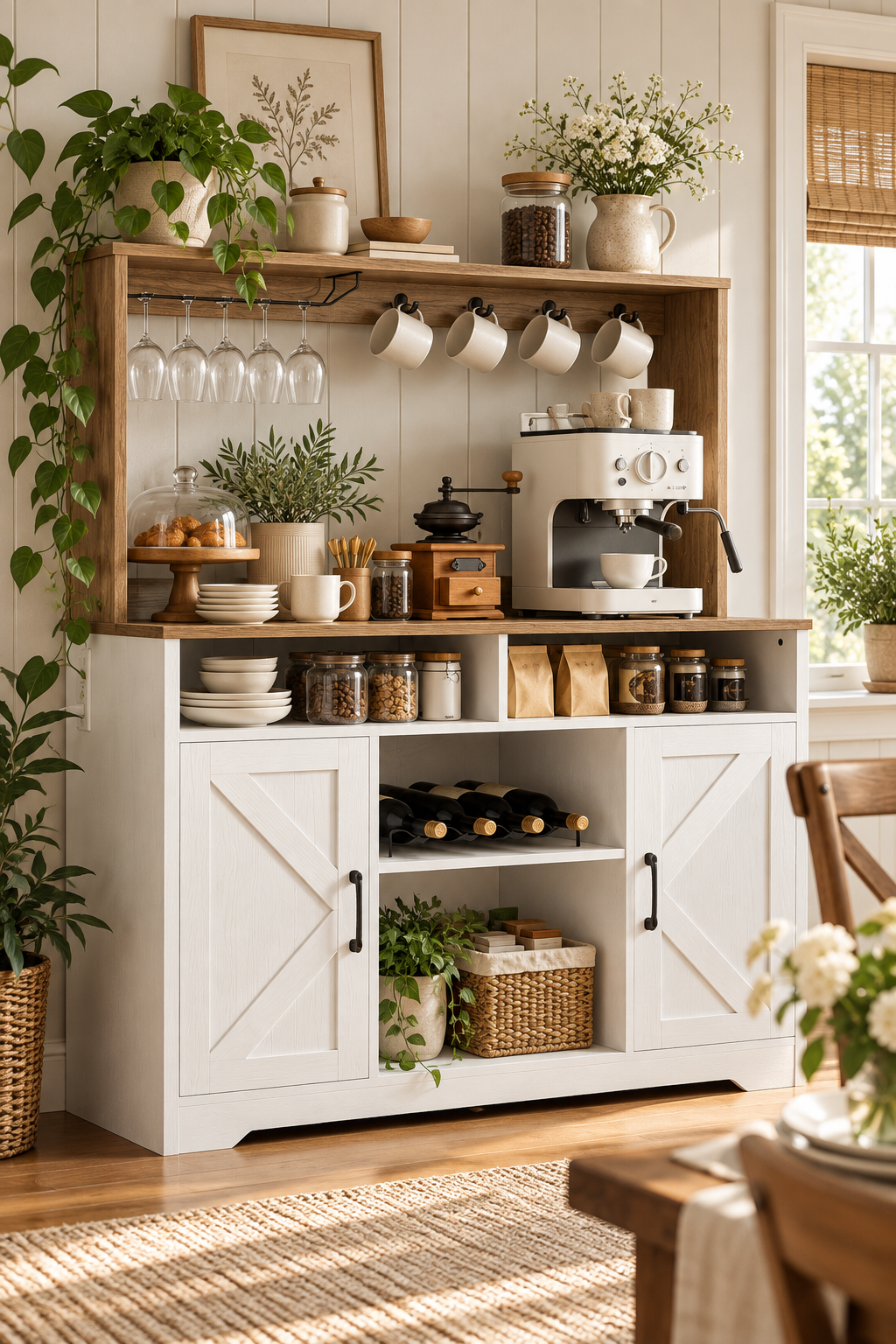
A farmhouse coffee bar hutch like this gives you a proper home café setup without needing any custom joinery. The white lower cabinet keeps the piece feeling bright, while the warmer wood top and open hutch add enough contrast to stop it looking flat. Hanging rails for mugs and stemware make the upper section useful rather than purely decorative, and the wide counter gives an espresso machine its own dedicated zone instead of squeezing it beside everyday kitchen appliances.
The storage layout is what makes this style work so well. Everyday cups and coffee supplies can stay visible in the open cubbies, while the barn-door cupboards hide bulkier items and backup stock. The central open shelf is also handy for baskets, bottles or extra beans. If you like farmhouse interiors but still want a practical coffee station, this is a much closer fit than a plain sideboard because the whole cabinet is designed around vertical storage and easy access.
2. Try a Modern Floating Coffee Bar
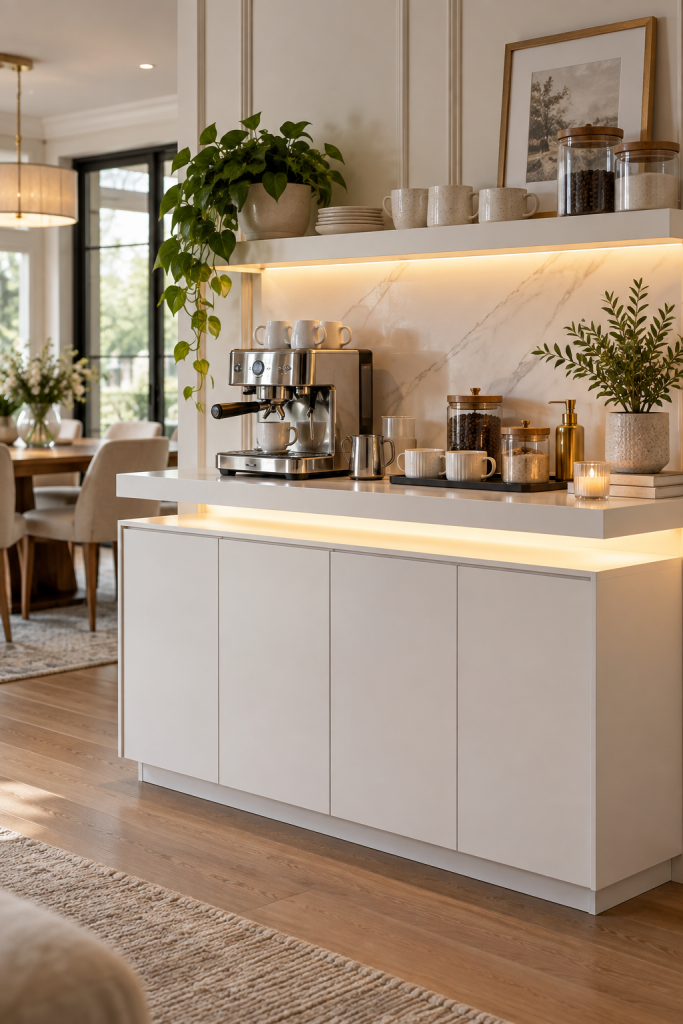
For a brighter, cleaner kitchen, a floating-style coffee station can look much lighter than a tall hutch. The raised counter line creates a little visual separation from the storage below, while an open shelf above gives you room for cups, beans and a few decorative pieces without making the whole wall feel heavy.
This is a good option when you want a coffee bar to look more like part of the kitchen than a separate piece of furniture. Keep the palette simple and let the coffee equipment provide most of the detail. White, pale stone and warm wood work particularly well together, especially with a soft strip of lighting underneath a shelf. The result feels polished, but still relaxed enough for everyday use.
3. Use a Fluted Wood Coffee Bar Cabinet
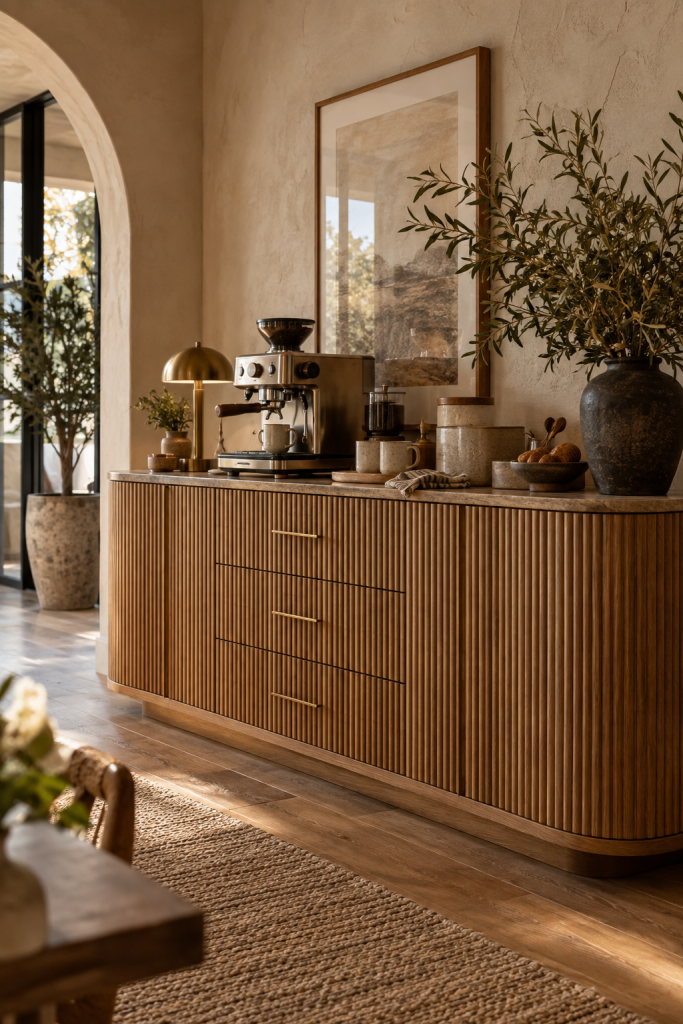
Fluted wood is a nice way to make a coffee bar feel more like a designed piece of furniture. The texture catches the light, so even a fairly simple sideboard has more depth than a flat-front cabinet. It works particularly well in warm modern, Japandi or organic interiors where you want the coffee station to feel decorative without adding lots of colour.
Keep the top fairly edited. An espresso machine, grinder, a pair of mugs and one or two canisters are enough. Everything else can disappear into the drawers. That hidden storage is what stops a coffee bar from becoming visual clutter. A small table lamp, brass hardware or framed artwork above the cabinet can make the setup feel finished, but leave some empty surface around the machine so it still feels practical.
4. Choose a Compact Coffee Cabinet with Mug Display
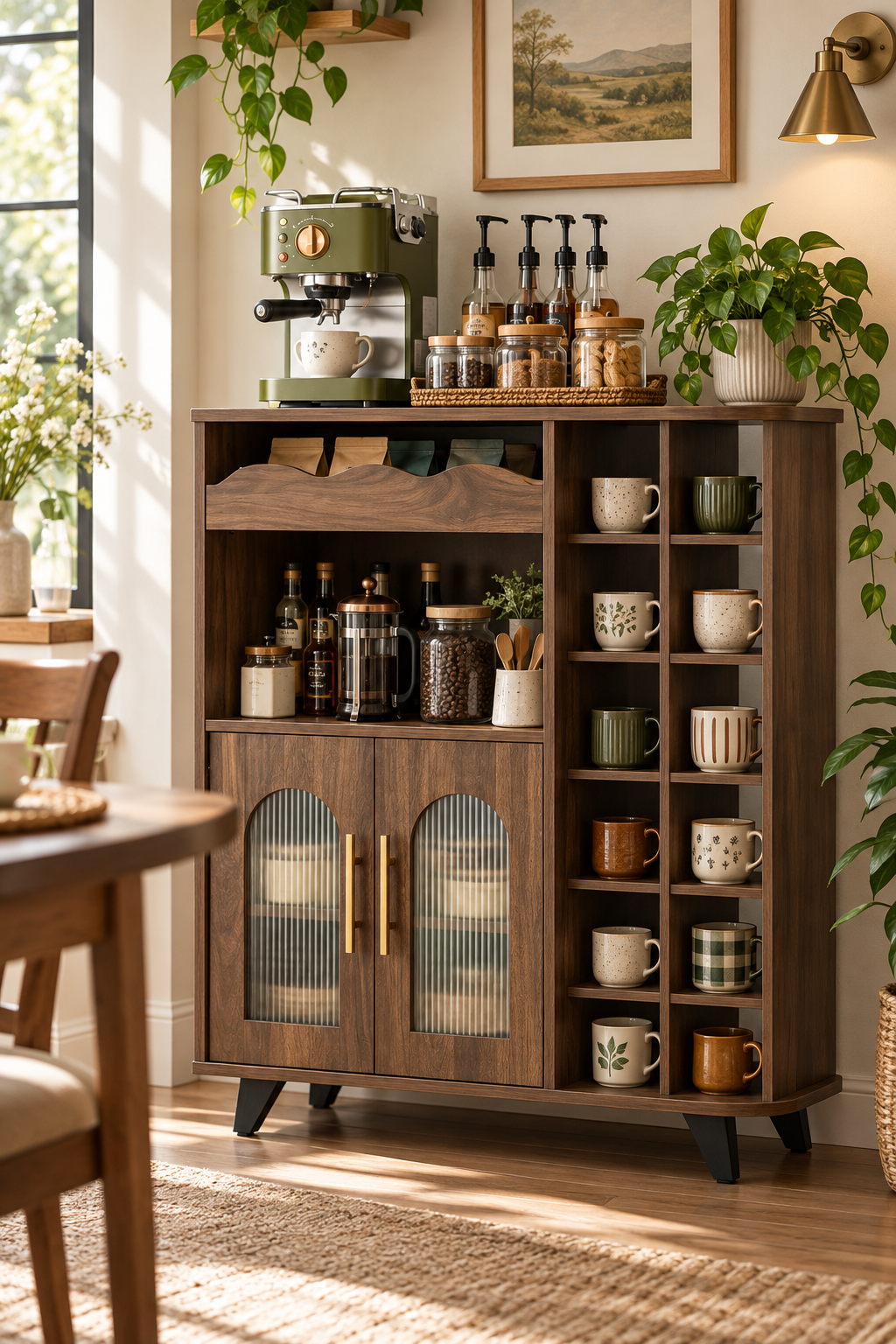
For a smaller home, a compact coffee cabinet with built-in mug display can make much better use of the floor space than a wide buffet. This walnut-style design keeps the coffee machine on top, gives you an open centre section for beans and syrups, then uses the tall side cubbies to turn your favourite mugs into part of the display. It feels more purposeful than adding floating shelves afterwards, and it keeps everything within one neat footprint.
The lower fluted-glass doors are useful for hiding the less photogenic supplies while still keeping the cabinet visually light. Because the unit is tall rather than sprawling, it suits apartments, dining corners and small kitchens where every inch matters. If you collect mugs, this is especially clever: instead of filling a cupboard with them, the vertical cubbies make the collection part of the coffee bar itself.
5. Combine a Coffee Station with a Wine Fridge
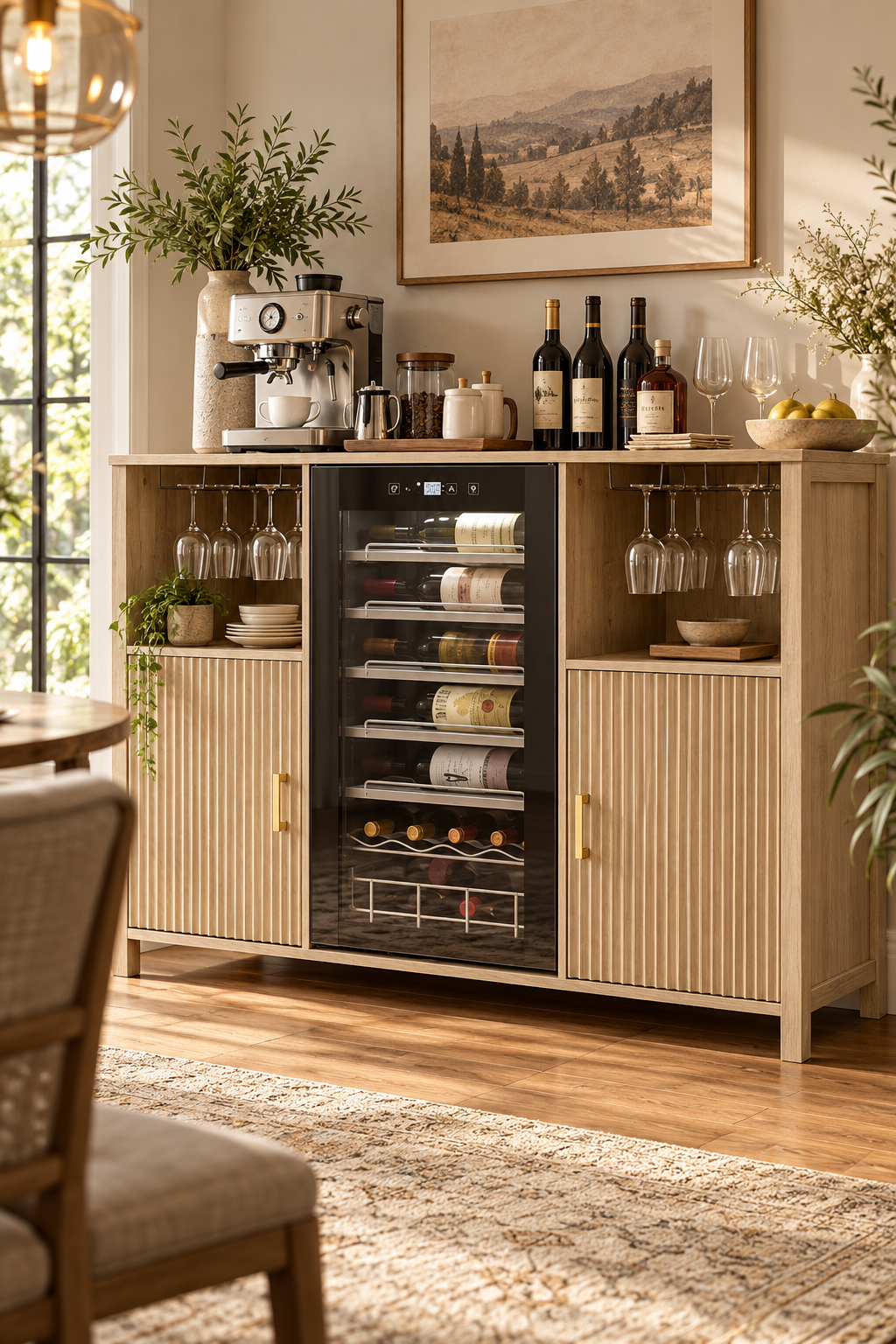
If you want one piece of furniture to handle both morning coffee and evening drinks, a cabinet built around a central wine fridge is a strong option. The espresso machine can sit on the top surface while the fridge stores bottles below, and the open side sections give you dedicated hanging space for stemware. That makes the setup far more versatile than a standard coffee station and works particularly well in a dining room or open-plan entertaining area.
The fluted cabinet doors help the piece feel like proper furniture rather than an appliance stand, while the fridge becomes the central feature instead of something awkwardly added later. Use the closed cupboards for coffee beans, tea, syrups and bar accessories, then keep only the things you reach for every day on top. It is a good example of a coffee bar doing more than one job without looking cluttered.
6. Build a Rustic Coffee Bar with Open Shelves
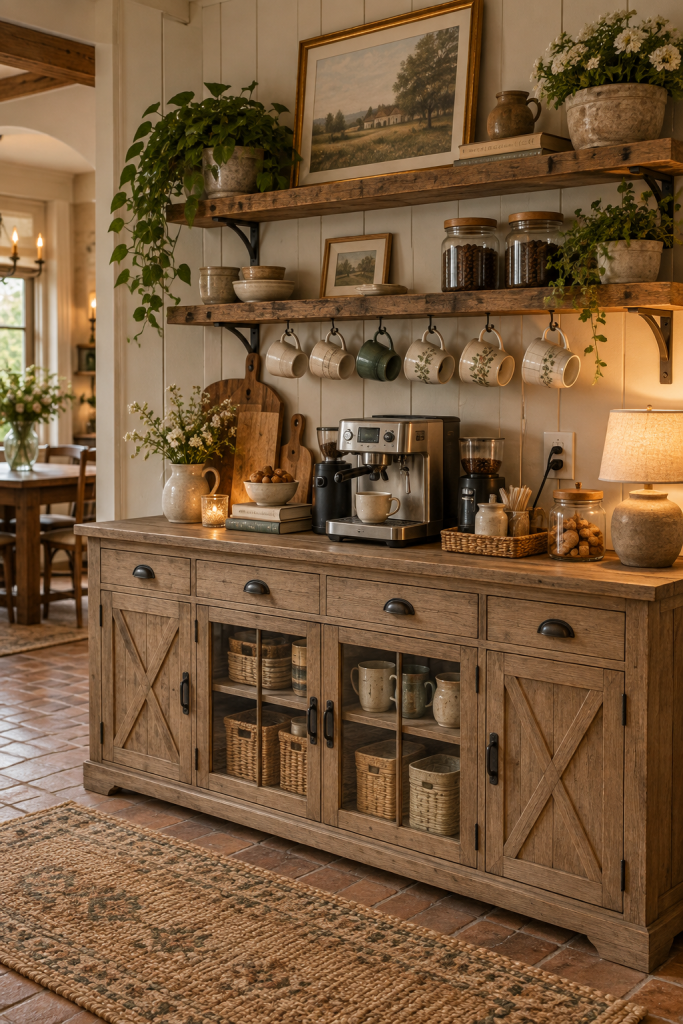
A rustic coffee bar feels best when it looks collected rather than overly coordinated. Warm timber, open shelves, stoneware mugs and a few old-looking accessories give the setup character, especially in a farmhouse or cottage-style kitchen. It is also a forgiving look because nothing needs to match perfectly.
Hang everyday mugs beneath the lowest shelf to free up surface space, then use jars for beans and sugar above. Cutting boards, a small framed print or a ceramic vase can soften all the hard edges from the coffee machine. Just do not turn every shelf into a display. Leaving a little breathing room makes the station feel calmer and keeps the focus on the things you actually use every morning.
7. Go Moody with an LED Coffee and Wine Bar
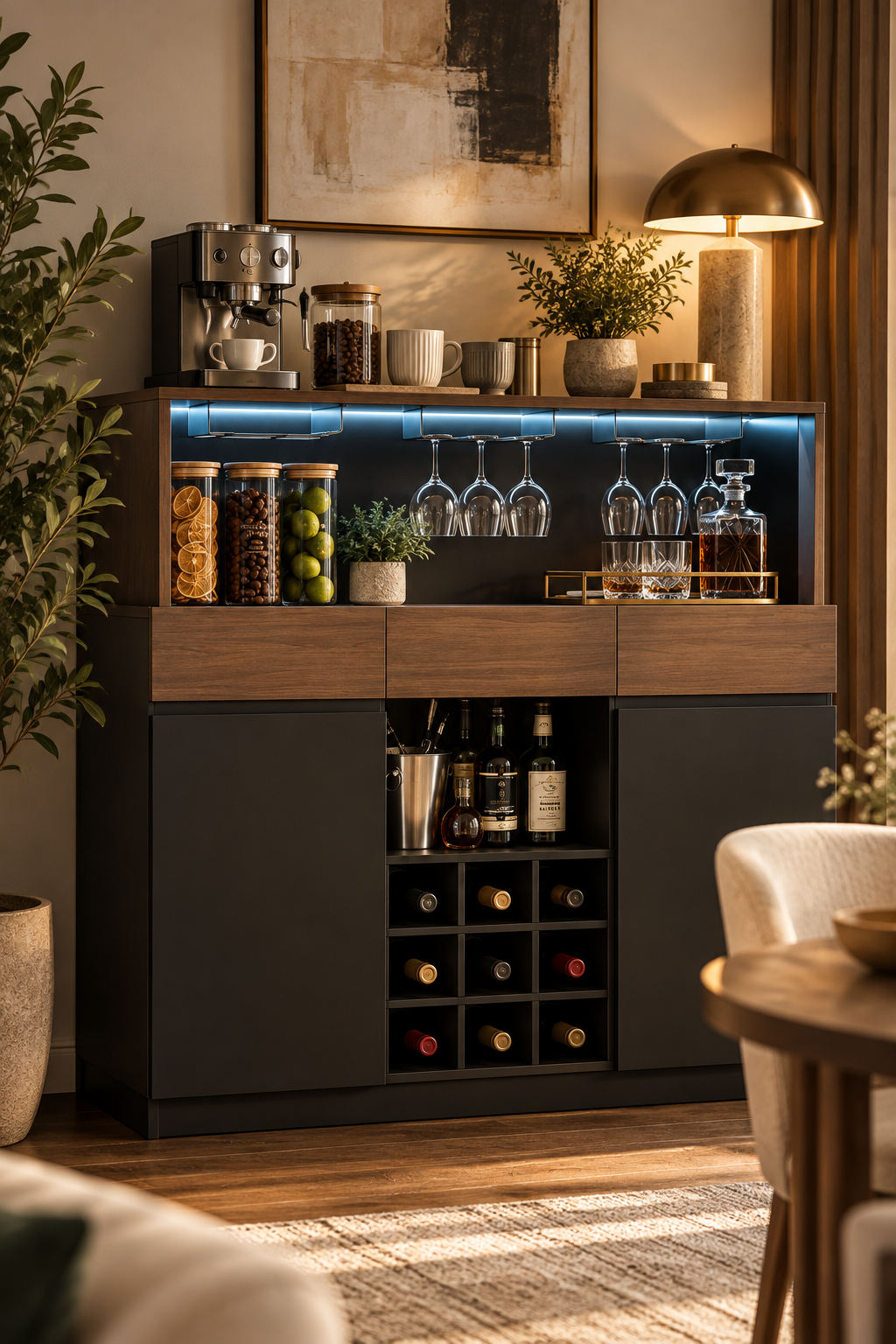
A darker coffee and wine bar can give the room a completely different mood from the usual pale farmhouse stations. This style mixes walnut tones with black lower doors, central bottle storage and hanging stemware, then uses integrated LED lighting across the open upper section. With a coffee machine on top, it works just as well for the first espresso of the day as it does for drinks later in the evening.
The lighting is the detail that makes the cabinet feel more like a proper bar rather than simple storage. Keep the top fairly restrained so the illuminated back section remains the focal point, and use the lower cupboards for anything you do not want on display. In a dining room, living space or darker kitchen, this kind of setup gives you a modern coffee station and home bar in one compact piece.
8. Hide the Coffee Station Behind Cabinet Doors
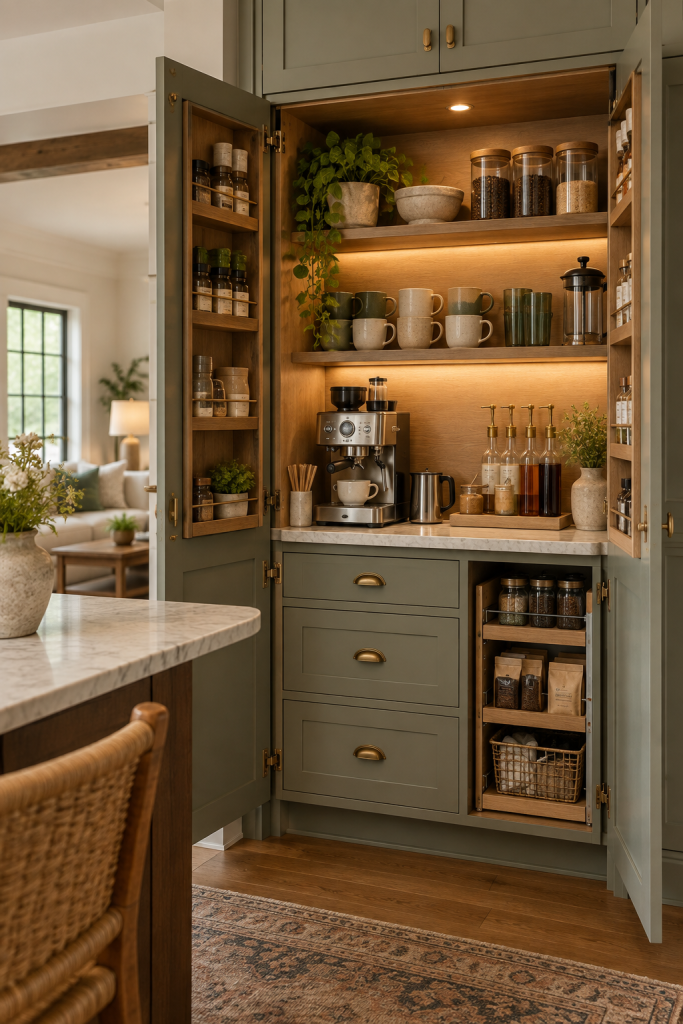
A hidden coffee station is brilliant if you like a calm kitchen but still want everything ready to use. Pocket doors, folding doors or a tall cabinet can conceal the entire setup when you are finished, then open to reveal shelves, cups, beans and the machine when you need them.
The inside is where you can be more practical than decorative. Add lighting, keep the machine near a socket, and use shallow shelves for mugs and canisters. A pull-out tray can be useful if steam or filling the water tank becomes awkward inside a cupboard. This idea works particularly well in open-plan homes where the kitchen is always visible from the living room. Close the doors, and the coffee station simply disappears.
9. Create a Luxury Coffee Station with Marble and Walnut
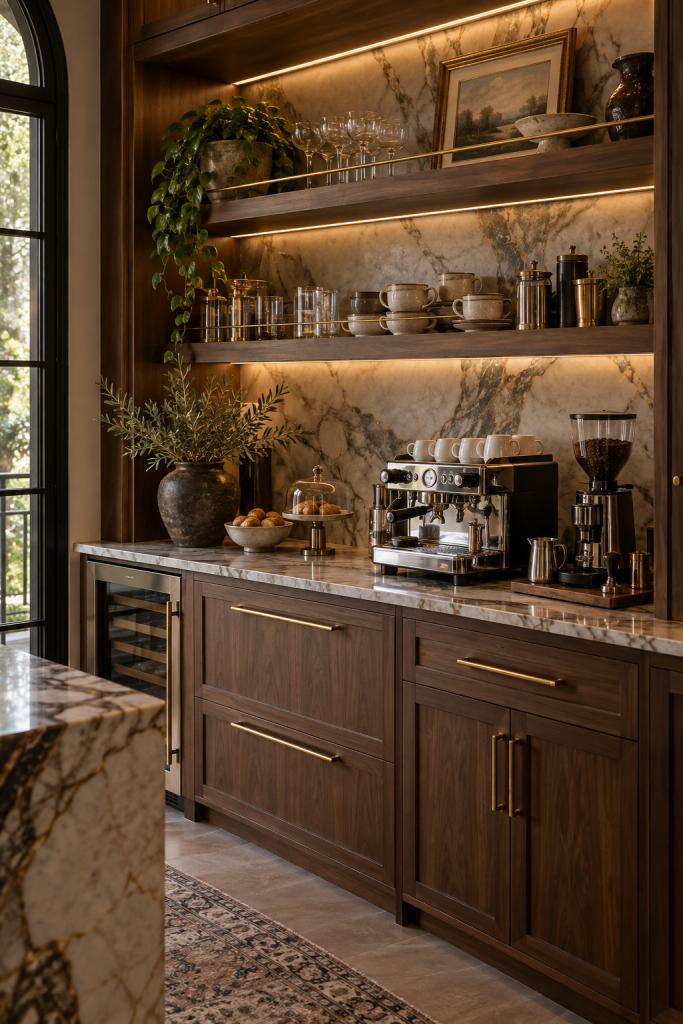
A luxury coffee station is less about owning the most expensive coffee machine and more about making the whole area feel permanent. Walnut cabinetry, a stone or marble backsplash, integrated lighting and simple brass hardware immediately make the setup feel closer to a boutique café or hotel bar.
If you are planning a renovation, treat the coffee area like a miniature kitchen zone. Give the grinder its own space, leave enough counter around the machine to work comfortably, and build in drawers for tools and coffee bags. Open shelves can display your best cups, but keep the styling restrained. One plant, a few cups and good glassware will look far more luxurious than shelves packed with accessories.
10. Go Fully Built-In for a Real Home Café Feel
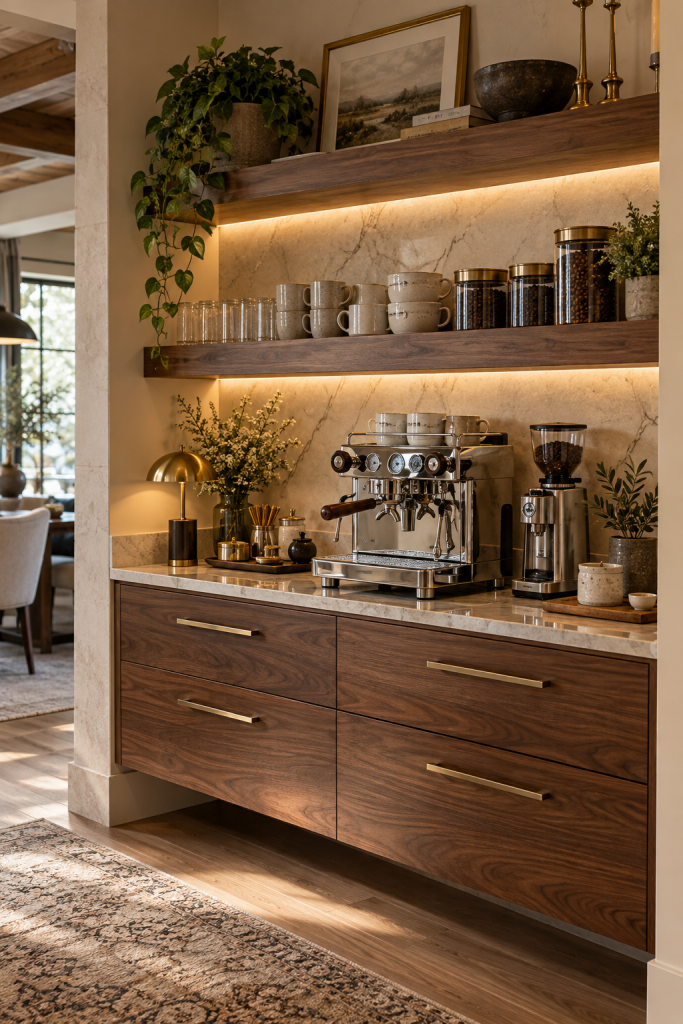
If coffee is genuinely part of your daily routine, a built-in home coffee bar can be worth giving proper space to. It turns the station into a feature of the room rather than something squeezed into an unused corner, and it gives you the freedom to position storage exactly where you need it.
This is where the home coffee station can start to feel like a real café. Use drawers directly below the machine for scales, filters and accessories, keep beans in airtight containers close to the grinder, and add lighting under the shelves so early mornings feel a little less brutal. A small sink is a luxury if plumbing allows it, but even without one, a carefully planned built-in can feel incredibly polished.
11. Make a Moody Coffee Nook with Dark Wood
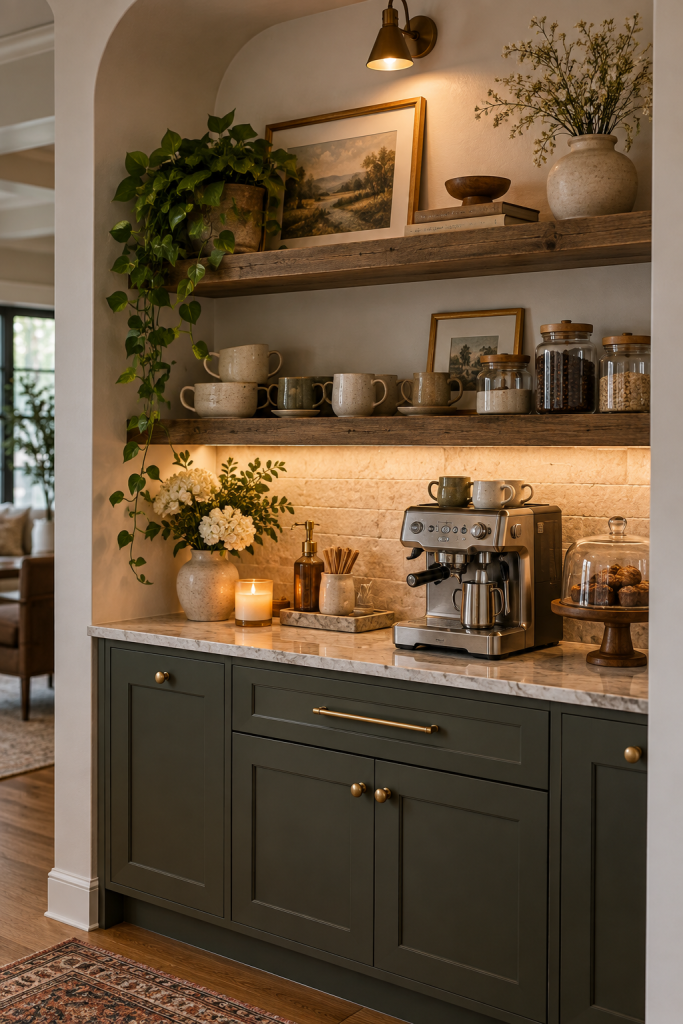
Coffee bars do not have to be bright and airy. A darker coffee nook with deep wood, warm lighting and richer colours can feel incredibly cosy, especially in a dining room, snug or open-plan living space. It is a good way to make the station feel more like a little evening bar while still working perfectly for the first coffee of the day.
Keep the lighting warm and local rather than relying on the main ceiling lights. A small lamp, shelf lighting or a wall light can create that café-like glow. Dark timber looks best when there is some contrast, so mix it with cream mugs, stone canisters, brass details or lighter walls. The final effect is less ‘coffee appliance corner’ and more a proper little destination in the house.
How to Style a Coffee Bar Without Making It Cluttered
Coffee stations naturally collect small things, so it helps to group them. Put syrups together on a tray, keep beans and sugar in matching or complementary jars, and choose one place for spoons and tools instead of scattering them around the machine. The countertop will look calmer, and cleaning it becomes much easier.
Try to keep at least a little empty surface around the coffee maker. That negative space is what makes even a small coffee bar feel considered. A plant, small lamp or framed picture can soften the setup, but you do not need all three if the cabinet is already visually busy.
Coffee Bar, Coffee Station or Coffee Nook?
In practice, they are all variations of the same idea. A coffee bar usually sounds a little more styled and furniture-led, a coffee station often focuses on function, and a coffee nook tends to be smaller or tucked into an existing corner. Use whatever term fits your space — the important part is creating one organised zone for the routine.
Whether yours ends up being a tiny countertop coffee station or a fully built-in luxury coffee bar, it should make mornings easier and the room better to look at. If it does both, it is probably working.