
The shoes by the door usually have a perfectly good reason to be there. They’re the pairs you reach for every morning, the boots that need to dry and the trainers someone will be wearing again in an hour. They just need a better place to land.
Good entryway shoe storage fits both the hallway and the people using it. A beautiful cabinet is lovely, but an open shelf may be easier for little ones, and a boot tray can be more useful than a cupboard after a wet walk.
These ideas mix hidden storage with quick-access options. Start with your everyday shoes, measure the space around the door and choose an arrangement that feels easy to keep using.
As an Amazon Associate I earn from qualifying purchases.
Images are AI-generated room inspiration. SHOP SIMILAR opens a search for visually similar options; check the details and suitability for your space before buying.
1. Hide the everyday pairs in a slim fluted cabinet

A slim cabinet gives a narrow hall a calmer first impression. The walnut fluting makes this one feel like part of the decor, while the tilt-out compartment keeps everyday pairs together behind a tidy front.
Check the internal dimensions against your largest shoes before buying. Some compartments suit flats and trainers better than bulky boots, and the front needs room to open without hitting the opposite wall.
Follow the wall-anchoring instructions, even with a shallow unit. Keep the top simple with a key dish and one favourite object, so the entrance feels finished without becoming another place to drop everything.
2. Choose a bench with a cubby for each pair

A shoe bench makes putting shoes on a little more comfortable and gives the floor underneath a proper job. Open cubbies are particularly useful when the household is more likely to put shoes on a shelf than open a cabinet.
Measure the cubbies rather than judging capacity by the number of squares. A large pair of trainers needs more space than children’s sandals, and a tall boot may need an adjustable or open section.
Keep the seat clear enough to sit on. A cushion can soften the look, but a pile of bags defeats the point. The easiest setup lets someone sit down, take off a pair and put it straight into its space.
3. Keep a simple open rack for shoes in constant use

A low metal rack is a straightforward answer when you need something easy to see and easy to use. The black frame sits neatly beside the charcoal door here, while the open design leaves the shoe pairs visible.
Choose shelves that suit the shoes you actually wear. Closely spaced bars or a flat surface may work better for small shoes and narrow heels than widely spaced rails.
Keep it to a manageable everyday selection. A rack becomes much less helpful when shoes are piled across two levels and the floor around it. Give each pair a clear position and keep the route through the hall free.
4. Use clear boxes inside an entryway closet

Clear boxes can make a hallway closet easier to scan, especially when shoes disappear behind coats. Front-opening designs let you reach a pair without lifting the whole stack.
Check the internal length and height with a shoe in mind, then check the stack against the closet dimensions. Allow space for doors to open and make sure the boxes connect or stack as the manufacturer intends.
Put away shoes only once they’re dry and ready for storage. Use the boxes for a modest collection that benefits from being visible; they don’t need to become a wall of packaging around every pair you own.
5. Give wet boots their own landing spot

A boot tray is one of those small additions that earns its place on the first rainy day. A raised edge keeps the wet soles in one area, and the dark finish feels tidy against the pale floor.
Choose a tray wide enough for the pairs that regularly arrive together. Place it where boots can stand upright without blocking the door, radiator or route into the house.
Empty and clean the tray as needed, and let the boots dry in a way that suits their care instructions. Once dry, move less-used pairs to their longer-term spot so the tray is ready for the next arrival.
6. Slide shoe baskets beneath an existing bench
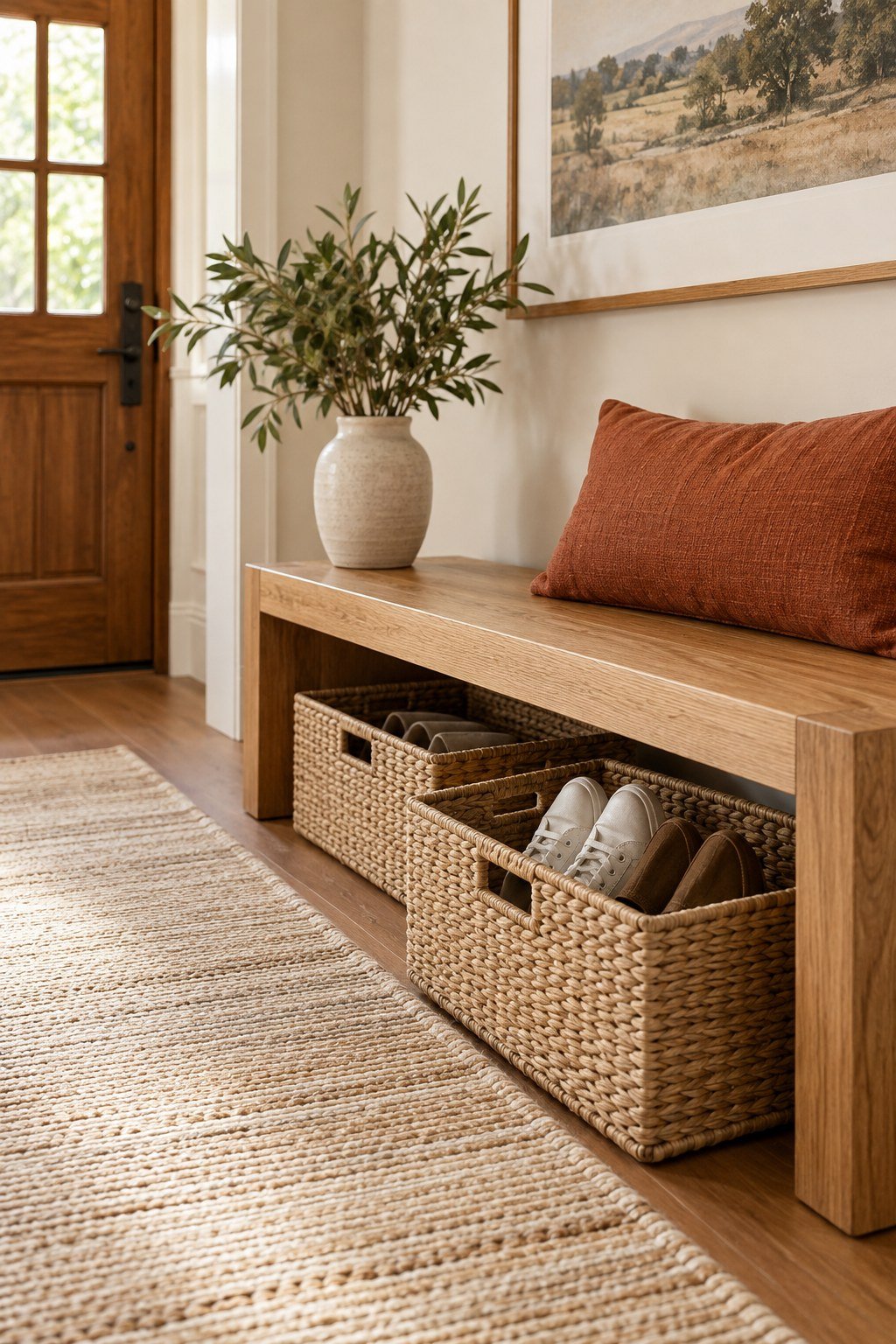
If you already have a bench, a couple of baskets may be all you need. Their woven texture makes the lower space feel softer, while the open tops keep dry everyday shoes within reach.
Measure the height under the bench as well as the basket width. You need enough room to pull a basket forward without catching its handles, and enough space inside to avoid crushing shoes together.
Give each basket a clear purpose, such as one person or one type of shoe. If the collection starts overflowing, move the occasional pairs elsewhere instead of squeezing in another layer.
7. Use the inside of a closet door for lightweight shoes
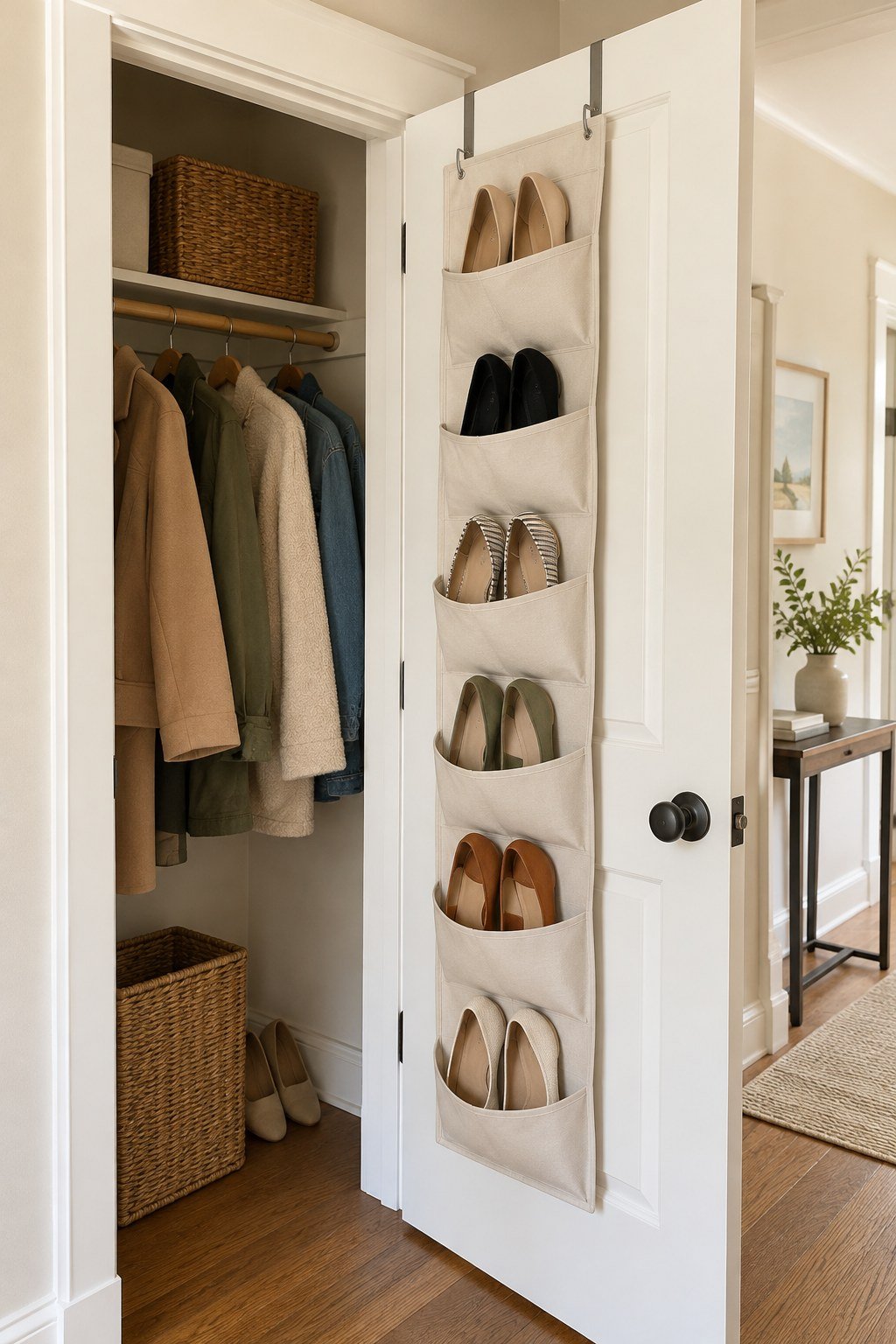
A door organiser can help a small entry closet hold more without adding furniture to the hallway. A neutral canvas version feels fairly quiet, and separate pockets make flat shoes easy to find.
Check that the hooks fit your door and that it still closes properly. Follow the stated loading guidance, and choose pockets large enough for the shoes rather than forcing them into a tight space.
Lightweight flats, sandals and children’s shoes are a better fit for this arrangement than heavy wet boots. Keep frequently used pairs at an easy height, with little ones’ shoes within their reach where appropriate.
8. Go upwards with a narrow open rack
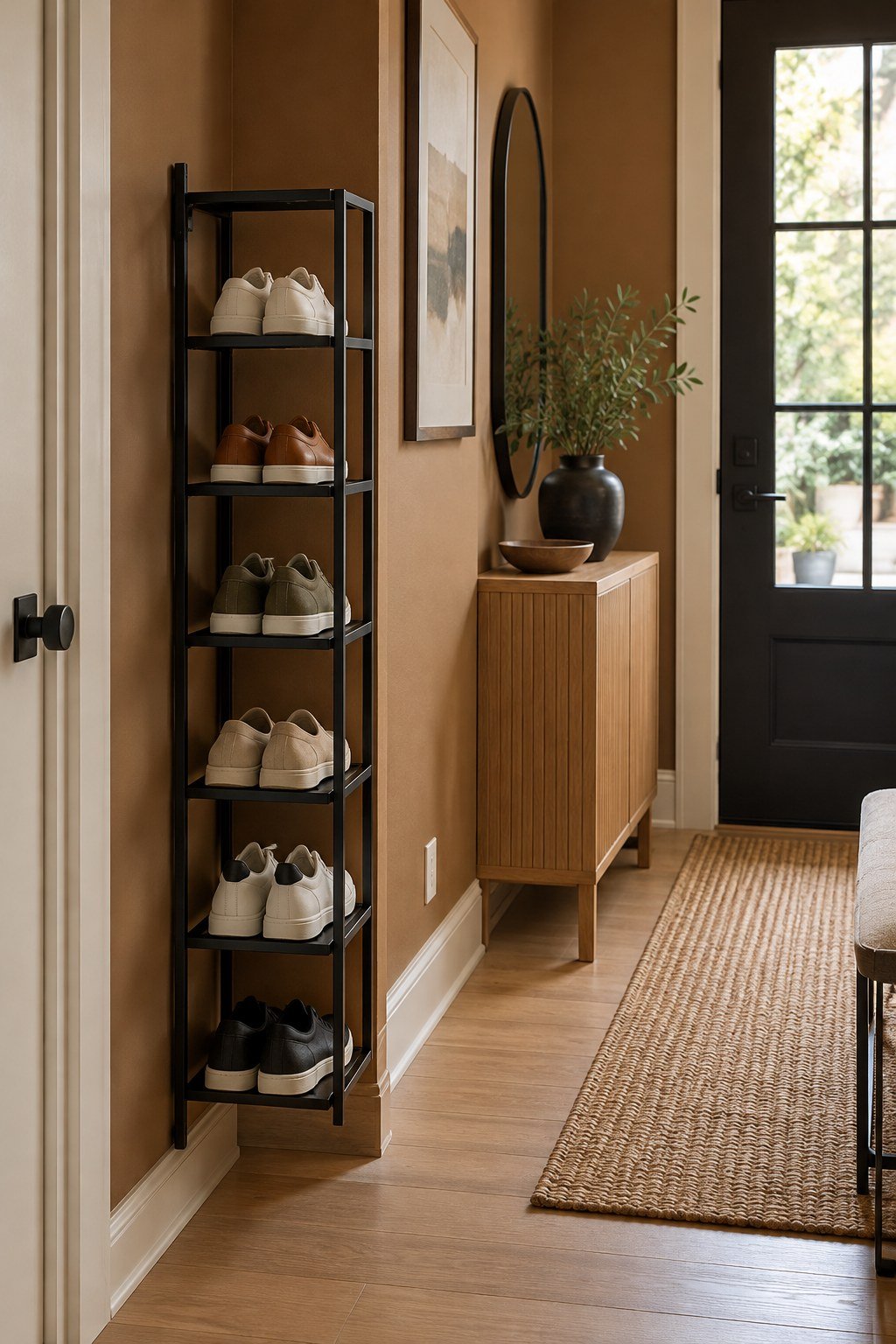
A tall narrow rack makes use of a corner when the hallway has very little spare wall width. The open black frame keeps this warm-toned entrance feeling lighter than a deep solid cupboard.
Check the depth carefully, including any shoes that project beyond the shelves. A slim frame doesn’t help if the toes of the shoes stick into the walkway.
Secure the unit as instructed and put heavier footwear low down. Leave enough room to take shoes out comfortably. The useful height is the height your household can reach, rather than every inch up to the ceiling.
9. Keep only the current everyday pairs by the door
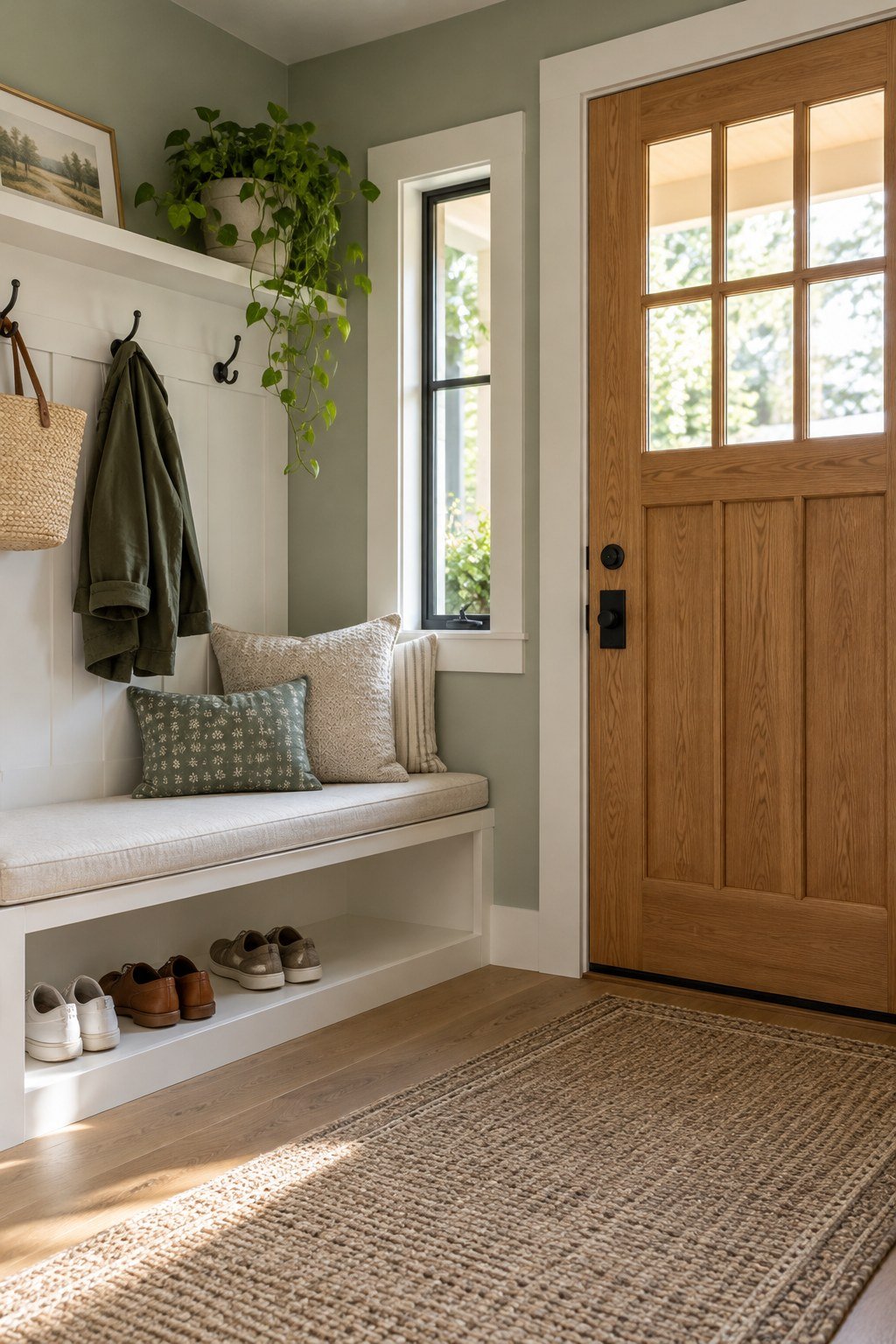
Sometimes the best change is simply giving the entrance a smaller collection to manage. Keep the shoes you wear on an ordinary week near the door and give special-occasion pairs a home elsewhere.
Choose a realistic allowance for your household. It might be one or two pairs per person, with a little flexibility for school, work or the weather. The aim is easy mornings, not a rule that becomes annoying.
An existing shelf can work beautifully once the overflow has gone. If deciding what stays is the difficult part, our decluttering tips can help you start with one manageable area.
10. Test the door swing before rearranging the hall

A hallway needs room for people as well as furniture. Open the front door fully and check what happens when someone comes in carrying shopping, wearing a backpack or holding a child’s hand.
Try your arrangement before committing to a new piece. Mark the footprint on the floor, check nearby cupboard doors and think about where you stand while taking shoes off.
Keep mats flat and the route clear of loose pairs. A slightly smaller storage area that is pleasant to use is usually more helpful than a high-capacity unit that makes the entrance awkward.
11. Give off-season shoes a home away from the entrance
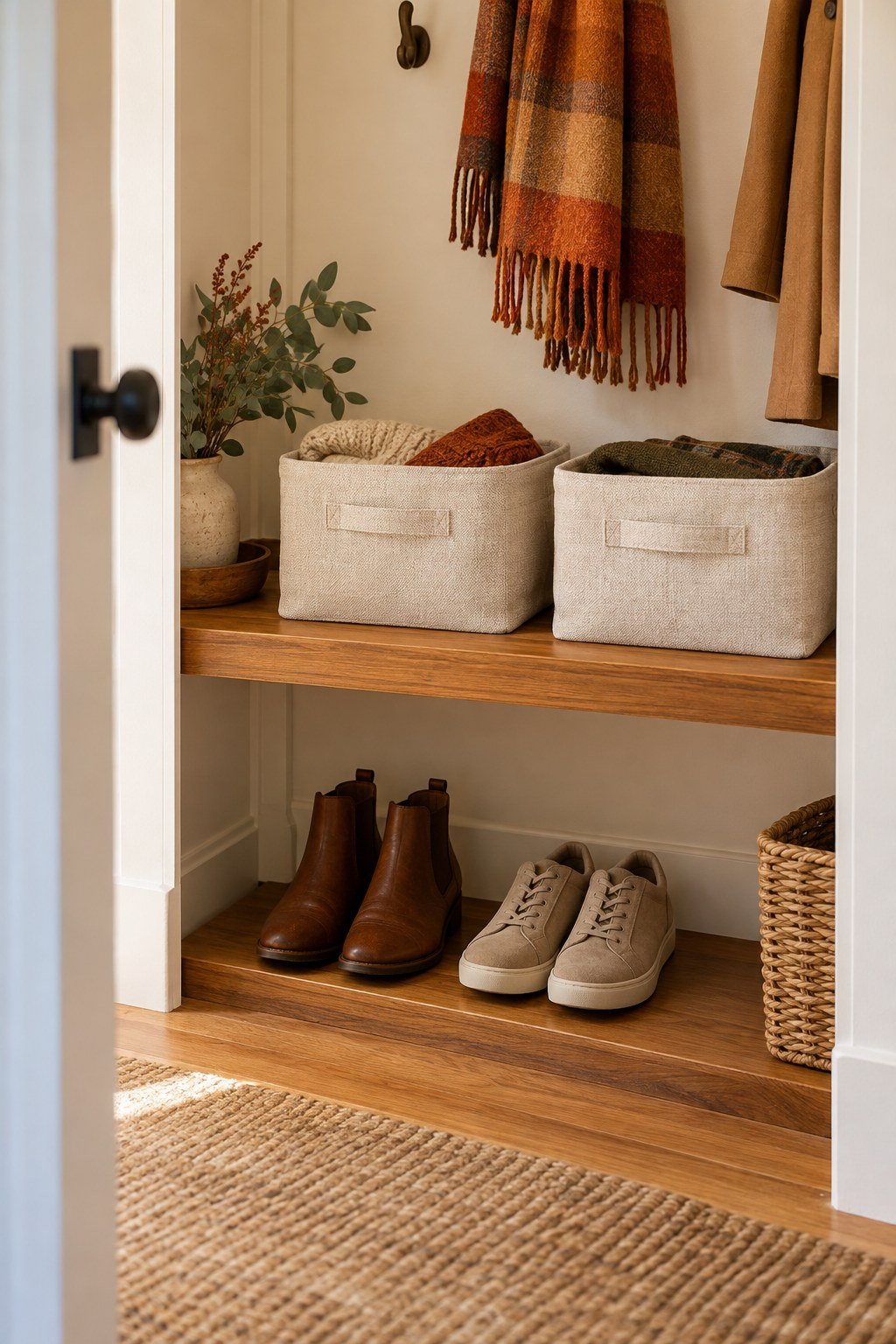
Winter boots don’t need the best entryway shelf through the middle of summer. Rotating a few seasonal pairs can make the everyday storage feel much more generous.
Clean and dry footwear according to its care instructions before putting it away. Choose a storage method and location that suit the material, and avoid packing shoes tightly while they’re still damp.
Keep the swap easy to remember and easy to reach. A small seasonal reset works well alongside organising hanging clothes, so coats and shoes change over together.
Make coming home feel a little easier
The right shoe storage doesn’t have to hold every pair you own. It just needs to make the entrance work well for the shoes arriving and leaving each day.
Start with a quick sort, measure the hall and give the everyday pairs a clear place. Then see whether your household needs a cabinet, a bench or simply a better use of the shelf that’s already there.
When putting shoes away takes only a moment, the hallway has a much better chance of staying clear. And having a welcoming space to come home to is a lovely little reward.