
A hallway can be small and still make a lovely first impression. The challenge is finding the balance between a welcoming entrance and an obstacle course of shoes, bags and furniture that looked smaller online.
These narrow hallway ideas focus on the space you actually move through. Think shallow storage, light that reaches the far end and wall details that bring character without taking over the floor.
The first ideas include useful pieces you can shop for, followed by paint, layout and architectural changes. Choose what solves a real problem in your hall; you do not need to squeeze every idea into one corridor.
As an Amazon Associate I earn from qualifying purchases.
Images are AI-generated room inspiration. SHOP SIMILAR opens a search for visually similar options; check the details and suitability for your space before buying.
1. Choose a console that leaves the floor feeling open

A console can give a hallway a lovely sense of arrival, but depth matters more than width here. A slender walnut table offers a place for keys and a little warm wood without taking over the route through the house.
Measure the space with the front door open, then mark the proposed table footprint on the floor. Walk past it carrying a bag. If you have to turn sideways or dodge a corner, a shallower design will make everyday life easier.
Keep the top simple: a small dish and one decorative piece are plenty. Open legs let the floor continue underneath, which helps the furniture feel lighter. Resist filling that open space with extra baskets if they make the passage tighter.
2. Hide everyday shoes in a shallow cabinet

A shallow shoe cabinet can make a surprisingly big difference when trainers keep spreading across the entrance. Pale oak and subtle fluting add texture, so the storage feels like part of the decor rather than something squeezed in afterwards.
Check the internal compartments against the shoes you actually wear. Tall boots and larger sizes may need a different home. You also need room to open the drawers comfortably, and the cabinet should be secured exactly as its manufacturer instructs.
Use it for the current daily rotation instead of every pair you own. One uncluttered top and a clear floor will do more for this hallway than a row of decorative accessories. There are more practical options in these entryway shoe storage ideas.
3. Bounce borrowed light with a round mirror

A round mirror brings a softer shape into a corridor full of straight lines. A thin brass frame feels warm against clay, cream or muted green walls, and gives the hallway a focal point without adding anything at floor level.
Try the position before making holes. A mirror opposite or beside a source of daylight can brighten the view, while one facing a cluttered coat pile simply repeats the clutter. The reflection should be something you would enjoy seeing twice.
Choose a size that feels generous on the wall without crowding switches or door frames. Keep the surrounding decor quiet so the circle can do the work. Use suitable fixings for both the wall construction and the weight of the mirror.
4. Warm up the route with a flat runner

A runner is an easy way to make a long hallway feel considered. A woven oatmeal or tan design brings warmth to hard flooring, and a restrained stripe adds interest without making an already narrow space look busy.
Leave a visible border of floor on both sides rather than choosing a rug that nearly touches the skirting. Check the full door swing too. A low profile is useful, but the actual rug and any underlay still need to clear your doors.
Use a suitable non-slip backing or underlay for your floor, and keep corners lying flat. Pick something you can realistically clean after wet shoes and muddy days. A beautiful hallway should still be easy to walk through on a normal Tuesday.
5. Give a few coats a tidy wall home

A wood hook rail works well when a freestanding coat stand would eat up the corner. Walnut adds a lovely warm line on the wall, especially against sand or pale stone paint. It is a small change with a clear everyday purpose.
Keep this rail for the coats and bags in use today. Bulky layers project much further into the passage than the empty hooks do, so test the space with something actually hanging there. Choose a quieter section away from a door swing.
Install the rail with fixings suitable for the wall and the intended load. Then give overflow coats a different home. A little breathing room between the hanging pieces looks better and stops the entrance becoming a soft wall of sleeves and straps.
6. Choose lighting that stays close to the ceiling

A low ceiling rarely needs a large pendant hanging into the space. A brass flush mount with an opal shade gives you a softer glow and a smart finishing touch while keeping the upper part of the hallway visually calm.
Look at the whole corridor rather than just the entrance. One fitting near the front door may leave the far end gloomy. The right arrangement depends on the length of your hall, existing wiring and how the adjoining rooms contribute light.
Choose a warm light colour that sits comfortably with the rooms beside it, and check whether the fitting and bulb support your dimmer. Have electrical work handled appropriately. Lighting feels most welcoming when you can see where you are going without a harsh glare overhead.
7. Wrap the walls and doors in one gentle colour
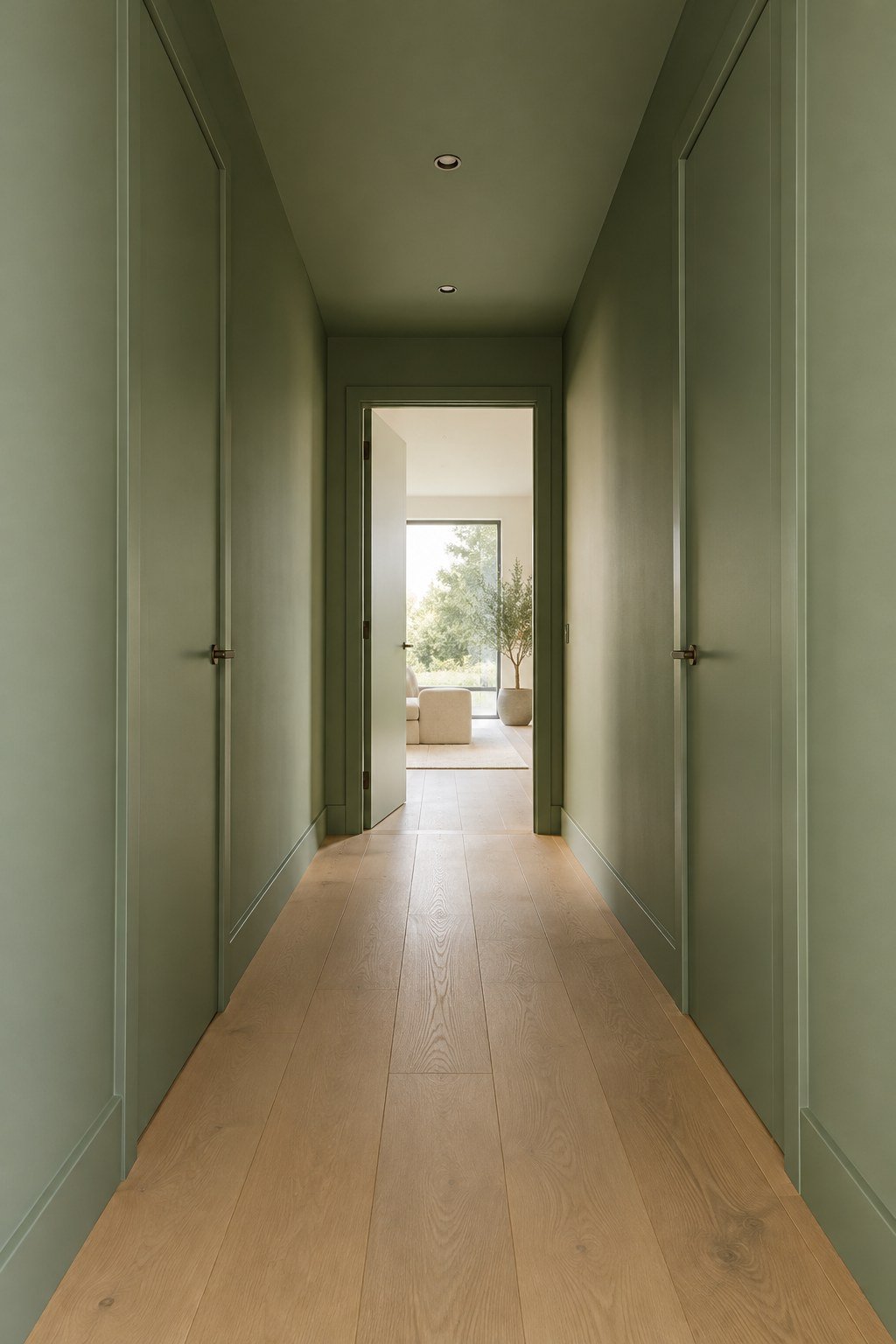
A hallway with several doors can feel like a collection of separate rectangles. Painting the walls, doors and trim in closely related shades makes those interruptions feel gentler. Muted sage is especially lovely with a warm wood floor.
You do not have to use an identical finish everywhere. Choose paint suited to each surface, and test the colour where the light changes along the corridor. A shade that feels soft by the front door can look much deeper at the other end.
Let the paint be the main feature instead of adding furniture to make the space interesting. This is one of the simplest narrow hallway ideas when the floor really needs to stay clear. A calm colour can carry the room beautifully on its own.
8. Add character with shallow wall detail

Shallow moulding gives a plain corridor a little architectural character. Painted in the same colour as the wall, it creates soft shadows rather than a busy pattern. It is a lovely option when there is no room for a console or shelving.
Plan the spacing around switches, sockets and door frames before fitting anything. A few larger panels often feel calmer than lots of tiny boxes. Keep the profile modest so it adds detail without becoming another thing to brush past.
You can take the idea in a traditional or contemporary direction simply by changing the proportions. Warm white looks fresh with oak flooring; a deeper stone shade feels more cocooning. Leave some wall space bare so the detail has room to breathe.
9. Make a gallery wall feel like one arrangement

A gallery wall can bring personality into a hallway without using floor space. The trick is treating the frames as one arrangement. Similar wood tones and a shared colour palette help family photographs or favourite prints sit comfortably together.
Lay the grouping out on the floor first, then use paper templates to check the spacing on the wall. Keep the arrangement within one clear area instead of running tiny frames around every doorway. Flat frames work better than deep display boxes here.
Leave the opposite wall quieter so the corridor does not feel crowded from both sides. Navy, cream and walnut make a particularly rich combination. The result can feel personal and collected while the actual walking route stays completely open.
10. Let the far end borrow daylight

Sometimes the most effective change is improving the view at the end of the hall. Keeping an adjoining doorway open when practical lets daylight travel further and gives your eye somewhere brighter to land. Even a clear threshold can make a difference.
For a renovation, a suitable glazed internal door may be worth discussing with a professional. The choice needs to work with privacy, safety and any requirements for that particular doorway. It is a considered building decision rather than a quick decorative swap.
Start with the easy version: clear the area beyond the doorway and avoid placing a bulky cabinet in that sightline. A lighter room at the end makes the hallway feel connected to the home. Our small apartment ideas explore that same sense of openness.
11. Keep doorways and turning points completely clear
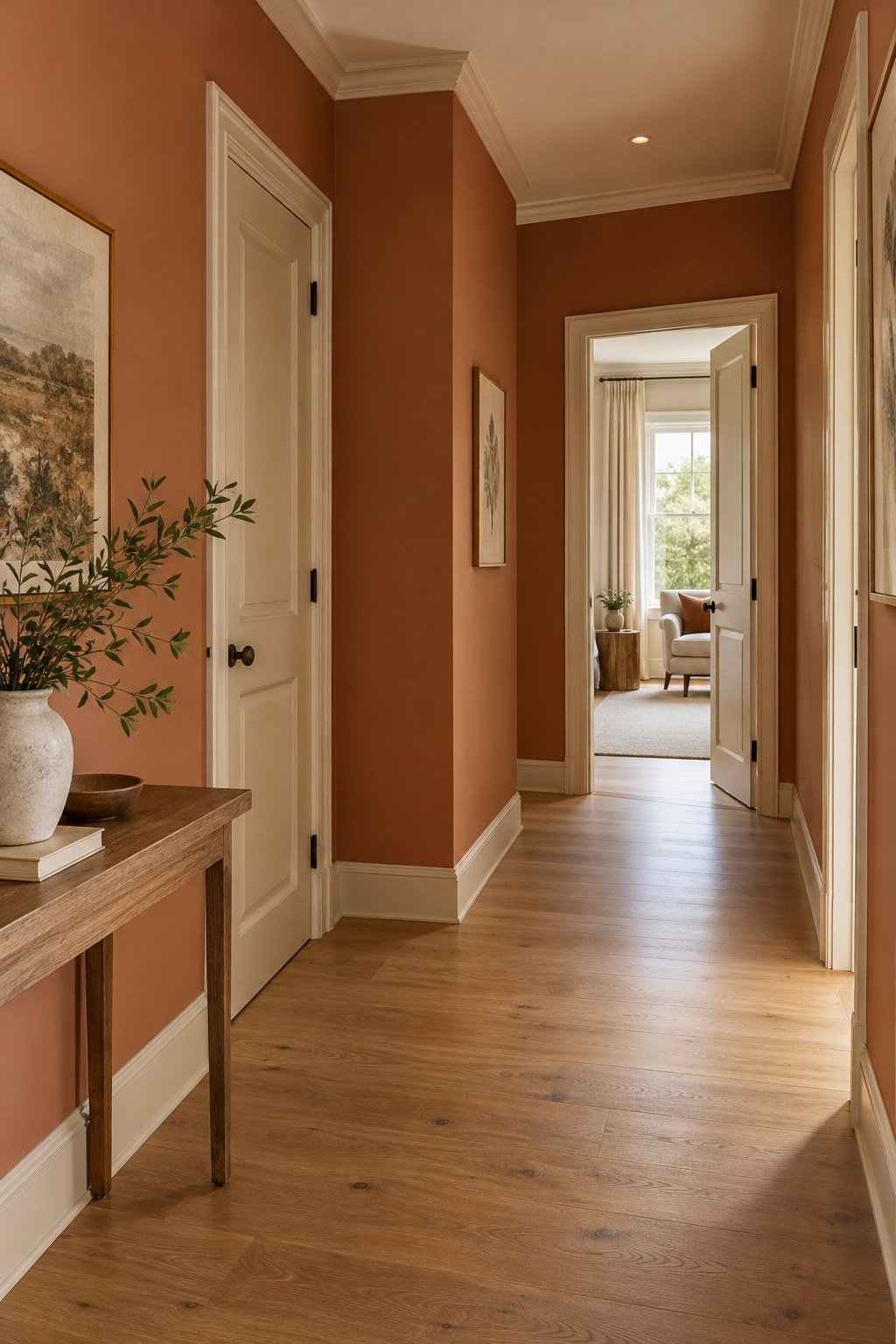
The tightest part of a hallway is often the turn rather than the straight section. A basket can seem harmless against a long wall and become awkward exactly where you need to change direction. Give those turning points extra breathing room.
Walk the route with a laundry basket, shopping bags or whatever you carry most often. Watch where elbows, handles and open doors need space. This simple test is much more useful than deciding from a photograph whether a piece looks slim enough.
Move occasional items into an adjoining cupboard instead of making the hallway their permanent parking spot. The room can still have colour and art. It just needs the floor to support the way people actually move through the house.
12. Finish the view with art instead of another table

An empty end wall can be a wonderful place for one generous piece of art. It gives the hallway a destination without adding another surface to collect things. Warm brown and ivory tones feel especially inviting against soft mushroom paint.
Choose the piece for the view from the entrance, then check it close up as well. The frame should sit comfortably within the wall rather than crowding nearby door trim. One larger artwork can feel calmer than several little objects competing for attention.
Keep the floor beneath it open and let the scale create the interest. This is a good reminder that narrow hallway decor ideas do not always need more furniture. Sometimes a clear route and one beautiful finishing touch are all the space needs.
A welcoming hallway starts with room to move
Start by clearing the route, then decide what the space still needs. A place for daily shoes, a little warmer light or one beautiful wall detail may be enough to make the entrance feel completely different.
Try the smallest useful change first and live with it for a few days. Your hallway should work when you are carrying shopping, opening the door and heading out in a hurry, as well as when everything is neatly in place.
Keep the pieces that earn their spot, give the walls a little personality and let the floor stay open. That is how a narrow hallway becomes a lovely part of the home rather than somewhere you simply squeeze through.