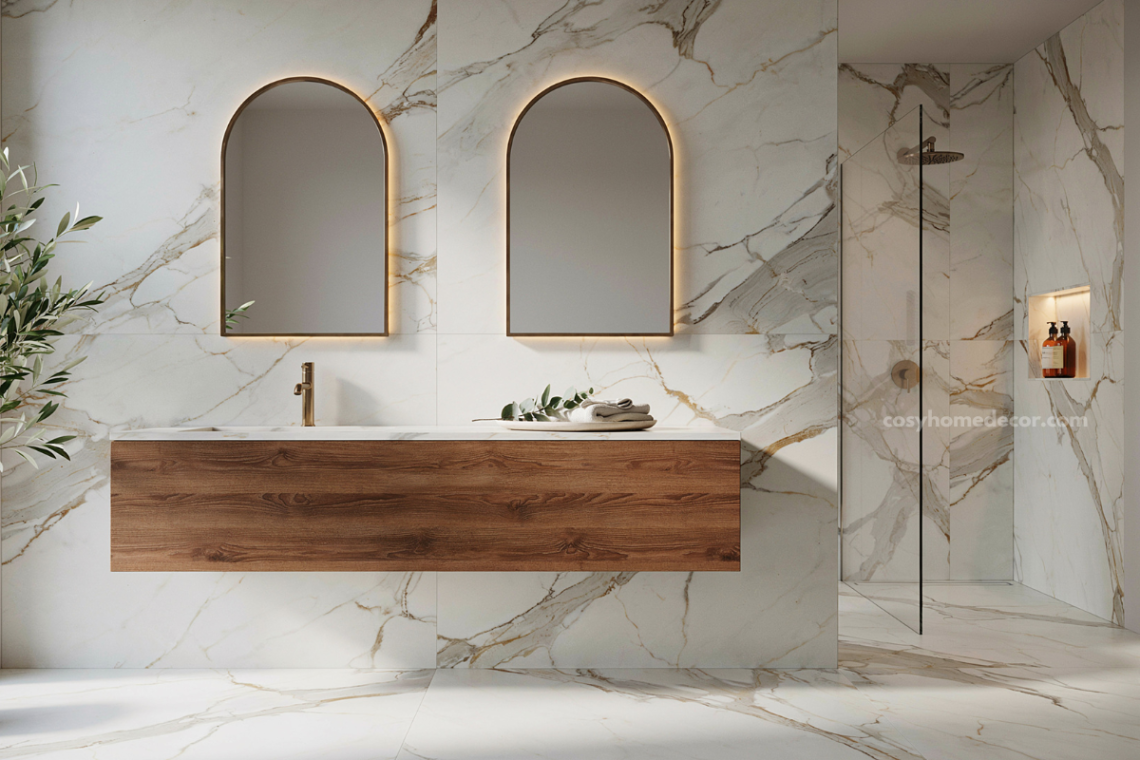
A floating vanity is one of those bathroom ideas that looks good in photographs but also makes sense in real life. Getting the cabinet off the floor creates a little visual breathing room, makes the floor easier to clean and can make even a fairly ordinary bathroom feel more considered.
What I like most is how many directions you can take it. A floating vanity can be crisp and modern, warm and rustic, tiled, curved, carved from stone or built almost seamlessly into the wall. It does not have to look like a generic white box with two drawers.
These 17 floating vanity ideas mix practical ready-made inspiration with more unusual bathroom concepts — from black fluted cabinets and warm oak to terrazzo, travertine, zellige tile and sculptural microcement. Some are easy swaps; others are the kind of idea you save for a proper renovation.
The interior images in this post are AI-generated design concepts for inspiration. Product-linked concepts are not product photographs, and exact finishes, dimensions and details may differ from the items linked.
Why Floating Vanities Work So Well
The obvious benefit is the extra visible floor. That gap underneath tricks the eye into reading more of the room at once, which is especially useful in a small bathroom. But there is another reason floating vanities often feel more expensive: they create a cleaner relationship between the furniture and the architecture. Instead of a cabinet simply sitting on the floor, it looks deliberately positioned on the wall.
The right height matters, though. Too low and the vanity feels awkward; too high and everyday use becomes uncomfortable. The basin style also changes the equation, because a vessel sink adds height while an integrated basin sits much lower. Think about the finished height of the sink, not just the cabinet itself.
1. Black Fluted Floating Vanity with Storage
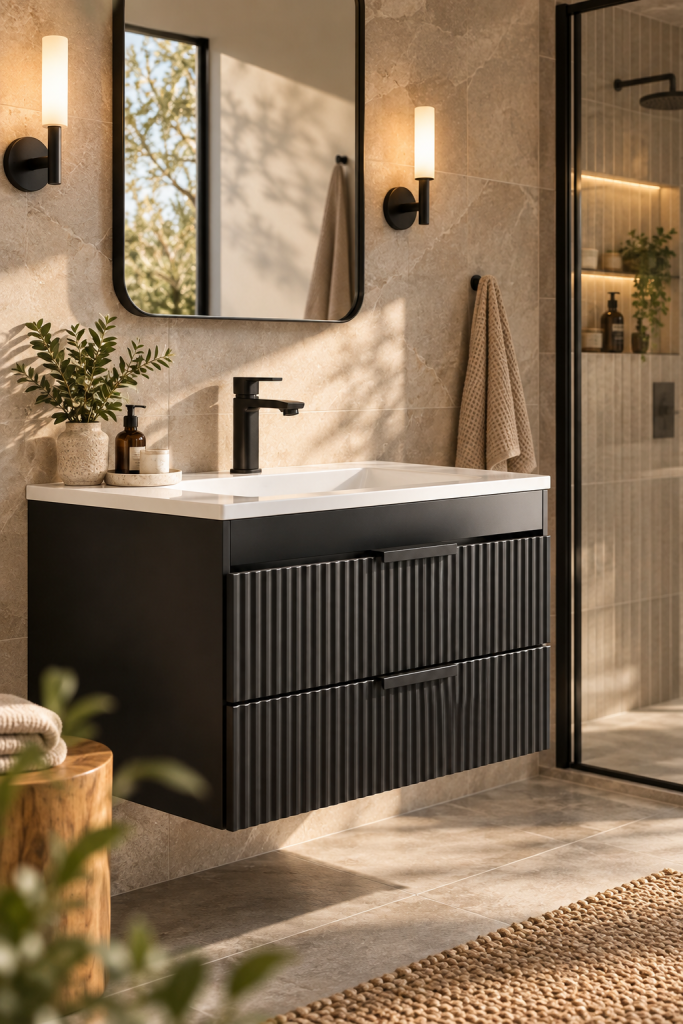
A black vanity can easily make a small bathroom feel heavy, but lifting it off the floor changes the whole effect. The gap underneath gives the eye somewhere to travel, so even a deep charcoal or black cabinet feels surprisingly light. The fluted drawer fronts add just enough texture to stop the finish looking flat, while a crisp white sink keeps the contrast clean rather than dramatic for the sake of it.
This kind of design works especially well in a compact bathroom where every centimetre matters. Two proper drawers are much more useful than a decorative open shelf if you actually need somewhere for toiletries, spare toothpaste and all the less-photogenic bits of bathroom life. Pair it with warm stone, a woven rug or timber accessories and the black suddenly feels cosy instead of stark.
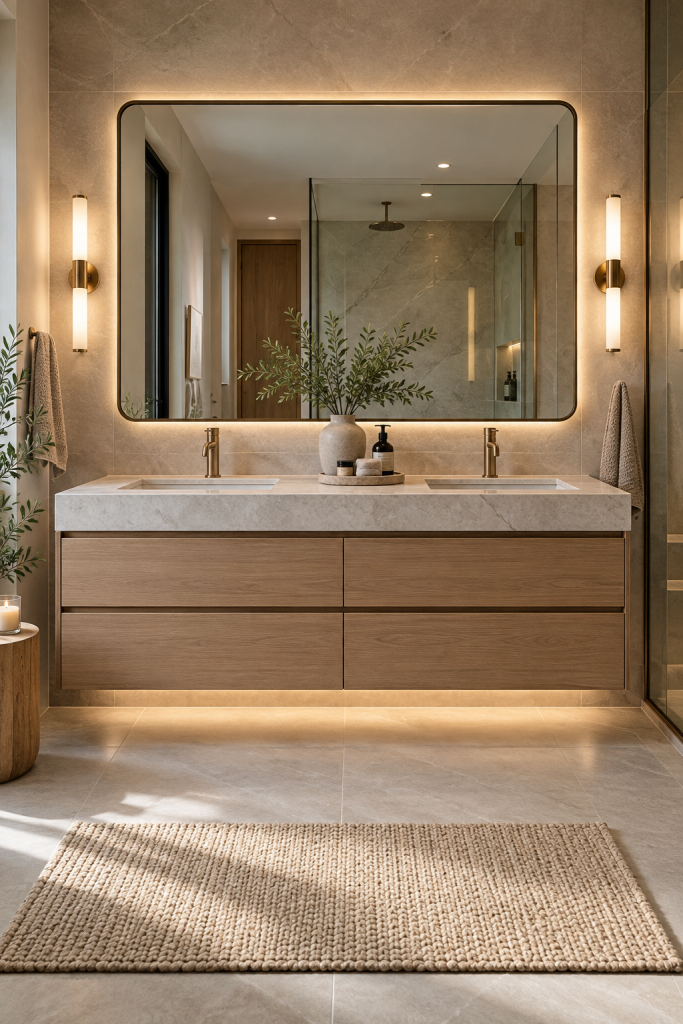
2. Light Oak Fluted Floating Vanity
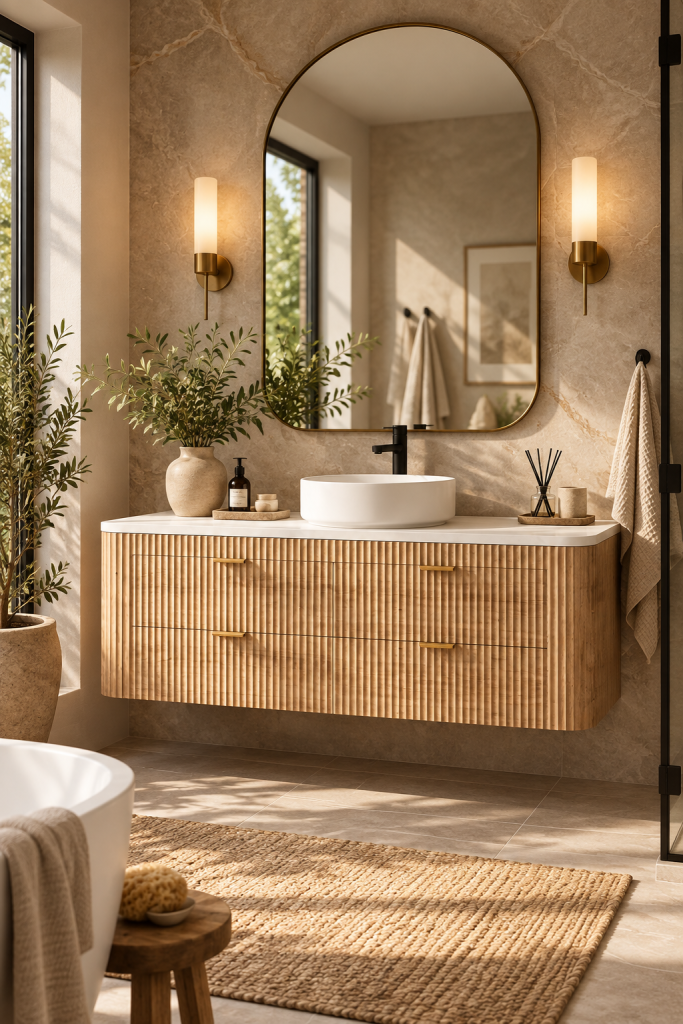
Light oak is probably one of the easiest vanity finishes to live with because it warms a bathroom without dictating the entire colour scheme. Here, the fine vertical fluting gives the cabinet a furniture-like quality, and the gently rounded corners soften what could otherwise be a very boxy shape. Add slim brass handles and a simple white basin and it feels polished without becoming overly formal.
The trick with a vanity like this is to let the wood be the warmest thing in the room. Pale stone, off-white plaster and muted brass all sit quietly around it, so the grain still gets noticed. It would look just as comfortable in a new-build bathroom as it would in an older home that needs a modern update without losing warmth.
3. Wood Floating Vanity with a Stone Top
There is something about a thick stone top over warm wood that instantly makes a vanity feel more substantial. The cabinet still floats, so you get the visual space underneath, but the stone gives it weight and permanence. It is a good balance if very minimal floating cabinets sometimes feel a little too sleek for your taste.
This look is particularly effective when the countertop has a soft vein or subtle natural movement rather than a loud pattern. Let the wood grain do some of the work, keep the mirror simple, and repeat the stone somewhere else in the bathroom if you can — perhaps in the shower niche or a small shelf. Those quiet repeats are what make a bathroom feel designed rather than simply furnished.
4. Black and Gold Floating Vanity
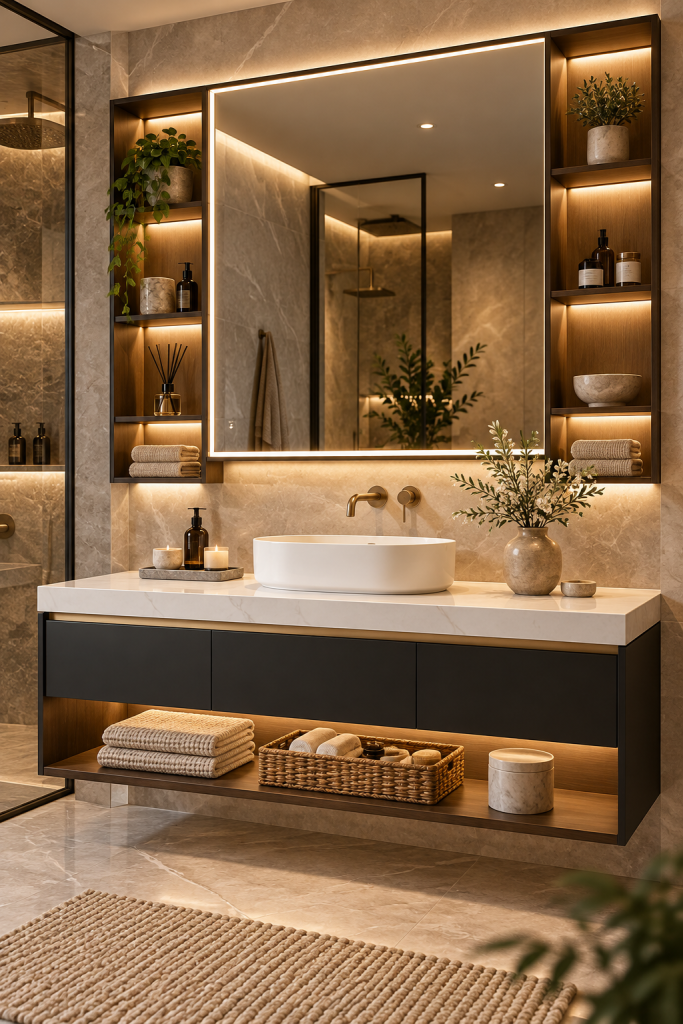
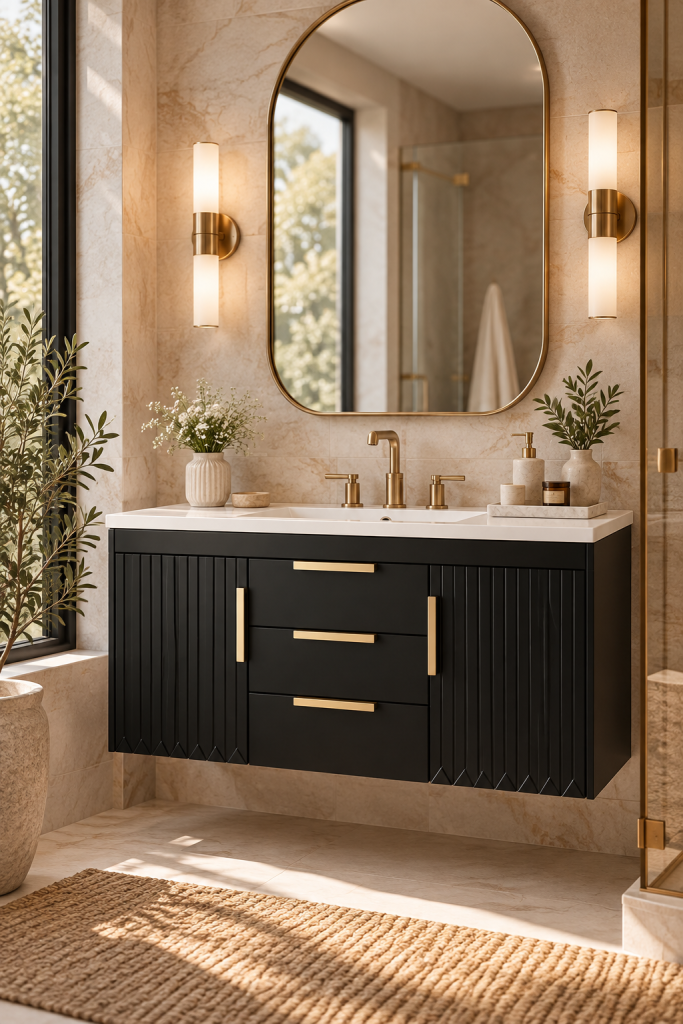
Black and brass can go wrong quickly if everything is glossy, but this version works because the finishes have texture. The fluted side panels break up the dark surface, while the gold hardware appears in small, controlled doses. It feels glamorous, but still like a bathroom someone could actually use every morning.
If you want this look to stay sophisticated rather than flashy, keep the rest of the room fairly calm. Warm cream stone, an aged-brass tap and soft lighting are enough. You do not need a matching gold soap dispenser, gold bin, gold shelves and gold everything else. A couple of repeated metal details will make the vanity feel intentional without turning the bathroom into a showroom.
5. Rustic Double-Sink Floating Vanity
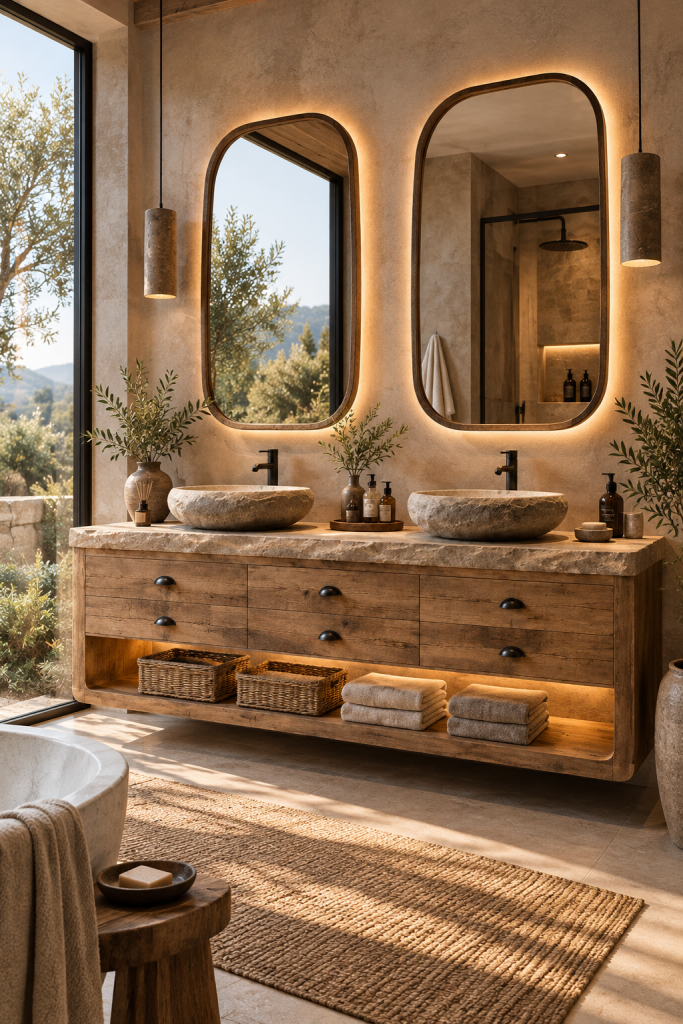
A double vanity does not have to mean a perfectly smooth slab of white cabinetry. This warmer version uses rustic timber, stone vessel basins and an open shelf underneath, which makes the whole bathroom feel more relaxed. It is the sort of vanity that looks better with baskets, folded towels and slightly imperfect ceramics rather than everything hidden away.
That open shelf is also genuinely useful. In a shared bathroom it gives you easy-access storage without forcing both people to fight over drawer space. The key is to keep the baskets and towels reasonably consistent so the shelf reads as part of the design instead of overflow storage. With natural stone and timber, a little variation actually adds character.
6. Moody Designer Floating Vanity
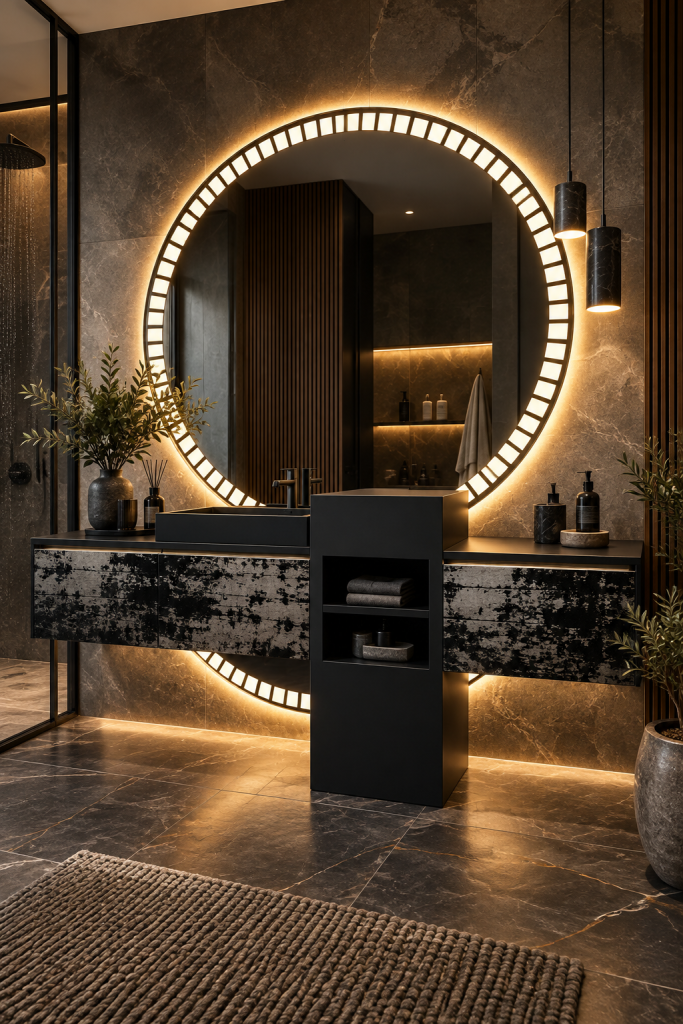
This one is for anyone bored of safe beige bathrooms. A dark floating vanity, dramatic circular mirror and sculptural basin can turn the sink area into the main event. The floating cabinet matters even more in a dark scheme because that strip of visible floor stops the whole composition feeling like one heavy block.
Lighting is what makes a bathroom like this work. Instead of relying on one harsh ceiling light, use a soft glow behind the mirror, a small pendant or wall light, and perhaps discreet lighting beneath the vanity. The result is much moodier in the evening but still practical. Dark finishes can feel wonderfully cosy when the room has enough layers of warm light.
7. Curved Walnut Floating Vanity
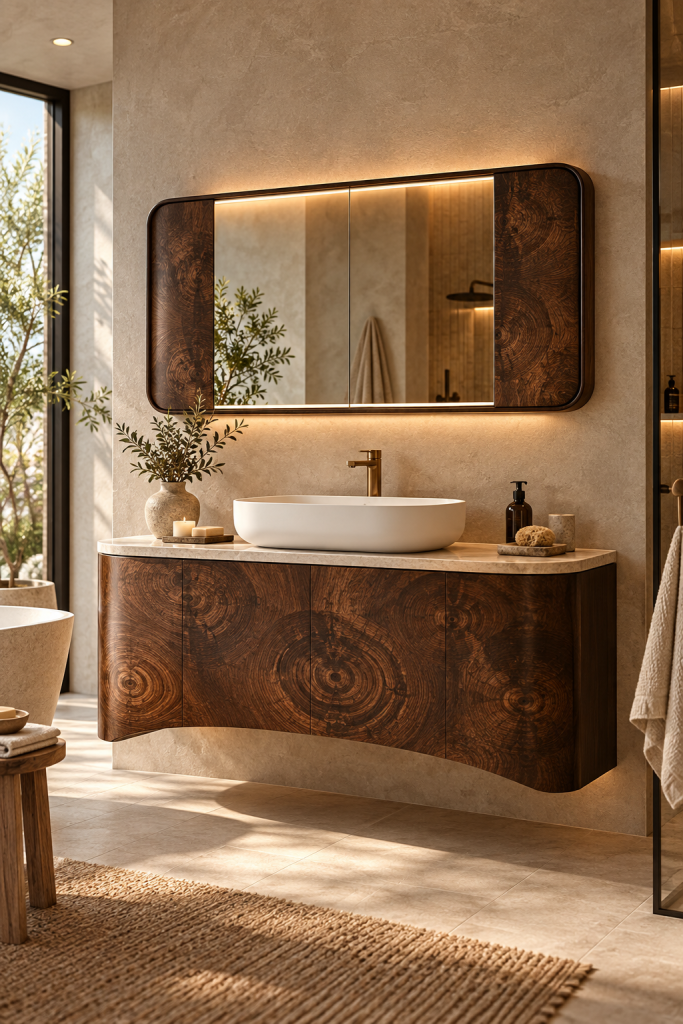
Curves instantly make bathroom furniture feel less generic. This walnut vanity has a softer, almost vintage-furniture shape, but floating it keeps the look modern. The dramatic grain adds a lot of personality, so the rest of the room can stay wonderfully simple: plaster walls, one beautiful mirror and a pale basin are enough.
It is a great reminder that modern bathrooms do not have to mean flat white drawers and sharp corners. A richer timber can make the room feel warmer and more individual, especially if the house already has wood elsewhere. If the grain is this expressive, avoid cluttering the countertop. A soap bottle, one small vase and perhaps a tray are plenty.
8. Sleek Black Vanity with Lit Open Storage
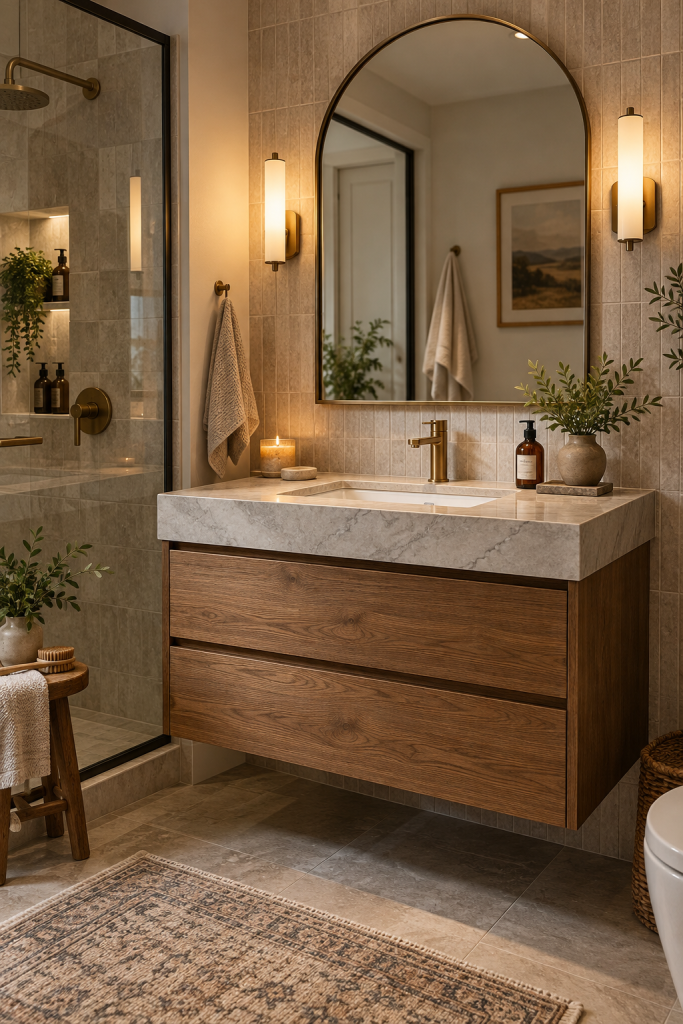
This design mixes closed storage with one open shelf, which is a clever way to keep a vanity looking styled without sacrificing practicality. Hide the everyday mess behind the dark drawer fronts, then use the open section for neatly folded towels, a basket or two, and the things you do not mind seeing.
The warm lighting beneath the cabinet is doing more than making the vanity look expensive. It visually separates the cabinet from the floor and makes the floating effect much stronger. It can also act as a gentle night light, which is surprisingly useful. Keep the LEDs warm rather than cool white; otherwise even the nicest stone can suddenly look clinical.
9. Zellige Tile Floating Vanity
Tiling the vanity itself is a much more interesting move than simply choosing another cabinet finish. Handmade-look zellige gives the front and top tiny changes in tone and reflection, so the vanity feels alive as the light moves across it. A muted olive or muddy green is especially beautiful because it adds colour without shouting.
This is not the idea for someone who wants every grout line to look machine-perfect — and that is exactly the charm. The irregular surface feels handmade and works brilliantly with plaster walls, unlacquered brass and a stone basin. If the tile is already visually busy, keep the mirror and tap shapes simple so the vanity remains the focus.
10. Terrazzo Floating Vanity
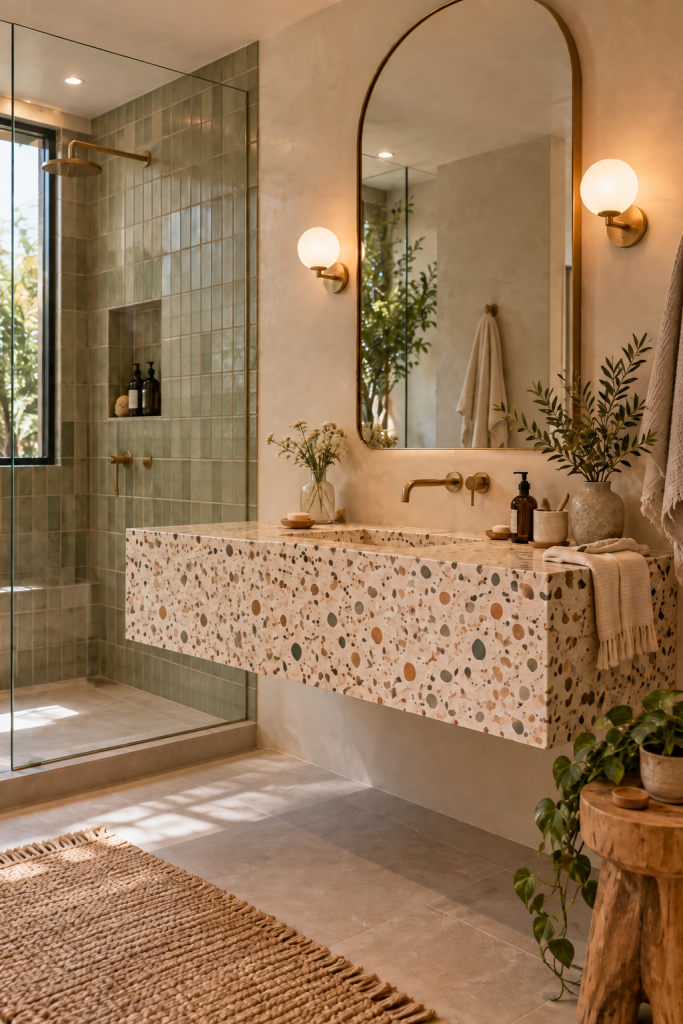
Terrazzo is one of those materials that can make a very simple shape feel completely original. Here, the vanity is basically one clean floating block, but the scattered stone chips give it colour, texture and movement. It feels playful without needing decorative hardware or complicated joinery.
A terrazzo vanity is easiest to live with when the surrounding bathroom borrows one or two colours from the chips. If there is a muted green, repeat it in shower tiles; if there are warm rust tones, bring them back through towels or timber. That stops the surface feeling random and makes the whole room hang together.
11. Curved Microcement Floating Vanity
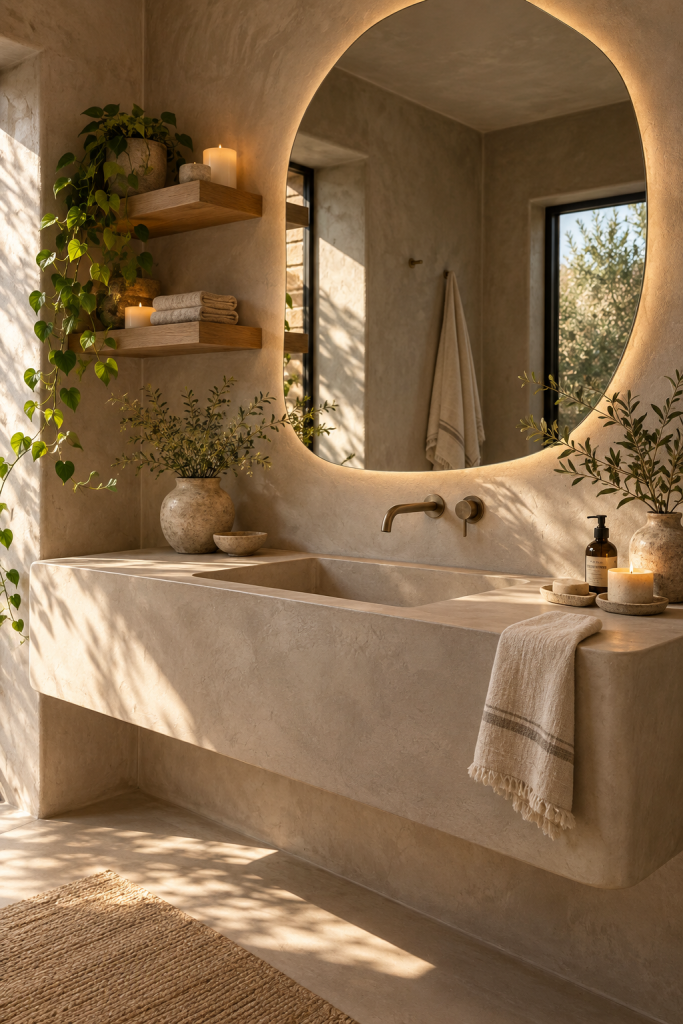
This is probably the most sculptural idea in the whole collection. Rather than looking like a cabinet fixed to the wall, the vanity appears to grow out of the bathroom itself. Microcement lets the front, countertop and basin read as one continuous shape, and the rounded corner takes away the hard edge you normally get from bathroom furniture.
The beauty is in how quiet it feels. There are no handles, no obvious joints and very little visual clutter. A warm sand or mushroom tone stops it becoming cold, while a concealed light underneath exaggerates the floating effect in the evening. It is a more bespoke route, but if you want a bathroom that feels genuinely different, this is the kind of detail people remember.
12. Double Microcement Vanity with a Timber Shelf
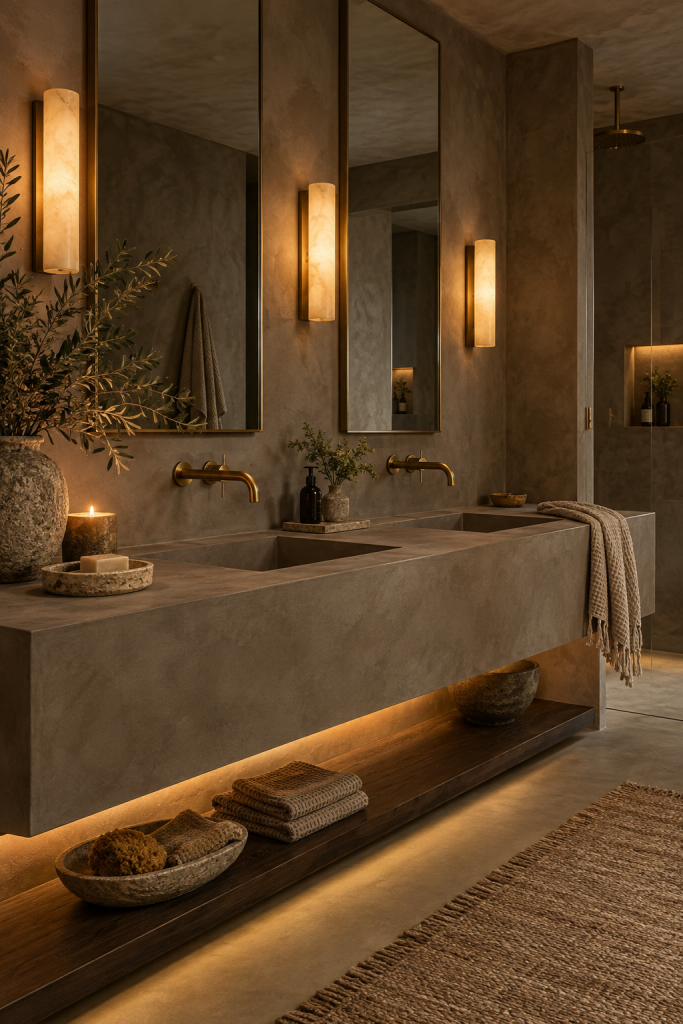
For a larger bathroom, stretching a microcement vanity almost wall to wall makes it feel architectural rather than like a piece of furniture. Two integrated sinks keep the surface clean, while the long timber shelf underneath adds just enough contrast to stop the design becoming too monolithic.
The lower shelf is where you can make the room feel human. Folded towels, a stone bowl, a basket or even a stack of magazines soften all that polished plaster. The lighting tucked between the vanity and the shelf gives everything a gentle glow and makes the entire piece appear lighter than its size suggests.
13. Travertine Trough Vanity
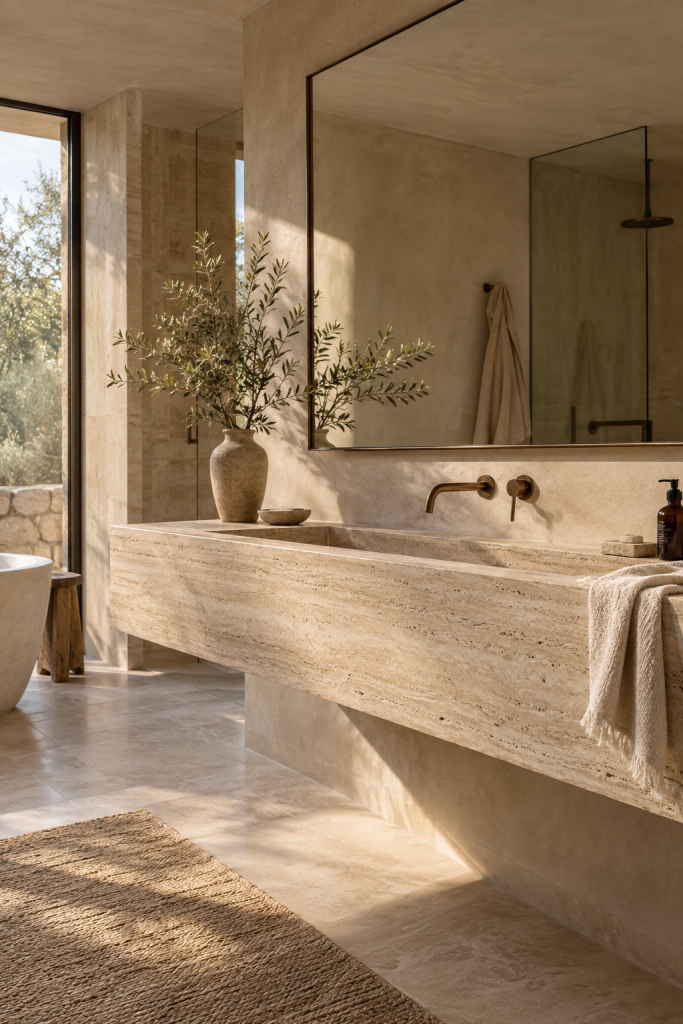
A long slab of travertine with an integrated trough sink feels luxurious in a very understated way. There are no shiny finishes or elaborate details; the stone itself does the decorating. Its pores, bands and subtle colour shifts give the vanity depth that a plain solid surface cannot really imitate.
This works beautifully in Mediterranean, organic-modern and minimalist bathrooms. Keep the tap wall-mounted so the countertop stays visually clean, and let the slab run wider than the basin for a generous hotel-like feel. Travertine does need sensible sealing and care, but visually it is difficult to beat when you want warmth without using timber.
14. Slim Marble Vanity for a Tiny Powder Room
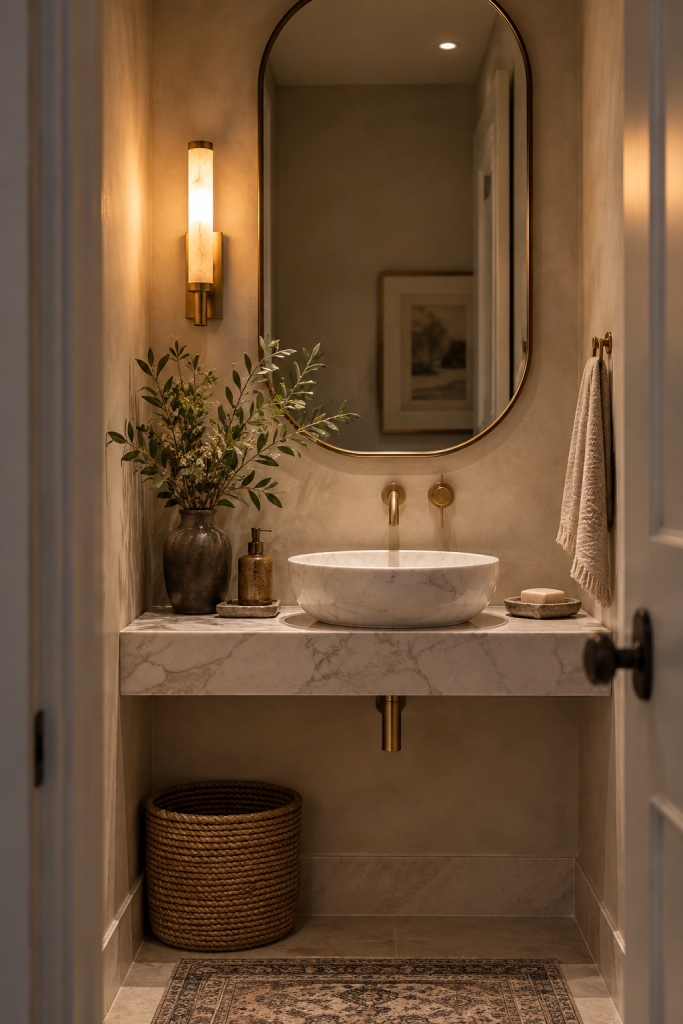
Small powder rooms are exactly where a floating vanity earns its keep. A slim marble shelf gives you just enough surface for a basin and soap without swallowing the floor area. Because the wall remains visible underneath, even a narrow room feels less boxed in.
You do not need deep storage in every bathroom. In a downstairs loo or guest powder room, the visual breathing space can be more valuable than another cabinet. A beautiful stone edge, wall-mounted tap and tall mirror make the area feel intentional rather than compromised. If storage is essential, a small basket beneath can handle spare paper without ruining the openness.
15. Earthy Mediterranean Floating Vanity
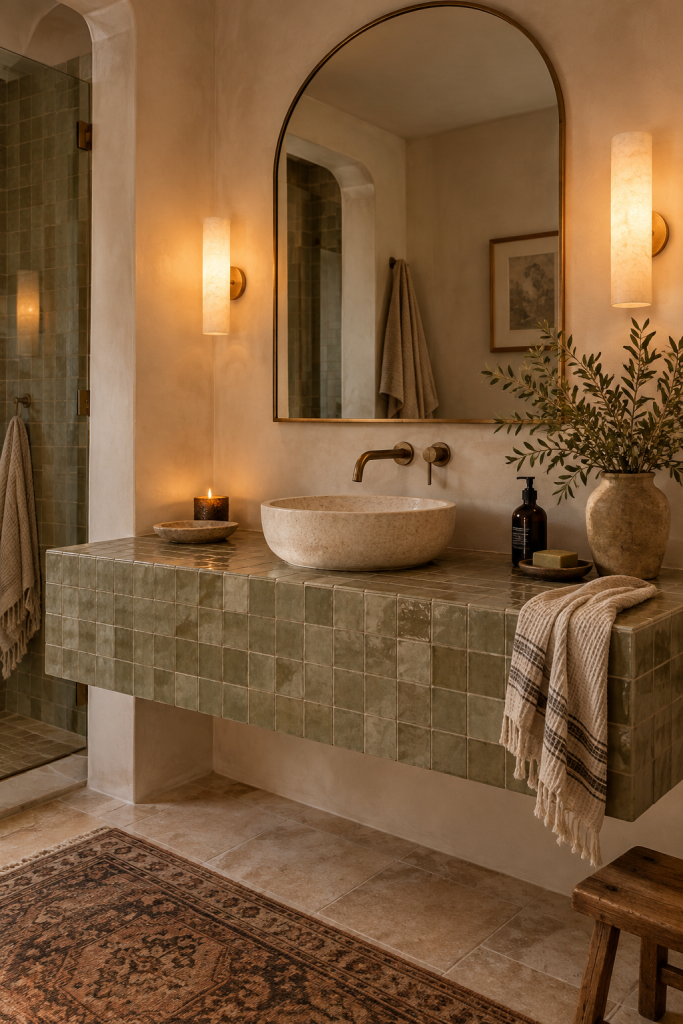
This look is less about one particular vanity material and more about atmosphere. Warm plaster, imperfect stone, aged metal and soft natural textures create the feeling of a bathroom that has evolved over time rather than arrived in one delivery. Floating the vanity keeps that rustic mood from becoming visually heavy.
The easiest way to copy the feeling is to avoid matching everything too perfectly. Let the basin be a slightly different stone from the floor. Use a timber stool that looks handmade. Choose a mirror with a little warmth in the frame. Those small inconsistencies are what make a room feel lived in and personal rather than staged.
16. Floating Vanity Inside an Arched Niche
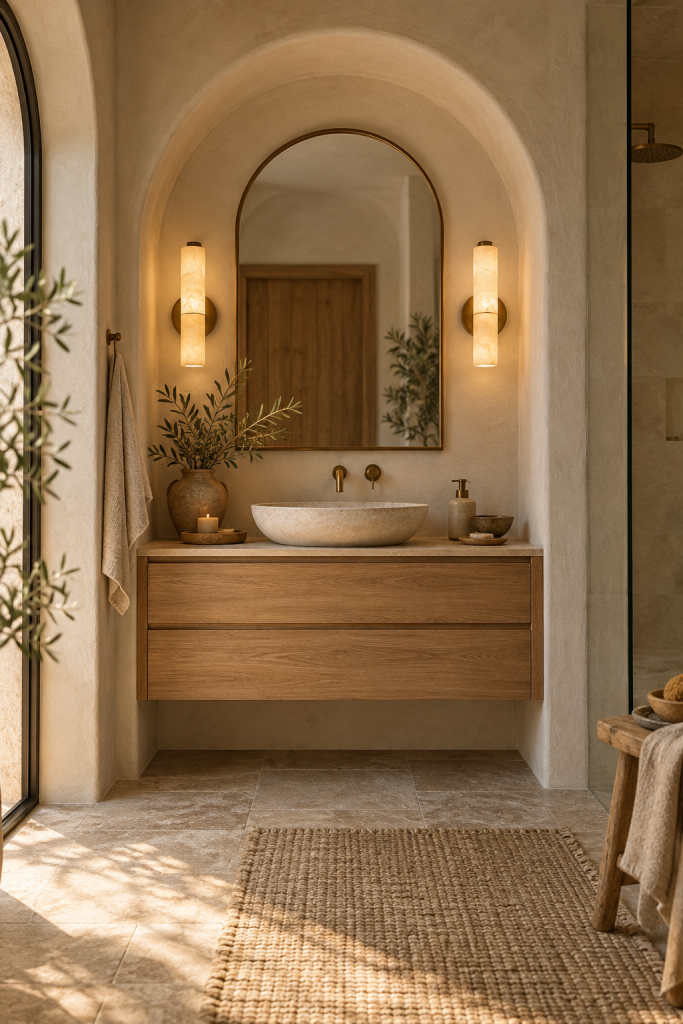
Framing a vanity inside an arch gives even a simple wood cabinet far more presence. The niche creates a natural focal point and makes the mirror, lights and vanity feel like one composition instead of four separate things attached to a wall.
It is particularly effective in bathrooms with high ceilings or a slightly awkward recess that would otherwise feel empty. The arch does not need to be ornate; a soft plaster curve is enough. Keep the vanity itself simple and let the architecture provide the character. It is one of those ideas that looks custom even when the cabinet is relatively straightforward.
17. Mediterranean Plaster Floating Vanity
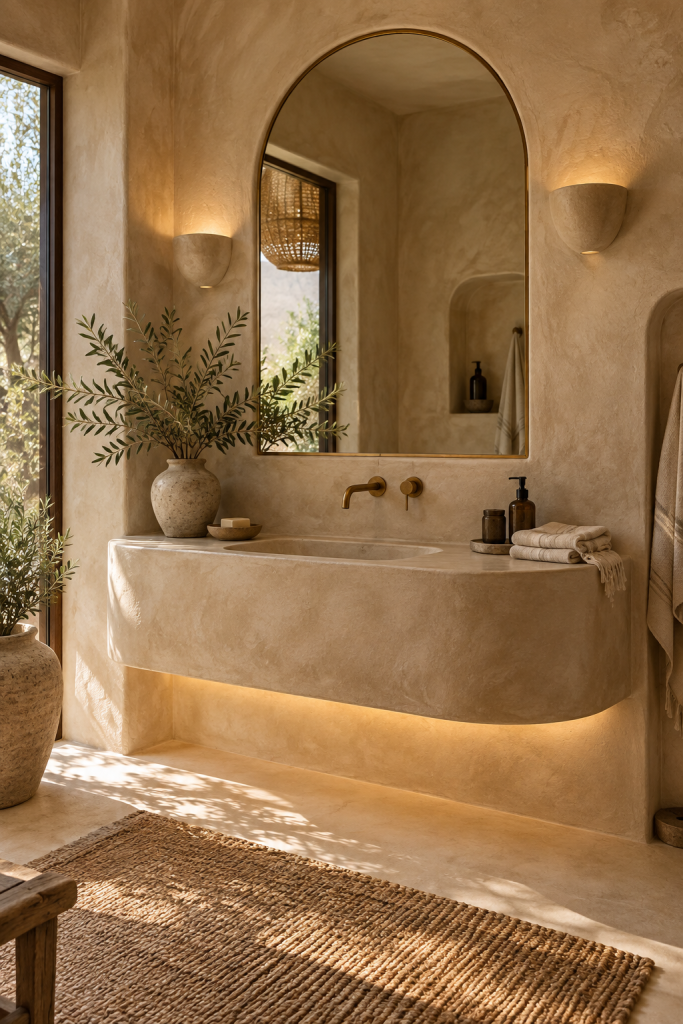
A plastered floating vanity is a beautiful halfway point between cabinetry and architecture. It feels solid and permanent, but the open space beneath prevents it from becoming bulky. When the same warm plaster continues onto the walls, the whole sink area blends into the room rather than standing apart from it.
This is a great choice if you love quiet, textural interiors where materials matter more than decoration. Add a wall-mounted brass tap, an arched mirror and a few tactile objects — a clay vase, linen towel or stone soap dish — and leave the rest alone. The calmness is the feature.
How to Choose a Floating Vanity That You’ll Still Like in Five Years
Start with the bathroom rather than the vanity. A dramatic black cabinet can look incredible in a bright room with pale stone, but it may overwhelm a tiny bathroom with little natural light. Likewise, an ultra-pale oak vanity can disappear against cream walls unless there is enough texture or contrast around it.
Storage is the other big reality check. Open shelves photograph beautifully, but they only work if you are happy seeing what is on them. If your bathroom needs to hide hair tools, cleaning products, spare toiletries and a small pharmacy, drawers are usually the better choice. You can always create the styled look with one tray on the countertop instead of sacrificing useful storage.
And finally, do not underestimate lighting. A floating vanity creates the perfect opportunity for a soft strip of light underneath, but it should be subtle. The goal is a gentle glow, not a bright line that makes the cabinet look like it is hovering in a nightclub. Warm lighting around 2700K–3000K usually feels much more comfortable in a bathroom than a cold blue-white strip.
Which Style Feels Most Timeless?
If you want something safe but not boring, warm wood with a pale stone top is difficult to regret. If you want more personality, fluted fronts, travertine and softly curved plaster all add character without relying on a passing colour trend. Microcement and tiled vanities are more of a commitment, but they can make the room feel genuinely bespoke.
The best vanity is not necessarily the most dramatic one. It is the one that makes the bathroom work better and gives you a small moment of pleasure every time you walk in. In a room you use every single day, that counts for quite a lot.
