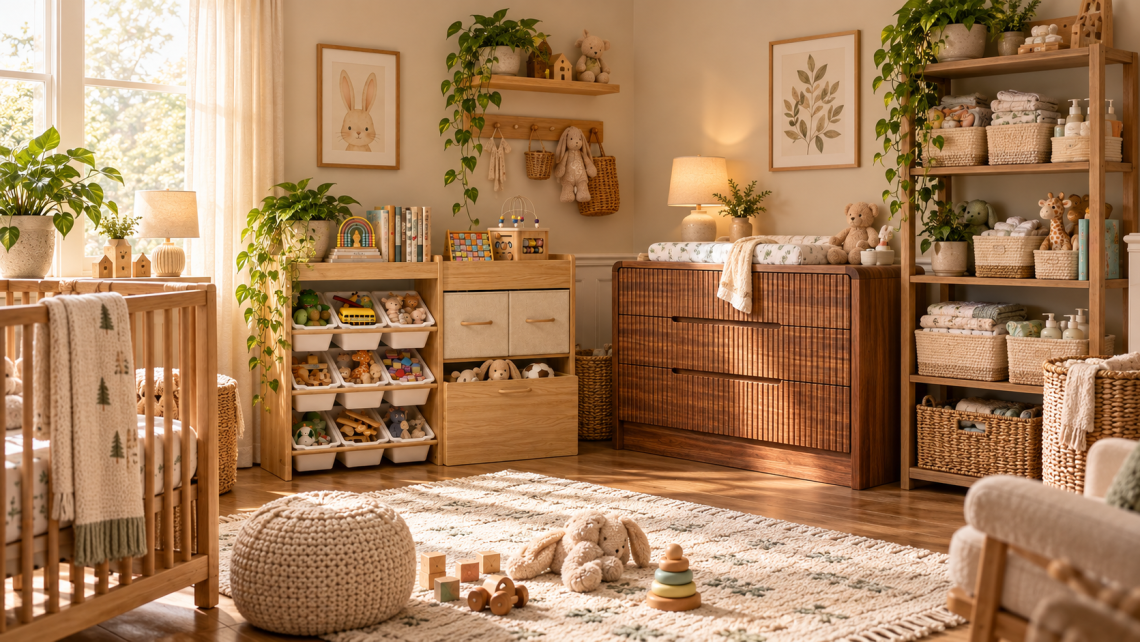
A well-organized nursery does not need to look like a showroom or rely on dozens of matching containers. The most useful setups simply put diapers, clothes, feeding gear, toys and everyday baby essentials where you naturally reach for them.
These 17 nursery organization ideas focus on practical storage that works in real homes, from toy organizers and closet dividers to under-crib baskets, wall storage and simple ways to keep the changing area under control.
If you are wondering how to organize a nursery without making the room feel crowded, start with the routines that happen every day. Give each routine a clear storage zone, keep frequently used items easy to reach and move backups out of the main working areas.
The interior images in this post are AI-generated styling concepts for inspiration. Product-linked concepts are not product photographs, and exact colours, finishes, proportions and details may differ from the linked items.
1. Create a Low Toy Station Kids Can Grow Into
As an Amazon Associate I earn from qualifying purchases.
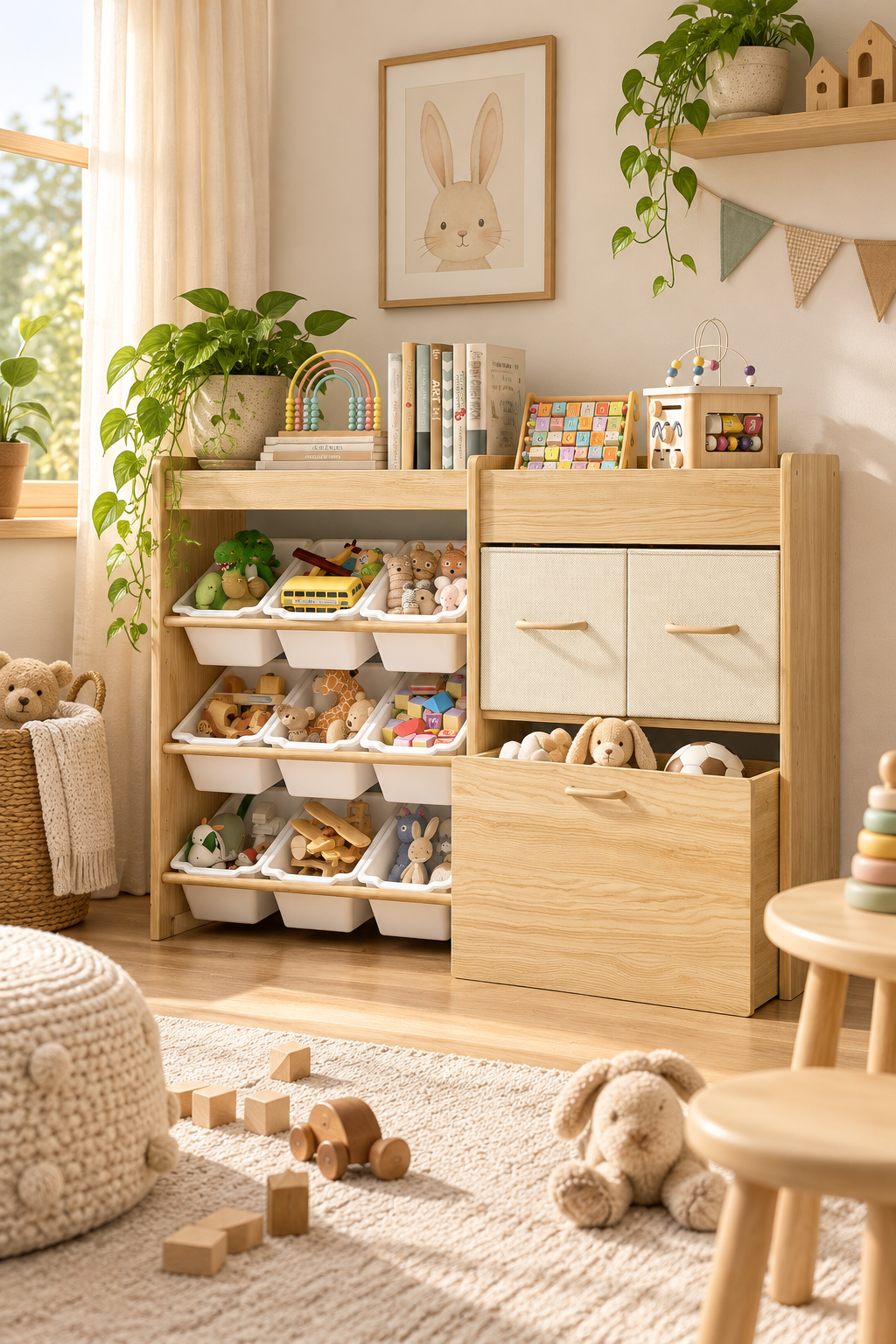
A low toy station is one of the most useful nursery organization ideas because it gives frequently used toys a home without hiding everything behind doors. The shallow bins make it easy to separate soft toys, blocks, books and small play pieces while the closed drawers handle the messier extras.
Keeping storage low also makes the setup useful beyond the baby stage. As your child grows, they can see what is available, choose a toy without emptying an entire cupboard and start helping with simple tidy-up routines.
Place the organizer against a wall with enough open floor space in front of it to play. A few books, a plant or simple artwork above can make the storage feel like part of the room rather than a purely practical unit.
2. Use the Back of the Door for Everyday Essentials
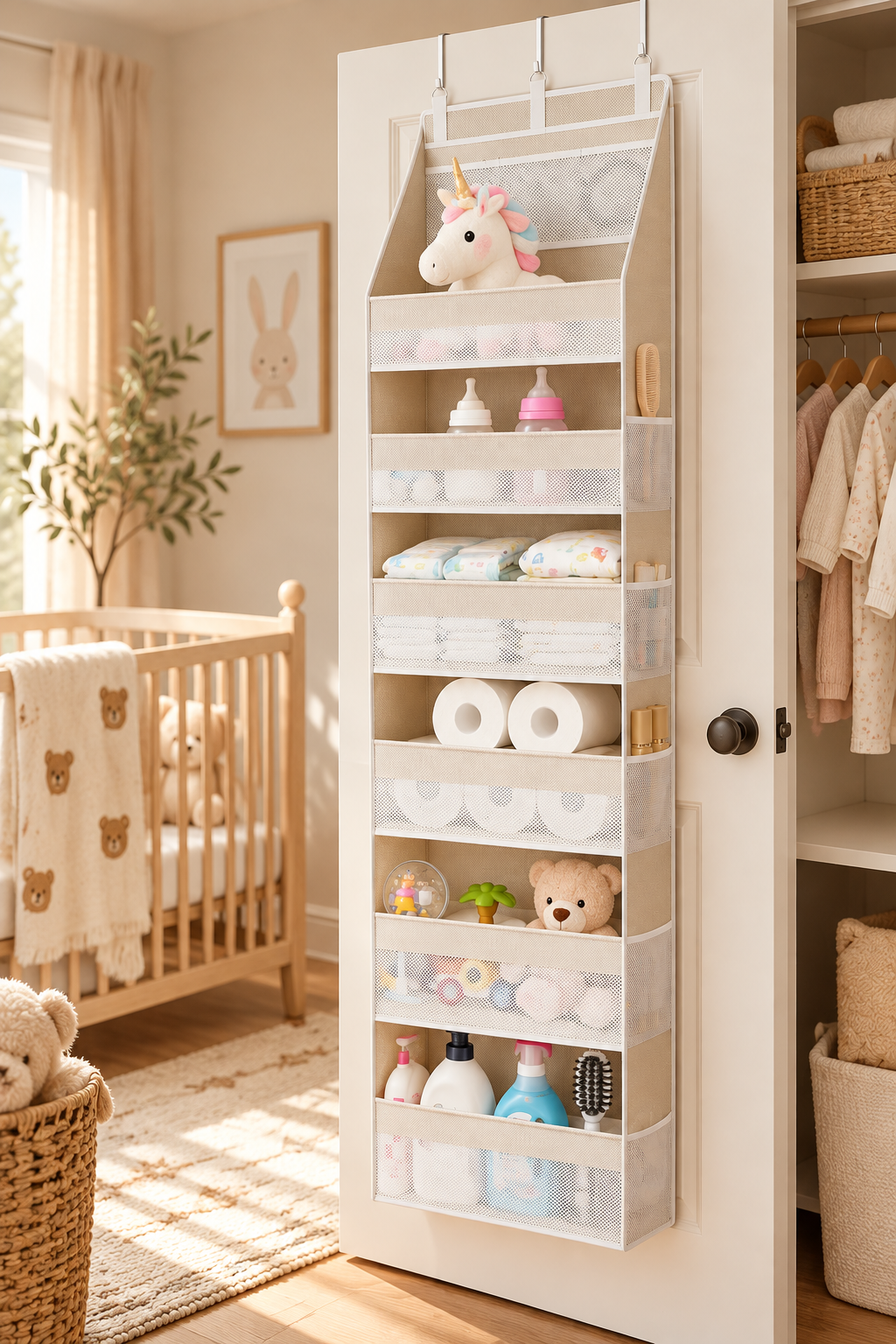
The back of a nursery door is valuable storage space that often goes completely unused. A tall over-the-door organizer can hold diapers, wipes, spare creams, toiletries, muslins and small toys while taking up almost no floor space.
This works especially well in a small nursery where a second cabinet would make the room feel crowded. The open pockets also make it easy to see when a supply is running low instead of discovering an empty packet halfway through a change.
Keep the most frequently used items around waist height and reserve the highest pockets for backups. That simple arrangement makes the organizer faster to use and keeps less suitable items away from little hands.
3. Give Bottles and Feeding Gear Their Own Station
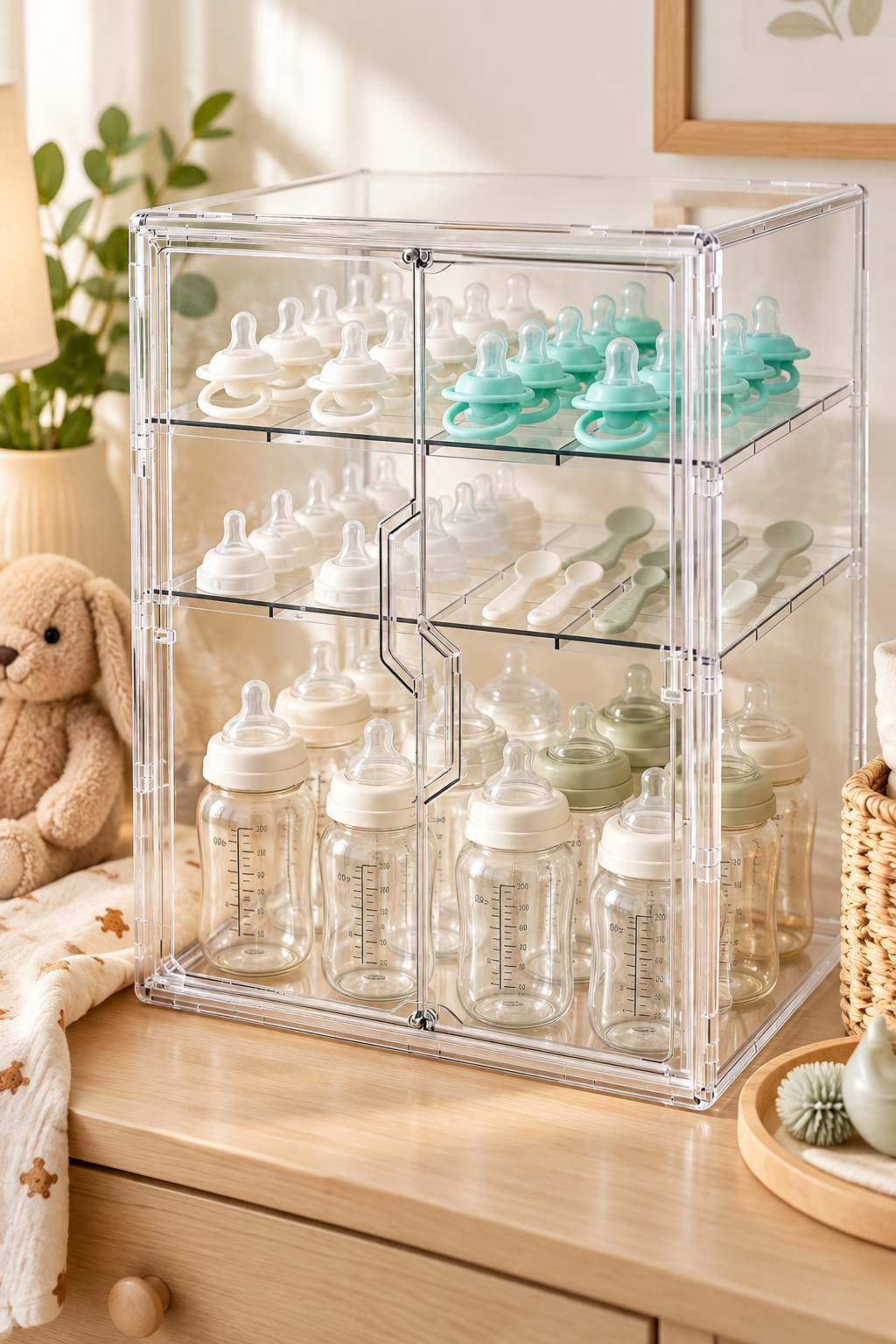
Bottles, nipples, pacifiers and small feeding parts can quickly take over a dresser if they do not have a dedicated place. A clear compartment organizer keeps all of those tiny pieces together while still letting you see exactly what is clean and ready to use.
A closed clear unit is particularly handy because it protects feeding pieces from dust without forcing you to rummage through opaque boxes. Group similar items by shelf so bottles stay together, pacifiers have their own section and smaller accessories do not get lost.
Set the station close to wherever you prepare feeds or pack the changing bag. Good nursery organization is often less about owning more storage and more about putting the right storage exactly where the routine happens.
4. Keep Changing Essentials Together in a Portable Caddy
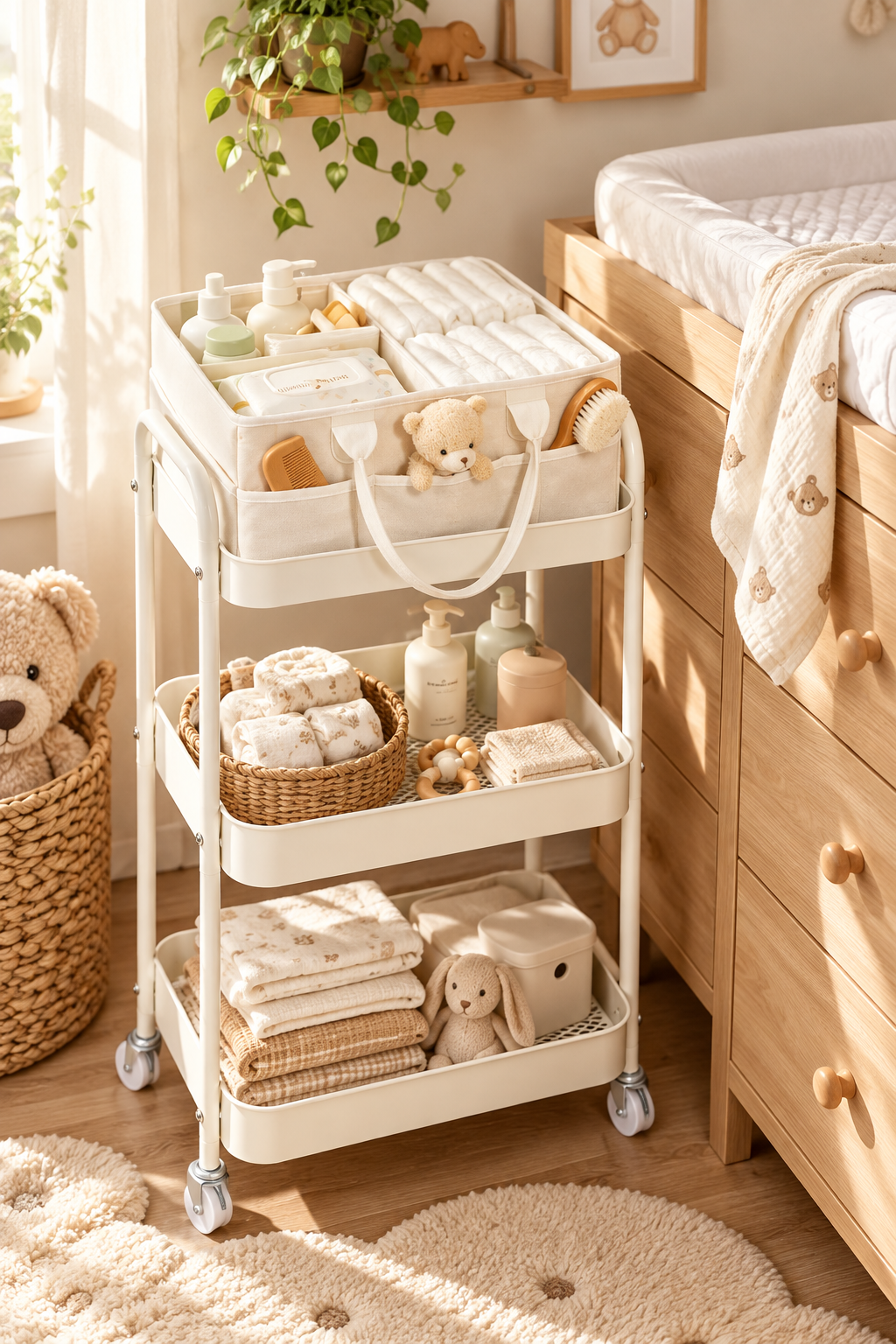
A portable diaper caddy keeps the core changing supplies together so you are not opening three drawers every time you need a diaper. Use the sections for diapers, wipes, cream, grooming tools and a couple of clean cloths.
The handles make this especially useful if changes sometimes happen in another room. Instead of carrying individual products around the house, the whole setup can move with you and then return to the changing area when you are finished.
Try not to overfill it. Keeping only the current day’s essentials in the caddy and storing backups elsewhere makes it easier to see what you have and keeps the changing surface feeling calm.
5. Organize Baby Clothes by Size Before You Need Them
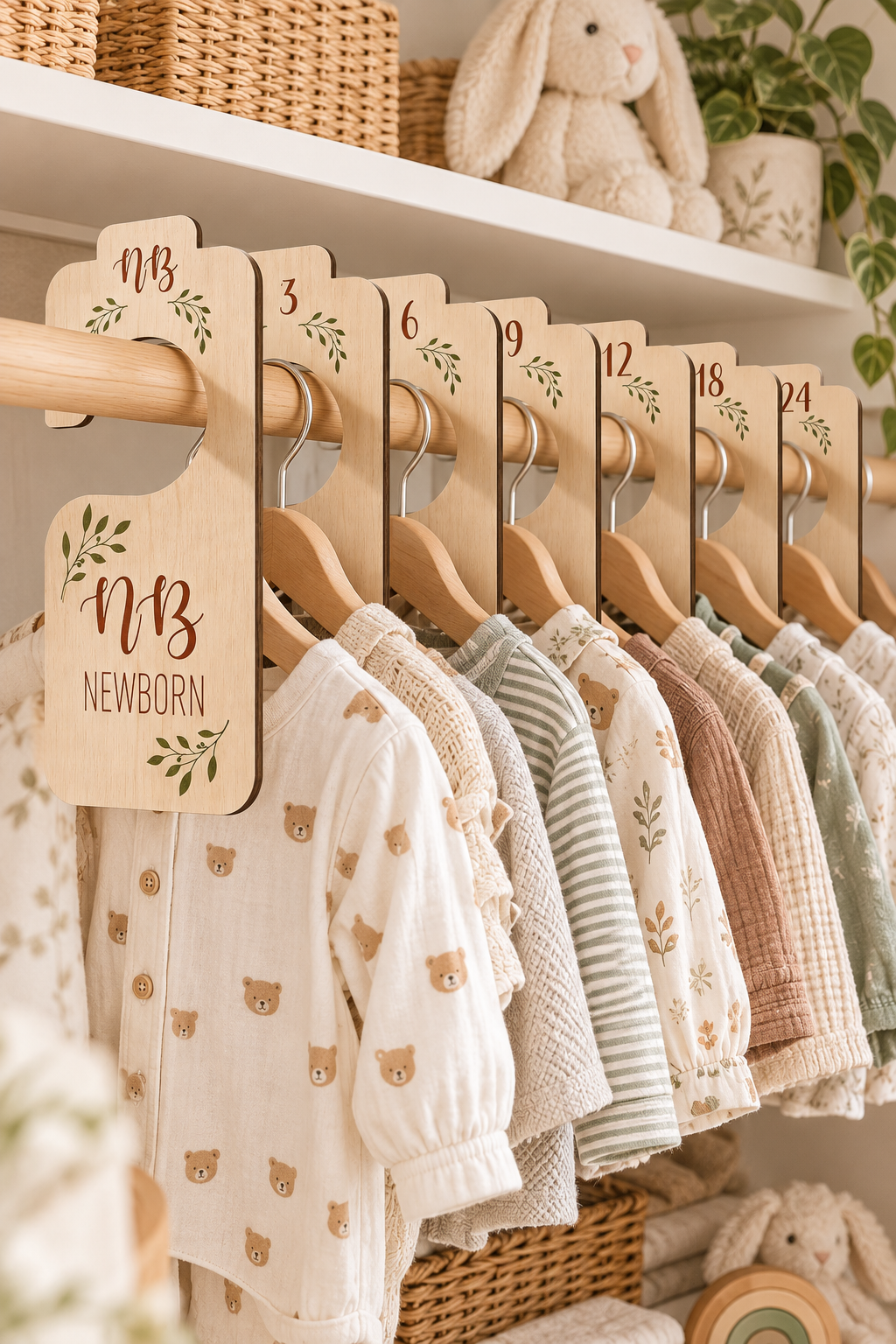
Baby clothes can look deceptively organized on a rail until several sizes get mixed together. Closet dividers solve that problem by creating clear sections for newborn, 0–3 months, 3–6 months and the sizes that follow.
This also makes it much easier to notice clothes your baby is about to grow into. Instead of finding an unworn outfit months too late, you can simply move along the rail as each size becomes current.
Keep a basket nearby for anything that has already been outgrown. That gives the wardrobe a simple flow: future sizes stay separated, current clothes remain easy to reach and too-small pieces leave the rail quickly.
6. Turn Stuffed Animals Into Vertical Storage
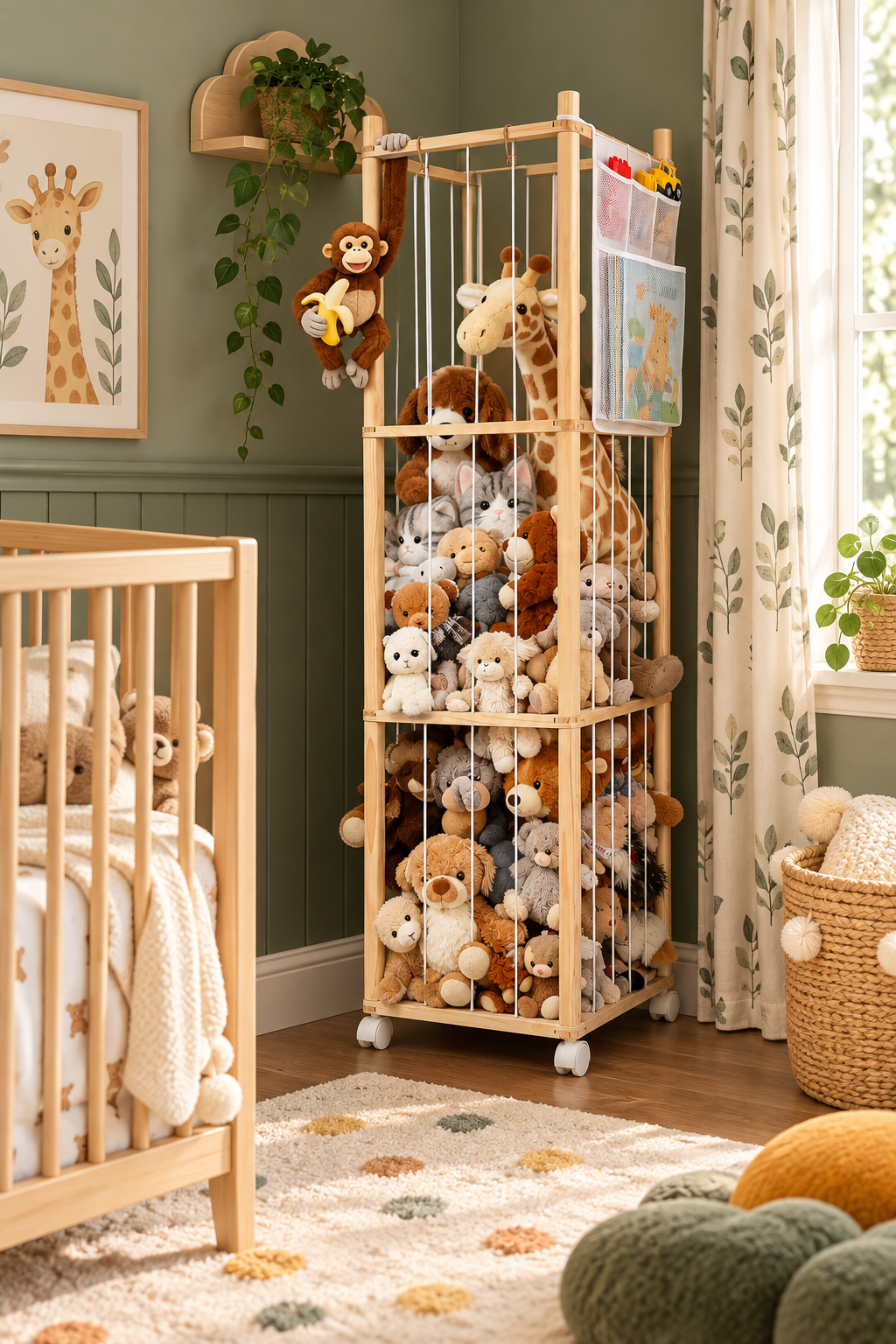
Stuffed animals are awkward to organize because they are bulky, irregular and somehow multiply very quickly. A tall vertical plush organizer uses height instead of floor area and turns the collection into part of the nursery display.
Because the toys remain visible, favourites are easier to find without tipping a whole basket onto the floor. A narrow tower also fits into corners that are too small for a normal chest or cabinet.
Keep the most-loved soft toys in the easiest-to-reach section and use the higher areas for less frequently used ones. The nursery stays tidier while the display still feels playful rather than overly controlled.
7. Keep Backup Supplies Up High and Off the Dresser

Changing tables work much better when the actual surface stays clear. A wall-mounted organizer above the changing area can hold backup diapers, wipes, lotions and folded cloths without using any of the working space below.
Vertical nursery storage is particularly useful in compact rooms because it adds capacity without another piece of furniture. Open compartments also make it easy to group supplies so you can spot what needs restocking at a glance.
Mount anything heavy securely and keep products you do not want a child reaching well above grabbing height. The goal is convenient adult access without turning the changing area into a cluttered shelf.
8. Give Hair Bows and Headbands Their Own Display
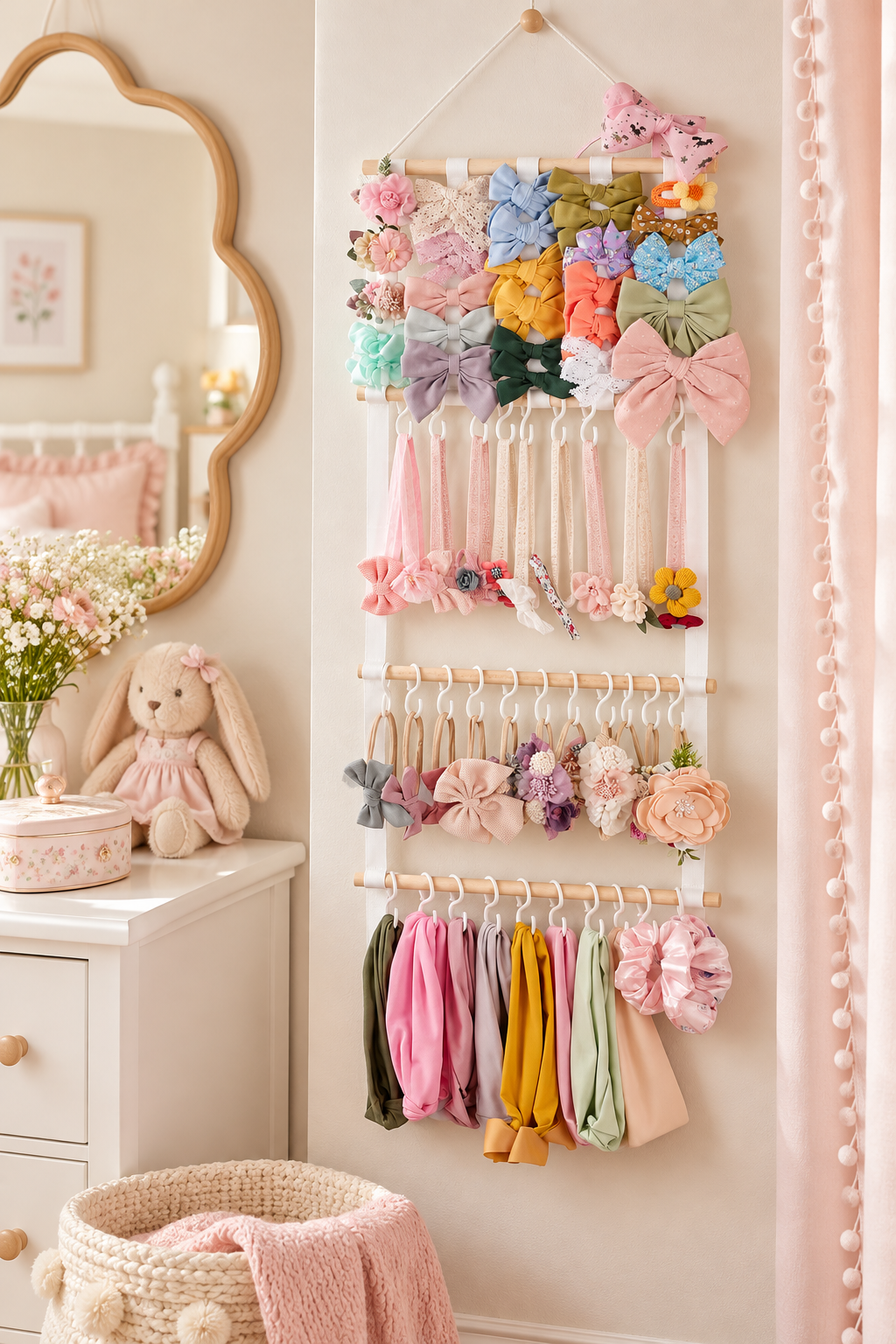
Hair accessories are tiny, easy to lose and surprisingly good at filling an entire drawer. A hanging organizer gives bows, clips and headbands individual places while turning them into a decorative feature on the wall.
Displaying them also makes getting dressed quicker because you can see the colours and sizes instead of digging through a box. It is a good example of nursery storage that can be both practical and pretty.
Hang the organizer beside the wardrobe or dresser so it sits naturally within the getting-dressed routine. Keeping accessories close to the clothes they are worn with is a simple way to make the room easier to use.
9. Put a Laundry Hamper Exactly Where Clothes Come Off
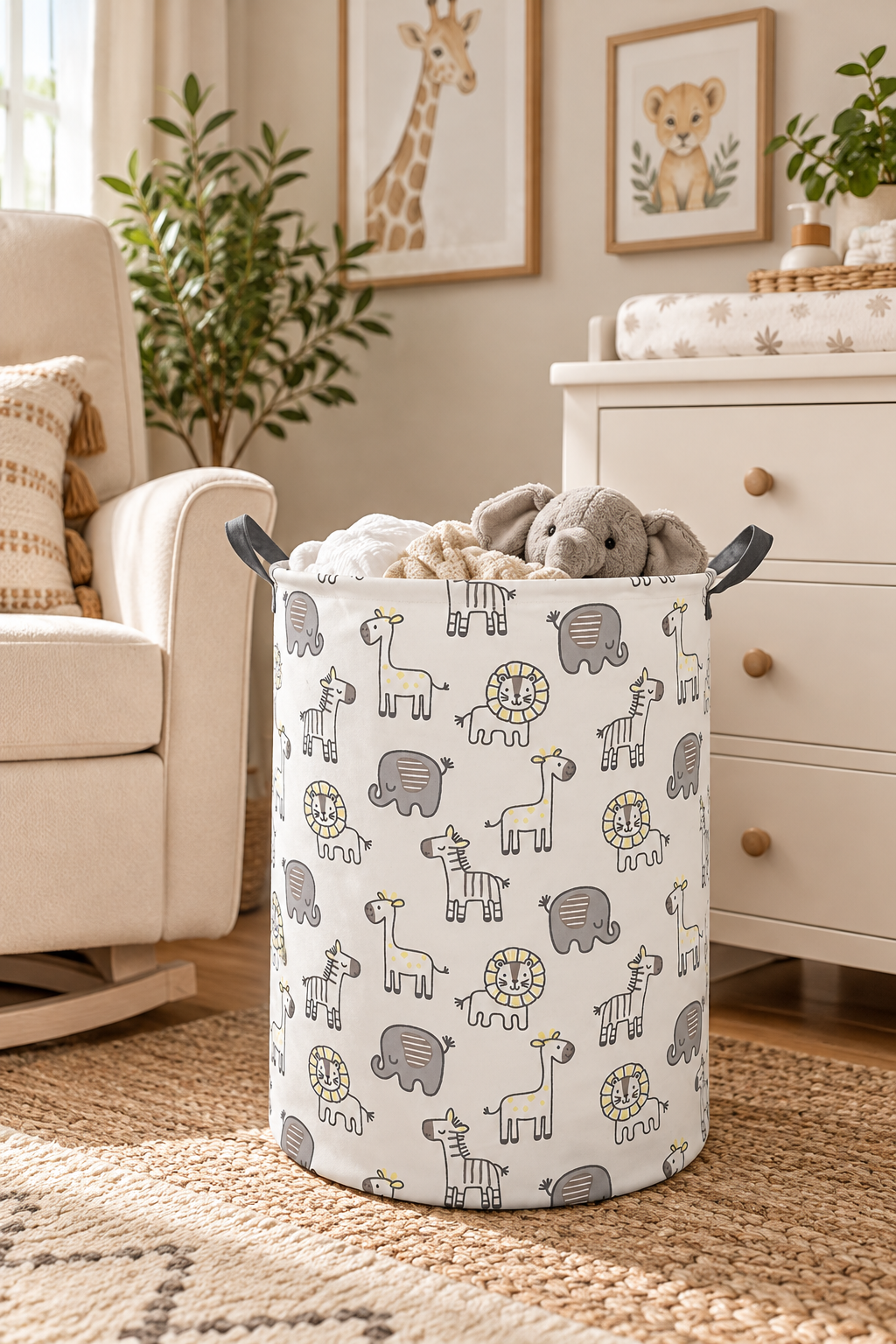
A nursery hamper works best when it sits where clothes are actually removed rather than wherever there happens to be an empty corner. Beside the changing unit or wardrobe is usually the most practical position.
A lightweight fabric basket is easy to move on laundry day and soft enough not to make a small nursery feel heavy. A simple animal print can also make a practical item feel more at home in a baby’s room.
Use the hamper for dirty laundry only rather than letting it become another general storage basket. Giving each container one clear job is one of the easiest nursery organizing tips to maintain long term.
10. Choose a Dresser That Does Most of the Storage Work
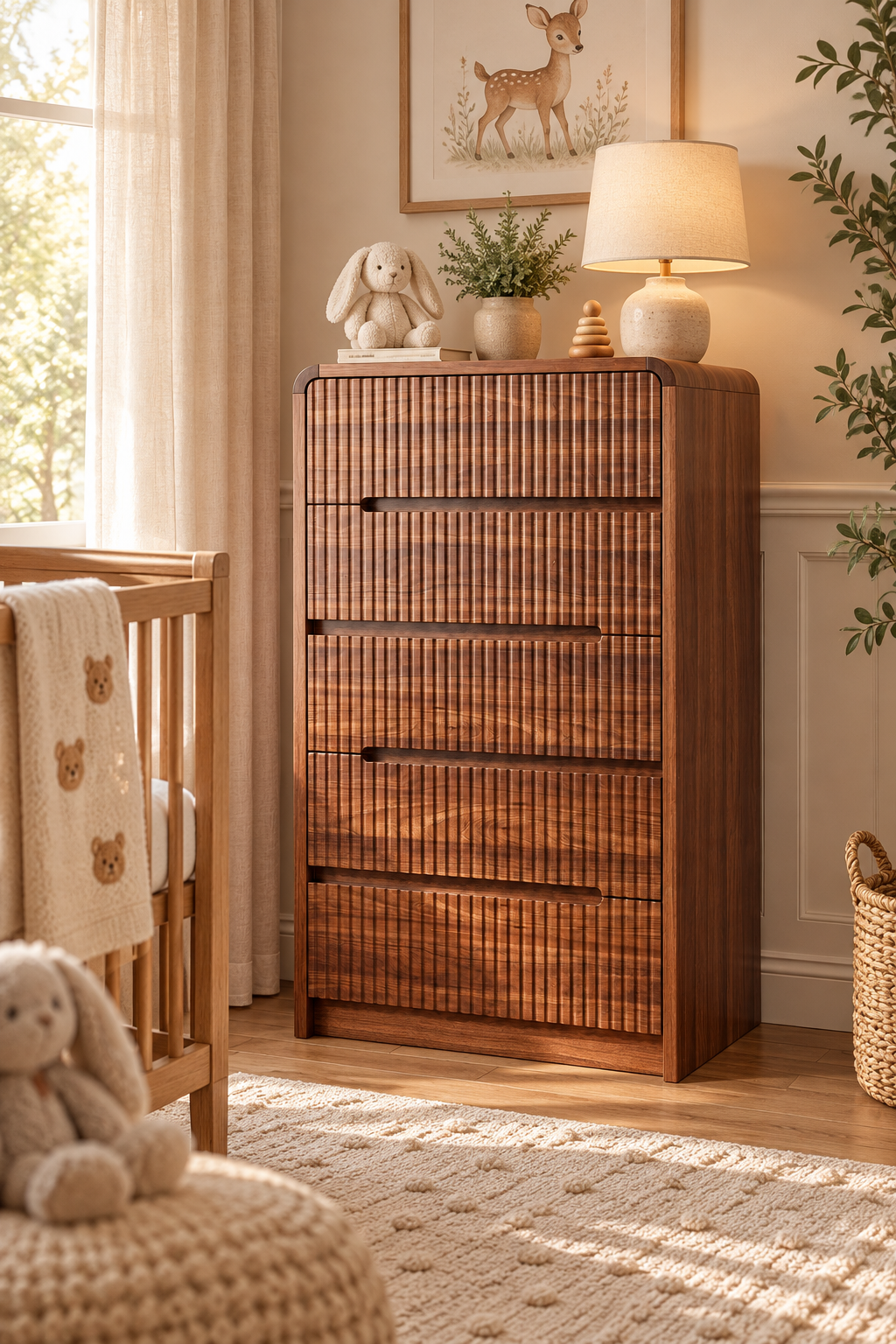
A tall five-drawer dresser can handle a huge amount of nursery storage without needing a wall of separate cabinets. Clothes, blankets, diapers and backup supplies can all be grouped by drawer, leaving the rest of the room much simpler.
The fluted walnut finish also proves that nursery furniture does not have to look temporary. A more grown-up dresser can stay useful long after the changing stage is finished and work in a child’s room for years.
Keep the top lightly styled and resist the temptation to store everything there. Closed drawers are doing the hard work, so the visible surface can stay calm with just a lamp, a small basket and one or two decorative pieces.
11. Use Slim Matching Hangers to Maximize Closet Space
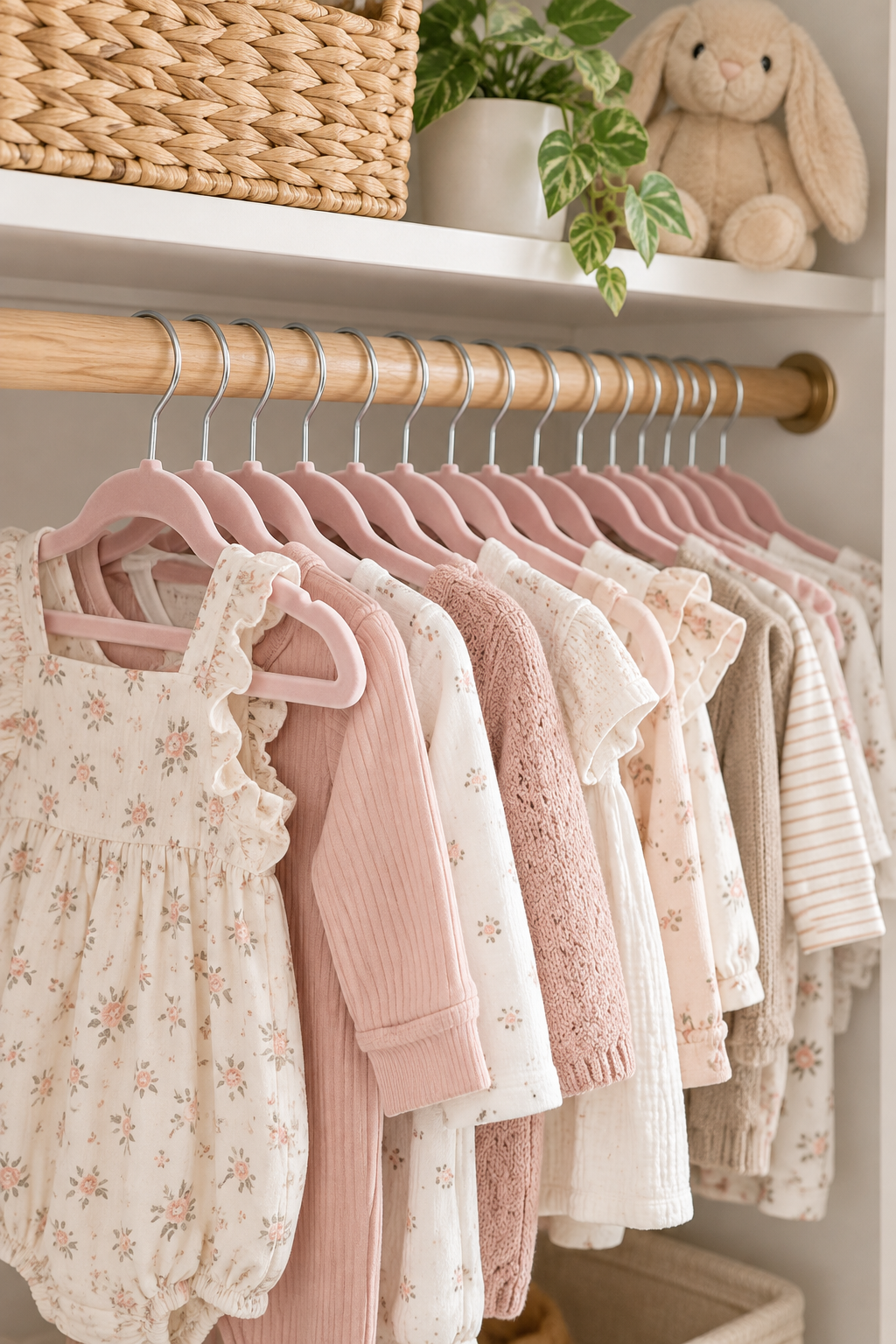
Baby clothes are small, which means bulky adult hangers waste a surprising amount of wardrobe space. Slim velvet baby hangers keep clothing from slipping while allowing far more pieces to fit comfortably along one rail.
Using one hanger style also removes a lot of visual noise from an open or frequently used closet. The clothes become the focus and it is easier to slide pieces along the rail without mismatched hangers catching on each other.
Leave a little breathing room rather than packing the rail completely full. The aim is to gain useful capacity while still being able to see every outfit and remove it without disturbing the whole wardrobe.
12. Divide Dresser Drawers Into Small, Useful Zones

Large dresser drawers are rarely designed around tiny baby clothes. Fabric organizer boxes turn one big drawer into smaller sections for bodysuits, socks, bibs, hats, diapers and folded sleepsuits.
This works particularly well with the file-folding method because clothes remain visible from above instead of being stacked on top of one another. You can find a clean item quickly without undoing the rest of the drawer.
Make each section broad enough to change as your baby grows. Flexible fabric boxes are useful because they can move between drawers and be reassigned when the mix of clothes and supplies changes.
13. Use the Space Under the Crib for Bulky Extras
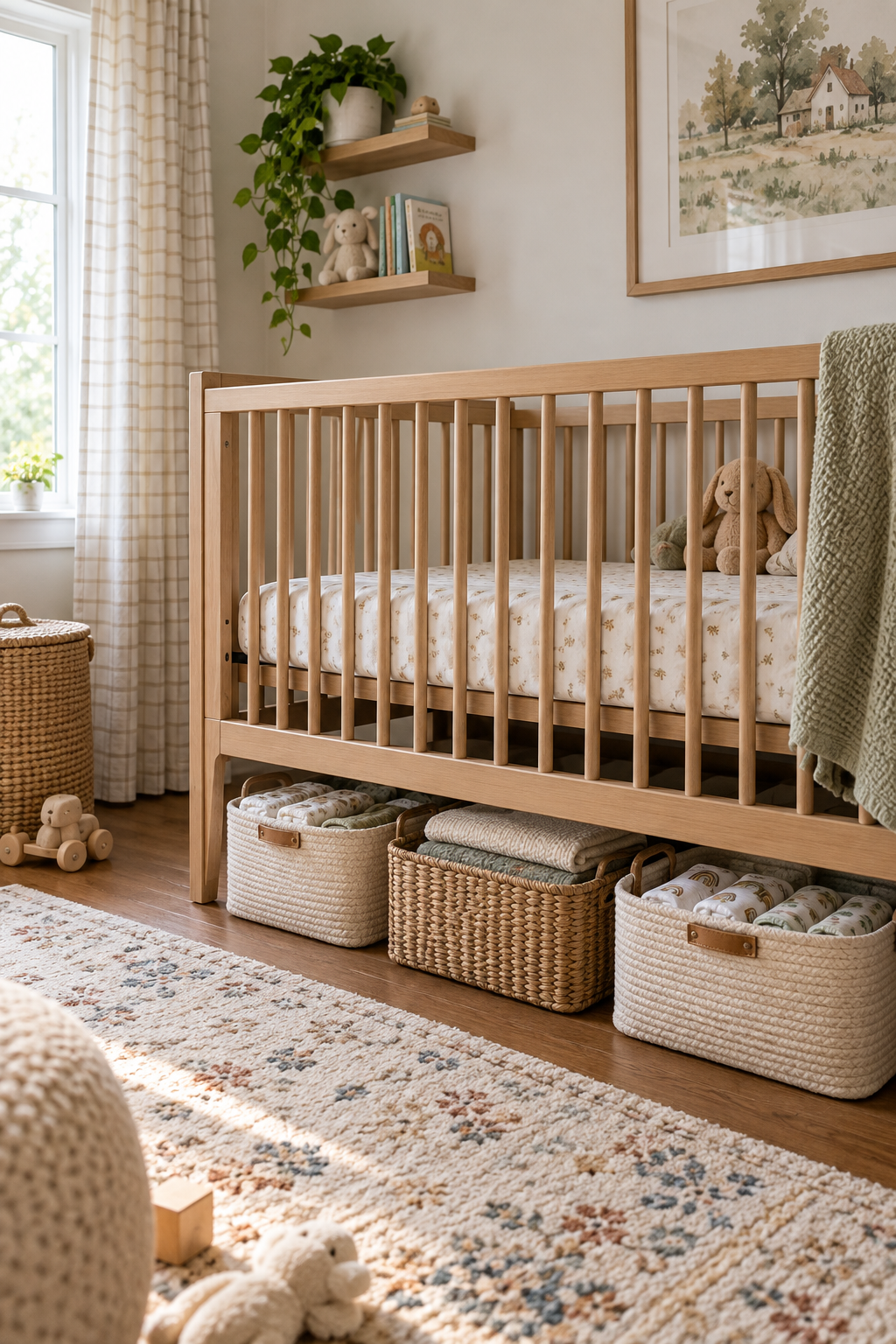
The area under a raised crib is ideal for things that take up lots of room but are not needed every hour. Shallow baskets can hold spare sheets, blankets, sleep sacks and clothes in the next size without adding another cabinet.
Matching baskets keep the storage looking intentional even when it is visible from across the room. Soft-sided or woven options are also easier to pull out on a rug than heavy wooden drawers.
Keep everyday changing supplies elsewhere and use this lower zone for backups. That prevents you from constantly crouching down while still making good use of an otherwise wasted strip of floor space.
14. Create a Front-Facing Book Wall
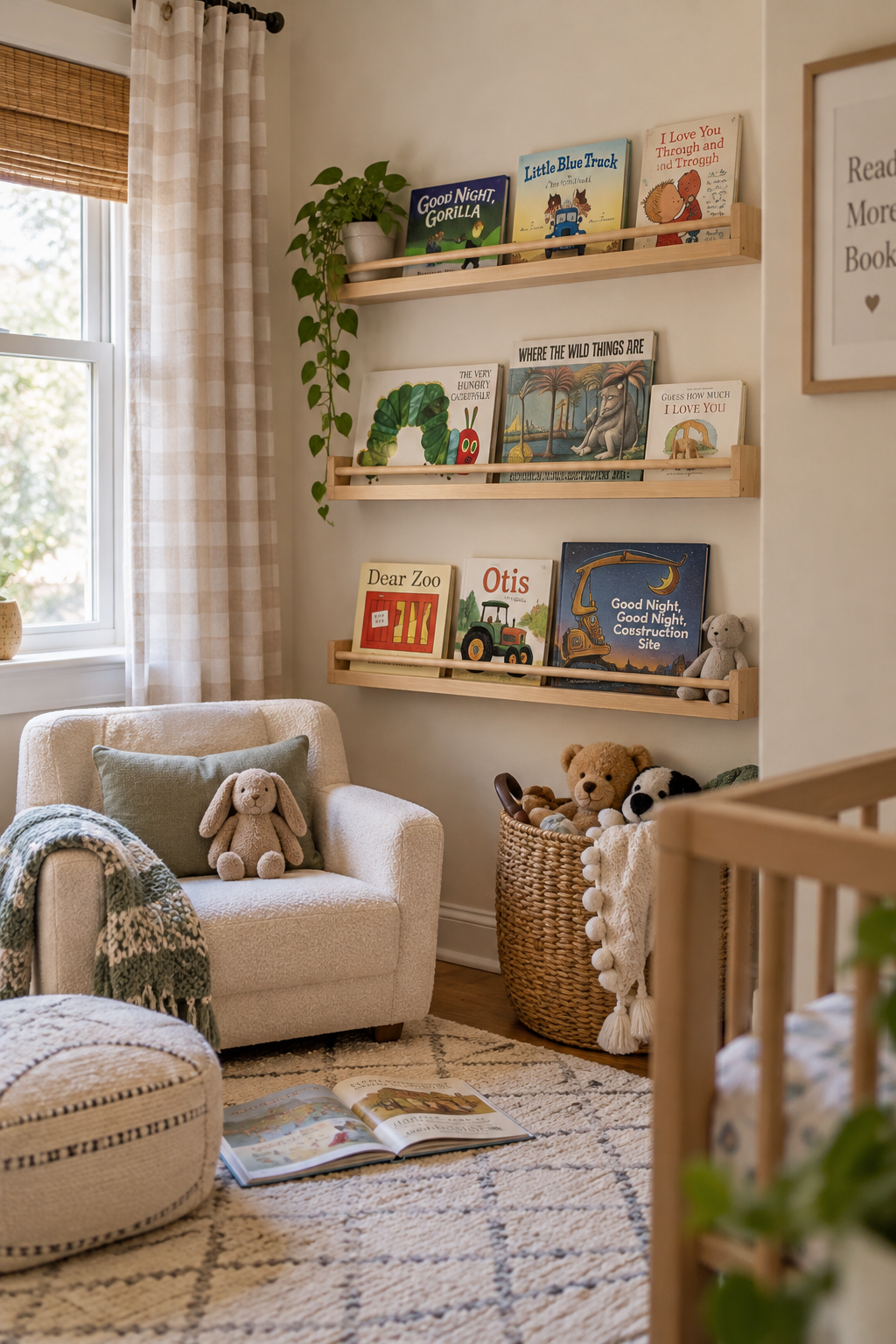
Traditional bookshelves can take up valuable floor space and hide the covers of board books. Slim picture ledges solve both problems by storing books front-facing on a narrow section of wall.
Visible covers make the reading corner feel more inviting and make it easier to rotate books without creating another toy pile. A few ledges above a chair can hold plenty for bedtime while still leaving floor space open.
Do not fill every inch. A smaller edited selection looks calmer and gives you an easy reason to rotate books from a backup basket, which can make old favourites feel new again.
15. Give Open Shelves Clear Categories
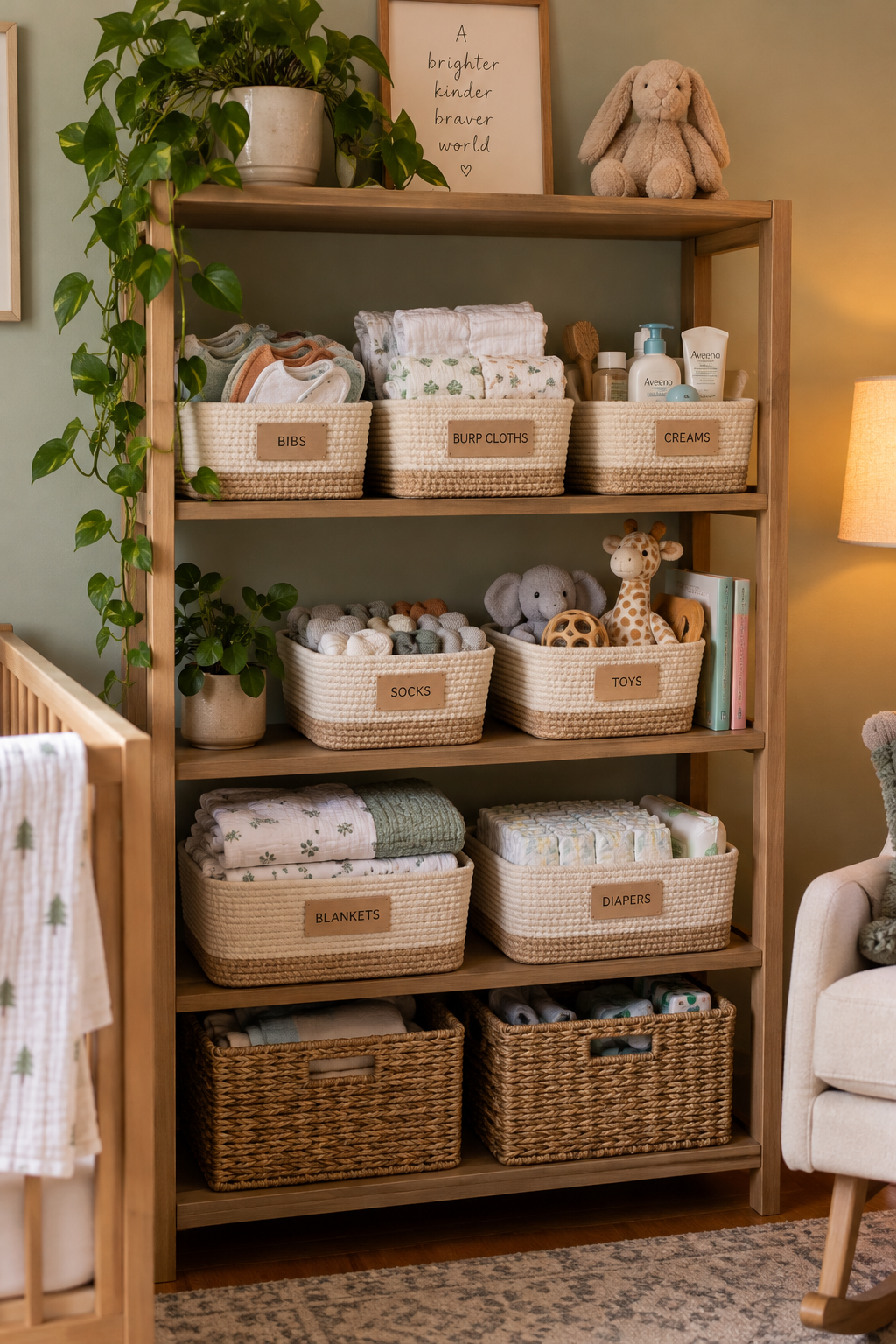
Open shelving becomes genuinely useful when each basket has a clear purpose. Separate containers for bibs, burp cloths, creams, socks, toys, blankets and diapers prevent one large shelf from turning into a mixed pile.
Labels are especially helpful when more than one person uses the nursery. Anyone helping with the baby can put something away without needing to know your personal system first.
Mix soft fabric baskets with a couple of woven ones so the shelving still feels like furniture rather than a storeroom. The categories do the organizing work while the repeated shapes keep the overall look calm.
16. Add a Peg Rail for Swaddles, Bibs and Small Bags
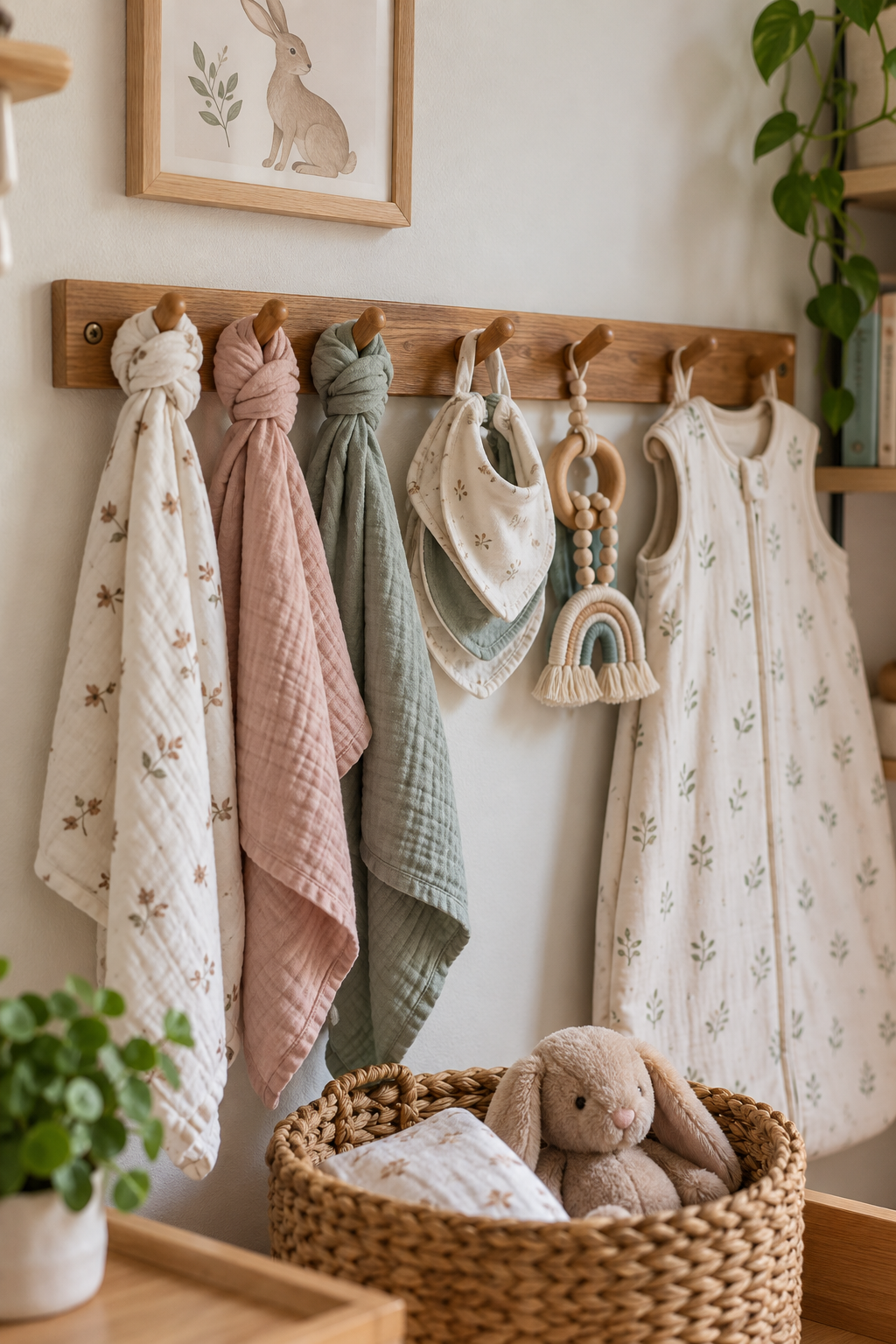
A simple wooden peg rail is one of the easiest nursery storage ideas to add to a blank wall. It keeps soft everyday items such as swaddles, bibs, sleep sacks and small bags visible without taking up drawer space.
This works well close to the changing area because you can grab a clean cloth or bib with one hand. The pegs can also change jobs as your child grows, later holding dressing gowns, backpacks or dress-up clothes.
Keep the arrangement loose rather than loading every hook. A few useful pieces, one teething toy and perhaps a small hanging bag will look more intentional and remain easier to use.
17. Create a Next-Size Clothing and Backup Zone
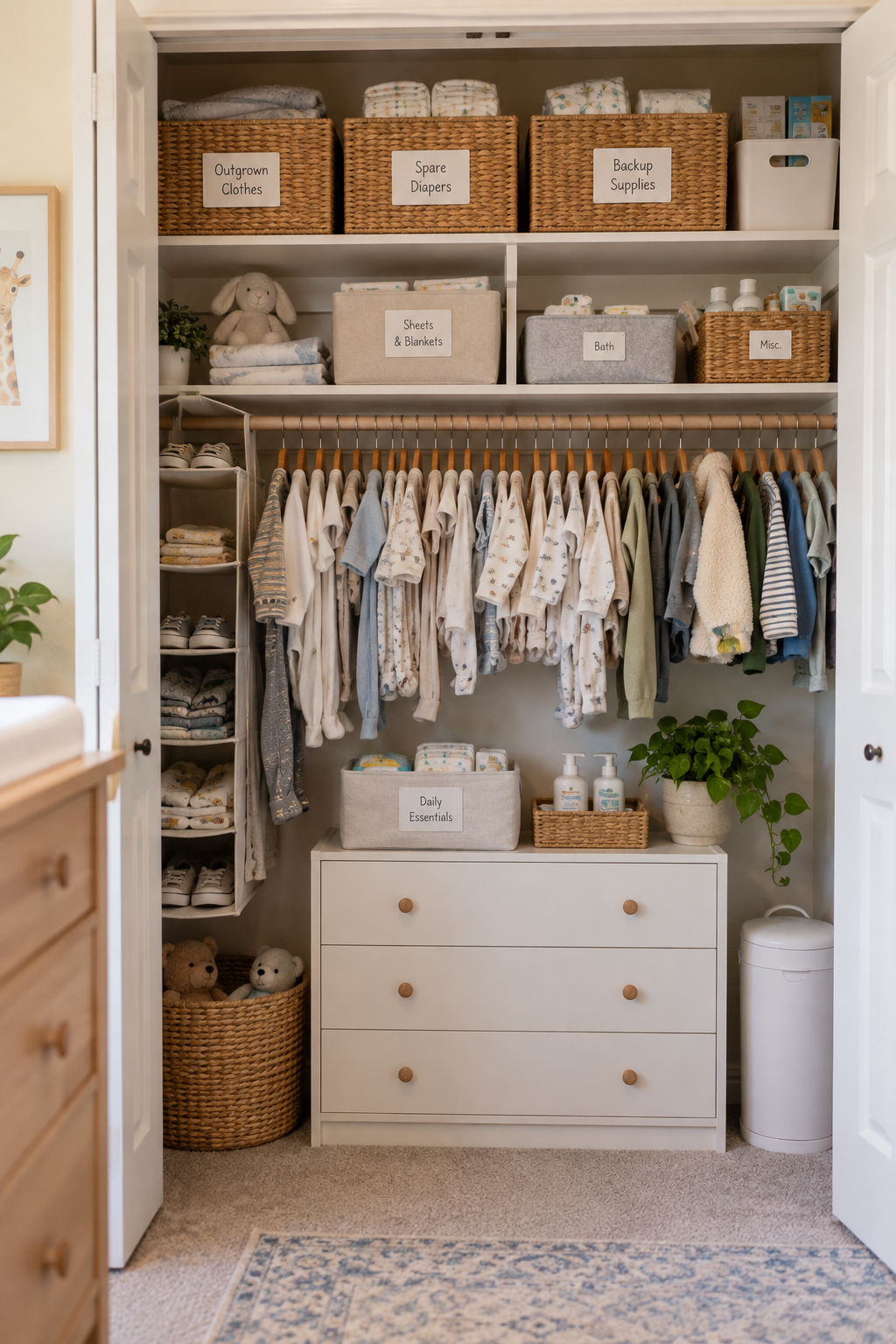
Babies move through clothing sizes so quickly that it helps to separate what fits now from what will be needed next. Use higher wardrobe shelves for labeled baskets containing the next size, spare diapers, extra bedding and other backup supplies.
Keeping future clothes out of the main rail prevents the everyday section from becoming overcrowded. When the current size starts feeling tight, you can bring one basket down and move the outgrown pieces straight into another container.
This simple rotation system is one of the easiest ways to organize a nursery for the long term. The room adapts as your baby grows without requiring a completely new storage setup every few months.
A Nursery Organization System That Can Change With You
The best nursery storage ideas are the ones that still make sense a few months later. Babies grow quickly, routines change and the items you reach for every day will keep shifting, so flexible baskets, drawers, rails and shelves are often more useful than a rigid system.
Start with the areas that currently create the most mess, then add storage only where it solves a real problem. A nursery that is easy to reset at the end of the day will usually stay more organized than one with a complicated system nobody wants to maintain.
As the room changes with your child, these reading nook ideas for small spaces can help turn an unused corner into a simple book area later on.