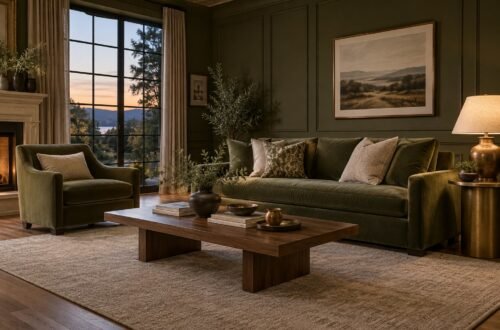
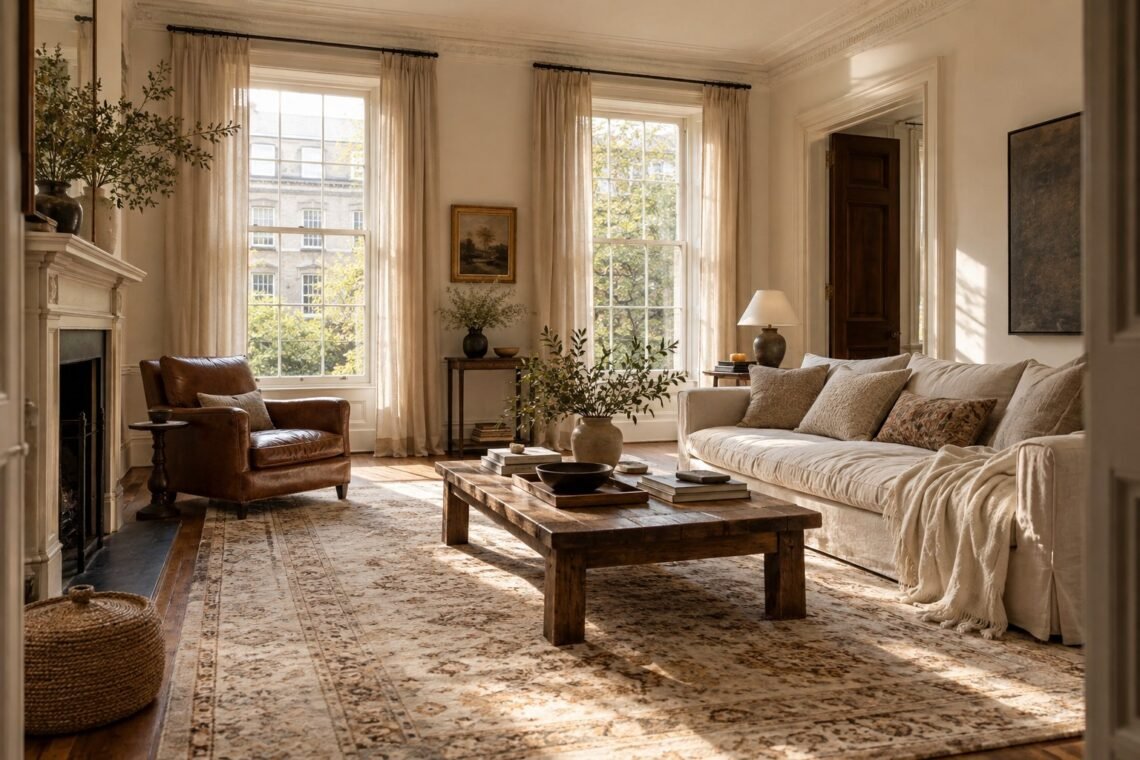
A neutral room can be wonderfully calm and still have plenty going on. Think of linen that looks better a little rumpled, a wooden table with a few marks, and a rug you can almost feel through the photograph. Those small differences give a quiet colour scheme its character.
The warm neutral living room look works best when you let cream, oatmeal, taupe and brown sit together without trying to match every shade. Add a few surfaces that catch the light differently, and suddenly the room feels much more inviting. It’s also a style you can build slowly around furniture you already like.
These fifteen ideas range from a quick cushion swap to bigger choices such as wall finishes and furniture. You don’t need to try them all. Pick the texture your room is missing, make one change, and see what you’d like to add next.
As an Amazon Associate I earn from qualifying purchases.
Images are AI-generated room inspiration, not manufacturer product photos. Selected SHOP SIMILAR links lead to products with a similar look; check the listing for the exact details and what is included.
1. Layer the shades in your warm neutral living room
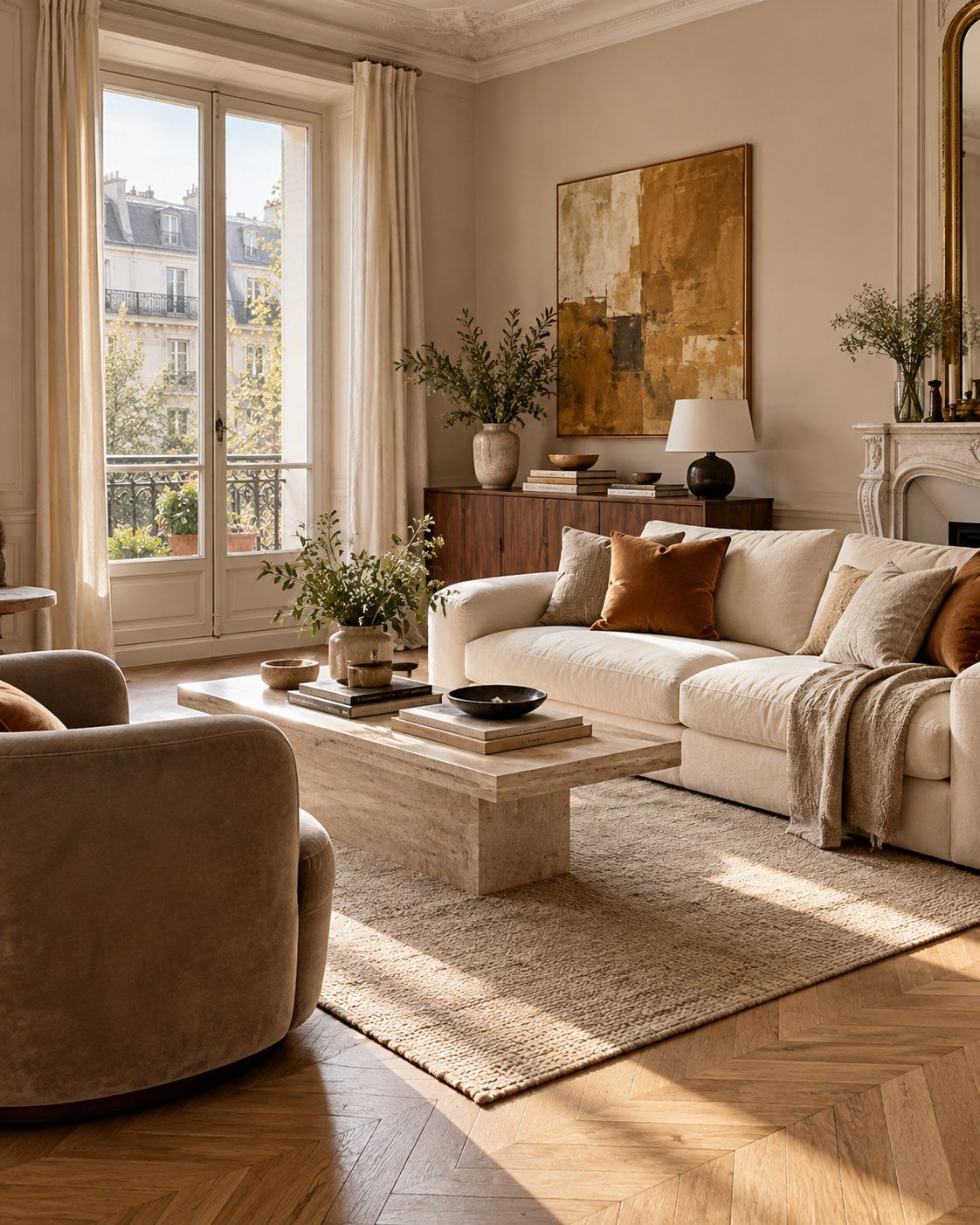
If your sofa, rug and walls are almost exactly the same beige, the room can look a little flat. Try giving each large surface its own shade: warm chalk on the walls, oatmeal on the sofa and a deeper biscuit or mushroom tone in the rug. You’ll still have a quiet palette, but there’s more to notice.
Use something you already own as your starting point. A wooden floor might suggest honey and caramel, while a favourite rug could lead you towards cream and soft brown. Bring fabric swatches and paint samples together in the actual room so you can see how they behave beside one another.
Leave a few deeper notes in the mix, perhaps a walnut frame or a brown cushion. They help the lighter pieces stand out without making the room feel busy. Our cosy living room ideas offer more ways to carry that warmth into the rest of the space.
2. Let relaxed linen set the mood
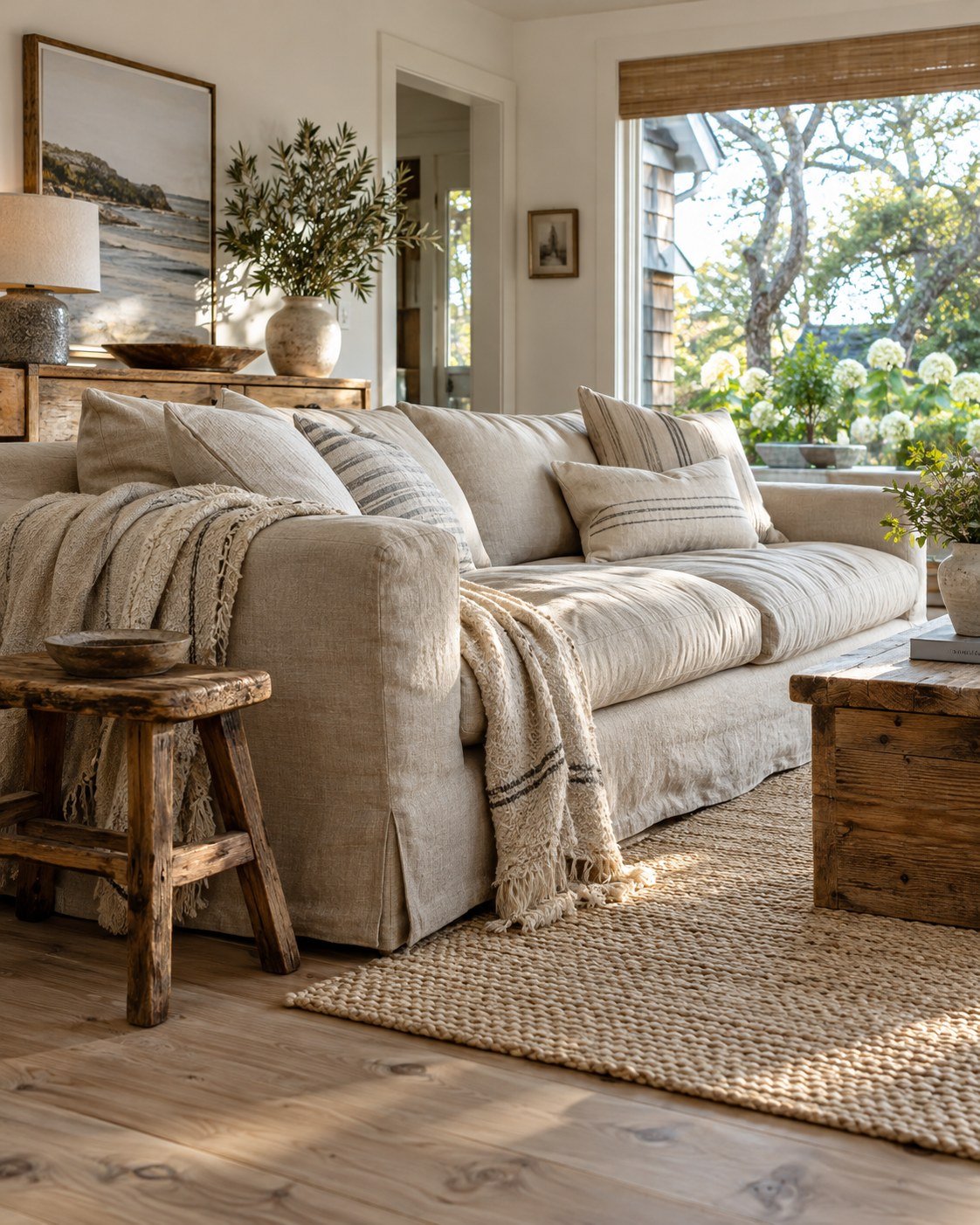
A sofa with a slightly rumpled linen finish immediately makes a room feel easier to live in. The fabric has enough variation to be interesting even in a very simple colour, and it sits beautifully beside wood, wool and woven pieces. You don’t need perfectly plumped corners for this look to work.
If you’re choosing new upholstery, order samples and try them against the rug and curtains before committing. Think about how your household uses the sofa, too. Removable covers can be handy, but check the actual care instructions rather than assuming every linen cover can go in the washing machine.
You can borrow the feeling without replacing the sofa. A textured linen cushion or a loosely folded throw can soften a more tailored design. Keep the arrangement comfortable enough that someone can sit down without clearing a little mountain of decorative pillows first.
3. Ground the seating area with a chunky woven rug
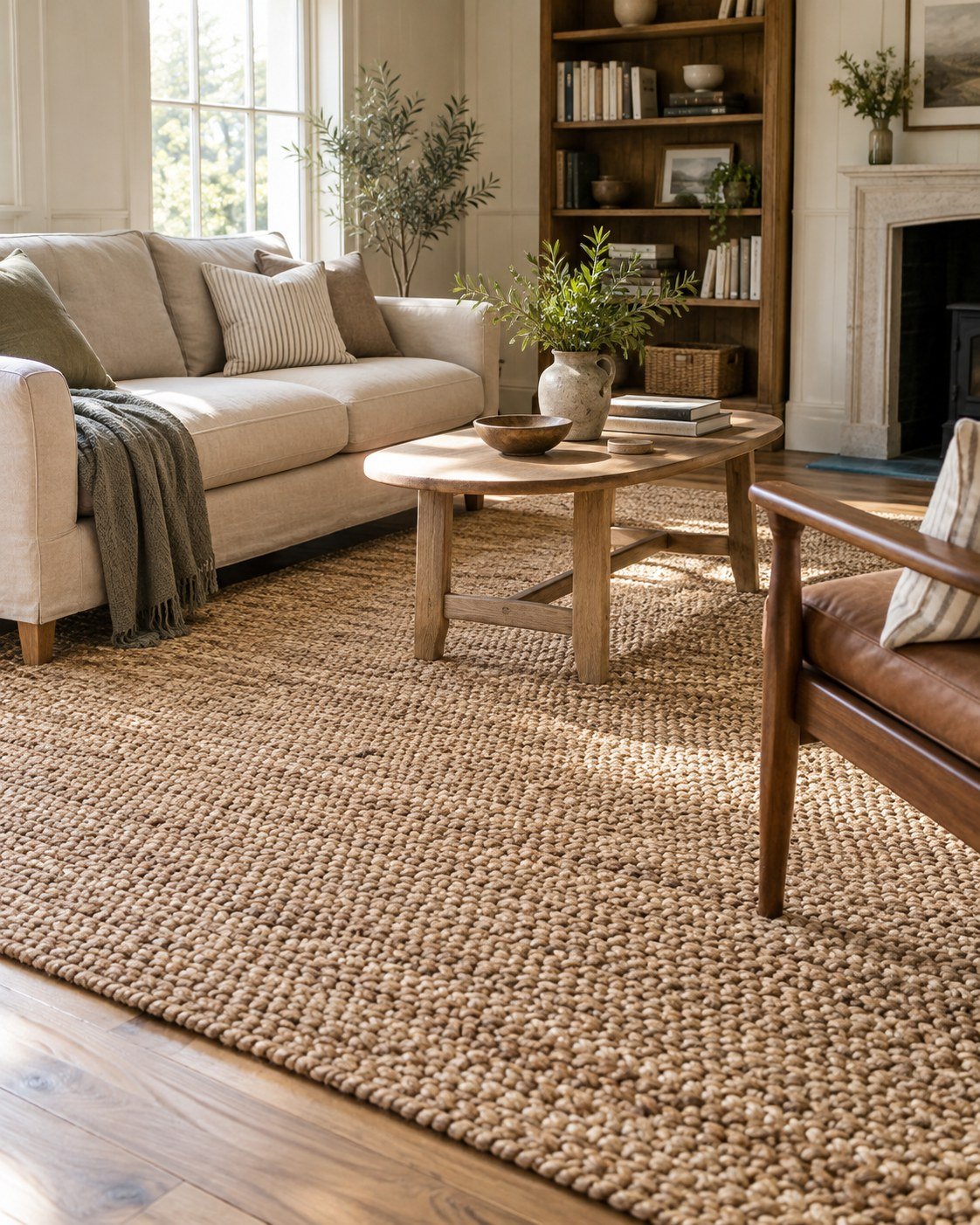
A chunky woven rug gives a pale living room an earthy foundation. The little changes in fibre and colour keep a plain rug from feeling blank, and that natural tan tone sits happily beside cream upholstery. It’s a good choice when you want the floor to add texture without introducing a bold pattern.
The rug’s chunky jute weave adds a lovely contrast to smooth upholstery and wooden furniture. Give it enough room to frame the seating area, with the front legs of the sofa and chairs resting on it. That little overlap helps the whole arrangement feel more settled.
Think about comfort as well as appearance. Natural jute has a different feel from a soft wool or synthetic rug, so try a sample or feel a similar weave if bare feet are part of your evening routine. Follow the maker’s care guidance and choose an appropriate rug pad for your floor.
4. Mix cushion textures instead of buying a matching set
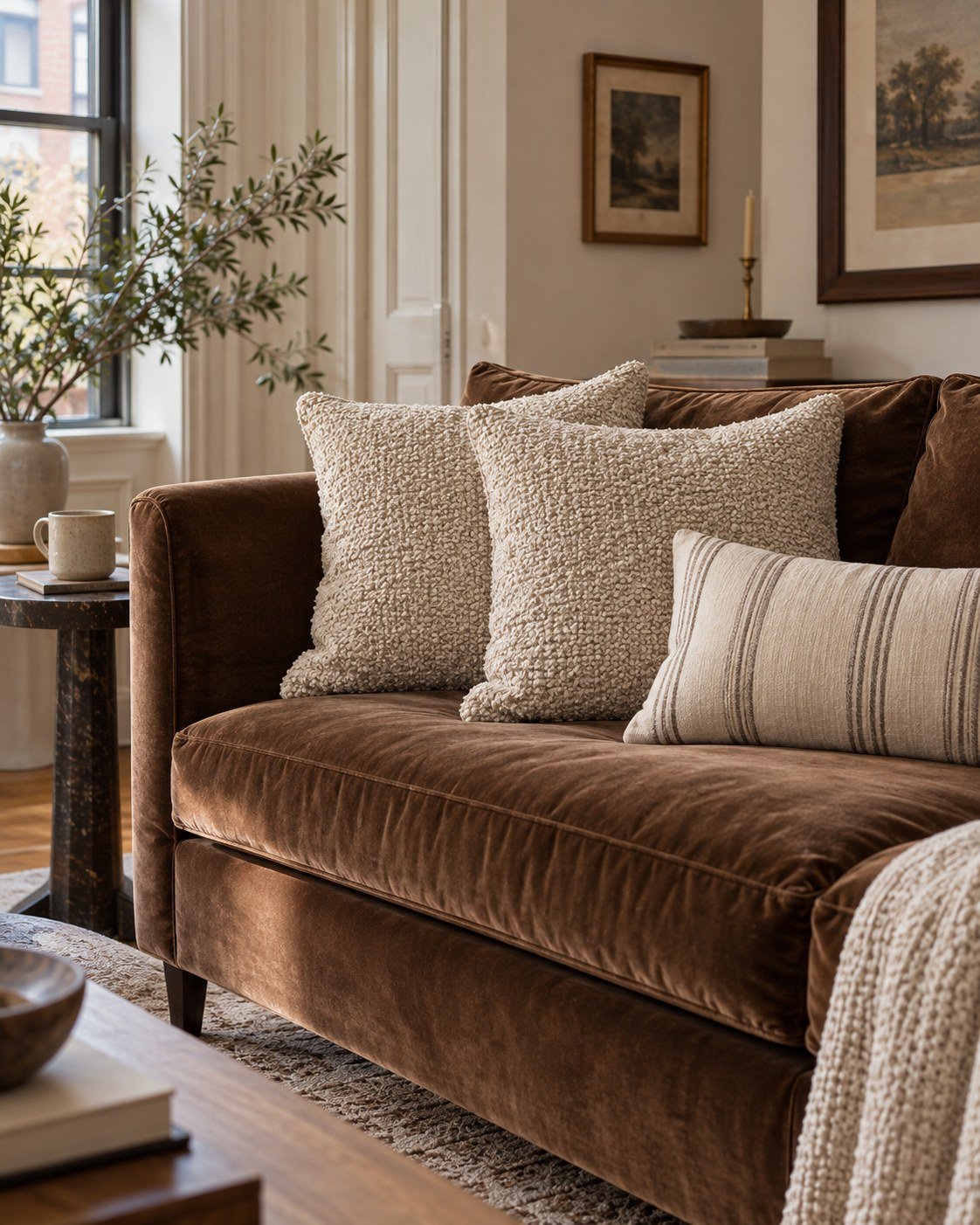
Cushions are one of the easiest places to make a neutral scheme feel richer. Try a nubby boucle cover beside a smooth cotton stripe or a soft linen lumbar cushion. Even if the colours are close, the different surfaces stop them blending into one pale row.
Beige boucle cushions bring a soft, nubby layer to the sofa without introducing another strong colour. Pair them with a simple striped cushion to break up the texture and give the arrangement a more relaxed feel. Let the sofa’s proportions guide the cushion sizes, and leave plenty of space to sit comfortably.
Limit the mix to a few textures you really enjoy touching. A pair of substantial cushions and one smaller shape often feels more relaxed than six identical squares. Try them on a brown or caramel sofa, too; the contrast makes the pale weave much easier to appreciate.
5. Make room for wood with a bit of history
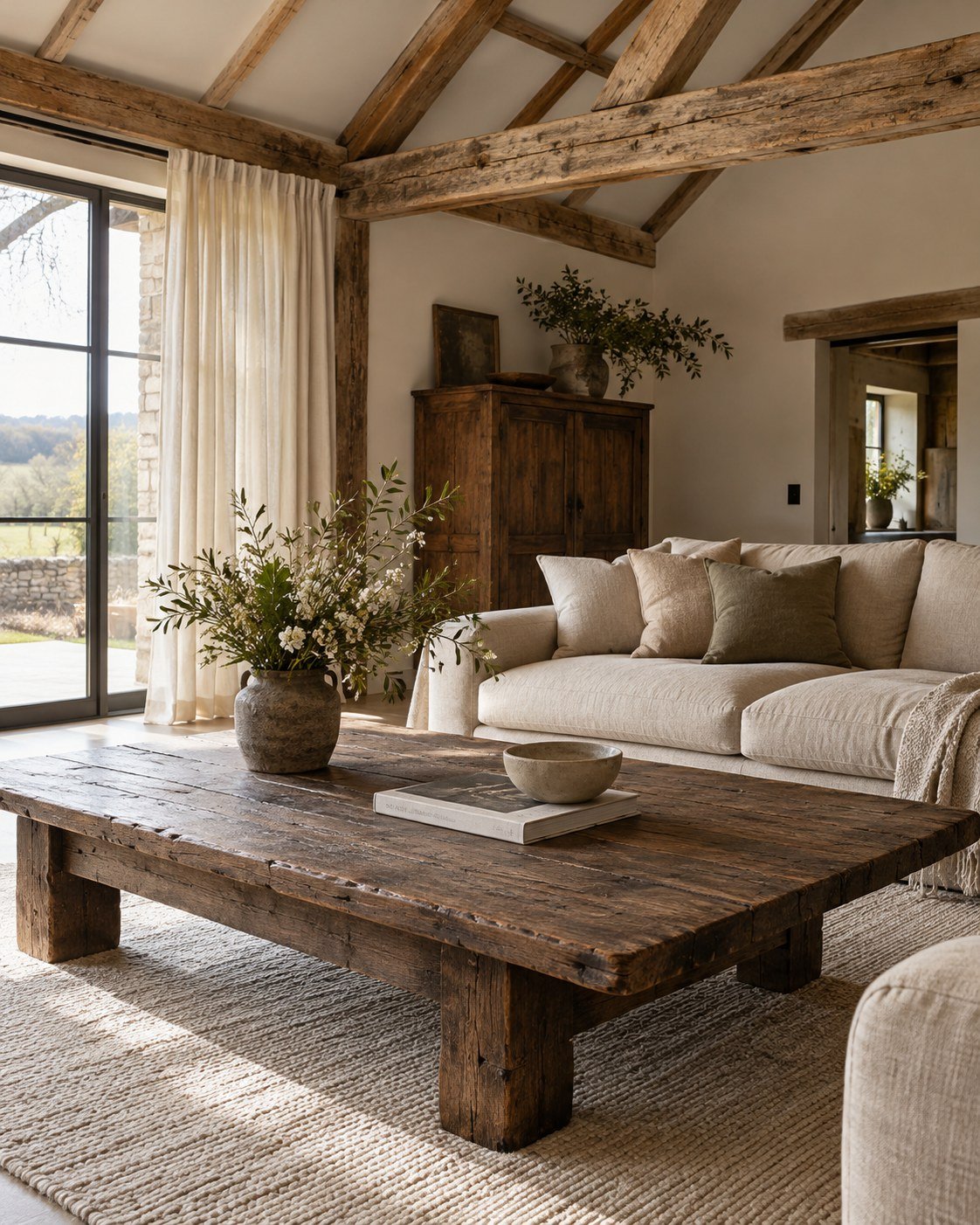
A table with visible grain and gently worn edges can bring more character than a whole collection of new accessories. The uneven colour gives a neutral room some depth, especially when the sofa and walls are fairly simple. An old piece doesn’t have to be precious to be lovely.
Look for a coffee table, sideboard or small stool whose proportions work for the room you have. A heavy rustic table can look wonderful with a plain sofa, while a smaller vintage side table is an easier way to introduce the same feeling in an apartment. Leave enough space to move comfortably around it.
You don’t need every wooden piece to be the same finish. Repeat one tone somewhere else, perhaps in a picture frame or chair arm, so the mix feels connected. Keep the tabletop fairly clear and let the grain, worn edges and little marks be part of the decoration.
6. Soften the whole room with full-length curtains
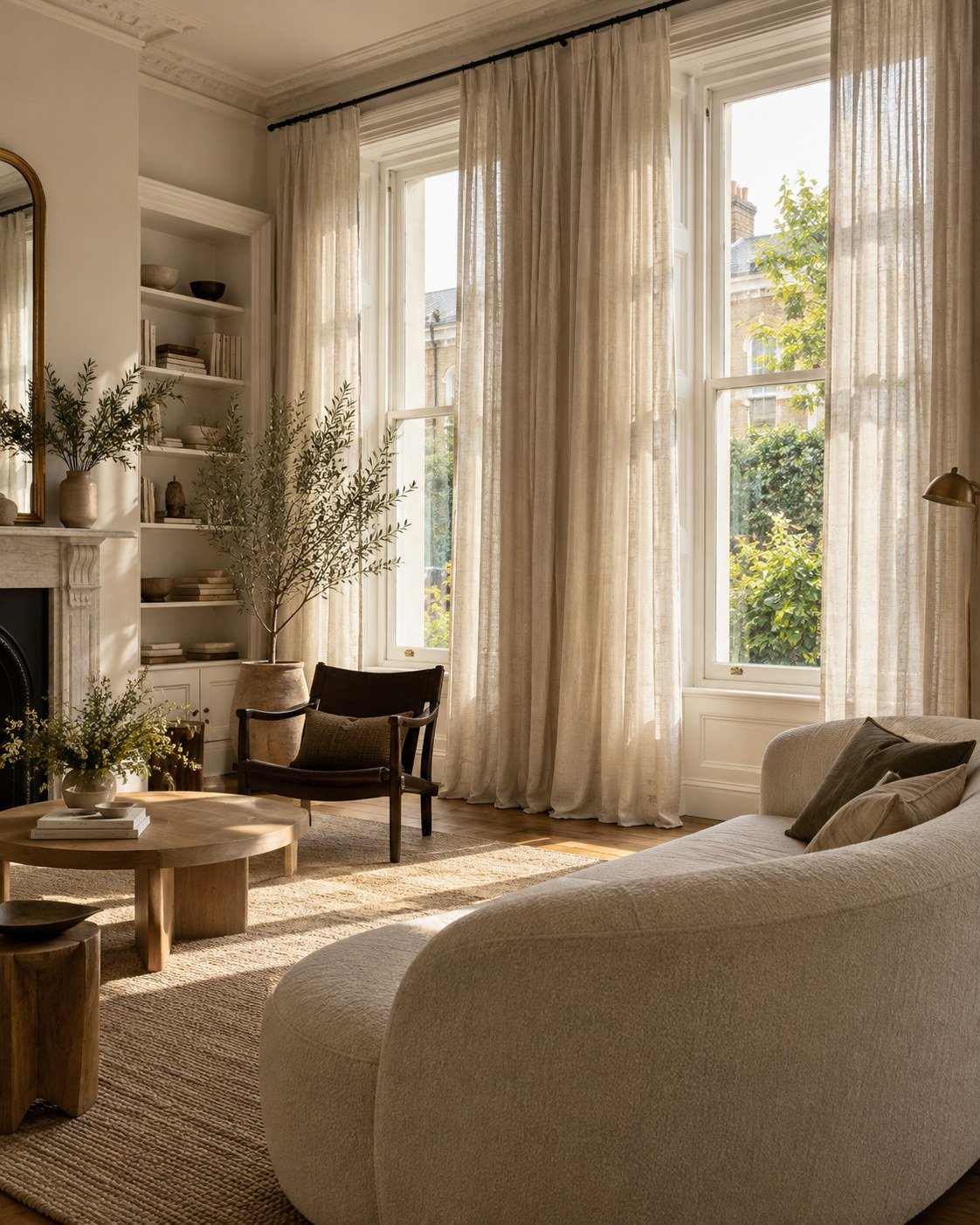
Full-length curtains give a living room a generous amount of fabric texture without adding more objects. A flax or warm ivory weave can soften the hard lines around a window and make the seating nearby feel more inviting. In daylight, even a plain curtain has lovely movement and depth.
Measure the window, hanging height and space around it before choosing the panels. You want enough fabric for comfortable folds rather than a tight sheet pulled across the glass. Where the wall allows, a rod that extends beyond the window can let the curtains gather clear of more of the daylight.
Choose the level of privacy and light control your room needs. Sheer or semi-sheer fabric may look beautiful during the day but won’t give the same evening privacy as a lined curtain. If necessary, combine your softer decorative layer with a practical blind, and keep the hem clear of anything it could snag on.
7. Balance soft upholstery with a stone-look centrepiece
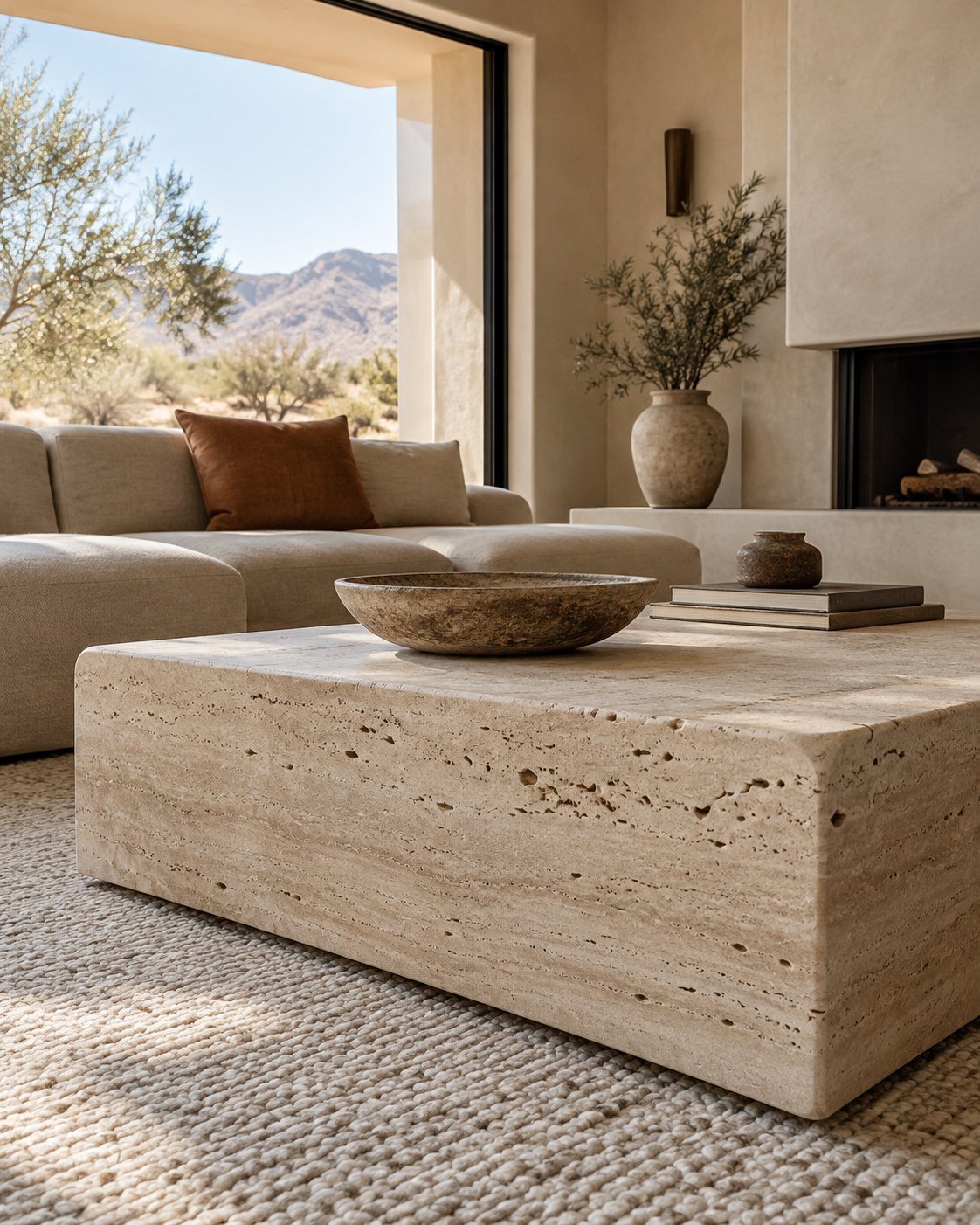
When a room has lots of fabric, one solid, smooth piece can make the softness feel even better. A warm stone or stone-look coffee table gives the seating area a different texture and a clear centre. Creamy beige, sandy tones and gentle veining fit especially well with oatmeal upholstery.
Look at the shape as carefully as the finish. Rounded corners or an oval top can work nicely with a large sofa, while a compact block shape suits a more spare arrangement. Real stone, veneer and imitation finishes behave differently, so check the construction, weight and care requirements before choosing.
Style the surface lightly: a low bowl and one book may be enough. If you already have a table you love, try the idea on a smaller scale with a stone tray or a substantial ceramic bowl. You’re adding a change of surface, not trying to turn the room into a showroom.
8. Bring in a woven chair to lighten the furniture mix
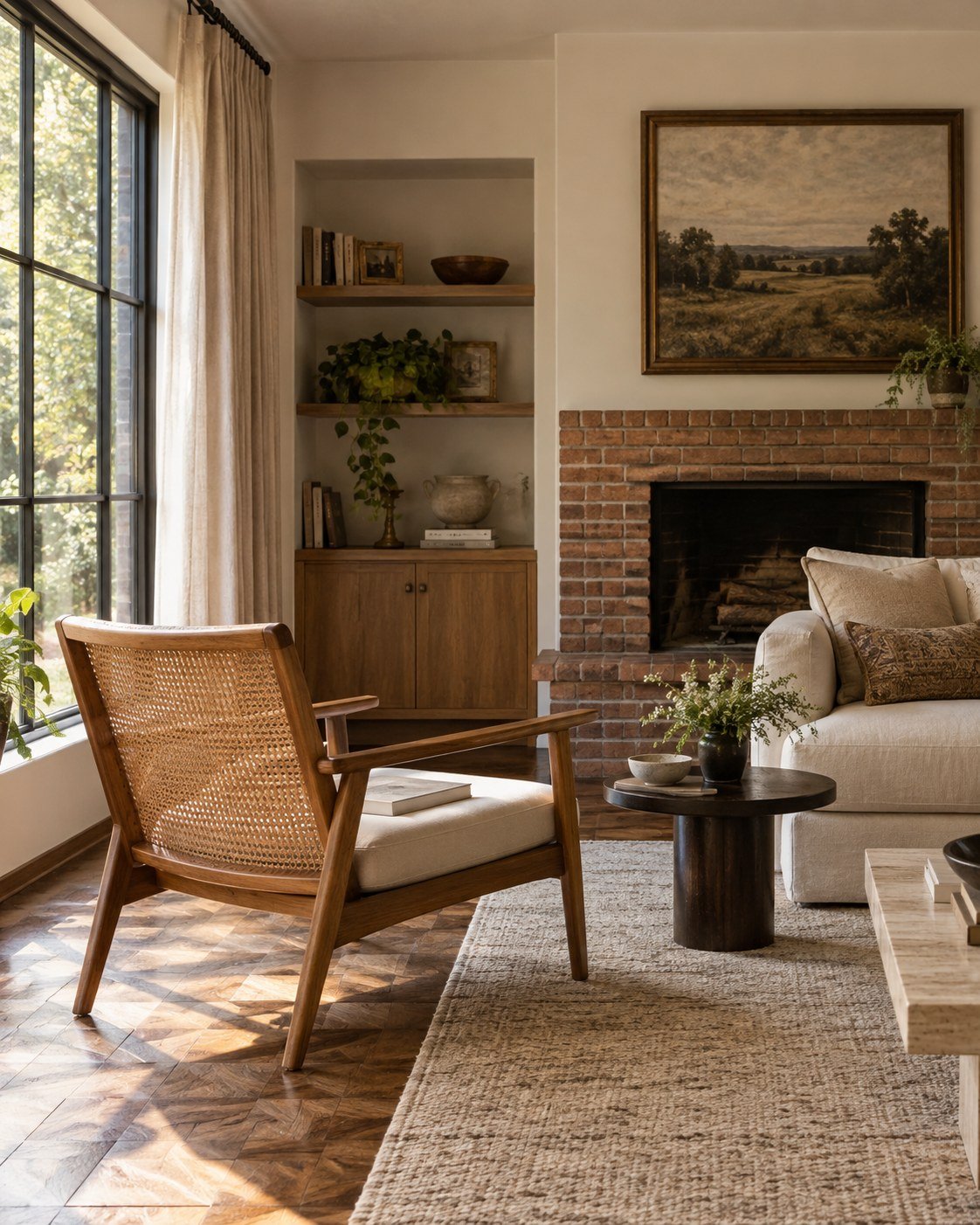
A chair with a cane back or woven detail gives your eyes something different to move through. It can make a room of fully upholstered furniture feel a little lighter, while the honey-coloured frame adds warmth. One piece is often enough to introduce that airy texture.
Angle the chair towards the sofa so it feels part of the conversation. A small side table and a comfortable seat cushion will make it a place someone actually chooses, rather than a beautiful chair nobody uses. Check the seat height alongside the rest of your seating before bringing it home.
Keep the surrounding textures fairly simple so the weave has a chance to show. Linen, plain cotton and a quiet rug work nicely here. For more ways to use this kind of piece in different rooms, take a look at our rattan accent chair styling ideas.
9. Let a softly textured wall do some of the decorating
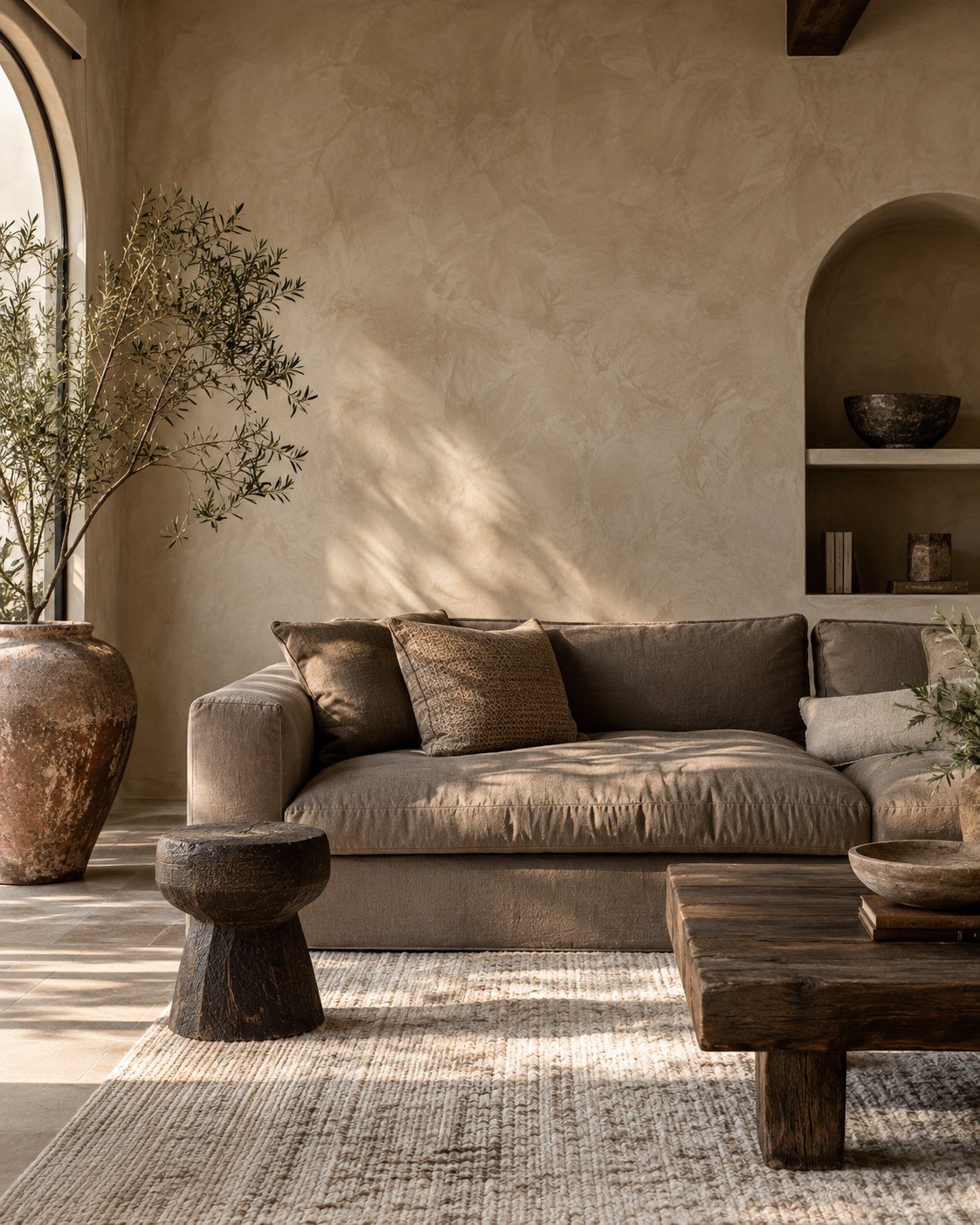
A wall with a gentle, cloudy finish can give a simple room surprising depth. Warm sand or chalky taupe looks especially lovely when daylight falls across it from the side. The effect can be very quiet; you don’t need dramatic marks for the wall to feel different from a flat painted surface.
Limewash and specialist decorative finishes vary in how they’re prepared and applied, so try a sample board and follow the chosen product’s instructions. See how it looks on different walls and at different times of day. A finish that feels subtle in the shop may look much stronger across an entire room.
If painting isn’t on your list, bring in a similar feeling with a large textured artwork or a woven wall piece. Keep plenty of plain space around it so the surface can be appreciated. Our wall panel ideas offer another route if you’d prefer texture with more defined lines.
10. Drape a generous throw where you’ll actually use it
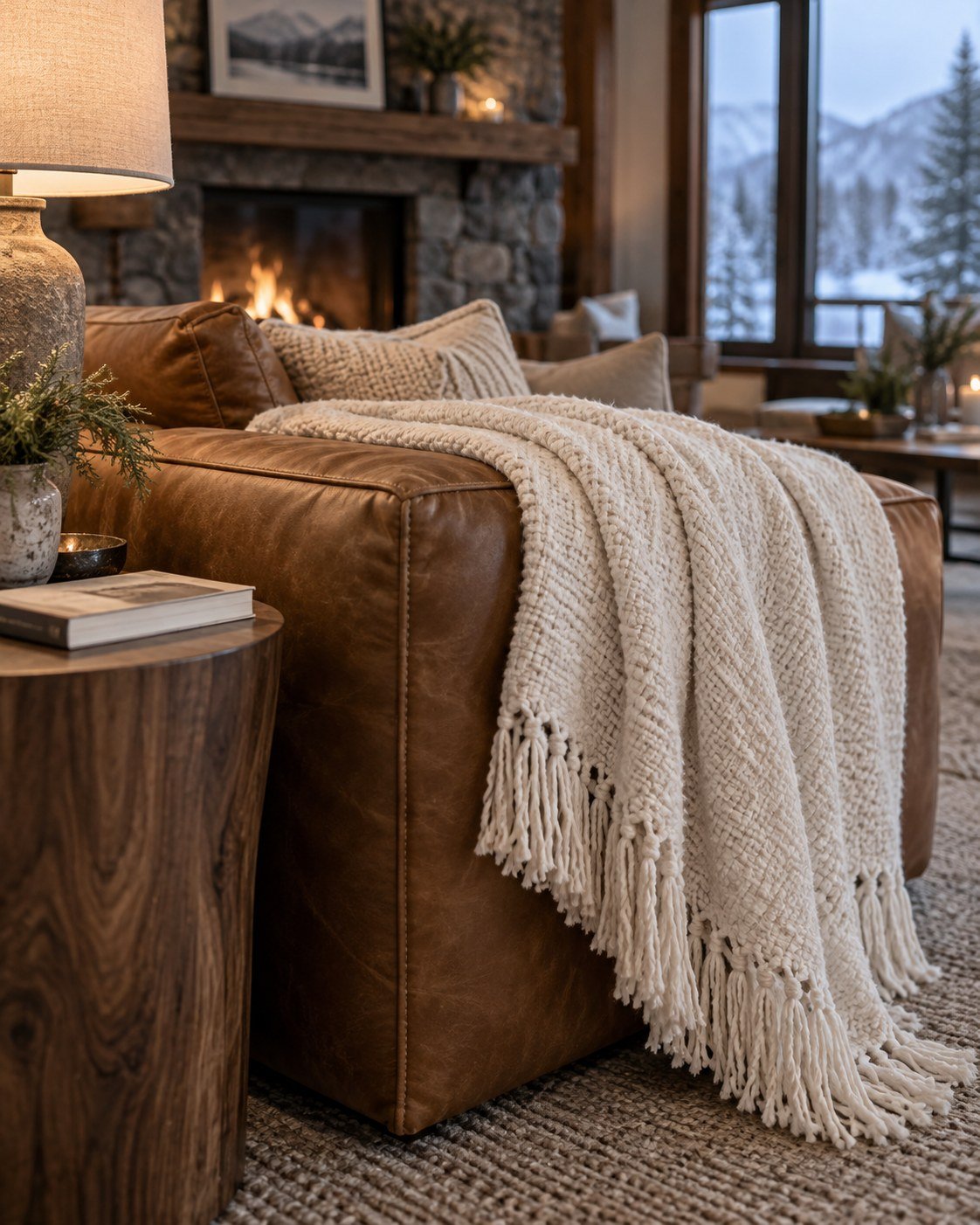
A throw is at its best when it looks as though someone might pull it over their knees. Let it fall over one arm of the sofa, or fold it loosely across the end of a chaise. A little irregularity suits the room much better than a blanket arranged so carefully you’re afraid to touch it.
A cream chenille throw adds softness through its thick weave and loose fringe. Let the edges fall naturally over the arm of the sofa so you can appreciate the texture without arranging every fold. Cream against caramel leather is a particularly lovely pairing because both the colour and the texture change.
Choose a size that works for how you’ll use it, and check the care label before washing. If you already have a favourite blanket in the right palette, bring it out rather than saving it in a cupboard. Useful things are allowed to be part of the room’s decoration.
11. Add a deeper brown to keep the pale colours interesting
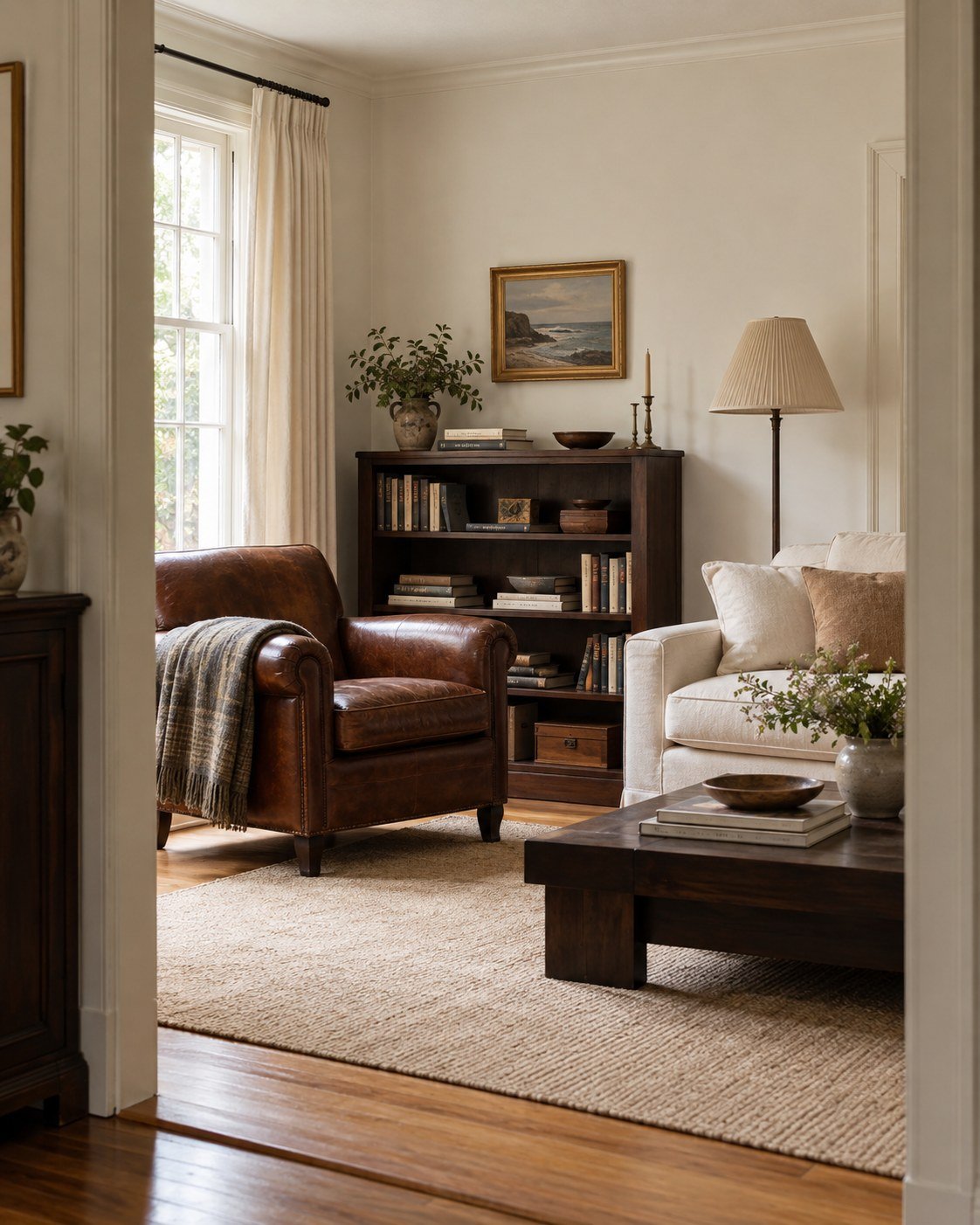
A warm neutral living room doesn’t have to stay pale from top to bottom. Chocolate, coffee and dark walnut can give cream and oatmeal a little more presence. One brown chair or a deep wooden cabinet may be all the contrast a light room needs.
Spread the darker tone in small, uneven amounts rather than lining up matching pieces. A chocolate chair could pick up a brown picture frame across the room, while a pale rug keeps the floor feeling open. The balance will depend on the daylight and the furniture you already own.
This is also a useful way to work with an older brown sofa you’re keeping. Give it lighter textured cushions, a generous rug and warm curtains, then let its colour belong in the scheme. You may find it becomes the piece that makes the room feel settled.
12. Choose a few ceramics with different surfaces
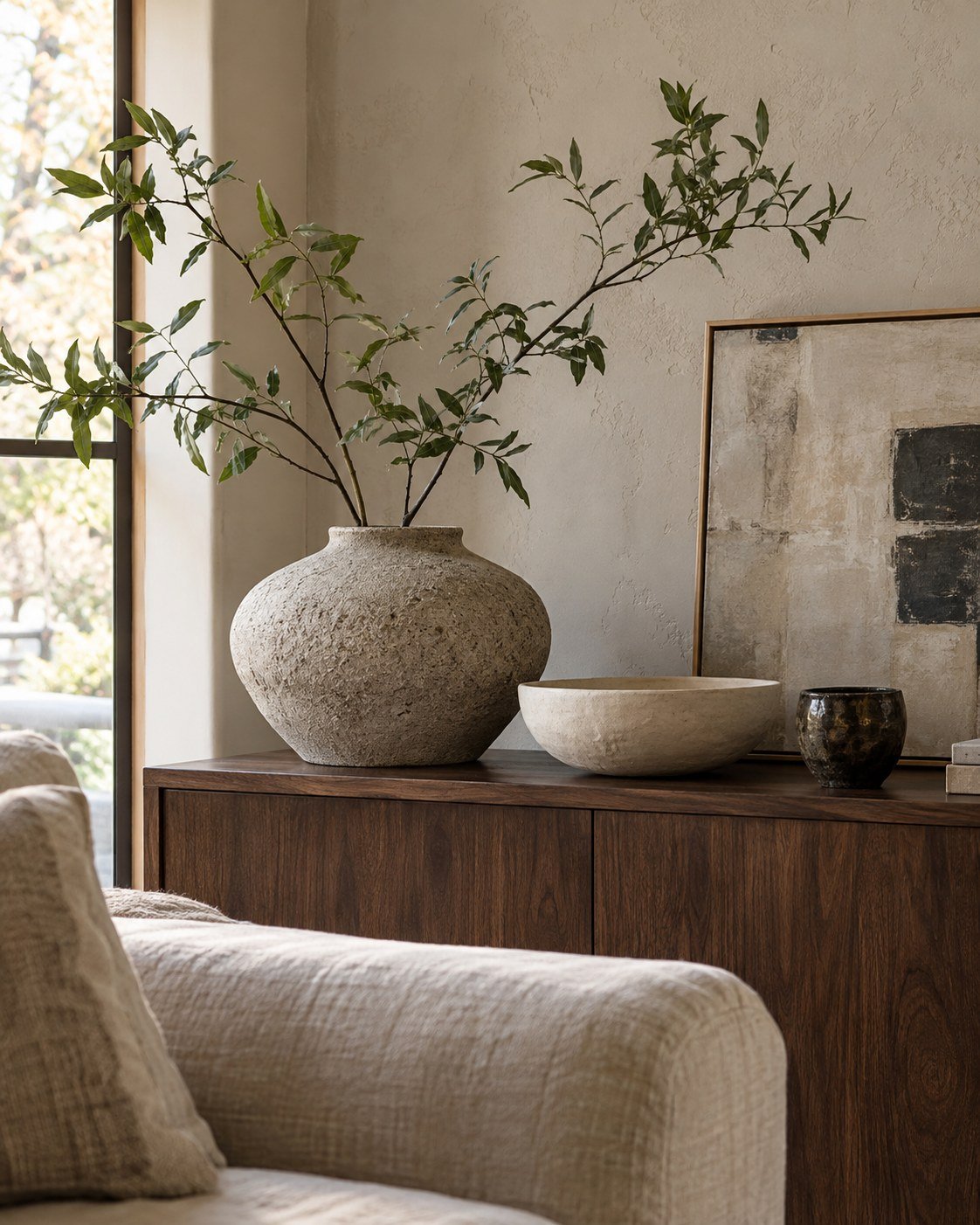
Pottery gives you lots of texture in a small amount of space. A rough stoneware vase, a smooth glazed cup and a simple pale bowl can look lovely together even when none of them match. Their small differences keep a console or shelf from feeling too carefully coordinated.
Choose pieces with a purpose or a shape you genuinely enjoy. A bowl for loose bits, a vase for a few stems and a favourite mug can do more for the room than a long row of decorative objects. Leave gaps between them so you can see each outline.
If you use fresh stems, make sure the vessel is suitable for water or use an appropriate liner. A single branch can be enough for a wide vase; you don’t need a huge dried arrangement to make it feel finished. Try moving ceramics between rooms before buying more.
13. Use shaded lamps to bring the textures out after dark
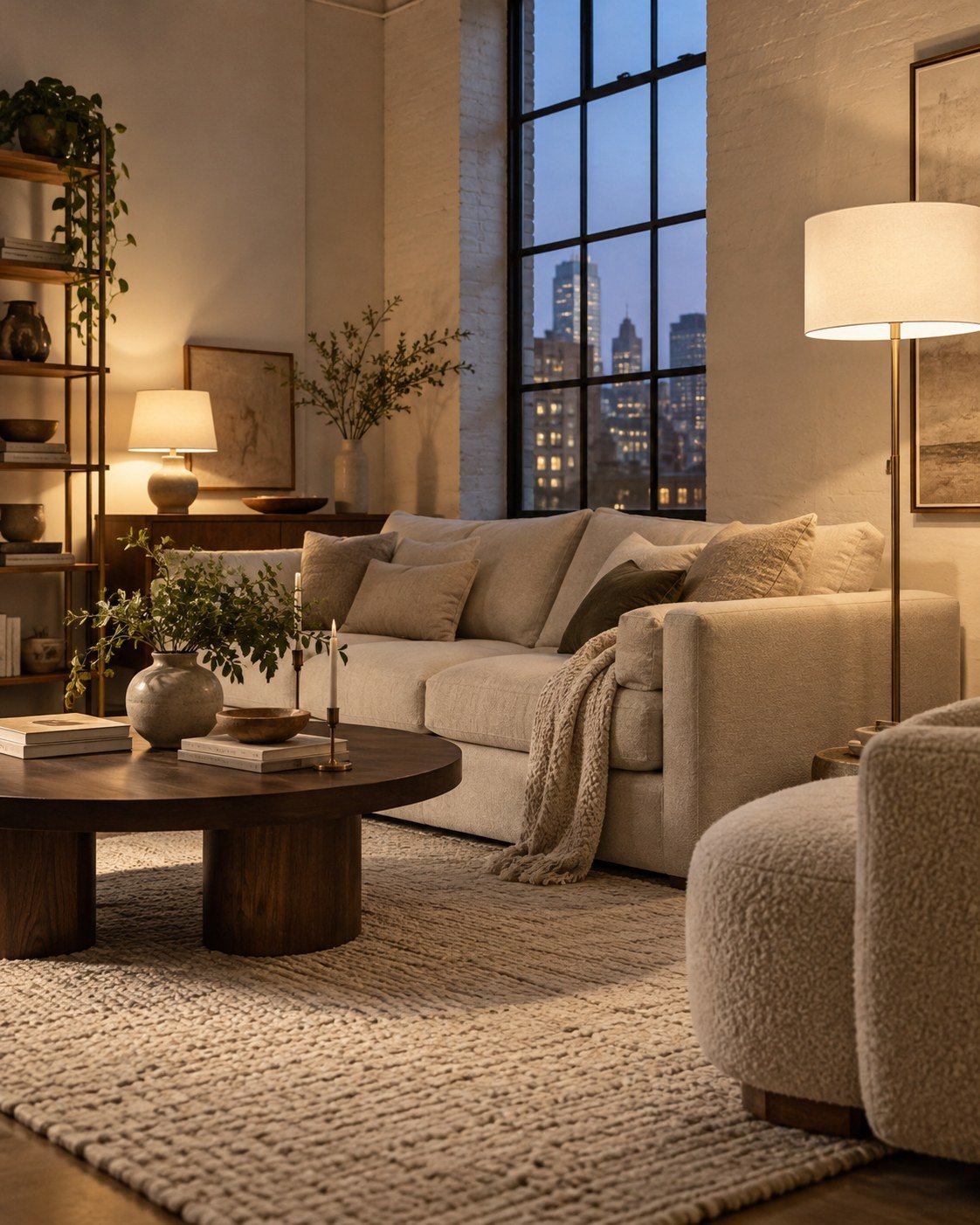
The room you love in daylight deserves to feel just as inviting in the evening. A shaded floor lamp beside the sofa and a lower table lamp across the room can bring out the folds in linen and the texture in a rug. Give yourself a few gentle pools of light around the places you sit.
A slim brass floor lamp brings a little warmth and shine into a room full of matte fabrics. A fabric drum shade keeps the light soft, while the slender stem sits neatly beside the sofa. Brass also works beautifully with oak, walnut and cream textiles.
Try moving your existing lamps before adding another. Light falling across a textured wall can be much more interesting than light aimed straight at it. For a fuller evening setup, our warm lighting ideas for home cover reading corners, shelves and other places a softer glow can make a difference.
14. Make storage part of the texture
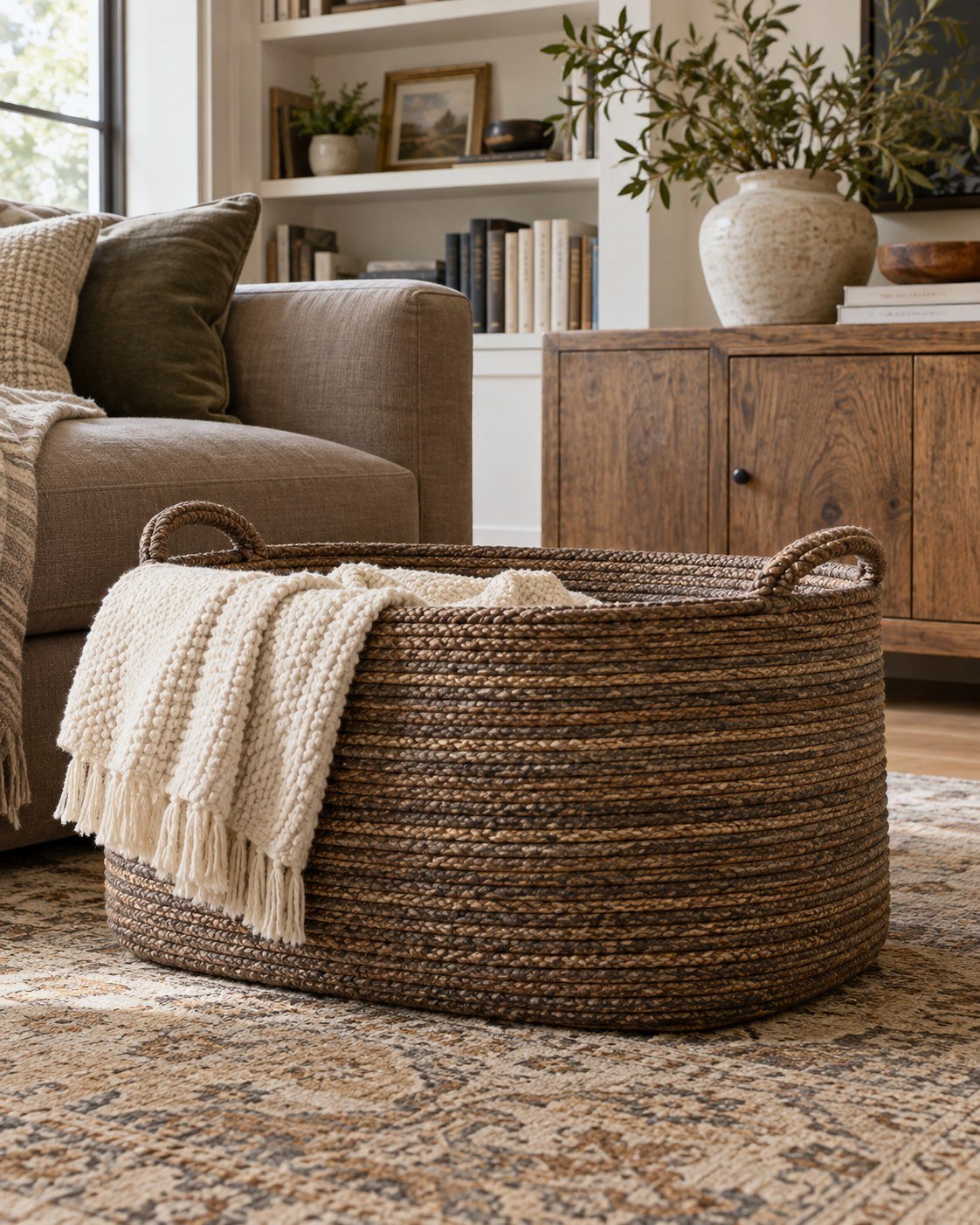
A living room feels much easier to enjoy when the everyday bits have somewhere to go. A substantial woven basket can hold spare blankets or a few toys while adding another useful surface texture. It’s especially good beside a plain sofa or a cabinet with smooth doors.
A low, broad cotton-rope basket adds a softer woven texture beside the sofa. The warm brown tones sit naturally with wooden furniture, while a cream blanket draped over the edge ties it back to the lighter fabrics. Tuck it close to the seating so it’s easy to reach.
Give it a clear job so it doesn’t become another place for everything to collect. Keep one blanket near the top if you like the softer edge, and put smaller items in a separate container where needed. Our decluttering tips can help if the room needs a little sorting before the styling feels enjoyable.
15. Finish with quiet checks, stripes or a faded rug
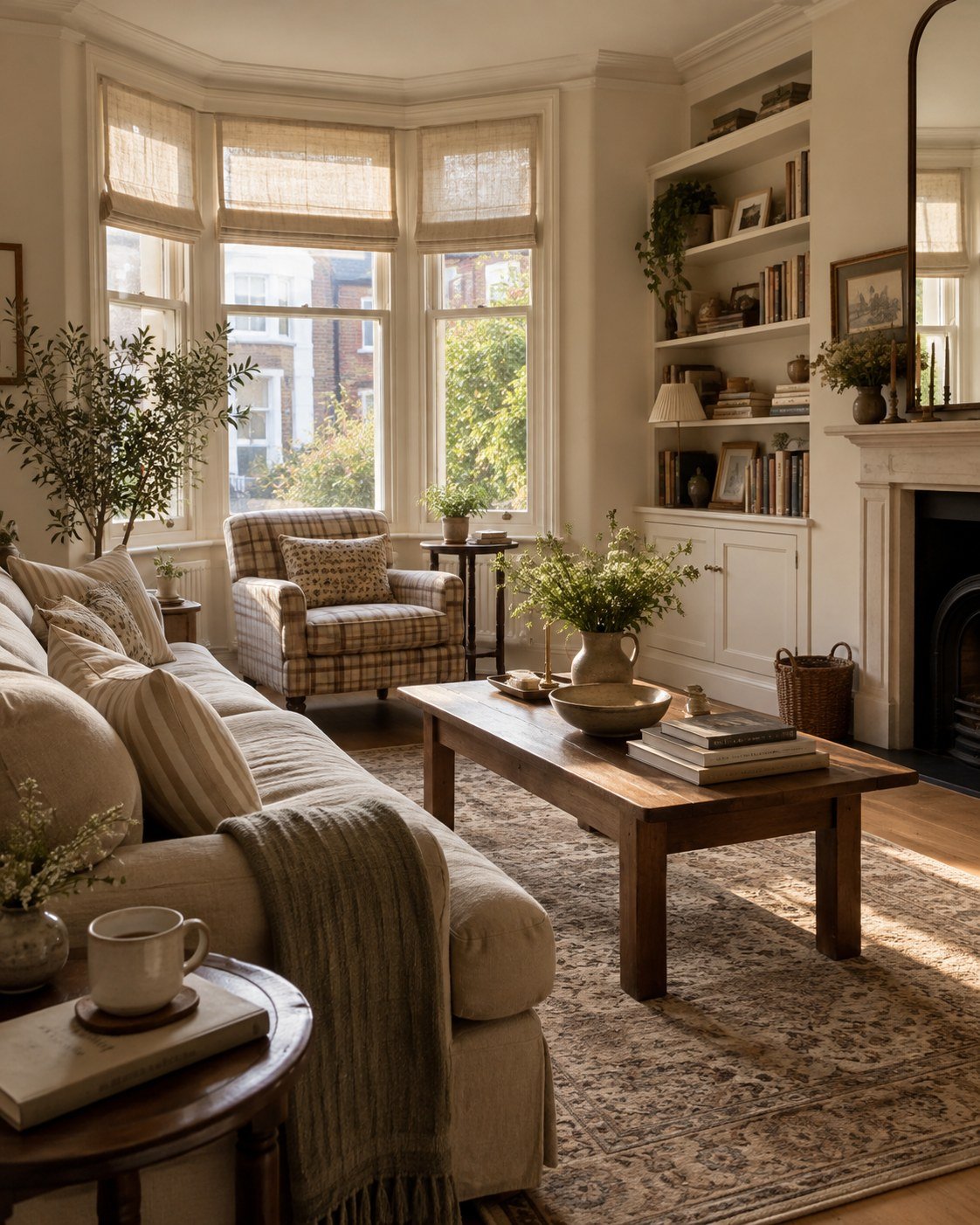
Texture and pattern work beautifully together when the colours stay fairly close. A little brown check, a narrow cream stripe or a faded tan rug can give a neutral room the collected feeling that plain fabrics sometimes miss. You don’t need to make every surface patterned.
Vary the scale so the pieces have their own role. A small check on one chair can sit beside a broader stripe on a cushion and a softer, less defined pattern underfoot. Keep one or two large surfaces plain, such as the sofa or curtains, to give the whole arrangement some breathing room.
Start with a piece you already love and build out from there. A cushion from another room, an old rug or a second-hand chair may be the detail that stops everything feeling brand new. Let the pattern show a little personality; the room should still feel like yours when the styling is finished.
Build a room that feels good to come home to
You don’t need to replace your furniture to make a warm neutral living room feel richer. Look around at what’s already there and notice what’s missing. If everything is smooth, try one nubby fabric. If everything is pale, bring in a little deeper wood or brown. One well-chosen change can make the pieces you own look better together.
Give the room time to settle before adding the next layer. Sit on the sofa, open the curtains, switch on the lamps and notice where you feel most comfortable. Keep the textures you enjoy living with, and leave enough room for the ordinary things that make the space useful: a cup of tea, a book, or someone putting their feet up.
The best part of this look is that a few creases, worn edges and familiar objects belong in it. Start with one corner this weekend and make it somewhere you’d happily spend an hour. The rest of the room can follow at its own pace.