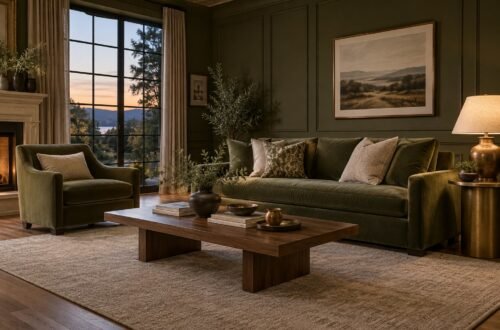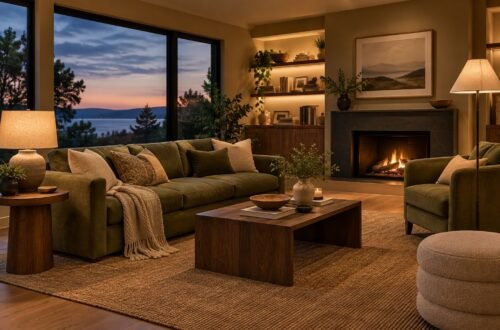

A moody living room is a lovely place to settle in after the day has been busy. Soft upholstery, a little depth of colour and warm pools of light give the room an intimate, comfortable feeling.
These moody living room ideas focus on how the whole space comes together: the curve of a sofa, the grain of a table, a rug with a quiet pattern and the way the room looks once the lamps are on.
There are lighter walls as well as deeper shades, with coordinated seating and varied styles. If you are choosing a rich paint palette first, our dark living room ideas can help with that part of the scheme.
As an Amazon Associate I earn from qualifying purchases.
Images are AI-generated room inspiration. SHOP SIMILAR opens a search for visually similar options; check the details and suitability for your space before buying.
1. Let a curved sofa soften the room

A curved sofa gives a sitting area a softer outline. Olive upholstery works beautifully with mushroom walls here, while the matching chair makes the seating feel settled.
Look at the whole footprint before choosing a curved piece. The shape can be generous through the middle, so allow useful space around the table and along the route through the room.
Keep the nearby furniture simple enough to show off the curve. One rounded walnut table and a quiet rug give the sofa room to be the main feature.
2. Bring depth through rich ribbed fabric

Chocolate corduroy adds depth through its texture as well as its colour. The broad ribbed fabric makes a simple sectional feel inviting, particularly in softer late-day light.
Choose the sofa for comfort and scale first, then consider the fabric’s care needs. A rich texture is most enjoyable when it suits the way the room is used.
Warm greige walls and a pale oak table let the brown feel generous without making every surface dark. There are more colour combinations in our brown living room ideas.
3. Make a smaller seating area feel intimate
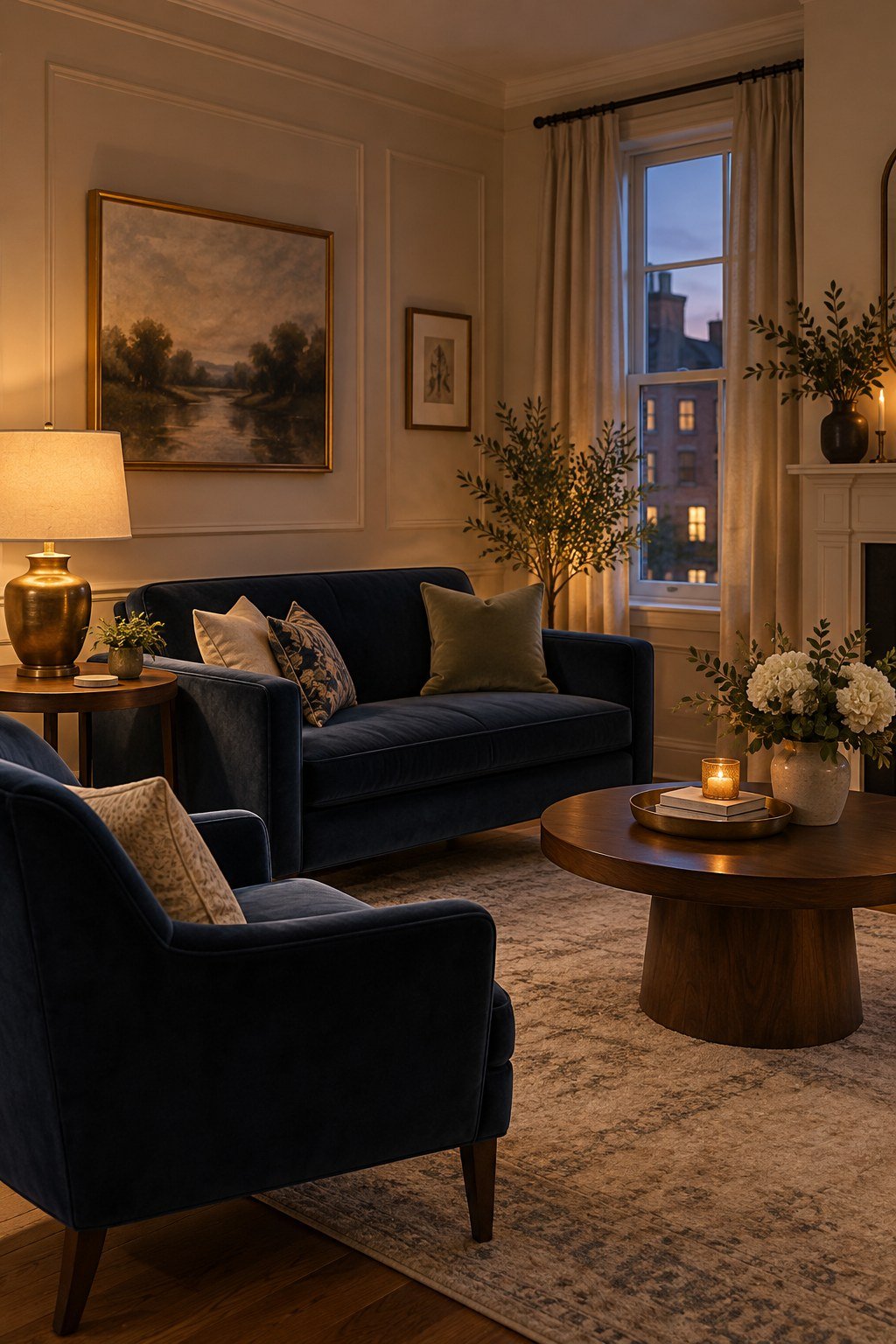
A compact loveseat can give a small living room a lovely, intimate feeling. Navy velvet brings richness, with warm taupe walls and walnut keeping the whole corner soft.
Choose seating that leaves room for useful side surfaces and a comfortable walking route. A smaller sofa can feel more generous to use when the room around it works well.
Keep the chair in a matching or closely coordinated upholstery colour for a calm arrangement. A few lighter cushions can add softness without introducing a whole new palette.
4. Make one beautiful fabric the starting point
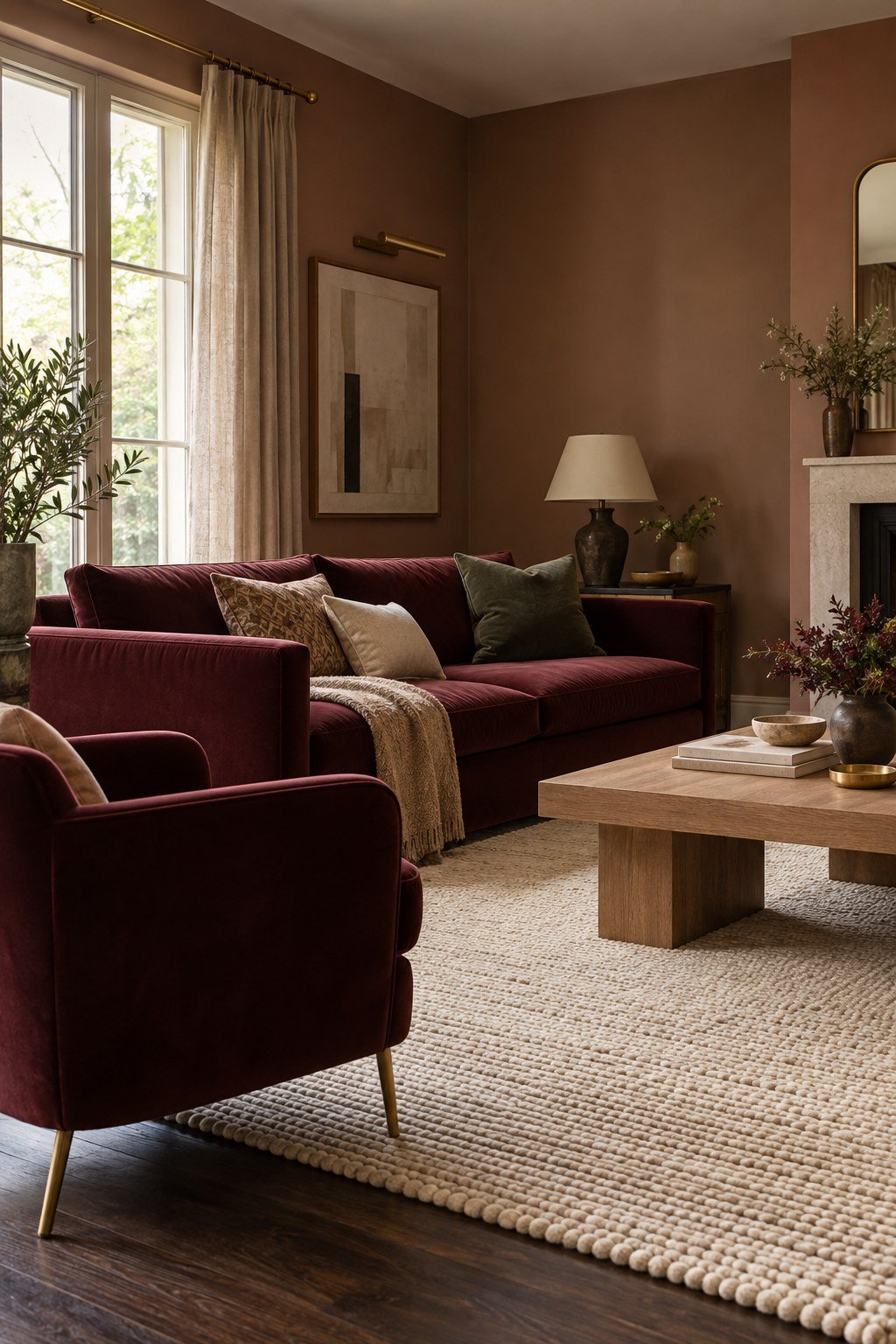
A rich burgundy sofa can set the feeling for the whole room. The fresh velvet catches the light, giving the seating a little movement against the warmer clay wall.
Build the other choices around the actual fabric. Look at paint, wood and rug samples beside it so the undertones feel connected in your own light.
Use the colour confidently across the main seats, then keep the surrounding details fairly quiet. Our burgundy room ideas have more ways to work with this rich shade.
5. Add richness with a small cushion palette
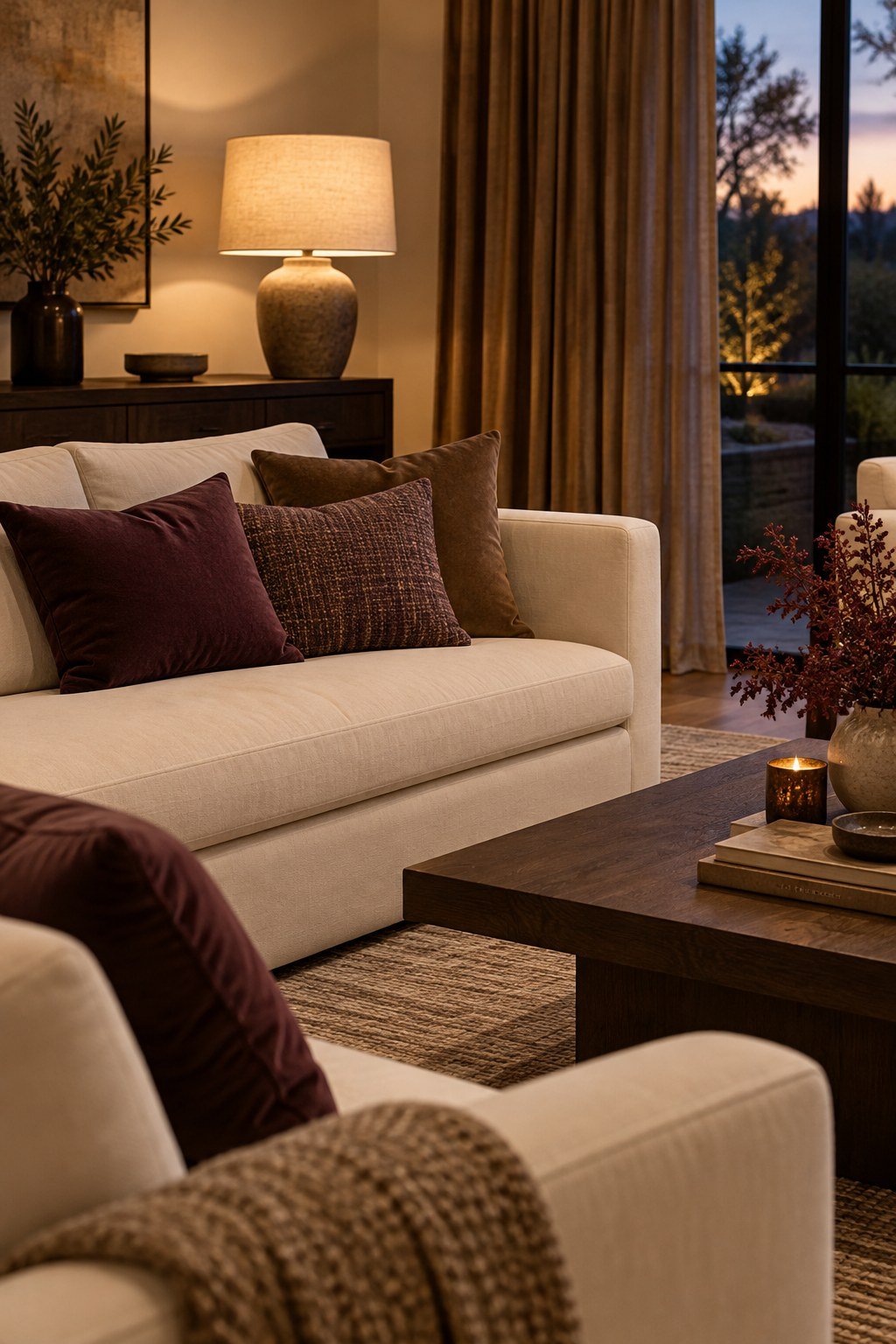
Plum and cocoa cushions can give cream seating a richer evening character. The light sofa and chair still feel airy, while the smaller fabrics add depth.
Choose two or three related textures rather than lots of unrelated colours. A woven cover, a softer fabric and a quiet plain cushion can feel layered without looking busy.
Keep enough space to sit comfortably, and choose covers that suit your care routine. Cushions are an easy detail to change when you want the room to feel a little different.
6. Ground the seating with a muted patterned rug

A rug with a soft, worn-in-looking pattern can add character while the furniture itself stays fresh. Muted rust, navy and burgundy connect this seating area without another bold accent.
Look at the pattern from a distance as well as close up. It should feel comfortable beside the upholstery and artwork, rather than making every part of the room compete.
Measure the seating group before choosing the size, and use suitable underlay for the floor. A generous rug helps the chairs, sofa and table read as one inviting place.
7. Use warm wood as a substantial centrepiece

A walnut coffee table brings warmth and a little visual weight to the centre of the room. The fluted sides make the wood interesting without needing a collection of objects on top.
Choose the table height and shape for how you use the sofa. You should be able to reach a mug comfortably and move around the edge without catching your knees.
Let the grain and shape do some of the styling work. A book, a useful tray or a small bowl can be enough to make the surface feel lived in.
8. Bring in a little smoked glass

Smoked glass gives a moody room a different sort of texture. The brown tint feels warm, while the lighter-looking frame balances the solid upholstery beside it.
Check the table’s stability, edge shape and suitability for your household. A side table should work comfortably in the place you reach for a drink or set down a book.
Keep the surface lightly styled so you can still enjoy the glass. One useful object looks more intentional here than a crowded collection hiding the material.
9. Choose a lamp with a soft, shaded glow

A pleated fabric shade brings gentle texture into the evening setup. The ceramic base and walnut furniture make this olive corner feel especially warm.
Choose a lamp that gives useful light where you need it, with a bulb that suits the fitting. Check the shade’s proportions against the surface beneath it so the arrangement feels balanced.
Place another useful light elsewhere if the rest of the room feels dim. Our living room lighting ideas explore ways to make the whole space comfortable after dark.
10. Give the windows a generous fabric frame
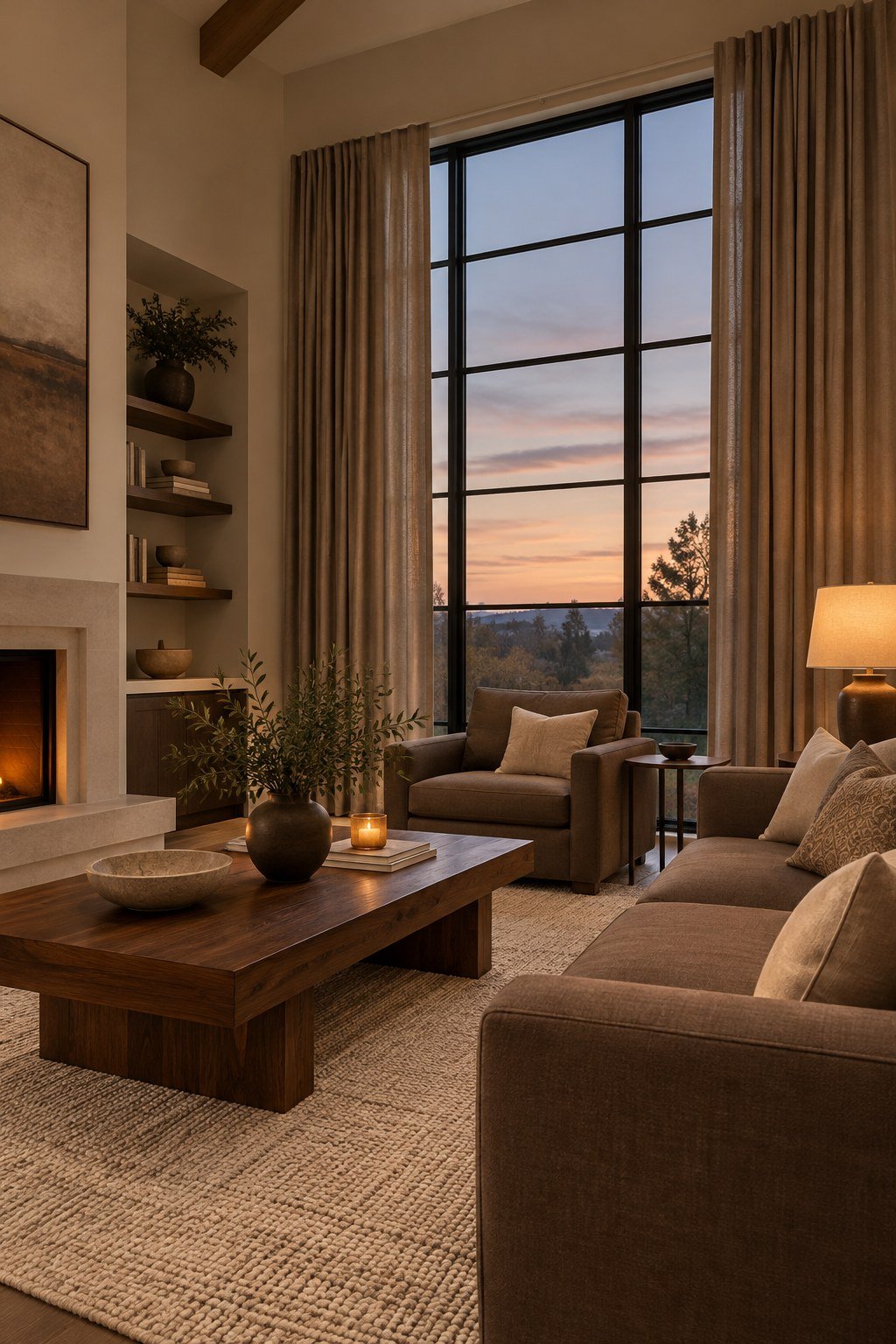
Textured curtains add a broad, soft layer to the room. Warm taupe sits beautifully beside cocoa upholstery and dark walnut, especially as the daylight fades.
Allow enough room beside the window for the curtains to stack back. Keeping the glass useful in the day makes the evening change feel more noticeable.
Check the finished length, lining and care guidance before choosing the fabric. Keep the hem and hardware practical for the room, including nearby heaters and walking routes.
11. Give one large artwork a quiet backdrop

One generous piece of art can give a moody room a clear focal point. The warm mat and dark walnut frame keep this landscape connected to the furniture below it.
Look at the picture’s overall size beside the sofa and the available wall. Leave it some breathing room so the artwork feels chosen, rather than squeezed between shelves and lamps.
Choose something you enjoy looking at in ordinary life. The room gains more personality from a picture you like than from artwork selected only to match a cushion.
12. Make one corner especially comfortable

A matching chair and footstool can turn a small part of the room into a lovely place to linger. Deep olive gives this corner a rich, settled feeling.
Check the footprint with the footstool in use, including the space needed to get in and out of the chair. A nearby side table is often more useful than extra decorative furniture.
Add a reading light where it works for you and keep the floor route clear. Our reading nook ideas offer more ways to make a comfortable corner.
13. Let trim blend into the wall colour
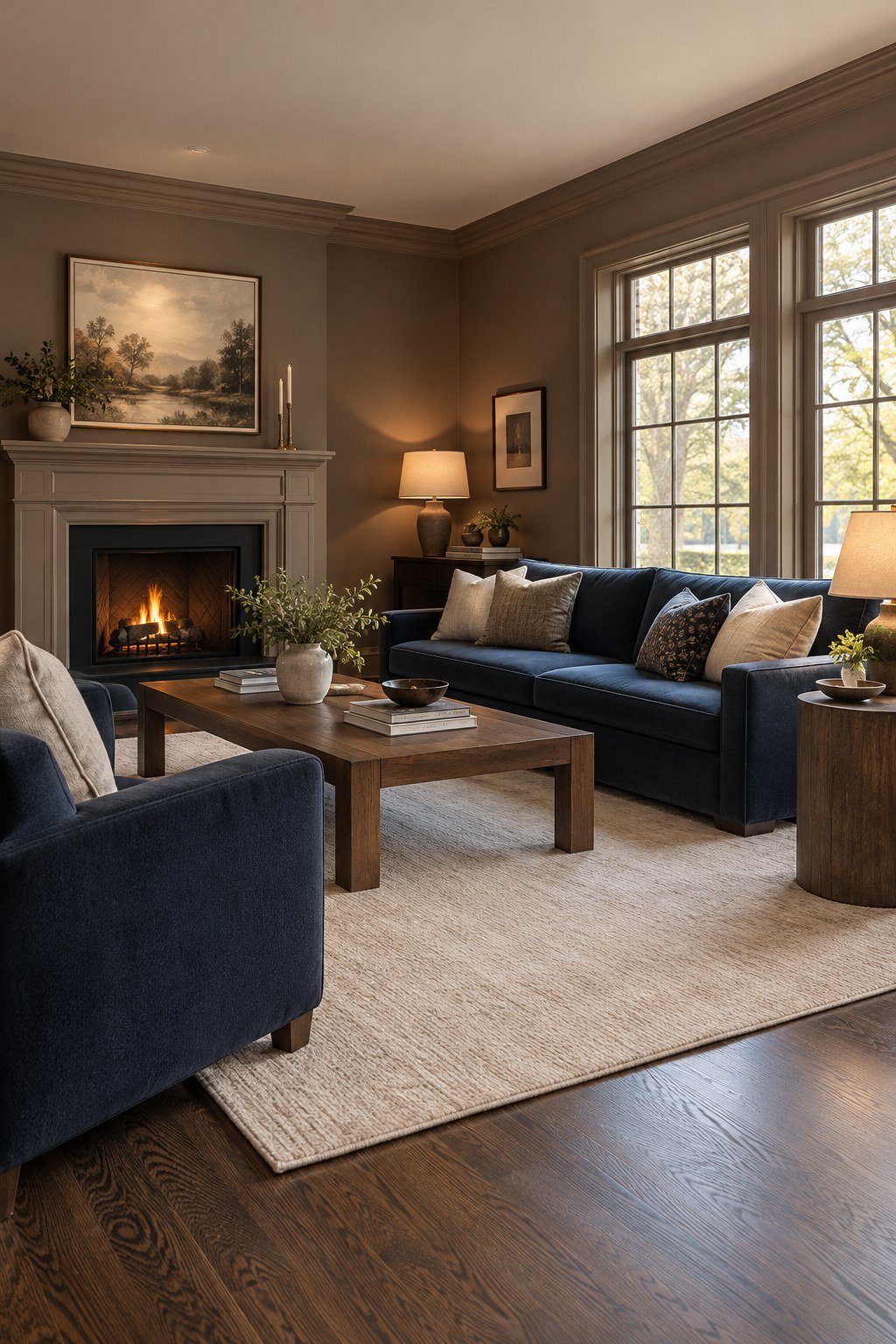
Painting suitable trim in the wall colour can make the room feel more continuous. The softer edges give the furniture and textiles a little more attention.
Try the colour on generous samples and consider the finish needed for each surface. The same colour can look different across materials and levels of sheen.
Keep the other relationships clear: coordinated upholstery, warm wood and one softer floor layer. The room can feel rich while its structure stays fairly simple.
14. Leave useful gaps on the shelves
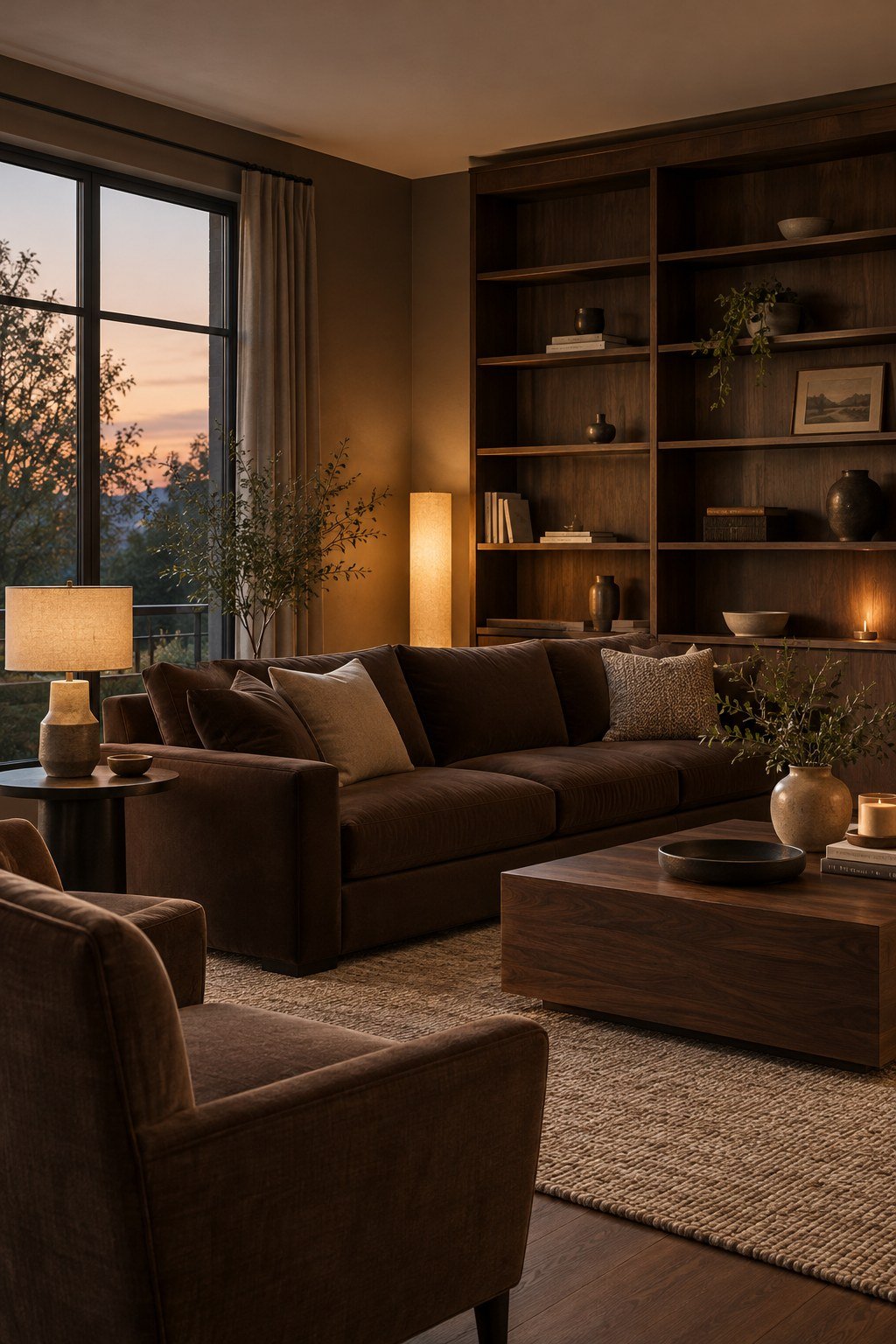
A little empty shelf space helps a room feel settled. A few books and ceramics are easier to enjoy when every available gap isn’t filled.
Group the things you like and step back to look at the overall balance. Leave room around larger pieces, and keep everyday items easy to take out and return.
Repeat a material or colour from elsewhere in the room so the shelves feel connected. That small link is often enough to make a display feel considered.
15. Style the room at the time you use it most

The most useful final check is sitting in the room when you normally relax there. Notice where the light falls, where your drink goes and whether the furniture arrangement feels comfortable.
Try the lamps in different combinations and look for any awkward dark spots or glare. Move a small table or turn a shade before assuming the room needs another purchase.
Then let the space settle into real life. A favourite book, a comfortable throw and a good place to sit are the details that give the atmosphere a purpose.
Bring the atmosphere together one layer at a time
You can begin a moody living room with a fabric you love, a warm wood finish or a lamp that makes an evening corner feel good. The room doesn’t need every idea at once.
Choose a small set of colours and materials that belong together, then check them in daylight and after dark. Give the larger furniture room to work before adding the finishing details.
The nicest atmosphere feels comfortable to use. When the seat, light and little everyday surfaces are in the right places, the room becomes a lovely place to slow down.