
A wardrobe can be full of clothes and still make getting dressed feel strangely difficult. When the hangers barely move, sleeves get tangled and the shirt you want is wedged behind three others, adding more storage is not always the first thing you need.
These hanging clothes organization ideas are about making the rail easier to use. A little more space between pieces, the right hanger for the garment and a sensible home for the things that do not need to hang can make a big difference to an ordinary wardrobe.
Start by taking out anything that belongs elsewhere, then look at where the real squeeze happens. The product ideas come first below, followed by a few simple habits that help the arrangement stay useful once the washing is put away.
As an Amazon Associate I earn from qualifying purchases.
Images are AI-generated room inspiration, not manufacturer product photos. Selected SHOP SIMILAR links lead to products with a similar look; check the listing for the exact details and what is included.
1. Swap bulky everyday hangers for a slimmer set

A row of slim hangers can make an everyday wardrobe feel much calmer. The clothes sit at a more consistent height, and you lose some of the bulk that comes from mixing thick plastic, wooden and wire hangers. Soft ivory velvet looks especially gentle against pale shirts and warm wood.
Use slim hangers for the garments they suit, rather than replacing every hanger you own. A structured jacket or heavy coat may still need a broader, supportive shape. Check that the hanger width fits the shoulders so sleeves are not pushed out or left slumping over the ends.
Once the new hangers are in, test whether you can slide them along the rail without a tug. Keep the space you have gained instead of immediately filling it with more clothes. That little bit of movement is what makes the wardrobe nicer to use.
2. Add a lower rail beneath short clothes

If the bottom half of the wardrobe is mostly empty, a second rail can make better use of it. Short shirts above and folded trousers below are a useful pairing, provided both have enough room to hang freely. You gain a separate level without needing a bigger wardrobe.
A hanging chrome rod can be a straightforward option when your existing rail is suitable. Measure from the upper rail to the floor, then check the drop of the longest shirt and the trousers on their hangers. The hems should clear the lower rail and the floor comfortably.
Check the existing rail, brackets and wardrobe’s loading guidance before adding the extra weight. A second level helps with short garments; it will only get in the way of long dresses and coats. Keep a separate full-height section for those pieces if the layout allows.
3. Give skirts and trousers their own slim clip hangers
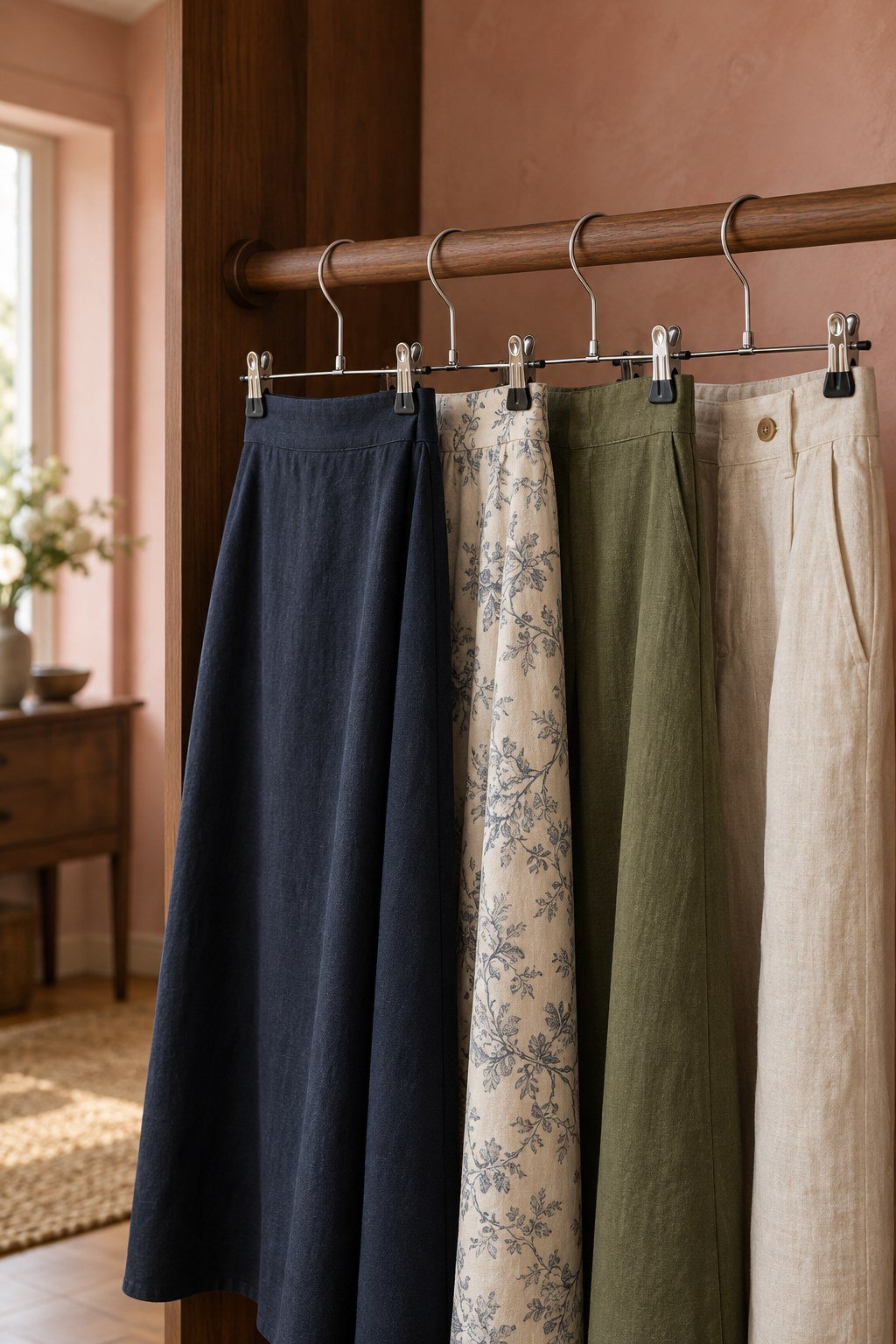
Skirts and trousers often take up more room than they need when they are draped over bulky hangers or doubled up with a jacket. Slim clip hangers give suitable pieces a clear place on the rail. You can see the waistbands and choose what you want without unfolding a pile.
Adjust the clips to fit the garment and check how they grip before leaving delicate fabric hanging. Padded tips can help, but some materials still mark easily. Follow the garment’s care guidance and use a different storage method if clipping is likely to damage it.
Leave enough space beneath the hem and keep the hooks facing the same way as the rest of the rail. One skirt or pair of trousers per hanger is easy to understand when clean laundry goes back. For a small room that has to handle several jobs, these small apartment bedroom ideas offer more ways to make the space work.
4. Gather lightweight scarves on one loop hanger

A scarf draped over every other hanger soon makes the whole rail feel messy. A loop hanger gives a small scarf collection one visible home. Choose a few favourites, thread each through its own opening and leave the rest of the hanger easy to see.
Keep this one light. Thin cotton and silk scarves take up much less room than several bulky winter wraps piled together. Fold or store the thicker pieces on a shelf if the full hanger starts to press into the clothes beside it.
Place it at one end of the rail so you can lift it out without dragging scarves through your shirts. Check that the ends do not trail on the floor or catch in drawers. It should make choosing an accessory easier, rather than become another crowded corner.
5. Move suitable knitwear into one narrow hanging shelf

Bulky knitwear can swallow a surprising amount of rail space, and some knits stretch when left on ordinary hangers. Folding suitable jumpers into a narrow shelf column gives them a different home. It also makes their colours and edges easier to see at a glance.
A fabric hanging organizer can help when the wardrobe has no shelves, but it takes up some rail width itself. Measure the column and compare that space with the clothes you plan to move into it. Use it only if the trade-off makes your particular wardrobe easier to use.
Keep the compartments lightly filled and follow the organizer and rail’s loading guidance. A couple of folded pieces per cubby are easier to pull out than a compressed stack. If you already have a chest of drawers or an empty shelf, try that first before adding anything to the rail.
6. Move foldable off-season clothes under the bed

You may not need every season on the rail at once. Moving clean, dry, foldable clothes you will not wear for a while into underbed storage can free up the part of the wardrobe you use each morning. It is particularly helpful when winter layers and summer pieces are competing for the same small space.
Low containers with clear tops make it easier to see what is inside without opening everything. Measure the bed clearance, including any supports underneath, and leave room to pull the container out. Avoid filling it so tightly that the lid bows or the zip struggles to close.
Keep pieces that need hanging in suitable hanging storage, and follow fabric care advice for anything delicate. A simple seasonal label helps you find the right container later. If deciding what to store feels like the bigger job, start with these manageable decluttering tips.
7. Sort by garment type before sorting by colour
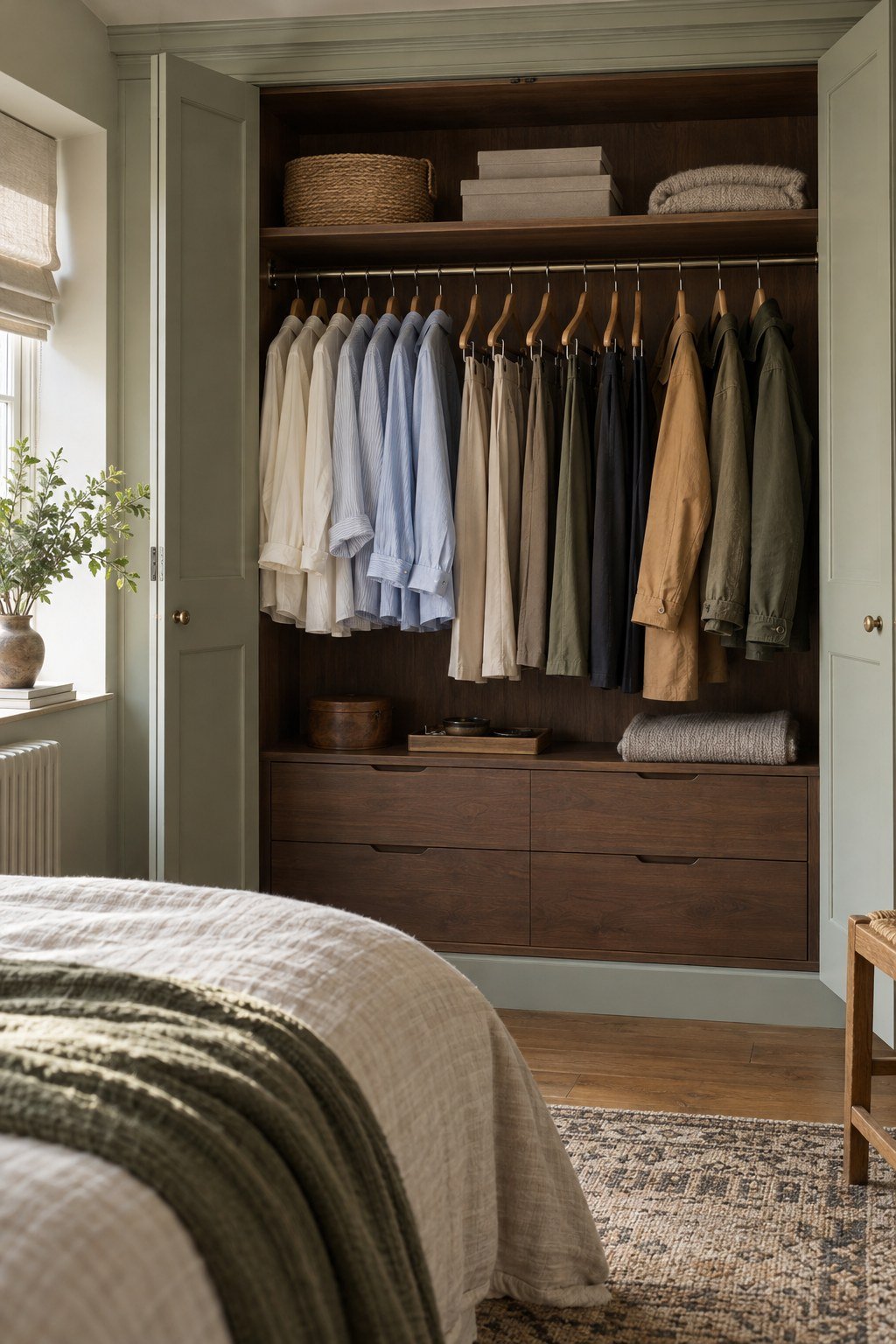
A colour-ordered rail looks lovely, but a practical wardrobe usually starts with garment types. Shirts together, trousers together and jackets together make it easier to find the kind of piece you need. You are not searching through everything pale just to locate a white shirt.
Once the groups make sense, arrange colours within each one if you enjoy that look. A gentle move from light to dark can make a busy rail feel quieter without making the system complicated. Keep the groups small enough that you can recognise them without labels.
Put the clothes you reach for most in the easiest part of the wardrobe to see and access. There is no need to copy someone else’s order if your own routine works differently. The best arrangement is the one you can still follow when you are putting washing away in a hurry.
8. Keep long clothes out of the short-hanging zone
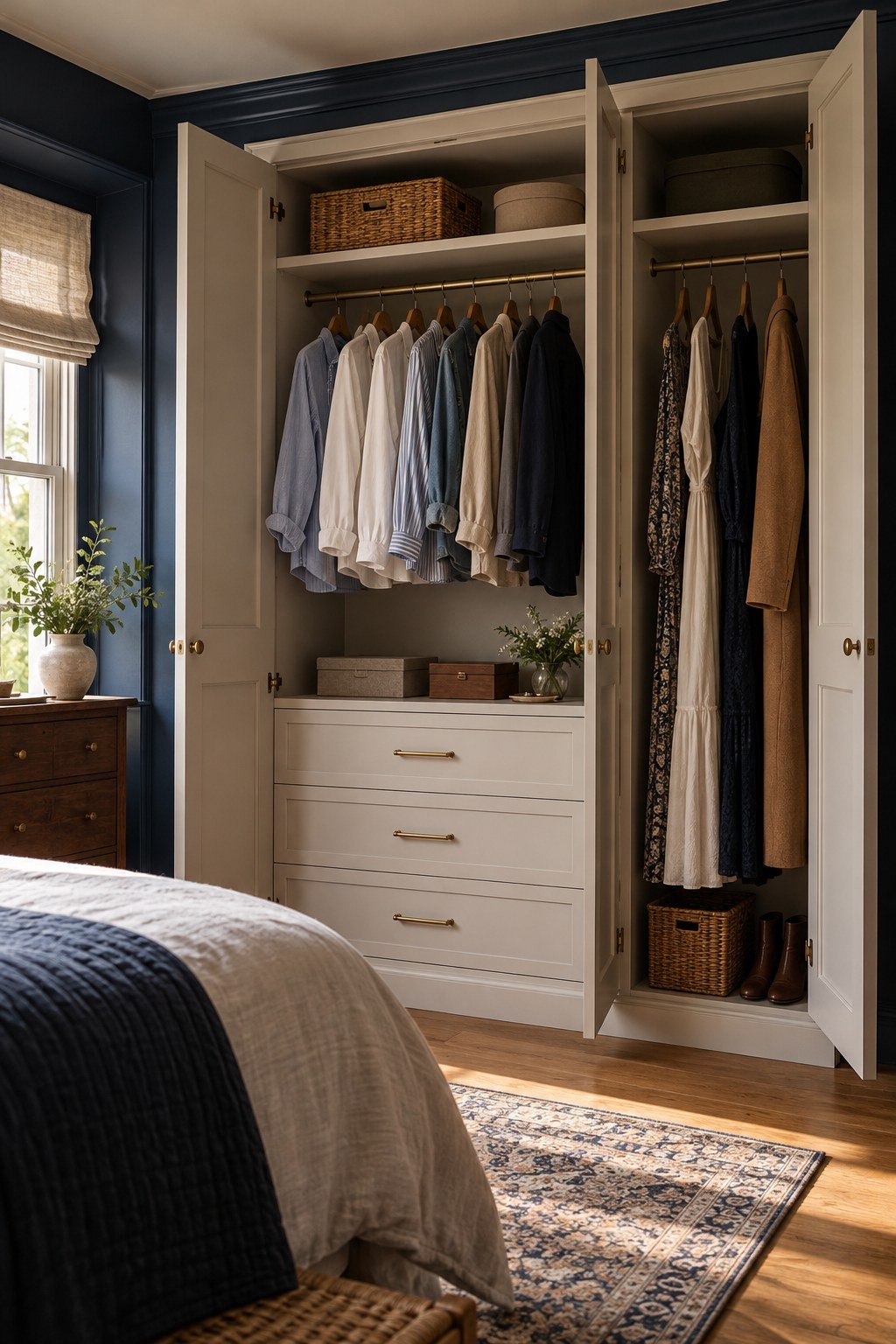
Long dresses and coats need a different kind of space from shirts and folded trousers. Giving them a full-height section stops their hems catching on drawers, baskets or a lower rail. Even a narrow long-hanging bay can make the rest of the wardrobe easier to arrange.
Group those longer pieces at one end if you have a single continuous rail. That leaves the area beneath short clothes available for drawers, folded storage or a lower rail where suitable. Keep the floor beneath long items clear so they can hang naturally.
Measure the longest piece while it is actually on its hanger before changing a layout. Shoulder position and hanger shape can alter how much drop it needs. A little more clearance is more useful than squeezing in an extra box that rubs against the hem every day.
9. Keep one garment visible on each everyday hanger
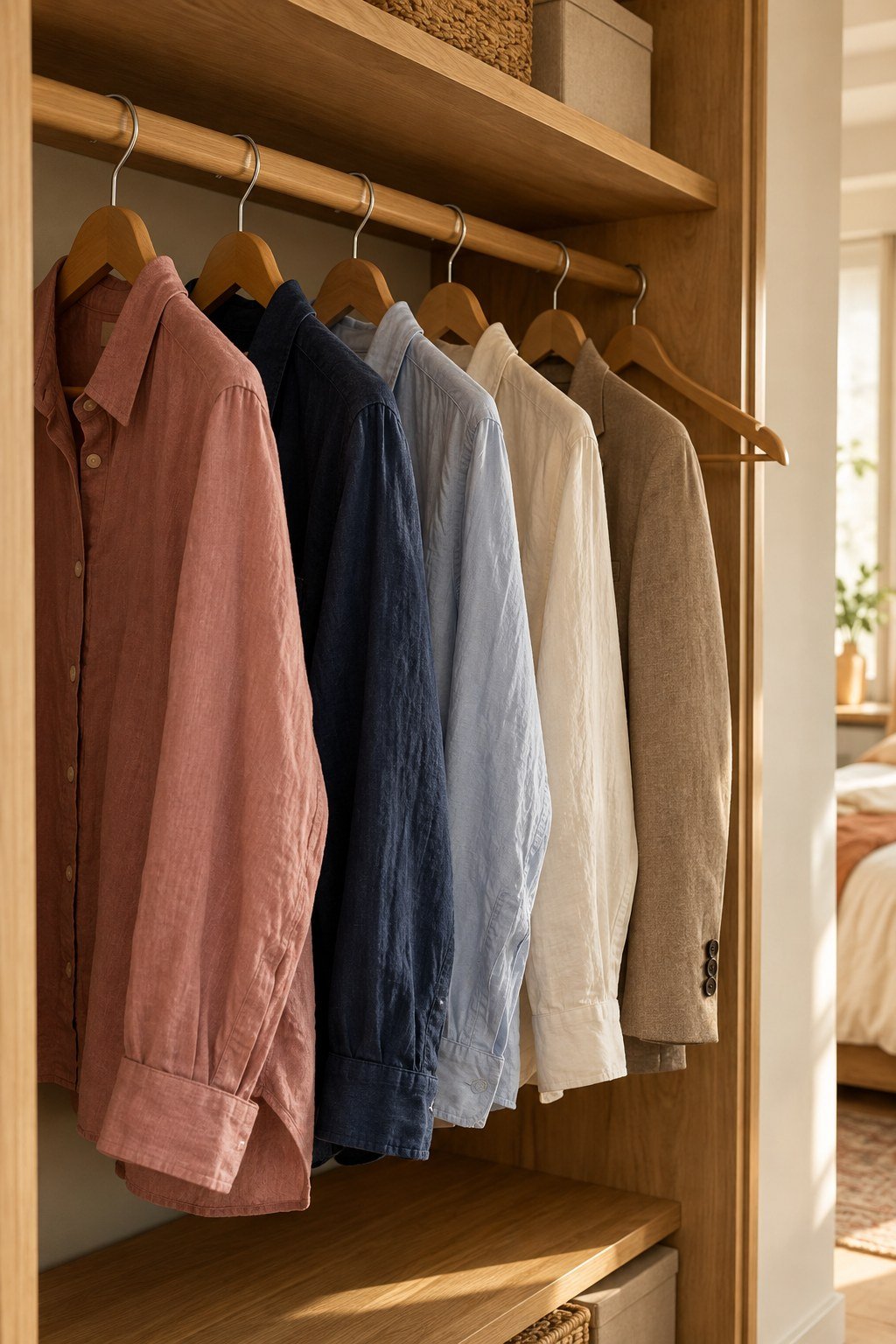
Putting several tops on one hanger can look like a clever saving until you need the one underneath. It also makes it much easier to forget what is there. For everyday clothes, one garment per hanger gives you a clearer view of your actual choices.
Make exceptions only where they suit the way you dress, such as a jacket and trousers you always wear as a set on a suitable hanger. Otherwise, separate the pieces and see whether you can recognise each one from the front. If you cannot, the rail may still be too crowded.
Do not feel you have to solve the problem by buying another batch of hangers. Check for duplicates, clothes waiting for repairs and pieces that belong in a drawer. Clearing a few of those can make more difference than another clever stacking arrangement.
10. Give wear-again clothes a small landing spot

The chair pile often starts with clothes that are not ready for the laundry but are not quite ready to go straight back into the wardrobe. Give those pieces a small, defined spot nearby. One or two hooks with hangers can keep an overshirt or cardigan visible while it airs.
Choose a position with suitable airflow and follow the garment’s care guidance. Keep the spot separate from clean clothes and the laundry basket so its purpose stays clear. Hooks need to suit the wall surface and the weight you intend to put on them.
Limit it to a couple of pieces, then return, wash or deal with them before adding more. If the area becomes a second wardrobe, it is time for a reset. Good light makes checking and choosing clothes easier too; these bedroom lighting ideas include useful options for getting ready.
11. Keep empty hangers together and protect a little spare room
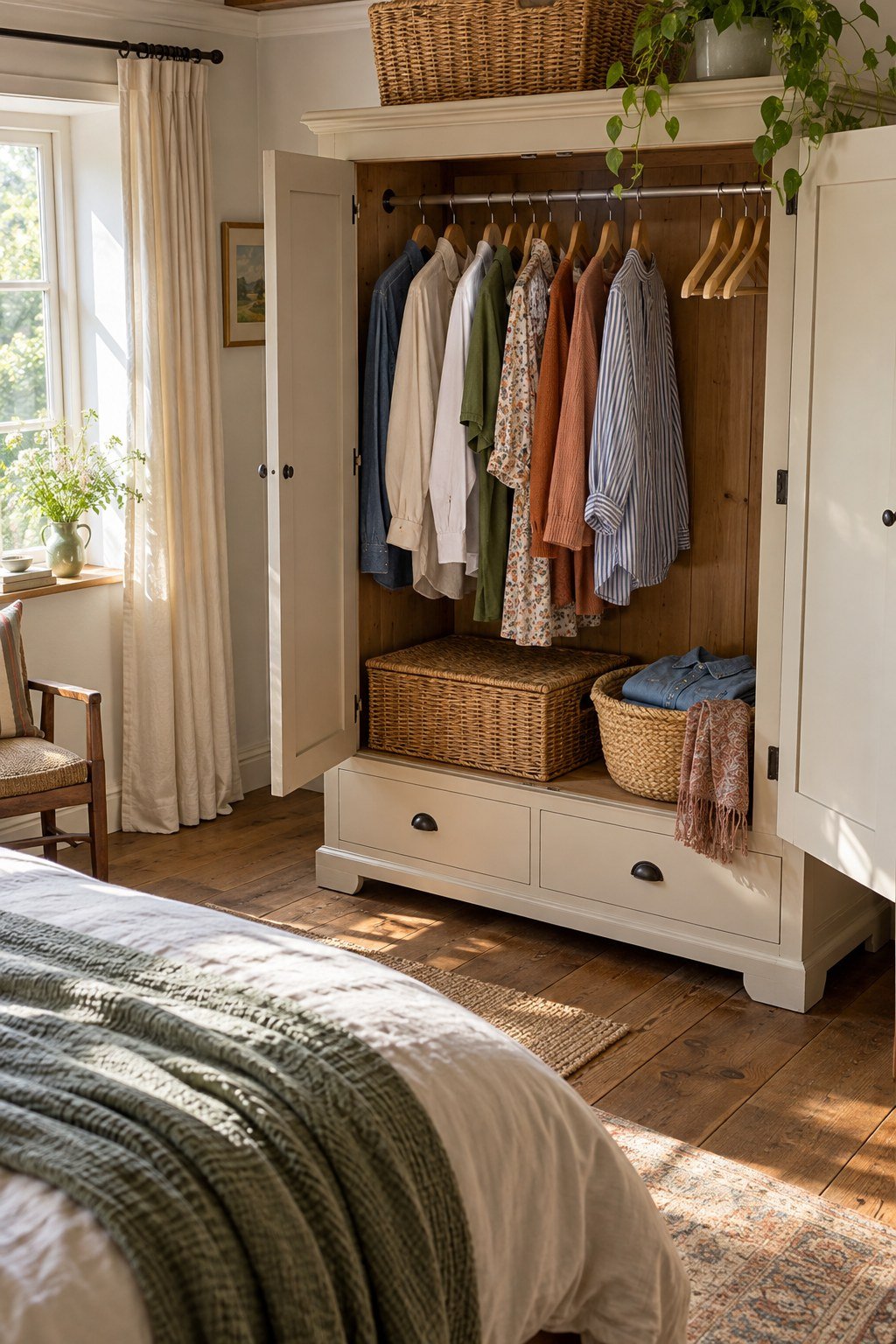
A few empty hangers scattered through the wardrobe can make it feel fuller than it is. Group them at one end when clothes come out, then use them when the clean washing returns. It is a tiny habit, but it makes putting things away much less fiddly.
Try to keep enough room for the hanging clothes to move freely instead of aiming for a fixed number of items. Fabrics and hanger shapes take up different amounts of space, so the slide test is more useful than an arbitrary wardrobe limit. You should be able to lift out a garment without pulling its neighbours with it.
If that spare room keeps disappearing, do a quick check before adding another organizer. Move repairs to a place where you will actually deal with them and set aside clean duplicates you are ready to rehome. Keep shared decisions with the people who wear the clothes, and let the wardrobe settle into a size that works for your household.
An easier approach to hanging clothes organization
A useful wardrobe does not need to look like a shop display. It needs to let you see what you own, take out what you want and put clean clothes back without a wrestle. A little breathing room does a lot of the work.
Choose the part of the rail that causes the most frustration and start there. That might mean changing a few hangers, moving knitwear to a shelf or giving long clothes their own clear section. Try one change before deciding you need more storage.
The aim is a calmer start to the day, with clothes that are easy to find and easy to care for. Once the rail works around the way you actually get dressed, keeping it organised becomes a much smaller job.