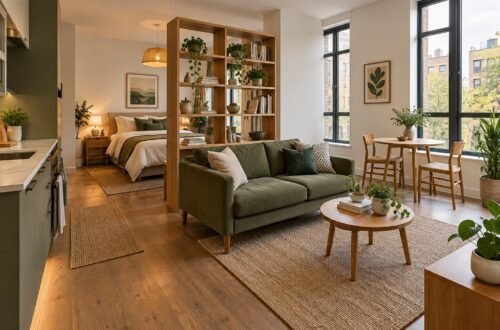
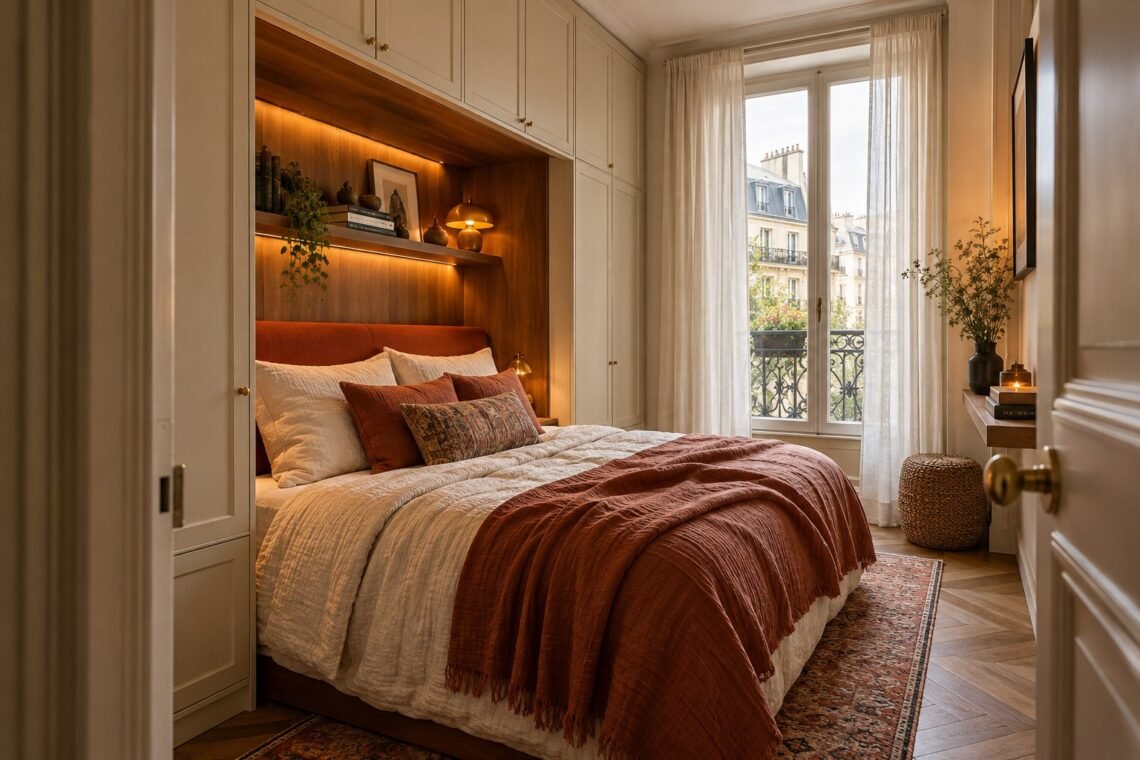
A small apartment bedroom can be the room you most look forward to coming home to. Think of a snug bed alcove lit like a little retreat, a desk tucked underneath a loft bed, or a window seat that turns an awkward corner into your favourite reading spot. There’s plenty you can do with a small footprint when you give the room a clear idea.
These small apartment bedroom ideas look at the whole space: where you sleep, how you move around, what you need to store and the details that make it feel yours. Some are simple styling changes; others are worth considering when you’re buying furniture or planning fitted storage. Choose the layout that suits your room, then borrow the colours and finishing touches you love.
As an Amazon Associate I earn from qualifying purchases.
Images are AI-generated room inspiration. Selected SHOP SIMILAR links let you browse similar furniture or accessories; check dimensions and suitability before buying.
1. Put a desk underneath a loft bed

If your ceiling height allows it, a loft bed lets your sleeping area and workspace share the same patch of floor. The bed sits up above, while a proper desk and chair tuck underneath. It’s a particularly useful option in a bedroom for one person when a conventional bed would leave almost nowhere to work.
Make the lower level feel like a little study: a warm desk light, a painted wall or pinboard, and one place for notebooks can give it its own identity. Keep the rest of the room relatively open so the frame becomes a deliberate feature. Natural wood with a muted blue or plum accent feels grown-up and cosy.
Choose a purpose-built loft bed rated for its intended user and mattress, and follow its ceiling-clearance, guardrail, anchoring and ladder requirements. Check seated headroom below as carefully as the space above the mattress, and allow a clear climbing route. This is one to measure properly before falling in love with the photograph.
2. Frame the bed with fitted wardrobes
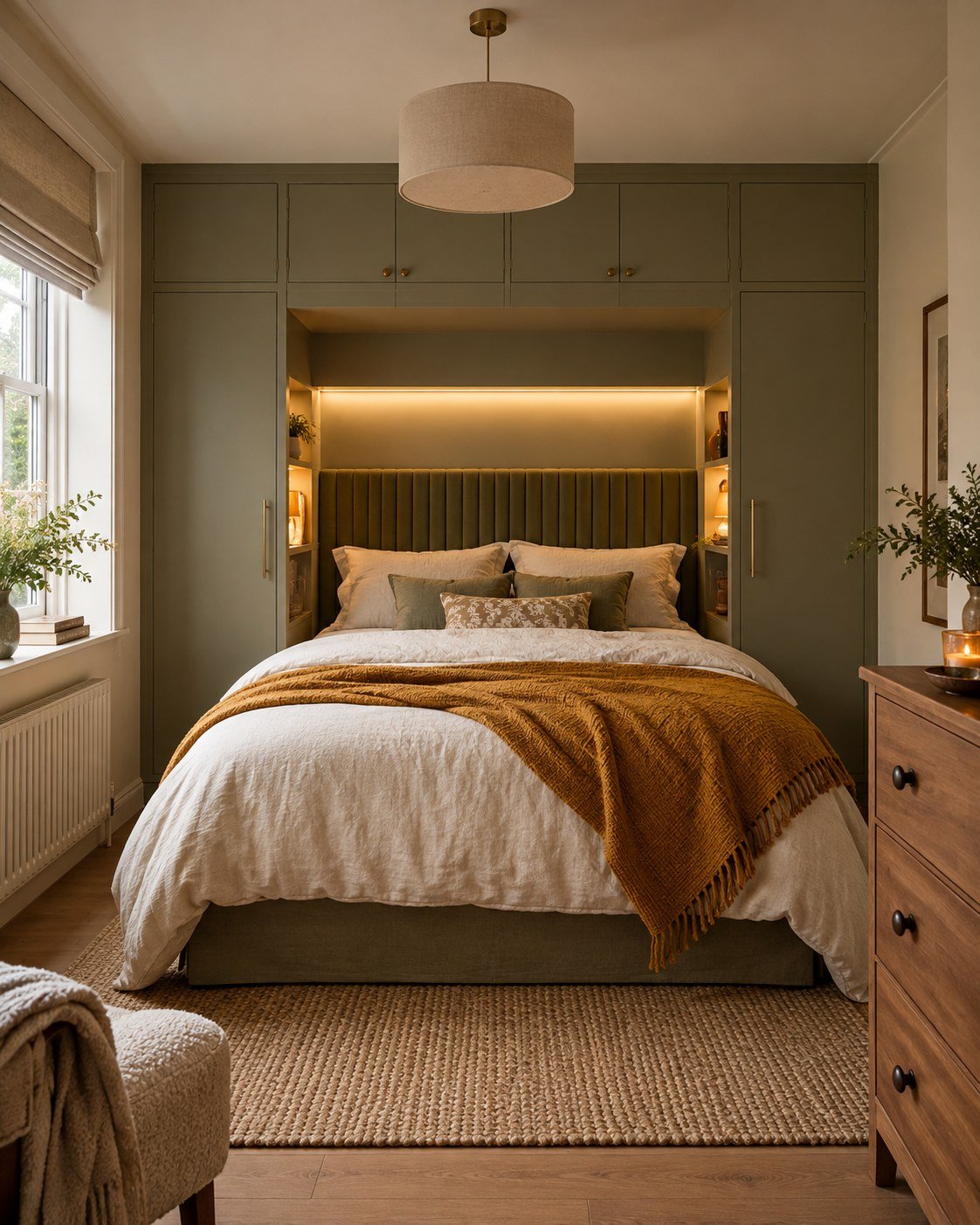
A bed alcove can make a tiny room feel beautifully considered. Tall wardrobes at either side give clothes a home, while the bed settles into the middle like it belongs there. A ribbed headboard panel, recessed niches and soft lighting turn the storage wall into the room’s main feature.
Keep the cabinetry in one quiet colour and let the alcove introduce a little contrast. Cream cupboards with a sage panel, warm oak details and an ochre throw give the room depth without a busy mix of furniture. Small bedside niches can hold a book and glasses without separate tables taking up the floor.
This usually needs a fitted design tailored to the bed, doors and room dimensions. Check door swings, ventilation and useful access on both sides; high cupboards and lights need suitable professional installation. Even without overhead cabinets, two well-fitted side wardrobes and a painted centre panel can create a similar tucked-in feeling.
3. Make a narrow room work with a daybed
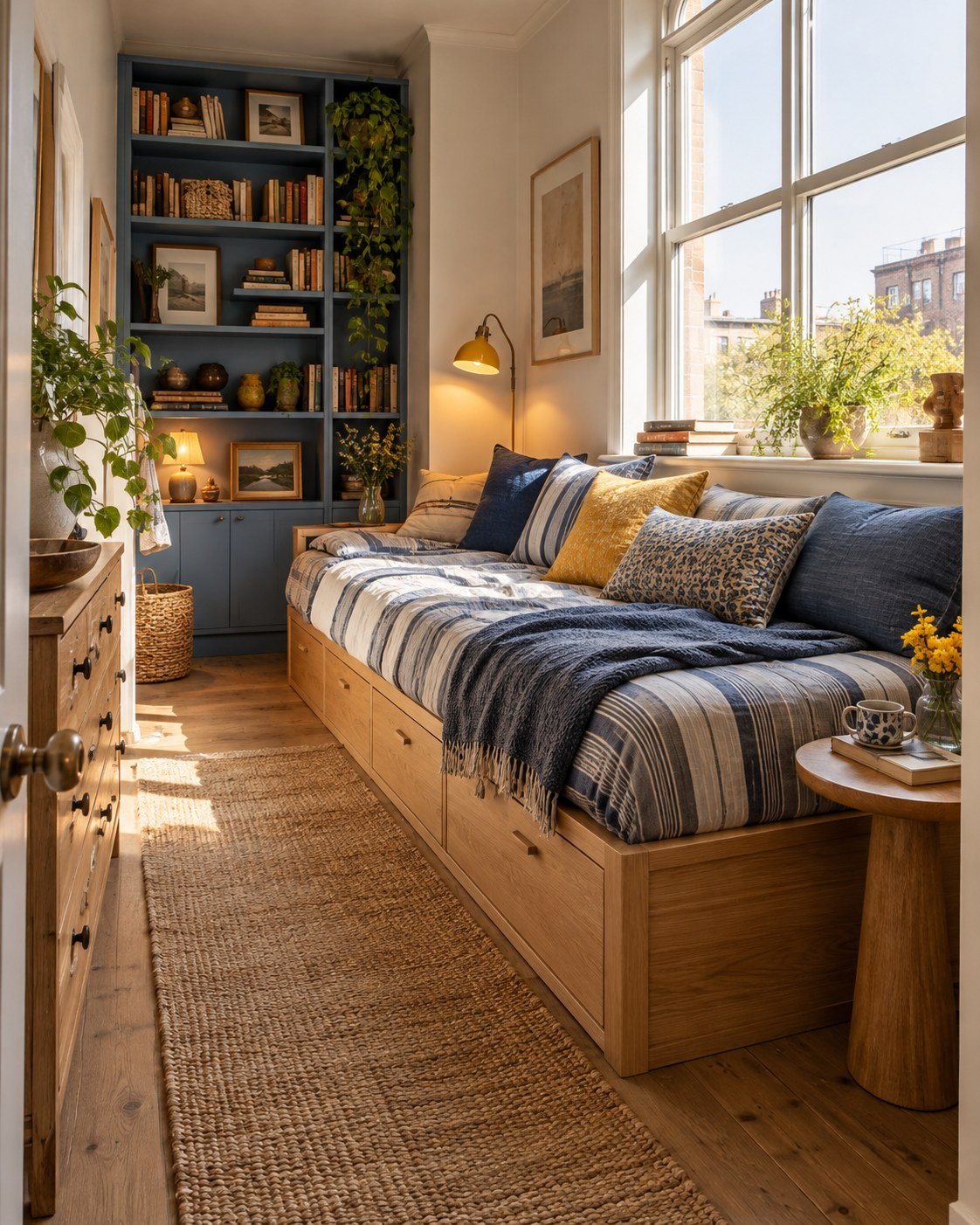
In a narrow bedroom, a single daybed against the long wall can leave a useful strip of open floor. During the day it reads as a place to sit, and at night it’s a proper sleeping spot. This suits someone who likes to read, have a friend over or use the room for more than sleeping.
Style the wall side with a few comfortable cushions and keep a throw within reach, then put the extra cushions away at bedtime. A striped blue cover, honey-toned wood and a cheerful yellow lamp make the room feel relaxed and sunny. Drawers underneath can take spare bedding if there’s room to pull them out.
Choose the mattress for everyday sleep if this is your main bed, rather than treating comfort as an afterthought. Measure the complete frame and any pull-out section, including the space it needs when open. You can also borrow the layout with a standard single bed and a wall-length upholstered cushion.
4. Free the floor with a fold-away bed

If the bedroom also needs to be a study or hobby room, a fold-away wall bed can give you the floor back during the day. Closed cabinetry creates a calm backdrop; opened at night, it becomes the sleeping area. It’s a bigger change, but one that can make a small room useful in two very different ways.
Plan the daytime version of the room as carefully as the bedtime one. A small desk, a comfortable chair and a rug can make it feel finished when the bed is away. Cream cabinetry, walnut accents and one rich wall colour give the room warmth while keeping the large cabinet visually settled.
Wall beds need a suitable purpose-designed mechanism and professional installation into an appropriate structure. Check the full opening area, mattress limits and what must be moved before lowering it. If you rent, this will normally need the owner’s agreement; it’s a renovation idea rather than a quick furniture swap.
5. Turn a tiny bedroom into a jewel-box retreat

A small room doesn’t have to be pale to feel inviting. Deep burgundy, aubergine or olive can give a bedroom a lovely enclosed atmosphere, especially when the bed is the obvious focal point. Painting the ceiling as well can make the colour feel intentional and immersive.
The contrast is what brings it to life: a pale upholstered headboard, rumpled pink bedding, an ochre throw and a little brass beside the bed. Add a small group of favourite pictures rather than scattering decoration everywhere. Warm pools of light help the colours feel rich once daylight fades.
Try paint samples on more than one wall and look at them morning and evening before committing. If a full colour change feels too much, start with the headboard wall and repeat its shade in the bedding. Our dark bedroom ideas have more ways to build this cosy, atmospheric look.
6. Give the wardrobe sliding doors

When a wardrobe faces the bed, opening hinged doors can take over the only walking space. Sliding doors can make that layout easier to use because the panels move across the wardrobe front. The room still needs a comfortable aisle, but you don’t have a door swinging into it.
Warm oak panels can make the wardrobe feel like part of the room’s architecture. Pair them with a soft blue quilt, creamy walls and a little rust or red-brown in a lamp or cushion. A consistent finish across a large storage wall helps the whole room feel more composed.
Check that the internal layout works with the door positions: you need to reach rails and open drawers through the available opening. Sliding doors also need their own track depth and fitting clearances. Compare complete wardrobe dimensions rather than assuming the sliding version is automatically shallower.
7. Tuck a desk into the window alcove
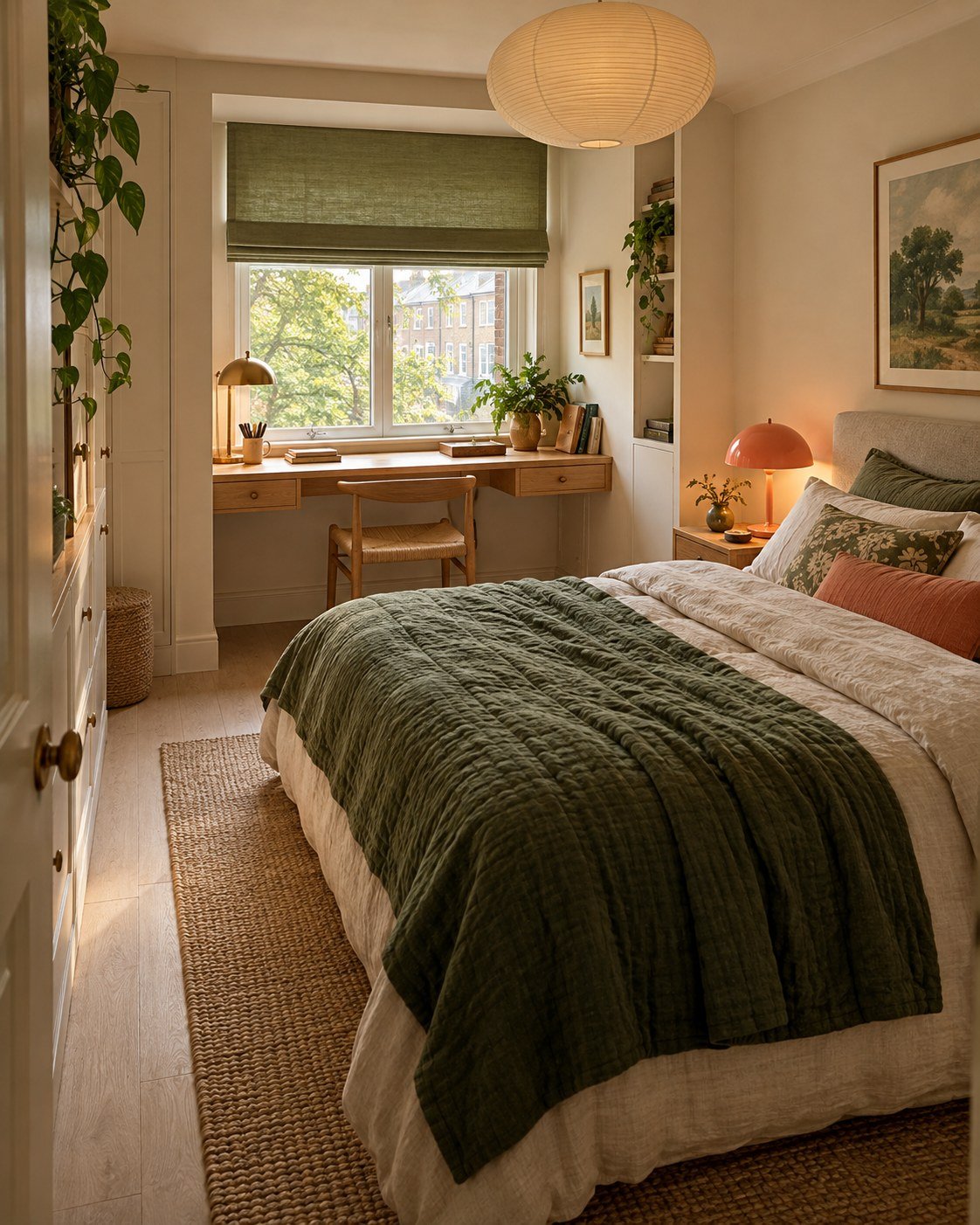
A shallow desk in a window recess can make an awkward end of the room feel purposeful. It uses the width that’s already there and leaves the main part of the bedroom for the bed. The daylight also makes this a lovely place to write, get ready or sit with a morning coffee.
Keep the desk visually light with a simple timber top and just enough storage for what you use. A green Roman blind, coral lamp and an oatmeal-and-forest-green bed create a cheerful but restful palette. A chair that tucks neatly under the surface helps the room settle down when you’ve finished.
Measure knee room, chair space and the window opening before fitting a desktop. Leave heaters and ventilation unobstructed, and plan power without trailing cables across the room. If you work here for long periods, make sure the desk and chair support a comfortable setup; our small-room home office ideas offer more inspiration.
8. Give a studio bed its own curtain-lined nook

In a studio, a curtain can give the bed a sense of privacy without building a permanent wall. Draw it around the sleeping area in the evening, then open it when you want daylight to reach farther into the apartment. It makes the bed feel like a little room within the room.
Choose a fabric that hangs softly and looks good beside the bedding. Ivory linen-look panels with pale blue sheets, one picture and a warm bedside light can create a quiet retreat even when the living area is close by. A ceiling-mounted track gives a continuous line where a suitable installation is possible.
Plan where the fabric will gather when open, and keep it away from heaters, lights, ventilation and walking routes. The track needs appropriate fixings and permission where required. It provides visual separation rather than soundproofing; our room divider ideas include other approaches if you need a different boundary.
9. Build storage into a low sleeping platform

A low platform with drawers underneath can gather the bed and some of the room’s storage into one piece. It works particularly well when there’s a clear side from which to reach the drawers. The result can feel calm and architectural, with fewer separate cabinets around the room.
Let the materials do the decorating: pale oak, textured plaster, an ivory duvet and a chocolate linen throw are enough to give the space warmth. A paper-shade lamp and one piece of art finish the scene without crowding it. The simple lines make the clever storage feel part of the design.
A custom platform needs proper support, mattress ventilation and a sensible way to access and clean the storage. Check the drawer extension against the available floor space before having it made. A ready-made storage bed can offer a similar benefit if a fitted platform isn’t practical.
10. Use a headboard wall with built-in bedside ledges

A headboard with integrated ledges gives the bed a strong backdrop and somewhere to put the essentials. It can replace separate bedside tables when the layout is tight. Shallow niches for a book or glasses make the wall useful without needing a shelf full of decoration.
Walnut against dusty blue looks especially lovely with cream bedding and a burgundy patterned cushion. Add a reading light on each side and keep the ledges mostly clear so the joinery stays visible. It’s a small-space idea that can feel wonderfully finished once the colours and lighting work together.
Check the overall depth before choosing or commissioning a storage headboard; it still uses space behind the bed. Place lights and switches where you can comfortably reach them, with wiring or cables properly managed. Our bedside table ideas include more alternatives if a full headboard wall isn’t possible.
11. Use mirrored wardrobe doors to open up the view

Mirrored wardrobe doors can bring more light and a longer view into a small apartment bedroom. They also give you a full-length dressing mirror without finding another patch of wall. The effect works best when you think about what the doors will reflect.
Position the bed and its layers so the reflection becomes a pleasing part of the room: a sage quilt, curved rust headboard and softly lit corner are lovely things to see twice. Keep the floor beside the wardrobe easy to use. A reflection of a clear route feels very different from one of laundry waiting to be put away.
Check glare from the window and how the doors look from the bed before deciding on a fully mirrored wall. The wardrobe needs secure installation, and sliding mechanisms should be suited to the panels’ weight. A mix of mirrored and solid doors is an option if you prefer a softer effect.
12. Turn an awkward corner into a storage window seat

A deep dormer or unused window recess can become a little reading perch, with storage beneath the cushion. It gives a small bedroom somewhere to pause besides the bed. In a room with a sloping ceiling, a low seat can make an awkward corner feel like the best part of the layout.
Make it inviting with a comfortable cushion, a small reading light and a colour that appears elsewhere in the room. Moss green with rust and warm cream brings the cosy feeling without needing lots of accessories. A book and a view are plenty of finishing touches.
Check comfortable sitting headroom, access to the window and space to open the storage. A fitted seat must be strong enough for its intended use and keep heating and ventilation clear. If the recess isn’t deep enough to sit in, a shallow ledge for books or a bedside surface may be the better use of that corner.
Make your small apartment bedroom somewhere you love
Start with the way your room could work, then build the look around it. A sleeping loft, a tucked-in bed or a curtain that closes around your own little nook can give a small apartment bedroom a real sense of place. You don’t need every idea here—just the one that makes you think, “I’d love to come home to that.”