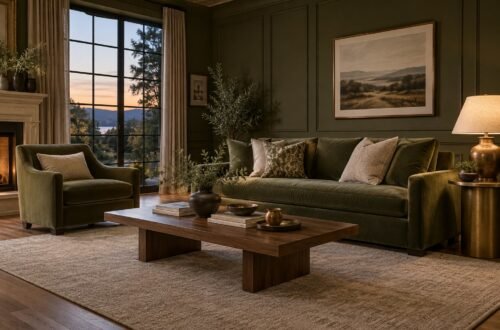

Brown has so much more to offer than a sensible sofa. Think buttery caramel leather in the sunshine, a deep chocolate corner you want to curl up in, or little touches of cocoa against a creamy backdrop. It can feel bright and easy, wonderfully moody, or somewhere comfortably in between.
The nicest brown living room ideas give the colour something to play against. That might be a generous pale rug, olive walls, a dusty blue curtain or the soft glow of a shaded lamp. A few differences in tone and texture keep the room feeling warm without turning everything into one brown blur.
Start with the pieces you already love, then choose one direction to build around. The sofa-led looks come first here, followed by smaller changes and room-wide ideas that work just as well with furniture you already own.
As an Amazon Associate I earn from qualifying purchases.
Images are AI-generated room inspiration, not manufacturer product photos. Selected SHOP SIMILAR links lead to products with a similar look; check the listing for the exact details and what is included.
1. Let a caramel leather sofa warm up a cream room

A caramel sofa does a lovely job of making a pale room feel less precious. The colour has enough depth to hold its own against cream walls, but it still catches the light beautifully. Keep the main backdrop simple and let the leather bring that warm, honeyed colour into the room.
A big cream rug makes the combination feel especially inviting. Add an oak coffee table, loose linen curtains and one or two darker details, such as a black picture frame or a walnut lamp base. Those little deeper notes stop the whole room from feeling washed out.
Give the sofa a bit of breathing space where you can. A few cushions, one soft throw and a table within easy reach are plenty. You can build on the same relaxed approach with these cosy living room ideas.
2. Sink into a chocolate sectional with soft oatmeal layers

A deep chocolate sectional is made for the kind of living room where everyone ends up with their feet tucked underneath them. Its darker colour gives a large seating area a cosy feel, while soft, rounded cushions keep the shape relaxed. It is a particularly lovely starting point if your room gets plenty of natural light.
Balance the sofa with oatmeal walls, a pale rug and a light stone or plaster-look coffee table. You do not need lots of different colours here. The interest comes from the contrast between soft upholstery, a slightly rough rug and the smoother surface of the table.
Before settling on an L-shaped arrangement, mark the sofa and ottoman footprint on the floor. Keep a comfortable route through the room and make sure you can reach side tables without squeezing past the chaise. A generous sofa should make relaxing easier, not make the rest of the room awkward.
3. Make a small cognac loveseat the star of an apartment
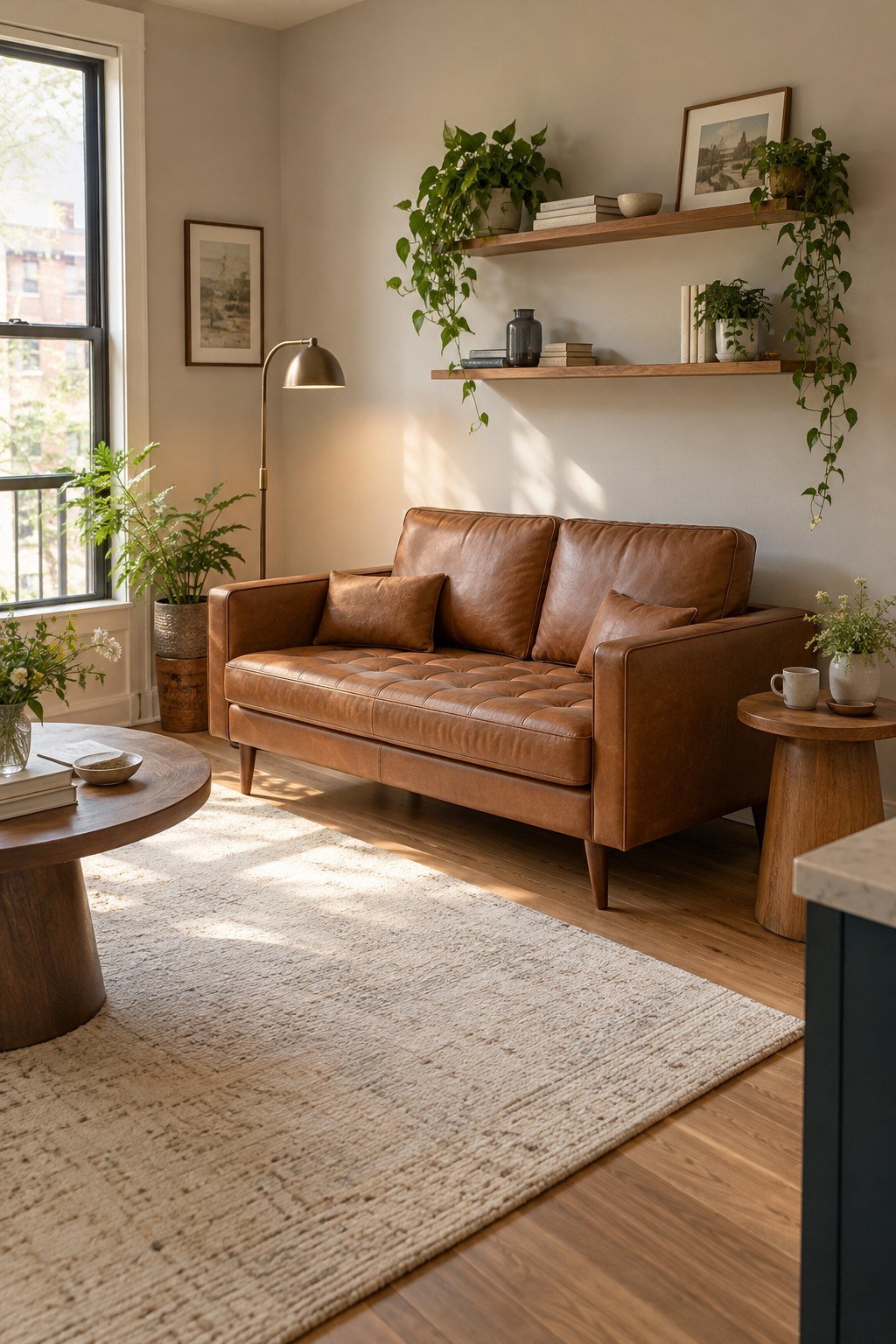
A small room can absolutely handle a brown sofa. A compact cognac loveseat gives it a warm focal point without taking over every spare inch. Exposed wooden legs are useful here because you can see more of the floor beneath the seating.
Use a round coffee table to soften the layout and choose a slim lamp instead of a bulky side table-and-lamp combination. A few wall shelves can hold books and favourite objects while leaving the corners open. Warm mushroom or off-white walls give the brown upholstery room to stand out.
Resist shrinking everything else just because the sofa is small. A properly sized rug and one confident piece of art often look calmer than lots of tiny accessories. Measure the entryway, door openings and sofa footprint before ordering, especially in an upstairs flat.
4. Try channel-tufted brown leather for a subtle retro feel

Brown leather and walnut make a gorgeous pair when you want a little seventies warmth without turning the room into a theme. A channel-tufted sofa brings in a clear, tailored shape, so the room already has some character before you add the finishing touches.
Give that stronger shape a few softer neighbours. An oval pale coffee table, a wool rug and curtains with a gentle drape stop the seating area from looking too rigid. A small dome lamp or an ochre print adds just enough of a retro nod.
Vary the brown tones rather than trying to match the sofa to every wooden piece. A darker cabinet and a slightly lighter floor can look much more interesting together. Leave a few open surfaces too, so the lovely shapes have space to show.
5. Build a laid-back snug around brown corduroy

Brown corduroy has an instant curl-up-and-stay-here quality. The ribs catch little shifts of light, which gives a simple sofa more depth than a flat fabric. In a snug, loft or second sitting room, a low, generous loveseat can set a wonderfully relaxed mood.
Keep the surrounding furniture low enough to feel comfortable alongside it. A small wooden coffee table, floor-level baskets and a wool rug help the seating area feel intentional. Cream walls are an easy backdrop, with a little terracotta or cinnamon in the cushions if you want another warm note.
Low seating suits some households better than others, so think about how easy it will be to sit down and stand up. If you like the corduroy look but prefer more support, use the same colour palette with a conventional sofa on legs. The warm fabric is what gives this idea its appeal.
6. Ease into cocoa with cushions on a cream sofa

You do not need a new sofa to try a brown living room. A pair of cocoa cushions against cream or oatmeal upholstery can change the feeling of the whole seating area. It is an especially easy way to see whether you prefer a soft milk-chocolate shade or something deeper.
Choose a texture you can actually see from across the room. Boucle adds little loops and shadows, while a plain brown cotton cushion would give a cleaner finish. Mix the squares with one striped lumbar cushion so the arrangement has a bit of variety.
Repeat a related brown elsewhere, perhaps in a picture frame, a ceramic lamp or a wooden bowl. Two or three small echoes help the cushions feel at home. For more soft, layered combinations, have a look at these warm neutral living room ideas.
7. Wrap the room in cocoa-coloured walls

Cocoa walls can make a sitting room feel like the best seat in a little boutique hotel. The trick is choosing a brown with enough warmth to look rich in your particular light. Some shades lean red, others grey or olive, and the difference becomes much clearer once they cover a larger area.
Try sample patches on more than one wall and look at them in daylight and with your evening lamps on. If you love an enveloping look, painting the skirting and built-in shelving in the same shade makes the edges quieter. A pale ceiling is a lovely option if you want a lighter top to the room.
Bring in contrast with a cream sofa, a faded rug and artwork with some lighter areas. You want places for your eye to rest within the deeper colour. A couple of shaded lamps will make the room feel welcoming long after the daylight has gone.
8. Pair camel brown with quiet olive green
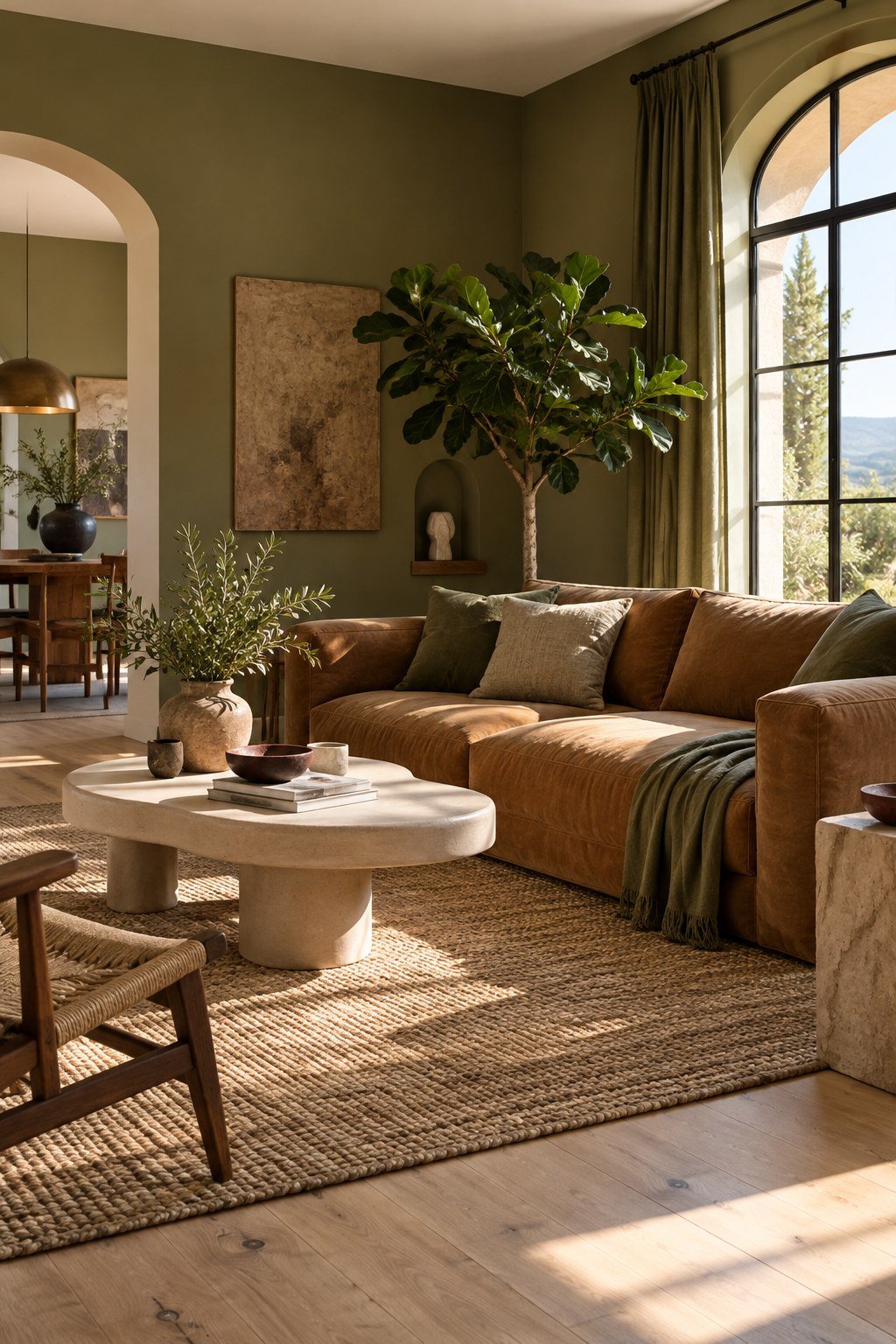
Camel and olive have a lovely outdoorsy warmth together. The golden side of brown lifts the green, while the olive keeps the scheme feeling grounded. It is a great direction if cream-and-brown rooms feel a little too neutral for your taste.
Let one colour take the lead. A camel sofa against olive walls is a clear, simple combination; alternatively, keep the walls light and bring olive in through curtains and a chair. Pale oak and natural woven textures sit happily alongside both.
A small darker accent makes the whole palette feel richer. Try a deep green cushion, a burgundy bowl or a dark wooden frame, then stop before every surface has an accent colour. You can find more green pairings in these green room ideas.
9. Cool espresso brown with dusty blue
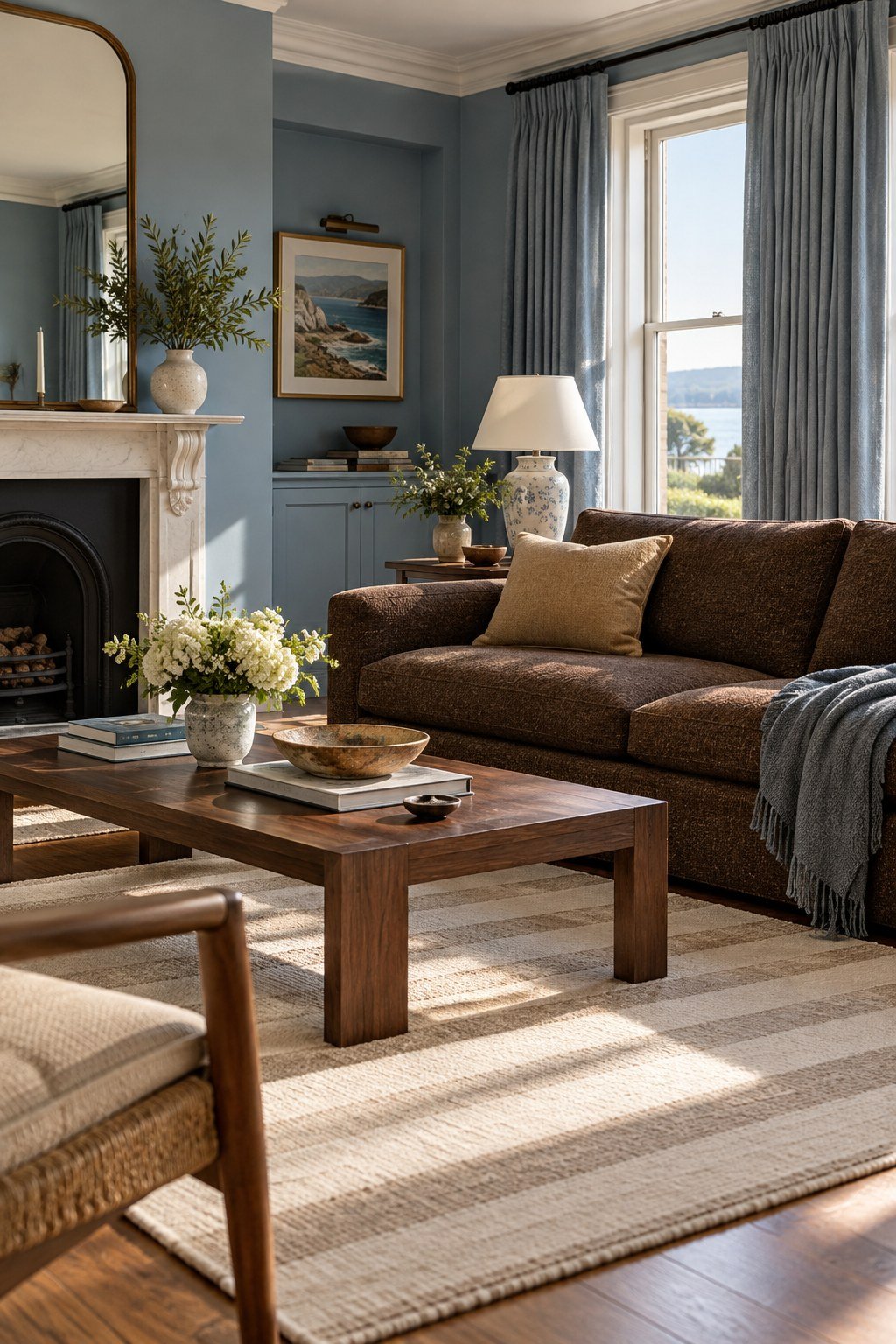
Espresso brown looks especially beautiful with a blue that has a little grey in it. The blue gives the room a fresh, airy feeling, while the dark sofa adds weight and warmth. Together they can feel calm without becoming bland.
Keep the lighter parts of the room warm rather than icy. Cream curtains, an ivory rug and a soft white lampshade help bridge the two colours. A walnut table or a tan cushion adds another gentle step between the deep upholstery and the pale background.
If painting the walls feels like too much, start with dusty blue cushions or a large print. See how that cooler note works with your existing brown furniture before taking it further. Even one generous blue textile can change the balance of the room.
10. Give caramel a little burgundy richness

A caramel sofa can take a much richer accent than you might expect. Burgundy cushions bring out its golden warmth and make the room feel a little more dressed up, especially in autumn and winter. You only need a small amount of the deeper colour for it to register.
Use burgundy in two or three places at most: a pair of cushions, a detail in a painting and perhaps a little bowl on the table. Let cream walls and a lighter rug do the quieter work around them. A dark walnut piece ties the warm shades together.
Try different reds beside the sofa before choosing. A very bright red gives a different mood from a muted wine or plum shade. If you like the deeper end of the palette, these burgundy room ideas have more ways to use it.
11. Mix walnut and oak for a layered brown palette

Wood is one of the nicest ways to build a brown living room without making every fabric brown too. A walnut coffee table, oak floor and darker sideboard each bring their own grain and depth. That variation makes the room feel collected over time.
Look for a shared sense of warmth instead of an exact colour match. Honeyed oak and warm walnut can sit comfortably together, while a very orange finish beside a cool grey-brown piece may need more thought. Bring samples or clear photographs together before buying a large new item.
A pale rug helps separate wooden furniture from a wooden floor, so the shapes remain easy to see. Add some soft curtains, a fabric sofa and a few ceramics to break up the harder surfaces. You will still have a rich brown palette, with plenty of texture around it.
12. Use a generous cream rug to lift deeper browns

When a brown living room feels a bit heavy, the answer is sometimes right under your feet. A generous cream rug gives the seating area a lighter base and makes dark furniture look more deliberate. It can be a surprisingly big change without touching the sofa or the walls.
Choose the size around the whole seating group, not just the coffee table. Having the front legs of the sofa and nearby chairs on the rug usually helps the arrangement feel connected. Leave enough rug visible around the table for that pale colour to do its work.
Look for texture or a quiet pattern if you want something more forgiving than a completely plain finish. Oatmeal, ivory and flecked cream can all give a lighter effect. Think about pets, muddy shoes and cleaning instructions before choosing the palest option.
13. Break up plain brown with quiet checks and stripes
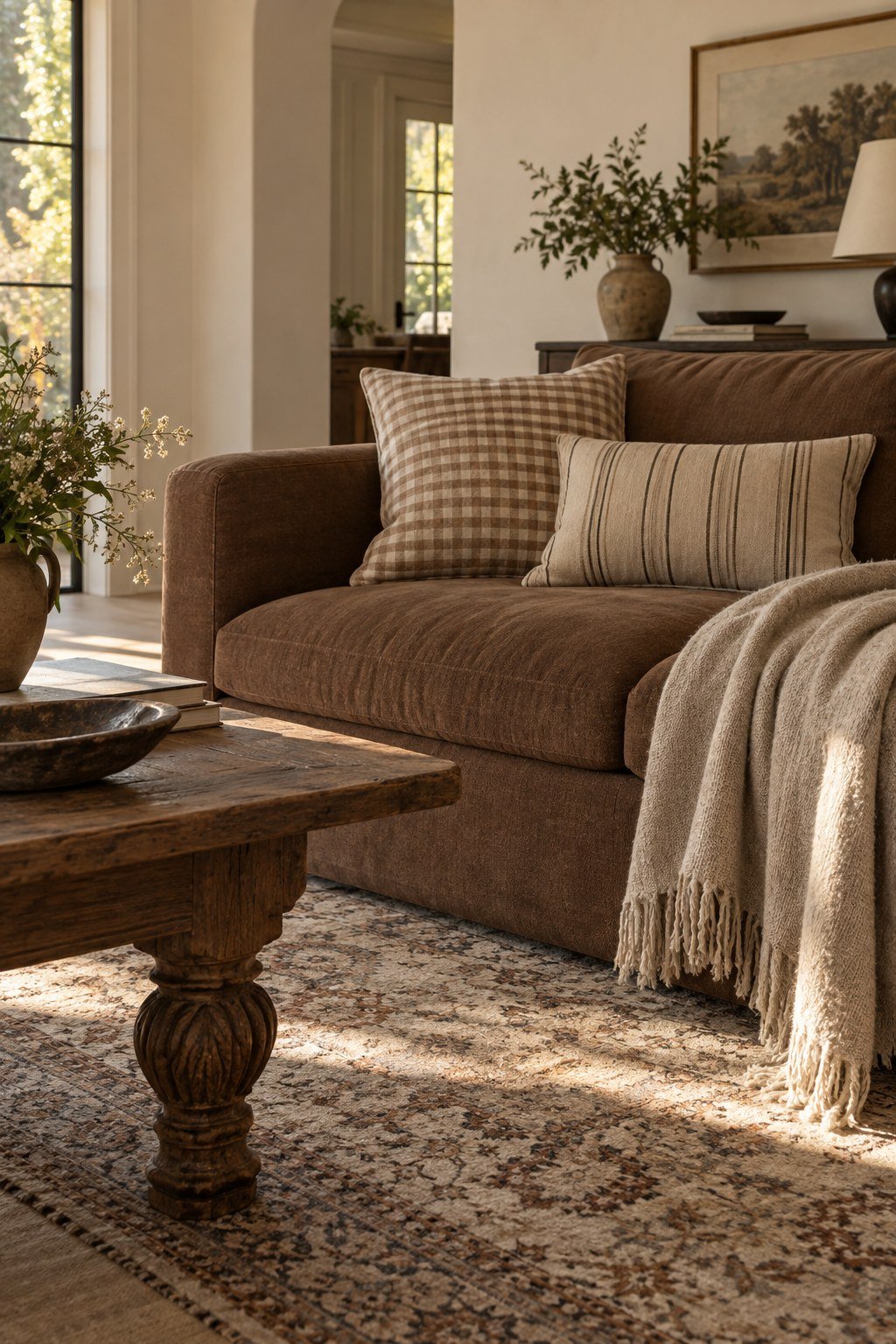
Brown gets along beautifully with a bit of pattern. A cocoa-and-cream check, a narrow stripe or a faded rug can stop a plain sofa from feeling like one big block of colour. The room still feels calm when the patterns share a similar palette.
Vary the scale so the pieces have different jobs. A larger check on one cushion can sit beside a much finer stripe, with a plain throw giving them some breathing room. You do not need a matching set across every seat.
Use the colours already in your room as a starting point. If the sofa is a warm reddish brown, try creamy rather than stark white patterns beside it. Keep an eye on the overall balance from the doorway; that view usually tells you when you have added enough.
14. Let shaded lamps bring chocolate brown to life
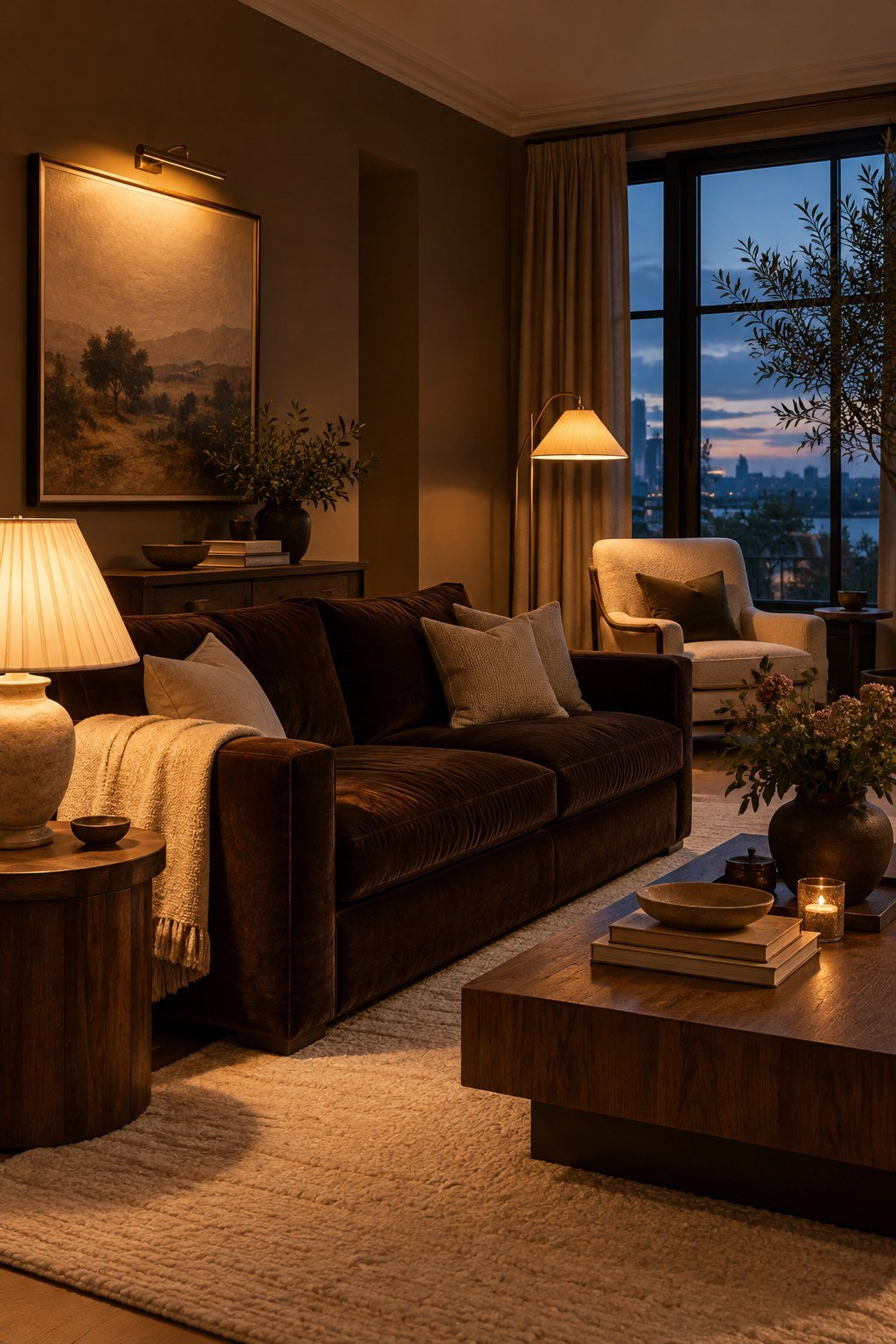
Deep brown can look wonderfully rich at night, but it needs a little help from the lighting. One bright ceiling light tends to leave the corners flat. A few shaded lamps at different points give the room softer edges and make it feel more inviting.
Put a table lamp beside the sofa, a reading light near a chair and perhaps a small picture light over a favourite piece of art. They do not all need to match. What matters is that the light lands where you actually sit, read and spend time.
Try warm white bulbs and look at the effect against the upholstery before filling every fitting with the same type. A dimmer can be useful for adjusting the mood through the evening. There are more practical combinations in these warm lighting ideas for home.
15. Finish with curtains, art and a few collected pieces
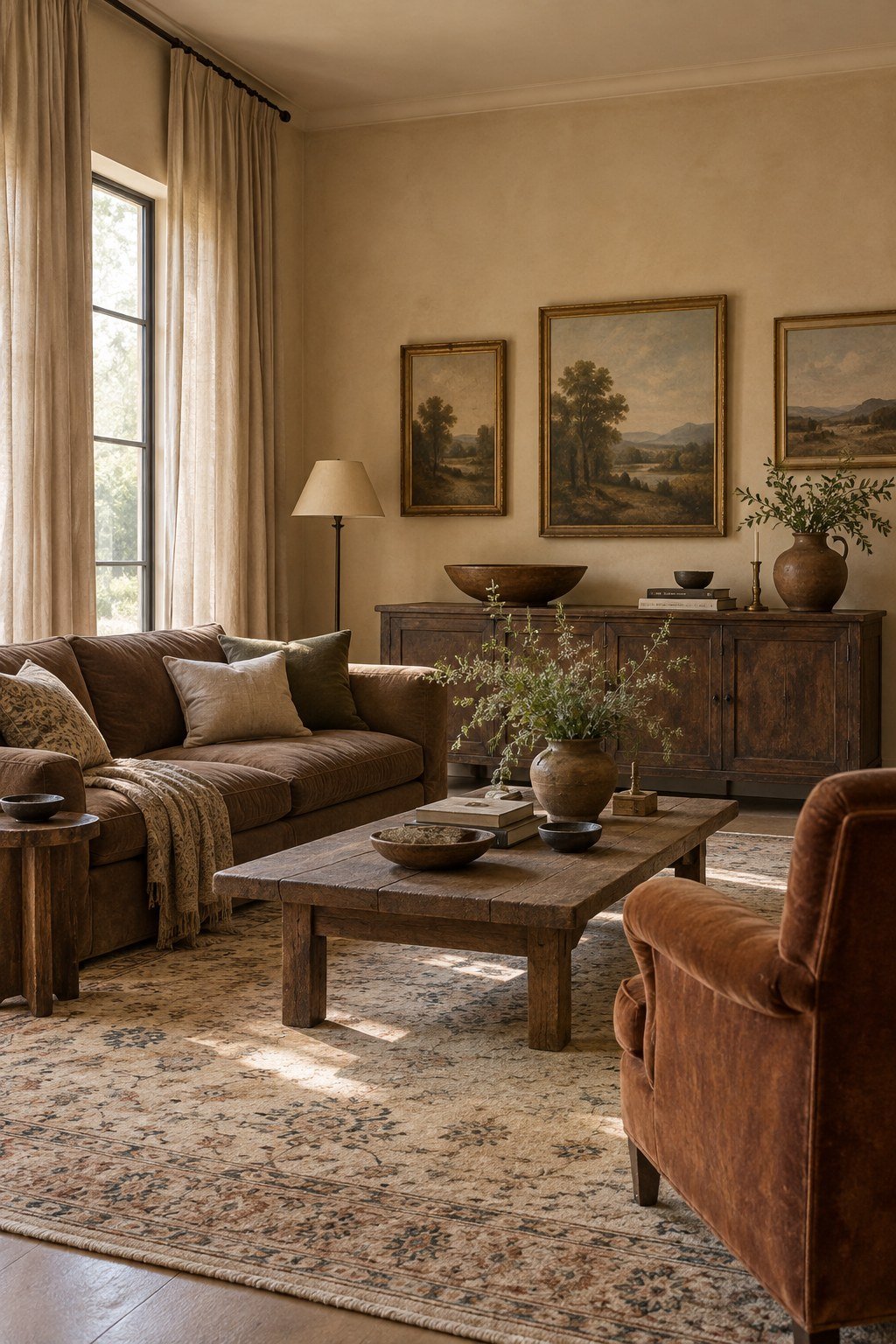
The finishing touches are often what make a brown room feel personal. Full-length oatmeal curtains soften the edges, a few landscapes bring in gentle colour and an old wooden bowl adds something less polished. Those details make a lovely change from trying to buy an entire room at once.
Hang curtains high enough to give the window a little more presence, and choose a width that still looks generous when they are closed. With artwork, try a small group with some space around it rather than filling every gap. Brown furniture gives you a warm backdrop for pieces you actually enjoy looking at.
Leave room for the ordinary things too: books, a blanket that gets used and a clear spot to put a mug. A room can look beautiful and still feel easy to live in. That relaxed, slightly collected quality is often what makes brown feel so welcoming.
Make these brown living room ideas your own
The best brown living room is one that suits the way you want to feel at home. Caramel can be bright and easy, cocoa can feel soft and cocooning, and espresso brings a lovely depth when it has a few lighter neighbours.
You do not have to change everything to get there. Start with one piece or one part of the room, then add contrast through a rug, a curtain or a different texture. Give yourself time to see how the colours look in your daylight and in the evening.
Whether you go for a big chocolate sofa or just a couple of brown cushions, aim for a space that feels warm, comfortable and yours. The little layers can come together gradually—and that is often when a room starts to feel its best.