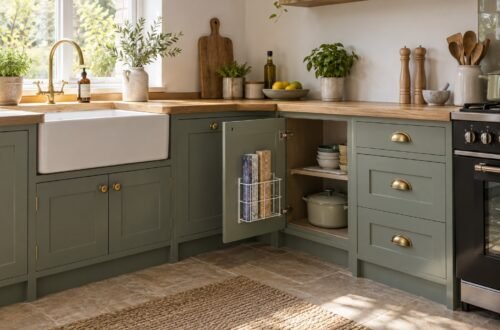
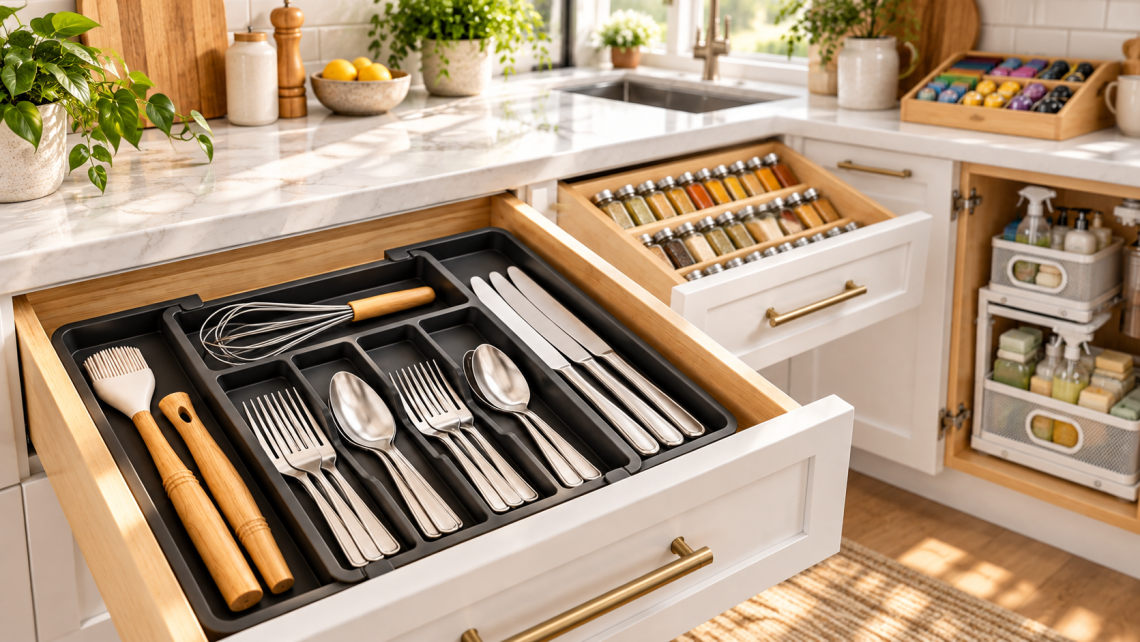
Kitchen drawers are easy to organize once and surprisingly hard to keep organized. The difference usually comes down to whether every category has a space that actually fits it, rather than trying to force cutlery, knives, spices, wraps and oversized tools into the same few generic trays.
These 11 kitchen drawer organization ideas focus on practical systems that are easy to live with: expandable organizers, pull-out storage, clear drawers, dividers and dedicated zones for the awkward things that usually create clutter.
If you are wondering how to organize a kitchen drawer so it still looks tidy weeks later, start by grouping items by how you use them. Keep everyday pieces easy to reach, move duplicates out of the working drawer and choose organizers that fit the drawer rather than the other way around.
The interior images in this post are AI-generated styling concepts for inspiration. Product-linked concepts are not product photographs, and exact colours, finishes, proportions and details may differ from the linked items.
1. Make the Cutlery Organizer Fit the Drawer
As an Amazon Associate I earn from qualifying purchases.
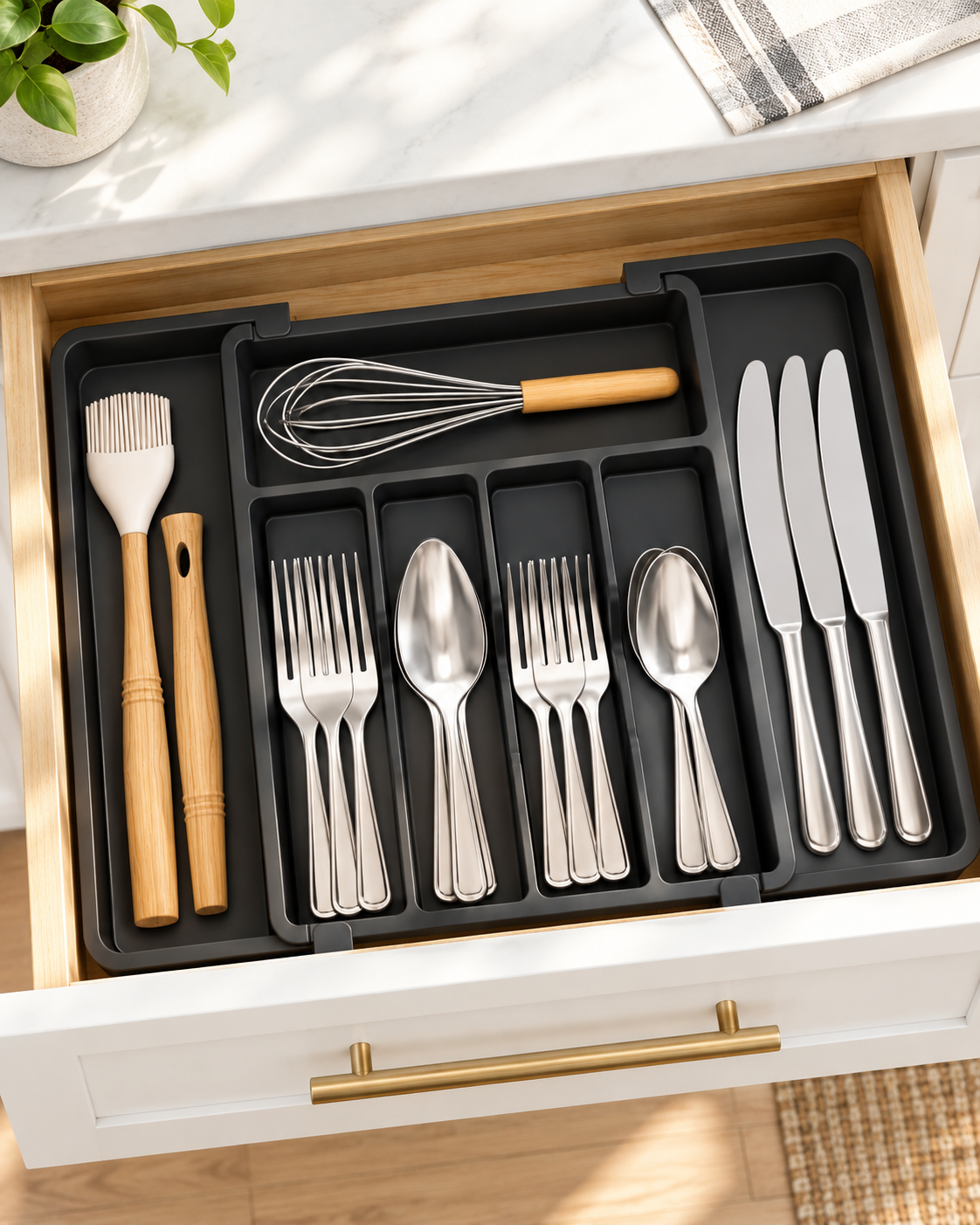
One of the easiest kitchen drawer organization ideas is to stop forcing a fixed-size tray into a drawer it was never designed for. An expandable silverware organizer uses the full width available, so forks, spoons, knives and everyday tools can each have a proper section instead of ending up stacked on top of one another.
The expandable sides are especially useful in wider drawers because they create extra compartments for things that normally float around loose, such as measuring spoons, peelers, small whisks or serving utensils. That extra structure is what helps the drawer stay tidy after the first few days rather than slowly returning to chaos.
Keep the items you reach for most in the central compartments and use the outer sections for less-used tools. A simple layout like that makes unloading the dishwasher quicker because you are not deciding where something belongs every single time.
Before buying any organizer, measure the inside width, depth and height of the drawer rather than the cabinet front. A close fit looks better, wastes less space and stops the tray shifting every time the drawer is opened.
2. Use Clear Stackable Drawers for Small Kitchen Extras
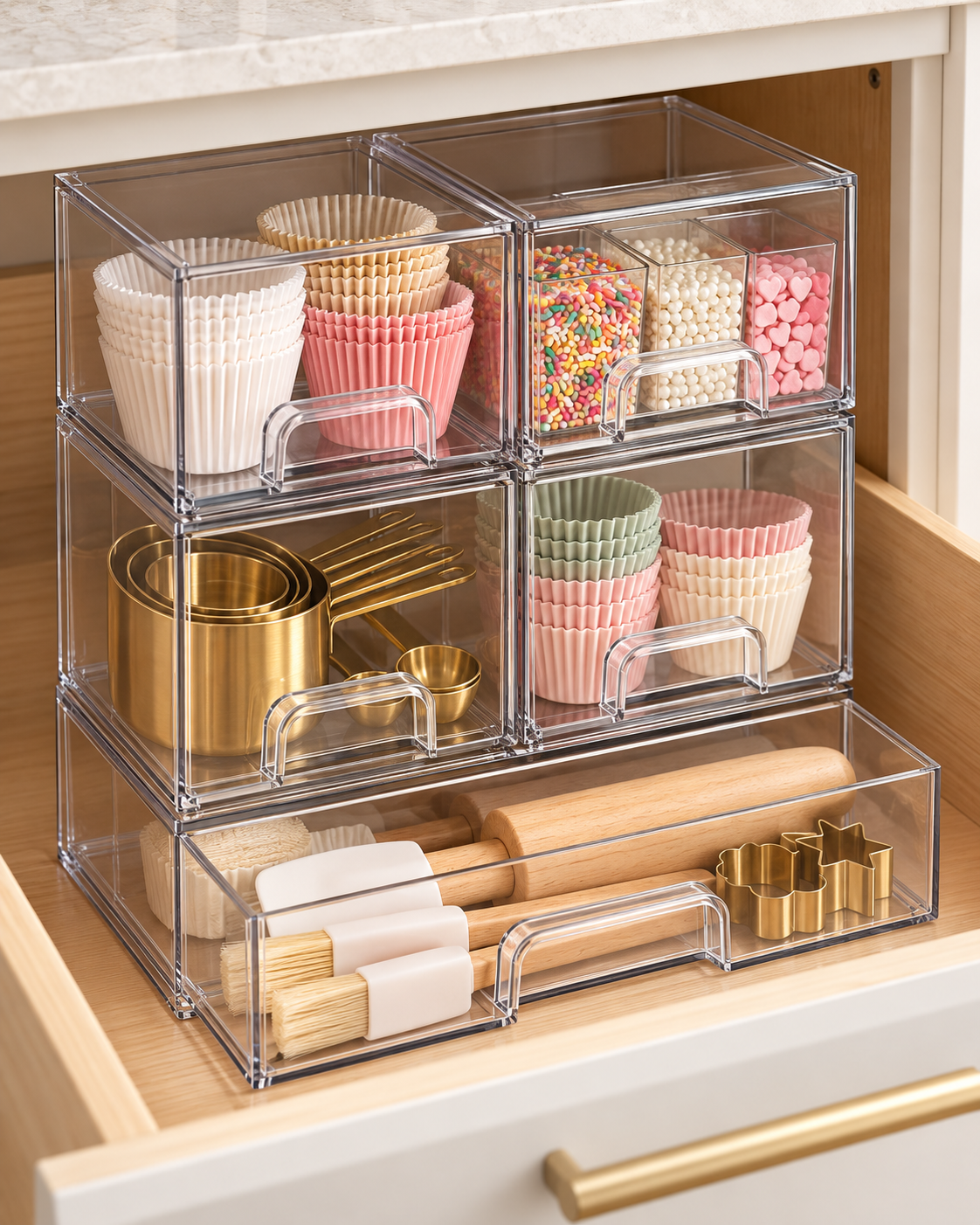
Small kitchen supplies are some of the hardest things to organize because they disappear into the back of deep drawers and cabinets. Clear stackable storage drawers work well for baking cases, cookie cutters, decorating supplies, spare measuring tools and other lightweight pieces that tend to collect in mixed piles.
The biggest advantage is visibility. Because the fronts and sides are transparent, you can see what is inside without opening every box, which makes it much easier to keep similar items together and notice when you are running low on something.
Stacking the units also lets you use vertical space instead of spreading everything across one large drawer. That can be especially useful in a baking cupboard or pantry cabinet where shelves are tall but the items themselves are small.
Do not fill every drawer to the top. Leaving a little spare space makes the system easier to maintain and gives you room for the occasional new item without immediately creating another overflow pile.
3. Store Knives Flat in a Dedicated Drawer Organizer
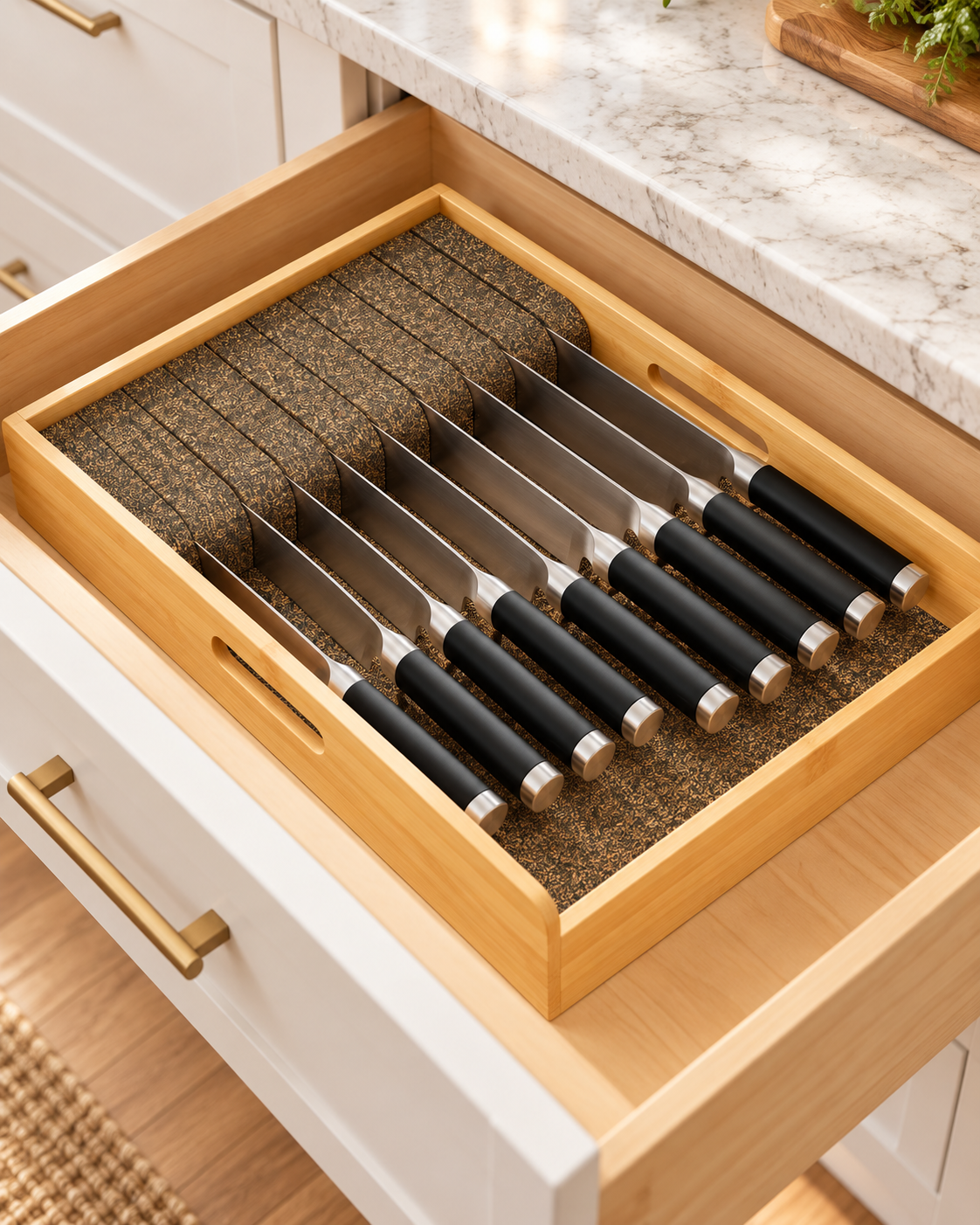
A countertop knife block can take up valuable prep space, while loose knives in a drawer are awkward and unsafe. A dedicated knife drawer organizer keeps the blades separated, protects the edges and gives each knife a clear place without adding anything else to the worktop.
Flat storage also makes it easier to see the full knife collection at once. Instead of pulling out several knives to find the one you need, the handles sit in a neat row and the blades stay protected inside their slots.
This is particularly useful in kitchens where the main prep drawer is wide but shallow. A low-profile organizer uses that otherwise awkward space efficiently and can often sit alongside a smaller utensil tray if the drawer is large enough.
Keep the knife organizer close to the main food-prep area rather than wherever there happens to be an empty drawer. Good kitchen drawer organization should support the way you cook, so the items used together should ideally live close together.
4. Store Pot Lids Upright Instead of Stacking Them
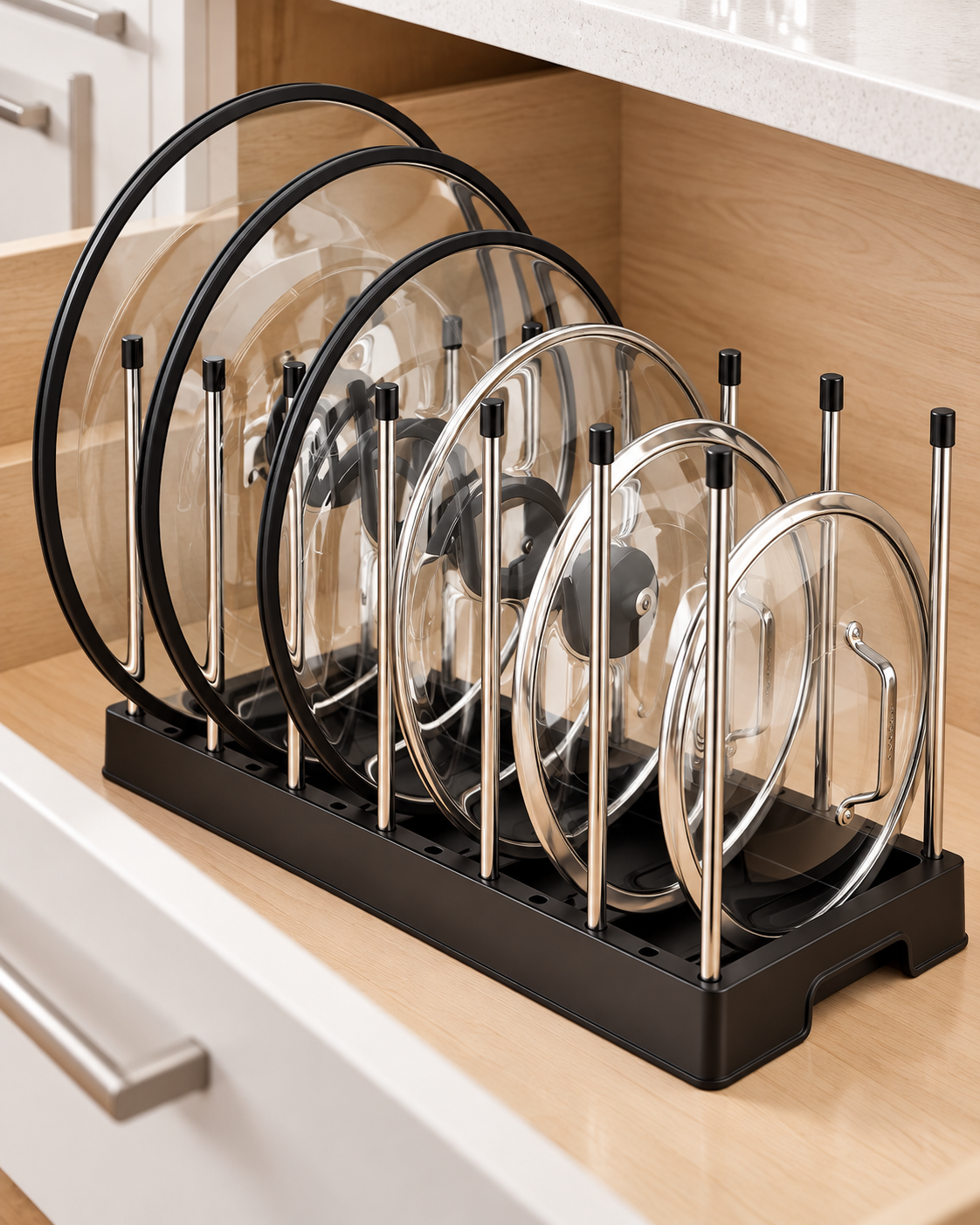
Pot lids are one of those kitchen items that can make a cabinet feel messy even when everything else is organized. Stacking them flat usually means lifting three lids to reach the one underneath, while leaning them loose against pans makes them slide and clatter every time the cabinet opens.
An upright pot lid organizer gives each lid its own slot, keeping different sizes separated and easy to identify. It also reduces the amount of shelf area they occupy, leaving more room for the pots and pans themselves.
This setup works particularly well in a deep lower cabinet or a wide pan drawer. Arrange the lids from largest to smallest so the collection feels intuitive, and keep the lids for your most-used pans toward the front.
If you have more lids than you realistically use, this is also a good moment to edit the collection. Keeping only the lids that match your current cookware makes the organizer easier to use and prevents it from becoming another overfilled storage solution.
5. Turn the Under-Sink Cabinet Into Pull-Out Storage
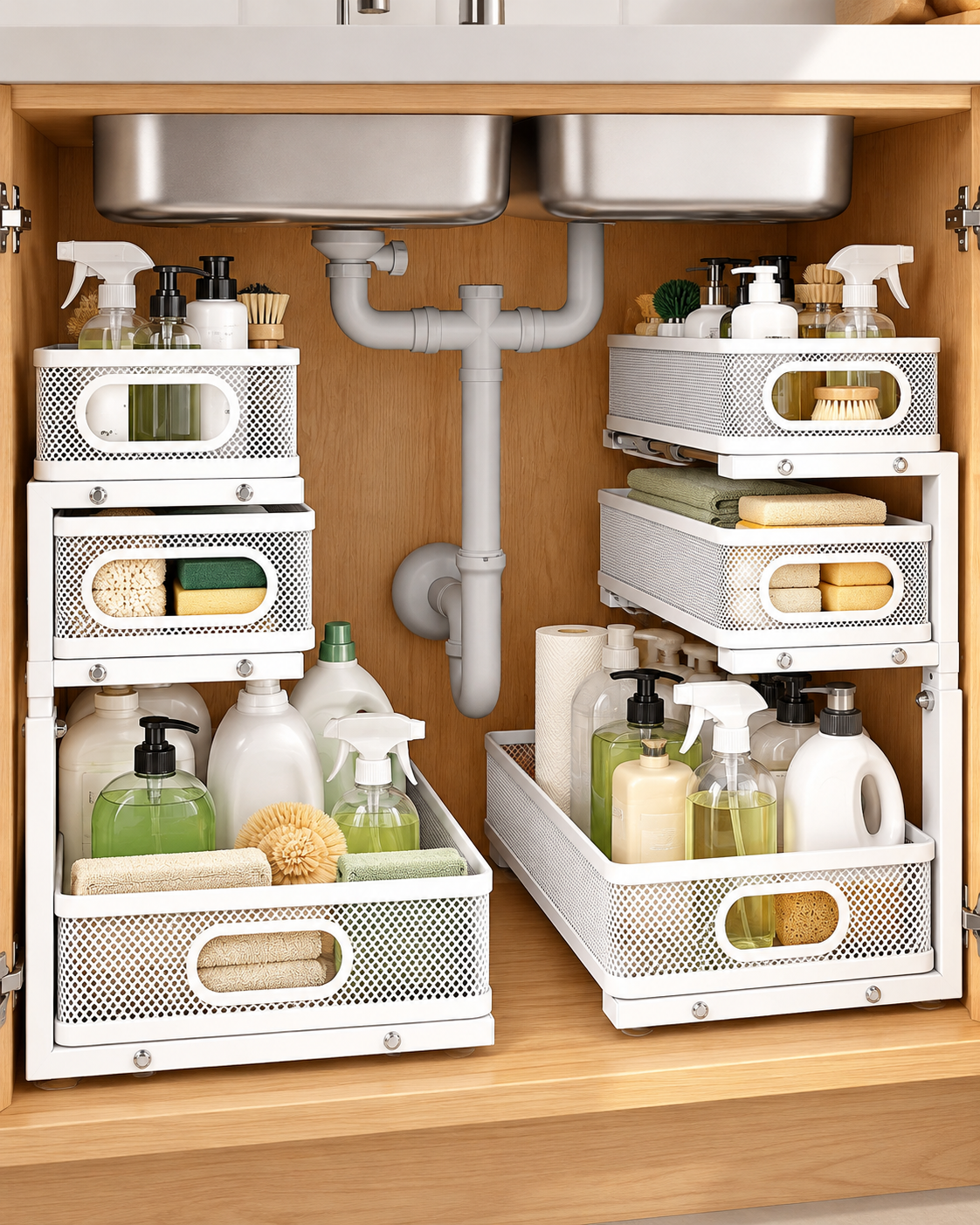
The cupboard under the kitchen sink is awkward because the plumbing breaks up the space and makes the back corners difficult to reach. Pull-out under-sink organizers solve that by bringing cleaning supplies forward instead of forcing you to crouch down and dig through rows of bottles.
Use separate baskets for different jobs, such as everyday sprays, dishwashing supplies, spare sponges and less frequently used cleaners. Creating categories means you can pull out one section without disturbing everything else in the cabinet.
Sliding baskets are also useful because they make the vertical space around the pipes more practical. A narrow upper tray can hold smaller bottles or cloths while a deeper lower basket handles larger containers and refills.
Keep the cabinet realistic rather than perfectly packed. Leaving a little open space around the plumbing makes cleaning easier, helps you spot leaks quickly and stops the organizers from becoming difficult to slide.
6. Give Food Bags, Foil and Wrap Their Own Drawer
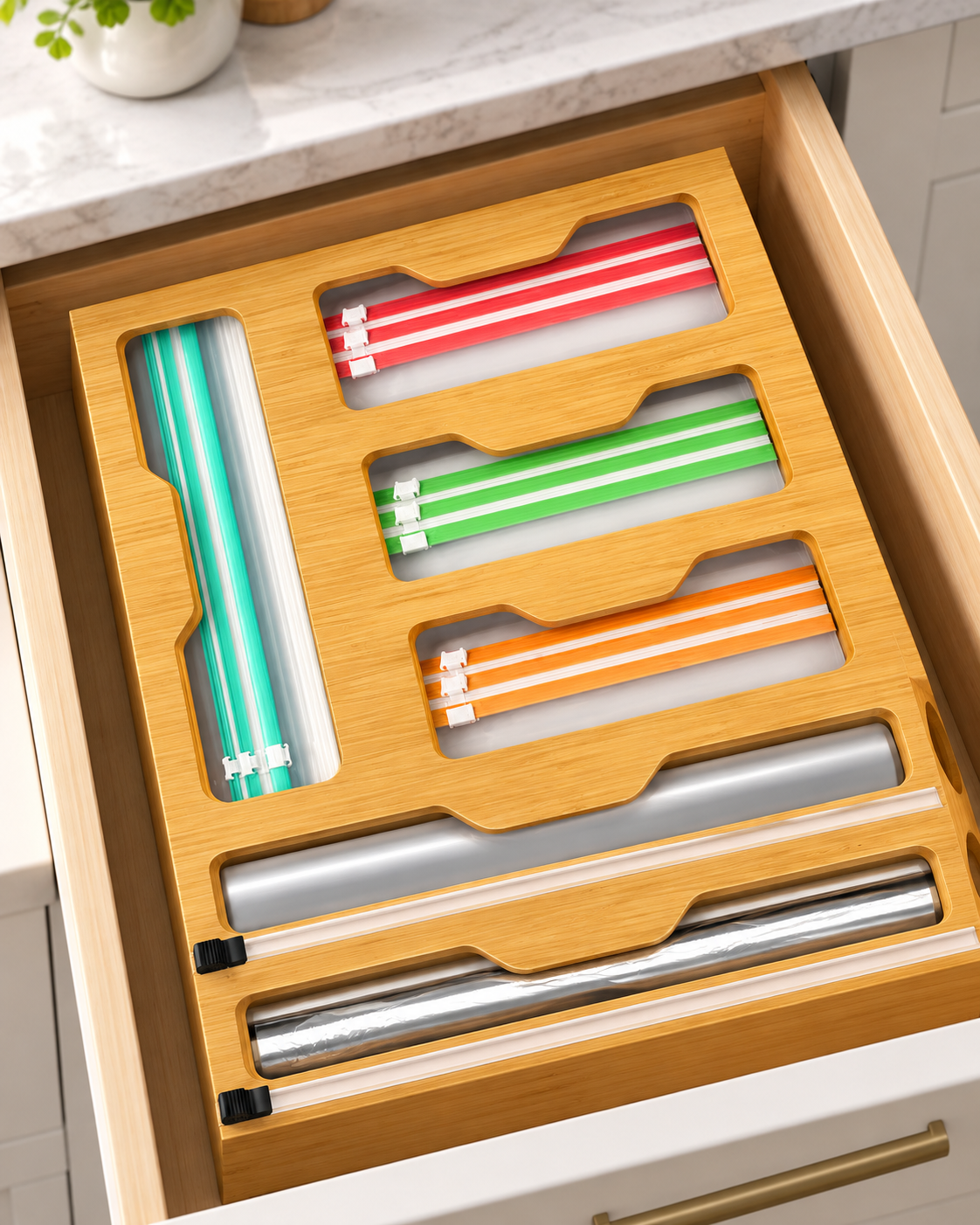
Food storage bags and rolls of foil are useful every day, but the original cardboard boxes rarely stay neat for long. A dedicated bamboo bag organizer and wrap dispenser turns a mixed drawer into clearly defined sections for gallon bags, sandwich bags, snack bags, plastic wrap and foil.
The biggest difference is that everything stays visible from above. You can see which bag size you are grabbing, and rolls stay in fixed channels instead of rolling to the back of the drawer or getting crushed underneath other items.
This is one of those kitchen drawer storage ideas that also makes restocking simpler. Empty compartments are obvious, so you know what needs replacing before you reach for a bag and discover the box is empty.
Choose a drawer close to the food-prep area or fridge if possible. The closer the organizer is to where leftovers are packed and lunches are made, the more useful the system becomes in everyday life.
7. Use a Tiered Spice Drawer So Every Jar Is Visible
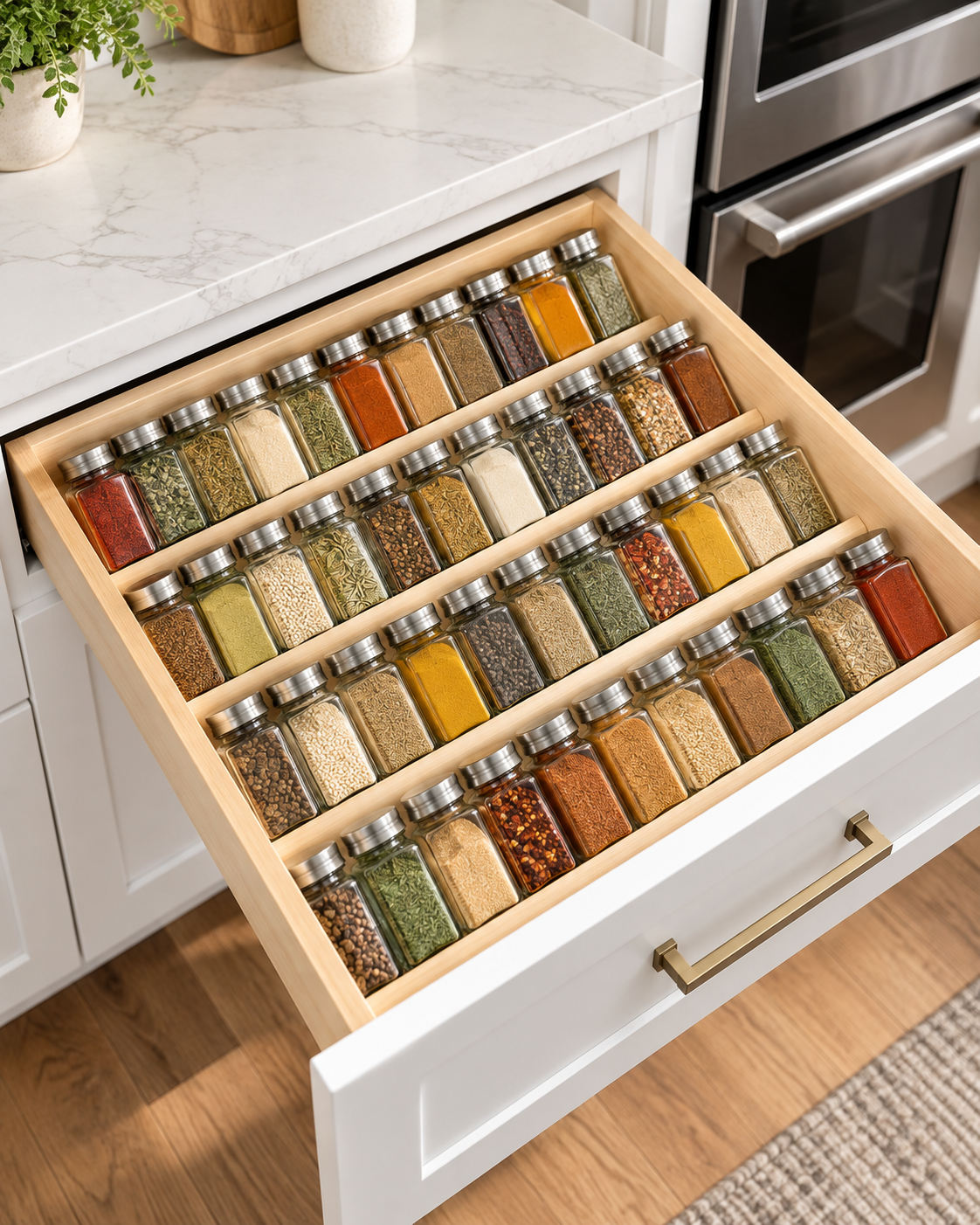
A spice drawer can be far easier to use than a wall cabinet because you can see the labels from above instead of searching behind several rows of jars. A tiered organizer angles the bottles slightly, making each spice visible while keeping the whole collection contained inside one drawer.
Matching jars can make the drawer look polished, but the real benefit is consistency in size and placement. When every jar sits at roughly the same height, it is much easier to scan the drawer quickly and put each one back in the same spot.
Group spices in a way that matches how you cook. You might keep everyday basics together at the front, baking spices in one row and stronger blends or international seasonings in another. The exact categories matter less than making the layout predictable.
Leave a small amount of empty space rather than filling every slot immediately. A little breathing room makes the organizer easier to maintain and gives you space to add a new spice without reorganizing the entire drawer.
8. Add a Pull-Out Rack to a Deep Lower Cabinet

Deep lower cabinets can hold plenty of cookware, but they are frustrating when the pan you need is sitting behind two heavy pots. A pull-out cabinet organizer turns the shelf into a sliding platform, so the entire contents move toward you instead of making you reach into the back.
This works particularly well for heavy saucepans, stock pots and frying pans that are awkward to lift over one another. Keeping cookware on a sturdy pull-out rack makes the cabinet easier to use and reduces the temptation to pile pieces into unstable stacks.
Arrange the heaviest items toward the centre and back of the rack while keeping your most-used pan near the front. The goal is not to display every piece perfectly but to make daily cooking quicker and less annoying.
Measure the cabinet opening carefully, including hinges and the door frame, before choosing a pull-out system. A rack that fits the internal shelf but cannot clear the opening will not be useful, so the smallest clearance measurement is the one that matters.
9. Create One Coffee and Tea Organizer Instead of Several Boxes
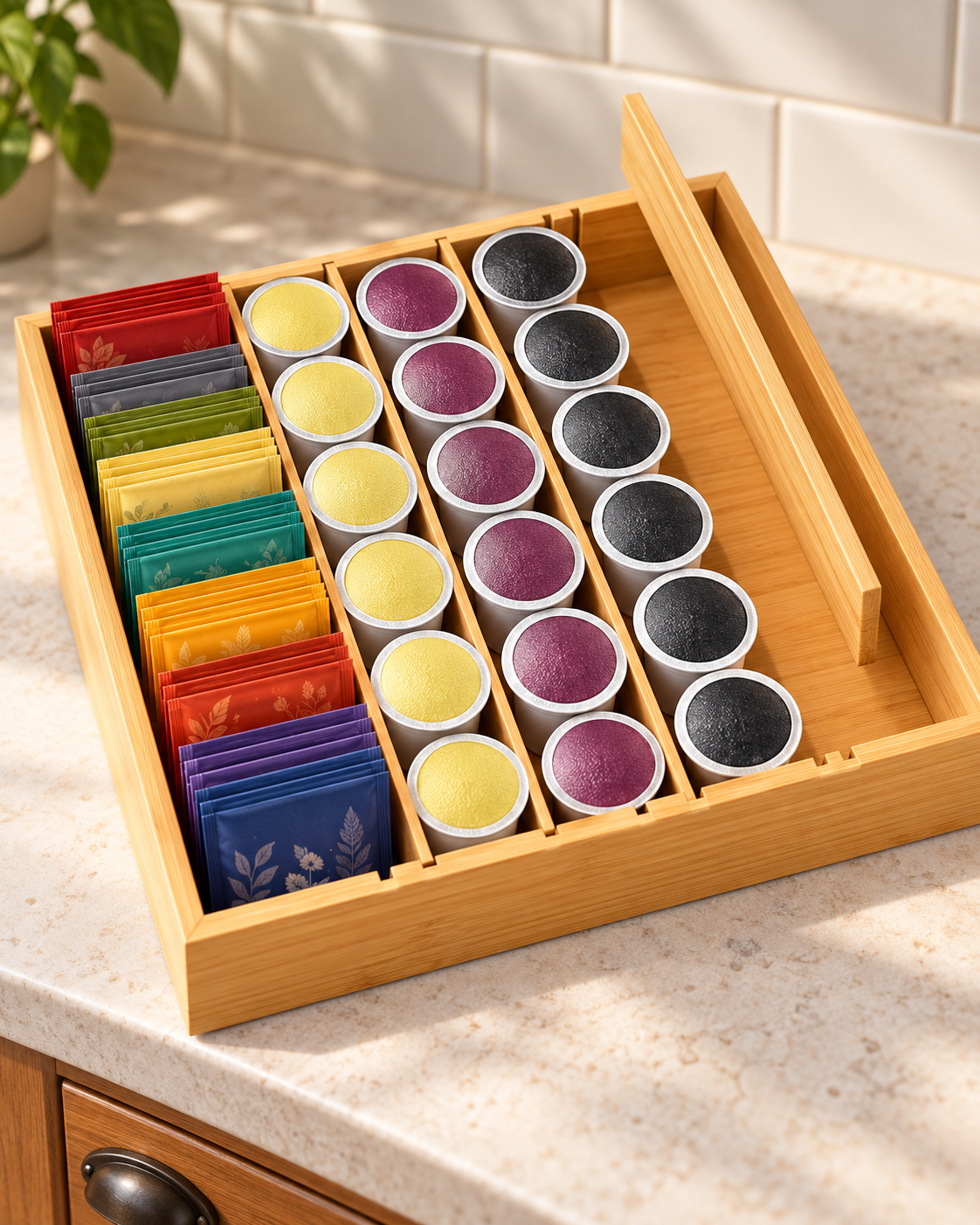
Tea bags, coffee pods and drink sachets can easily take over an entire shelf because every brand comes in a different box. A divided coffee and tea organizer gives those supplies one consistent footprint and makes the whole hot-drink area feel much calmer.
Separate tea bags by type and use the deeper compartments for coffee pods or individual sachets. Keeping everything visible means guests can find what they want without opening cupboards, and you can quickly see which favourites are running low.
This organizer can live inside a drawer, on a pantry shelf or directly beside the coffee machine depending on the kitchen layout. The important part is creating one dedicated beverage zone rather than scattering tea, coffee and accessories across several cupboards.
Try to keep only the varieties you actually drink in the organizer. Extra unopened packs can stay in a backup cupboard, which prevents the everyday station from becoming overloaded and keeps it much easier to reset.
10. Use a Long Sliding Bin for Oversized Utensils

Rolling pins, long spatulas, pastry brushes and other oversized tools rarely fit neatly into a standard cutlery tray. A long sliding drawer bin creates a dedicated lane for those awkward pieces so they stop lying diagonally across the drawer and blocking everything underneath.
An adjustable bin is useful because it can sit alongside other organizers without wasting the whole drawer. You can create one long section for baking tools while leaving the rest of the drawer open for smaller utensils or folded towels.
This type of setup works best when similar tools are grouped together. Keep baking pieces in one bin, grilling tools in another if space allows, and avoid mixing unrelated items simply because they happen to fit.
Do a quick edit before filling the organizer. Oversized drawers often become storage for duplicate spatulas and gadgets that are rarely used, so removing the extras will make the new layout much easier to maintain.
11. Divide One Large Drawer Into Custom Zones
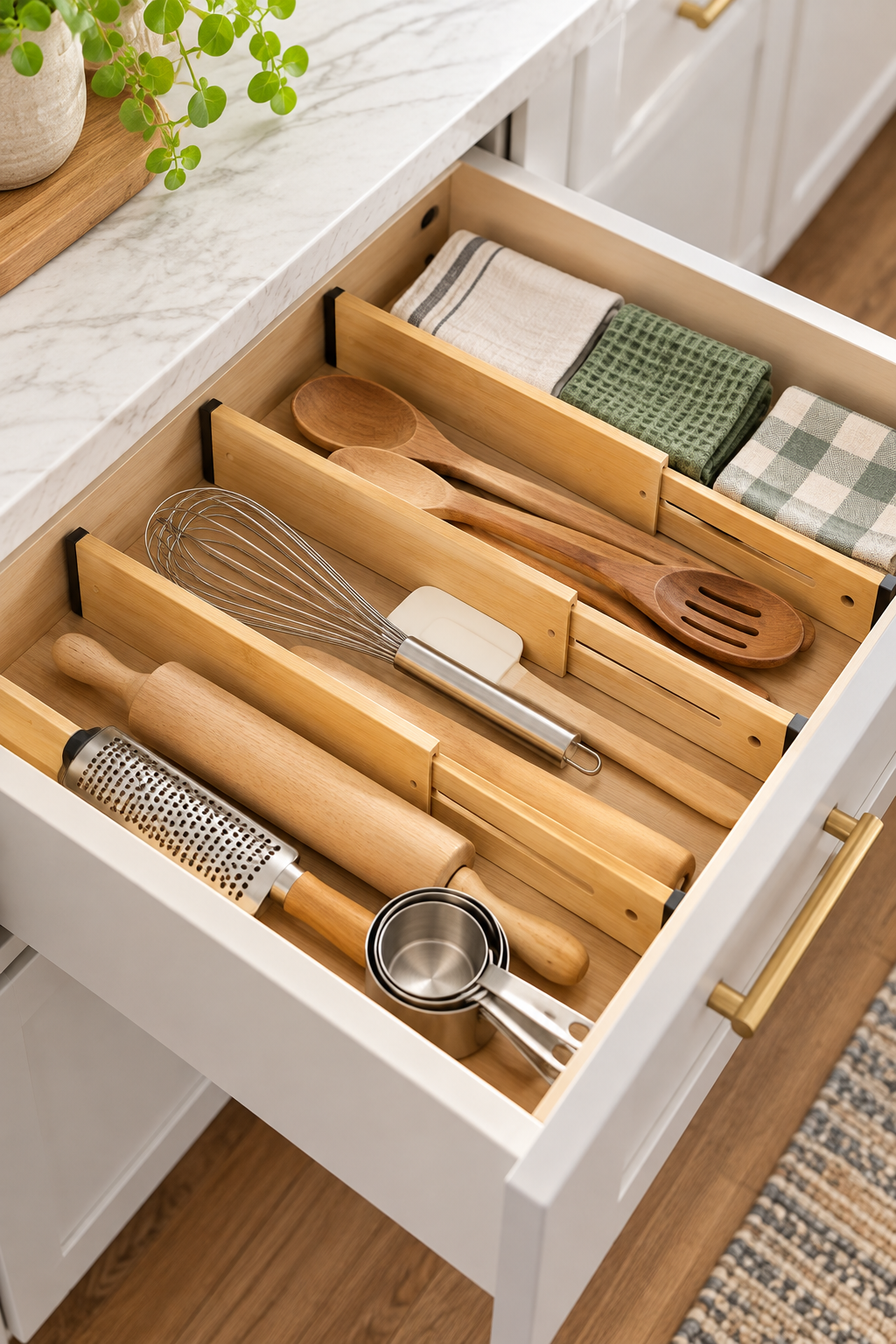
Sometimes the best kitchen drawer organizer is not a tray at all. Adjustable drawer dividers let you turn one oversized drawer into sections that match the exact items you own, whether that is wooden spoons, whisks, baking tools, rolling pins or folded kitchen towels.
Because the dividers can move, the layout can change as your kitchen changes. You are not locked into fixed compartments, which makes this particularly useful for deep drawers that hold a mix of large and small tools.
Create fewer, wider sections rather than trying to give every single utensil its own narrow slot. Broad categories are easier to remember and much quicker to maintain when you are putting things away after cooking.
The best test is whether the drawer can be reset in under a minute. If every item has an obvious zone and nothing needs to be balanced or squeezed into place, the system is much more likely to stay tidy long term.
Kitchen Drawer Organization That Is Simple Enough to Reset
The most effective kitchen drawer organization is usually the least complicated. A drawer can look beautiful on the first day, but if putting something away requires moving three other things or remembering an overly specific category, the system will not stay tidy for long.
Build around the way you already cook, leave a little spare capacity and give the most-used items the easiest positions. Once the storage works with your habits instead of against them, keeping the kitchen organized becomes much more automatic.
If you are tackling storage beyond the kitchen, these utility closet organization ideas use the same practical approach.