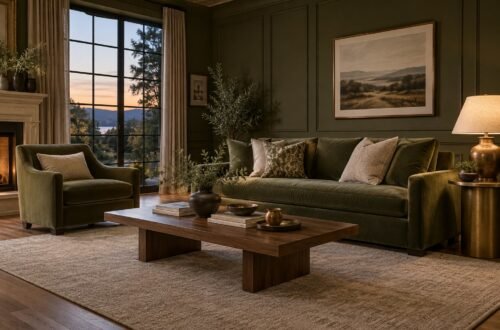
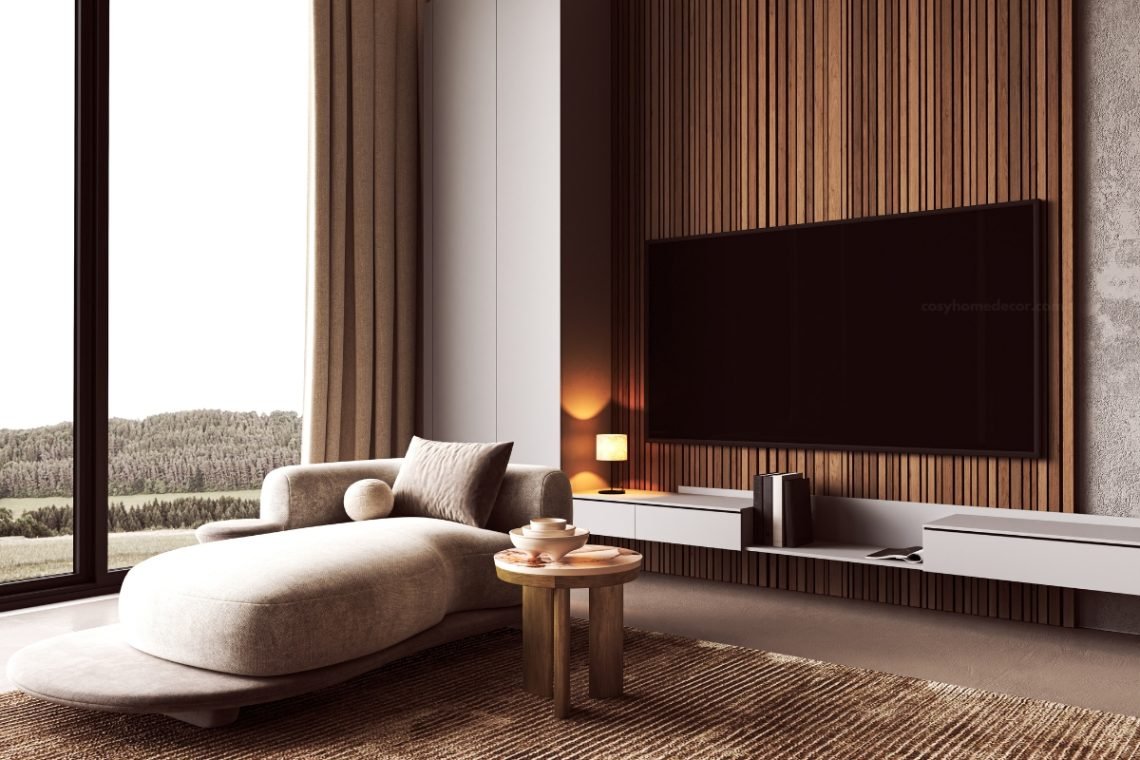
The best TV wall ideas do more than give the screen somewhere to hang. They make the television feel like part of the architecture, using proportion, lighting, storage and texture to turn an ordinary living-room wall into something that looks properly designed.
These 21 ideas deliberately mix very different homes and styles, from walnut slats and marble-look panels to traditional library walls, coastal textures, microcement, stone fireplaces and softly lit hotel-inspired builds. Some are realistic weekend upgrades; others are bigger custom projects worth borrowing details from.
Where it makes sense, I have included Amazon finds that can help recreate the look: acoustic slat panels, wall molding, faux stone and marble finishes, floating consoles, picture lights, sconces, LED lighting and electric fireplaces. Treat them as building blocks rather than a kit — combining two or three simple elements is usually what makes a media wall look custom.
The interior images in this post are AI-generated styling concepts for inspiration. Product-linked concepts are not product photographs, and exact finishes, colours, proportions and details may differ from the linked items. Always follow manufacturer instructions and required clearances when installing televisions, wall panels, lighting or fireplaces.
1. TV Wall Ideas: Build a Walnut Slat Wall Around a Linear Fireplace
As an Amazon Associate I earn from qualifying purchases.
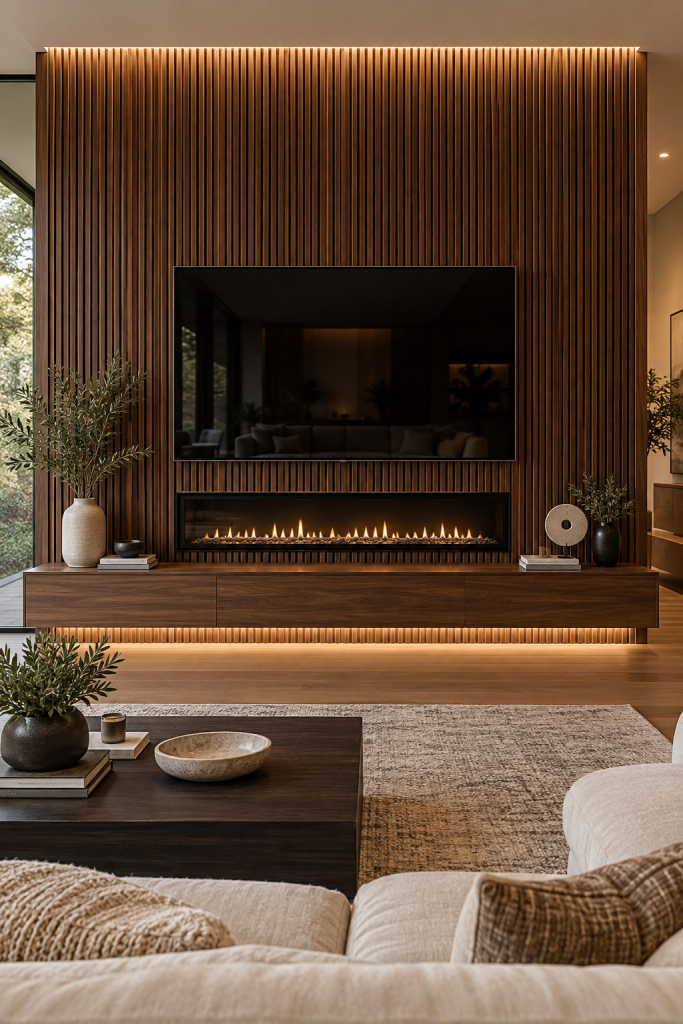
A walnut slat wall already has that made-to-measure feel, but the real trick is giving it more than one job. Here, the timber texture runs floor to ceiling while the TV and a long linear fireplace sit inside the same composition, so the whole wall reads as architecture rather than a screen hung over furniture.
The Art3d fluted acoustic panels are a useful starting point for this kind of build because they bring the vertical rhythm and warm walnut tone without needing a joiner to manufacture every slat from scratch. Pairing them with a recessed electric fireplace creates a strong horizontal line that balances the tall panelling and makes the TV feel properly anchored.
Keep the storage low and simple so the wall remains the star. A floating walnut cabinet, a couple of oversized ceramic vases and warm concealed lighting are enough. The expensive look comes from repetition, proportion and keeping cables completely out of sight rather than filling every available surface.
2. Mix Travertine Texture With Warm Oak Built-Ins
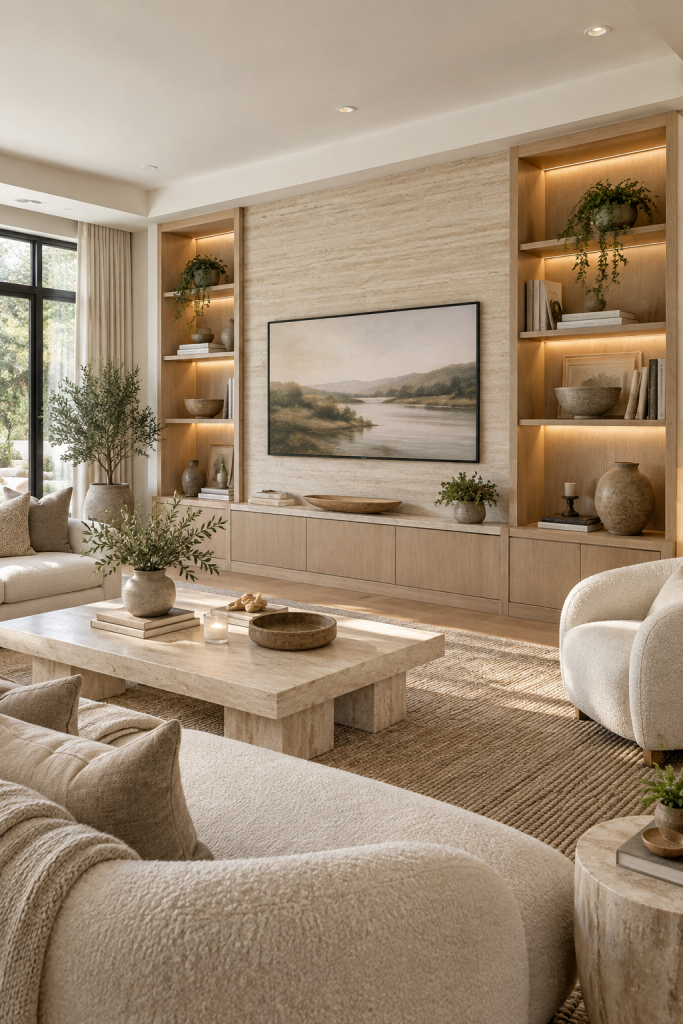
Stone and timber are one of those combinations that rarely look cheap when the proportions are right. A pale travertine-style centre panel gives the TV a calm, almost gallery-like backdrop, while warm oak shelving on both sides turns the wall into a complete piece of furniture.
The useful part is that you do not need every element to be custom made. A well-proportioned floating media console can create the clean lower line, then simpler shelves and timber trim can be built around it. The result feels bespoke because all the horizontal lines line up, not because every component came from the same range.
Style the niches lightly. A few stone bowls, neutral books, trailing greenery and one larger object per shelf are more convincing than rows of little ornaments. Add warm shelf lighting and the stone texture starts to glow in the evening, which is where this look really earns its luxury feel.
3. Pair Cream Fluting With Sculptural Brass Sconces
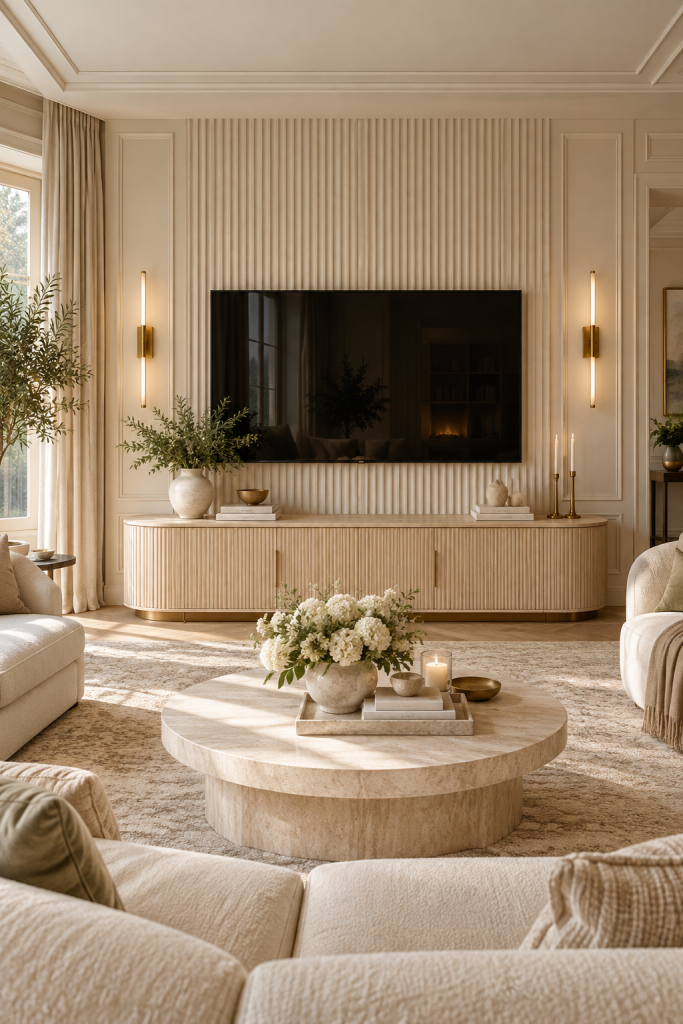
This is a softer take on the modern media wall. Instead of dark timber or dramatic stone, use warm cream fluting behind the TV and frame the composition with slim brass sconces. The repeated vertical lines add texture, but the pale colour keeps the room bright and elegant.
Brass lighting matters here because it breaks up all the cream without introducing a harsh black outline. A pair of simple globe sconces on either side of the television can make the entire wall feel symmetrical and deliberately designed, especially when their warm light washes across the fluted surface.
Finish the look with a low curved console rather than another boxy cabinet. Tonal accessories, a round stone coffee table and softly upholstered seating keep the room feeling layered. It is a good example of how an expensive-looking TV wall can be quiet rather than dramatic.
4. Go Dark With a Charcoal Ribbed Wall and Fire

A dark media wall is one of the easiest ways to make a large television visually disappear when it is switched off. Charcoal ribbed panels blur the edge of the screen, while warm LED lighting and a slim fire below stop the wall becoming a flat black rectangle.
Black fluted PVC panels are a practical way to introduce that deep texture without covering the wall in heavy joinery. Use them as one section of the design rather than necessarily edge to edge; pairing them with smooth dark plaster or stone makes the material contrast look far more intentional.
At night, this setup should feel almost cinematic. Keep the room lighting low, use one warm colour temperature throughout, and let the fireplace and hidden LEDs do most of the work. Deep green or brown upholstery adds richness without competing with the TV wall.
5. Make Traditional Wall Molding Work With a Modern TV
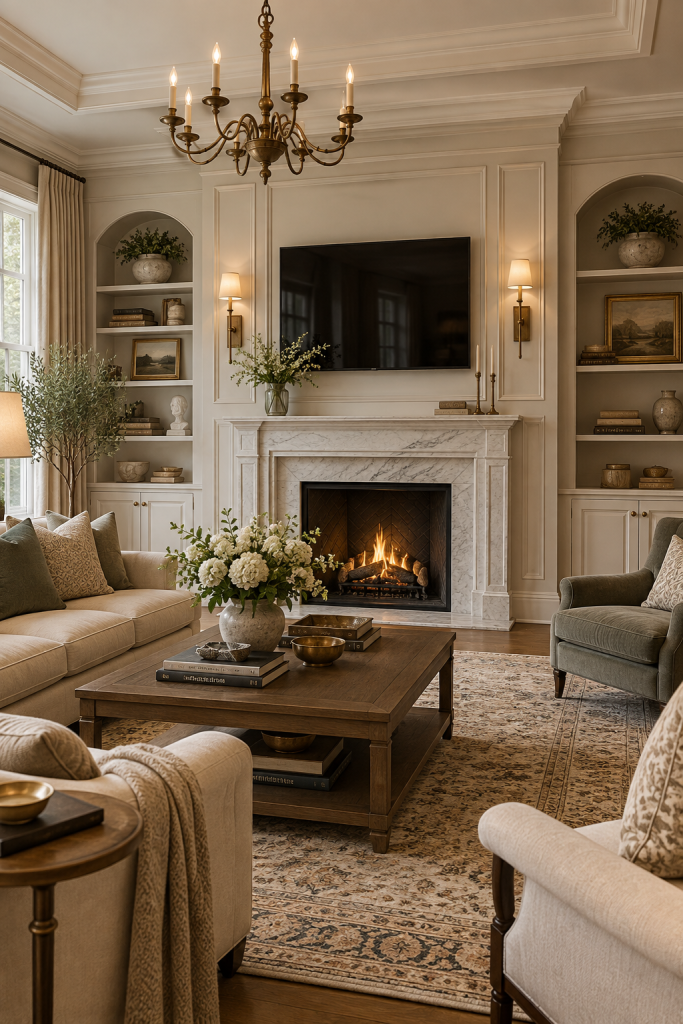
A television does not have to push a traditional room in a modern direction. Box molding gives the wall enough architectural detail to hold its own, especially when the TV sits above a marble-look fireplace and the surrounding panels continue across the full width of the room.
Pre-cut peel-and-stick molding kits are useful if you want this effect without learning complicated mitre cuts. Paint the molding and wall in the same warm neutral so the rectangles become shadow lines rather than high-contrast decoration. That makes the treatment feel much more built in.
The fireplace surround is where you can add a slightly more luxurious material. Keep the mantle simple, repeat brass in the sconces or handles, and style the room with classic furniture rather than trying to disguise the TV. The contrast between old-school paneling and a clean modern screen is what makes the scheme interesting.
6. Combine Stone and Walnut Slats on the Same Feature Wall
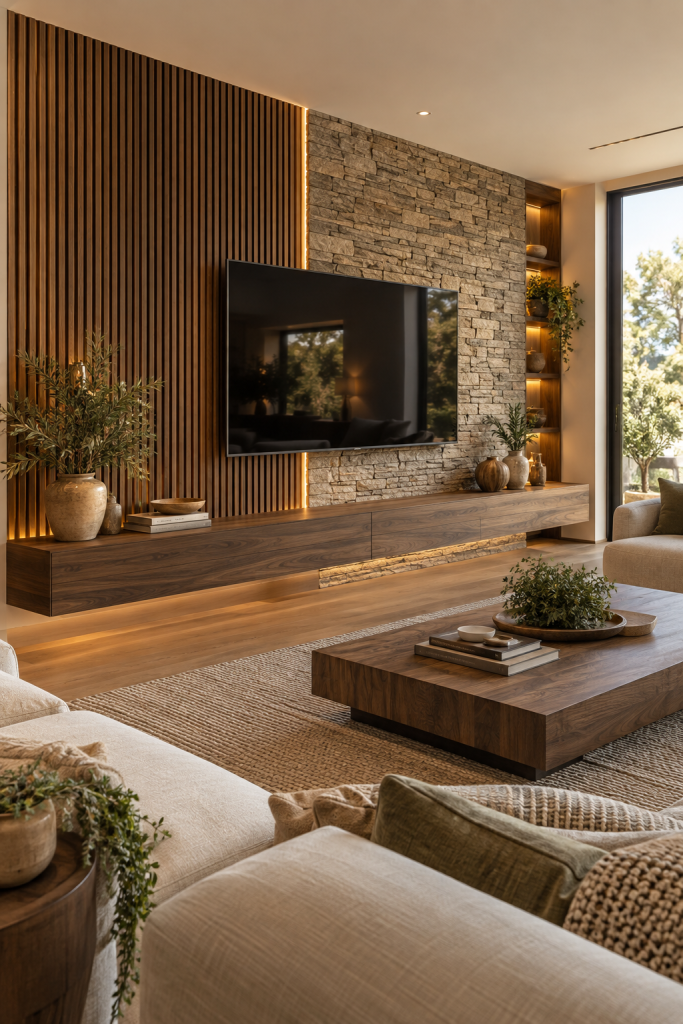
Mixing two materials immediately makes a media wall look more custom. Instead of covering everything in one finish, split the wall between stacked-stone texture and walnut slats, then run one long floating cabinet underneath to tie both halves together.
Peel-and-stick faux stone panels make this kind of experiment much more achievable, while wood slat panels add a completely different texture beside them. The secret is choosing materials with similar warmth so the join looks deliberate rather than like two unrelated accent-wall ideas pushed together.
A thin vertical LED strip between the materials can make that junction into a feature. Keep the TV slightly overlapping the boundary or centre it on one material, then repeat walnut in the coffee table or shelving so the slatted section feels connected to the rest of the room.
7. Keep It Organic With Limewash and a Floating Oak Bench
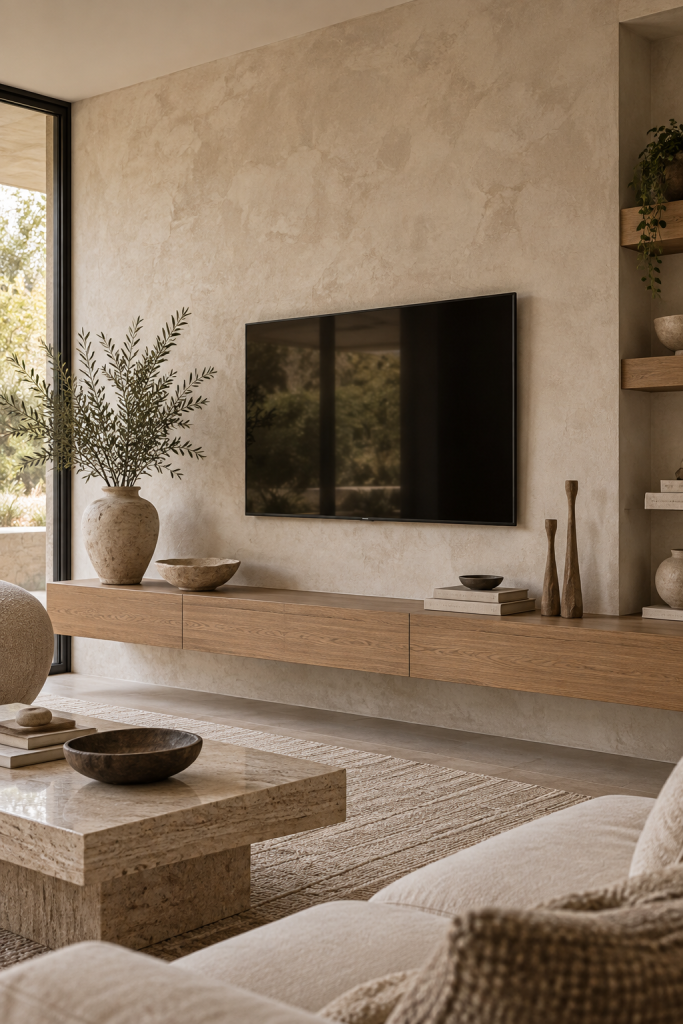
Not every expensive-looking TV wall needs obvious panels. A softly textured limewash or plaster-style finish can make a simple wall feel architectural, particularly when it is paired with one long floating oak bench that stretches well beyond the television.
The bench is important because it gives the screen a visual base. Long floating shelves can create a similar effect in smaller rooms, or they can be used beside the TV to continue the oak line without introducing bulky cabinetry. Keep the hardware hidden wherever possible.
This is the kind of wall that looks better with restraint. One oversized pot, a stone bowl and a few books will usually look more sophisticated than a row of accessories. Let the texture of the wall, the grain of the oak and the changing daylight provide the detail.
8. Create a Marble Slab Centre With Lit Display Niches

A large marble-look centre panel instantly gives a TV wall the scale of a hotel lobby or luxury apartment. Rather than stopping at the stone, flank it with narrow timber display niches so there is somewhere for the eye to travel when the television is switched off.
Faux marble wall panels can deliver the broad veined effect without the weight and installation cost of full stone slabs. Warm LED strips inside the surrounding shelves are just as important; they emphasise the depth of the niches and stop the marble panel looking like a flat printed surface.
Use the shelves almost like display cases. One sculpture, one vase and a small stack of books per level is enough. If you also include a linear fireplace, keep it narrower than the marble panel so the whole composition steps inward neatly rather than becoming a stack of competing rectangles.
9. Use Light Oak Slats for a Scandinavian Media Wall
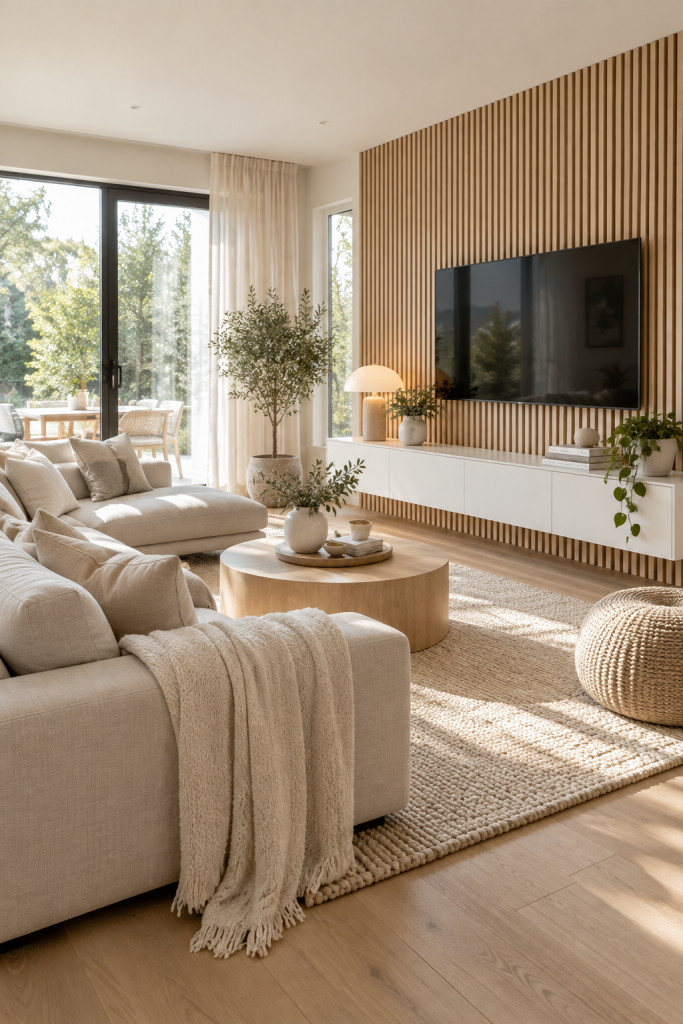
Light oak slats give you the architectural effect of a media wall without making the room feel heavy. In a Scandinavian-style living room, they work especially well with a white floating console, pale upholstery and plenty of natural light.
Art3d’s teak-toned acoustic slat panels are a useful reference for this warmer, lighter look. The vertical lines create enough contrast behind the television, while the timber finish still feels soft beside cream walls and pale flooring.
Keep the furniture uncomplicated and let the wall carry the detail. A round timber coffee table, textured rug and one large indoor tree are enough to make the room feel lived in. The expensive part of the look is the calm consistency rather than lots of decorative features.
10. Frame the TV Inside a Soft Architectural Arch

An arched recess can make a television feel like it belongs to the architecture of the room rather than being added afterwards. The curve softens the rectangular screen and works beautifully in Mediterranean, organic-modern and relaxed contemporary interiors.
Built-in shelves on either side make the arch feel purposeful. Natural oak floating shelves can help create that layered look if you are working with an existing wall and do not want to build full cabinetry from scratch. Recessed warm lighting makes the curved shape even more noticeable.
Keep the plaster finish slightly imperfect and use earthy accessories rather than glossy ones. Handmade ceramics, aged books and trailing plants suit the softness of the arch. It should feel more like a niche that happens to contain a TV than a conventional entertainment centre.
11. Turn Geometric 3D Panels Into a Designer TV Backdrop
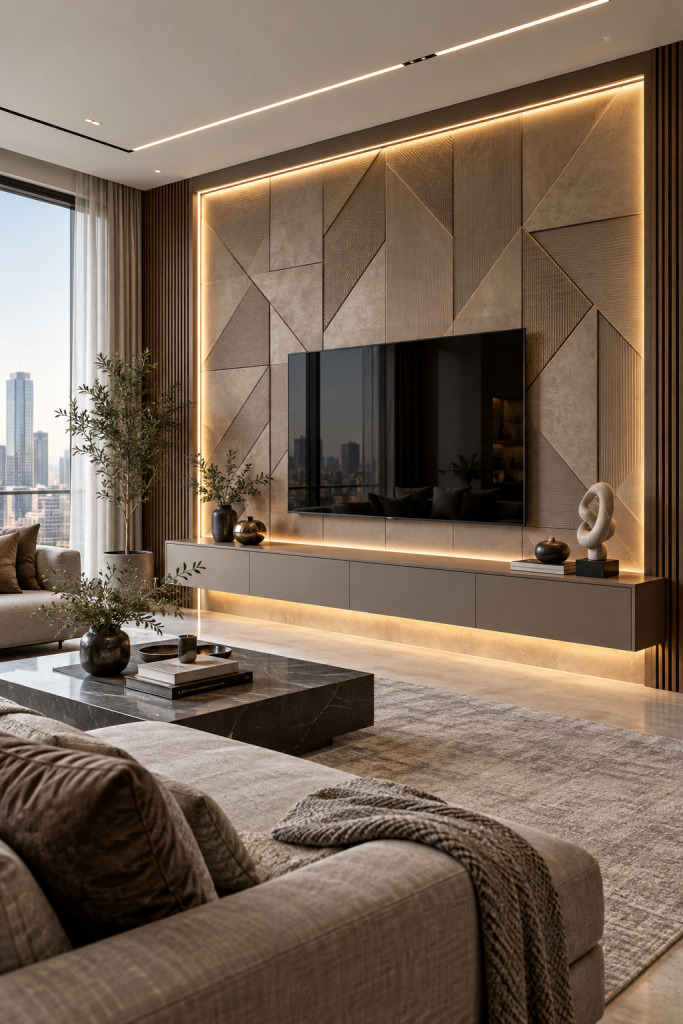
Geometric panels can look surprisingly high-end when they are treated as an architectural insert rather than scattered decoration. Create one large framed rectangle behind the TV, light the perimeter softly and keep the console beneath it completely plain.
Black PVC 3D panels are especially effective because shadows exaggerate the raised pattern. The TV almost disappears against the dark surface while the angled texture catches the warm edge lighting, giving the wall movement even when nothing is playing.
Do not repeat the geometric pattern elsewhere in the room. Smooth upholstery, a simple round coffee table and a quiet rug give the feature wall space to breathe. That contrast between one detailed surface and everything around it is what makes the design look considered.
12. Build a Rustic Stone Fireplace Wall That Feels Permanent

A stone fireplace wall gives a TV the visual weight it needs in a larger family room. Instead of a slim modern feature, this is about making the centre of the room feel solid and established, with timber beams, generous shelving and a substantial mantle.
Faux stone panels can help recreate the texture on a lighter-weight build, particularly around a non-combustible electric fireplace installation where the manufacturer’s clearance requirements are followed. A chunky timber shelf above the fire gives the television a strong dividing line from the flames.
Balance the heavy materials with softer furniture. Linen sofas, a faded rug and warm table lamps stop the room feeling like a themed lodge. Built-in shelves on either side are worth including because they make the stone chimney breast feel like one part of a complete wall.
13. Give a City Condo a Warm LED Halo
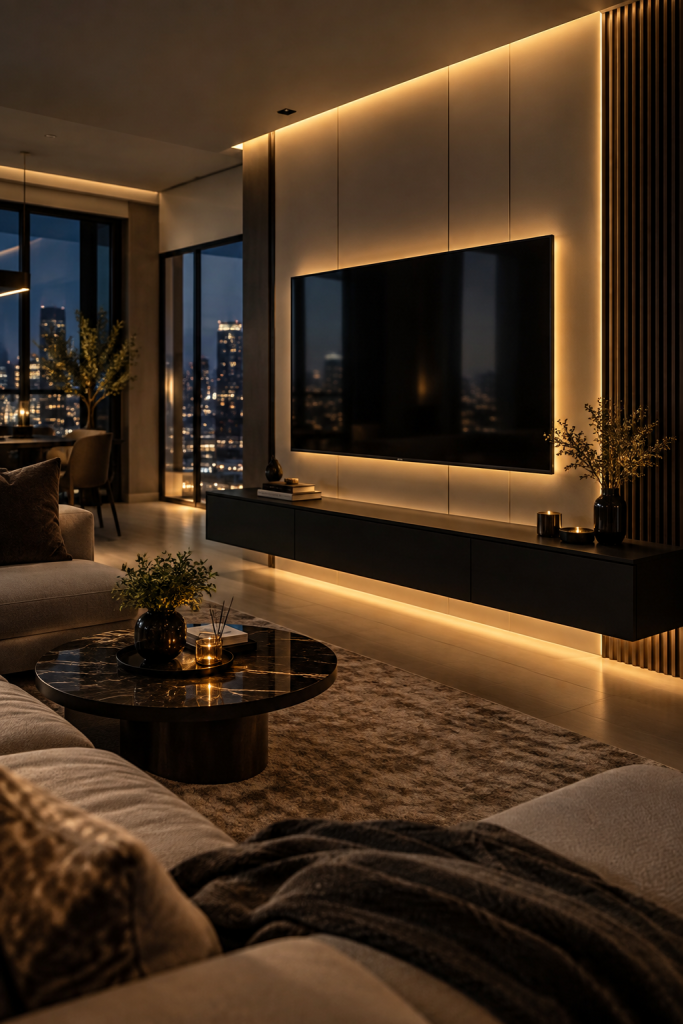
In an apartment, a deep built-out media wall can steal too much floor space. A slimmer setup works better: mount the TV over a narrow floating console, use dark vertical detailing at the edges, then create the drama with lighting rather than depth.
The Govee TV Backlight 3 Lite is an easy way to add a coloured or warm halo around the television, and it becomes especially effective against a darker wall. If you prefer a calmer look, keep the light on warm neutral tones instead of turning the room into a gaming setup.
A black floating console gives the wall a clean baseline and hides the everyday clutter that ruins minimalist spaces. At night, the combination of city views, low furniture and indirect lighting makes even a relatively simple wall feel much more expensive.
14. Make a Frame TV Part of a Proper Gallery Wall
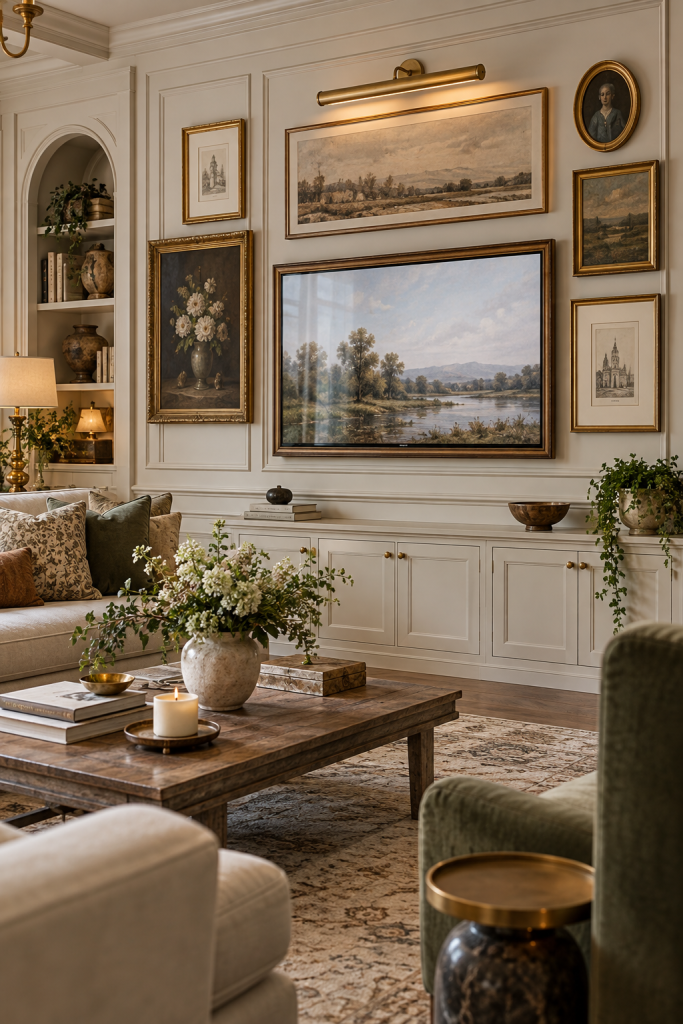
If you dislike the look of a blank black rectangle in a traditional living room, make the TV join the artwork instead of fighting it. A Frame-style television can display art when it is not in use, allowing the surrounding picture frames and molding to read as one gallery composition.
A brass picture light above the central piece adds another layer of realism and makes the arrangement feel more like a collected wall than a tech setup. Rechargeable versions are particularly useful when you do not want to chase wiring into an already finished wall.
Keep the frames varied but coordinated rather than perfectly matching. Antique gold, warm timber and a few slim black frames can all live together if the artwork shares a muted palette. The television should be the largest piece in the grouping, not the only thing your eye notices.
15. Give a Coastal TV Wall Soft Ivory Texture

A coastal living room does not need blue shiplap or obvious seaside accessories. A softly textured ivory wall behind the TV can create just as much character, especially with pale oak cabinetry, woven lighting and open views to the garden or water.
Use the texture across the main centre panel, then keep the side shelving simple. Natural oak floating shelves fit neatly into this scheme and give you somewhere for coral-like objects, books and greenery without building full floor-to-ceiling cabinetry.
Keep the colours sun-bleached and relaxed: warm white, sand, pale timber and only a little dusty blue. The wall should feel tactile rather than themed. That is what makes a coastal room look expensive instead of like a collection of beach-house clichés.
16. Wrap the Whole Media Wall in Deep Walnut Storage
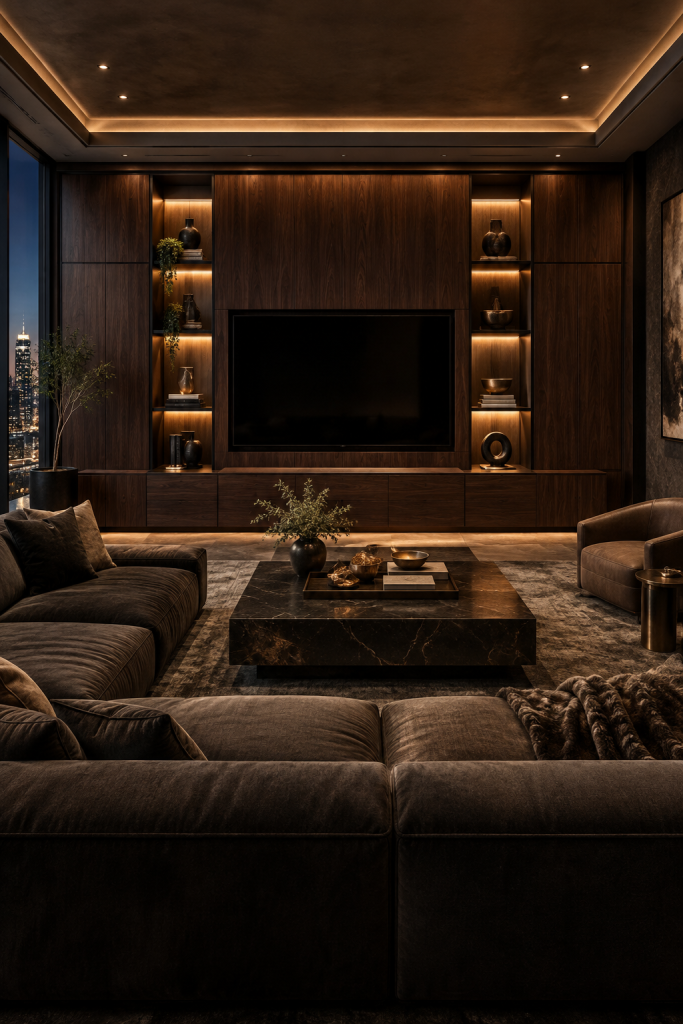
Deep walnut can make a living room feel instantly richer, particularly when it covers more than the small rectangle directly behind the TV. Extend the timber across cupboards, open niches and the low media unit so the entire wall reads as one continuous built-in.
Slat panels are useful for the central section because they stop such a large amount of dark timber feeling flat. A floating walnut console can then provide concealed storage beneath the television, while taller side cabinets hide everything you do not want on display.
Lighting is what prevents this look becoming gloomy. Use warm strips inside the open niches and a soft wash beneath the lower cabinetry. Keep decorative objects dark, sculptural and sparse so the beautiful timber grain remains the dominant pattern.
17. Pair Seamless Microcement With a Ribbon Fireplace

Microcement is perfect when you want the television wall to feel monolithic rather than decorated. The nearly seamless texture creates a calm backdrop, and a long narrow fireplace cut into the same plane gives the wall enough drama without adding another material.
A recessed electric fireplace makes this approach far easier to achieve than a traditional hearth. Keep the fire opening very linear and let a single floating stone or timber ledge run beneath it, rather than adding a full media cabinet.
The room around it should stay tactile and quiet. Travertine, boucle, linen and pale timber complement the soft movement in microcement beautifully. This is one of those looks where the lack of visible joins, handles and clutter is exactly what makes it feel expensive.
18. Create a White-and-Oak Japandi Media Wall
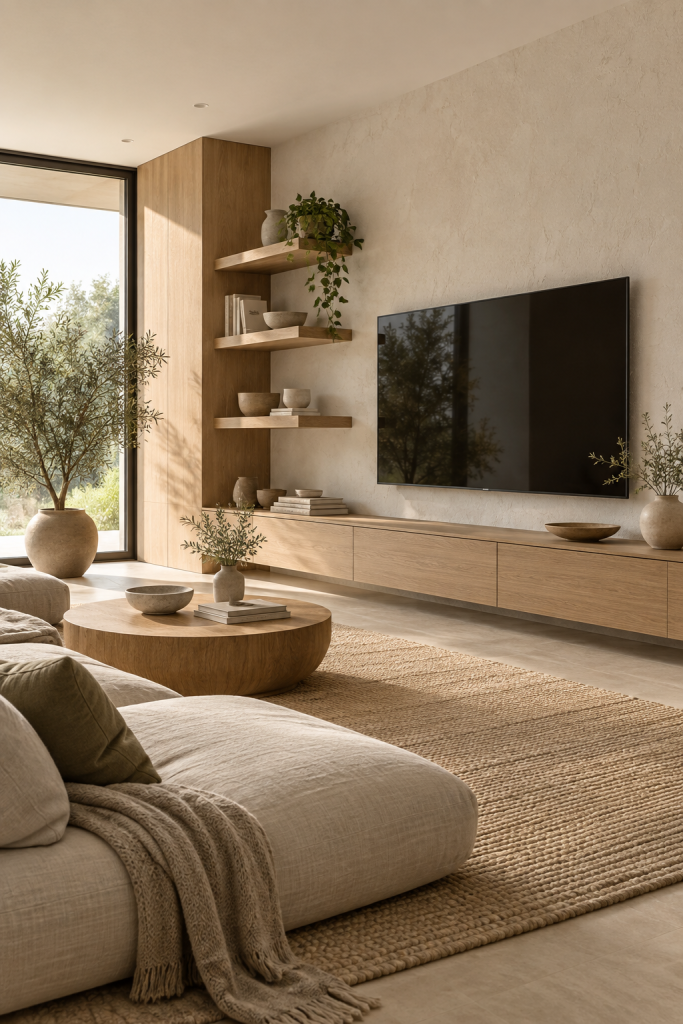
Japandi works particularly well around a TV because it gives you a clear rule: fewer pieces, better proportions and plenty of natural material. Use a warm off-white wall, a long oak cabinet and just a small section of vertical slats or shelving for detail.
Natural oak shelves let you build asymmetry into the wall without making it feel busy. A warm LED strip tucked beneath a shelf or cabinet is enough to create depth at night, but keep the lighting subtle and avoid bright colour-changing effects.
Choose accessories that feel useful as well as decorative: a ceramic bowl, a few books, a branch in a simple vase. Leaving blank wall space is part of the design. The room should feel settled and calm rather than filled for the sake of filling it.
19. Mix Black Marble With Fluted Walnut for Maximum Drama
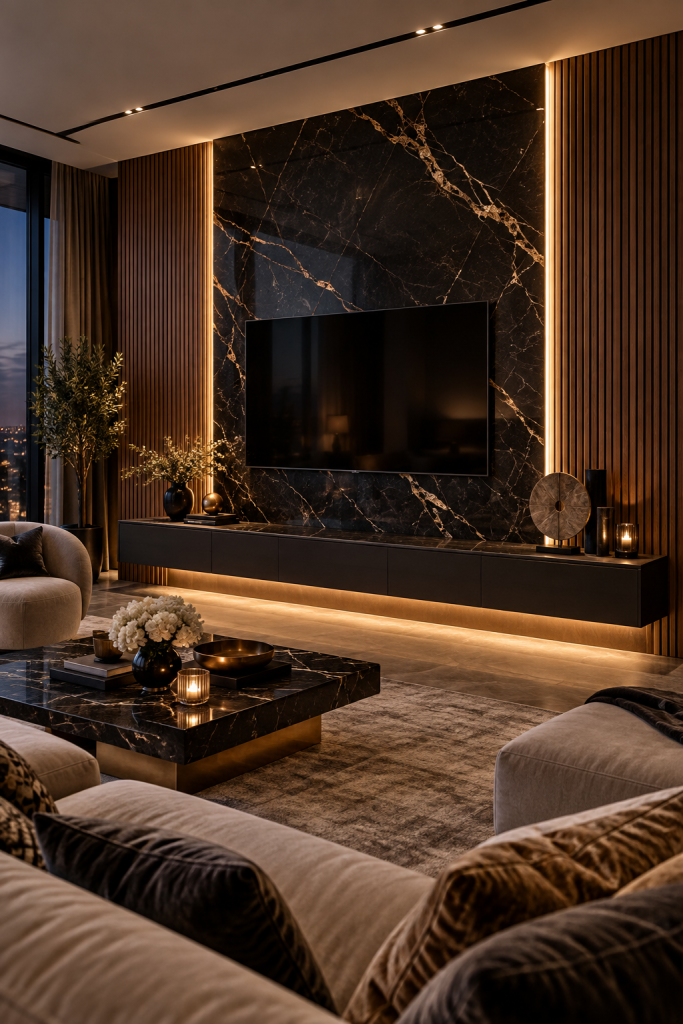
Black marble and warm walnut are a dramatic combination, but together they feel far more layered than an all-black media wall. Keep the marble as the central panel behind the screen, then use narrow slatted timber sections at the sides to soften the stone and introduce warmth.
This is a good place to use faux materials intelligently. Marble-look wall panels can create the large veined surface without needing a structural stone slab, while acoustic wood slat panels bring depth and texture to the flanking areas. Warm edge lighting makes both finishes look richer.
Keep the floating console matte and uncomplicated. If the wall already has black marble, veining, slats and LEDs, adding ornate furniture will tip it into excess. Soft taupe seating and a simple dark coffee table are enough to finish the room.
20. Build the TV Into a Traditional Library Wall

A traditional built-in is still one of the best ways to stop a television looking like an afterthought. Frame the TV with library shelving, panel the wall around it and use a proper fireplace below so the whole arrangement feels like part of the house.
Wall molding is a useful shortcut for adding traditional detail to the central section, while brass sconces give the shelves and fireplace a warm evening glow. Paint everything in one colour so the cabinetry, molding and wall visually merge into a single installation.
Do not over-style every shelf. Mix books with larger bowls, framed art and a few plants, leaving some negative space between groups. That slightly collected, imperfect arrangement feels much more natural than shelves filled with matching decorative objects.
21. Finish With a Soft Beige Boutique-Hotel TV Wall
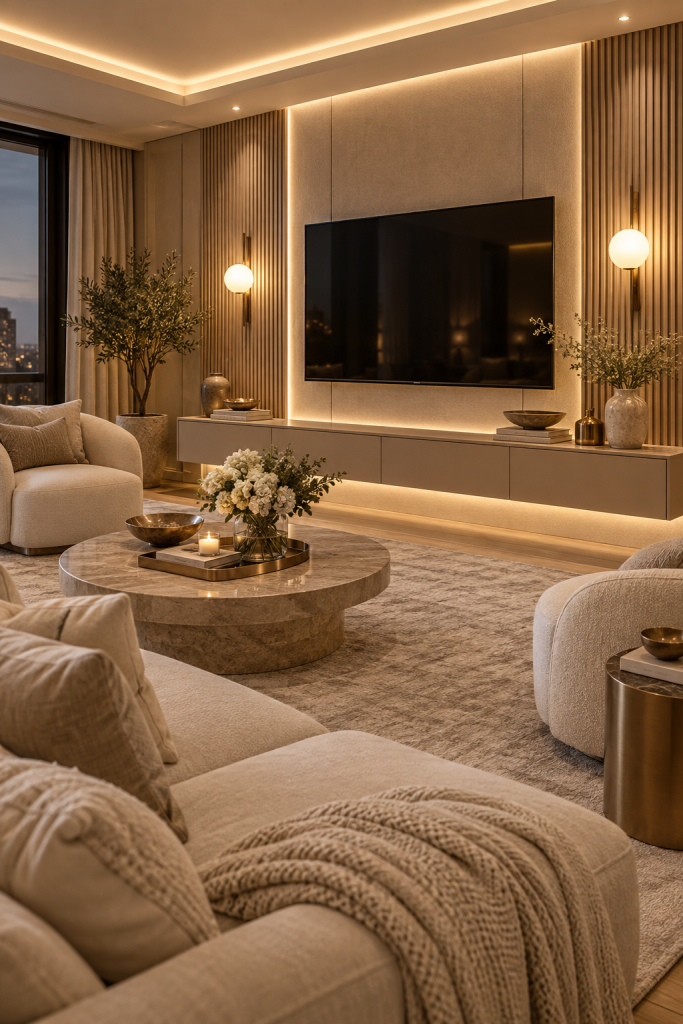
This last idea is all about softness. Upholstered-looking beige panels, narrow timber fluting and a long floating console create a wall that feels closer to a boutique hotel suite than a typical living-room entertainment setup.
Sculptural globe sconces work beautifully against the soft neutral backdrop because they give the wall a decorative element without introducing another busy texture. Warm concealed LED lighting behind the TV panel and underneath the console creates the layered glow that makes the design feel expensive after dark.
Keep the furniture rounded and tactile to continue the mood. Boucle chairs, a low stone coffee table, thick curtains and a large neutral rug all soften the technology. The television is still the centre of the wall, but it no longer feels like the centre of the room. That balance is what makes the strongest TV wall ideas feel integrated rather than overly tech-focused.
If you like feature-wall treatments, our wall panel ideas offer more ways to add texture around a living room.