Kitchen pendant lighting can give an island, peninsula or breakfast table a lovely sense of place. The right shape adds character in daylight, then brings a softer glow when cooking is finished and the kitchen becomes somewhere to linger.
Start with the space beneath the fitting rather than the number of pendants you have seen in a photograph. A short peninsula might need one generous light; a longer island may suit a pair or a single linear fitting.
These ideas focus on the look and the everyday feel of the room. Have a suitable electrician plan and fit wired lights, and follow the fitting’s clearance and installation guidance. For the rest of the room, these kitchen lighting ideas cover useful light around counters and corners.
As an Amazon Associate I earn from qualifying purchases.
Images are AI-generated room inspiration. SHOP SIMILAR opens a search for visually similar options; check the details and suitability for your space before buying.
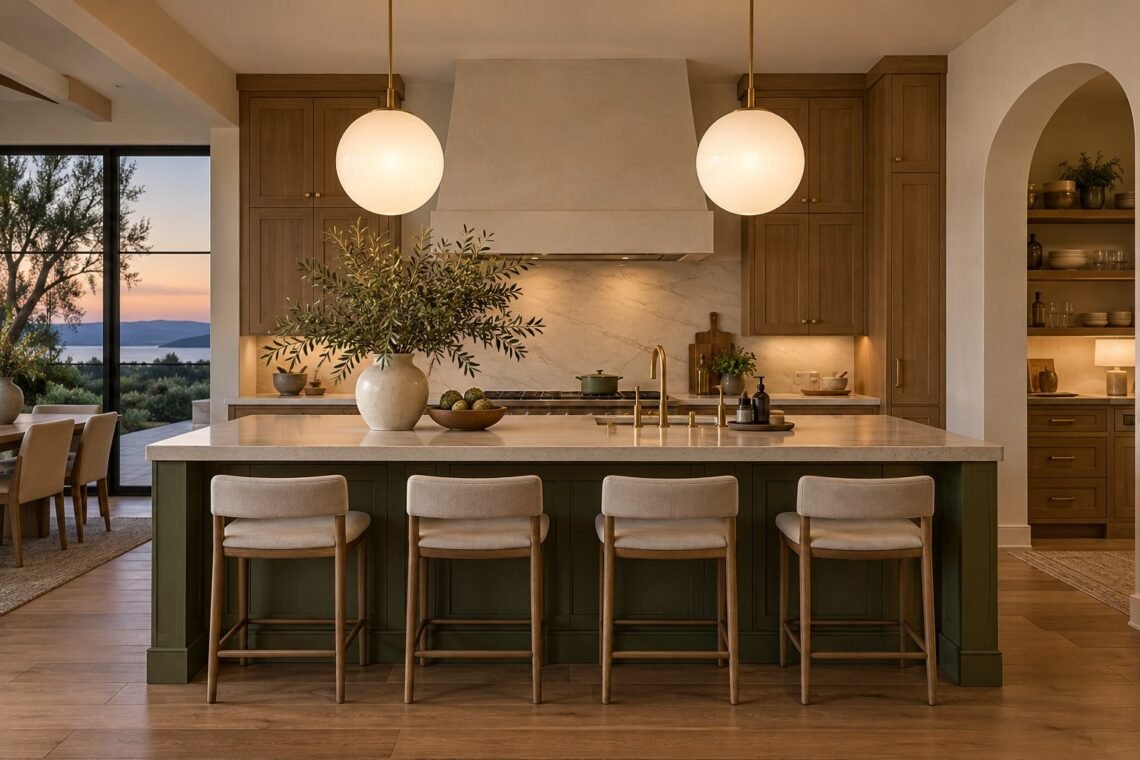
1. Choose opal globes for a softer-looking glow

Opal glass gives a pendant a clean outline while softening the view of the light source. Two globes can look beautiful above an oak-and-cream island, especially with simple brass fittings. The round shapes offer a gentle contrast to straight cabinetry.
Check how the fitting looks illuminated before choosing it. Glass thickness, bulb position and brightness all affect the result. The glow should feel comfortable from the neighbouring seats as well as when you are standing at the island.
Let the rest of the kitchen stay fairly quiet if the globes are large. Warm wood, a restrained countertop and a few useful objects will show off the shape. These warm neutral kitchen ideas offer more ways to keep that softer feeling throughout the room.
2. Add detail with ribbed glass

Ribbed glass adds a little texture without turning the pendant into a solid block in the room. It works beautifully with navy cabinets and a pale countertop. Warm brass at the top can connect it to handles or a tap without matching every metal exactly.
Remember that clear or lightly textured glass may leave the bulb more visible than opal glass. Look at the fitting from seated eye level and choose a suitable light source that feels comfortable. A decorative bulb is only useful if you like seeing it.
Glass also needs a practical cleaning plan in a kitchen. Check how the shade comes off or can be reached safely, and follow the care instructions. The texture should be something you enjoy, rather than a detail that becomes difficult to maintain.
3. Keep a small kitchen crisp with black domes
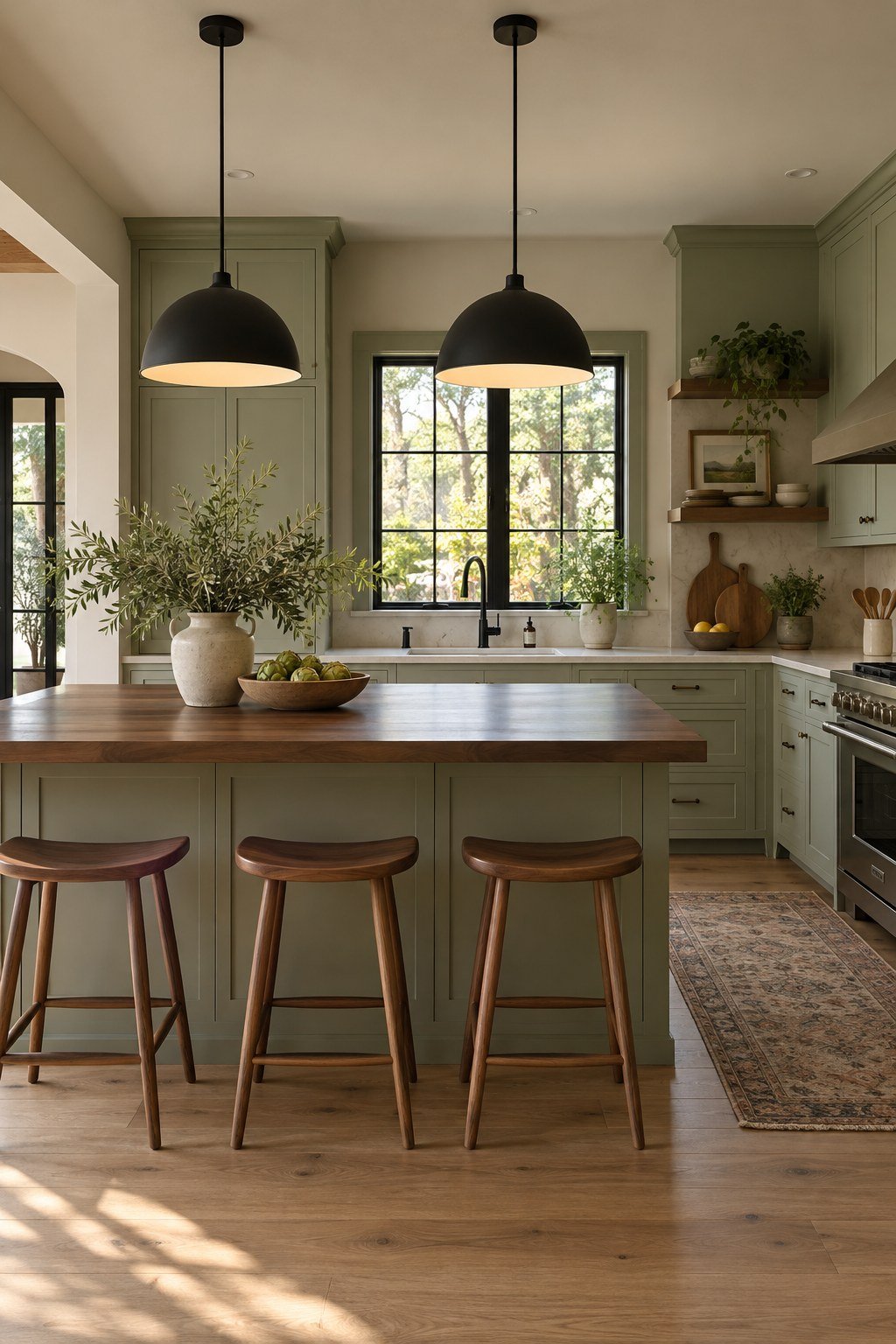
A matte black dome gives a small kitchen a clear, simple focal point. Against pale sage cabinets and walnut, the shape feels graphic without being harsh. A lighter shade interior can also give the fitting a softer appearance from below.
Check where the light falls on the worktop. An opaque dome usually directs more of it downwards, so the area beyond may need separate lighting. Think about the pendant as one part of the kitchen rather than the whole plan.
Repeat the black in a small existing detail if the room needs a connection. A handle, a chair frame or a narrow picture frame may be enough. The quiet shape works best when it has some visual space around it.
4. Warm the room with aged brass cones
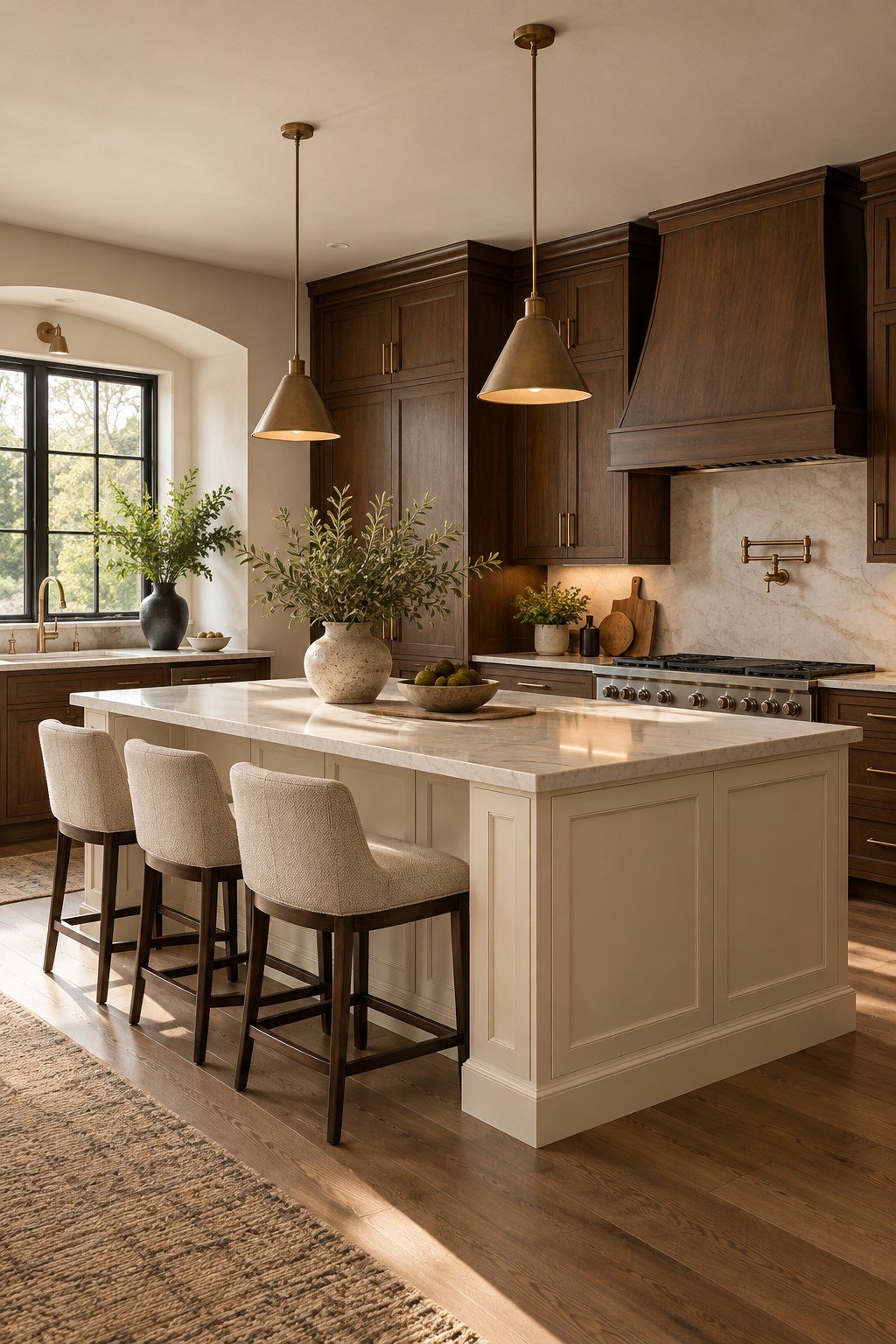
Aged brass feels especially warm beside chocolate timber and cream stone. A pair of small cone shades can bring a little shine without the sharpness of a polished mirror finish. The simple outline also suits a kitchen with rich materials.
Compare the brass with the finishes already in the room. They do not need to be identical, but a similar warmth helps. A muted tap or handle can sit happily beside a slightly darker pendant if the overall palette feels connected.
Keep the countertop underneath useful and uncluttered. That lets the warm metal read clearly from the doorway. A bowl of fruit or a wooden board can give the kitchen personality without competing with the fittings above it.
5. Bring woven texture into a clean-lined kitchen
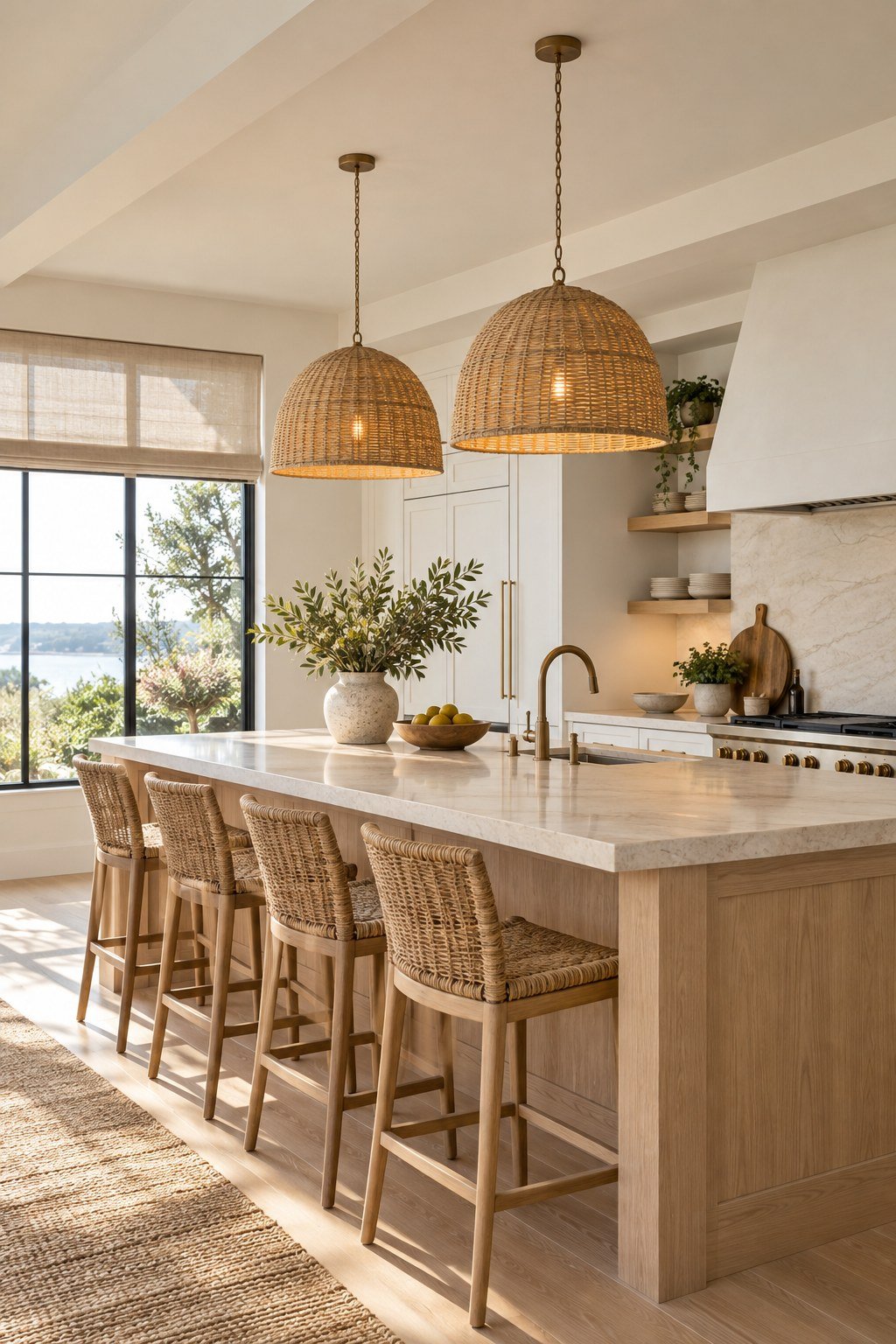
Woven shades can soften a kitchen full of smooth cabinetry and stone. Natural rattan looks lovely with warm white cabinets and pale oak, especially when the room has good daylight. The weave gives the fitting character even when it is switched off.
Choose a complete fitting intended for the shade and use it within the manufacturer’s bulb and heat guidance. Keep it in a suitable position away from cooking grease, steam and other conditions the fitting is not designed for. A decorative texture still needs to suit a working kitchen.
Look at the light pattern at night if you can. Some woven shades create stronger shadows than others. Use separate task lighting where you prepare food so you can enjoy the softer pendant effect without depending on it for every job.
6. Use one linear fitting over a longer island
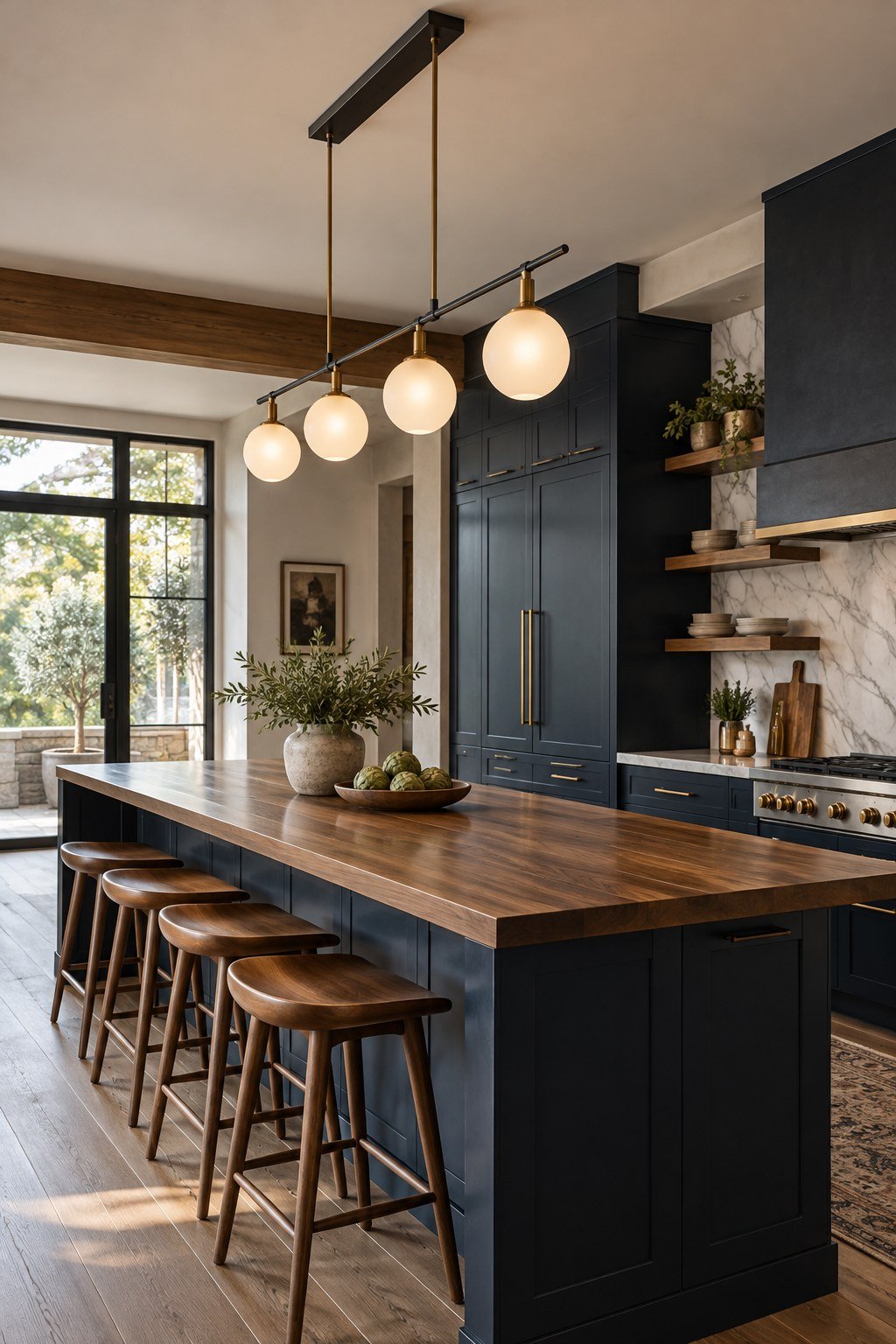
A linear fitting can bring several light points together in one clear shape. Black, brass and opal globes look particularly good above a slim walnut island in a navy kitchen. It gives the length of the island a sense of balance.
Check the fixture’s full length against the usable surface below, not just the room width. It should feel comfortably contained above the island and leave the ends visually clear. The electrician can help assess support, wiring and the canopy position.
Keep other nearby fittings quieter so the linear shape has a clear role. If the dining area is close, think about both lights in the same view. They can share a material or colour without repeating exactly the same design.
7. Let a coloured shade be the accent
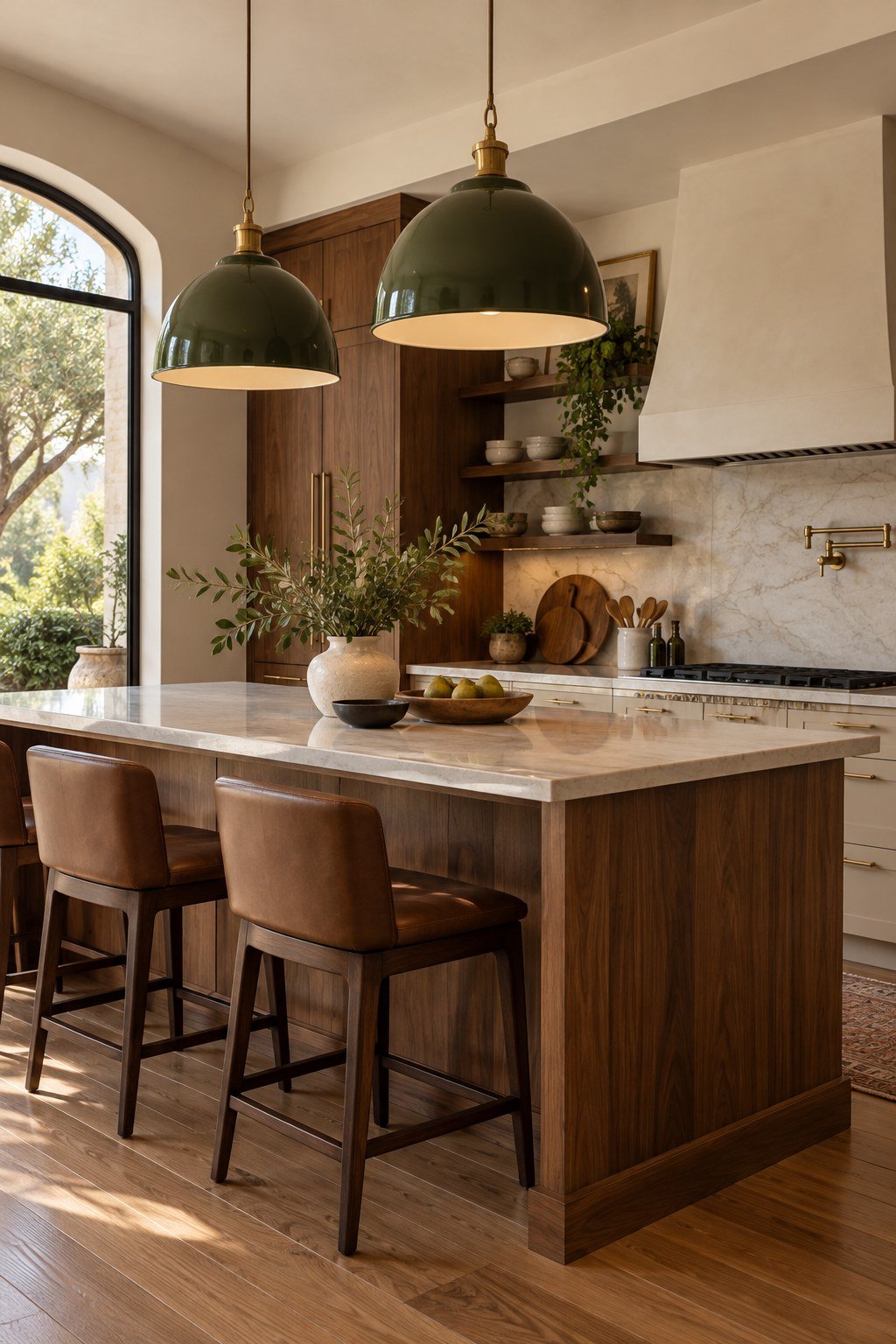
A forest-green pendant can add colour to a cream kitchen without repainting the cabinets. Glossy metal catches the daylight beautifully, while walnut stools or shelving keep the green grounded. Two simple shades can carry the whole accent.
Try the colour beside the surfaces you already own. Green can lean blue, yellow or grey, and those undertones become clearer against a countertop or backsplash. A small material sample or an actual shade is more useful than a screen image alone.
Give the green a little breathing room rather than repeating it on every accessory. A bowl, a plant or a single piece of art can make a gentle connection. The kitchen will still feel considered when the colour appears in only a few places.
8. Use a sculptural shade above the breakfast table
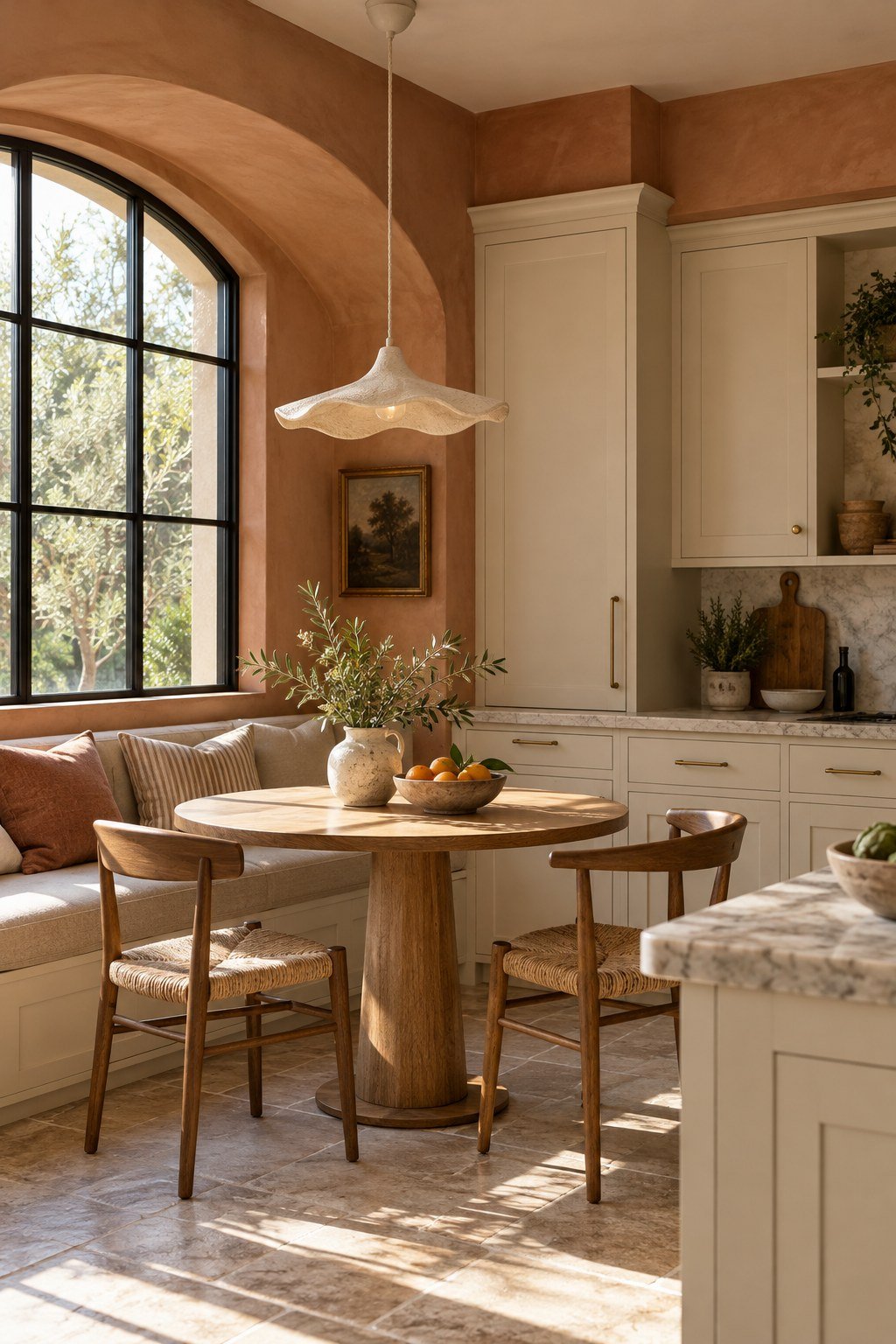
A small breakfast table is a lovely place for a pendant with a little personality. An off-white ceramic shade with a soft curved edge can make a simple oak table feel special. Warm terracotta nearby gives the pale fitting some depth.
Choose the size around the table and the way you sit there. The fitting should leave comfortable headroom and an easy view across the table, following its installation guidance. A sculptural shade does not have to be huge to make an impression.
Keep this corner welcoming with ordinary everyday things: two mugs, comfortable chairs and room for breakfast. These coffee bar ideas can help connect the nook to your morning routine without filling every surface.
9. Give a short peninsula one confident pendant

A short peninsula does not automatically need a row of three lights. One well-sized pendant can make the surface feel intentional while leaving the small kitchen open. An opal globe works particularly well when you want a soft, simple outline.
Centre the fitting around the part of the surface it is meant to serve. A breakfast perch and a preparation area may have different priorities, so discuss the placement before the wiring position is fixed. Check the view from adjoining rooms too.
Leave the surrounding ceiling uncomplicated where possible. A small kitchen often feels calmer when one pendant has a clear job and the other lighting is quieter. The number of fittings matters less than how comfortably they sit in the space.
10. Keep the window view in the conversation
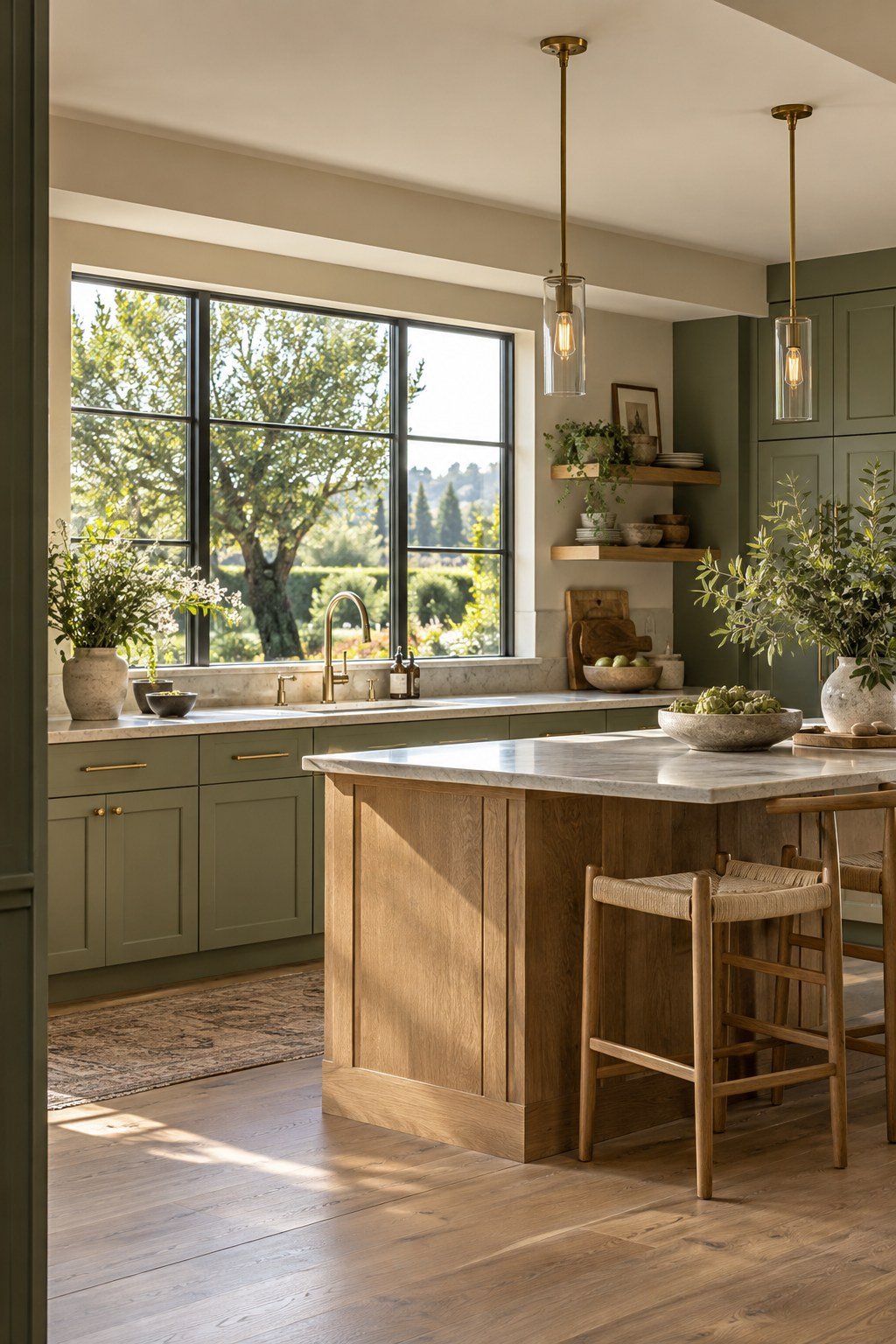
When the island sits in front of a window, the pendant becomes part of the view. Slim glass or narrow metal shapes can keep the sightline feeling more open. Brass and glass work nicely in a sage-and-oak kitchen with a leafy outlook.
Check the arrangement from the places where you stand and sit most often. A shade that looks balanced from the doorway may land directly in your eye line from a stool. Use simple temporary outlines while planning the scale with the installer.
Think about the backsplash and window dressing at the same time. These kitchen backsplash ideas show how much visual detail can already be present. Sometimes the nicest pendant is the one that lets those other parts breathe.
11. Test scale and the evening setting together
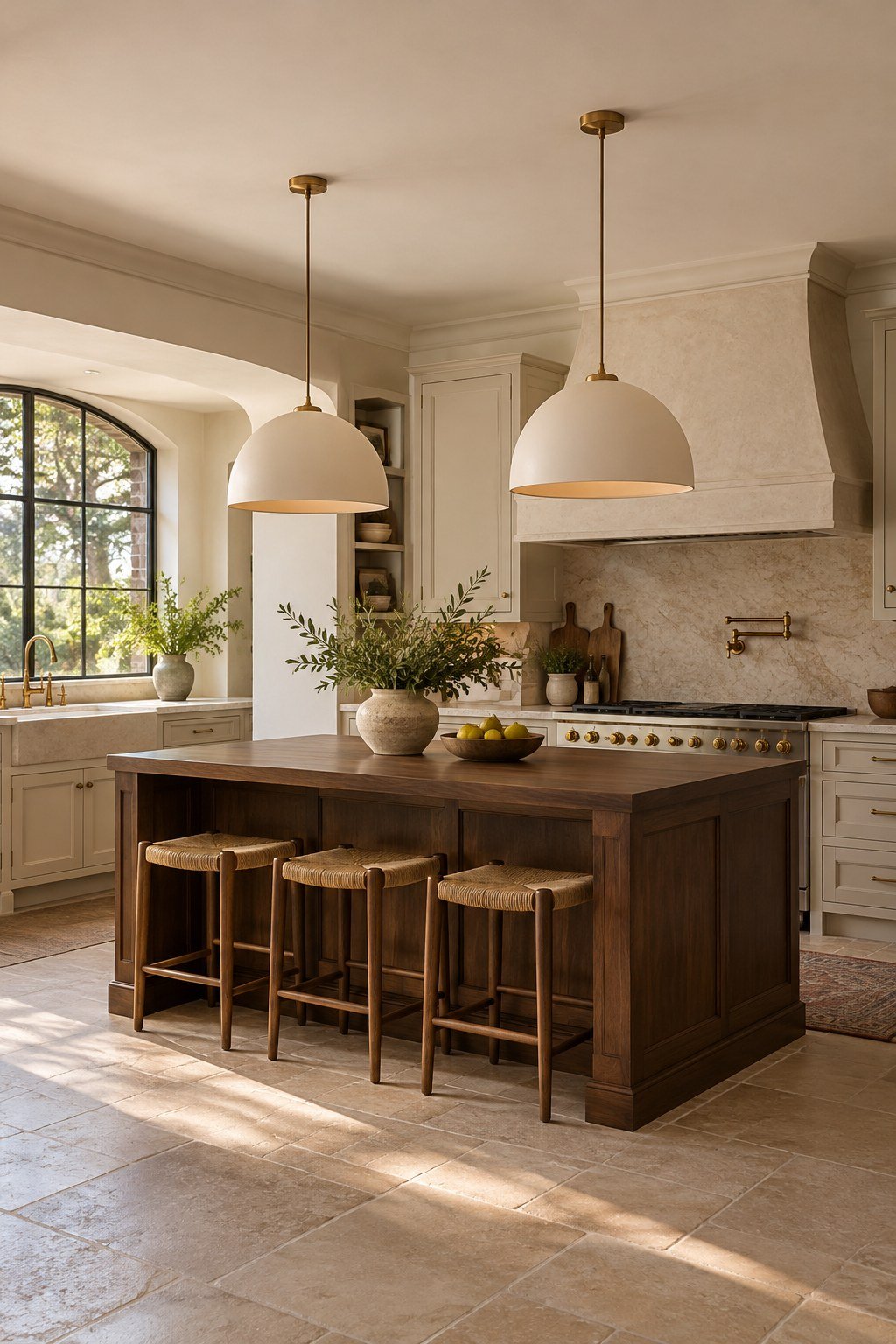
Pendant scale is easiest to judge with the whole kitchen in view. Two generous cream domes can feel calmer than several tiny shades, provided they suit the island and leave clear headroom. Smaller is not always the less noticeable choice.
Before fitting, compare simple cardboard outlines with the island, stools and ceiling height. Follow the manufacturer’s guidance and have the installer check the final position. There is no single hanging height that suits every fitting, person and kitchen.
Plan the evening light as carefully as the shape. If you want dimming, check that the bulbs, fitting and controls are compatible; the Department of Energy’s bulb guidance explains this point. A gentle setting is lovely after dinner, while separate task lighting can keep the working areas useful.
Choose the pendant around the kitchen you actually have
The nicest kitchen pendants suit the surface below them and the room around them. A soft globe, a crisp dome or a woven shade can all work beautifully when the scale and placement feel comfortable.
Start with the everyday view: where you prepare food, where someone sits with coffee and what you see from the next room. Then choose the shape and finish that support that setting.
Give yourself time to check the proportions before anything is fitted. Once the practical choices are settled, the pendant can do the enjoyable part—making the kitchen feel welcoming from the first coffee to the last cup of tea.