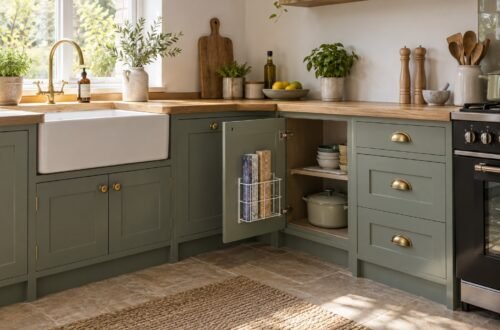
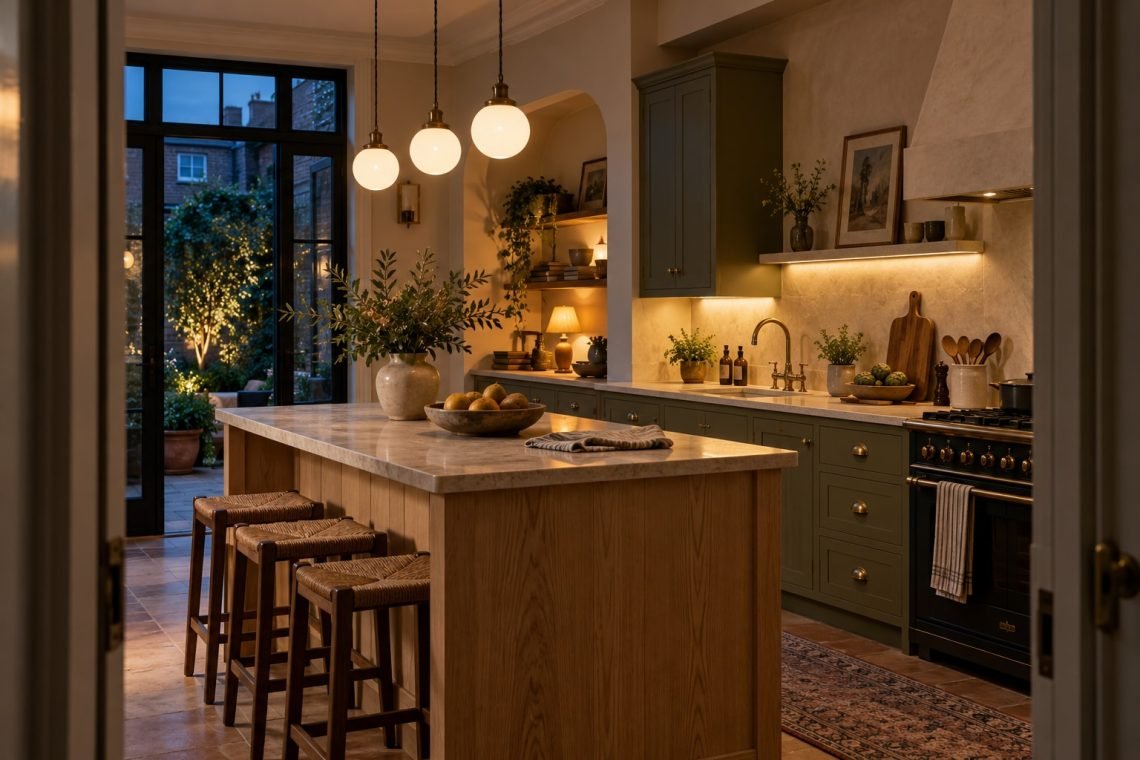
A kitchen can look lovely in daylight and feel surprisingly gloomy once you start making dinner. Often, the problem isn’t a lack of light. It’s light coming from the wrong place: one bright fitting overhead while your own shadow falls across the chopping board.
These kitchen lighting ideas give each part of the room a job. Some help with cooking, others make a small corner inviting, and a few simply let the kitchen feel calmer after the washing-up is done. You don’t need every idea in one room; start with the spot that bothers you most.
As an Amazon Associate I earn from qualifying purchases.
Images are AI-generated styling ideas, not photographs of the linked products. Amazon links let you browse similar items; check dimensions, materials and suitability before buying.
1. Put the light on the worktop, not behind you

If the worktop feels dark even with the ceiling light on, under-cabinet lighting is a sensible place to start. It puts light in front of you, where you rinse vegetables, read a recipe or make the first coffee of the day.
Look for an even wash across the surface rather than a row of bright spots. A diffuser helps soften visible LED points, while a shallow fitting is easier to tuck out of sight. Try the position before fixing anything: glossy tiles and polished counters can reflect more light than you expect.
For a kitchen with several short runs of cabinets, compare where one light ends and the next begins. A bright patch beside a dark corner can be distracting when you move along the worktop. These kitchen lighting ideas work best when the useful surfaces feel evenly lit, including the stretch beside the kettle and the place where you usually unpack groceries.
A useful starting point: For a small upgrade, tackle the counter you use most before lighting the entire kitchen.
2. Scale pendants to the island you actually have
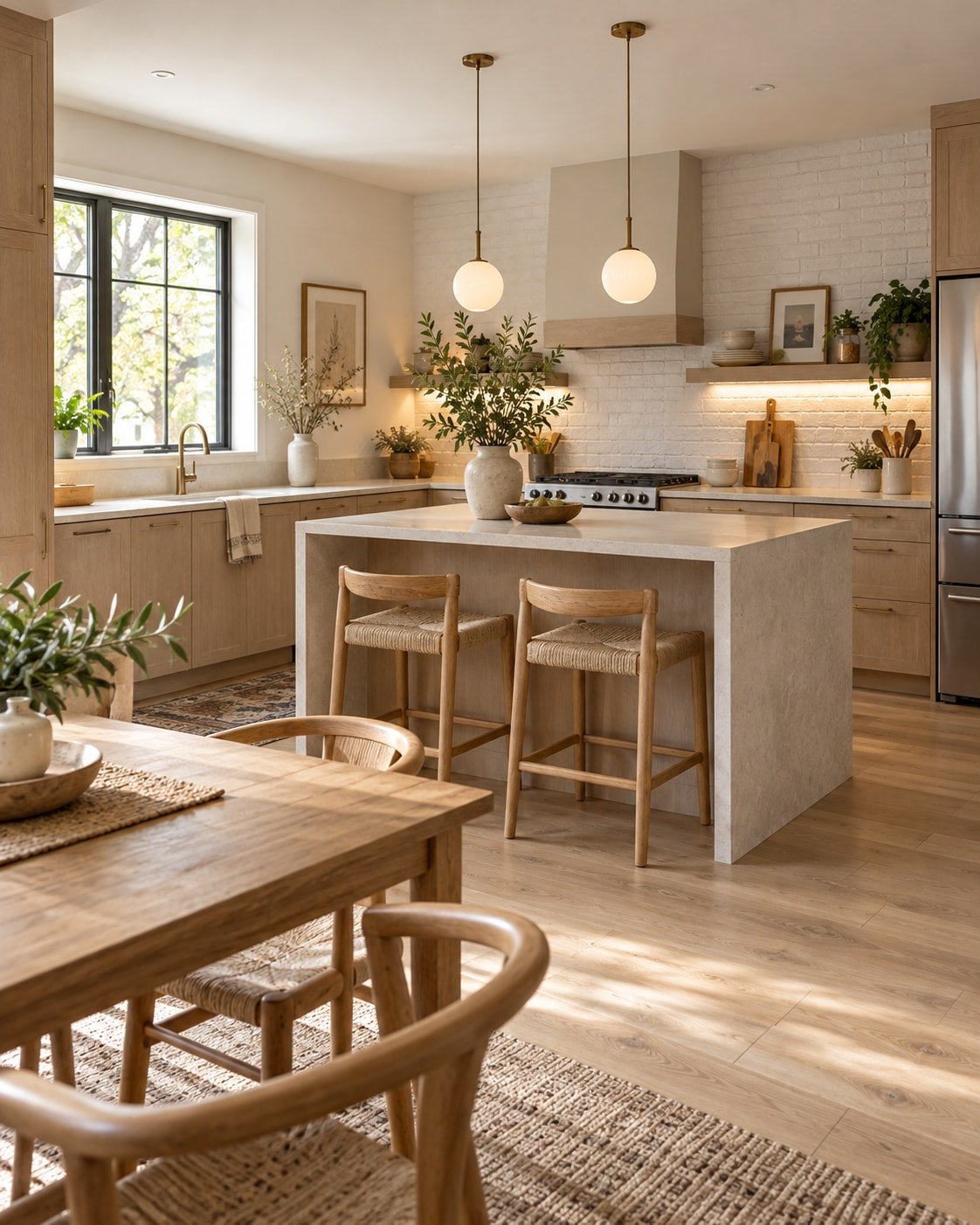
A short island doesn’t need a dramatic row of oversized shades. Two modest pendants—or one well-proportioned fitting—can mark the space without making it feel crowded. The shape and spacing matter more than copying the number in an inspiration photo.
Use paper shapes or balloons to get a feel for the size before ordering. Then check the view from both sides of the island. You want to see the person opposite you, not spend dinner peering around a shade. Opal glass is a good option when you want a softer-looking glow.
Consider the shade from a seated position as well as standing at the counter. A pendant that looks perfectly balanced in a photograph may put a bare bulb directly in your eyes when you sit down. If your island doubles as a homework spot or breakfast table, a softly diffused fitting can make that change of use feel much more comfortable.
A useful starting point: Check the fitting’s dimensions, not just the styled product photograph.
3. Choose a close-to-ceiling fitting for a low room

Low ceilings can make a beautiful pendant feel as though it’s in the way. A flush or semi-flush fitting keeps the centre of the room open while still giving you something nicer to look at than a bare bulb.
This works especially well in cottage kitchens, narrow rooms and spaces with a busy ceiling line. Keep the finish connected to one other detail, such as the handles or tap, without trying to match every piece of metal. A simple pale shade can sit quietly above patterned floors or colourful cabinets.
The spread of light matters as much as the depth of the fitting. A shade that sends most of its light straight down may leave the upper walls looking dim, while a more diffused design can make the room feel less enclosed. When comparing kitchen lighting ideas for low ceilings, look at how the fitting lights the surrounding space, not only its decorative shape.
A useful starting point: Keep task lighting separate; a ceiling fitting alone may still leave shadows on counters.
4. Aim adjustable lights at the awkward bits
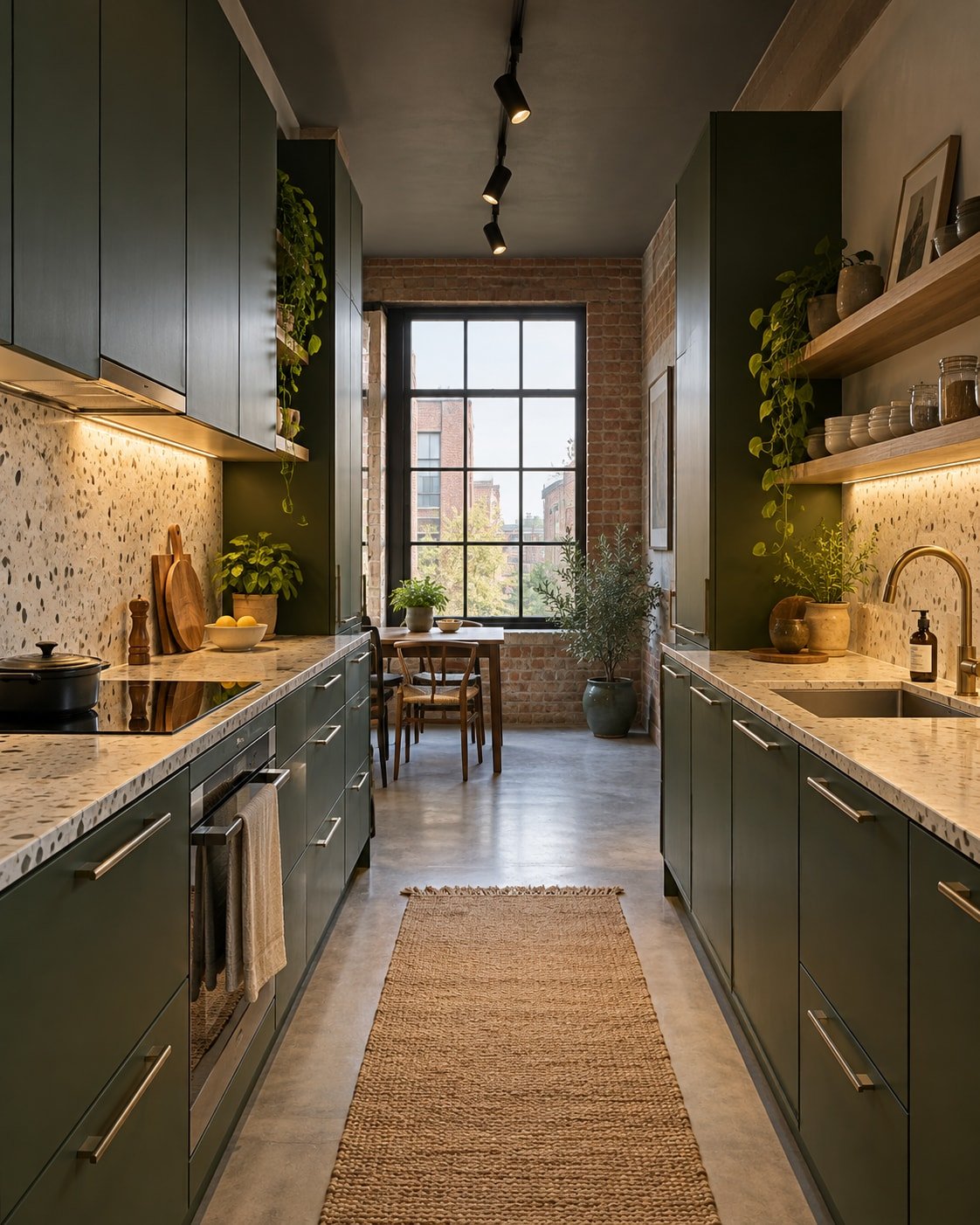
Not every kitchen has a neat island and an obvious place for a pendant. In a galley or an irregular room, adjustable heads can direct light towards a prep area, a tall cupboard or the corner the main fitting misses.
Think about what each head is illuminating. Pointing them all straight down can leave the same old dark patches, while aiming one at a glossy surface may create glare. A small number of carefully positioned lights usually looks calmer than a ceiling filled with fittings.
Use your normal evening routine as a guide to the aiming points. One person may need light beside the cooker, while another spends most of their time at a counter around the corner. Take a photo of the room with the lights on and note the shadows you actually notice. That gives you a clearer brief than simply asking for a brighter ceiling fitting.
A useful starting point: Review the lighting while standing where you cook, rather than only from the doorway.
5. Give the breakfast corner a little lamp
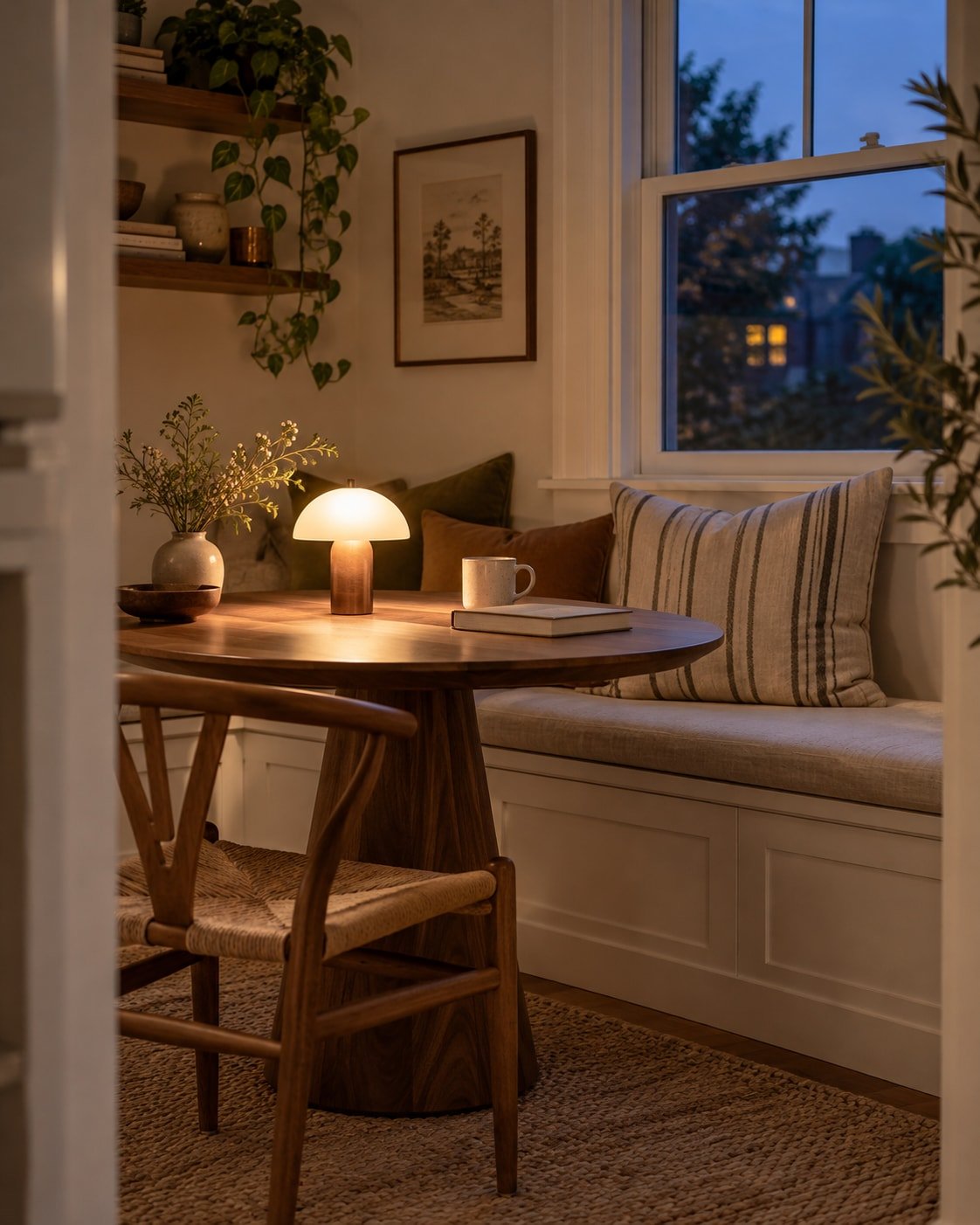
A small lamp makes a breakfast nook feel like somewhere to sit, rather than an extra surface for shopping bags. It is especially lovely when the rest of the kitchen is bright enough for cooking but you want the seating corner to feel softer.
A rechargeable model avoids a cable crossing the table. Choose a stable base and a light level that lets you read comfortably. Keep it in a dry spot away from the sink, hob and hot appliances, and follow the manufacturer’s guidance on charging and placement.
Treat the lamp as part of a small arrangement, with room left for a mug, breakfast plate or book. A very large shade can swallow a compact table even if the base is narrow. For a corner used mainly in the evening, try pairing the lamp with a plain wall or curtain behind it so the soft pool of light remains the main feature.
A useful starting point: Try a lamp you already own in a suitable dry corner before buying a new one.
6. Frame open shelving with a wall light
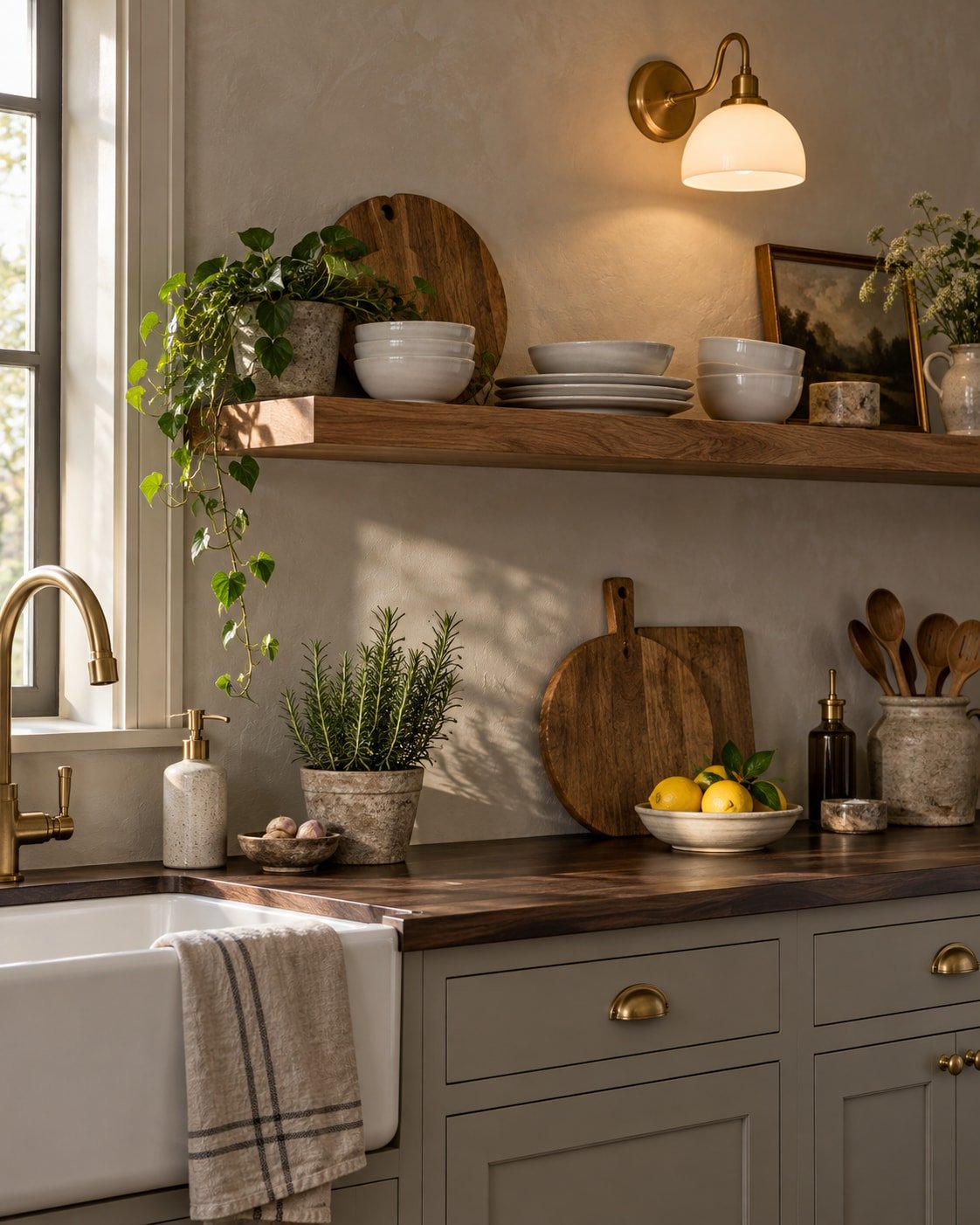
Open shelves can look a little flat after dark. A wall light beside or above them adds depth and turns everyday bowls, jars or a favourite print into part of the evening view.
Keep the shelf arrangement simple so the lighting has something clear to land on. Leave space around the fitting and avoid cramming the shelf up to the shade. If you are considering a plug-in version, plan a tidy cable route first; a trailing cord can undo the relaxed look you were aiming for.
Notice the finish behind the shelf before choosing the beam direction. Matte paint creates a gentler backdrop than reflective tile, and a bright hotspot can draw attention away from the objects you wanted to highlight. Among these kitchen lighting ideas, shelf lighting is particularly forgiving when you keep the display loose: a stack of bowls, one taller jug and an open patch of wall.
A useful starting point: Use this as an accent alongside good worktop lighting, rather than as its replacement.
7. Treat the dining end as its own little room

If the kitchen also holds your dining table, a separate pendant can make that end feel more settled. It creates a visual centre for meals, even when the table sits only a few steps from the fridge.
Choose the fitting around the table’s position rather than the centre of the whole ceiling. A linen-look shade brings softness; a simple metal shade feels more defined. Check whether the material is appropriate for the location, especially if the dining area is close to steam or cooking grease.
If the table moves for guests, think about where it spends most of the week. The pendant should feel right for daily meals rather than only the fully extended arrangement. It also helps to repeat a shape elsewhere: a rounded shade above a round table feels settled, while a longer fitting can echo the proportions of a rectangular dining surface.
A useful starting point: Imagine the lights in the cooking area switched off: the table should still feel comfortably lit.
8. Add a gentle glow along the base cabinets

A discreet strip beneath the base cabinets can give the kitchen a soft outline at night. It is useful when you want a little background light without turning on the full ceiling arrangement.
The important word is discreet. Aim for a gentle glow on the floor, with the strip itself hidden from the usual viewing angles. Bare LED dots or very bright cool light can make the effect feel much harsher. This is an extra layer of atmosphere, not a substitute for properly lighting a walkway or work surface.
Look at the floor colour before choosing how strong this layer should be. Pale flooring may reflect more of the glow, whereas a darker surface can make the same fitting feel quieter. Keep the effect consistent along the visible run rather than adding scattered bright sections. A tidy, continuous line looks more deliberate and lets the cabinetry remain the focus.
A useful starting point: Check the result from a chair as well as standing up, because lower sightlines reveal more of the fitting.
9. Use clear shades where you want an open view

An opaque shade can visually divide a small kitchen, especially if it hangs in front of a window. Clear or lightly ribbed glass keeps more of the view open while still giving the fitting a presence.
Pay attention to the bulb because you will see it. A glaring exposed bulb can be uncomfortable even inside a beautiful shade. Check the fitting’s recommended bulb type and try the light in the evening before deciding whether it suits the room. Glass also shows dust and cooking residue, so choose a shape you can clean easily.
Clear glass works especially well when another part of the room already supplies the visual weight, such as dark cabinets or a patterned splashback. That balance is useful when collecting kitchen lighting inspiration: you can keep a favourite decorative fitting without adding another solid shape across the room. Check the opening of the shade too, so routine cleaning will be straightforward.
A useful starting point: One clear pendant can be enough for a small peninsula; the room doesn’t need a matching row.
10. Make an unused corner feel intentional

Some corners don’t need another storage basket. A favourite print and a small picture light can make an awkward bit of wall feel deliberately finished, particularly in a kitchen with a dresser or a narrow sideboard.
This is one of the kitchen lighting decor ideas that works best when it stays small. Choose a fitting that suits the width of the artwork and keep its brightness lower than the task lighting. A battery model can be worth considering where a new cable would be intrusive, provided access for charging or battery changes is straightforward.
Choose artwork you enjoy seeing from the doorway or dining table, then let the light support that view. There is no need to add several framed pieces just to fill the wall. A single print with space around it often gives a narrow corner more presence, especially when nearby shelves and counters are already doing the practical work of the kitchen.
A useful starting point: Keep art and fittings away from areas that regularly collect splashes or cooking residue.
11. Help the pantry shelves light up from the inside

A deep pantry can hide its contents even when the kitchen itself is bright. A small internal light makes it easier to see what is already there, especially on shelves below eye level.
Think about how you reach into the cupboard. The fitting should illuminate the shelf without sitting where packets or jars will knock it. Rechargeable sensor bars can suit a small cupboard, but you will need an easy way to remove and charge them. Check the sensor’s behaviour before attaching it permanently.
Test the cupboard with the items you normally store inside, rather than with empty shelves. A tall cereal box can cast a shadow over the next row, and a light hidden behind a shelf lip may not reach the back. Small changes to the arrangement can make a modest fitting more useful and save you from adding unnecessary lights to every shelf.
A useful starting point: Combine better lighting with a little space between containers, so the back of the shelf stays visible.
12. Give yourself more than one evening setting
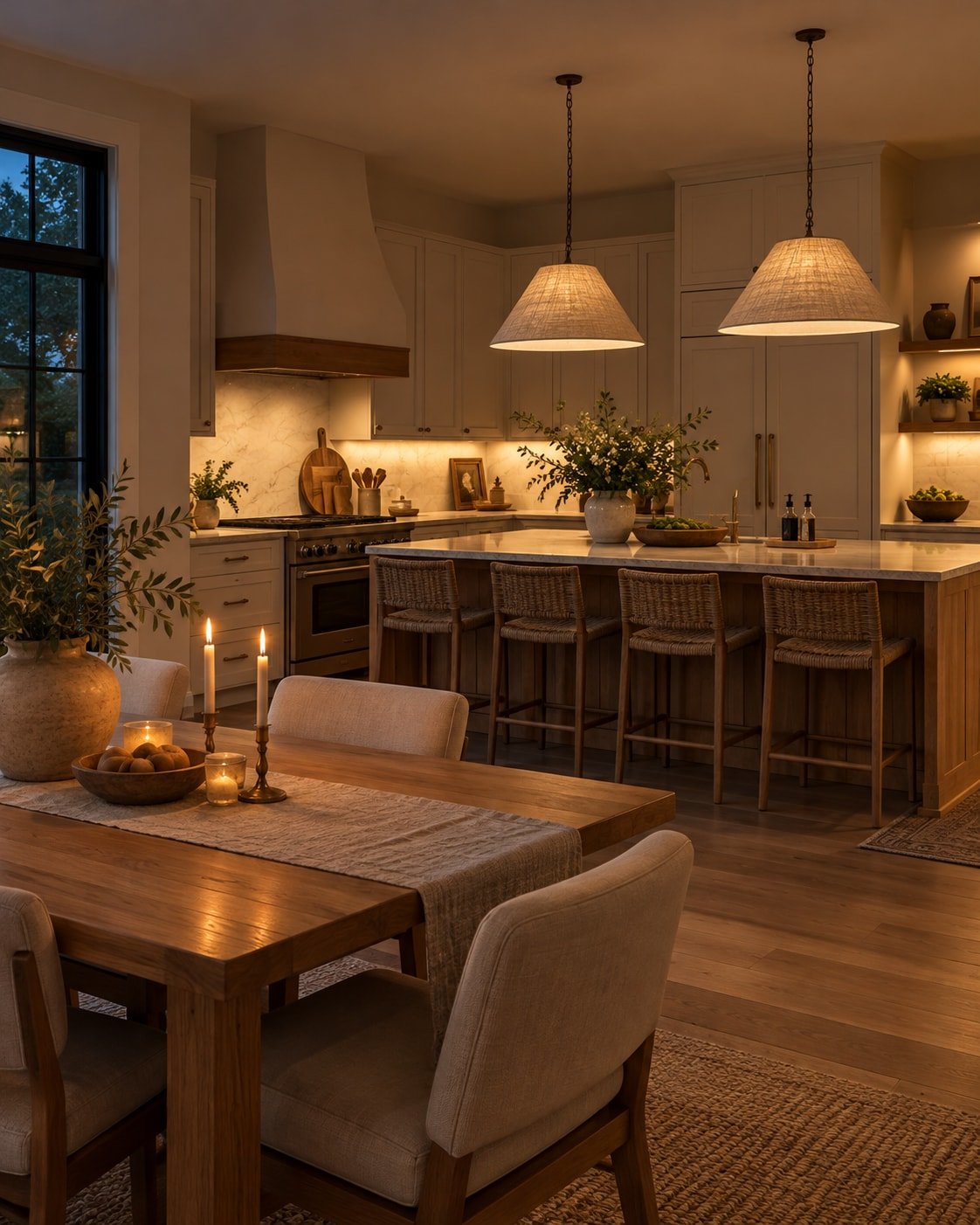
The nicest kitchen lighting design ideas usually offer choices. You might want bright counters while cooking, softer light over supper, and just a gentle glow when you return for a glass of water.
Separate controls make those changes easier, and compatible dimmable fittings can add flexibility. Check that the bulbs, fittings and controls are designed to work together rather than assuming any LED will dim smoothly. For new wiring, changed switches or hardwired fittings, use a qualified electrician who can assess the installation and local requirements.
Make a simple list of the lights you want on together before discussing controls or buying compatible products. For example, your cooking setting might combine the worktop lights and ceiling fitting, while dinner uses only the table pendant. The most useful kitchen lighting ideas fit these ordinary moments; you should not need to walk around the whole room adjusting five separate lamps.
A useful starting point: Plan around three moments—cooking, eating and winding down—then decide which lights each one actually needs.
Which kitchen lighting ideas should you try first?
Start with the shadowy counter or the corner you avoid after dark. Fixing one useful spot often makes more difference than changing every fitting. Once the practical light feels right, add a softer layer for the part of the evening when the kitchen becomes somewhere to linger.
For help comparing bulbs, the Department of Energy’s Energy Saver guide explains brightness labels and light appearance. Use those details alongside the fitting manufacturer’s compatibility guidance.