

A living room can look lovely in daylight and feel completely different once the ceiling light comes on. Often, the answer is a few smaller sources of light in the places where you actually sit, read and unwind.
These living room lighting ideas start with those everyday uses. Think a lamp beside your favourite seat, a little glow across the opposite side of the room and enough light to find a book without lighting every corner equally.
You can try much of the arrangement with lamps you already own. Move one, switch another off and see what the room needs before adding more fittings. The aim is a comfortable evening room that still works for real life.
As an Amazon Associate I earn from qualifying purchases.
Images are AI-generated room inspiration. SHOP SIMILAR opens a search for visually similar options; check the details and suitability for your space before buying.
1. Put a shaded lamp beside the seat you use most

A shaded table lamp beside the sofa gives the light a useful starting point. A broad linen shade looks soft against mushroom walls and chocolate upholstery, while a ceramic base adds texture. The lamp feels like part of the furniture arrangement.
Choose the table and lamp together so the shade does not crowd the seat or overhang the walking route. From your usual position, the bulb should feel comfortably screened. You also want enough table space left for the ordinary things you keep beside you.
Try the lamp on its own in the evening before deciding what else the room needs. It may show that the opposite side needs a second pool of light rather than a brighter bulb here. Small adjustments are easier to judge one at a time.
2. Give the reading chair its own adjustable light
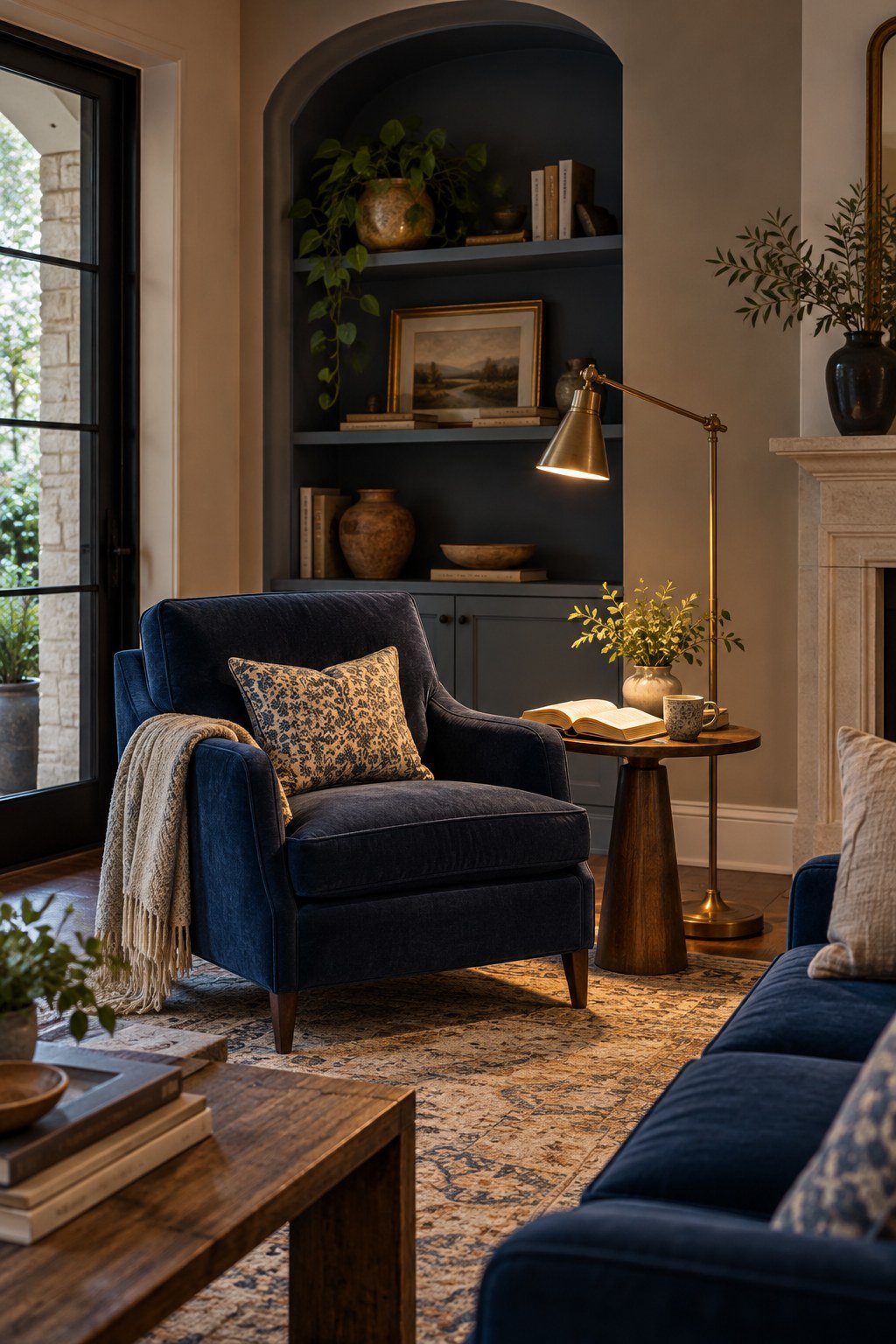
A reading lamp gives one corner a clear purpose. A slim brass stem and small adjustable shade look lovely with navy upholstery and warm pale walls. The fitting can be modest because it is doing a particular job rather than trying to light the whole room.
Sit in the chair with a book while testing the position. Aim the light across the page so your head or shoulder does not block it, and check that the bulb does not shine into your eyes. The adjustment should feel easy from the seat.
Keep the base clear of the route around the chair and tuck the cable safely along the room edge. If the corner also needs a table, these small-space reading nook ideas show how the pieces can work together.
3. Reach over the sofa with an arc lamp

An arc lamp can bring a light above the seating without relying on a ceiling fitting. A black curve looks beautiful against cream walls and caramel upholstery. It also adds height to a room where the furniture is mostly low.
Check the full reach, base footprint and shade height before choosing one. The base must stand securely where it will not become a trip point, and the shade should clear the people using the sofa. A dramatic silhouette still has to fit the room.
Keep the rest of the nearby furniture straightforward so the curve has space around it. A round wooden table and a generous rug can be enough. This works best when the lamp reaches the seat naturally rather than stretching across the main walkway.
4. Use wall lights when the side tables are small

A pair of wall lights can frame a sofa while leaving small side tables free. Brass fittings and fabric shades feel warm against pale green walls, particularly with olive upholstery below. The wall gets a little interest without needing extra furniture.
Test the height with the sofa in place and someone sitting on it. The shades should feel balanced on the wall and keep direct glare away from eye level. Leave clearance around cushions and nearby shelves as the fitting instructions require.
Plug-in lights still need sensible cable routes and secure fittings. Follow the manufacturer’s directions, and use a suitable electrician for hardwired changes. Once fitted, they can become the gentle background light while a separate reading lamp handles closer work.
5. Soften a corner with a paper floor lantern

A paper floor lantern gives a corner a broad, soft glow rather than a hard spotlight. Its rounded shape sits beautifully beside a simple warm-grey sofa and oak furniture. In an uncluttered room, the shade becomes a quiet sculptural detail.
Choose a complete fitting intended for that shade and follow its bulb and clearance guidance. The stand should be stable and the paper kept clear of knocks, moisture and heat. Think about pets and small children when choosing its position.
Let the lantern provide atmosphere while another lamp lights a book or hobby. You do not need it to do every job. These cozy living room ideas offer more ways to pair gentle light with comfortable materials.
6. Light one favourite picture

A picture light gives you something lovely to look towards after dark. A single landscape above a console can feel especially rich in a burgundy snug. The small illuminated area brings depth to the room without making every wall equally bright.
Check the fitting’s width and light spread against the artwork. You want the picture lit evenly, with the source positioned so it does not create an uncomfortable reflection. Follow guidance for the artwork and avoid prolonged strong light on sensitive pieces.
Keep the surrounding wall quiet so the picture has room to stand out. A table lamp elsewhere can support the overall room, while this fitting gives one detail a little attention. It is a thoughtful alternative to adding another decorative object to a crowded shelf.
7. Let bookshelves glow gently from within
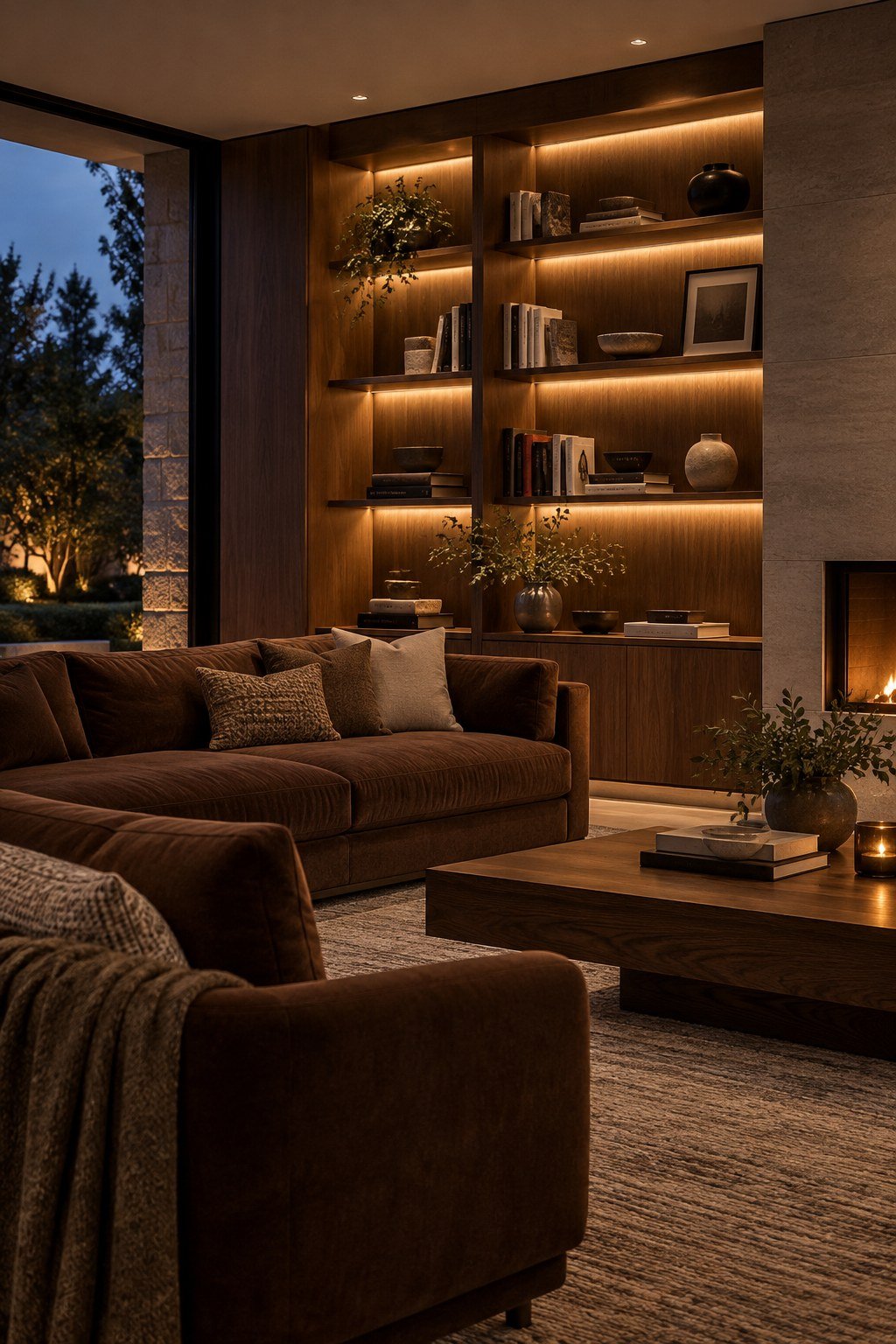
A little light beneath a shelf makes books and ceramics visible in the evening. Concealing the source keeps the effect calm, especially in a walnut bookcase beside brown seating. You see a softly lit shelf rather than a row of bright dots.
Choose suitable fittings and keep wiring or charging arrangements accessible and tidy. Check heat and clearance guidance before putting objects around the lights. A simple installation that you can maintain is more useful than a complicated hidden setup.
Use restraint with brightness. The shelves should add depth to the room, not compete with the seating area or the television. A few lit sections can look more natural than lighting every compartment to the same level.
8. Use a portable lamp on a narrow table

A small portable lamp can be useful where the nearest socket is awkwardly placed. A bronze mushroom shape looks lovely on a narrow wooden table beside a navy sofa. It gives the corner a warm point of light without a cable crossing the floor.
Check the lamp’s brightness, expected run time and charging method against how you plan to use it. Some compact lamps are better for atmosphere than reading. Choose one with a control you can reach comfortably from the sofa.
Give it a regular charging home away from the walking route, following the manufacturer’s instructions. That keeps it ready when you want it. The flexibility is the benefit: it can move with a chair or lend a little light to another quiet corner.
9. Balance the room from one side to the other

If all the lamps sit in one corner, the rest of the living room can feel oddly empty at night. Try spreading the light across the room, with a table lamp on one side and a floor lamp on the other. Different heights keep the arrangement relaxed.
You do not need identical lamps to get a balanced result. Look for a similar warmth in their light and enough visual weight on each side. An upholstered chair, a curtain or a bookcase can help the smaller fitting feel settled.
Walk into the room from the doorway and judge the effect there as well as from the sofa. The space should feel welcoming before you sit down. These warm lighting ideas for home explore how smaller pools of light can connect nearby areas.
10. Check the television from your usual seat

A lamp that looks perfect beside the sofa can put a bright reflection straight across the television. Check the screen from your normal seat before settling on a position. Often, moving the lamp slightly or using a better-screened shade helps.
Keep some gentle room light when you watch, then adjust it to what feels comfortable. A lamp beside or behind the seating can work differently from one facing the screen. The best position depends on your layout and the screen itself.
Use the television wall as part of the whole room rather than planning it separately. These TV wall ideas can help with the furniture and storage around it. A clear, comfortable sightline is a useful place to start.
11. Let low ceilings be a reason to light lower down
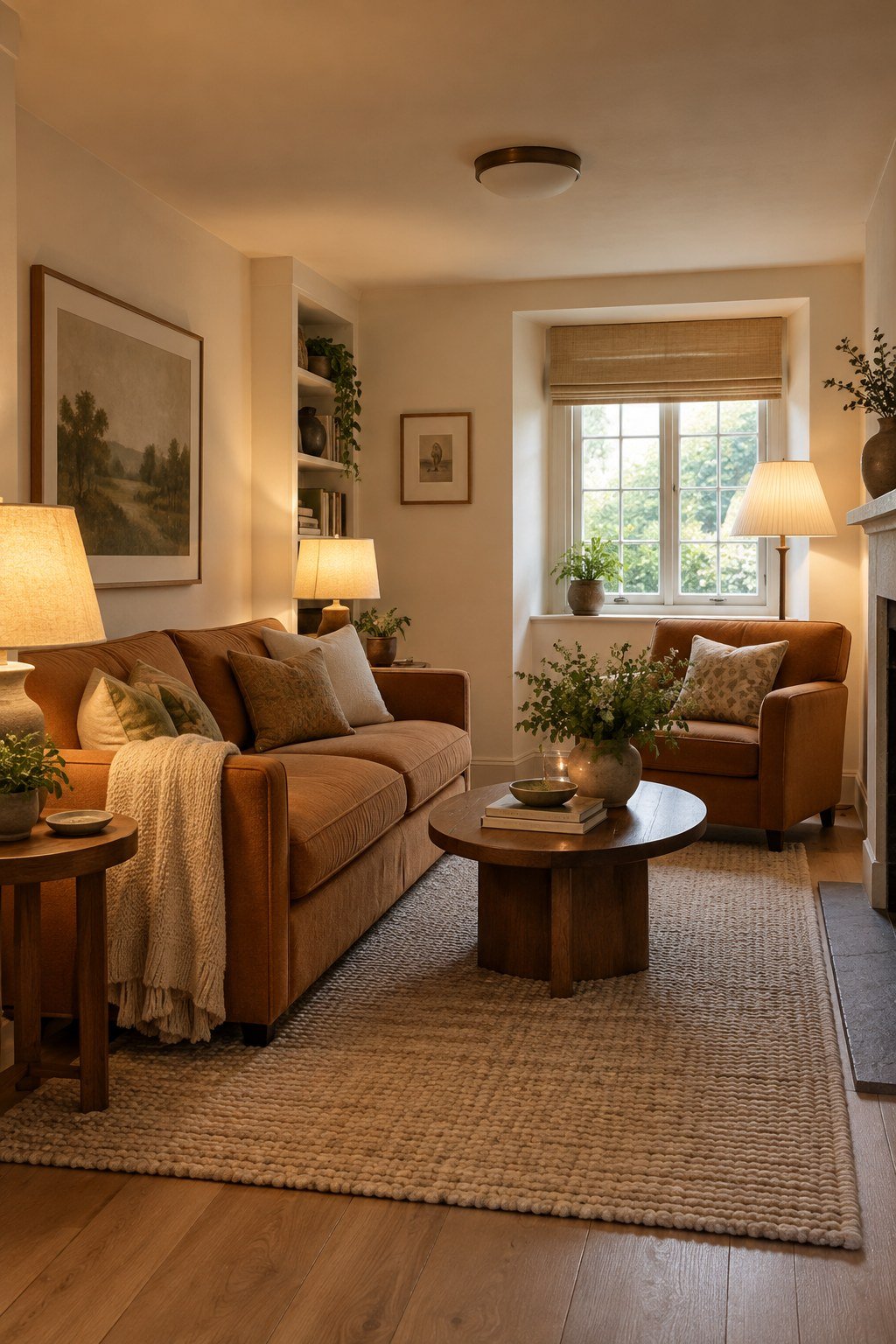
A low ceiling does not need a dramatic hanging fitting to make the room feel finished. A shaded floor lamp and a table lamp can give the seating plenty of presence. Caramel upholstery, cream walls and warm wood keep the modest room feeling inviting.
Keep the scale comfortable. A huge shade can dominate a small room just as much as an oversized ceiling fitting, while a tiny lamp may struggle to reach the seat. Try the arrangement at normal sitting height.
You can still use the main light when you need a brighter room for cleaning or finding things. The smaller lamps simply give you another setting for the evening. Having that choice is more useful than expecting one fitting to create every mood.
12. Make the evening setting easy to switch on

A lovely lighting plan is easier to enjoy when the controls are straightforward. Keep switches reachable and think about the order you use the lamps when entering the room. A simple evening routine makes the softer setting feel natural.
If you want dimming, check the bulb, fitting and control together. Not every LED works with every dimmer; ENERGY STAR’s lighting guidance explains why compatibility matters. Ask a suitable electrician about changes to wired controls.
Choose a gentle setting for relaxing and keep a brighter option for reading or practical jobs. You do not need complicated scenes for the room to work well. Being able to turn on the right light easily is a very good finishing touch.
Build an evening room around the way you use it
Good living room lighting is a collection of useful choices: light beside a seat, enough glow across the room and a few details you enjoy seeing after dark.
Start by moving one lamp and trying it for an evening. Notice where you still want light and where you would prefer a little less. That will tell you more than buying several fittings at once.
Once the main pieces feel right, leave the room some quieter corners. A living room can be comfortable, practical and beautifully lit without every surface being equally bright.