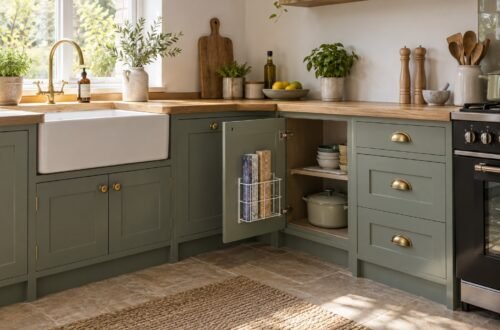

These bathroom organization ideas start with the things that always seem to end up around the sink: the face wash, the hair ties, the half-empty bottles and someone else’s toothbrush charger. You don’t need to turn the room into a matching set of containers. You need a place for the things you reach for every morning.
The most useful bathroom storage is easy to reach and easy to put back. Pick the one spot that annoys you most, sort it first, and give the new setup a few days before buying anything else.
As an Amazon Associate I earn from qualifying purchases.
Images are AI-generated styling ideas, not photographs of the linked products. Amazon links below let you browse similar organizers; check sizes, materials and fitting requirements before buying.
Bathroom Organization Ideas for Your Daily Routine
Empty one drawer or shelf at a time. Separate daily toiletries from occasional products, unopened spares and anything ready to go. Wipe the empty space, then measure its usable width, depth and height, including hinges, pipes and the space a drawer needs to close.
Put the daily group where you use it. Store refills farther away and keep only what your household needs in this room. Use a tray or basket you already own to test the size before committing to a new organizer.
1. Give your daily toiletries one small landing spot

A little tray makes the difference between a collection of bottles and a deliberate daily-use spot. Keep it to the few products you reach for most: perhaps face wash, moisturiser and sunscreen. If you need to stack bottles, the tray is trying to do too much.
Choose a washable material and leave a clear stretch of counter beside the sink. Move the whole tray when you wipe the vanity, then dry underneath before putting it back. Oversized decorative trays can eat up more space than the toiletries themselves, so check the footprint first.
2. Divide the drawer before the little things disappear

Hair ties, clips and spare floss are much easier to find when they aren’t sliding around one big drawer. Start with a few shallow trays in different sizes rather than filling every inch with identical compartments. A long section works for a comb; a small one can hold the tiny accessories.
Measure the drawer’s inside height as well as its width. Check that taller items don’t catch when it closes. Leave a little room between categories so the arrangement can change, and keep damp items out of enclosed drawers. You want useful divisions, not a complicated sorting job.
3. Give each person a grab-and-go caddy
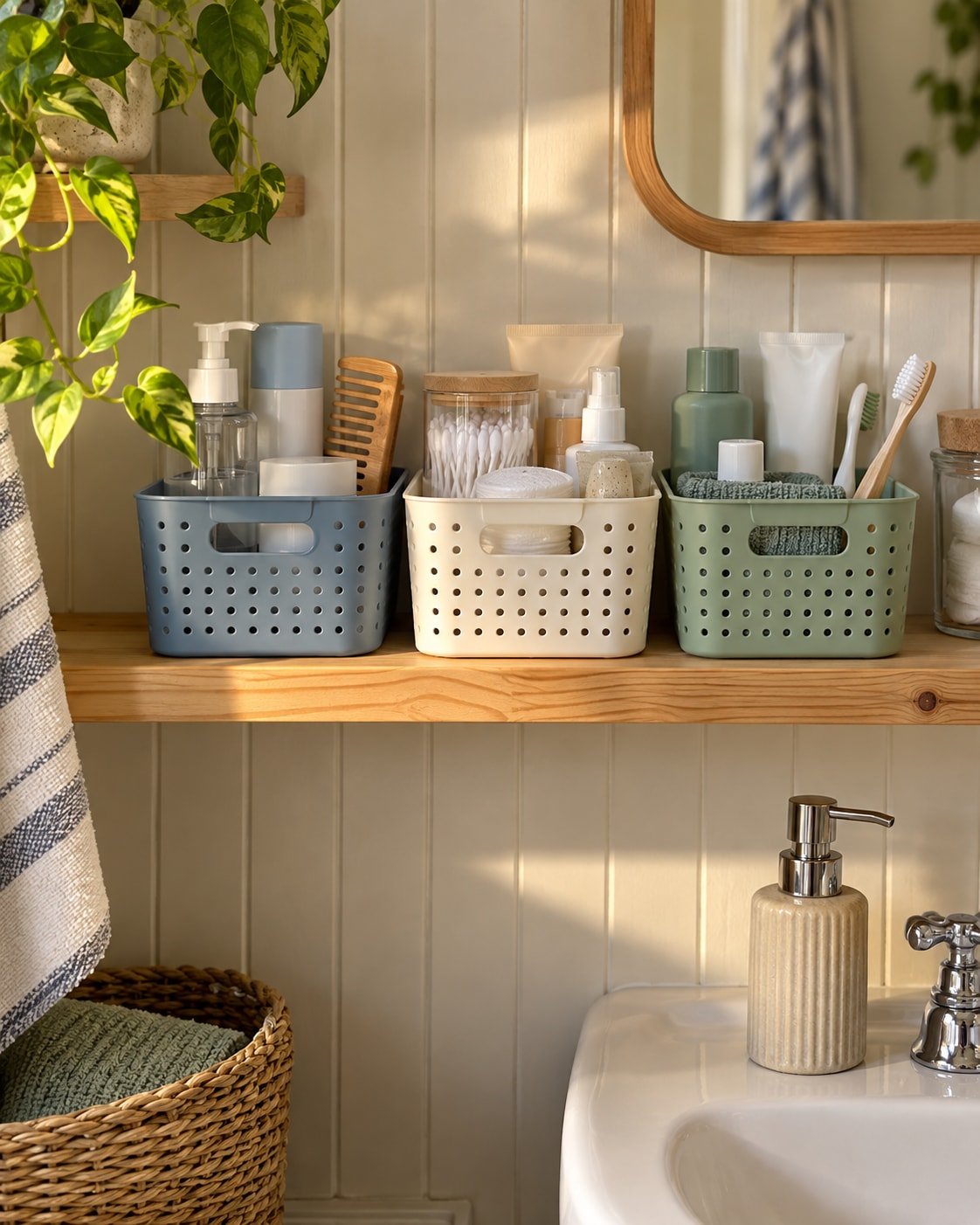
A shared bathroom can work better when each person has a small caddy for their own products. Instead of spreading three routines across the counter, bring out the caddy you need and return it to the shelf afterwards. Different colours or simple name labels make ownership obvious.
Choose a handle that’s comfortable when the caddy is full and a size that fits the actual shelf opening. Keep shared items, such as hand soap, in a separate common spot. Let wet containers dry before storing them; a portable basket shouldn’t become a place for standing water.
4. Fit under-sink bins around the pipes

The awkward space under the basin rarely suits one large box. Two narrower bins, arranged around the plumbing, are often easier to lift out. Use one for everyday extras and another for unopened toiletries, with the things you use most towards the front.
Measure around the U-bend, hinges and water valves before choosing storage. Leave access to the plumbing and avoid forcing a rack against a pipe. Clear or open bins make leaks and forgotten products easier to spot. Keep moisture-sensitive items somewhere dry instead of treating every inch beneath the sink as usable storage.
5. Put small bottles on a turntable
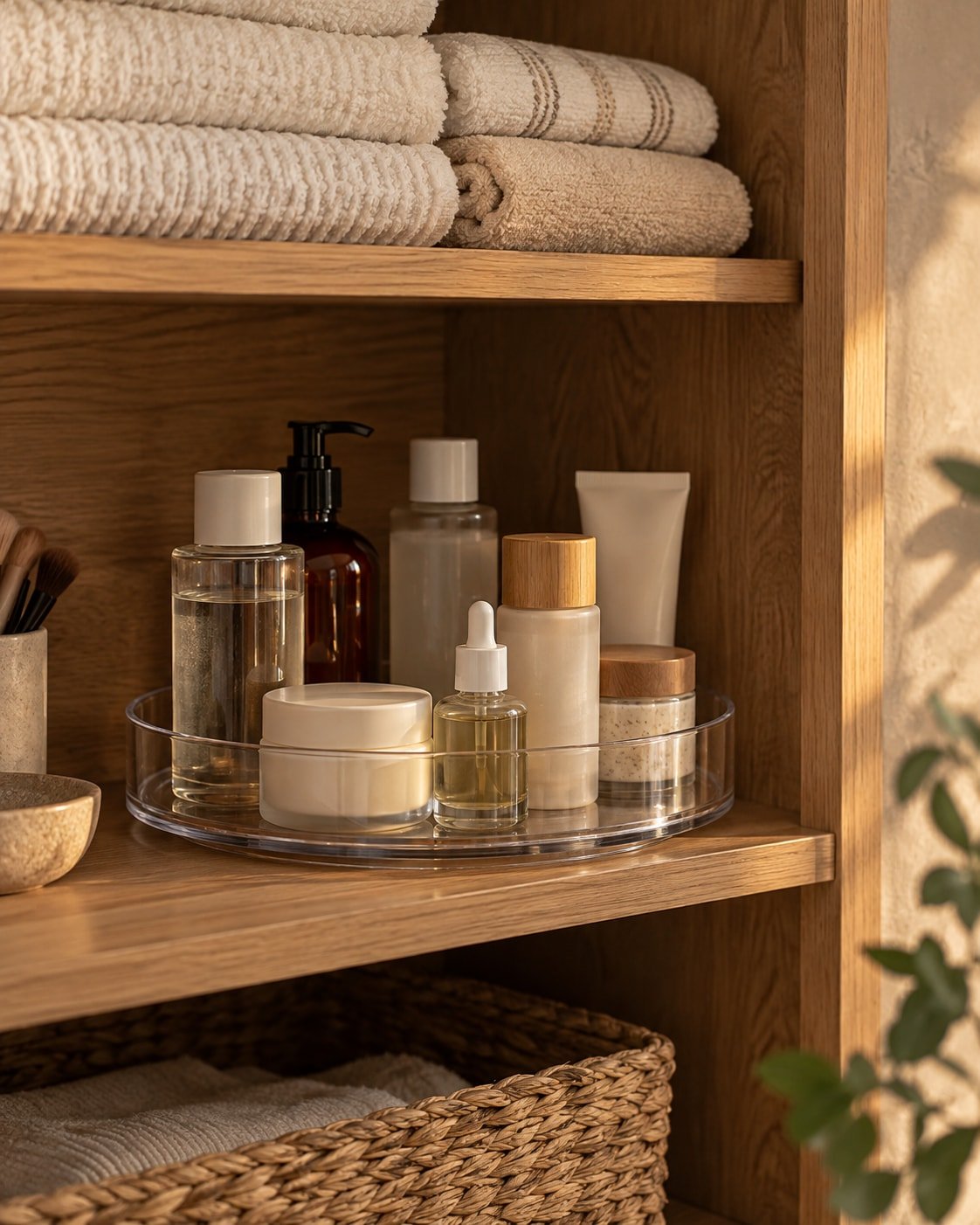
When a shelf is deep enough for bottles to hide behind one another, a small turntable can bring the back row to you. It works well for upright skincare bottles and similar-sized containers that won’t fall over as it turns. A low rim helps keep the group together.
Check the diameter against the cupboard opening and make sure the door can close. Don’t crowd the centre with tall bottles that block your view. If a square shelf fits ordinary bins better, use those instead: a turntable earns its place only when it makes things easier to reach.
6. Keep only current bottles in the shower
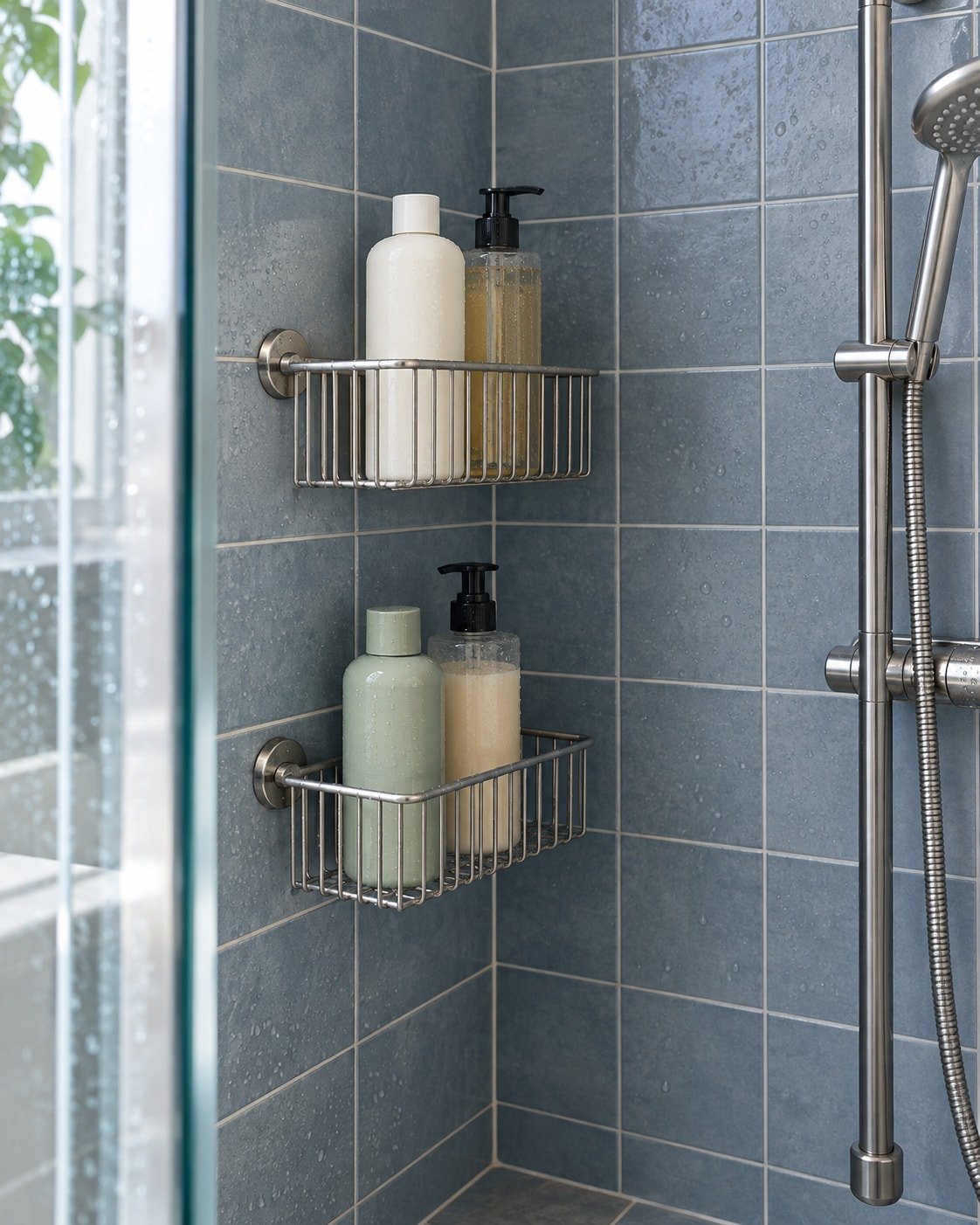
The shower doesn’t need to hold every shampoo you’ve ever opened. Keep the products currently in use in one or two draining baskets, and store unopened replacements outside the wet area. Leaving space between bottles makes it easier to lift one without knocking the rest over.
Choose a caddy designed for the surface and location, following its fitting instructions and weight limit. Check that the basket drains rather than collecting water beneath the bottles. A quick rinse when you clean the shower helps keep this corner usable without adding another complicated routine.
7. Space towel hooks so towels can actually dry

Hooks are simple to use, which helps in a busy bathroom. The useful part is giving each towel its own space rather than squeezing several onto one hook. Assign a spot to each person so nobody has to guess which towel is theirs.
Hang hooks where the towel can fall freely without trailing on the floor or covering a heater. If your towels stay bunched and damp on hooks, a rail may suit the room better. Check the wall and use appropriate fixings; the right storage depends as much on how towels dry as on how neat they look.
8. Keep a modest basket of spares
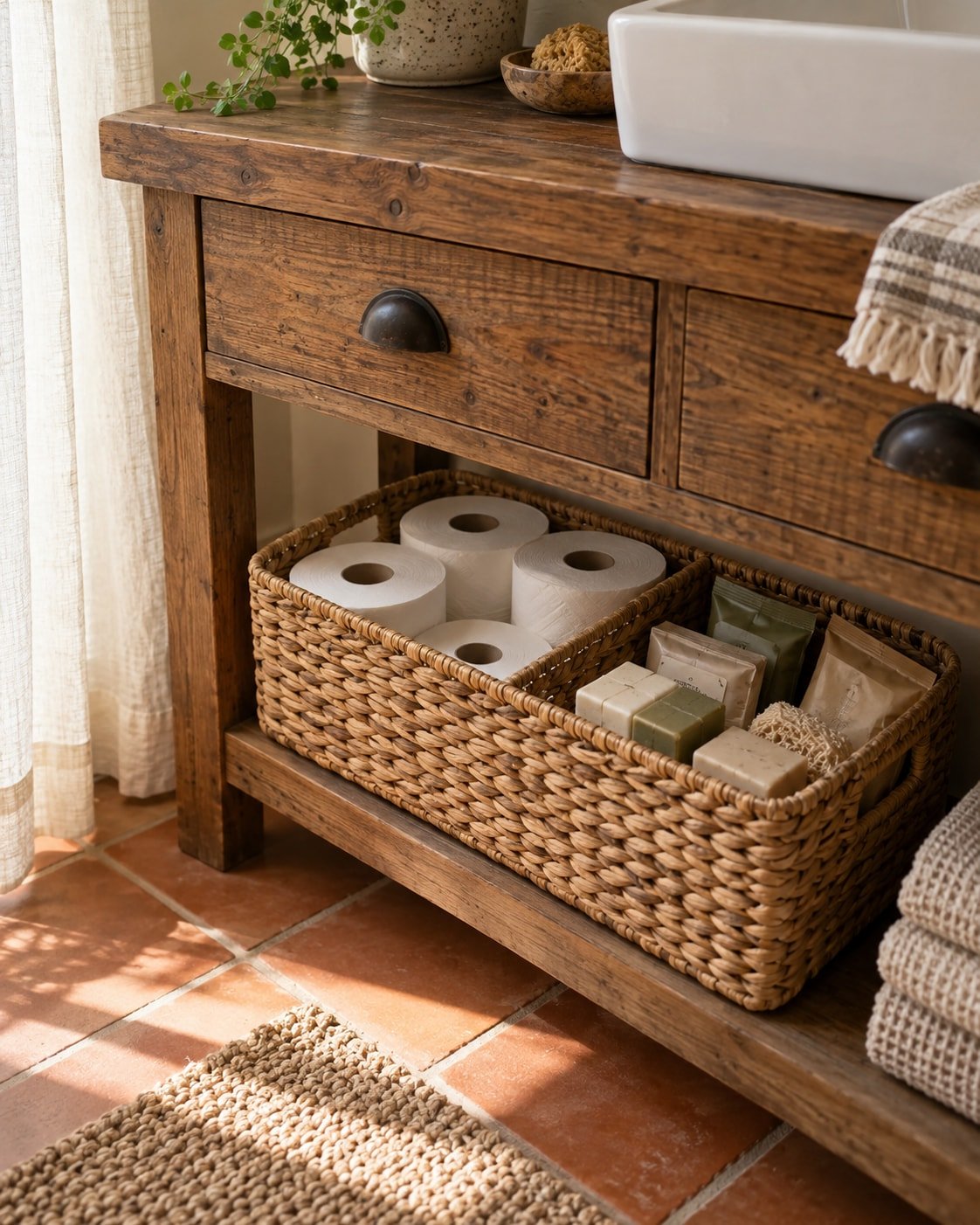
A small basket of toilet rolls, spare soap and other everyday replacements saves a trip to another cupboard. Keep the categories separate with a divider or smaller inner container so everything doesn’t become one mixed pile. You only need enough nearby to make refilling convenient.
Put the rest of the multipacks elsewhere if the bathroom is short on space. Choose a dry location away from splashes, and check the basket before shopping. This is one of the easiest bathroom organization tips to maintain because you can see at a glance when the local supply is running low.
9. Give cooled hair tools a separate holder

A hair dryer and its cable can swallow a whole drawer. A divided holder gives the dryer, brush and styling tools distinct places, so you can lift out one without pulling a knot of cords with it. Keep the holder on a dry shelf away from the basin and bath.
Unplug heated tools and let them cool fully before storing them. Follow the tool and holder manufacturers’ instructions rather than assuming every metal holder is suitable for hot equipment. Loosely bundle each cord on its own and avoid tight bends near the plug or handle.
10. Use a slim trolley only where there’s a genuine gap
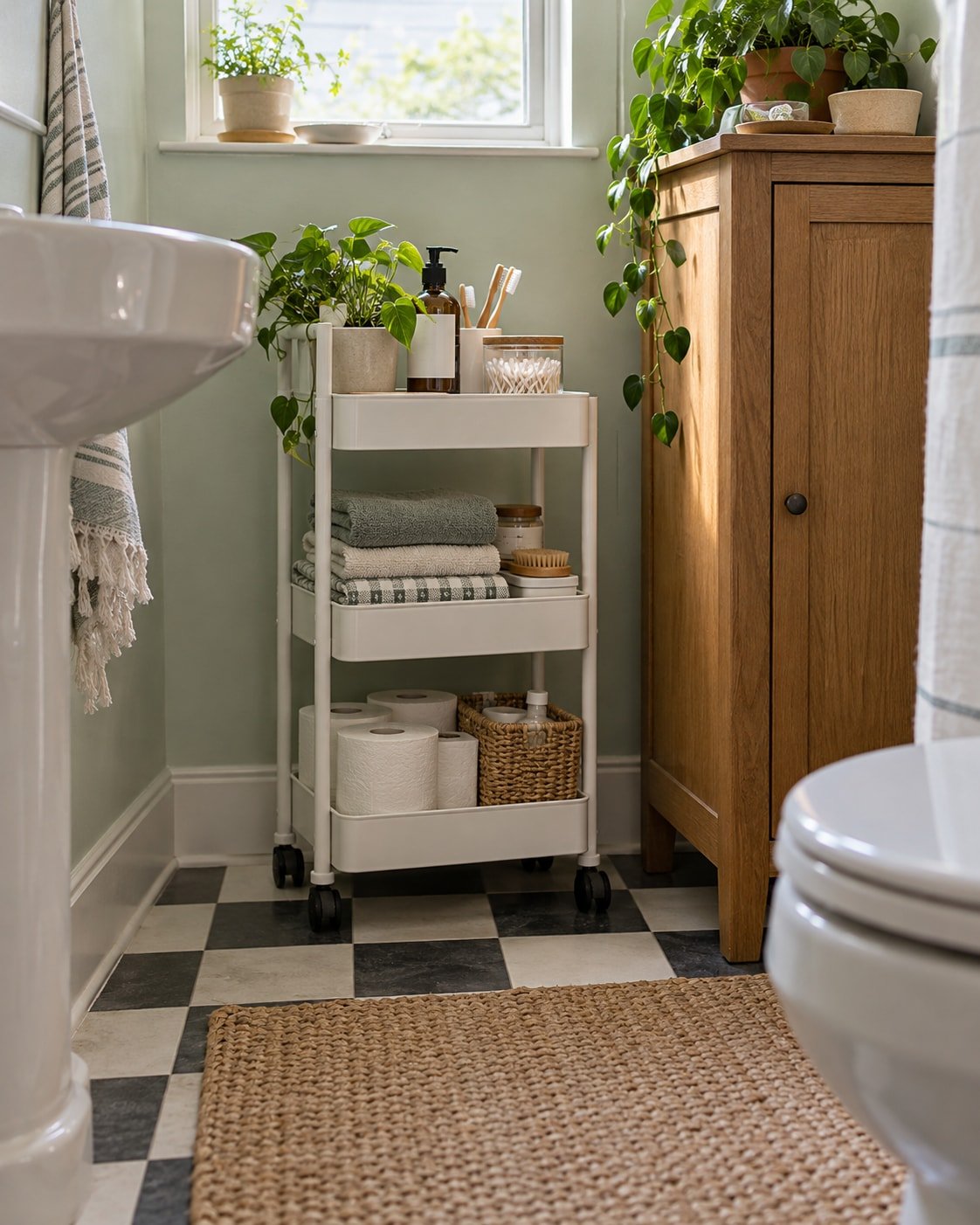
A narrow trolley can add useful storage beside a cabinet when the room has a spare strip of floor. Think of it as an extra shelf for washcloths and daily products, not an invitation to squeeze storage into the walkway. You should still be able to open doors and move comfortably.
Measure the gap at floor level, allowing for skirting boards and wheels. Put heavier items on the lowest tier and check the cart’s load limits. If pulling it out is awkward, a simple fixed narrow shelf may be the more useful option for your bathroom.
11. Make period supplies easy to find

Keep the products your household uses in a small open basket in a dry, easy-to-reach spot. Individually wrapped supplies can stay in their packaging, with different types separated so you don’t have to rummage. A spare basket also makes the room easier for overnight guests to use.
Choose a size that fits a sensible amount rather than the whole bulk order. Top it up when you change towels or restock toilet paper. The goal is a normal, convenient home for these essentials, with enough privacy to suit the people sharing the room.
12. Store the cleaning kit together, safely

Gather the bathroom’s cleaning supplies in a small handled caddy so you can take them out together. Keep cloths and gloves separate from toiletries, and let reusable cloths dry properly before putting them away. Only keep products here that you actually use in this room.
Store cleaners in their original labelled containers, following the storage instructions, and use a secured location out of children’s and pets’ reach. Don’t decant them into decorative bottles. If the bathroom has no suitable storage spot, keep the caddy in your main household cleaning cupboard instead.
Start with the part of the bathroom you use most
You don’t need to use all 12 ideas. A clear daily tray, a drawer that closes easily and a sensible home for spare products may solve most of the frustration. The best bathroom organization ideas keep the setup simple enough that putting something away takes no more effort than leaving it out.
For the supplies that live elsewhere, see our utility closet organization ideas. The same habit of separating everyday items from refills works there, too.