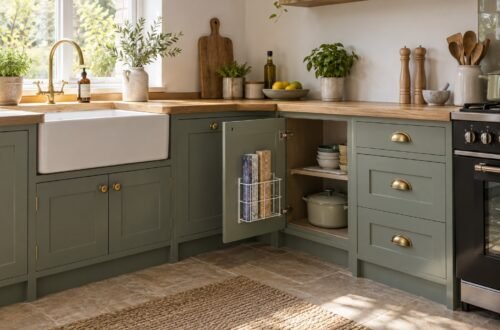

Snack organization in a pantry often falls apart for a very ordinary reason: a big box takes up the whole shelf, the open crackers get pushed behind it, and nobody can see what’s left. A few clear homes for different snacks can make the cupboard much easier to use.
These 11 snack organization ideas work in a walk-in pantry, a kitchen cupboard or a couple of shelves. You don’t have to decant everything or buy a matching container set. Start with the snacks your household actually eats and the people who need to reach them.
As an Amazon Associate I earn from qualifying purchases.
Images are AI-generated styling ideas, not photographs of the linked products. Amazon links below let you browse similar organizers; check sizes, materials and fitting requirements before buying.
Snack Organization: How to Organize Your Pantry Before Buying Bins
Take out the snacks and group them loosely by type. Check dates and packaging, set aside anything your household won’t use, and note what is already open. Measure the shelf depth, opening width and available height before choosing containers.
Keep food storage instructions and ingredient information available, especially for shared households with allergies. Original packaging is often the simplest choice. Use clean, dry containers intended for food contact if you decant loose snacks, and retain the original label and date information.
1. Choose one easy-to-reach snack shelf

Put the everyday selection at a height the people using it can reach comfortably. That might mean a lower shelf for older children or a middle shelf for adults who don’t want to bend. Keep the area clear enough that taking out a packet doesn’t require lifting a heavy basket.
Use one or two open bins to define the space, then test it during an ordinary week. Adjust the contents and access to suit your household rather than filling it for the photo. Keep snacks that need adult supervision in a suitable separate location.
2. Group snacks by the way you look for them
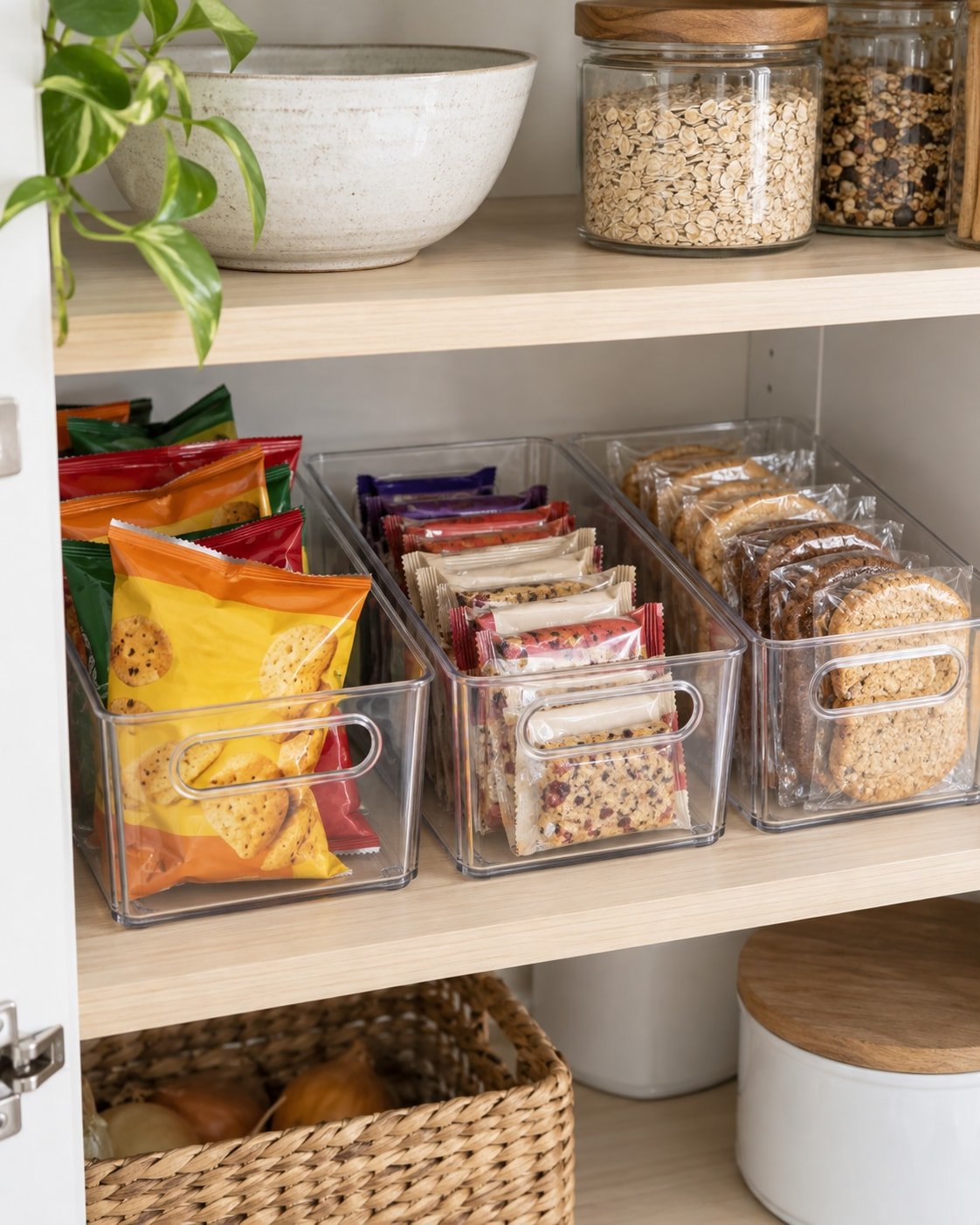
Broad categories are usually enough: savoury snacks, fruit bars and biscuits, for example. When each category has a home, the last packet is less likely to disappear behind a different box. Clear bins are helpful, but a plain basket you already own can work just as well.
Choose containers you can lift when full, and leave a little spare space for different packet shapes. Avoid so many categories that unpacking groceries becomes a puzzle. If two groups are always half empty, combine them; the pantry should fit what you buy, not the other way round.
3. Stand bars and small packets upright
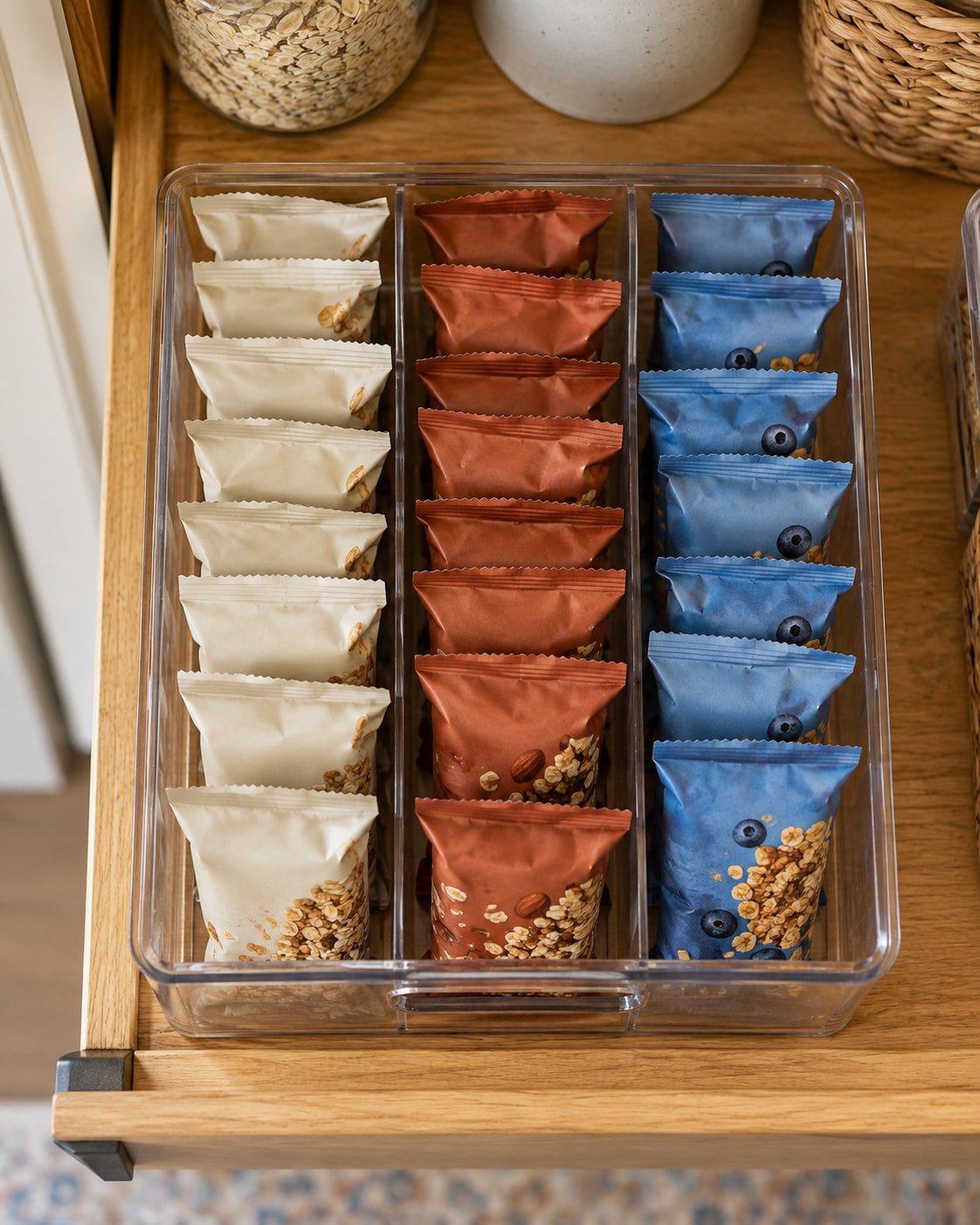
Small snack bars are easier to browse when they stand in rows rather than lying in a heap. A shallow divided organizer holds them in place and stops the last few packets sliding across the shelf. Keep wrappers visible so people can check what they’re taking.
Try a small box or spare container first to work out the depth you need. Don’t pack the rows so tightly that removing one pulls out several others. This is especially useful for lunchbox snacks, where a quick glance at the bin can tell you what needs adding to the shopping list.
4. Decant only the opened snacks that benefit
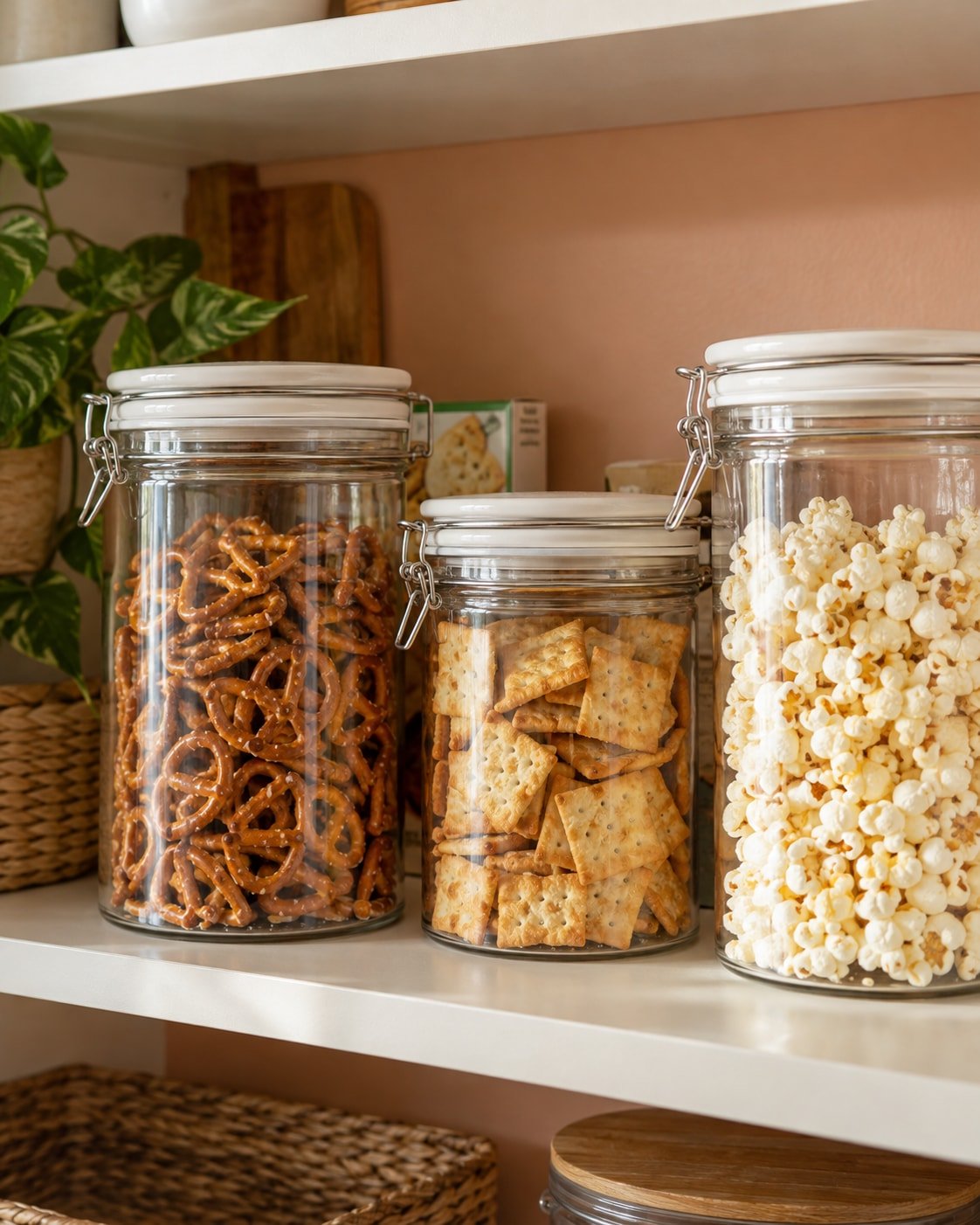
An opened bag of pretzels or crackers can be awkward to stack. A food-storage container with a properly closing lid may be easier to use, especially when the same snack is bought regularly. Pick a size that holds the usual packet without leaving half of it homeless.
You don’t need to transfer individually wrapped snacks or every new purchase. Keep ingredient, allergen and date information from the original packaging, and follow the food’s storage instructions. Finish and clean the container before refilling it, rather than repeatedly topping new food onto an older layer.
5. Use the door for lightweight packets
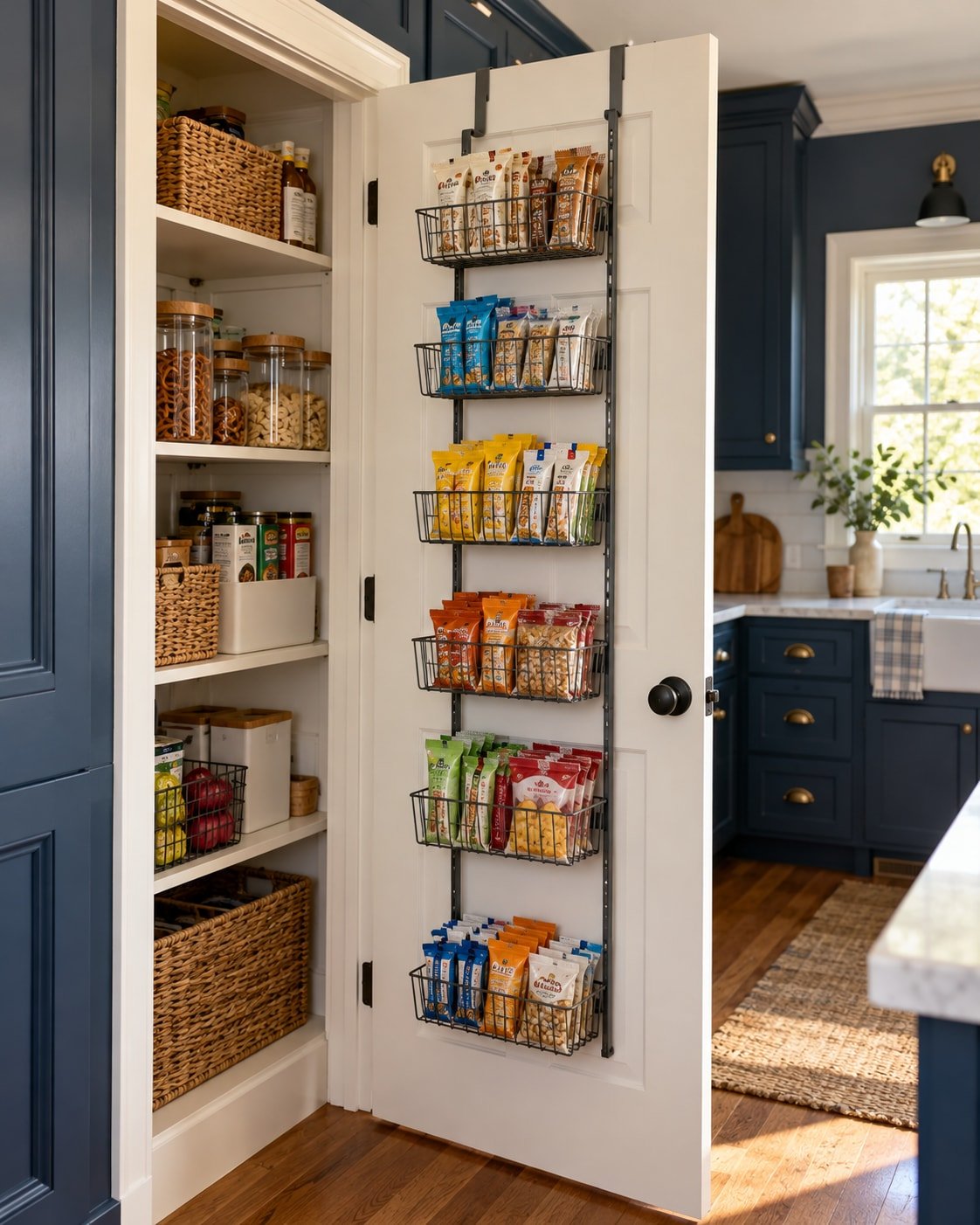
The inside of a pantry door can hold small, lightweight snacks without taking up shelf space. A shallow rack works well for wrapped bars and little packets that otherwise slip behind boxes. Keep heavier items on stable shelving instead of loading the door.
Check the gap between the door and shelves before buying a rack. Allow for hinges and make sure the door still shuts freely. Follow the rack’s fixing instructions and weight limit. If it swings or rattles every time the door moves, it’s not making the pantry any easier to use.
6. Turn a spare drawer into a snack drawer

A drawer is a good alternative when your pantry shelves are already busy. Simple dividers keep bars, cracker packets and other wrapped snacks in their own sections, with everything visible from above. Leave the packets in their wrappers so flavour and ingredient details stay available.
Measure the internal drawer height and test a few packets before fitting dividers. A drawer that only closes when everything lies perfectly flat will be frustrating on a busy morning. Keep this area for shelf-stable foods and use the fridge for anything whose packaging requires refrigeration.
7. Bring the opened packets to the front

A small ‘eat first’ basket gives opened packets an obvious home. Check what’s inside before opening another bag, and use it as the first stop when packing a snack. Clips can keep suitable bags neatly closed, but follow the food’s storage instructions rather than assuming a clip makes it airtight.
Keep this basket small enough that you can see the contents. Move older suitable snacks forward and check their dates and condition as you go. The basket is a reminder to use what you have, not a reason to keep food that should be discarded.
8. Separate backstock from the daily choice
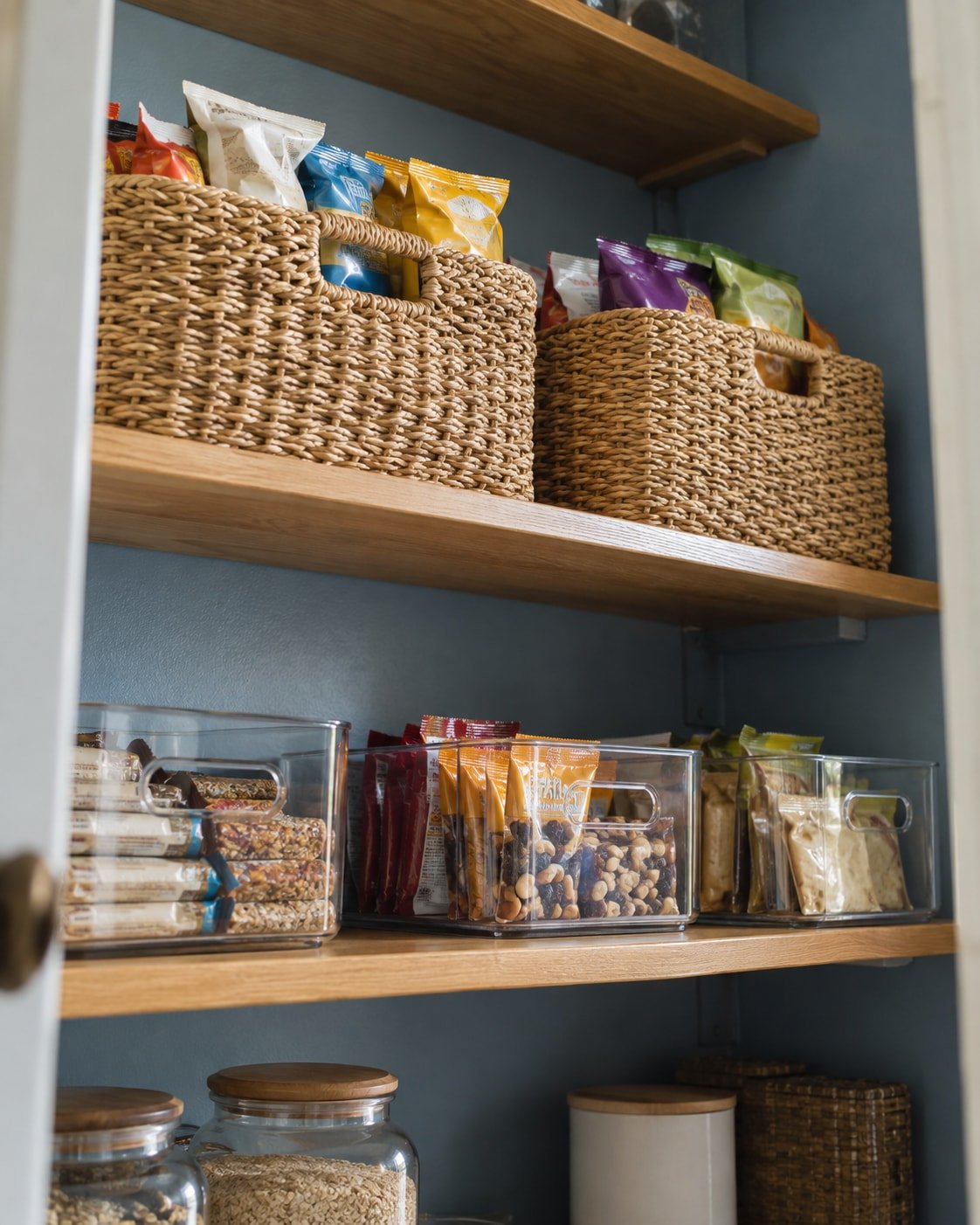
Bulk snack boxes can overwhelm a small shelf even when the everyday amount is modest. Keep unopened extras together on a separate shelf or in one backstock basket, then replenish the reachable snack zone as needed. You can see the daily choice without digging through the whole shopping haul.
Choose a location you can access safely, and avoid heavy boxes high overhead. Keep packets protected from damp and heat according to their labels. Before buying more, check both the everyday bin and the backstock so you don’t mistake an empty front shelf for an empty pantry.
9. Use labels that help the people sharing the cupboard

The most useful label is the one your household understands immediately. Simple words such as ‘crackers’ or ‘bars’ are enough. Pictures can help younger readers, while large, clear lettering is easier to read than tiny decorative script.
Label the container rather than the exact snack brand so the setup still works after a different grocery shop. Try removable labels while you settle on categories. Keep the original wrappers too: a storage label helps with finding things but doesn’t replace ingredients, allergen information or storage directions.
10. Make a portable lunchbox caddy

If lunchboxes are packed at the kitchen counter, a handled caddy can bring the shelf-stable snack options to you. Divide it into a few sections and return it to the pantry once you’re finished. It saves several trips between the counter and cupboard without requiring a permanent packing station.
Only stock the amount that fits comfortably, and check handles and compartments against your usual packets. Add chilled items from the fridge when needed rather than leaving them in the caddy. A spare divided basket is a good way to test whether this idea suits your morning routine.
11. Keep the selection shallow and leave room to restock
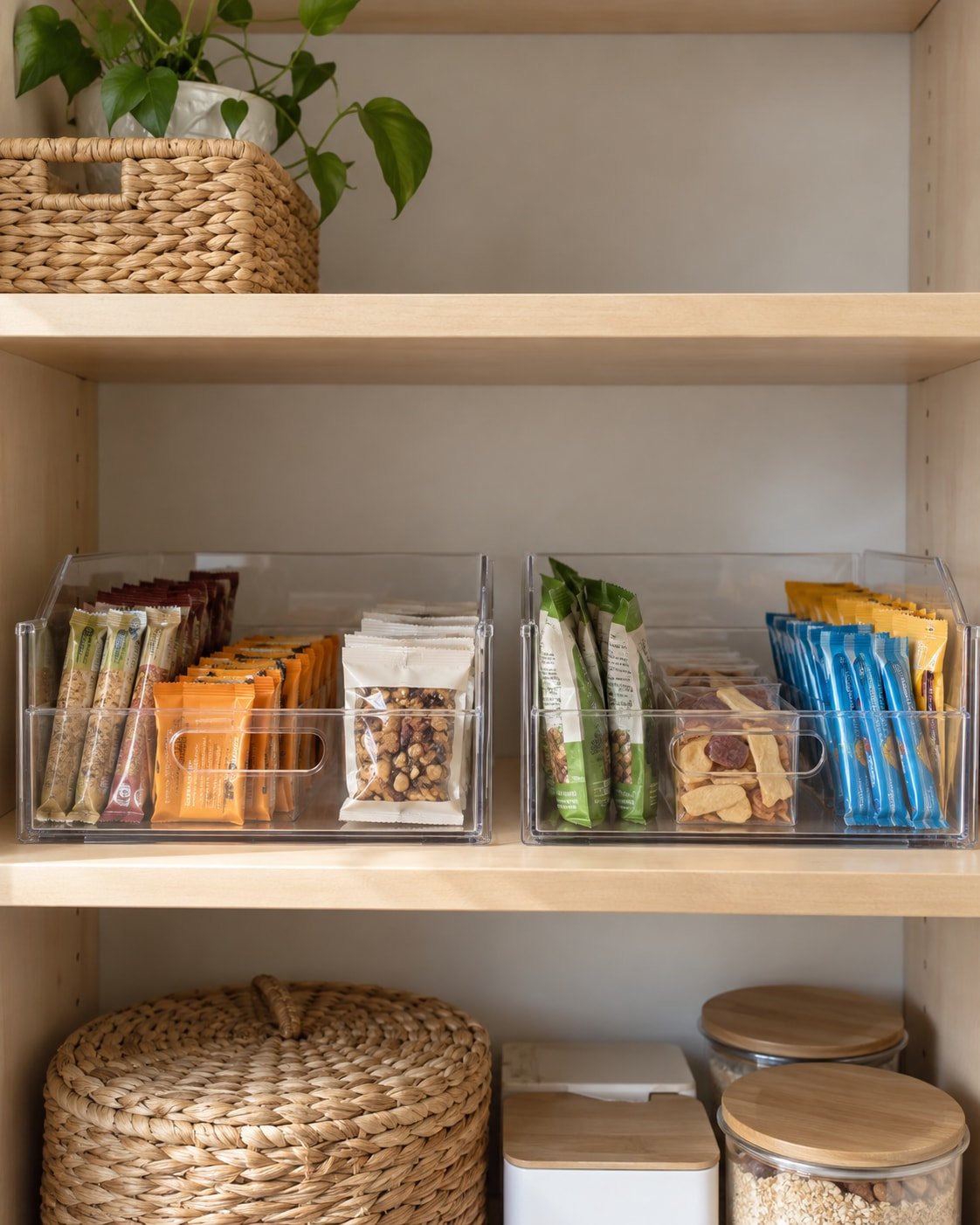
Deep layers are where snacks get forgotten. Arrange the everyday selection in shallow bins or a single visible row, keeping the rest in backstock. If you have adjustable shelves, check whether changing the spacing would make the existing cupboard more useful before adding another organizer.
Leave a little empty space so new groceries can go away without a full rearrangement. Once a week, bring older suitable packets forward, wipe up crumbs and note what’s running low. The best snack pantry organizing tips are the ones you can keep doing in a couple of minutes.
Make the pantry easy to use on an ordinary day
Start with one reachable snack zone and one place for opened packets. Once those work, add a backstock basket or a lunchbox caddy if it would solve a real annoyance. A pantry everyone can understand is more useful than one that only stays tidy when you manage every packet.
If the clutter continues into your kitchen drawers, our kitchen drawer organization ideas cover simple ways to separate the everyday essentials.