

A cosy bedroom doesn’t need mountains of cushions or a completely new furniture set. Often, it’s the feel of the bedding, a warm lamp within reach and a few colours that make you happy to be there.
These cozy bedroom ideas mix lighter, airy spaces with deeper cocoa, olive and burgundy rooms. Some are all about texture, while others make space for reading, a slow morning or a quieter evening routine.
Choose the part you would enjoy most in your own room. One lovely layer or a more useful bedside setup can be a satisfying place to start.
As an Amazon Associate I earn from qualifying purchases.
Images are AI-generated room inspiration. SHOP SIMILAR opens a search for visually similar options; check the details and suitability for your space before buying.
1. Start with bedding that feels lovely to you

Soft-looking ivory bedding gives this clay-coloured room a relaxed centre. The gentle texture adds interest without needing a strong print, and the warm wood makes the whole space feel welcoming.
Choose the fabric for the way you like a bed to feel, then check the care information before buying. Linen, cotton and other fabrics have different textures, so what feels wonderfully cosy to one person may not suit another.
Keep the arrangement easy to remake. A comfortable duvet, the pillows you use and one extra layer can be enough to give the bed a lovely finished look.
2. Soften the bed with a padded headboard

A padded headboard can make the bed feel like a more inviting place to sit with a book. Beige upholstery softens the olive walls here, with subtle channels adding a little detail.
Check the headboard’s dimensions and how it attaches to the bed or wall. Allow for the height of your mattress so the proportions still work once everything is in place.
Keep the nearby fabrics in a small, comfortable colour family. Cream, sage and walnut give this room depth without needing lots of separate accent colours.
3. Add a quilt for an easy extra layer

A quilt gives the bed a little colour and texture without changing the whole room. This soft blue works beautifully with ivory and walnut, especially in gentle morning light.
Choose a weight that suits how you use it. You might want a lighter decorative layer to fold back, or something more substantial for the times you like extra warmth.
Check the size against the bed and the amount of drape you want. A neatly folded quilt can look just as inviting as a full extra cover, and it is easy to move aside at night.
4. Bring in a warm, tactile throw

A chocolate throw makes this cocoa bedroom feel especially inviting. The woven texture breaks up the smoother duvet, while the dark wood keeps the palette warm and settled.
Choose a throw that feels good against your skin and is manageable to wash or care for. Large loose knits can look beautiful, but check whether the weave suits your household and everyday use.
Drape it simply across the foot of the bed or fold it into a broad band. The bed should still feel comfortable to get into, rather than like a display you have to dismantle.
5. Give the room a softer evening glow
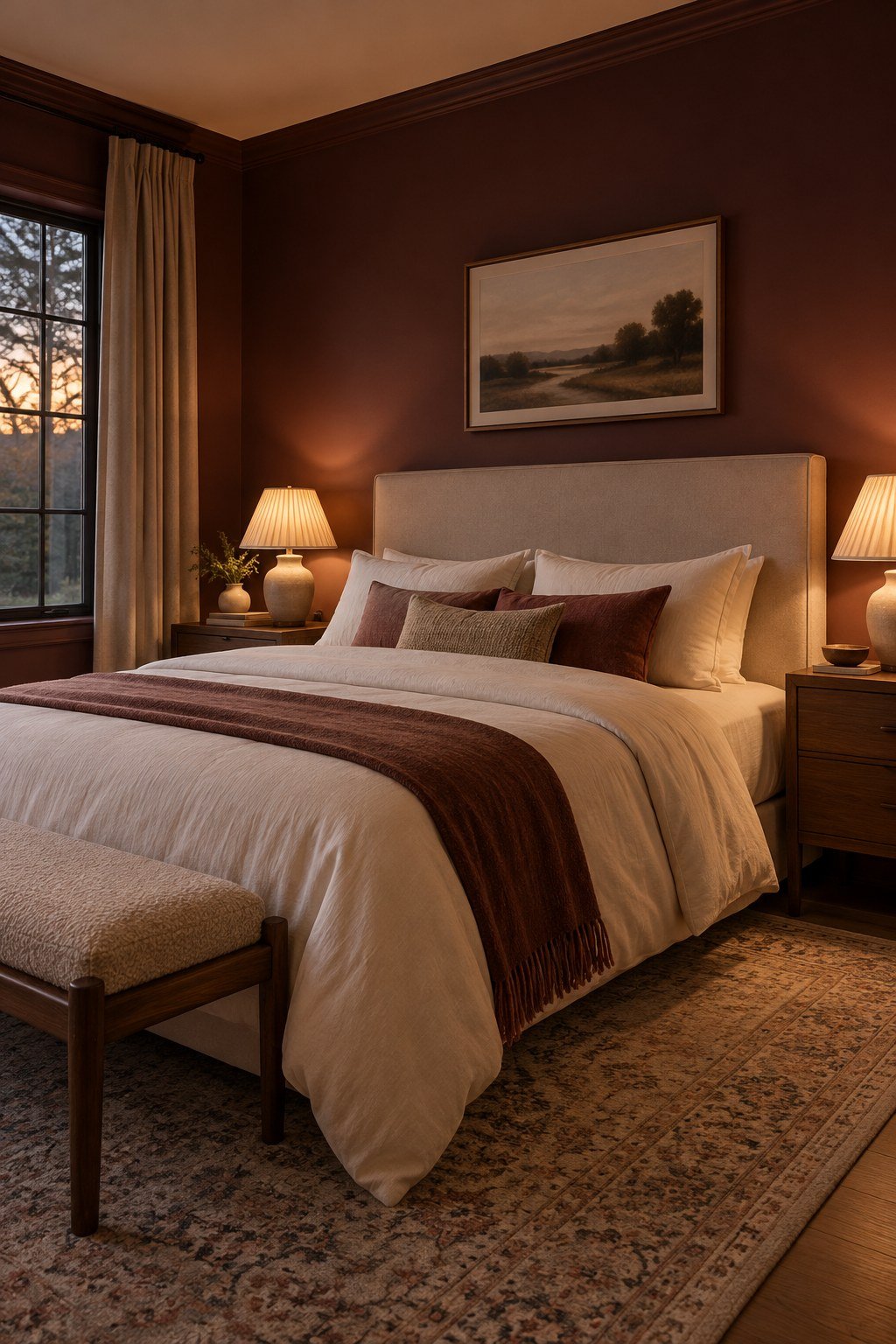
A shaded lamp on each side of the bed can make an evening room feel much gentler. The pleated shades and warm ceramic bases soften the burgundy walls here.
Put the controls where you can reach them easily, and choose bulbs that suit the fittings. If you read in bed, check that the light is useful for the page as well as attractive across the room.
Try the lamps with the main ceiling light off and see what still feels comfortable. Our bedroom lighting ideas cover reading, getting ready and winding down in more detail.
6. Make the first step out of bed a softer one

A rug adds a soft layer where your feet land in the morning. The ivory texture lifts this navy room, while the oak bed keeps the scheme feeling warm.
Measure where you stand and walk beside the bed before choosing a size. A rug that only peeks out at the foot may look lovely but do very little for the spot you use first.
Choose a suitable underlay for the floor and keep edges flat. Think about cleaning and door clearance too, especially if you are tempted by a thick pile in a compact room.
7. Frame the window with warm fabric
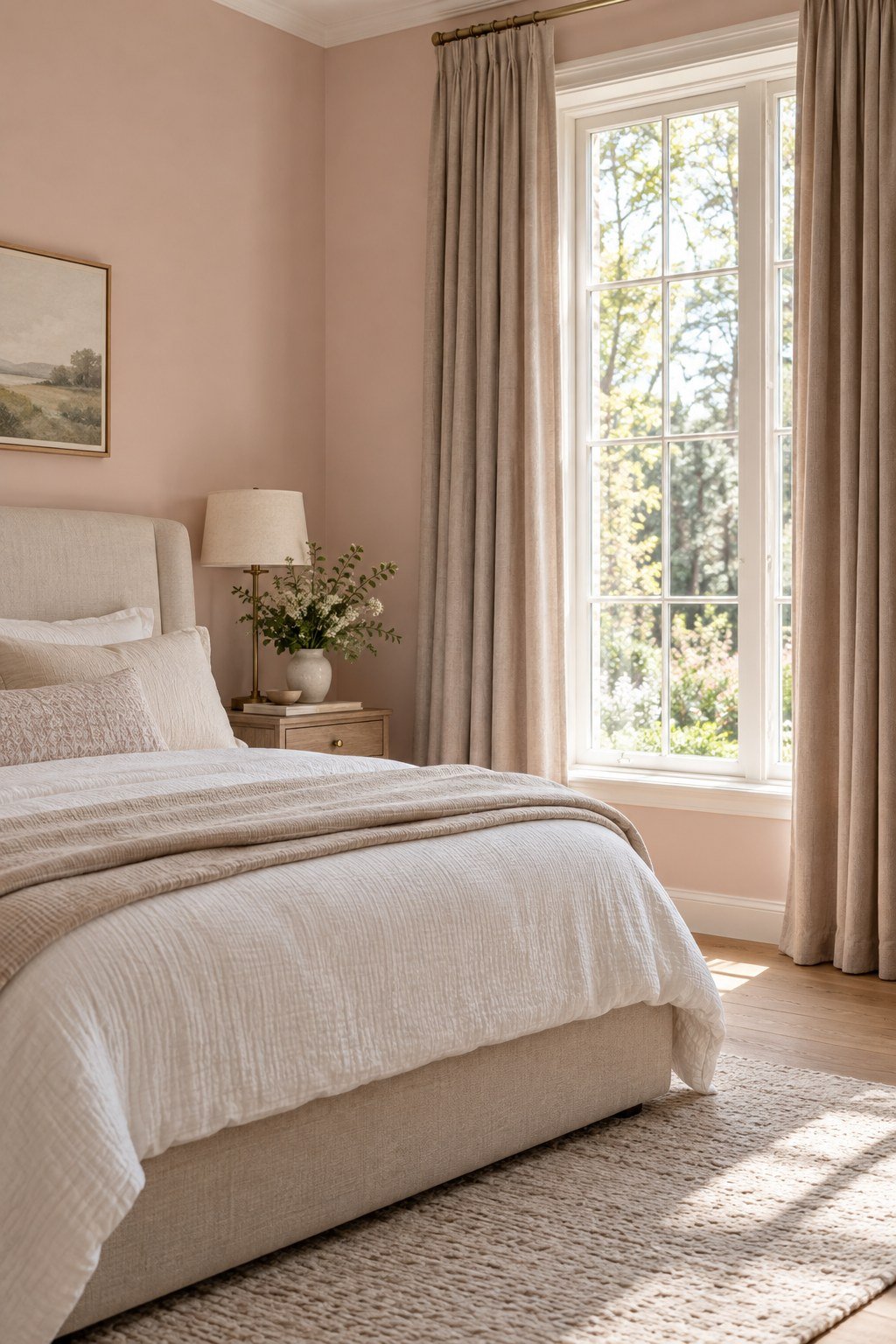
Warm taupe curtains give this pink room a soft, settled feeling. Their simple vertical lines also make the window feel like a proper part of the room’s design.
Check the fabric, lining and finished dimensions against what you need from the window. Privacy, light control and ease of care may matter as much as colour.
Give the curtains space to pull back during the day, and keep fabric clear of heaters and walking routes. The room can feel cocooning in the evening while still enjoying its daylight.
8. Choose bedside tables with useful storage

A bedside table feels more restful when it holds the things you use without a crowded top. These walnut drawers give small practical bits a home, leaving space for a lamp and a book.
Look at the table height alongside your mattress and check the drawer can open comfortably. A beautiful table is less enjoyable if you have to reach awkwardly for a glass or move the bed to use it.
Matching tables can give the room a calm rhythm, although the most useful choice is one that suits your space. Our bedside table ideas have more shapes and arrangements to consider.
9. Add a bench only if it earns its space

A soft bench can make the bedroom feel a little more generous. It’s a lovely place to sit while getting dressed or lay out a cardigan for the next morning.
Measure the route around the foot of the bed before bringing one in. You should be able to pass comfortably, reach drawers and use nearby doors without squeezing.
Give the bench a clear purpose so it doesn’t quietly become the clothes pile. In a smaller room, a useful chair or the edge of the bed might already do the job.
10. Create a small reading corner

A comfortable chair beside the window gives the bedroom somewhere to pause that isn’t the bed. Caramel upholstery brings warmth to this pale room, with a matching footstool making the little corner feel complete.
Choose the chair for how you like to sit, and check the full footprint with the footstool in use. A small table within reach is more helpful than squeezing in extra decorative furniture.
Add useful reading light for later in the day, with cables kept tidy and clear of the route. For tighter corners, these reading nook ideas for small spaces have more possibilities.
11. Use a small amount of gentle pattern

A little gingham can make plain bedding feel warm and familiar. Pale green keeps the pattern quiet here, while the cream pillows give it space.
Repeat a colour already in the room rather than adding a whole new palette for the cushions. That makes the pattern feel connected to the walls, bedding and wood.
Keep the number realistic for the bed you use every night. A small pair that you enjoy is easier to live with than a collection that spends most of its time on the floor.
12. Make room for a slow morning

A simple tray can make a weekend coffee and a chapter of a book feel like a little occasion. Natural wood looks lovely against the quiet navy stripe here.
Choose a stable tray that suits the surface and follow its instructions. Set it securely before putting anything on top, keep hot drinks manageable and move it aside when getting in or out.
Keep the moment simple. One mug and a book are enough; the room doesn’t need a full breakfast spread to feel like a pleasant place to start the day.
13. Choose a wall colour you enjoy in your own light
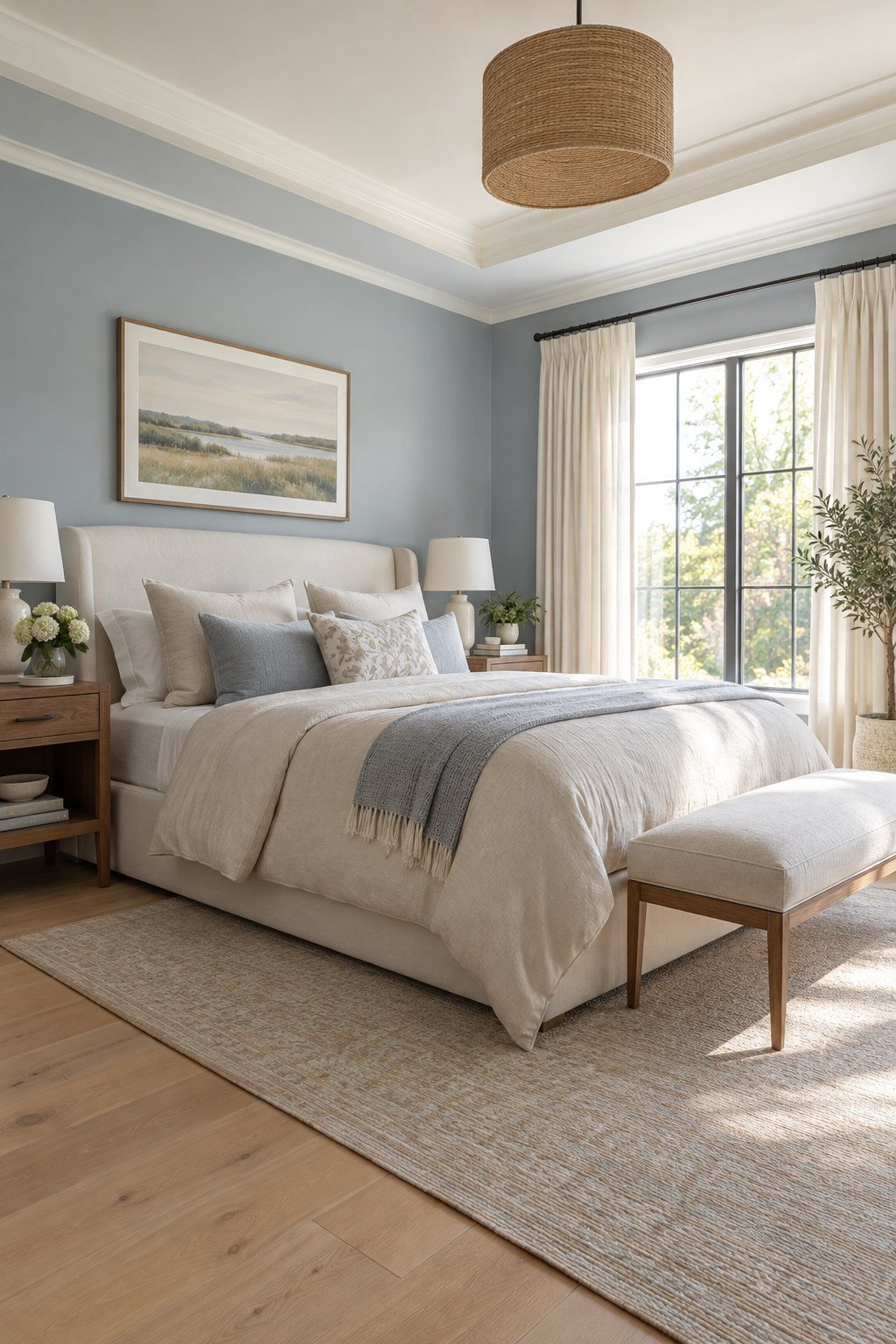
Dusty blue gives this bedroom a gentle, airy feel without relying on bright white. Warm wood and soft oatmeal bedding keep the colour from feeling too cool.
Try a generous paint sample near the bed and look at it through the day. The same shade can feel different beside your flooring, curtains and evening lamps.
You can make a cosy room with pale or deep colour. If you are drawn to something richer, our moody bedroom ideas explore the darker end of the palette.
14. Leave a little calm around the bedside

A little clear space can be just as inviting as another soft layer. A bedside surface with a useful lamp and one book gives your eye somewhere quiet to rest.
Put occasional items in a drawer or another suitable home, and keep the essentials easy to reach. It helps to decide what genuinely belongs beside the bed rather than tidying the same pile each week.
You don’t need to strip away the things that make the room yours. A favourite photograph or small object can stay; the aim is a bedside setup that feels pleasant to use.
15. Let the bedroom work from morning to evening
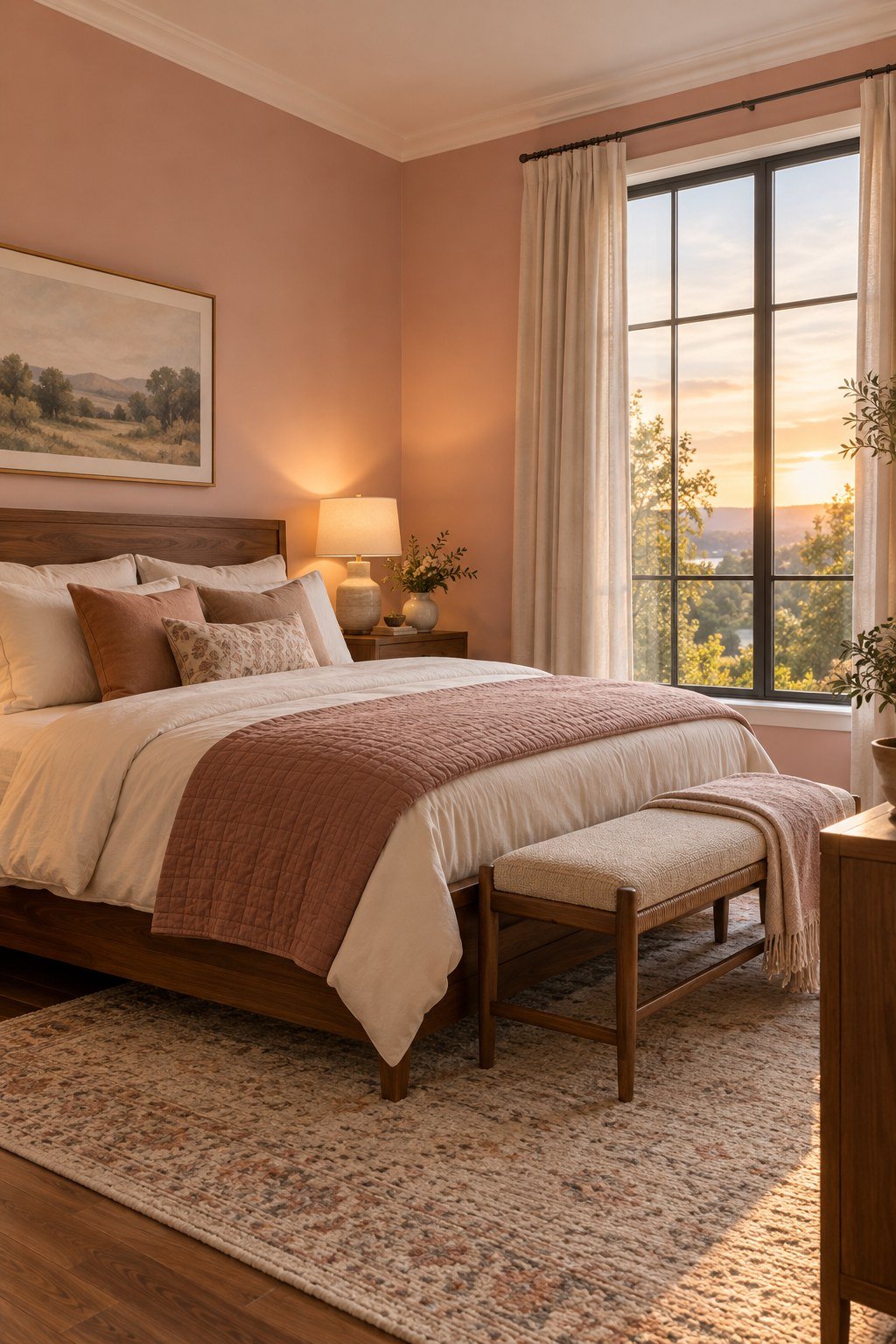
A cosy bedroom can still feel fresh and open in the daytime. Pulling the curtains back and keeping the window area clear gives you a different mood from the softer lamp-lit evening.
Notice where the room catches light and place the small routines you enjoy around it. A chair near the window or a clear place for a morning mug can be enough.
Then make the evening change easy: move the tray, settle the bedding and use the light you like. Those ordinary little transitions help the room feel comfortable throughout the day.
Make the bedroom feel good to come back to
You don’t need every layer or every piece of furniture to make a bedroom feel cosy. Start with the things you touch and use most: the bedding, the light beside the bed and the space where you put your everyday essentials.
Choose one change, live with it for a little while and see what would make the next morning or evening more pleasant. A softer quilt or a better lamp may do more for the room than a whole new set of accessories.
Let the finished room have a little breathing space. Comfortable fabrics, colours you love and a few useful details are a lovely recipe for slow mornings and early nights.