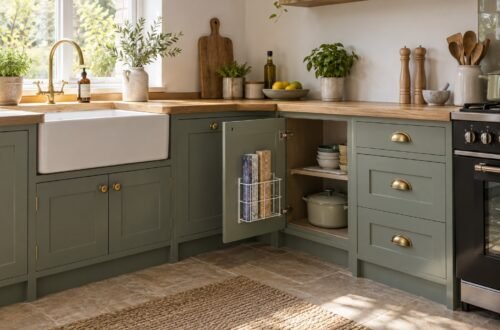

A child’s closet is much easier to use when the everyday things are easy to see, reach and put back. The favourite jumper needs a proper home, socks need somewhere obvious to land, and there should be room to slide a hanger along without pulling everything off the rail.
These kids closet organization ideas build on that simple starting point. Think a small selection of clothes that fit now, broad categories and storage your child can manage with a little help. A tidy closet can still have colour, personality and the occasional unevenly folded T-shirt.
Make the setup secure before inviting little helpers in. Fit rails and shelving properly, and anchor dressers and other furniture according to the manufacturer’s instructions; the CPSC’s Anchor It guidance explains why this matters. Keep everyday clothes within comfortable reach so there is no reason to climb.
As an Amazon Associate I earn from qualifying purchases.
Images are AI-generated room inspiration. SHOP SIMILAR opens a search for visually similar options; check the size, finish and suitability for your space before buying.
1. Bring the everyday rail down to their height

A low rail can change the whole getting-dressed routine. Instead of asking for every top, your child can see a few suitable options and help choose what to wear. A simple black rail looks lovely against a dusty-blue closet interior, especially with small white hangers.
Work out the height with your child standing comfortably on the floor. They should be able to reach the clothes without stretching, hanging from the rail or balancing on furniture. Leave enough space below for the garments to hang freely, and keep any higher storage for adult use.
Start with a handful of everyday favourites and show them how a hanger goes on and comes off. Some children will need help with that part for a while, which is completely fine. The useful change is having a clear, reachable section they can gradually take responsibility for.
2. Use low open bins for easy put-away jobs
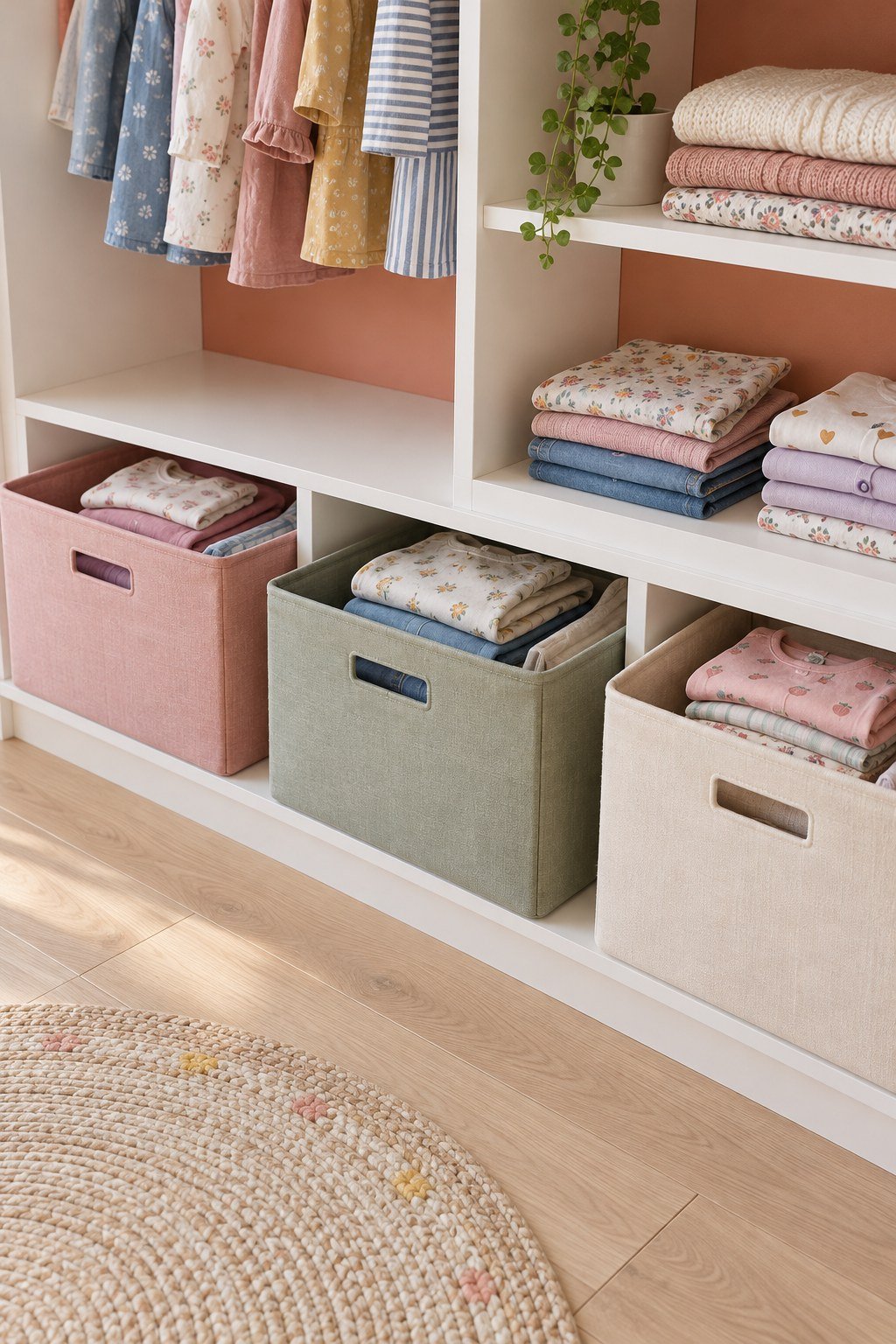
Soft open bins are forgiving storage for clothes that do not need to hang. Pyjamas, leggings and everyday T-shirts can each have their own broad category. A few coral, sage or cream bins bring some colour into white shelving without making the whole closet feel busy.
Choose a size your child can move comfortably when it is filled. The bin should slide out without scraping the shelf or tipping onto the floor. Leave some empty space inside so putting something away does not turn into a packing puzzle.
Give each bin one clear job and practise that job together. Matching pyjama pieces and dropping them into the same basket can be a useful first step. There is no need for a perfect fold before a child is ready; finding the right home matters more.
3. Use clothing pictures to show what belongs where
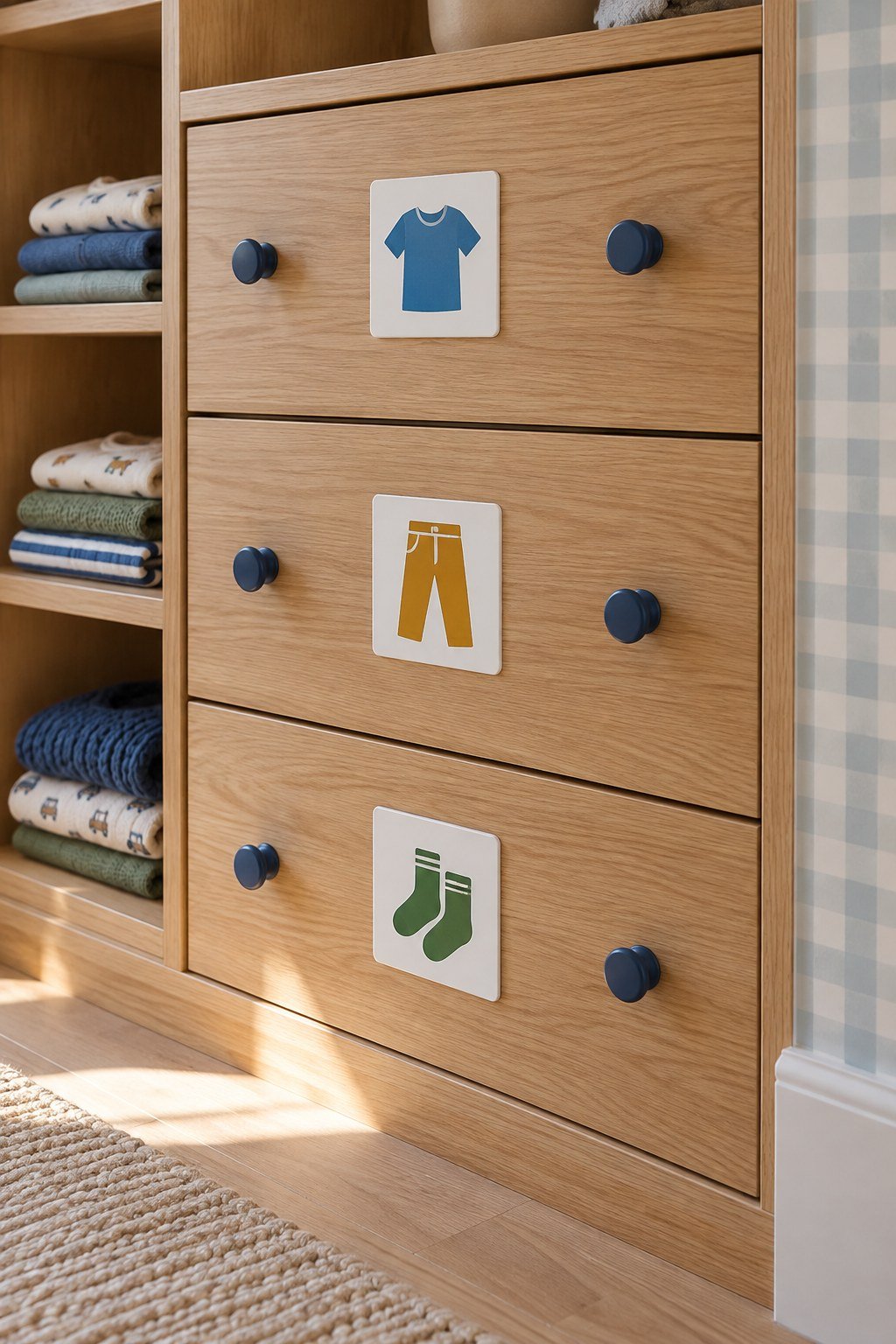
A simple picture makes a storage category easier to recognise before a child can read. A T-shirt, a pair of trousers or two socks can be enough to explain a drawer. On an oak dresser, a few clean picture labels look cheerful without taking over the furniture.
Choose images that look like the clothes you actually store there. Keep the same picture on the drawer or bin every time, and avoid squeezing several unrelated categories behind one tiny label. A word alongside the picture can be useful as your child becomes interested in reading.
Let them help decide which picture goes with each section, then do a quick practice round with the clean laundry. Use flat labels that are firmly attached rather than loose tags or dangling clips. The system should be easy to recognise from a small child’s usual viewpoint.
4. Divide one drawer into simple, roomy sections

A whole drawer can feel like a lot of empty space to a little helper. A few fabric boxes give socks, underwear and small tops their own places, so one rummage does not mix everything together. Soft cream dividers look calm alongside brighter children’s clothes.
Measure the drawer before buying anything and keep the sections generous. A child needs room to pick up an item and return it without undoing five other folds. Use just a few boxes at first, then change the arrangement if one category clearly needs more space.
The same flexible approach works well in your baby’s room too, as these nursery organization ideas show. As your child grows, give the easiest drawer a job they can manage themselves. An adult can handle the trickier folding while they sort familiar pieces into the right section.
5. Choose small hangers and leave room to slide them

Child-size hangers make a compact rail feel much easier to use. They fit smaller shoulders better than bulky adult hangers and help keep the clothes in a tidy line. Blush velvet hangers can look lovely in a warmer wardrobe scheme, with cream, rose and burgundy clothes around them.
Check that the width suits the clothes you are hanging now. A non-slip surface may help a cardigan stay in place, though your child might find a smoother hanger easier to handle. Try a few before replacing every hanger in the closet.
Leave enough space between garments to move them independently. You can teach one small routine at a time: choose a top, return the empty hanger, then put the clothes back after laundry day. If the rail is packed too tightly for that to work, move less-used pieces elsewhere.
6. Make a small outfit station for the week ahead

A hanging organizer can turn a rushed morning into a much smaller decision. Each open shelf holds a top and bottoms chosen together in advance. Against a butter-yellow closet wall, a simple white organizer feels cheerful and keeps the colours of the clothes easy to see.
Prepare only as many outfits as your family actually needs. Some weeks that might be five school-day sets; other times, two ready options will do. Give your child the compartments they can comfortably reach from the floor, with an adult handling higher shelves and small accessories.
Check the rail’s support and the organizer’s fixing and load guidance before filling it. Show your child how to lift the clothes out rather than pulling on the shelves. A quick weather check in the evening keeps the plan flexible when tomorrow suddenly looks colder or wetter.
7. Give shoes a low shelf with an obvious place for each pair

Small shoes are easier to manage when pairs stay together and the whole row is visible. A low two-tier rack can fit beneath a short hanging section or along one side of the closet. Simple black metal works well with blue cabinetry and a pale wood floor.
Check the shelf spacing with your child’s actual shoes, including the boots that never seem to fit anywhere. Keep the rack low and secure, and follow its installation instructions. Leave a clear route beside it so the closet does not become an obstacle course.
Make putting shoes away a simple matching job. They can place the two shoes together in their usual spot, while you deal with cleaning and checking the fit. Keep only the regularly worn pairs here so it is easy to notice when something has wandered off.
8. Put a small open hamper where clothes come off

A laundry basket earns its place when it is close to the getting-changed spot. A small woodland-print fabric hamper beside an oak wardrobe feels at home in a child’s room. An open top also removes an extra step when you are teaching the clothes-away routine.
Choose a manageable size with a straightforward opening and short handles. Keep the basket out of the walking route, and avoid using it to store clean clothes or toys as well. One clear purpose makes the habit much easier to understand.
Show your child which clothes go into the hamper and which can be worn again. They can help carry a light load with you when it is time for washing. This is a good way to build on the laundry-zone idea in these nursery storage ideas as the room grows with them.
9. Keep next-size clothes in a separate adult-managed zone
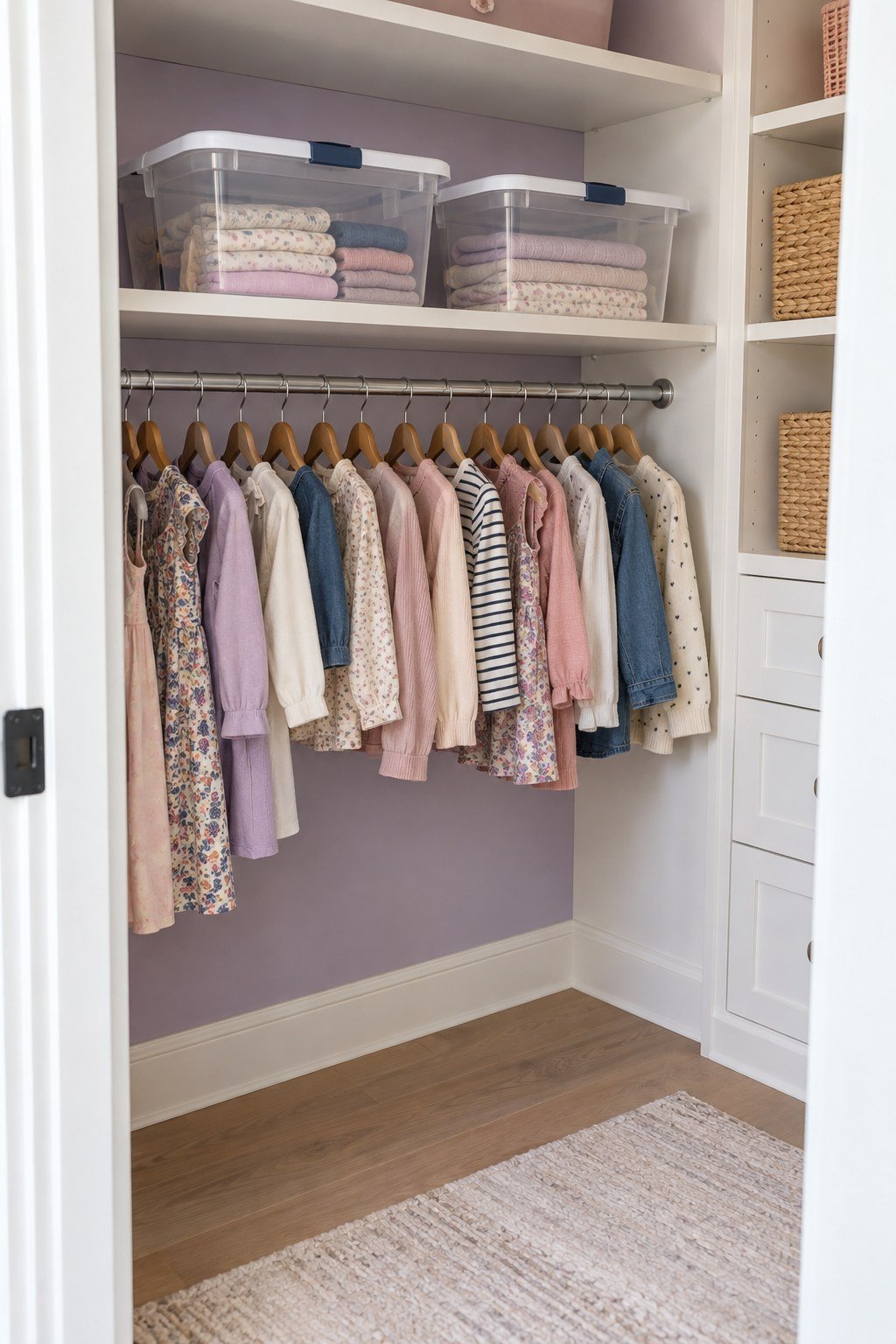
Clothes that do not fit yet can make an everyday closet surprisingly confusing. Keep them in a separate reserve zone so your child is choosing from things they can actually wear. Clear lidded bins make it easier for you to see the spare layers and next-size pieces.
Sort the clothes together at floor level, then let an adult close, lift and store the reserve boxes. Use modest, manageable containers on secure shelving and keep heavier items lower down. Avoid putting favourite toys or other tempting things above the everyday section.
This is one of the nursery systems worth keeping as children get older. Add a simple size note and review the boxes when the seasons change. The everyday rail stays easier to use, and you are less likely to discover a forgotten jumper after it has already been outgrown.
10. Keep the current-season choice small and useful

An easier closet does not always need another organizer. Sometimes it needs fewer clothes in the main section. A short rail of comfortable favourites gives a child a clearer choice than a packed wardrobe full of different sizes, seasons and special-occasion outfits.
Do a simple check together: what fits, what feels comfortable and what is right for the weather now. Move future sizes and occasional pieces to the adult-managed area, then decide what is ready to pass on. These decluttering tips can help if the first sort feels like a big job.
Leave a little empty rail and shelf space when you put everything back. That breathing room is useful when clean laundry returns or a new school jumper arrives. Review the selection when getting dressed starts to involve lots of searching again.
11. Give each child a clear section of a shared closet
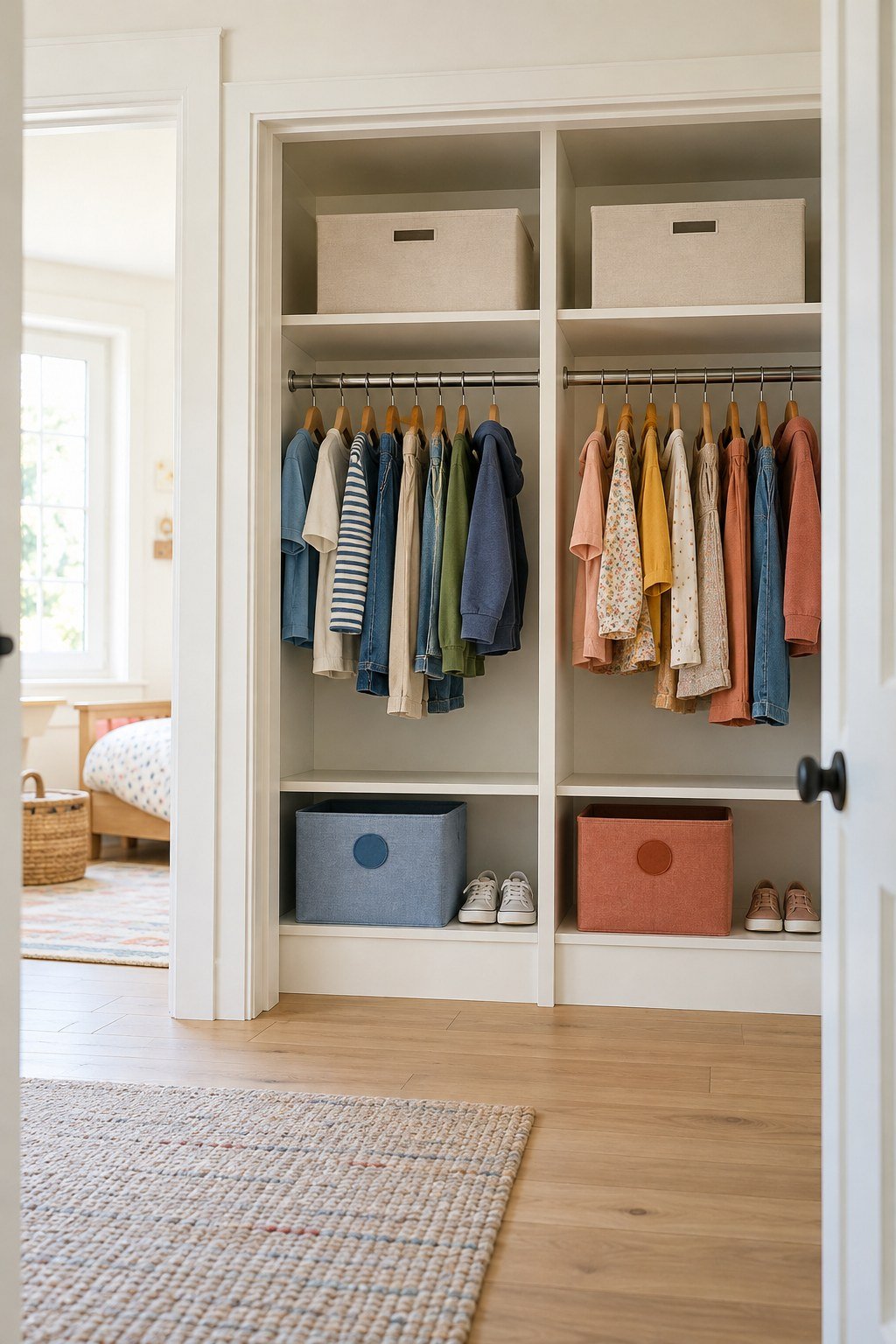
A shared closet feels easier when each child can recognise their own section. One vertical bay each keeps the rail, folded clothes and shoes together. Blue and terracotta bins can mark the two areas without making the bedroom feel like two completely separate spaces.
Choose the markers together and keep them simple. A colour, picture or initial can help, depending on what your children recognise. The important thing is that both sections have reachable everyday storage, even if the shelf heights need to be different.
Keep shared reserves in a separate adult-managed area rather than mixing them into either child’s daily clothes. When laundry comes back, each child has a small, clear job in their own section. Leave enough room for both to use the closet without blocking one another.
12. Finish with a quick, predictable closet reset

A simple reset helps the layout stay useful after the first tidy-up. Choose a regular moment to pair the shoes, return stray clothes and check the hamper. A few minutes together can be enough when each category already has an obvious home.
Give your child one job they can finish, then add another when it feels comfortable. They might start with putting pyjamas into a bin or matching shoes on the low shelf. Some days will need more help than others, especially when everyone is tired.
Notice when the storage itself is making the job harder. An overflowing bin, a high rail or a drawer that sticks is a cue to adjust the setup. A closet that is easy to reset will serve your family better than one that only looks neat when an adult does every step.
A closet they can grow into
The most useful children’s closet starts with a few clear jobs: choose clothes, find the matching pieces and return things to a familiar place. Reachable storage, broad categories and a little spare room make those jobs easier to practise. The room can still feel warm, colourful and personal.
Start with one change your child will use tomorrow. Lower the everyday selection, add a picture to the sock drawer or move the hamper to a better spot. Try the new arrangement together before adding more containers or a complicated routine.
Keep adjusting as their clothes, reach and confidence change. You will still be helping, but the closet can make that help feel calmer and more predictable. A few small jobs done together are a lovely foundation for easier mornings.