Good home office organization makes it easier to sit down and get on with the thing you came to do. There’s room for your notebook, the charger is where you expect it to be, and yesterday’s papers aren’t competing with today’s work. Add warm lighting, a colour you love and storage that suits the room, and the whole space feels more inviting.
These ideas cover the small desk details and the bigger storage decisions, from organising a drawer to giving project supplies a home. Start with what regularly gets in your way, then choose the system that solves it. Some ideas include a product worth considering; others work with a different arrangement of the furniture and containers you already have.
As an Amazon Associate I earn from qualifying purchases.
Images are AI-generated workspace inspiration, not manufacturer product photographs. Selected SHOP SIMILAR buttons link to individual Amazon products; check the current dimensions, compatibility and included parts before buying.
1. Give the middle of your desk back to your work
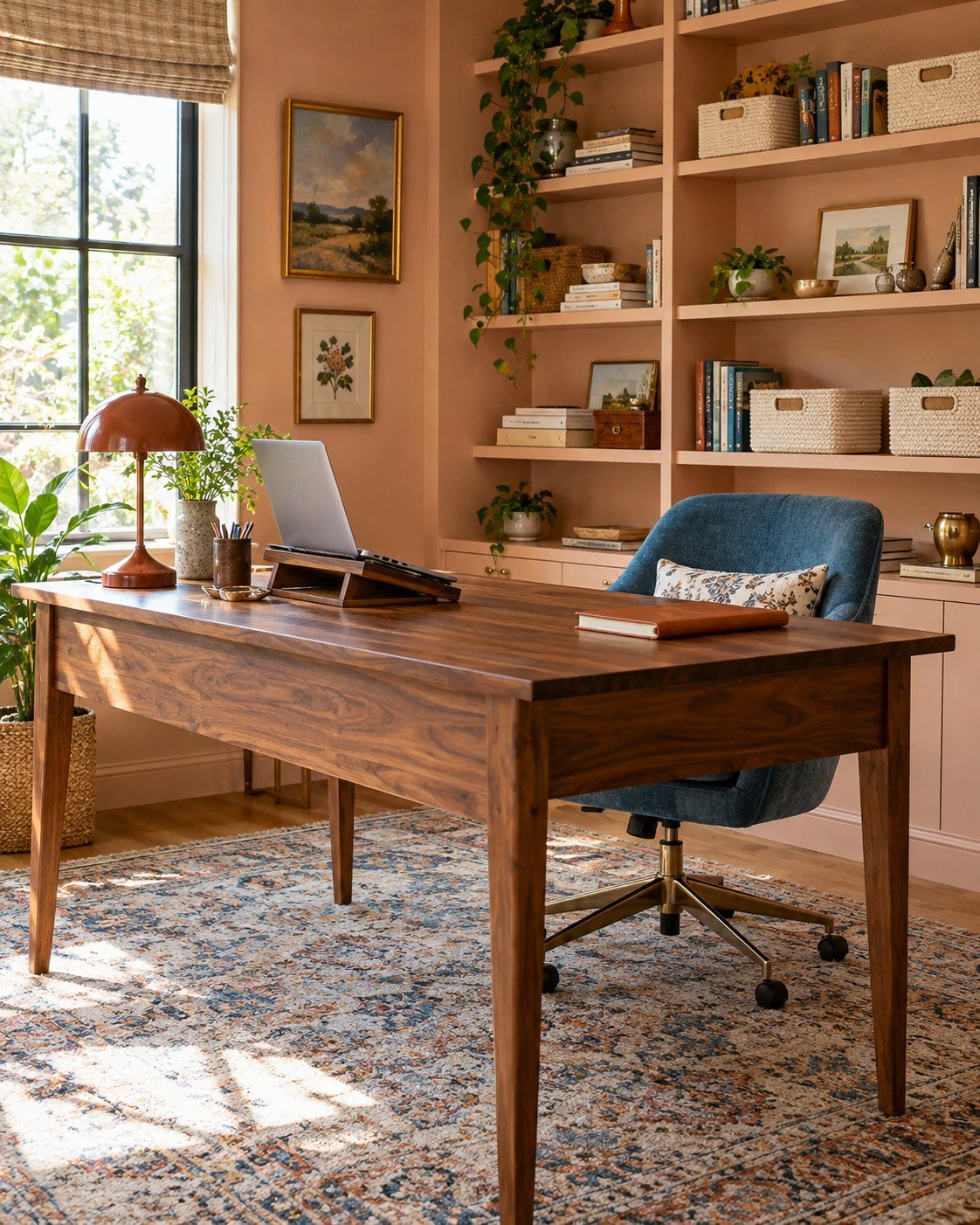
Before choosing an organiser, decide what you need to do at the desk. Writing, working on a laptop, sketching and sorting documents all need slightly different amounts of space. Clear a central area large enough for your usual task, then arrange the things you reach for around it.
Keep daily essentials close and move occasional supplies to a drawer or shelf. A lamp, notebook and small pen holder can look lovely without covering the whole surface. An oak or walnut desk with a warm-coloured mat and a comfortable chair gives the practical setup a bit of personality.
Try the layout for a few working days before filling the spare corners. If the desk keeps disappearing under paperwork, the next step is a paper system rather than a bigger desk. Our cosy home office ideas for small spare rooms have more inspiration for making a compact setup feel like a proper place to work.
2. Create a paper station with a clear next step
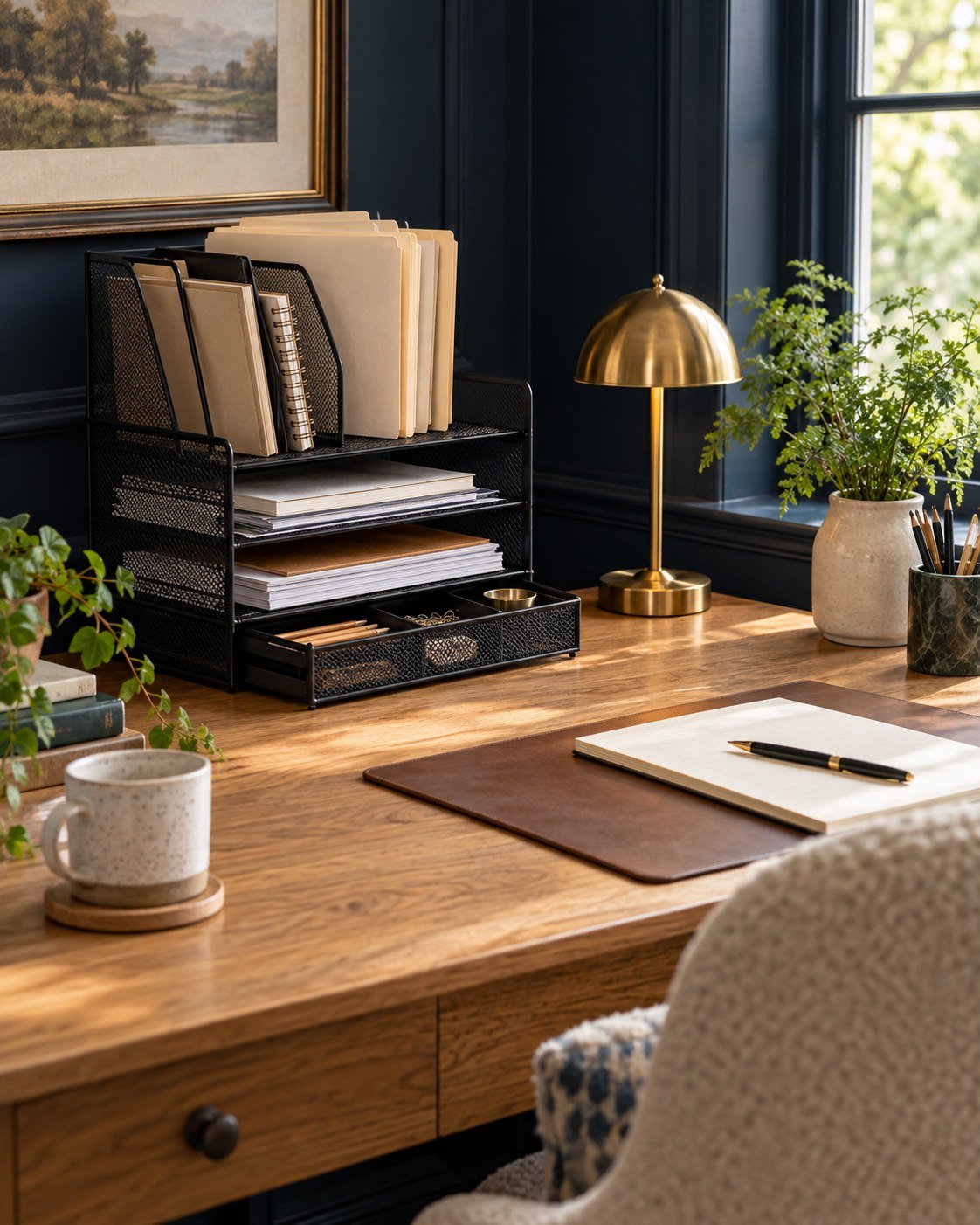
Separate papers that need action from papers you’re keeping for reference. The first group should stay visible enough that you remember it; the second needs a sensible filing home. Recycling obvious junk and reviewing old printouts before putting them away will stop the organiser starting life already full.
A desktop file organiser can keep a few active folders upright and loose sheets together. The linked Simple Houseware black mesh organiser combines file slots, paper trays and a small drawer in one unit. Place this kind of organiser at the side or back of the desk so it doesn’t take over the space in front of you.
Choose categories around what you actually do, such as incoming, current project and waiting for a reply. Set a regular time to process the papers and move finished work out. Check the organiser’s current dimensions against your desk and paper size before buying; a system is easier to keep using when reaching into it feels effortless.
3. Divide a drawer around the supplies you actually use

A desk drawer is most useful when you can open it and see where things belong. Empty one drawer, test the pens and gather duplicates before putting anything back. Keep your everyday supplies here and store large spares somewhere else so the drawer doesn’t become a stockroom.
Clear modular trays let you build small sections for pens, clips, sticky notes and short leads. The linked Vtopmart set has a selection of tray sizes to arrange around those categories. You don’t need to use every piece in one drawer; leave a little space where it makes the layout easier to use.
Measure the inside width, depth and closing height, including anything hanging below the desktop. Put the most-used items near the front and keep sharp tools safely contained. If other household drawers need the same treatment, our drawer organization ideas show how simple divisions can make everyday things easier to find.
4. Move small tools onto a pegboard
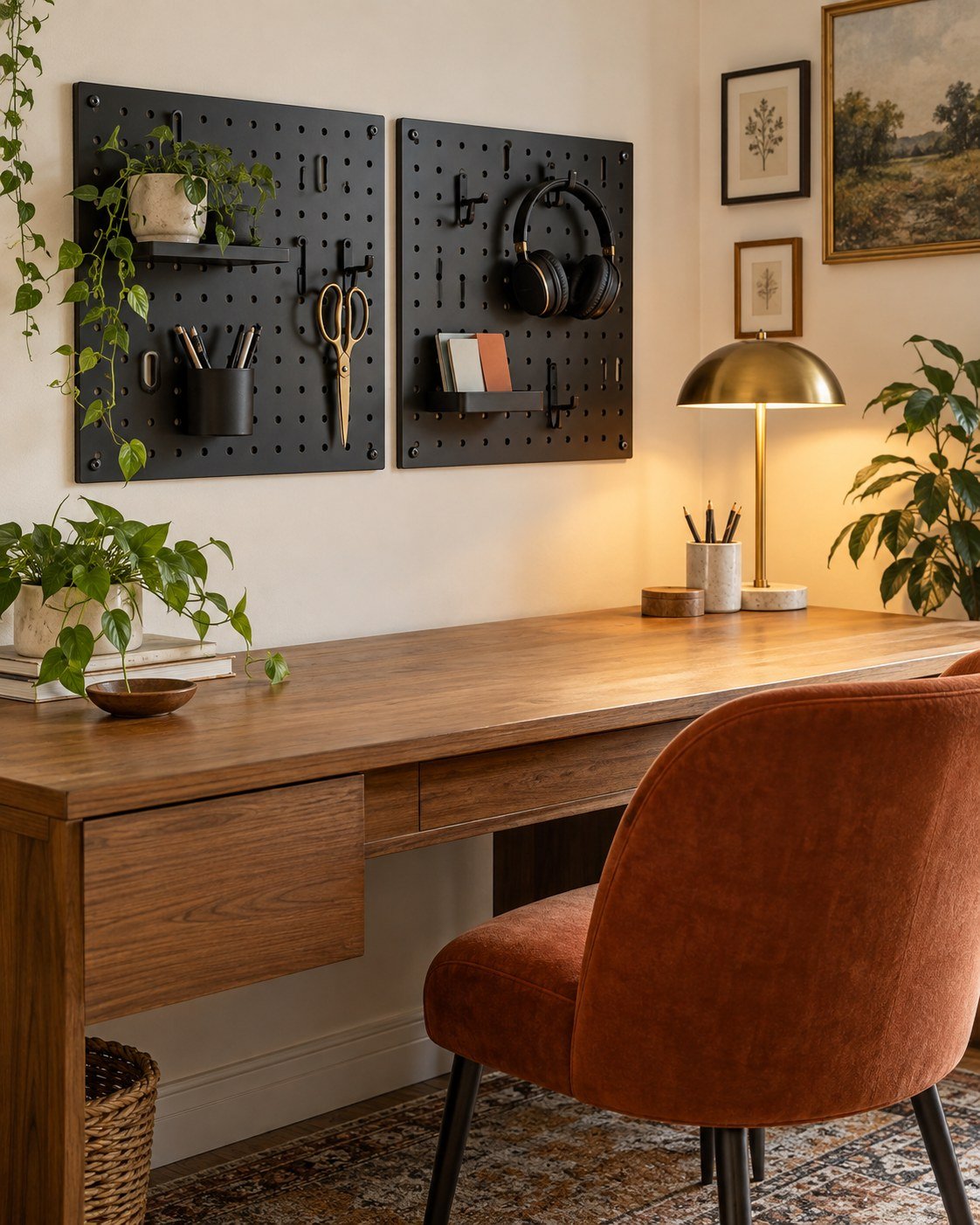
A pegboard can turn an unused wall into a useful part of your workspace. Scissors, headphones and lightweight tools can move off the desktop while staying within reach. It’s especially handy when your work includes drawing, sewing or small craft projects as well as screen time.
Keep the arrangement selective rather than covering every hole. A dark board above an oak desk can look striking against a pale wall, especially with a rust chair or a warm lamp nearby. The linked WORKPRO black metal pegboard panels provide a similar starting point for a more practical, graphic wall setup.
Check the mounting requirements and use fixings appropriate to your wall. Hooks, cups and other accessories need to be compatible with the board and may be sold separately, so review the listing’s included pieces. Keep heavier tools low and avoid placing awkward or sharp objects where they could fall onto your working area.
5. Give cables a planned route
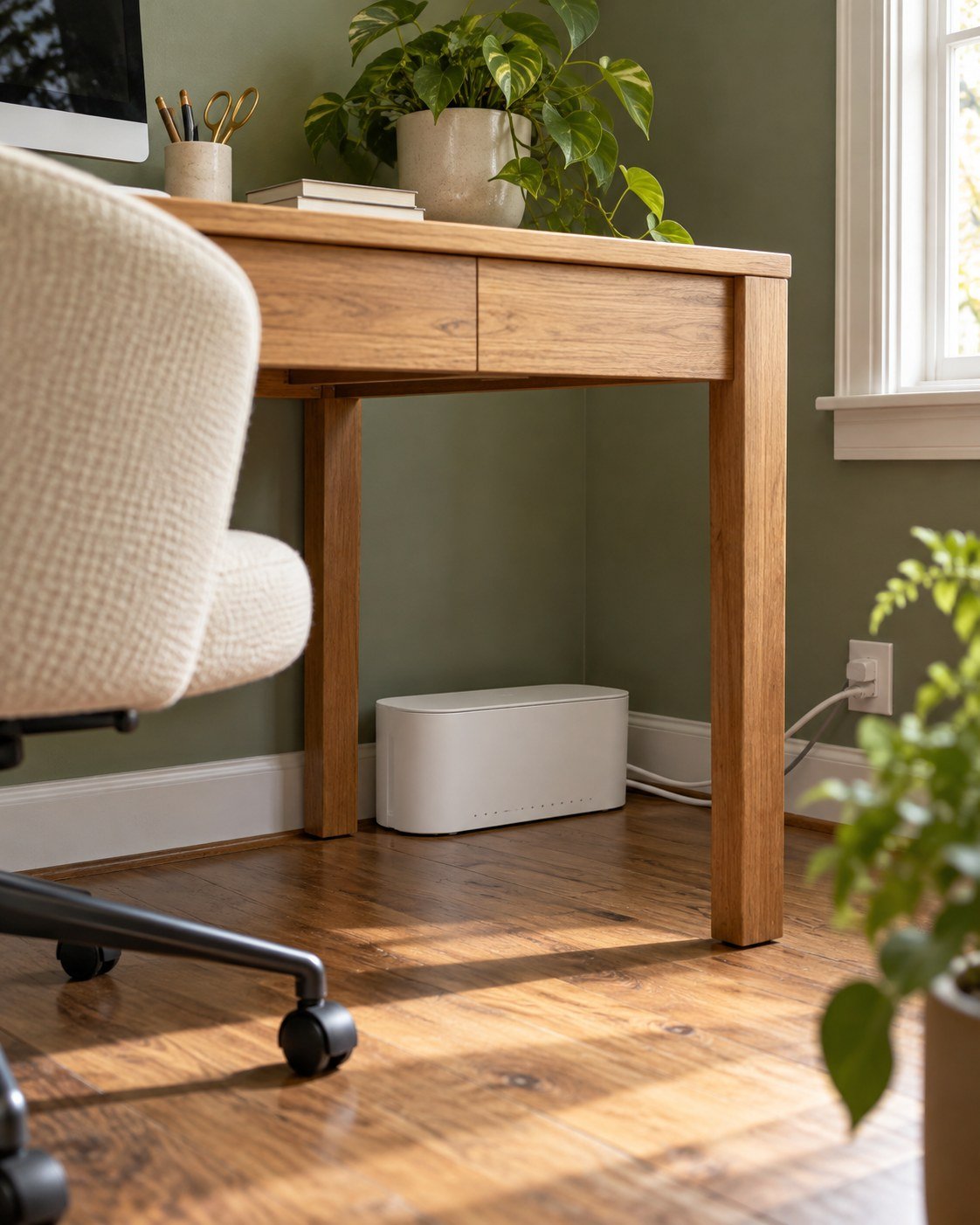
Follow each cable from the device to its socket and work out which leads you actually need. Remove disconnected extras and keep enough slack for the way your equipment moves. A tidy setup should still let you unplug a charger or move the chair without tugging on everything else.
A purpose-made cable box can gather a suitable power strip and excess lead in one discreet place. The linked D-Line small white cable management box is an option for a light, quiet-looking setup. Position the box where it’s accessible and clear of your feet, rather than hiding it behind a pile of things.
Check the box and power-strip sizes, follow both makers’ instructions and leave ventilation openings unobstructed. Avoid overloading sockets, enclosing unsuitable equipment or routing cables where they can be pinched. For a desk that changes height, check the full movement before securing any cables in place.
6. Lift compatible screens off their individual stands
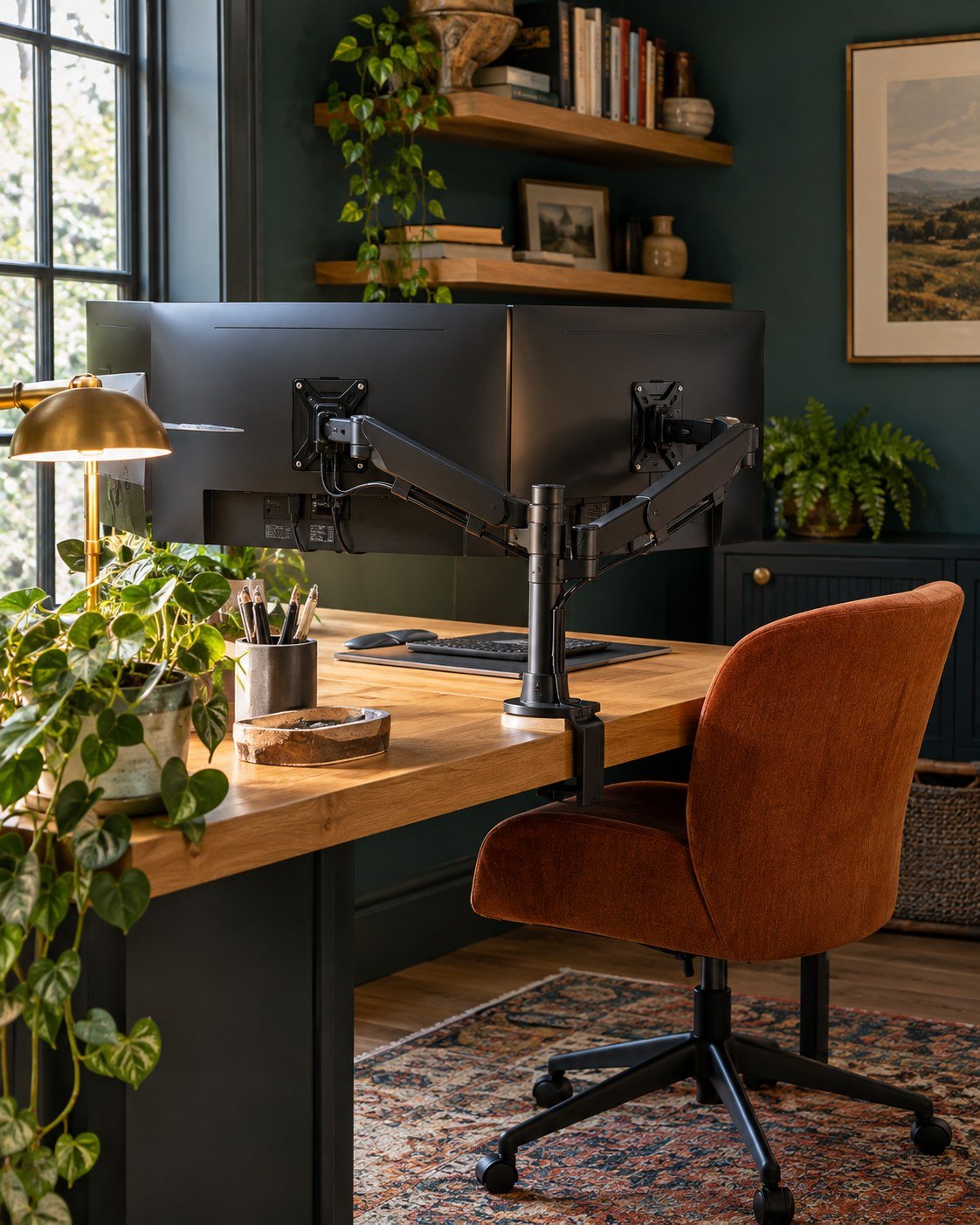
If two monitor bases are taking up most of the back of the desk, a compatible dual arm can free some of that surface. It also gives you another way to arrange the screens around the work you do. The space underneath can stay clear rather than immediately becoming another storage shelf.
The linked MOUNTUP dual monitor mount is one option for a two-screen setup. A black arm can sit quietly against dark monitors while warm wood, a coloured chair and a small lamp keep the office from feeling too technical. Keep the keyboard, mouse and frequently used items in comfortable positions as you adjust the layout.
Check each screen’s weight, size and mounting pattern, plus the desk’s material, thickness and suitability for the attachment method. Follow the mount’s installation instructions and leave room behind the desk for movement. If your setup is already comfortable and the stands don’t get in the way, there’s no need to change them just for a tidier photograph.
7. Put spare supplies behind closed doors

Printer paper, spare notebooks and bulk stationery don’t all need to sit within arm’s reach. Give them a cupboard or low cabinet nearby, leaving the desk for current work. Closed storage can be especially useful when the office shares a room with a bed or living area.
Arrange supplies by category and keep the quantities sensible. A few boxes on a shelf can hold refills, posting materials and occasional tech accessories without turning the cabinet into a mystery cupboard. Keep heavy supplies lower down and make the things you use most easy to reach.
Choose furniture that fits the room as well as the contents: an olive cabinet, oak sideboard or painted cupboard can feel like part of your home. Measure door openings and access around the chair before adding it. The best home office storage ideas should make the whole room easier to use, including when you’re finished working.
8. Keep a current project together on a trolley

A small rolling trolley can hold the supplies for one active project instead of letting them spread over every surface. It works well for someone who switches between computer work and hands-on tasks. Roll it beside the desk when needed, then return it to its own spot afterwards.
Use the upper level for current folders or frequently used tools, with heavier suitable items lower down. Keep the contents edited so you can see what’s there. A cream or muted-colour trolley beside a timber desk can look cheerful and considered rather than like extra office equipment.
Check the trolley’s footprint, shelf sizes and load limits, and use wheel locks where supplied. Keep it clear of the chair’s route and make sure it won’t obstruct doors. If your projects fit comfortably into a portable box you already own, try that first before adding another piece of furniture.
9. Keep daily pens in one small caddy
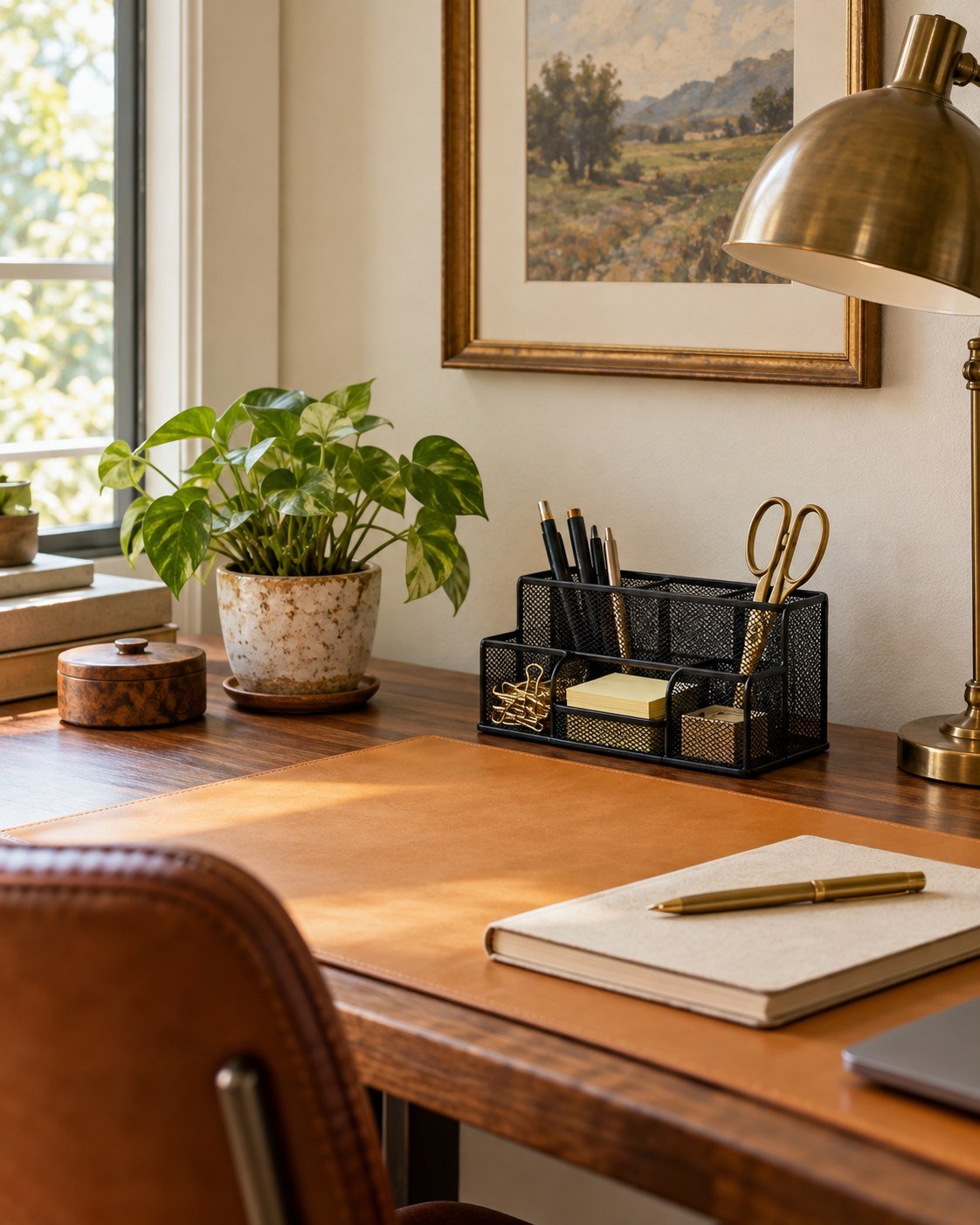
Choose the pens and small tools you actually reach for during a normal week. Keep those together and move the rest to a spare-supplies drawer. One comfortable place to grab a pen is useful; several overflowing cups make it harder to find the one that works.
The linked Amazon Basics black mesh organiser has six compartments for a mix of small desk supplies. A compact caddy like this can keep pens upright and smaller items grouped in front. Sit it toward your usual reaching side, with enough space around it to pick things up comfortably.
Test the contents occasionally and return stray items before they become a second miscellaneous drawer. A simple black organiser can work with an ochre mat, a brass lamp or a colourful notebook, so useful storage still feels part of the room. If you only need two pens, a small cup you already have may be all the organisation required.
10. Arrange shelves by how often you need things
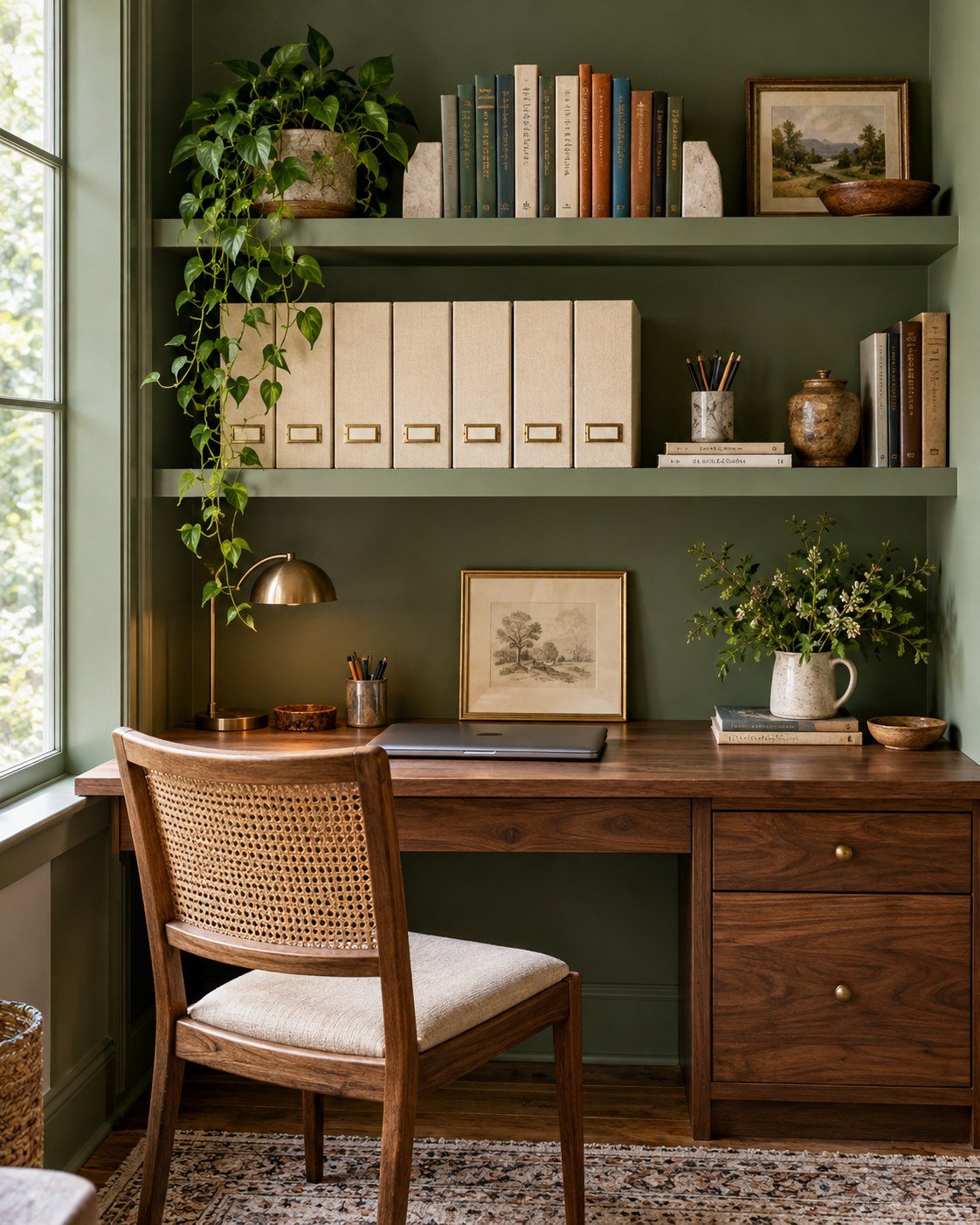
Put regularly used reference books and active files where you can comfortably reach them. Store less-used material elsewhere and keep the highest shelves for lighter things. This is easier to maintain when you arrange around your actual routine rather than by the colour of every spine.
Use file boxes or folders for loose material that needs keeping, and make their categories clear to you. A small amount of visible labelling saves opening each box to find one document. Keep personal or confidential records in storage that suits their privacy needs, rather than treating an open shelf as a secure archive.
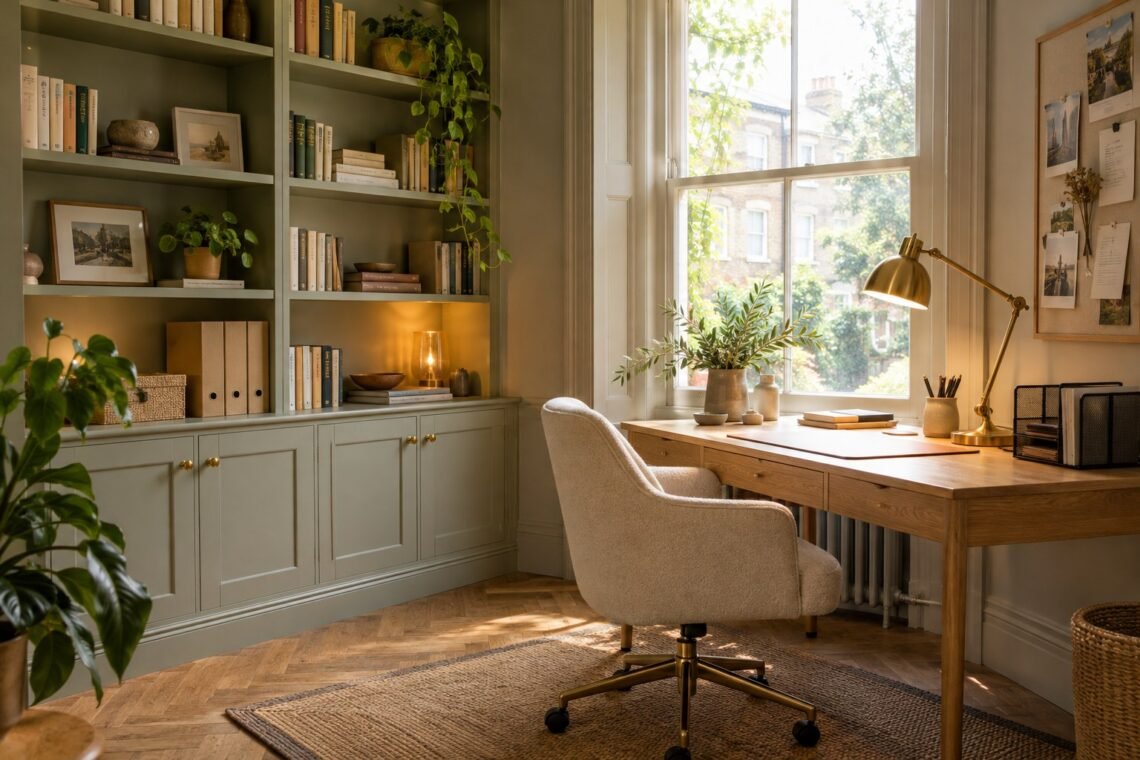
Leave a little breathing room between groups so the shelves remain easy to use. One plant or picture can make them feel warmer without taking over. Before buying more shelf space, review what’s there and pass on reference material you no longer need; extra shelving is most useful after you’ve edited the collection.
11. Give each person their own storage zone
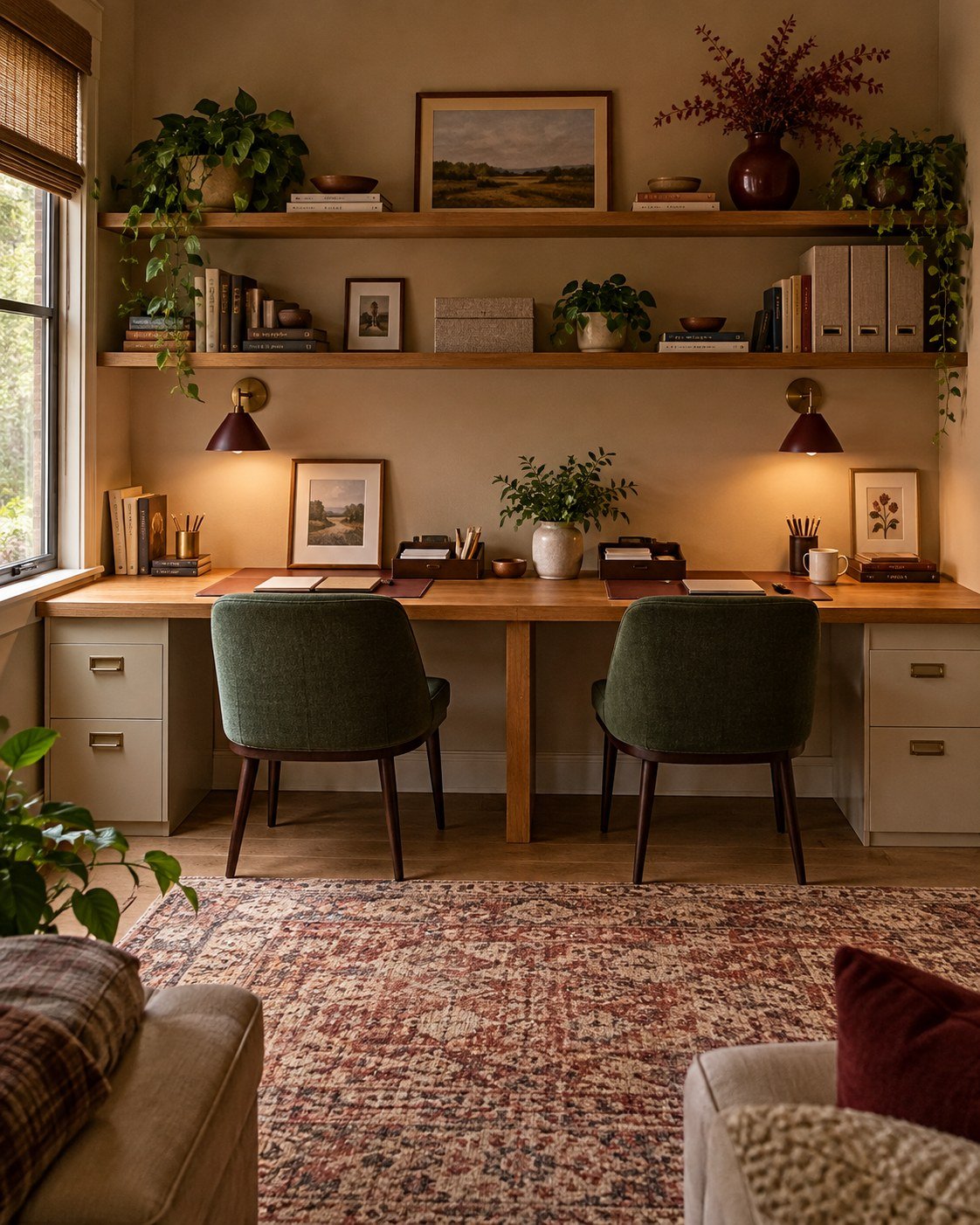
When two people share a home office, separate storage can prevent a lot of small frustrations. Give each person a clear place for papers, stationery and current work. Shared equipment can live between the two work areas, with an agreed place to return it.
The room can still feel coordinated with matching lamps, similar storage boxes or a repeated accent colour. The contents don’t need to be identical. One person might need several project folders while the other needs a drawer for drawing supplies, so divide the space around how it’s used.
Check that both chairs can move comfortably and that drawers open without interrupting the other person. Talk through which supplies are communal and which belong to someone’s current task. Home office organizing tips are much easier to follow when everyone understands the arrangement.
12. Make a short reset part of finishing work
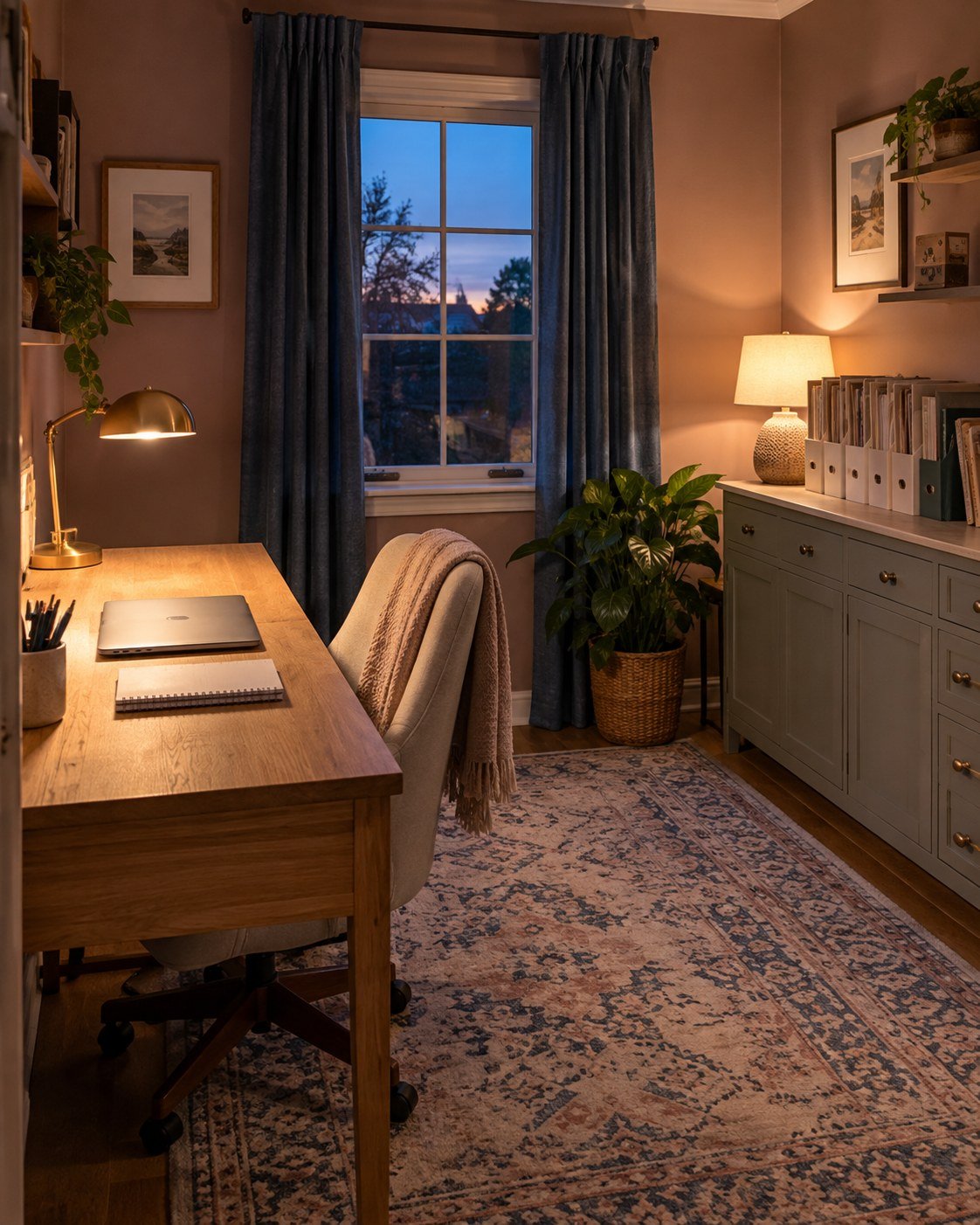
Before leaving the desk, return the daily tools, gather loose papers and put the current project in its agreed place. Close the laptop or shut down equipment as appropriate for your work. A short reset makes the next working session easier to begin.
Write down the next small task before clearing the surface so you don’t have to keep the whole project in your head. Leave the materials you’ll need together, without spreading them across the desk overnight. You’re aiming for an easy starting point rather than a room that looks untouched.
Once a week, deal with the incoming tray and check whether a drawer or shelf needs a quick sort. If something keeps landing in the wrong place, adjust its home rather than repeatedly fighting the same habit. The most useful home office organization ideas fit the way you work and make your room pleasant to come back to.
Make your home office easier to use
Start with the part of your workspace that interrupts you most: the papers, the cable tangle or the drawer that never contains the pen you need. Give that one thing a sensible home, then build from there. A useful system and a room you enjoy spending time in can grow together.