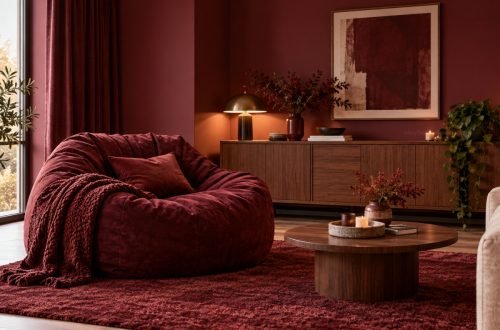

Sometimes a room has everything it needs and still feels a little chilly. The sofa is comfortable and the walls are freshly painted, yet the space doesn’t quite invite you to settle in.
These warm home decor ideas look at the small relationships that make a difference: a richer fabric against a pale wall, wood beside smooth stone, or curtains that give a bare window a softer edge. You can start with what is already there.
The first few ideas include useful pieces you might want to add. The rest are about colour, shape and arranging your home in a way that feels comfortable every day.
As an Amazon Associate I earn from qualifying purchases.
Images are AI-generated room inspiration. SHOP SIMILAR opens a search for visually similar options; check the details and suitability for your space before buying.
1. Bring in a little rust velvet
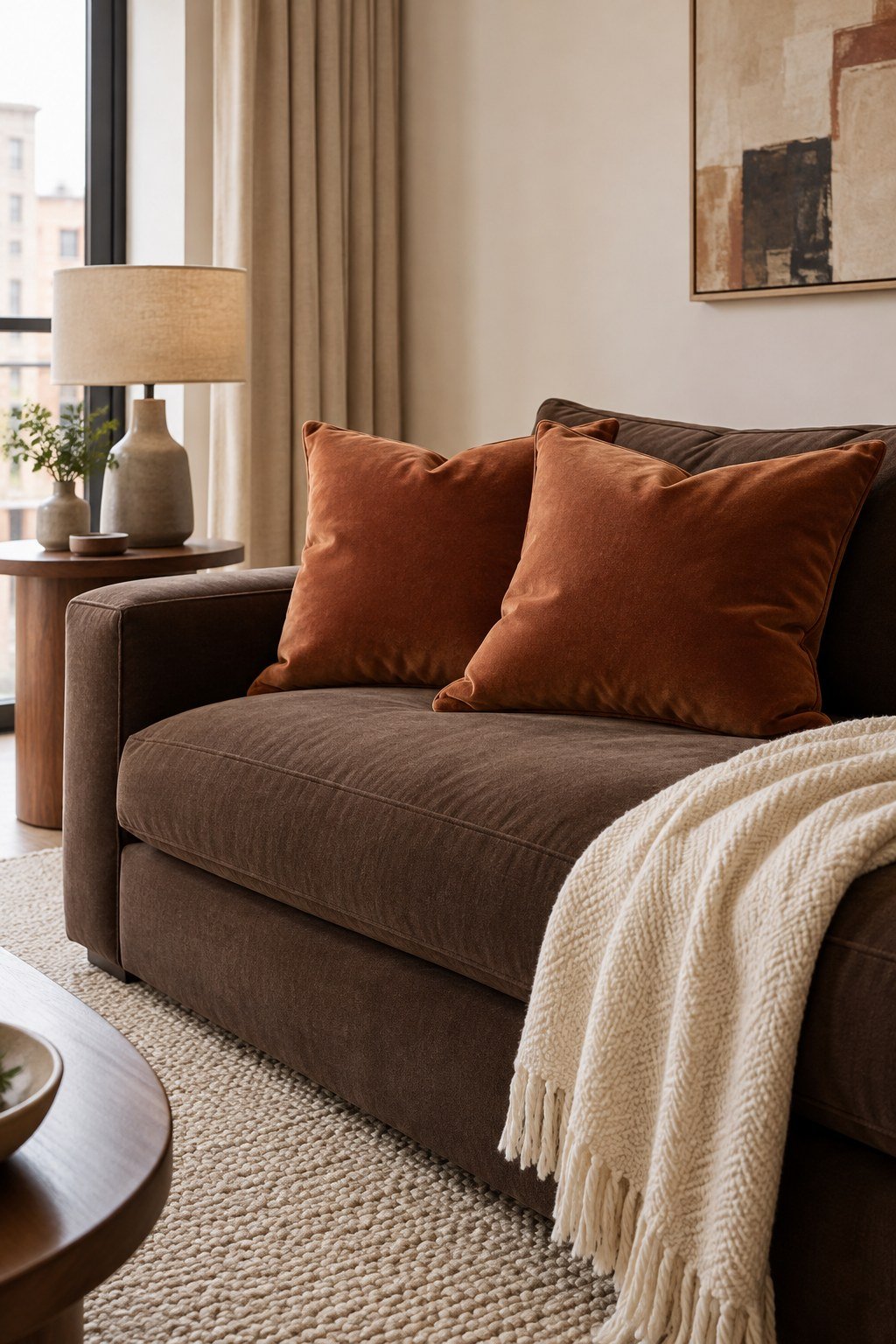
Rust cushions bring a soft earthy note to a brown sofa without asking the whole room to change colour. The velvet catches the light differently from the upholstery, which gives a fairly simple arrangement a bit more depth.
Try one or two cushions first and pick up a similar tone somewhere small, perhaps in a picture or a clay pot. Let the main furniture stay coordinated so the rust feels like a deliberate accent.
Keep enough room to sit comfortably. A cream throw and a pair of cushions can do more for the sofa than a long row you have to remove every evening.
2. Give the hallway a shaded pool of light

A small lamp can make the entrance feel welcoming before you reach the living room. An ivory ceramic base and pleated shade look particularly lovely beside oak and a muted green wall.
Place it where the shade suits the scale of the console and the switch is easy to reach. Keep the cable out of the walking route, and leave a useful spot for the things you actually put down at the door.
One bowl and a picture are plenty around it. If your entrance also catches shoes and bags, these entryway shoe storage ideas can help the practical side feel just as considered.
3. Put natural texture beneath the dining table
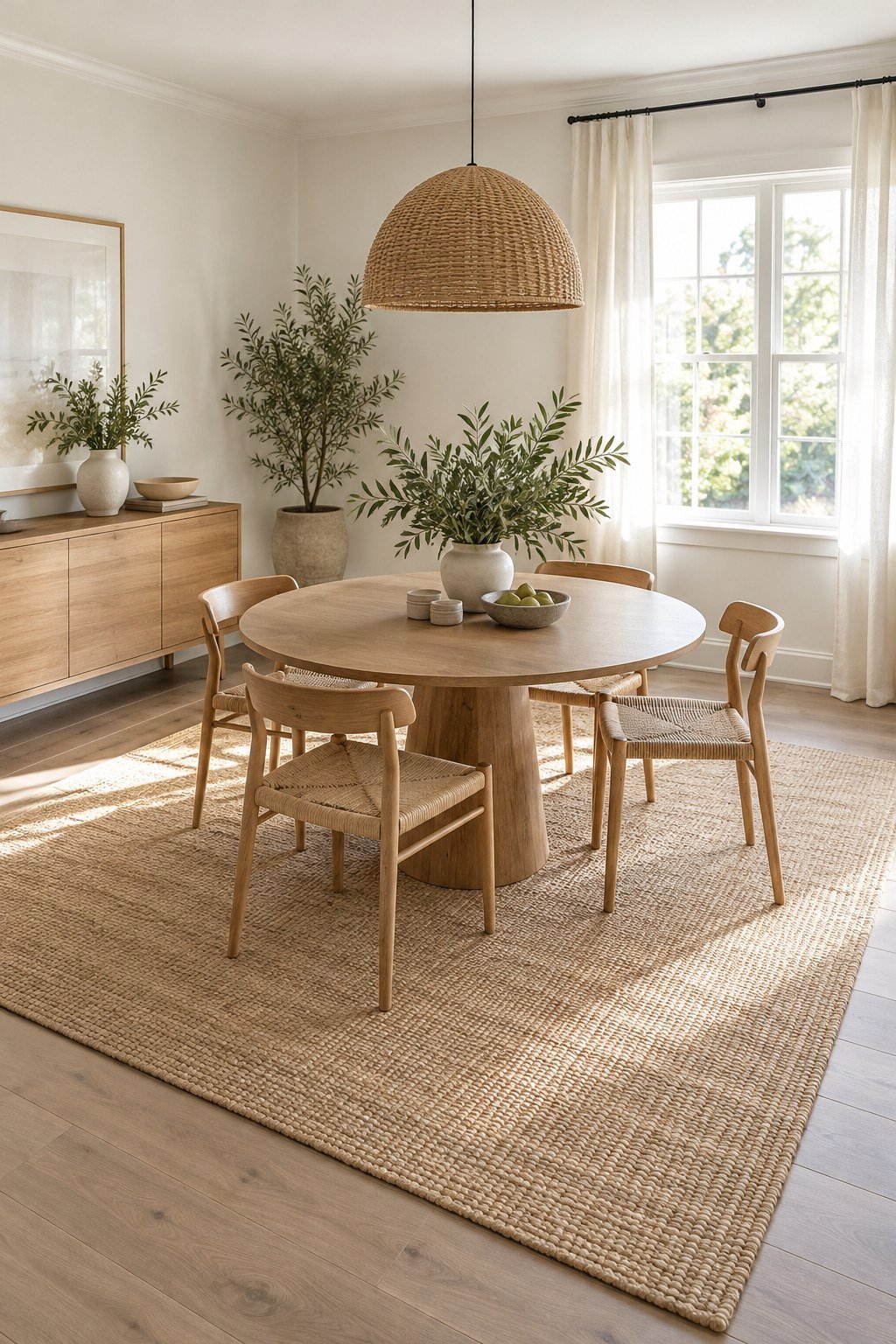
A woven rug gives a dining area a clear place in the room and breaks up a large stretch of smooth flooring. The tan fibres sit easily with oak, cream walls and simple timber chairs.
Measure with the chairs pulled out, rather than tucked neatly under the table. Aim for an arrangement where chair legs remain comfortable to move, and check that the rug suits your floor and the way the room gets used.
Think about everyday cleaning before choosing a weave. If meals here tend to be lively, an easy-care textured alternative may give you the same warm look with less fuss.
4. Soften the window with generous linen-style curtains

Bare glass can make a room feel harder around the edges. Oatmeal curtains add a broad area of texture, especially when the sofa and chair are already in a gentle taupe shade.
Choose enough fabric for soft folds when the curtains are closed. Position the pole to suit the window and allow the panels to draw back comfortably, keeping useful daylight in the room.
A sheer layer can add softness during the day while the heavier panels frame the view. Keep fabric clear of heat sources and choose the length for the way you clean and move around the space.
5. Keep a blanket basket beside the chair

A woven basket gives a reading corner a relaxed, useful detail. Beside an olive chair, the natural fibres and a couple of cream blankets make the space look ready to use.
Choose a basket that holds what you need without taking over the walkway. Check the inside for rough areas that might catch a knitted throw, and keep the blankets folded loosely enough to lift out.
Leave the rest of the corner simple: a good light, somewhere for a mug and a seat you enjoy. Our reading nook ideas have more ways to make a small corner feel inviting.
6. Make one everyday kitchen corner feel intentional

A wood tray can gather the things you already use into a warmer little arrangement. Two favourite mugs and a small vase feel at home against cream cupboards without filling the whole counter.
Choose a tray that leaves plenty of clear work space around it. Keep it away from the busiest preparation area so moving it doesn’t become another step every time you cook.
Repeat a wood tone already present in the kitchen, then let the ceramics bring a little contrast. These coffee bar ideas are useful if you’d like to give the daily coffee routine a proper home.
7. Try mushroom or putty where white feels too sharp

A warm mushroom wall can soften a room while keeping it fairly quiet. It gives taupe upholstery and walnut furniture a gentle backdrop without turning every surface beige.
Look at large samples beside the flooring, sofa and curtains at different times of day. A colour that looks softly brown in one corner may lean pink or grey near a different window.
Keep the finishes around it in mind, too. A warm wall works best when it belongs with the largest pieces in the room, rather than trying to correct several unrelated undertones at once.
8. Repeat wood in a few separated places
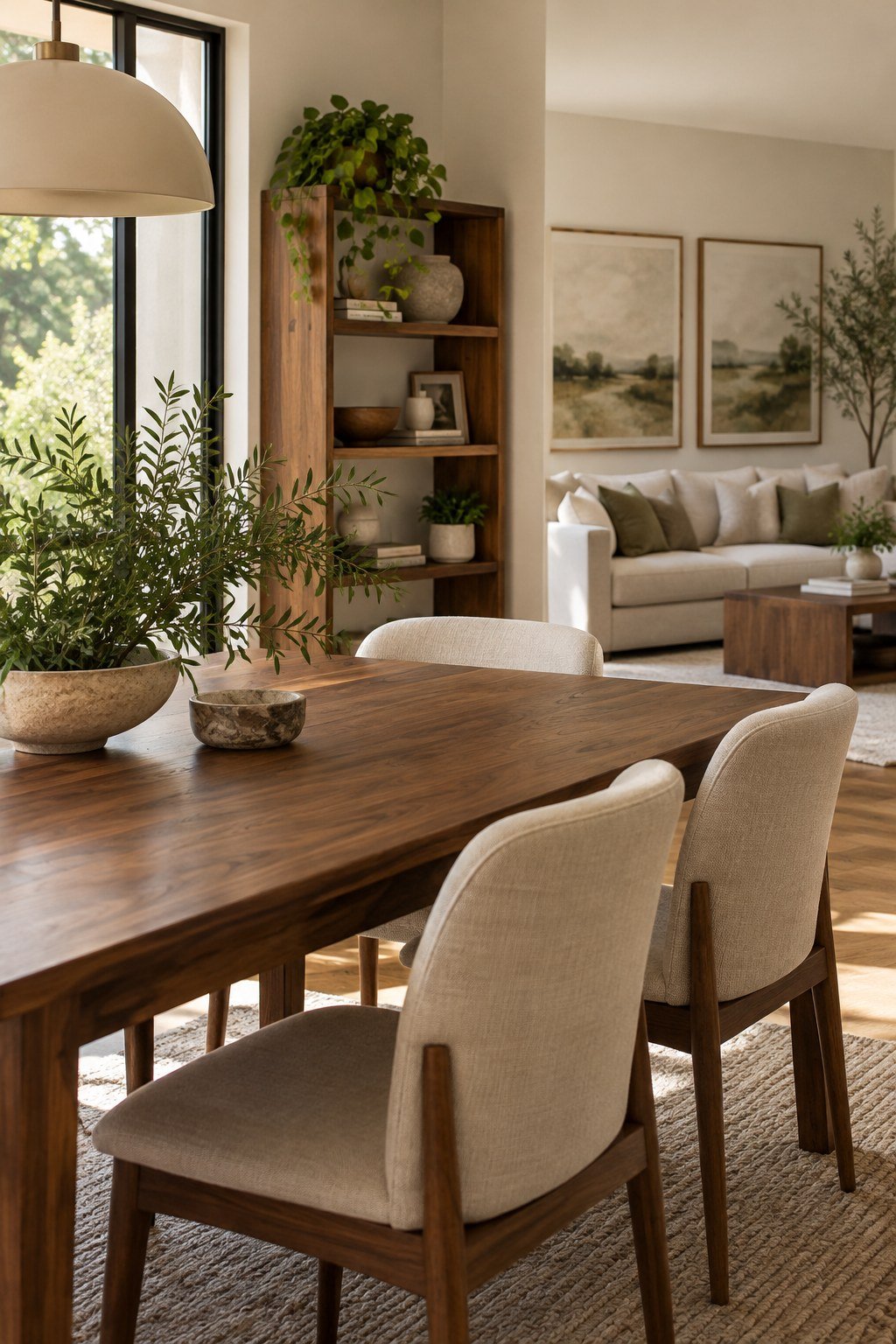
Wood feels more connected when it appears in a few places around a room. A table, a shelf and a picture frame can quietly link separate areas without becoming a matching furniture set.
Choose a main wood tone, then let the other pieces sit comfortably beside it. Notice whether the finishes are very red, golden or cool before bringing another large piece into the mix.
Leave some different materials between them. Upholstery, painted walls and a woven rug give the wood room to stand out and stop the space feeling like a showroom.
9. Balance straight lines with softer shapes
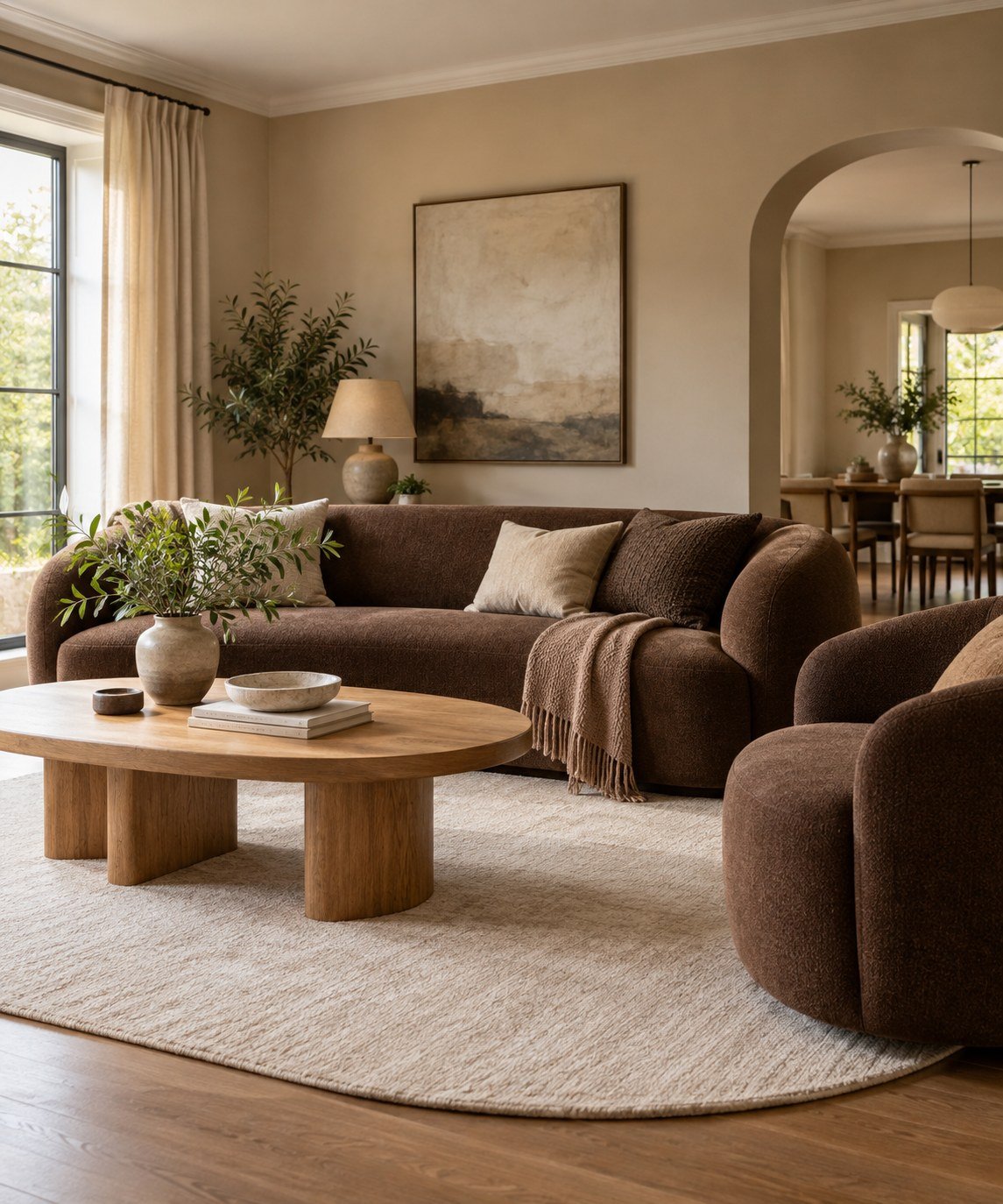
A room full of square edges can feel a little formal even when the colours are warm. A rounded chair or oval table changes the rhythm and makes a seating area look easier to settle into.
You don’t need to replace every straight piece. Look for the place where one softer shape would help, perhaps a table in front of a boxy sofa or a round mirror over a narrow console.
Check the arrangement from the doorway and from your usual seat. The shape should make the room nicer to move through as well as nicer to look at.
10. Let a small amount of pattern do the work
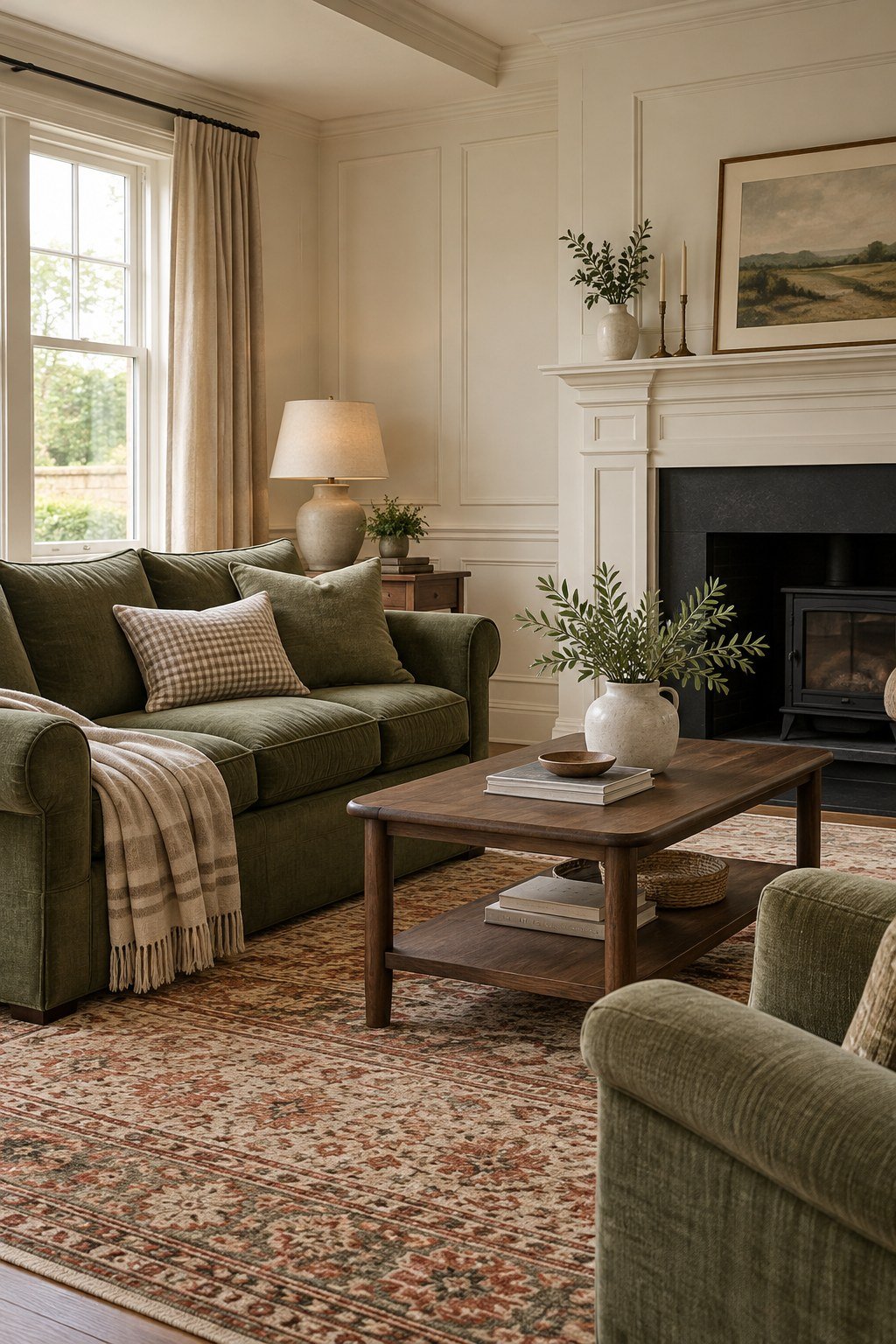
A stripe, a check and a softly patterned rug can bring warmth without making a room busy. They work especially well when they borrow colours from the same small palette.
Vary the scale so the patterns aren’t all competing at once. A narrow stripe can sit beside a larger rug motif, with plenty of plain upholstery between them.
Start with the patterned piece you love most and build gently around it. If you’re drawn to richer earthy seating, these brown living room ideas offer more combinations to explore.
11. Make room for the things that feel like you

A few favourite books and objects can give a room warmth that a perfectly coordinated display misses. The shelf becomes more interesting when there is something you actually want to pick up or talk about.
Group a few pieces and leave space around them. Mix heights and shapes, but avoid filling every gap simply because another ornament fits there.
Move things around as your interests change. A home feels more relaxed when its display has a little life in it, rather than being an arrangement nobody is allowed to touch.
12. Bring the evening seating closer together

Furniture pushed to every edge can leave a room feeling strangely empty in the middle. Bringing the seating a little closer can make a generous space feel more comfortable for conversation.
Keep a clear route through the room and put small tables within easy reach. Try the arrangement before buying anything new; even a modest shift can change how the space feels.
Then look at it after dark with the lamps you normally use. Our warm lighting ideas can help you create a few comfortable pools of light around the places you sit.
Start with the corner that feels least inviting
You don’t need to warm up the whole house in one weekend. Choose the room you use most, then notice whether it needs softer fabric, a warmer material or a more comfortable arrangement.
Try one change and live with it for a few days. Move a lamp, bring a throw out of the cupboard or shift the chair toward the conversation before deciding what else the room needs.
The best result is a home that feels good during an ordinary evening. A useful little table, a favourite texture and a comfortable place to sit are a lovely place to begin.