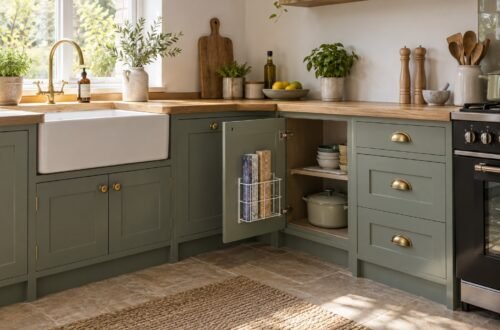

A walk-in pantry can hold a surprising amount of food. Finding the one tin you need is another matter. Deep corners, tall gaps and packets tucked behind jars can make a roomy pantry feel awkward long before you run out of shelves.
These walk in pantry organization ideas are about making the food visible and keeping it easy to reach. There is a place for pretty baskets and matching containers, but also for the cereal box you would rather leave exactly as it is.
Start with one troublesome shelf, measure what you have, and try the simplest change first. If the kitchen cupboards need the same treatment, these small kitchen organization ideas are a useful companion.
As an Amazon Associate I earn from qualifying purchases.
Images are AI-generated room inspiration. SHOP SIMILAR opens a search for visually similar options; check the details and suitability for your space before buying.
1. Give deep shelves a pull-out front row
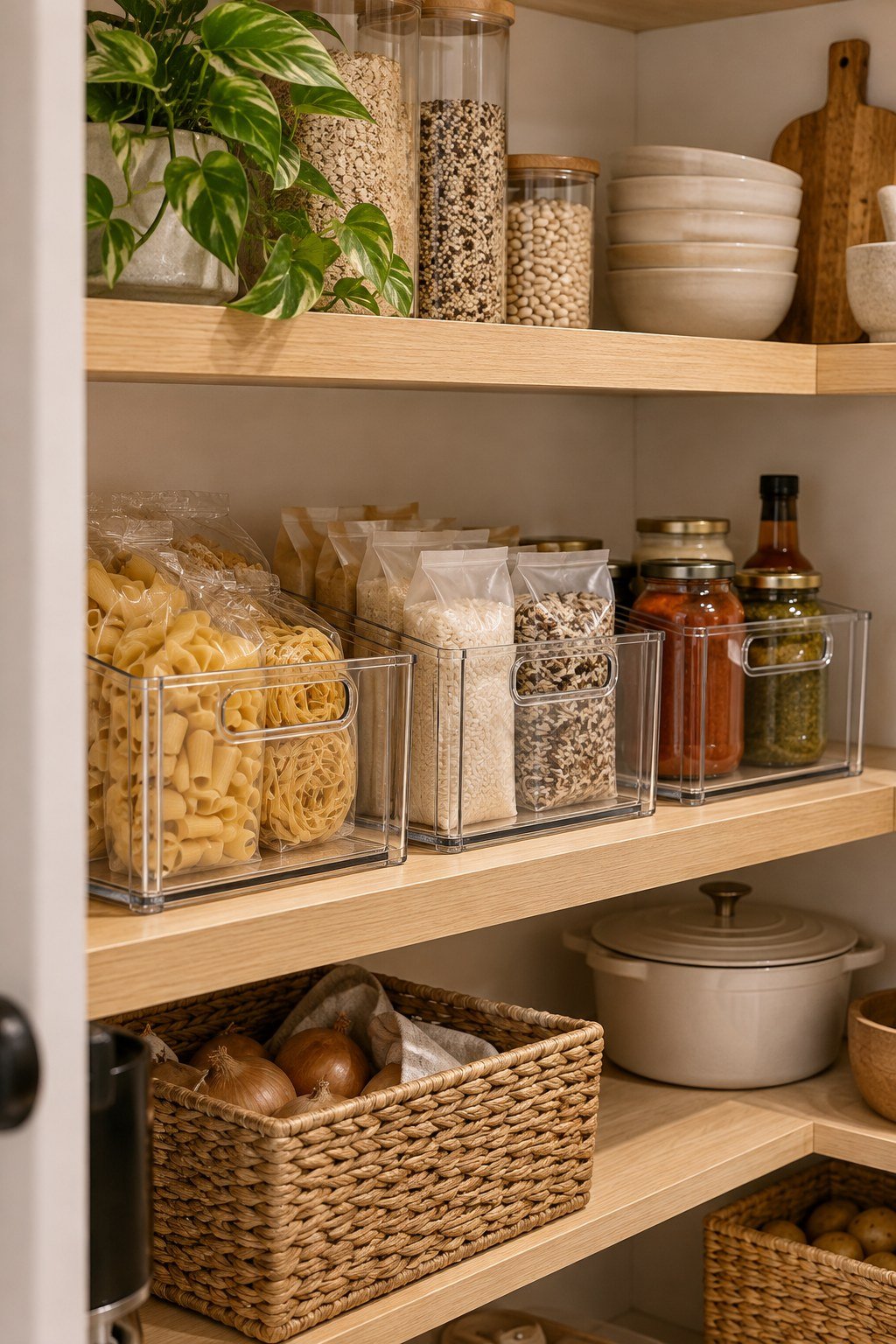
A row of clear handled bins makes a deep shelf much less mysterious. Pasta pouches can sit together, sauces can have their own section, and the packets at the back come forward with the whole bin. Clear sides also keep the shelf looking lighter than a wall of solid boxes.
Measure the shelf depth, the available width and the space above it before choosing bins. You need room to grip the handle and slide the container out without catching the shelf above. Try one filled bin first; a large container packed with jars can become surprisingly heavy.
Use a broad category for each bin rather than giving every ingredient a tiny separate home. Keep the heavier contents low and the most-used food near the front. If you cannot comfortably lift the bin when it is full, split the category between two smaller ones.
2. Let a turntable bring the corner to you
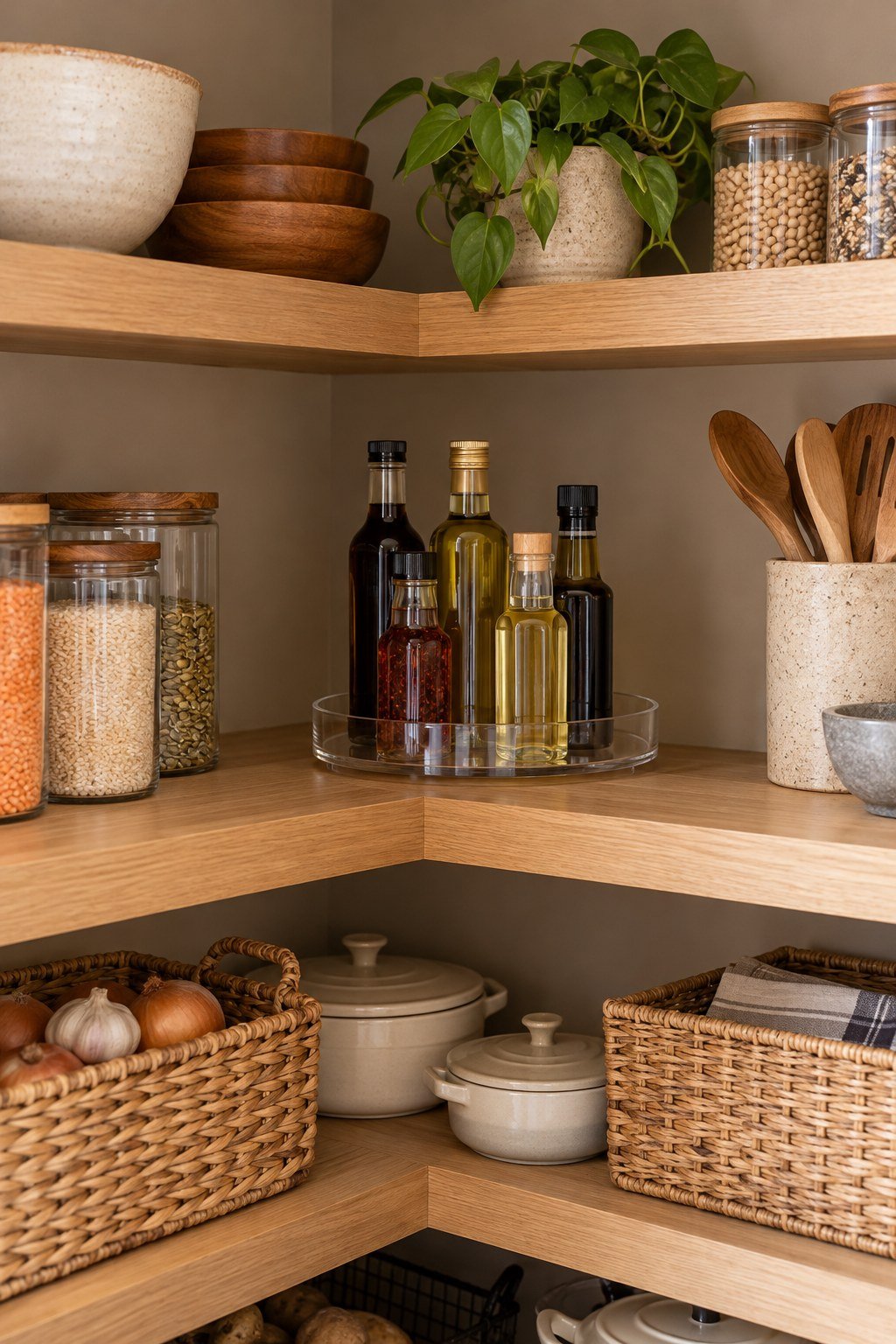
A corner shelf often looks generous until you try to reach its back edge. A low-rim turntable brings oils, sauces and small bottles around to the front instead. It works particularly well where an L-shaped shelf creates a pocket that never seems to get used properly.
Check the turntable diameter against both shelf edges and leave a little clearance for it to rotate. All of its base should sit securely on the shelf. Tall bottles also need enough headroom, especially if there is a shelf bracket overhead.
Keep the collection small enough that every bottle stays upright and easy to remove. Wipe sticky bases before returning them, and avoid piling packets in the middle where they will stop the tray turning. A corner is useful storage when one gentle turn actually gets you what you need.
3. Raise the back row of small jars

A stepped shelf riser lets the back row of small jars show its face. Instead of seeing only the first few containers, you can scan the whole group. Bamboo adds a warm touch against sage-green shelving without making the pantry feel over-styled.
Choose the step depth around the containers you normally use. Wide jars need more room than narrow spice bottles, and the tallest row must still clear the shelf above. Keep the riser fully supported and within its stated load limit.
Face any food labels towards the aisle and group similar ingredients in short rows. Keep product information and date details when you transfer food out of its packaging. This works best as a visible arrangement, rather than an excuse to stack another hidden layer behind the riser.
4. Use shallow baskets for awkward packets
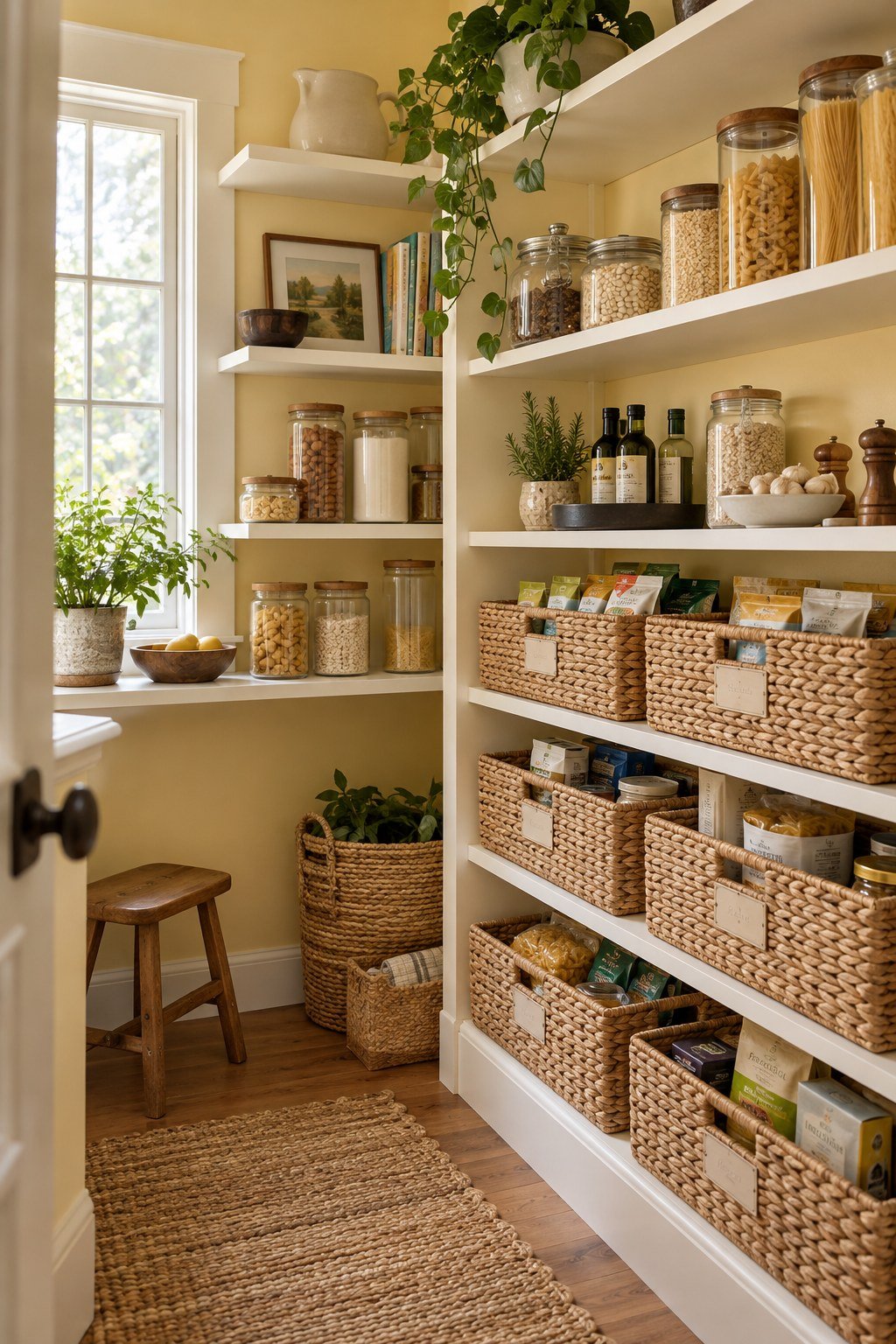
Woven baskets are lovely for the packets that otherwise slump across a shelf. A shallow rectangular shape can gather rice pouches, unopened crackers or baking extras while leaving the contents visible from above. Natural fibres bring warmth to simple white or butter-yellow shelving.
Keep the baskets low enough that you can see into them comfortably. On an overhead shelf, an opaque basket can hide the food just as effectively as a deep cupboard. A flat label on the front helps with broad categories such as breakfast or baking.
Choose a basket that slides easily and will not shed fibres into open food. Leave dry ingredients sealed in their packaging unless they are in a suitable food container. A little breathing room inside each basket makes putting the shopping away much easier.
5. Decant the staples you reach for most

A small run of clear canisters can tidy up the shelf you use every day. Rice, oats and the pasta shape you cook twice a week are sensible candidates. You do not need to empty every unusual ingredient into a matching jar for the pantry to look organised.
Choose containers intended for food storage and check their capacity against a normal bag of each staple. A container that leaves a quarter of the packet homeless adds work instead of saving it. Square shapes can sit neatly together, but comfortable lids matter more than perfect symmetry.
Keep the product name, relevant cooking instructions, allergen information and date details from the original packaging. Let washed containers dry fully before refilling, and finish the older contents before adding a new batch. Leave less-used ingredients in their packets if that is easier to maintain.
6. Give the door a narrow storage job
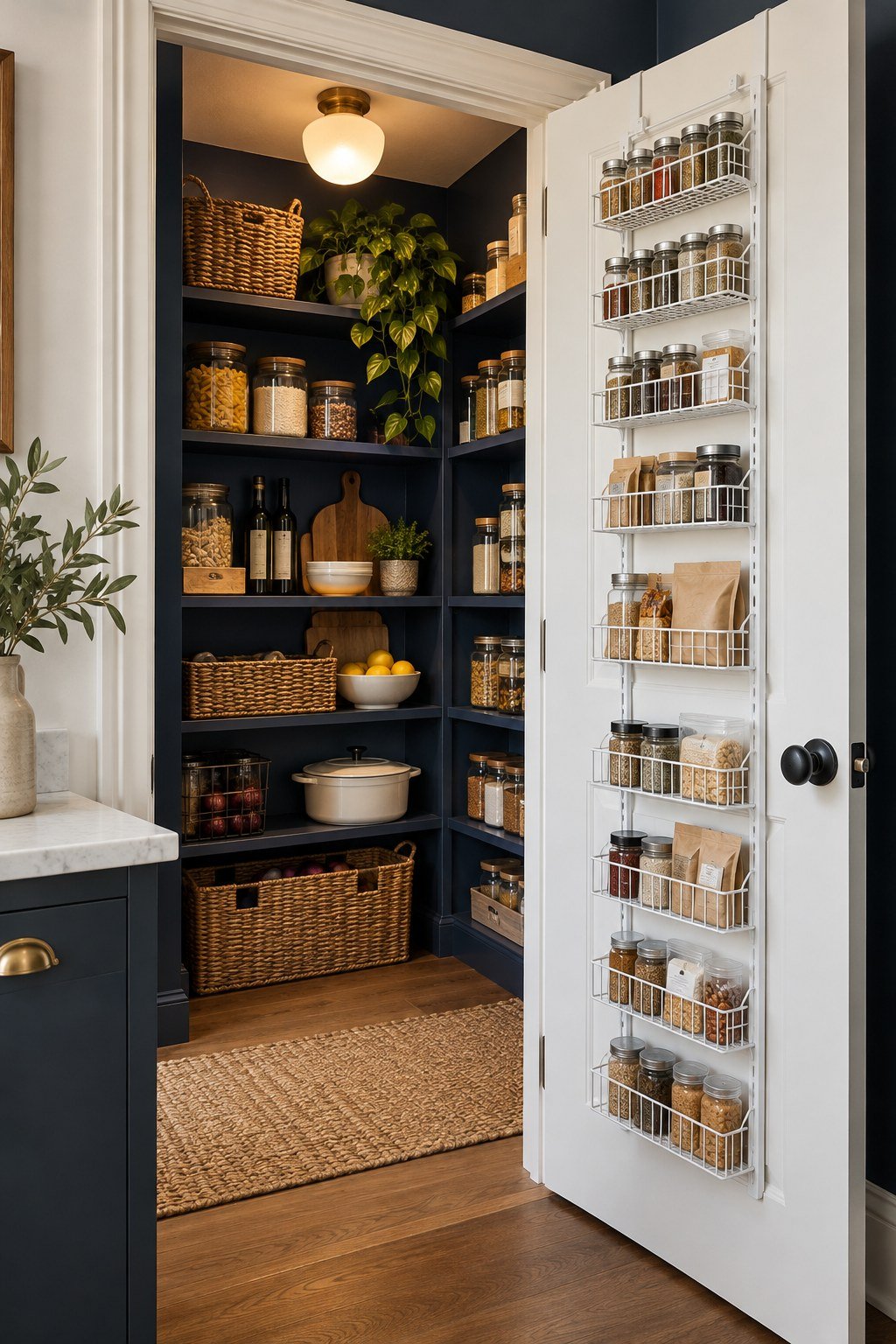
A shallow door rack can take the small items that disappear among bigger groceries. Spice jars, unopened seasoning packets and lightweight cooking extras suit this spot. Against a white door, a simple metal rack keeps the arrangement clean and easy to scan.
Check the door construction, fixing method and load guidance before fitting anything. The door must still close freely, with clearance around hinges, shelves and the frame. A rack that works on a solid door may need a different fixing approach on a hollow one.
Keep the weight modest and spread it evenly rather than loading every basket with glass. Put the most-used items where you can see them without bending. If your pantry entrance is already tight, leave the door clear and use a shelf bin instead.
7. Borrow one small gap beneath a shelf
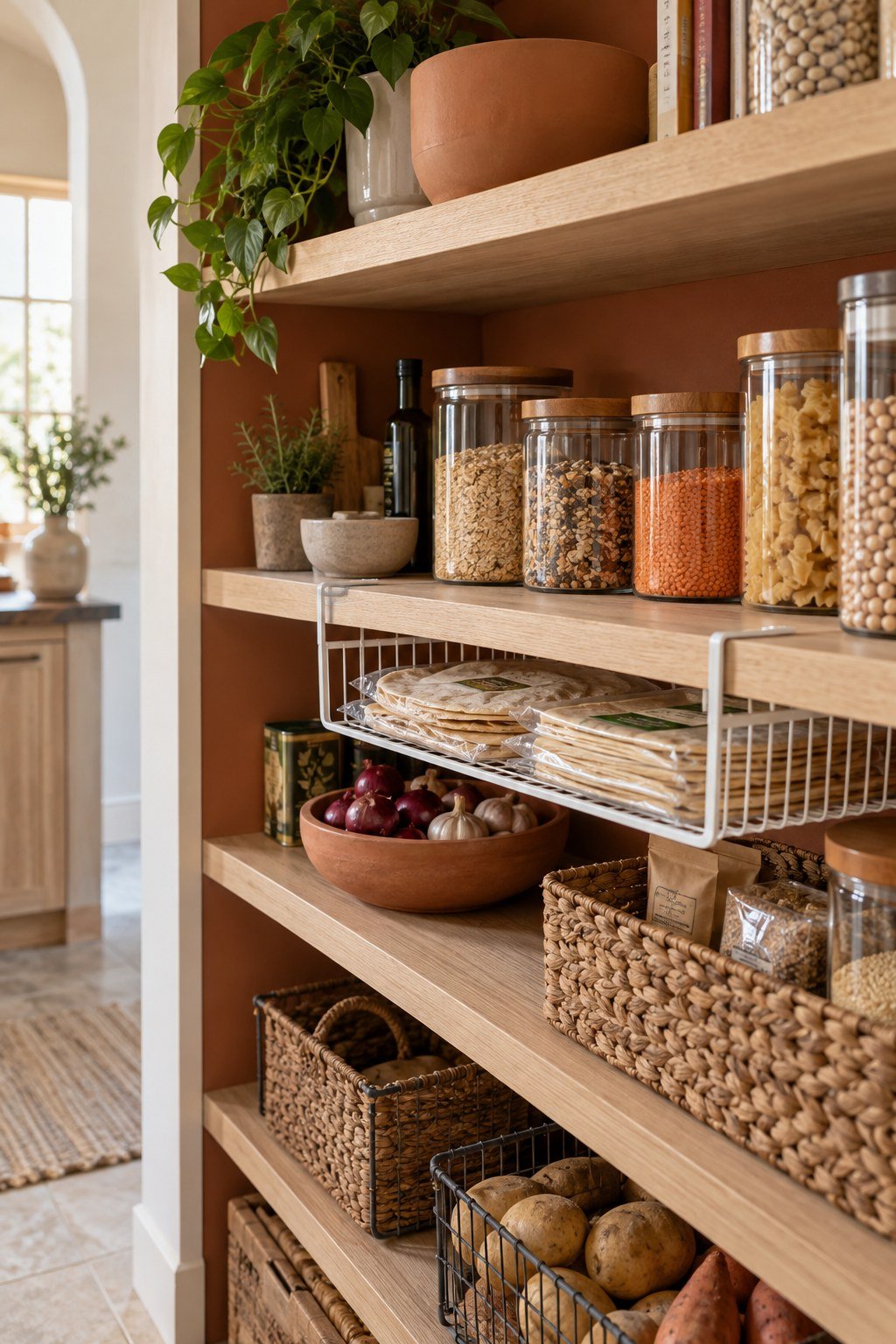
An under-shelf basket can make use of the little gap above shorter groceries. Flat packets, wraps and lightweight baking supplies suit it better than tall jars. One white wire basket against oak shelving is often enough to solve an awkward spot without filling every inch.
Measure the shelf thickness as well as the gap below it. The hooks need to fit securely, and the basket must leave enough space for the food underneath to come out normally. Follow the basket’s load limit and keep its contents light.
Try it on a shelf you use often before adding more. If the basket makes the row below difficult to reach, it is stealing useful space rather than creating it. Good walk in pantry storage ideas should make everyday movements easier, even when that means leaving a gap empty.
8. Stand baking trays upright in a low section
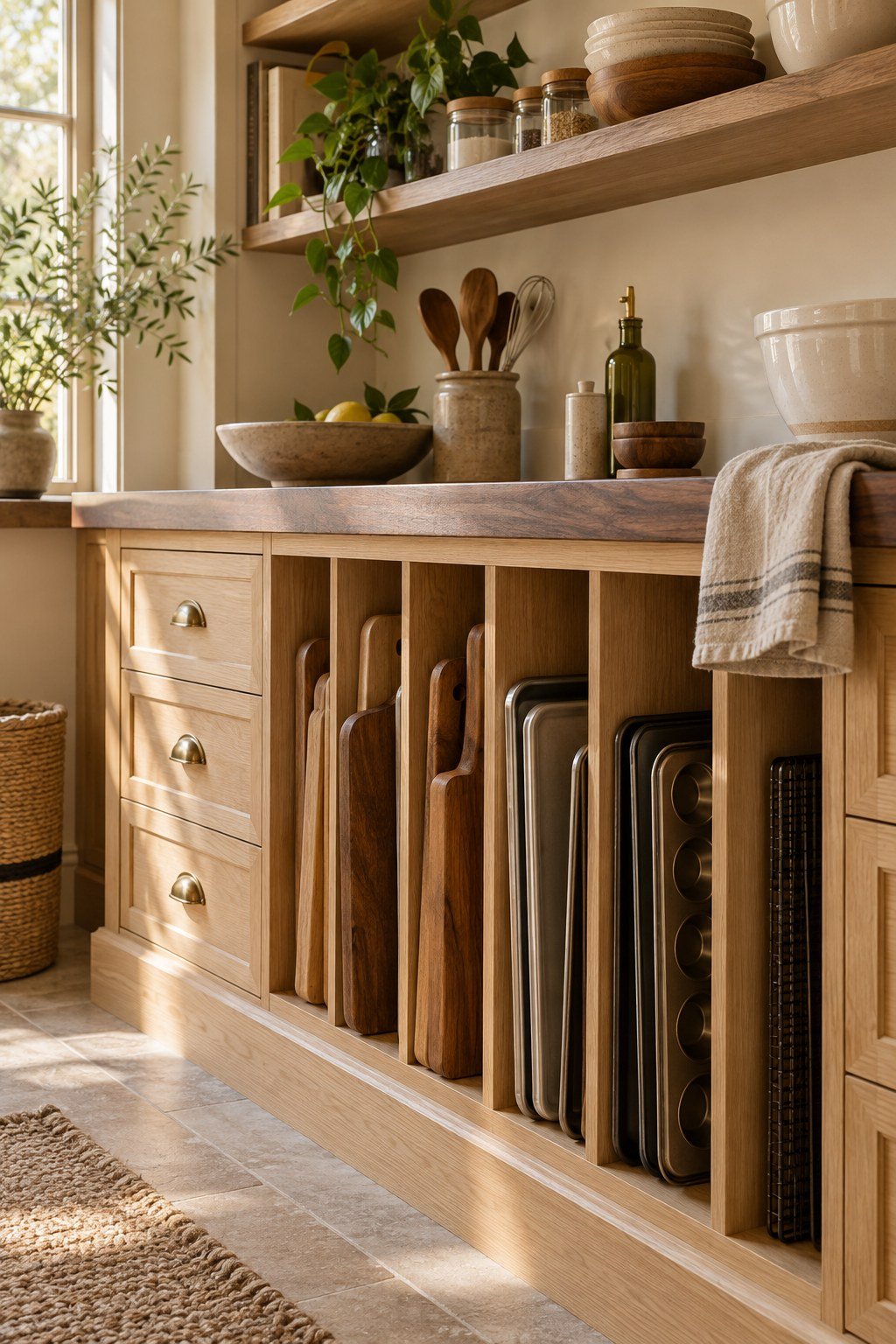
Trays and boards are much easier to choose when they stand in separate slots. You can pull out a baking sheet without lifting a chopping board, a muffin tin and three lids first. A low cabinet or sturdy shelf section is a useful place for this heavier group.
A freestanding vertical divider can offer the same basic arrangement as built-in slots. Check its height and spacing against your biggest tray, and make sure the shelf can support the combined weight. The pieces should sit securely without leaning into the walkway.
Keep the pieces you actually use here and move occasional serving platters elsewhere. Put the heaviest boards at a comfortable low height and keep sharp or delicate items suitably protected. This little change also frees kitchen cupboards for the things you need closer to the cooker.
9. Light the shelf fronts, not just the floor
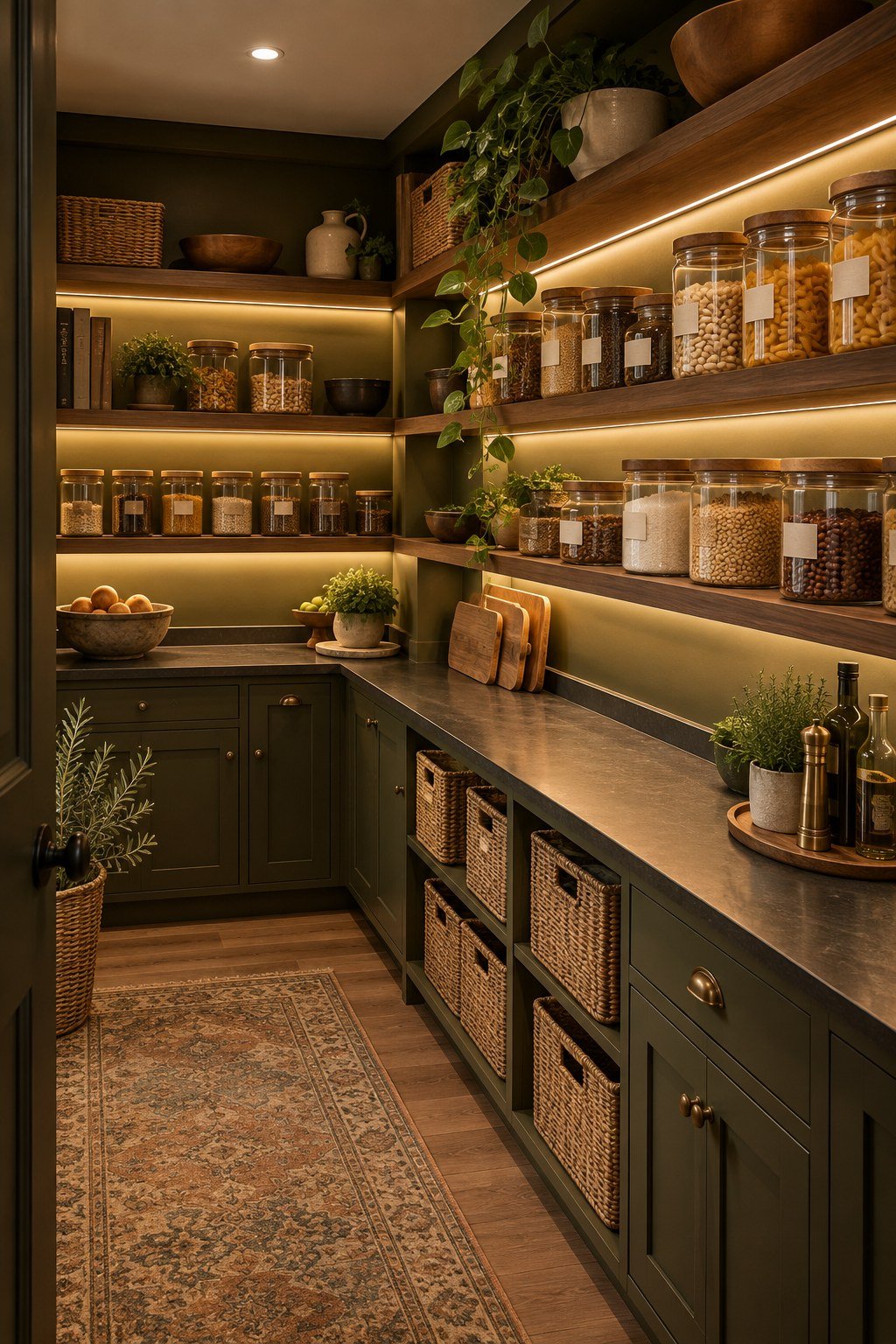
A ceiling light can leave the shelf faces in shadow, especially when you stand between it and the food. A little lighting beneath the shelf above makes jars and packets much easier to see. Warm light looks especially inviting against olive cabinetry and walnut shelving.
Use fittings intended for the location and follow their installation instructions. Rechargeable lights can be handy where you want a simple fitting, provided you can remove them easily for charging. Choose a position that illuminates the labels without shining straight into your eyes.
Keep fittings, cables and charging arrangements clear of spills and stored goods. For a permanent wired setup, use a suitable electrician. If the whole kitchen needs a gentler glow, these kitchen lighting ideas cover a few more useful spots to consider.
10. Build zones around the meals you actually make

Put the breakfast things together, the baking supplies together and the usual dinner ingredients together. That sounds obvious, but it is often more useful than arranging every item by height or colour. A breakfast shelf with oats, cereal and bowls saves several trips around the pantry.
Choose zones from your own routine rather than copying someone else’s exact list. If you rarely bake, you do not need a whole beautiful baking wall. If packed lunches happen every morning, that category deserves an easy-to-reach position.
Let the arrangement settle for a week before labelling everything permanently. Notice which things you keep moving and put them where your hand expects to find them. These snack organization ideas are helpful when several people share the same shelves.
11. Separate backstock from the food already in use

Extra groceries are easier to manage when they have a clearly separate home. Keep the open cereal and current pasta on the everyday shelf, with unopened replacements in one backstock area. You can then spot what is actually running low instead of buying another duplicate.
Choose a sensible low shelf for heavy bottles and bulk food, following the shelf’s load guidance. Keep the floor and walking route clear. Lighter, rarely used supplies can go higher if you can retrieve them safely without stretching over other things.
Before shopping, check the backstock shelf as well as the containers at the front. Bring a replacement forward when the current packet finishes and add only what you need to the list. The pantry starts to feel calmer when extra supplies stop spreading into every category.
12. Leave a small space for the next grocery shop

A pantry filled right to its edges has nowhere to absorb the next shop. Leave a small section of shelf available for the groceries that arrive before the old batch is finished. That little buffer can stop bags and boxes landing permanently on the floor.
Keep a few foods you want to use soon together near the front. This can be a spare tray you already own rather than a new purchase. Check the packaging instructions and dates as usual, and make those ingredients part of the next meal plan.
Finish with a quick reset before you shop: return stray packets, bring older supplies forward and glance at the empty spaces. If the whole job feels bigger than one shelf, these decluttering tips can help you find a comfortable starting point.
A pantry that makes dinner a little easier
You do not need a pantry full of identical jars to make the space work well. Clear sightlines, comfortable reaching heights and categories that fit your cooking habits do most of the useful work.
Start with the shelf that annoys you every day. Add one bin, move the back row onto a riser or give that awkward corner a smaller job, then see how it feels during a normal week.
The nicest result is being able to walk in, find what you need and put the shopping away without a reshuffle. Let the pretty details follow that, and the pantry will be much easier to enjoy.