A favourite night in usually starts with a few ordinary comforts: somewhere soft to sit, a mug within reach and a room that feels lovely once the daylight goes. You do not need to redecorate the whole house to get there.
These cozy home decor ideas bring that feeling into the places you use every day. Some are small swaps, such as a textured cushion or a better home for blankets. Others are about moving what you already own so the room works more comfortably.
Choose the detail you would enjoy tonight and start there. A home can feel warm and personal with plenty of colour, a little everyday untidiness and furniture that has space around it.
As an Amazon Associate I earn from qualifying purchases.
Images are AI-generated room inspiration. SHOP SIMILAR opens a search for visually similar options; check the details and suitability for your space before buying.
1. Keep one generous throw within reach
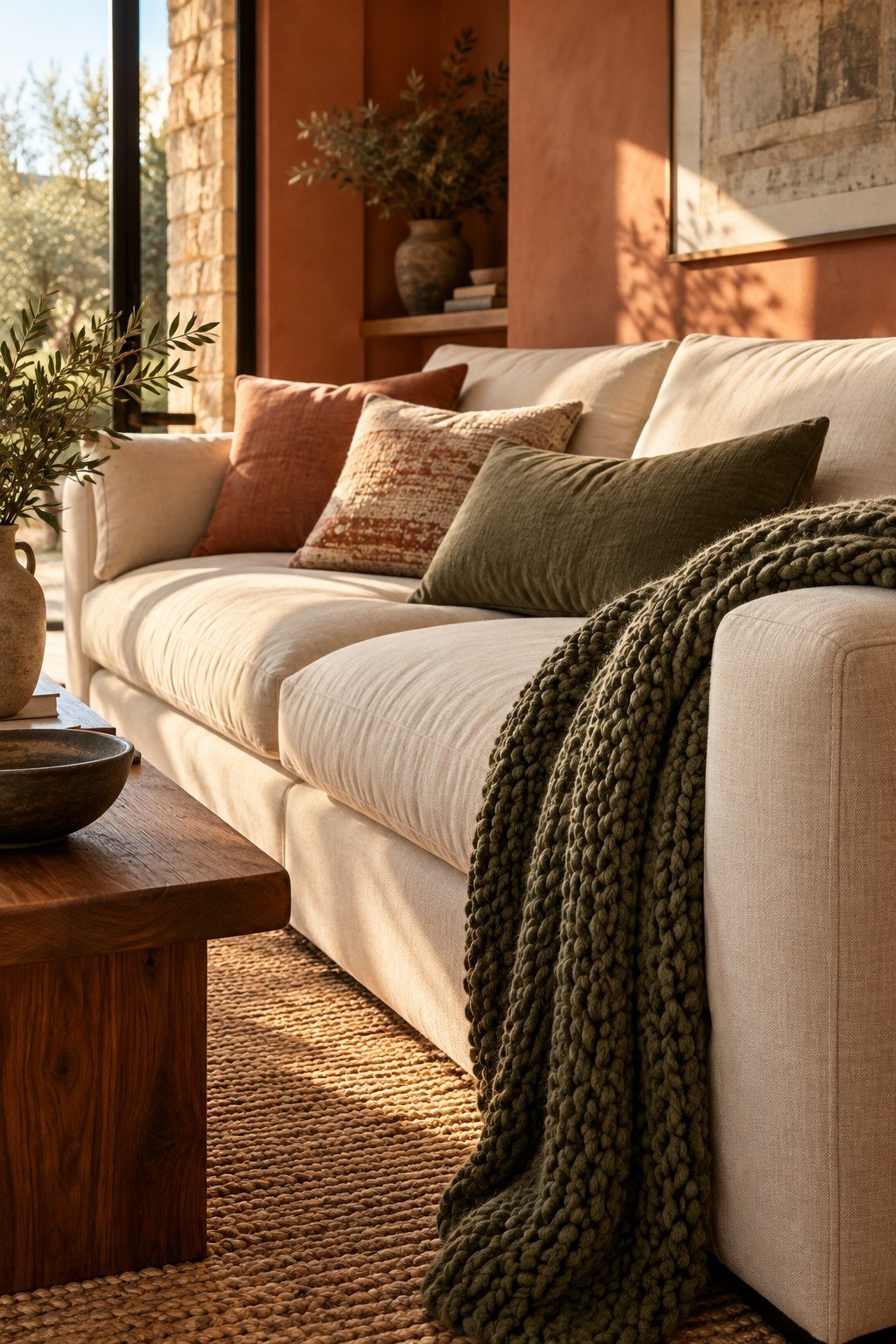
A generous knitted throw makes a sofa feel ready to use. Olive looks lovely against cream upholstery and warm terracotta walls, especially when the knit has enough texture to catch the light. Let it fall over one arm rather than folding every edge into place.
Choose a fabric that feels pleasant against your skin and is practical for your household. A blanket that can handle regular washing will get far more use than something precious you are nervous to touch. Check the size against the way you like to sit.
Keep it close to the seat you use most, with a simple basket nearby for putting it away. There is no need to drape a blanket over every chair. One comfortable layer can make the whole seating area feel more inviting.
2. Mix cushion textures within the same colour family
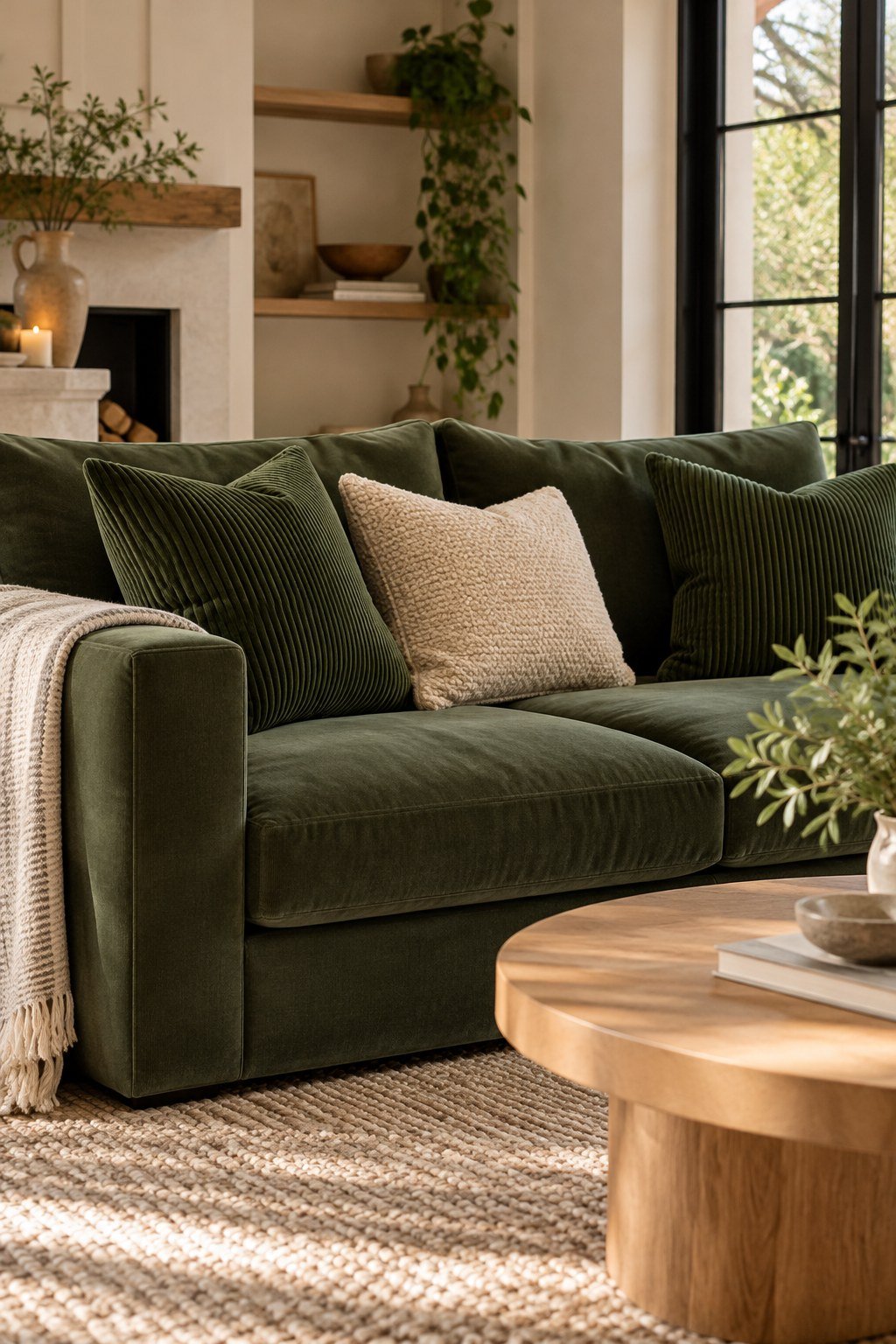
A green sofa can feel beautifully layered without lots of contrasting cushion colours. Forest-green corduroy gives it a little depth, while one cream cushion keeps the arrangement soft. The different fabric surfaces create interest even when the palette stays restrained.
Try changing the covers before buying more cushions. Use inserts that suit the covers properly, and leave enough clear seating space that the sofa is still comfortable. A few well-chosen cushions are easier to live with than a row you move to the floor each evening.
Repeat one texture elsewhere in a small way, perhaps through a ribbed ceramic pot or a woven throw. You do not need everything to match. The useful connection is a similar warmth and softness running through the room.
3. Let a soft rug connect the seating
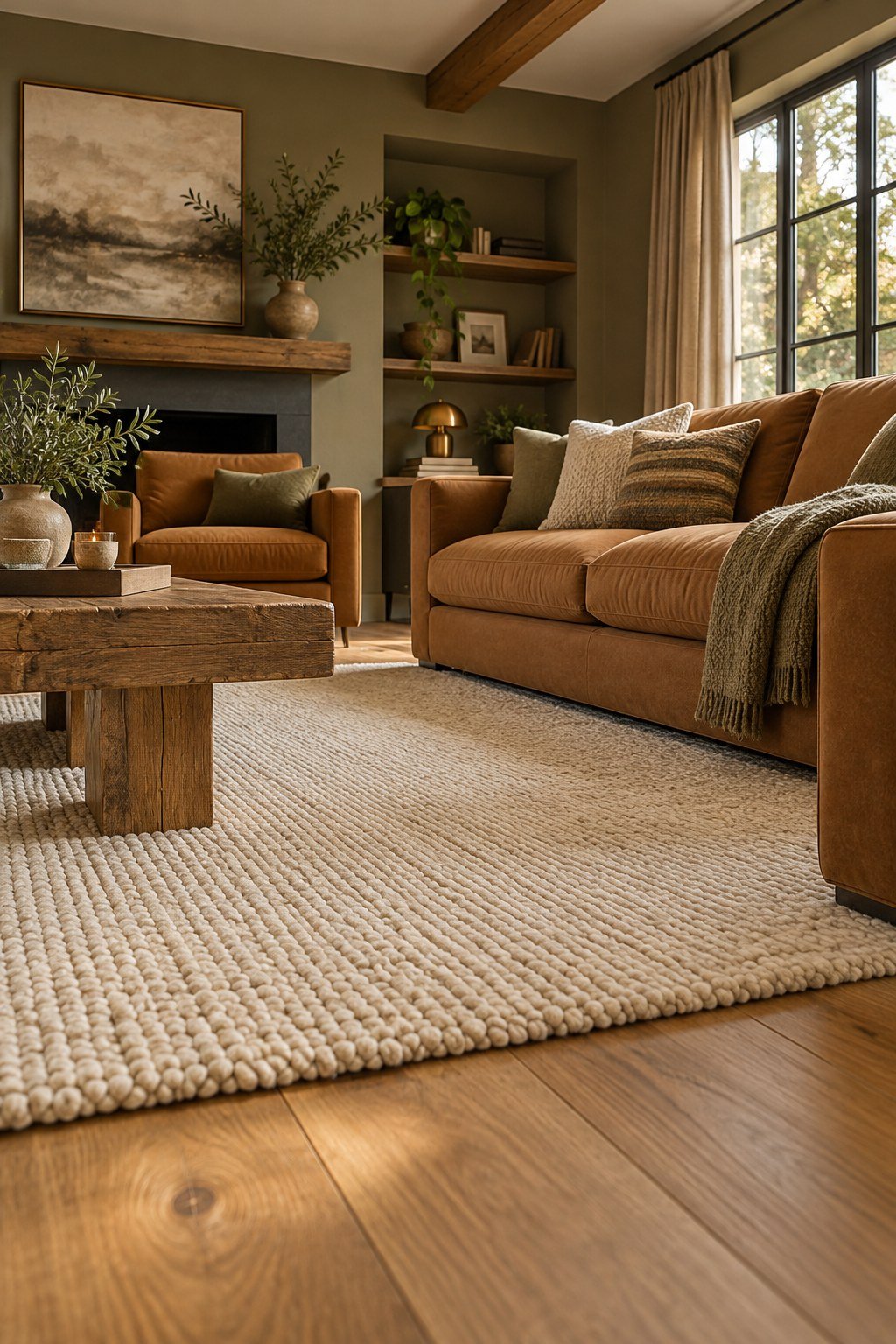
A soft rug gives a seating area a clear centre and makes the floor feel kinder underfoot. Ivory works especially well with caramel seating and muted olive walls. Letting the front feet of the sofa and chair sit on it helps the pieces feel connected.
Measure the whole seating arrangement rather than choosing a rug from the coffee-table size alone. Check door clearance and the route through the room too. A suitable rug pad can help keep the rug in place where the floor and rug manufacturer recommend one.
Choose a texture you can realistically maintain. A very deep pile may be lovely beside a reading chair but less convenient in a busy family walkway. For more room combinations, these warm neutral living room ideas show how much texture can do.
4. Give the window a softer frame
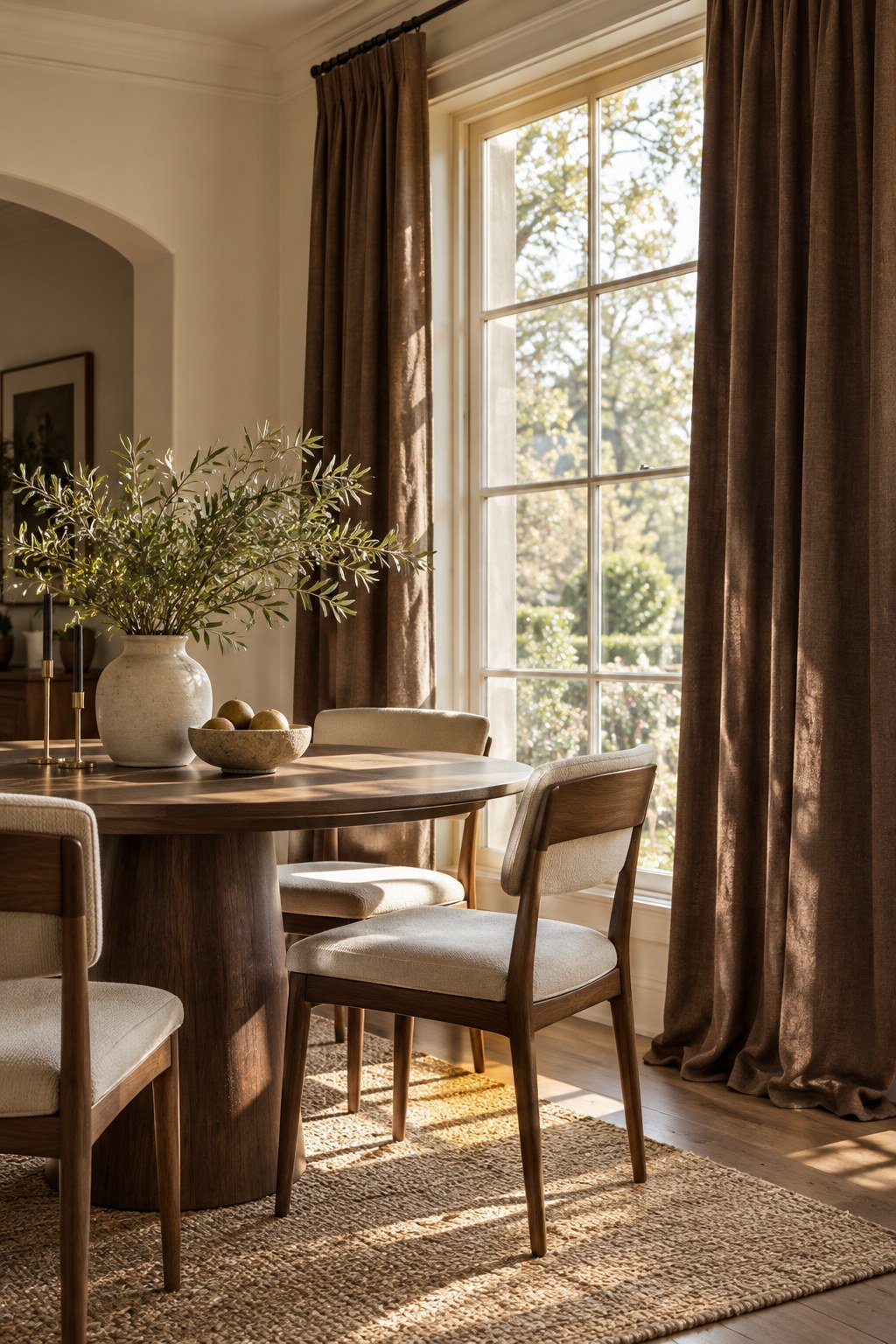
Full-length chocolate curtains can make a simple dining corner feel much more settled. Their vertical folds soften the window and give pale walls a little depth. Beside a walnut table, the brown feels connected to the furniture rather than added as an afterthought.
Measure from the actual curtain rail and choose enough fullness for relaxed folds. Check how the panels sit when they are fully open, so they do not take away more daylight than you want. Keep the fabric clear of radiators and other heat sources.
If the room already has a strong colour, try a curtain shade close to it. Brown with warm wood, olive with green upholstery or soft stone against neutral walls can all look lovely. Texture and proportion often matter more than a bold pattern.
5. Give blankets a basket beside the sofa
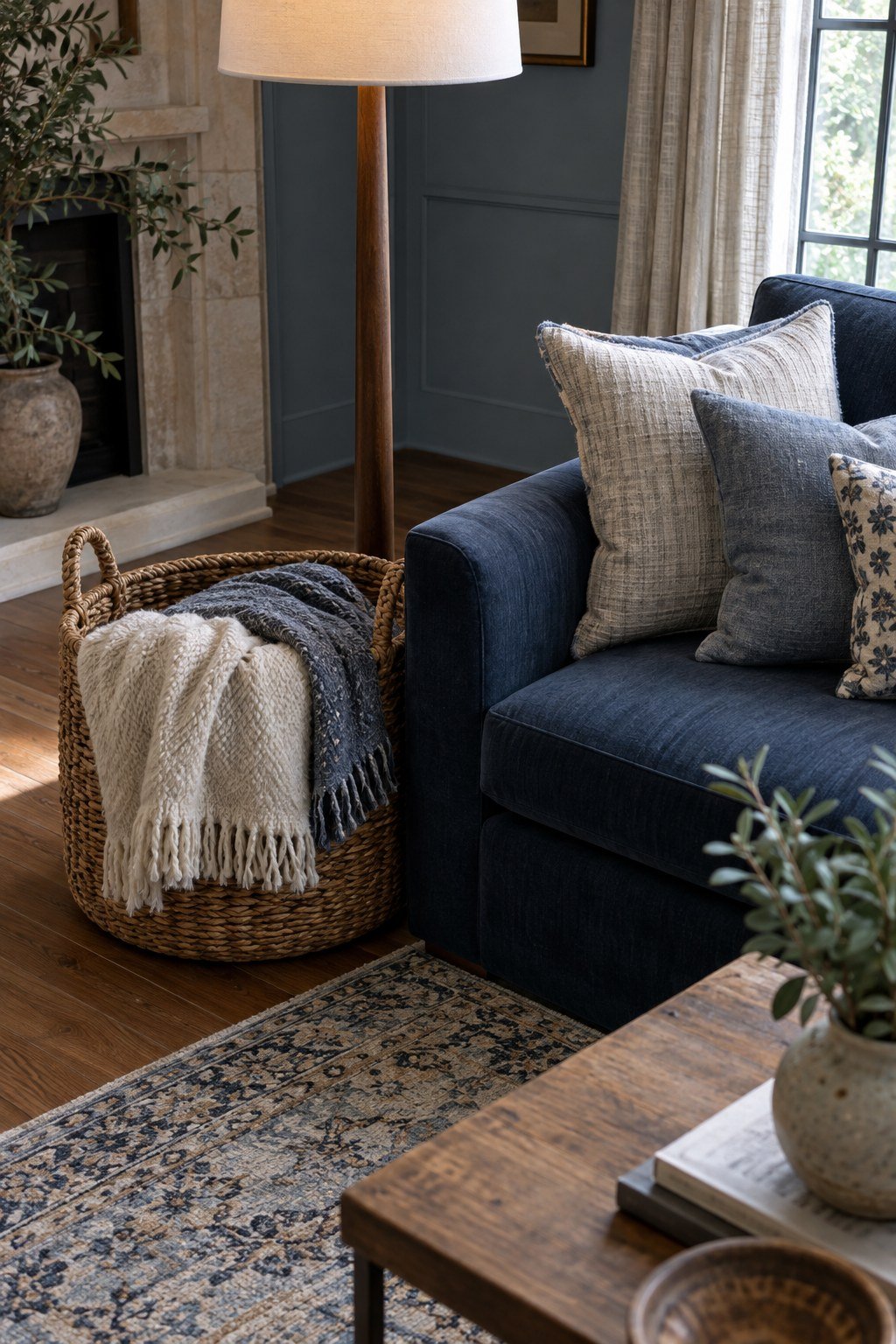
A woven basket makes everyday comfort easy to tidy away. Tuck two throws beside the sofa and the room feels ready for a slow evening without looking as though laundry has taken over. The natural fibre also adds warmth to navy or blue-grey schemes.
Choose a basket that is easy to lift when filled and low enough to reach from the seat. Smooth edges are useful around knitted fabrics. Keep it beside a table or sofa arm where it will not narrow the main walking route.
Give the basket one clear job so it stays useful. If remotes, post and chargers start collecting underneath the blankets, a small reset helps. These decluttering tips are a good place to start when cosy corners feel more crowded than comfortable.
6. Make room to put your feet up
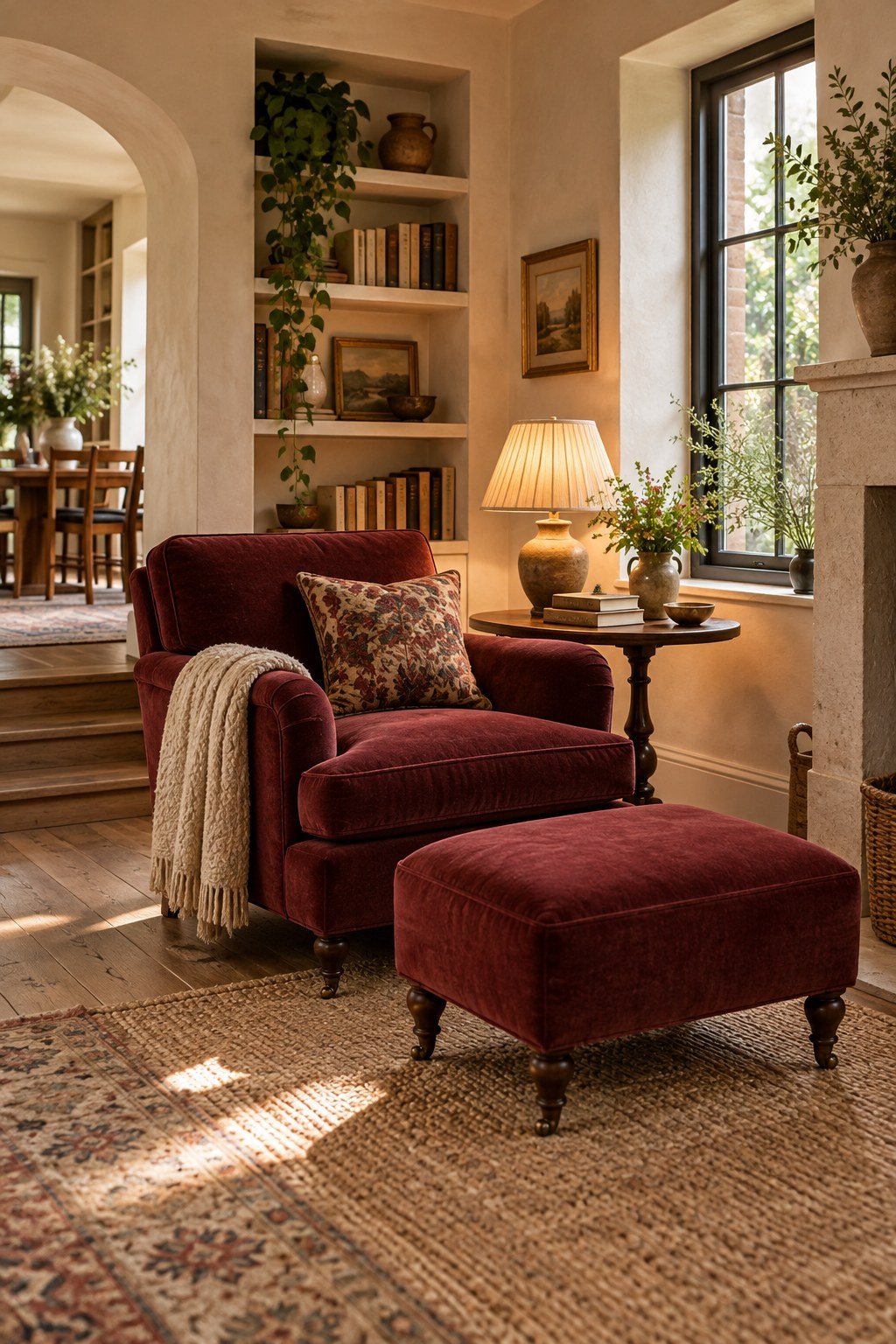
A footstool can turn a chair you admire into the chair you actually choose. Burgundy upholstery looks especially inviting against pale plaster walls and warm timber. Matching the chair and stool keeps the small corner feeling considered.
Try the height with the chair before committing to a shape. Your legs should feel supported comfortably, and you still need room to stand up and walk past. A compact stool can be more useful than a large ottoman in a narrow room.
Add a small surface for a mug and enough light to read by. That is usually all the corner needs. If you are working with an awkward little space, these reading nook ideas offer more ways to make it usable.
7. Keep the coffee table ready for a quiet evening
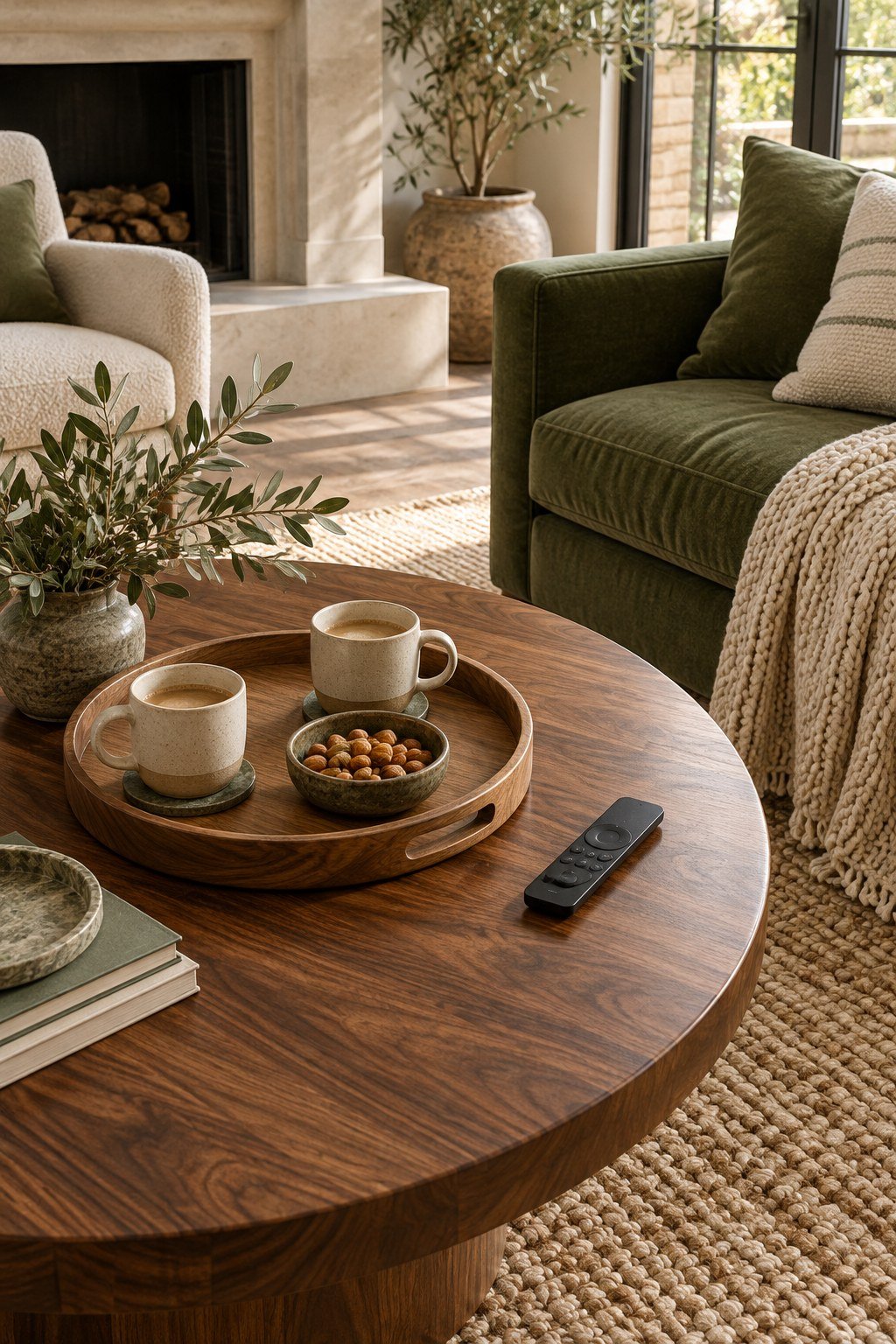
A shallow wooden tray gives a coffee table an easy little gathering place. Two mugs and a small bowl can look welcoming without filling the surface. The warm grain brings detail even when the rest of the table stays clear.
Choose a tray you can lift comfortably and set down securely. It should leave space around it for a book or a remote, and its handles should not catch on soft sleeves. A tray that works for serving is more useful than one that only looks decorative.
Keep the arrangement flexible. On a normal evening it might hold tea; when friends visit, it can move to the kitchen or carry snacks. The room feels more relaxed when the styling is allowed to change with what you are doing.
8. Put a warm lamp where you arrive home
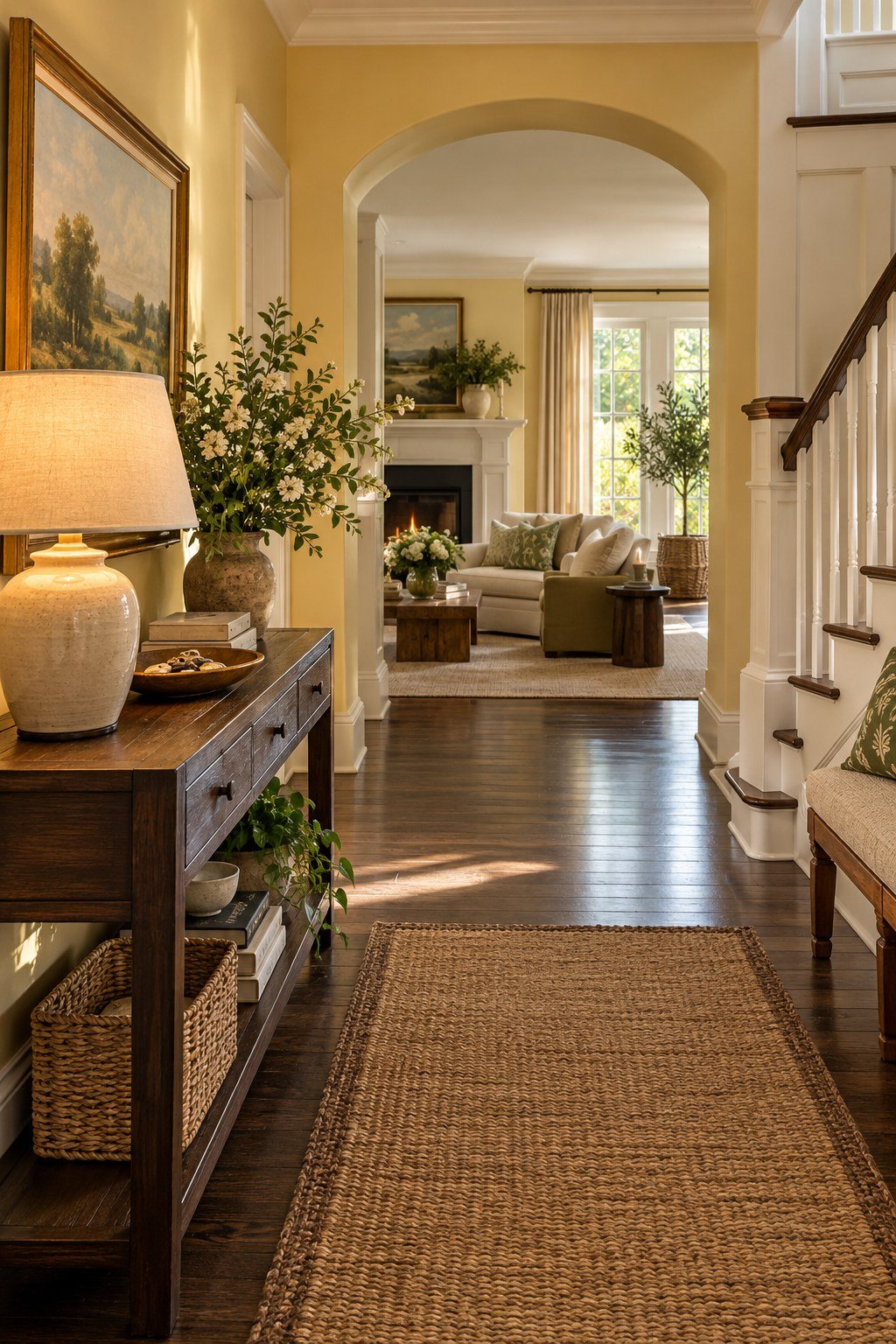
A small table lamp makes a hallway feel welcoming after dark. Beige ceramic and a linen shade sit beautifully on a dark oak console, especially against a soft yellow or warm neutral wall. A key dish beside it keeps the everyday purpose clear.
Choose a scale that leaves some useful surface around the lamp. Tuck the cable out of the walking route and keep the switch easy to reach. A narrow hallway needs a compact lamp and table rather than a dramatic piece you brush against.
Let the light set the tone for the rest of the home. A gentle glow at the entrance feels lovely when the rooms beyond are quieter too. These warm lighting ideas explore that feeling in a few different spaces.
9. Fold one extra layer across the bed
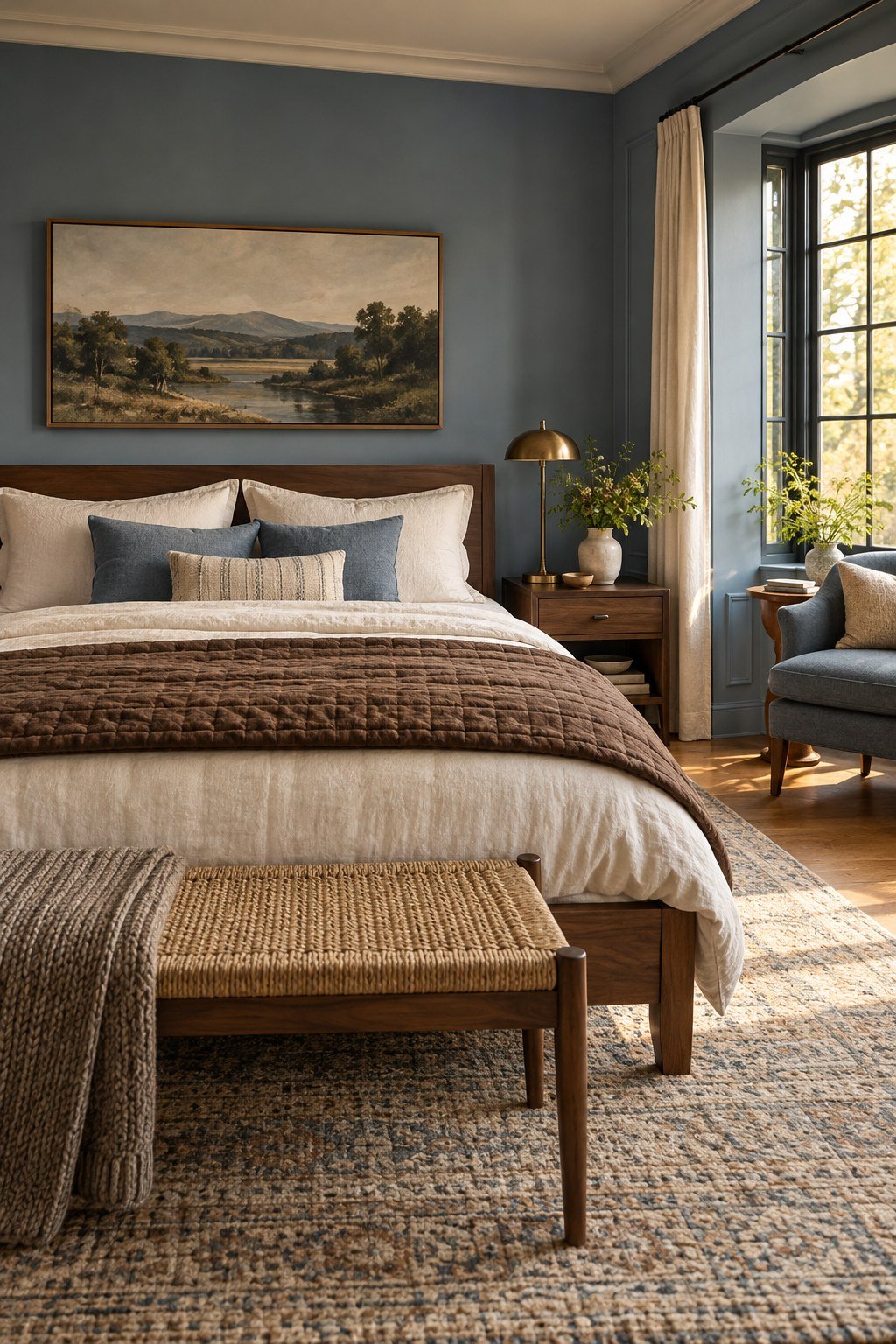
A folded quilt across the lower part of the bed adds warmth without hiding all the bedding underneath. Cocoa brown looks lovely with cream linen and muted blue walls. The contrast stays soft because the colours share a gentle, earthy feeling.
Choose the layer for the way you actually sleep. It might be a light coverlet in warmer weather or a thicker quilt for colder nights. A fabric you can wash easily makes the bed feel welcoming rather than precious.
Keep the rest of the arrangement straightforward: comfortable pillows and bedding with room to relax into. The quilt can be pulled up when you want it and folded back in the morning. Small rituals are part of what makes the room feel cosy.
10. Let books and personal things be part of the decor
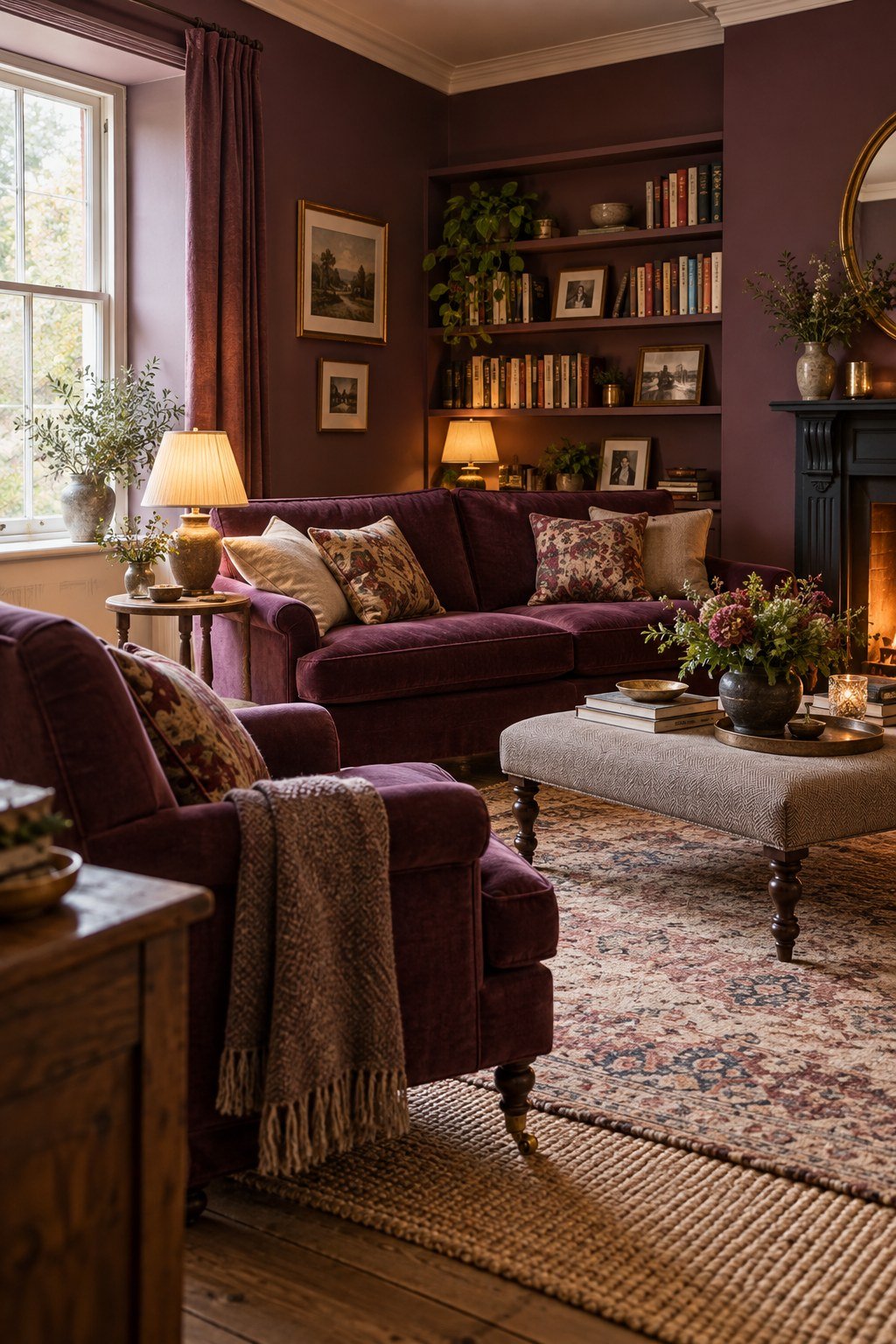
Books bring colour and personality to a room without needing a perfectly coordinated cover collection. A plum sitting room can look lovely with shelves that hold novels, a few framed photographs and a small amount of breathing space. The objects feel like part of a life.
Group the things you enjoy seeing rather than filling every gap. Leave enough shelf height to take a book out easily and keep heavier items on suitable supported shelves. A useful shelf does not have to look like a shop display.
You can move a favourite piece between rooms when you fancy a change. An old photograph or a book you are reading often means more than another decorative purchase. That personal layer is difficult to buy all at once, and there is no reason to try.
11. Angle the seats towards each other
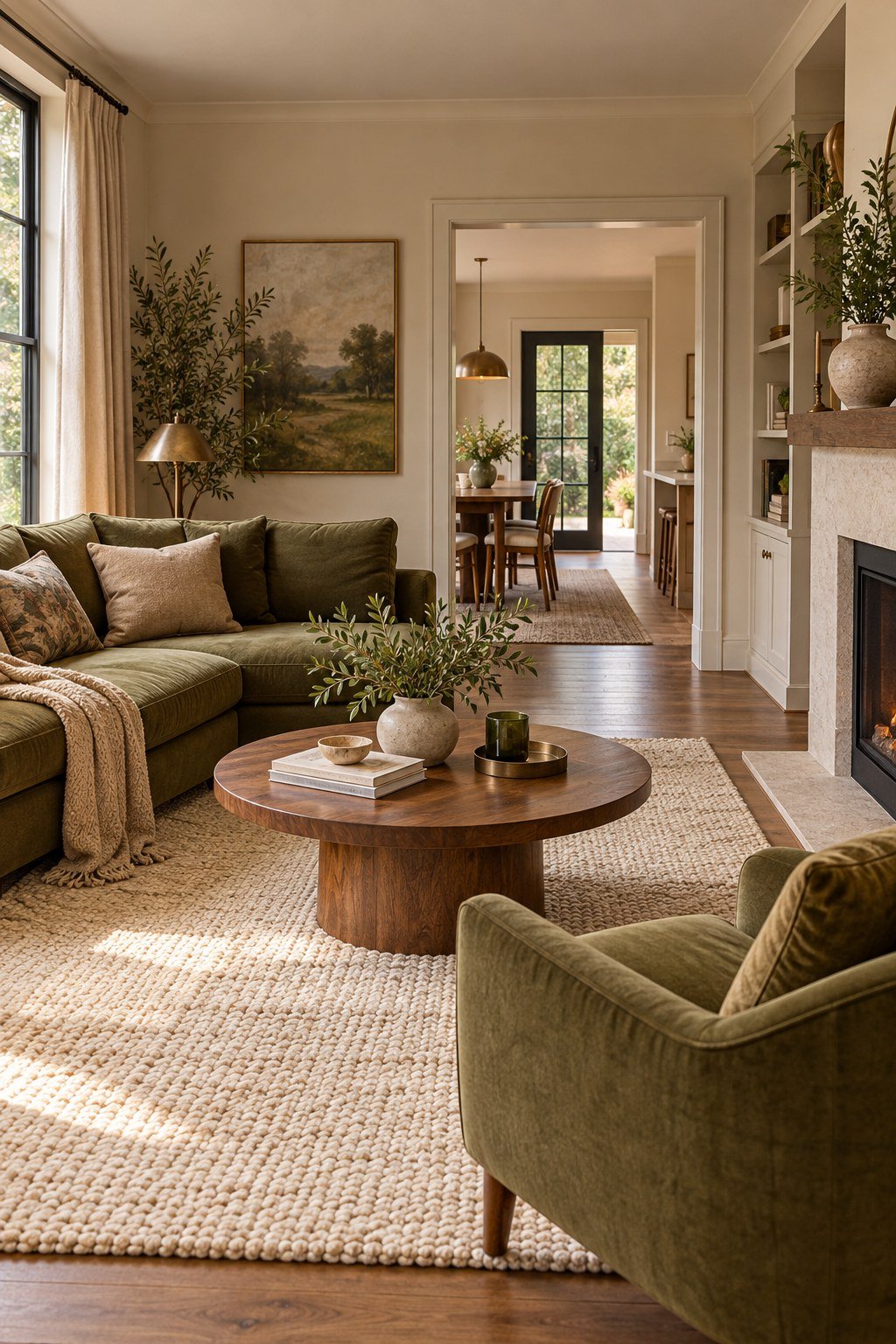
A room feels more welcoming when the seating invites people to settle together. Turning an armchair slightly towards the sofa can make a surprising difference. Coordinated olive upholstery and a round table keep the arrangement calm in a small apartment.
Check the route behind the chair before moving anything permanently. You should be able to get to doors, windows and storage without squeezing between furniture. A good conversation corner still needs to work when someone is carrying a tray.
Try the arrangement for a few evenings with the furniture you already own. Notice whether you can reach the table and hear each other comfortably. These small apartment living room ideas are useful when every movement needs a little thought.
12. Choose depth of colour as well as soft texture
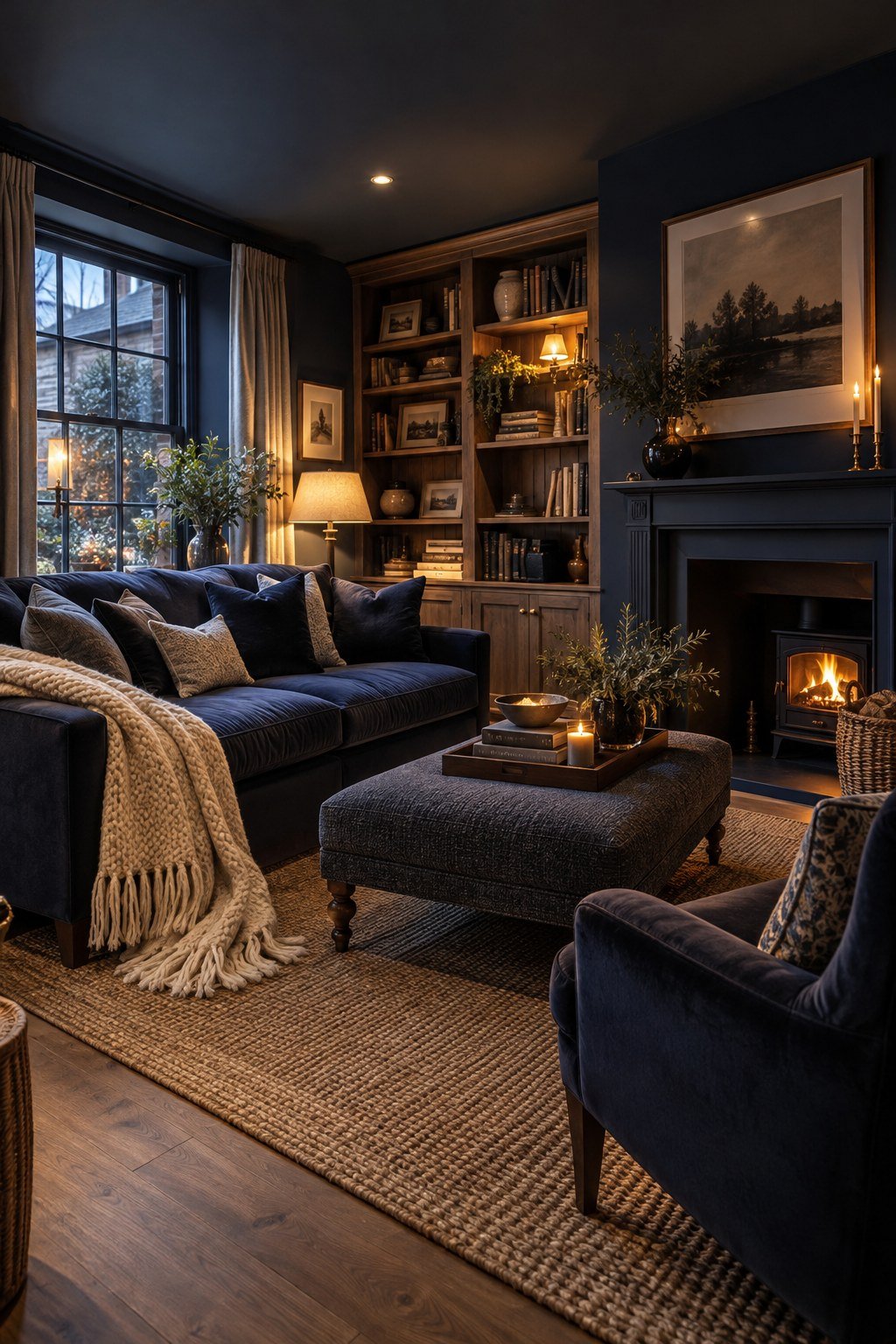
Cosy does not have to mean pale. A navy snug with warm timber and a cream throw can feel wonderfully enveloping, especially in the evening. Keeping the sofa and chair in the same colour family helps the richer backdrop feel settled.
Try the colour in the room’s actual light before making a large change. Deep blue can look very different beside a north-facing window or under a warm lamp. Bring the wood and fabric samples into the same decision.
You can get some of the effect through smaller areas too. A dark bookcase, a painted alcove or a substantial curtain can introduce depth while the main walls stay lighter. Choose the amount of colour you enjoy living with.
13. Make an everyday meal feel like a small occasion
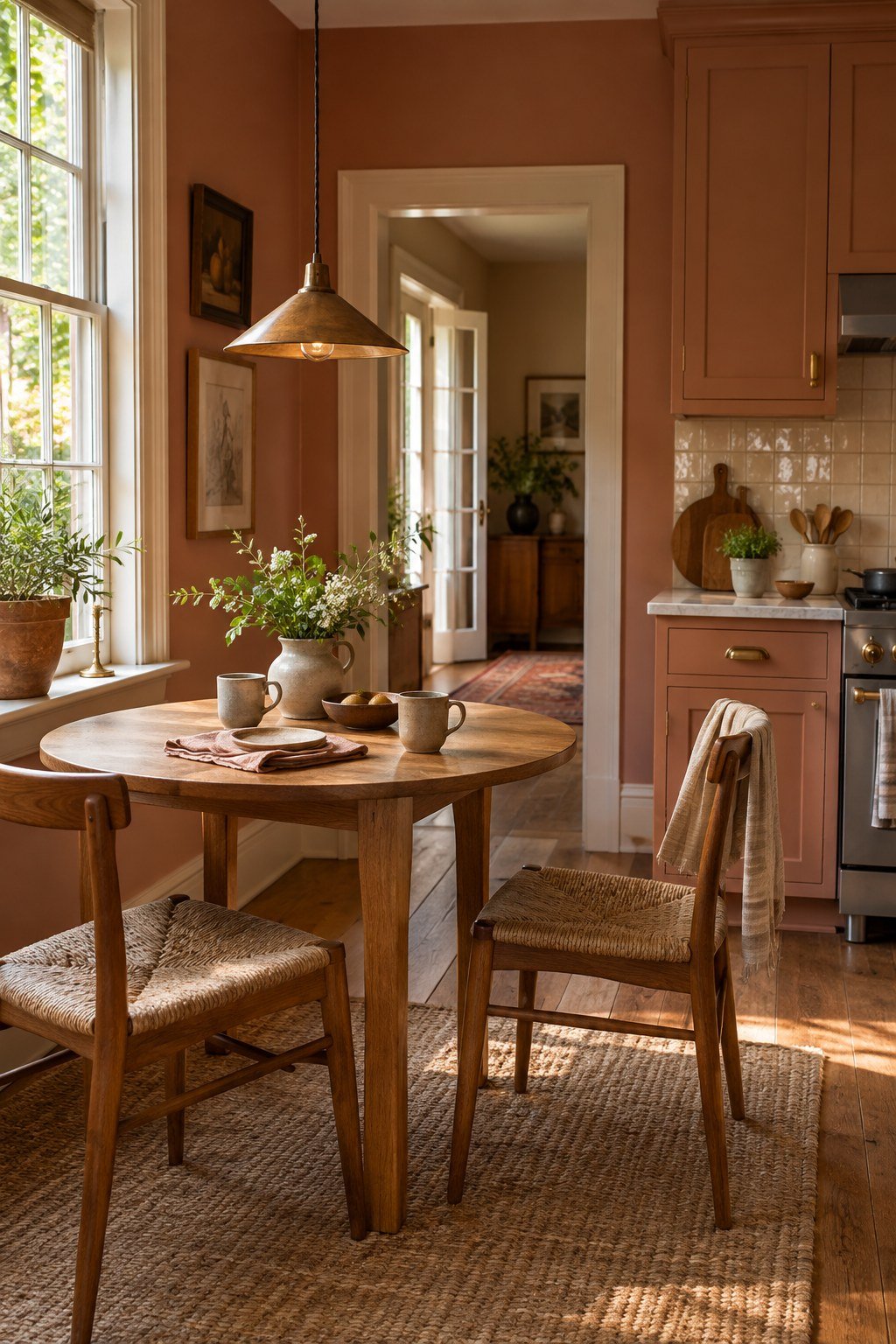
A small dining nook can make staying in feel special without a formal table setting. A clear oak table, comfortable chairs and a pair of linen napkins are enough. Soft terracotta walls give the corner warmth before you add anything else.
Keep the table useful between meals. A single bowl or a small vase can move easily, while a large permanent display may leave nowhere to put a plate. Choose everyday pieces you are happy to use and wash.
The nicest part is giving the meal a little space in the evening. Put the work things away, sit somewhere comfortable and let the table do its simple job. Cosy home decor works best when it supports the way you want to spend your time.
14. Make the doorway easy to leave tidy
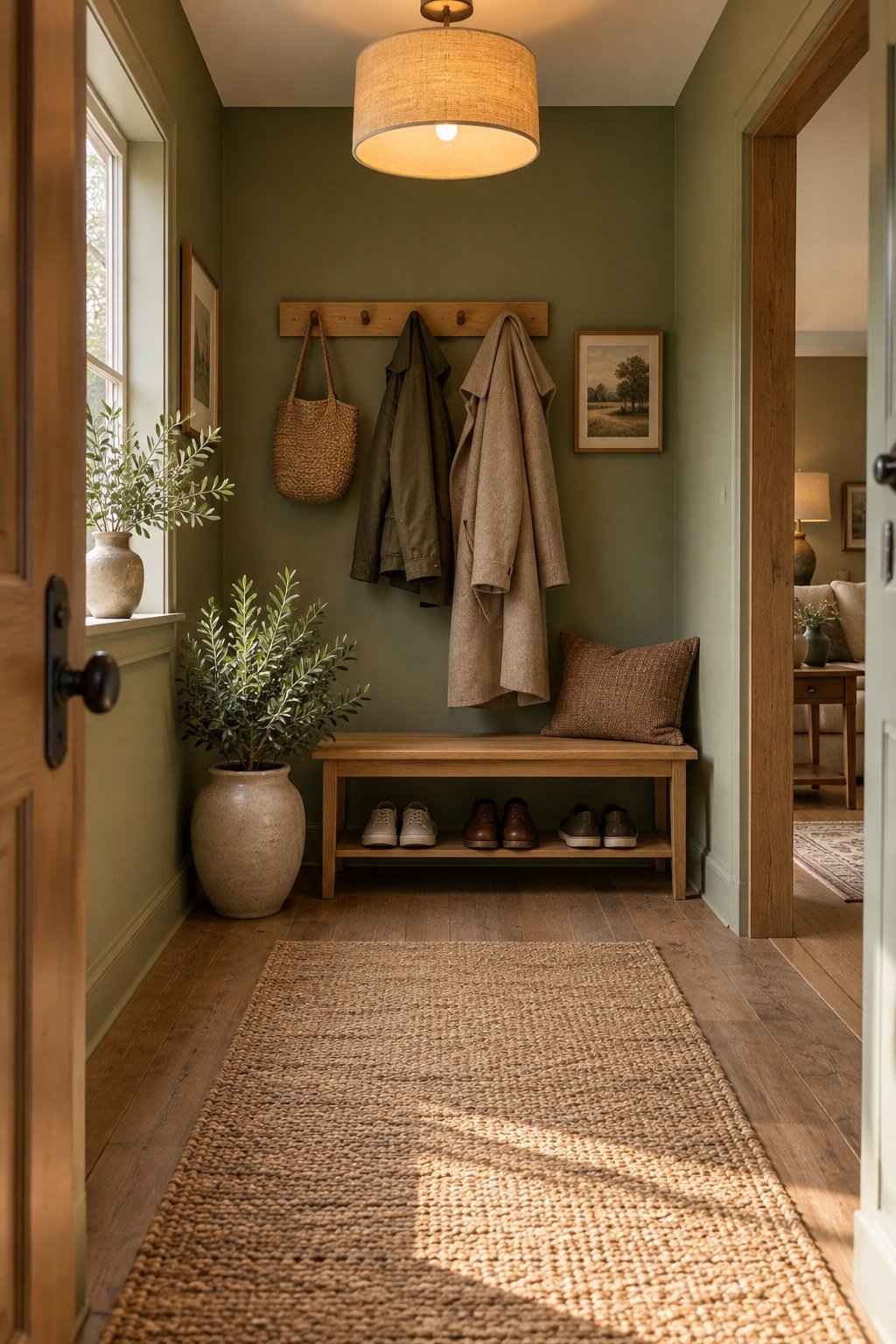
A welcoming entrance starts with somewhere obvious for the things you carry in. A small bench, a few useful hooks and a low shoe shelf can make a sage-green hallway feel calm. One soft cushion is enough to make the bench look comfortable.
Keep only the regularly used coats and shoes here. The setup is easier to maintain when it is not trying to store the whole household wardrobe. Secure furniture and fittings as their manufacturers direct, and keep the floor route clear.
A short put-away routine makes more difference than extra decoration. Hang the coat, return the shoes and place the keys in their dish. The hallway can then feel warm and welcoming again the next time you arrive.
15. Leave a little room for the evening itself
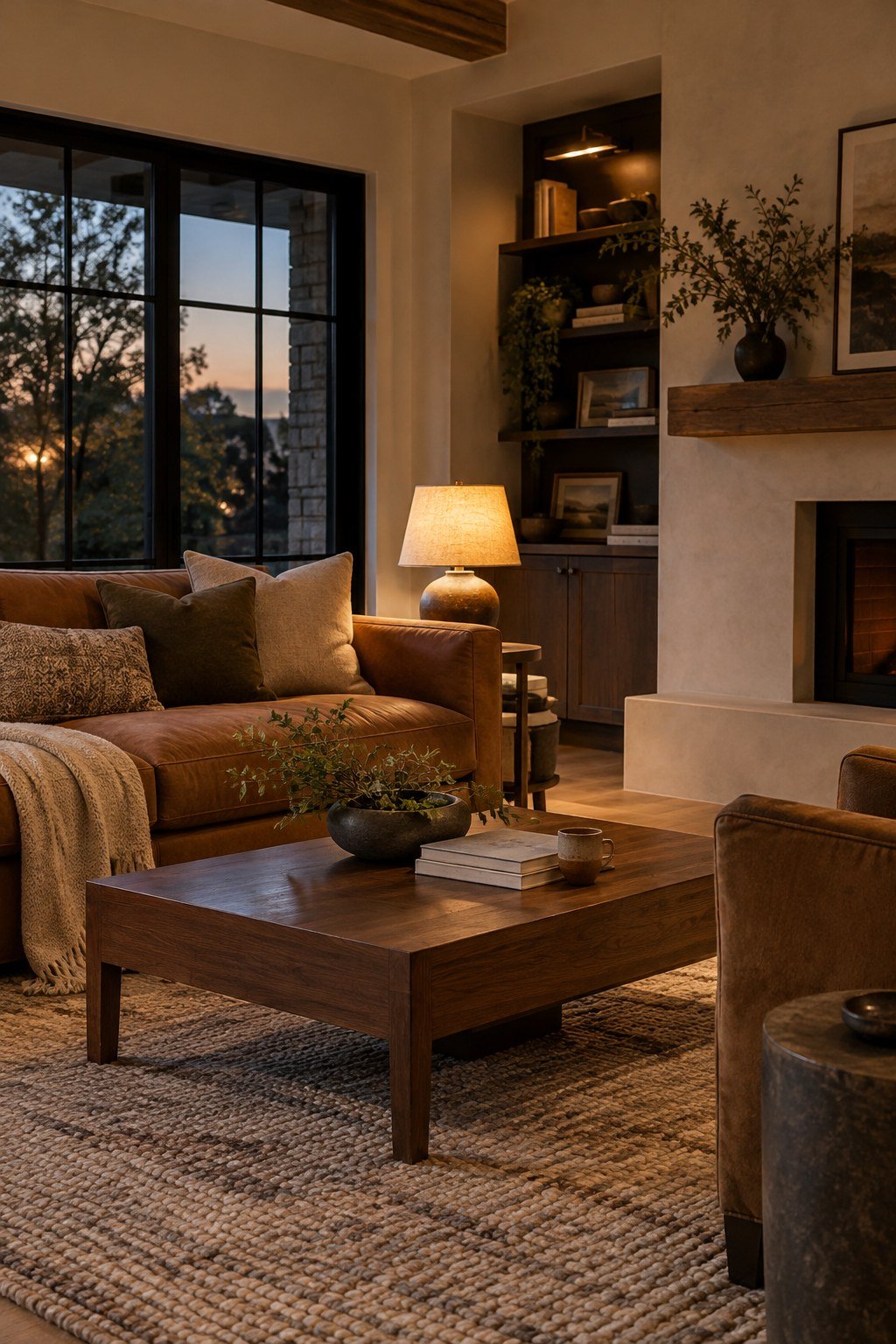
The final cosy detail might be the space you leave empty. A clear part of the coffee table, a chair without a pile of clothes and a blanket within reach make the room easy to enjoy. Caramel seating and warm light already bring plenty of character.
Try a quick reset around the seat you will use tonight. Return a few stray items, fold the throw loosely and put a mug or book where it is useful. There is no need to turn the whole house into a project.
Notice what made the biggest difference and repeat that tomorrow. A home starts to feel more comfortable when its best corners are easy to return to. The decor gives you a lovely setting; being able to relax in it is the useful part.
Build the kind of evening you want to come home to
A cosy home grows from a handful of details you enjoy using. Soft fabric, warm wood, a comfortable chair and a clear surface can make an ordinary evening feel much more inviting.
Start with one small change in the room where you spend the most time. Live with it, see what feels better and let the next choice follow naturally.
You do not need every room finished at once. A few thoughtful corners, some personal things and room to settle in will do far more than a house full of decorations you never quite get to enjoy.