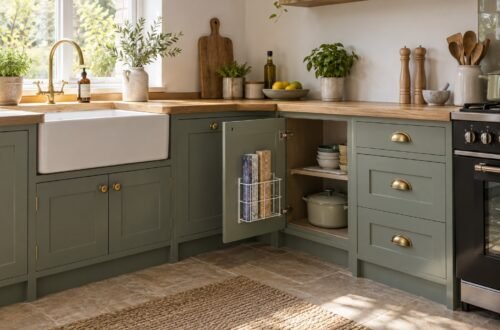

Bathroom cupboards have a way of collecting almost-finished shampoo, spare handwash and the moisturiser you forgot you opened. Before long, the thing you use every morning is hiding behind three things you hardly touch.
These bathroom cabinet organization ideas give those bottles clearer homes. There are useful options for the space around a sink, small vanity drawers and taller cupboards, plus a few simple habits that help the arrangement stay usable.
Start with the cupboard that causes the most rummaging. Check product labels and storage instructions as you sort, keep products in their original packaging, and separate cleaning supplies from everyday toiletries. These bathroom organization ideas can help with the rest of the room.
As an Amazon Associate I earn from qualifying purchases.
Images are AI-generated room inspiration. SHOP SIMILAR opens a search for visually similar options; check the details and suitability for your space before buying.
1. Fit a pull-out organiser beside the plumbing

A pull-out organiser brings the back of a cupboard into reach. A white two-tier frame can look tidy inside a warm oak vanity, with smaller bottles above and taller supplies below. The important part is finding a shape that works around the plumbing.
Measure the cabinet opening, shelf depth and pipe positions before choosing anything. Allow room for hinges and for the drawer to slide fully forward. Keep valves and other service points accessible, and never force a frame against the pipes to make it fit.
Start with a few regularly used items rather than filling both levels immediately. You should be able to see what is there and remove a bottle without lifting several others. If the unit makes access awkward, a smaller bin may be the better fit.
2. Give small things their own clear drawers

Clear drawers are useful for the little things that disappear between bottles. Cotton pads, spare sealed toiletries and small grooming accessories can each have a shallow section. Inside a navy vanity, the transparent fronts keep the arrangement looking lighter than a row of solid boxes.
Check the drawer depth and opening space as well as the overall stack height. The bottom drawer should open without catching the cabinet lip, and the stack should sit securely according to its instructions. Leave clearance around any plumbing and fittings.
Keep each drawer’s job broad and obvious. One for small daily items and another for unopened extras may be enough. Adding lots of tiny categories can make putting things away more complicated than it needs to be.
3. Turn a deep shelf into an easy-to-scan circle

A small turntable can be handy in a taller cupboard where bottles otherwise gather in a deep row. Bring the one you need around to the front with a gentle turn. A clear low rim keeps the bottles visible against pale shelves and a soft pink bathroom scheme.
Measure the full circle and leave clearance for rotation. The base needs to sit completely on the shelf, with enough headroom for the tallest bottle. A low rim helps contain small items, but it should still be easy to lift them out.
Keep the collection modest and the bottle bases clean. A tray crammed with leaning tubes will be less useful than a simple row. Group products you use together so the turntable has a clear purpose in your routine.
4. Pull a whole category forward in one bin
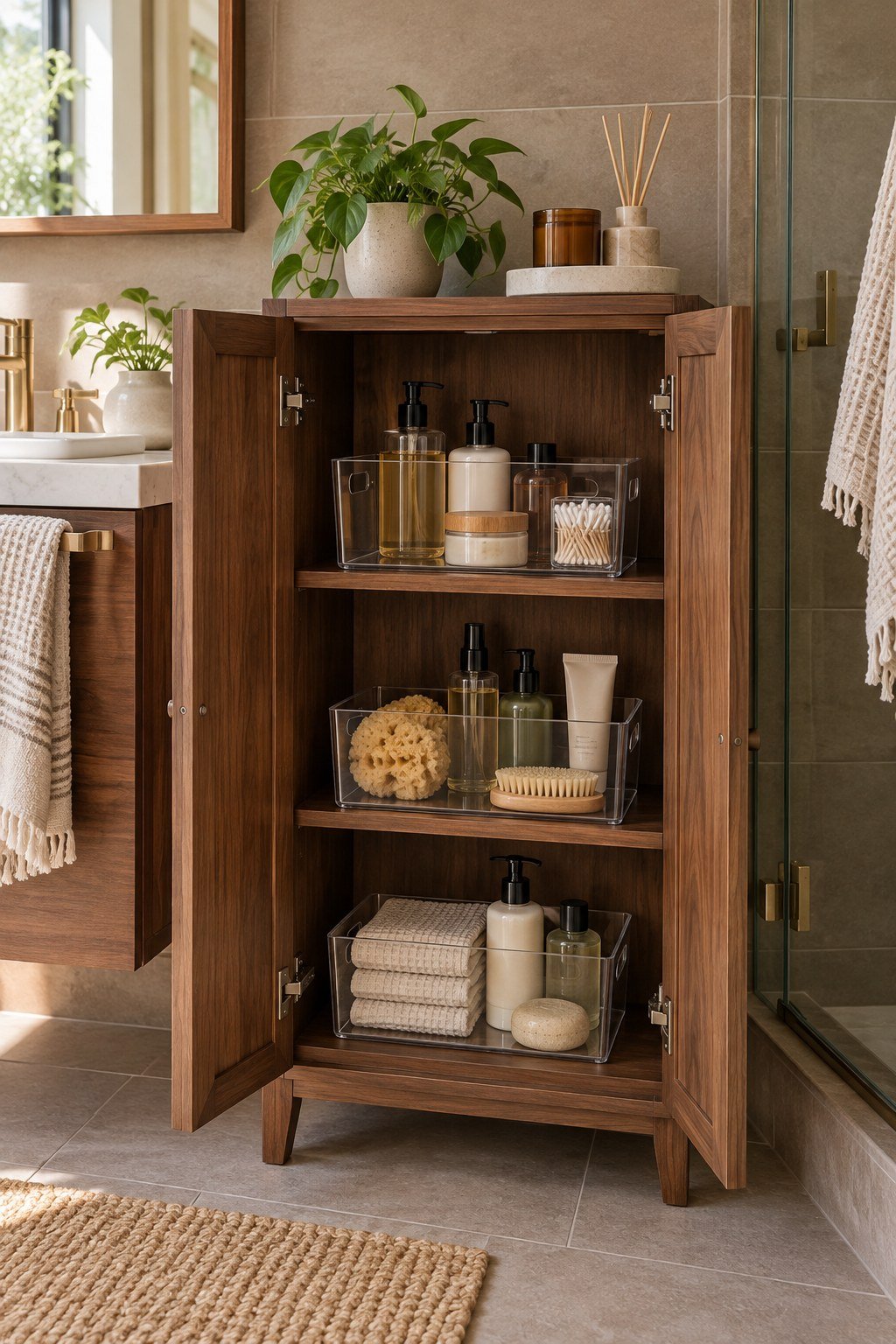
A handled bin can gather the bottles that belong together: hair care, body care or unopened refills. Pulling the category forward is much easier than reaching past everything at the front. Clear sides also let you notice what is running low.
Choose a bin that is comfortable to lift when filled. A large container of full bottles can get heavy quickly, so smaller groups often work better. Check that you can grip the handle without catching the shelf above.
Keep the original labels visible and leave space between products. If a bottle leaks, you can remove the bin and clean it more easily than an entire cupboard. Let everything dry before putting it back, and follow each product’s storage guidance.
5. Divide the drawer into a few roomy sections
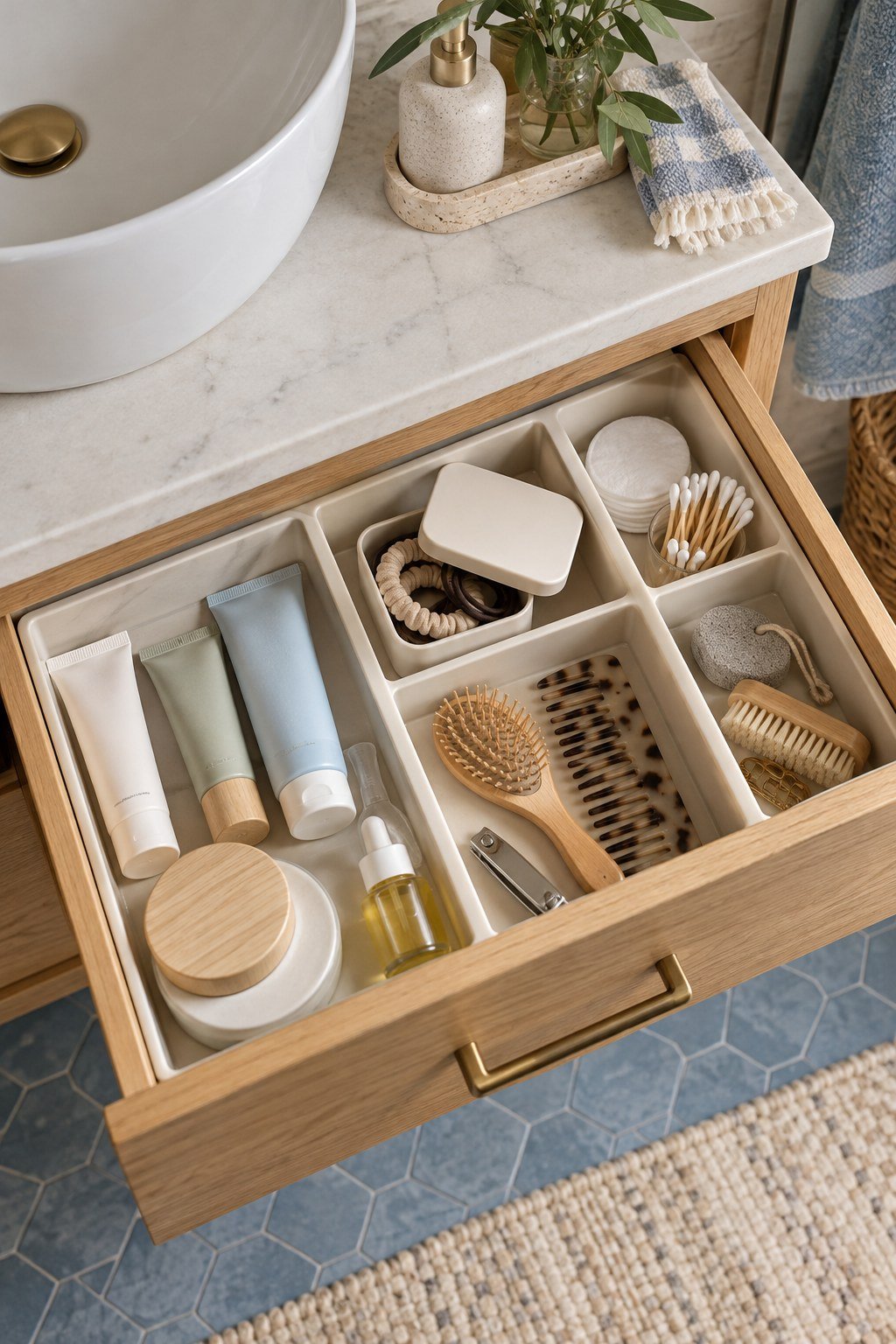
A few removable trays can stop a vanity drawer becoming one mixed layer of tubes and accessories. Cream dividers look lovely against oak and make small items easy to recognise. You can lift one section out when the drawer needs a wipe.
Measure the inside of the drawer, including its usable height, before choosing a set. Keep the sections big enough for the things you actually own. An awkward gap is less annoying than a tray that stops the drawer closing.
Put the most-used items in the easiest section and keep small loose accessories together in a suitable container. Avoid making every item stand to attention. These drawer organization ideas show the same helpful principle in another busy room.
6. Use the door for a small, lightweight category

The inside of a cupboard door can hold a couple of lightweight items that usually get lost on the shelf. A shallow white basket works nicely in a simple vanity and keeps its contents easy to see. Think a few sealed toiletries, rather than a heavy collection of bottles.
Check the door’s material and the organiser’s fitting instructions. It must clear the hinges, shelf edges and plumbing when the door closes. A basket that looks slim on its own can still take up valuable space inside a small cupboard.
Try opening and closing the door several times with the intended contents in place. Nothing should knock, catch or tip. If the space is too tight, keep the door clear and give that category a small shelf bin instead.
7. Give cooled hair tools a proper home

A hair dryer and a tangle of cable can take over a whole shelf. A suitable metal holder gives the tools separate places and keeps their shapes easy to see. A tall cabinet is useful when it offers enough space away from water and crowded toiletries.
Let tools cool fully and unplug them before storing them. Follow the appliance and organiser instructions, and keep electrical items away from water. A metal basket does not automatically make it safe to put a hot styling tool straight into a cupboard.
Loop cords loosely in the way the manufacturer recommends rather than winding them tightly around the appliance. Keep the tools you actually use together and move occasional extras elsewhere. The cupboard should be easy to close without trapping a cable.
8. Borrow some vertical space with a small riser
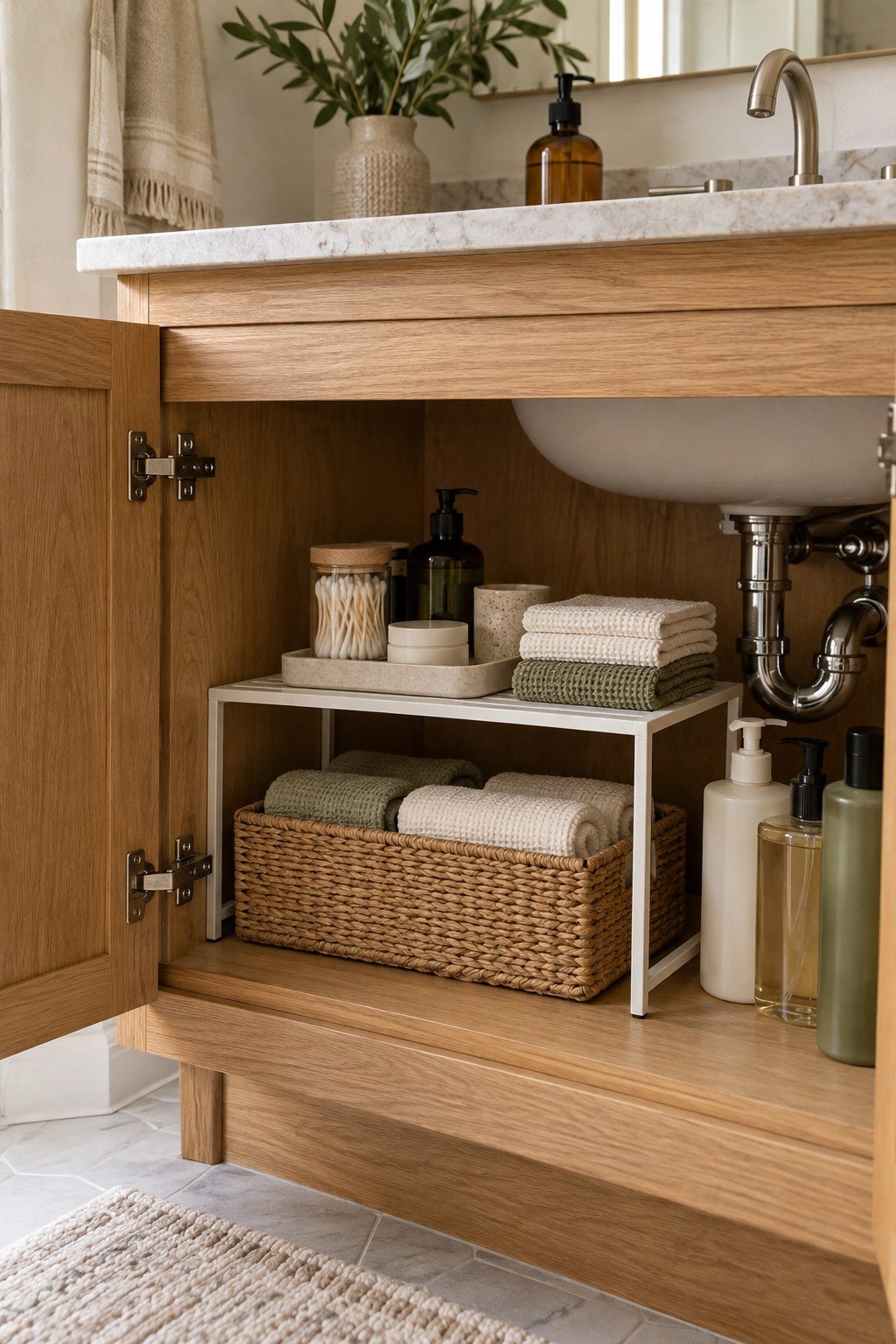
A small riser can make a tall shelf gap more useful. Short bottles or folded washcloths can sit below, with another light category above. White works well against oak shelving and keeps the cupboard looking simple.
Check the riser’s width, depth and load guidance, then leave enough space to remove items from underneath. It should sit steadily on the shelf rather than balancing across brackets or an uneven base. Keep taller bottles beside it if they will not fit comfortably below.
Use the extra level to improve visibility, not to squeeze in another hidden row. A shelf still needs space for your hand to reach in. These utility closet organization ideas offer more ways to make awkward shelf gaps work.
9. Keep the bottles already in use at the front

The simplest way to deal with half-used bottles is to make the current ones obvious. Put a small group you are actively using near the front, with unopened replacements elsewhere. An ordinary tray you already own can give that group a clear boundary.
Choose the products you still want to use after checking their condition, labels and any date or period-after-opening information. Keep different products in their original containers rather than combining leftovers. Follow local disposal guidance for anything you no longer need.
Before opening a replacement, glance at this front section. It is an easy habit that can stop three similar bottles collecting at once. If the whole cupboard feels overwhelming, these decluttering tips can help you make a smaller start.
10. Give each person an easy-to-recognise section
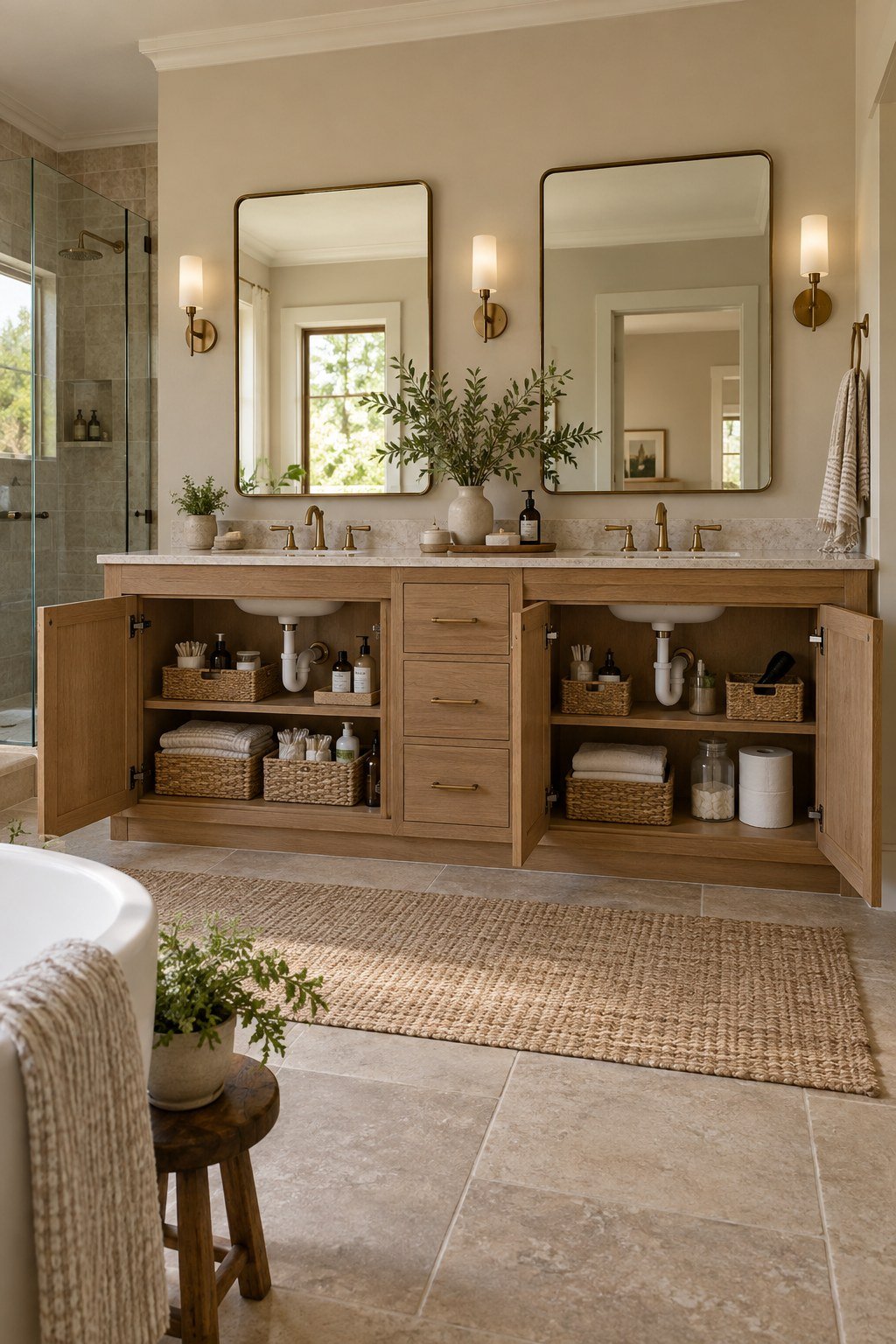
A shared bathroom is easier to use when everyone knows where their own things belong. Two sides of a double vanity are an obvious starting point, but separate shelves or simple baskets can work too. The system does not need lots of matching labels.
Choose the positions around the people who use the room. Keep everyday items comfortable to reach, while anything unsuitable for children needs secure storage as its label directs. Make sure no section blocks access to the plumbing.
Leave room for shared supplies such as spare handwash rather than putting everything into someone’s personal space. A little clarity helps the counter stay calmer too. For a more open style of cabinet, these floating vanity ideas show useful proportions and storage arrangements.
11. Leave a small gap for refills and a quick reset
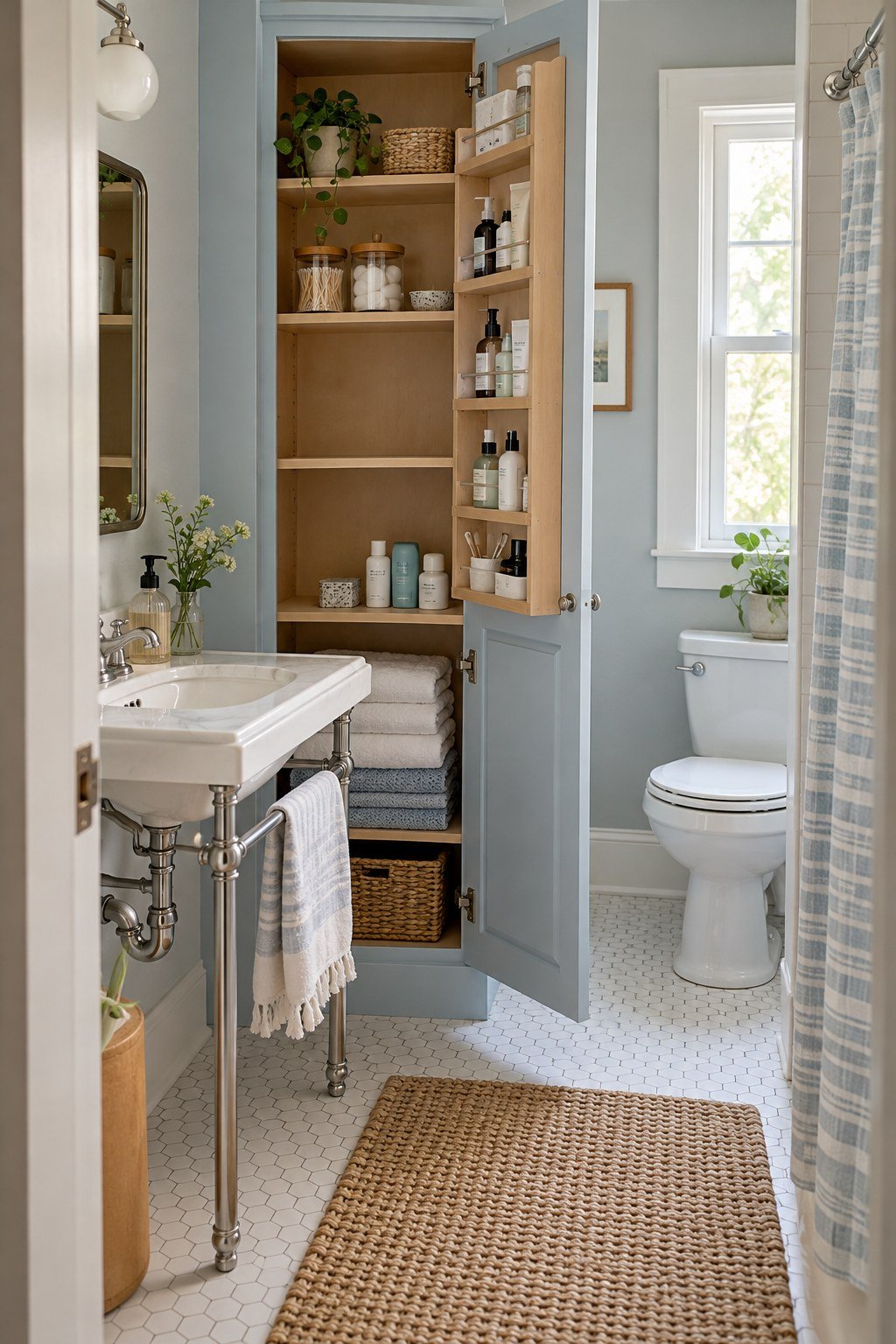
A cupboard filled to its edges has nowhere to absorb a new bottle of shampoo. Leave a small gap beside the current supplies and keep unopened replacements in one clear area. You can then see what you already have before shopping.
Keep the amount of backstock realistic for your space. One useful spare may be easier to manage than a large collection tucked across several shelves. Heavy bottles belong on suitable lower shelves, with the floor and cupboard access kept clear.
Give the cabinet a short reset when you replace a product or clean the room. Return stray items, wipe any residue and bring the things in use forward. A few ordinary habits make the storage work far better than adding another organiser to every gap.
Make the cupboard easier to use tomorrow morning
A well-organised bathroom cabinet does not need a perfect row of identical bottles. Clear categories, comfortable access and a small amount of spare space do most of the useful work.
Start with one shelf or drawer and give it a simple job. Try the arrangement during a normal week, then move anything that still feels awkward.
The nicest result is being able to open the door, find what you need and put it back without a rummage. Let the storage support that routine, and the tidier look will follow naturally.