A little place to sit with your coffee can change how a kitchen feels. It doesn’t have to be a separate breakfast room: a window corner, a short bench or a table that folds away can give everyday meals a lovely spot of their own.
The best small kitchen dining nook fits the kitchen around it. There needs to be room for knees, chairs, cupboard doors and whoever is making the toast. After that, the softer details can make it feel like your favourite little café.
These ideas mix light wood and pale colours with olive, navy and burgundy corners. Start with the shape and size that suit your space, then add the colour and comfort you enjoy.
As an Amazon Associate I earn from qualifying purchases.
Images are AI-generated room inspiration. SHOP SIMILAR opens a search for visually similar options; check the details and suitability for your space before buying.
1. Try a small round pedestal table

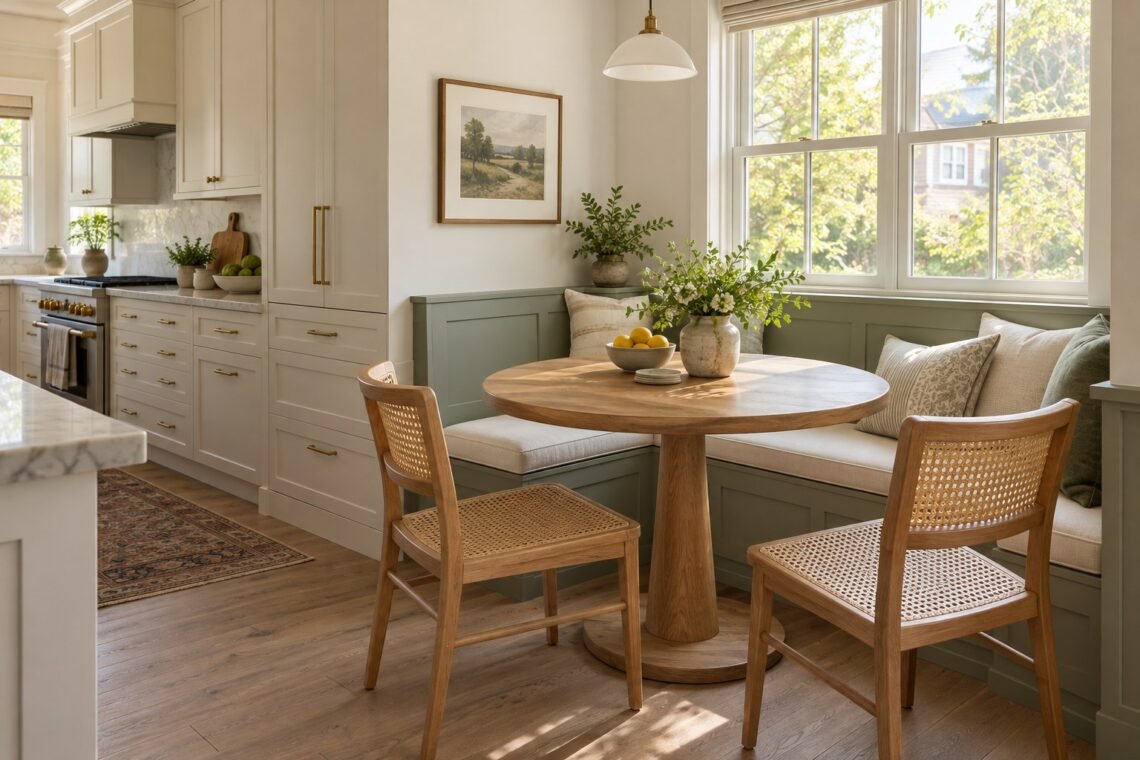
A round table gives a small corner a soft shape, and a pedestal base can make positioning the chairs a little easier. This oak version feels warm beside the pale blue kitchen.
Check the actual tabletop size and base shape rather than assuming round means compact. Sit at a similar table if you can, and think about where your feet and knees will go.
Leave room to pull out the chairs and pass behind them. Two comfortable places are often more enjoyable than trying to fit four seats into a corner that works best for a quiet breakfast.
2. Tuck an L-shaped bench into the corner

A corner bench can use two wall edges and leave the open side feeling less busy. The fluted oak brings texture here, while the cream cushions keep the little nook welcoming.
Look carefully at the relationship between the seat and table. You need a comfortable seat height, useful table overlap and a way to get in and out without climbing over everyone else.
If the bench includes storage, check how you will access it with the table in place. Keep occasional items inside so breakfast doesn’t involve moving the furniture every morning.
3. Let a drop-leaf table earn its place

A drop-leaf table lets a little kitchen change through the day. One raised side can make space for a meal, then the folded position gives more of the floor back.
Measure both positions, including the chairs and any support legs. The everyday setup should feel comfortable, rather than technically fitting only when nobody is sitting down.
Keep the tabletop easy to clear so folding it is a small job. If the whole room needs a little more flexibility, our small apartment ideas have more furniture that can change with the day.
4. Use a compact oval table in a narrow spot
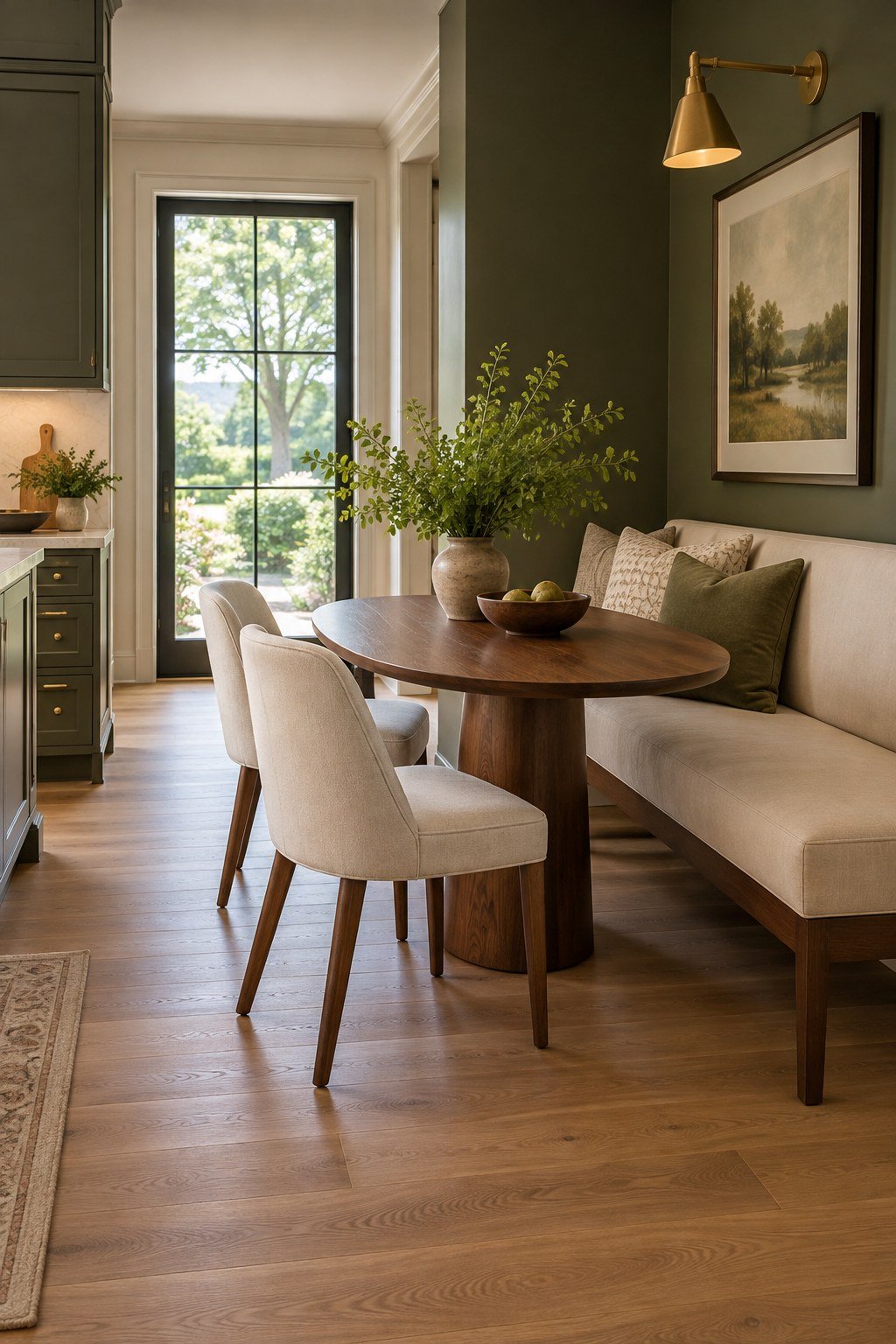
An oval table can give a narrow nook a gentler outline than a sharp-cornered rectangle. Walnut and cream make this olive corner feel rich without becoming busy.
Compare the dimensions with the space you have, including the widest part of the tabletop. Rounded ends may feel pleasant to move around, but they don’t remove the need for useful clearance.
Keep the seating fairly slim and make sure the table base leaves comfortable foot space. A calm, well-proportioned arrangement matters more than squeezing in the largest table that will fit.
5. Choose chairs that tuck in neatly
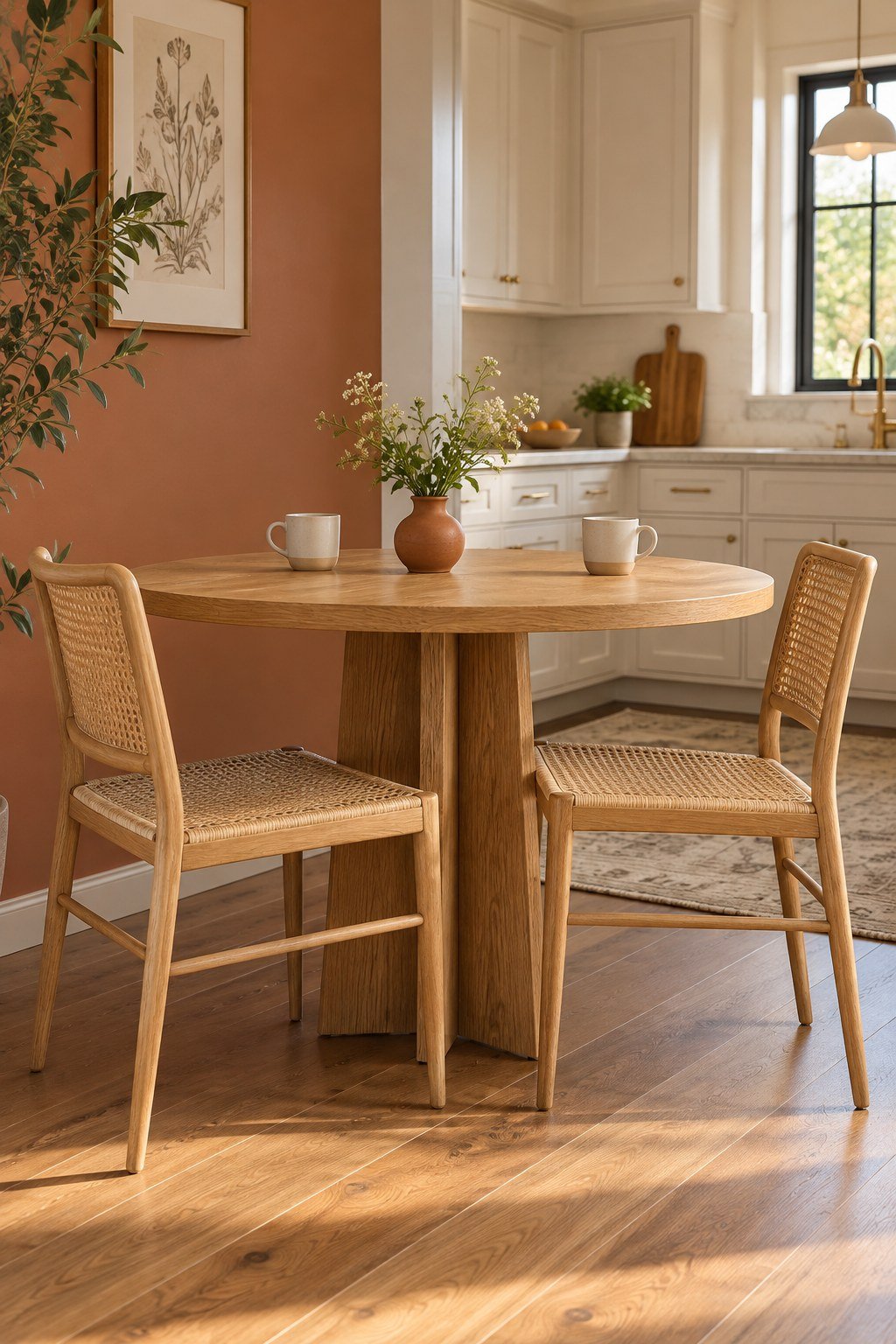
Light, open chair shapes can make a small dining area feel less crowded. Oak and cane suit this terracotta corner beautifully, with the armless seats sliding close to the table.
Check the chair height, width and back shape against the table. Some chairs look delicate but have legs or backs that keep them from tucking in as far as you expect.
Comfort still comes first. Choose a chair you would enjoy using for a meal, and leave enough space to sit down easily. A kitchen nook should feel inviting once you’re in it.
6. Fold a wall table away between meals

A wall-mounted folding table can work in a kitchen that has a useful wall but very little spare floor. Natural wood gives the open position a warmer feel than a purely practical work surface.
Check the wall, fixings, support mechanism and stated load before choosing one. It needs a suitable installation, and rented homes may require permission for the work.
Plan where the seats live when the table is closed. A folding table helps most when the whole arrangement has a tidy resting place and doesn’t block doors or kitchen access.
7. Soften an existing bench with a fitted cushion

A simple seat cushion can make a hard bench feel much more inviting. Rust and cream stripes bring warmth to the navy paint here without adding a busy mix of colours.
Measure the seat carefully, including any corners or shaped sections. Check how the cushion stays in place and whether its thickness still leaves the right sitting height beneath the table.
Look at the care information before buying, especially for a spot used every day. A practical fabric and a manageable number of back cushions make the nook easier to enjoy between quick meals.
8. Give the table its own small pendant
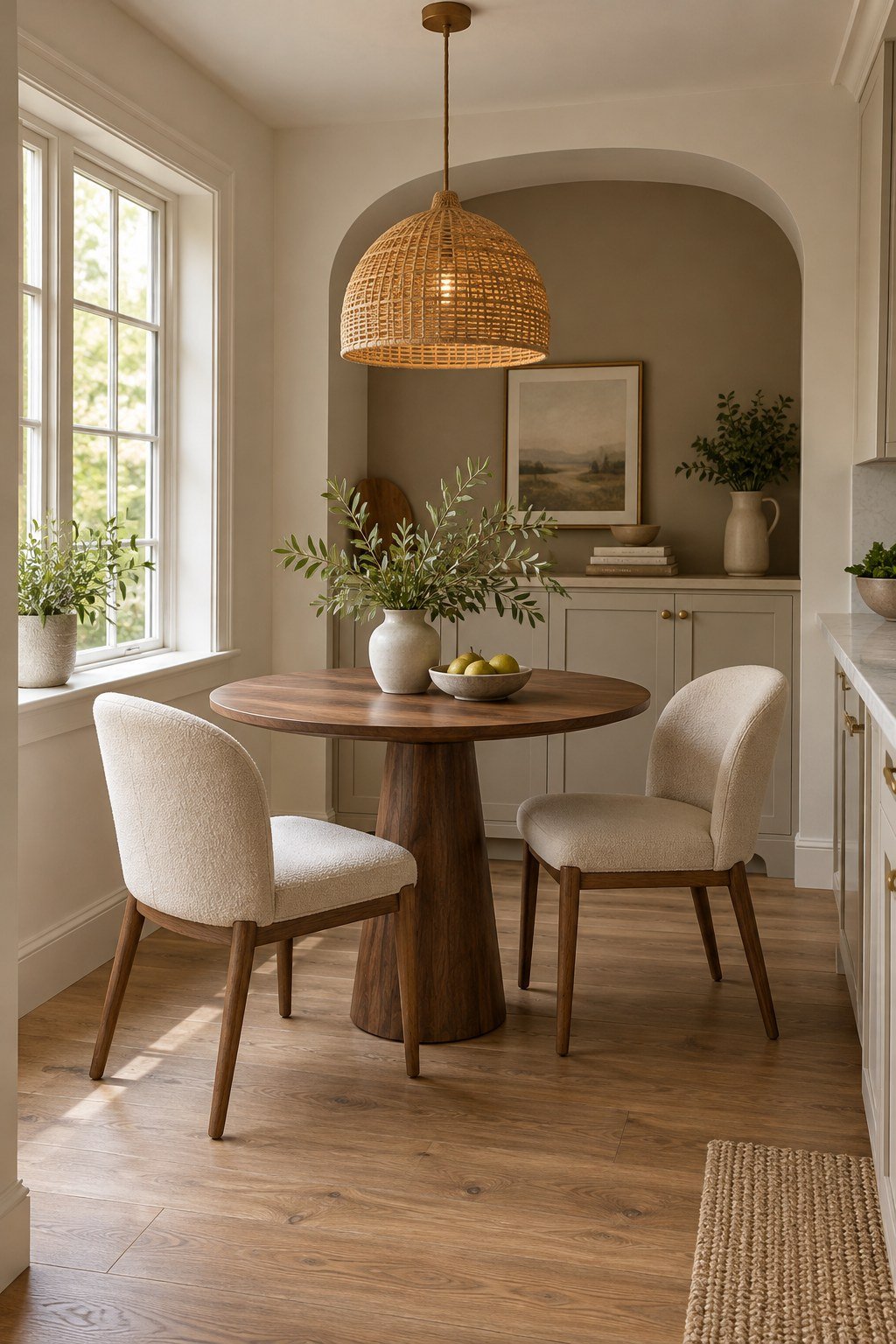
A small pendant can make a dining corner feel intentional. The woven shade adds a soft texture above the table, while the rest of the kitchen can keep its practical working light.
Choose the shade size and hanging position for the actual room. It should suit the table, leave comfortable head clearance and avoid putting glare directly in your eyes.
Have any required electrical work handled appropriately, and check the fitting’s bulb guidance. Our kitchen pendant lighting ideas have more ways to connect the light with the space below it.
9. Protect the route through the kitchen

A nook works best when making breakfast still feels easy. Check the route between the fridge, sink, cooker and table before settling on the furniture layout.
Open the cupboards and nearby doors, pull out the chair and imagine someone walking through with a plate. The space needs to work while it’s being used, rather than only when every seat is tucked away.
Use fewer seats if that makes the room more comfortable. If the cupboards are part of the squeeze, these small kitchen organization ideas can help free up the areas around the nook.
10. Use colour to give the nook a little identity

A small area of colour can make a dining nook feel like its own place without adding a divider. Burgundy gives this shallow recess a warm café feeling, with cream seating keeping the corner soft.
Repeat the colour in one small detail elsewhere if you want the kitchen to feel connected. It might be a tea towel, a mug or a quiet piece of art rather than another large painted surface.
Try the paint beside the cabinets and flooring in your own light. Our warm neutral kitchen ideas offer gentler palettes if you prefer a quieter starting point.
11. Keep the window corner light and usable

A window can make even a tiny table feel like a lovely place to pause. Keep the view and daylight as open as practical, with window coverings that suit your privacy needs.
Allow access to the window and any nearby heating or ventilation. A built-in seat needs careful planning around the features that are already there, rather than simply covering them up.
Finish with something small that you enjoy using, such as a favourite mug or a little vase. If coffee is part of the pleasure, our coffee bar ideas can inspire a nearby setup without taking over the table.
Make a little corner worth sitting down in
A good dining nook doesn’t have to seat a crowd. A comfortable spot for coffee, toast or a simple evening meal can be a lovely addition to the kitchen you already have.
Start by checking the shape, access and sitting space. Once those feel right, a warm wood finish, a little colour or a soft seat cushion can make the practical arrangement feel personal.
Keep the table easy to use on an ordinary morning. The nicest nook is the one you actually sit down in, even when you only have time for a quick cup before the day begins.