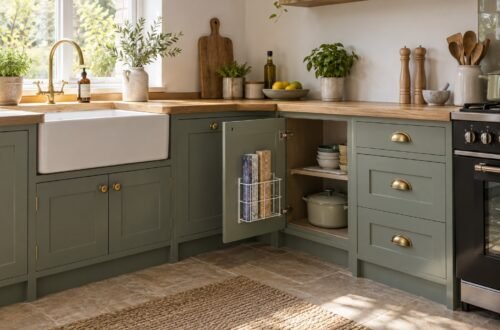

Paper has a talent for spreading across the surface you were about to use. A letter lands beside a school form, a receipt joins them, and somehow the dining table becomes a filing system with no drawers.
A simple home paperwork system gives each piece a next step. Incoming papers need a place to land, action items need to stay visible, and the things you are keeping need a home you can find again.
These ideas start with useful storage, then move into the small decisions and habits that keep it working. Pick the point where your papers tend to get stuck and begin there.
As an Amazon Associate I earn from qualifying purchases.
Images are AI-generated room inspiration. SHOP SIMILAR opens a search for visually similar options; check the details and suitability for your space before buying.
1. Give incoming mail one small landing tray
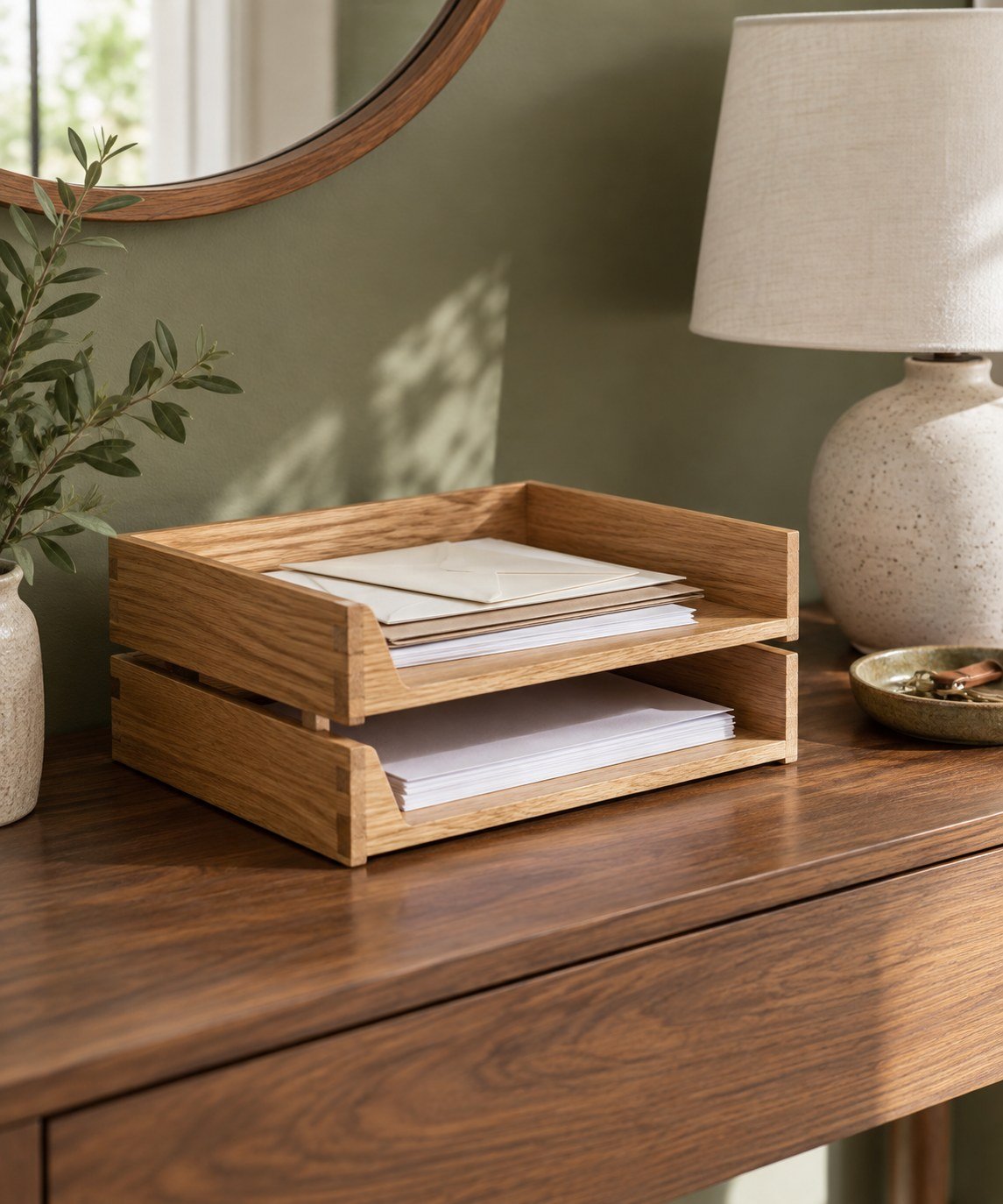
A small letter tray gives fresh paperwork a clear landing place before it reaches the dining table. Wood feels easy to live with on a hallway console, especially beside a lamp you already use.
Keep the tray for unsorted arrivals rather than long-term storage. Choose a size that holds ordinary letters comfortably but doesn’t invite weeks of paper to disappear into a deep basket.
Put it where the mail genuinely enters the house. The easier it is to use without thinking, the less likely envelopes are to spread to every nearby surface.
2. Use a portable file box for the papers you keep
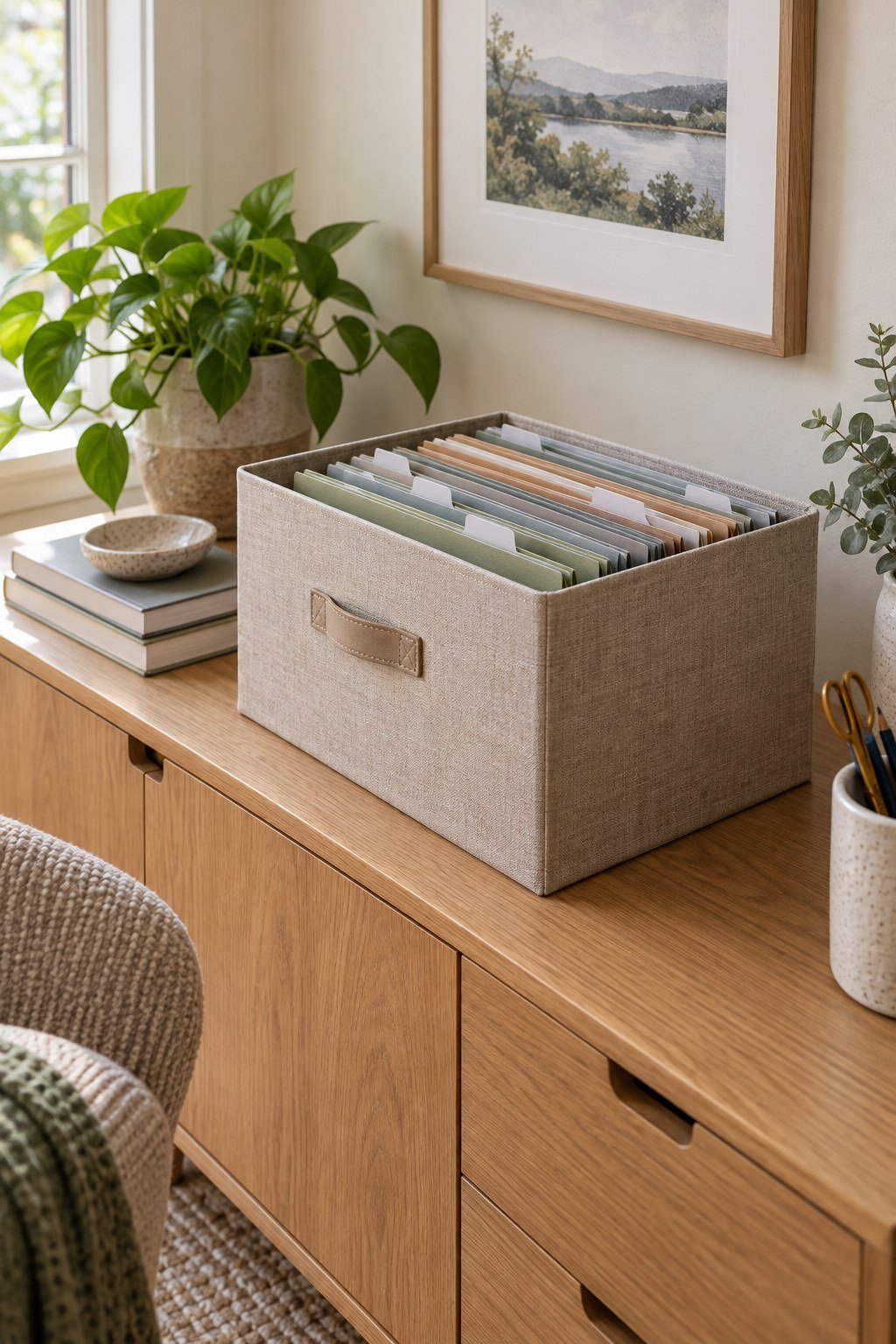
A lidded hanging-file box can suit a home that doesn’t have a dedicated office. It keeps papers together and can move to the table when you want to work through them.
Check the file size, internal dimensions and how comfortable the handles are when the box is loaded. Leave room between folders so returning a document feels straightforward.
Give it a convenient home when it isn’t in use. A box you can reach easily is more helpful than a beautiful one stored behind everything else in a cupboard.
3. Move active papers onto a slim wall pocket

Wall pockets can keep a small group of active papers visible without covering the counter. They work well in a kitchen command corner or beside a home desk.
Choose only the categories you actually need, such as incoming, action and waiting. Make the pockets easy to reach and use suitable fixings for the wall and loaded weight.
Keep private information out of open display where visitors can see it. The visible pocket can hold the folder, while the papers themselves stay tucked inside.
4. Keep one contained project in an expanding folder

An expanding folder is useful for a defined project, such as paperwork for a move or a collection you need to take to an appointment. The sections help keep related pieces together.
Give the folder a clear purpose instead of making it the home for every loose paper in the house. Use a few understandable tabs and leave enough room to open each section comfortably.
When the project is finished, review what still needs to be kept and where it belongs. Otherwise a convenient temporary folder can quietly become a second permanent filing system.
5. Tuck everyday files into a compact cabinet
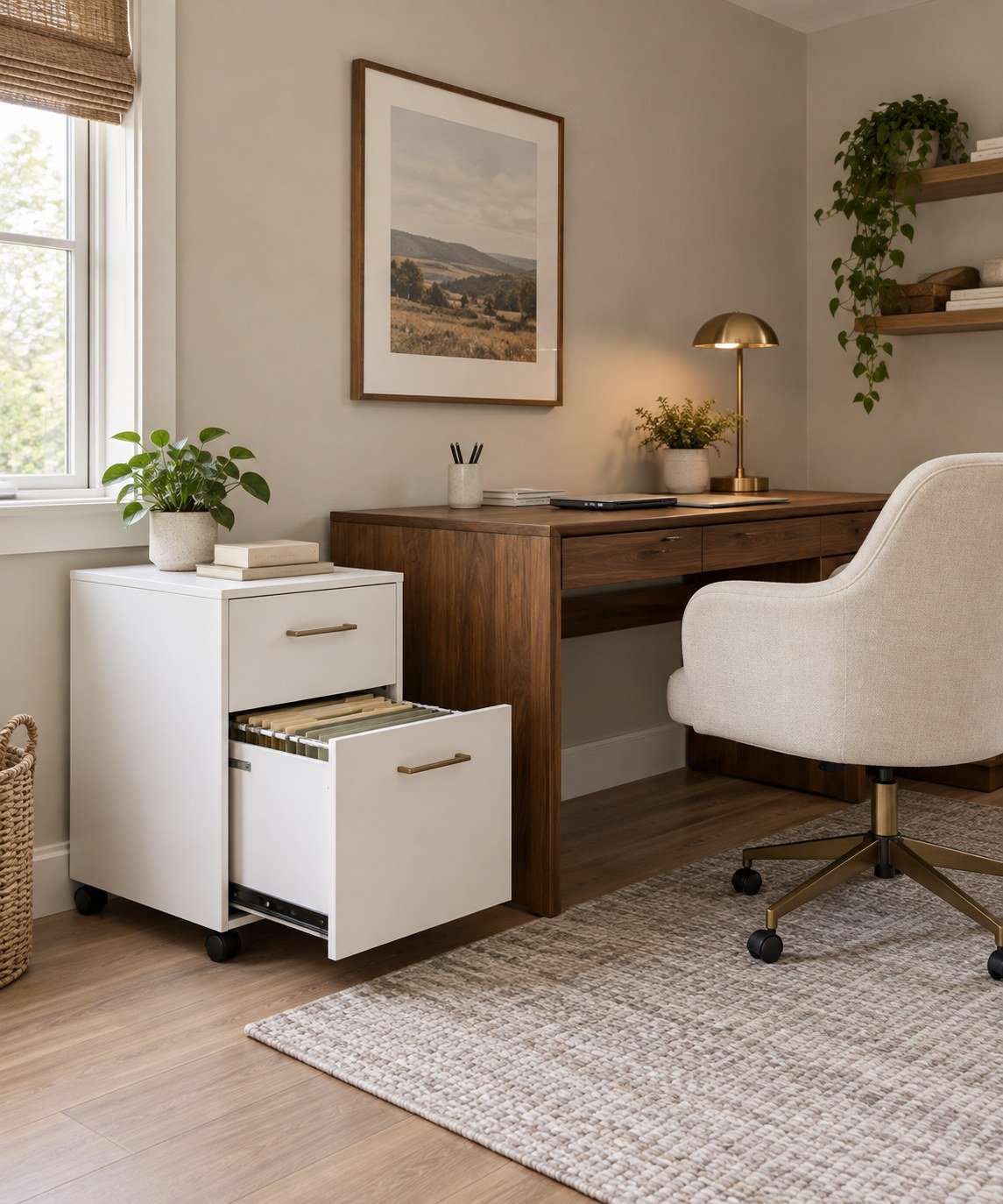
A small filing cabinet can be useful when paperwork is part of your weekly routine. Keeping it beside the desk makes the papers easy to put away as soon as you finish with them.
Check the drawer type and file size before choosing a cabinet. Make sure it fits the space with drawers open, and follow the stability and loading guidance for the unit.
Keep the top reasonably clear so it doesn’t become another paper landing pad. These home office organization ideas can help the rest of the work area stay useful.
6. Stand reference papers in simple magazine files
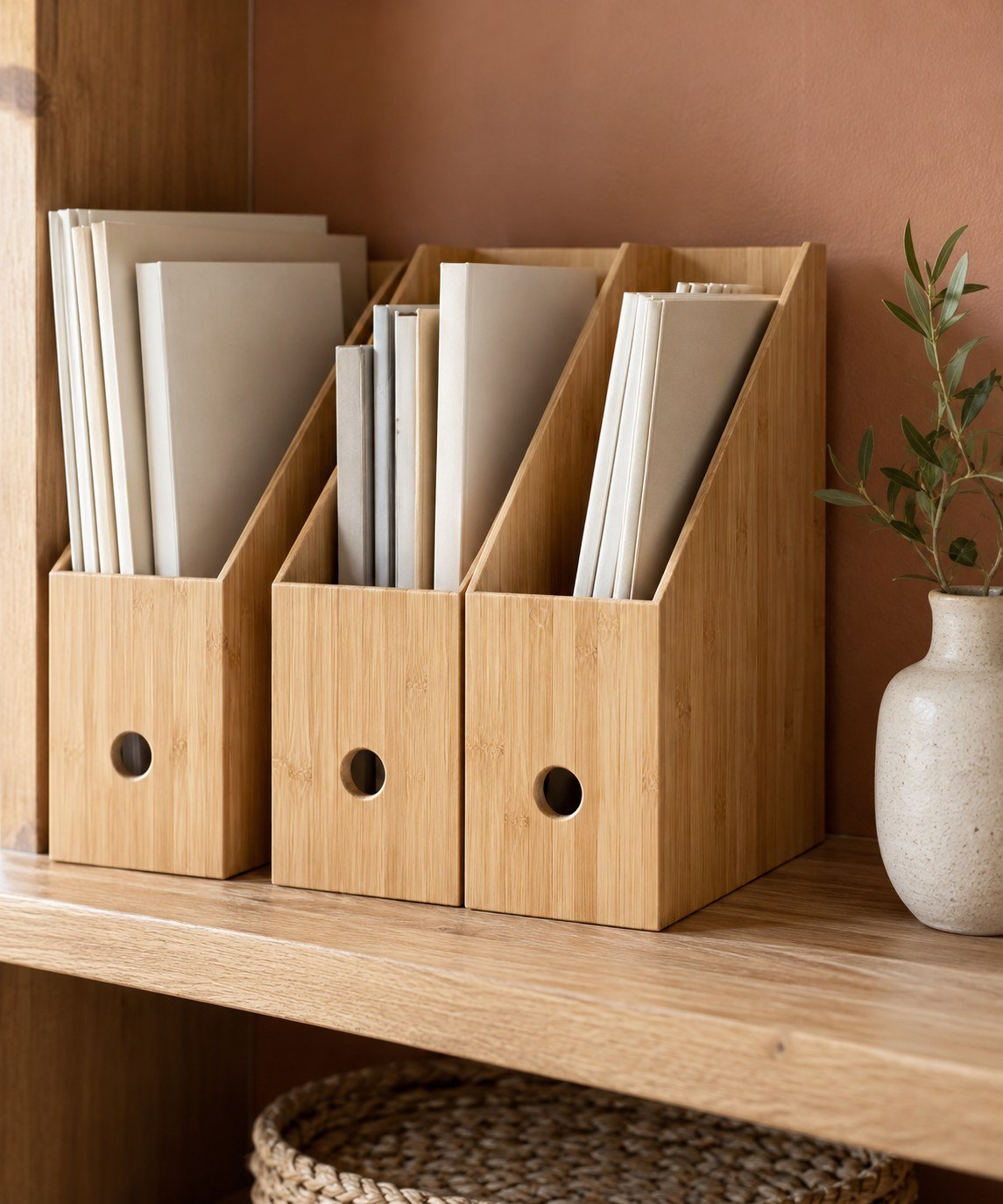
Magazine files can keep slim reference folders upright on a shelf. A few bamboo holders add warmth while making it easier to pull out one category without moving the whole row.
Use them for papers you genuinely refer to, such as household instructions or an active set of notes. Give each holder a simple name and avoid squeezing loose sheets down the sides.
Check whether a digital manual would be easier to find before keeping another thick booklet. The useful reference shelf is usually smaller than the collection that arrived in the post.
7. Separate action papers from papers to file
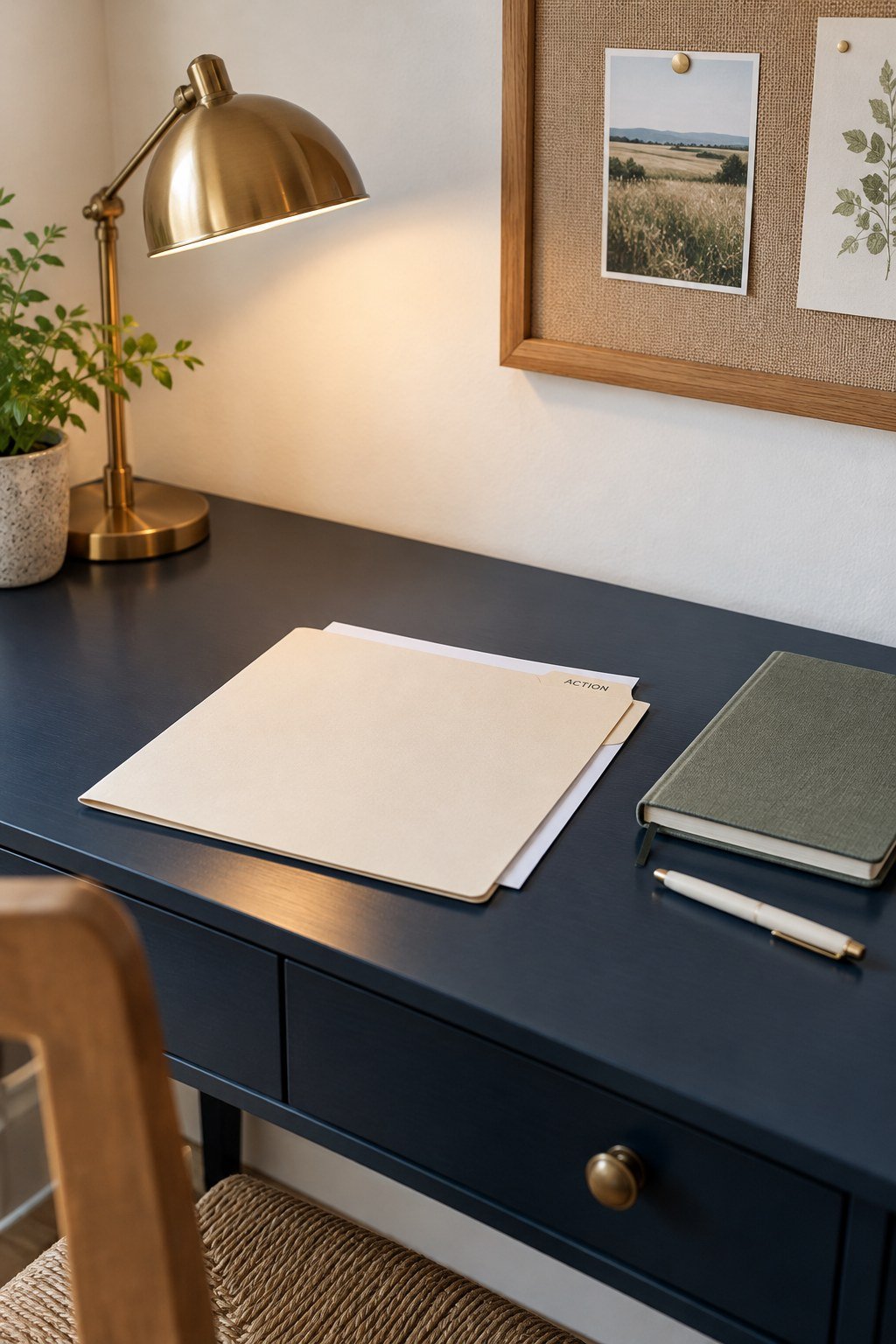
A paper that needs a decision shouldn’t disappear into the same folder as a document you’re keeping for reference. Give action papers their own small place so you can see what still needs attention.
Write the next step in your usual task list or diary where appropriate. The folder holds the paper, but a reminder helps you remember when you need to deal with it.
Keep the action collection small and review it regularly. A visible folder works better when its contents still mean something, rather than becoming a pile with a nicer cover.
8. Use household categories you can understand quickly
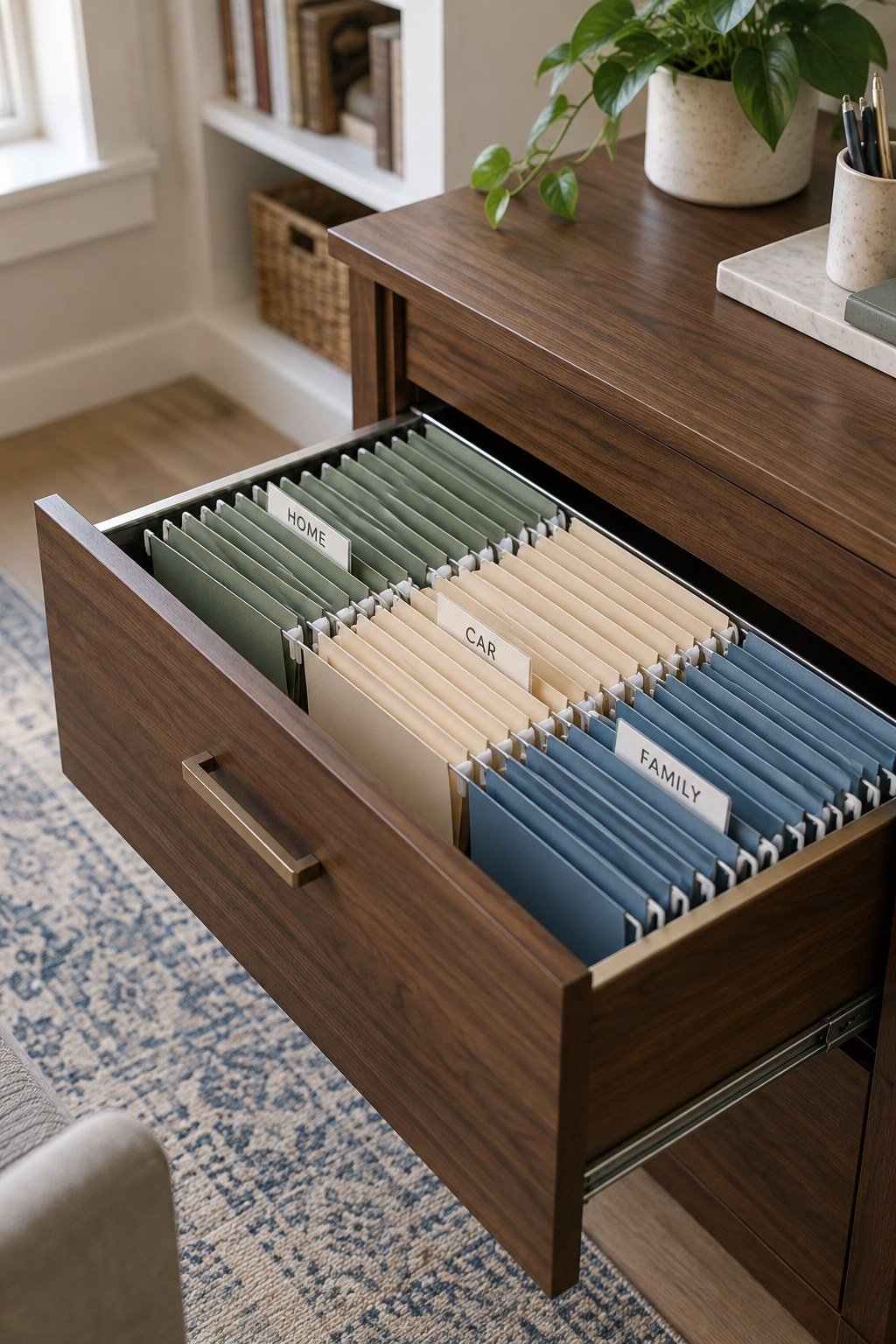
Simple category names make a filing system easier for everyone to use. Home, car and family may be more useful than a detailed structure you have to think through every time.
Choose the categories from the papers you actually keep, and split a group only when it becomes awkward to search. You can always add a section later if a clear need appears.
Keep sensitive originals in storage appropriate to their importance and access needs. These home organization systems have more ideas for making shared household routines easy to follow.
9. Give digital copies a findable home too

Scanning can reduce some paper clutter, but only if you can find the copy later. Choose a simple folder structure and use file names that will still make sense when you search for them months from now.
Check whether you need to retain an original before disposing of anything. Requirements vary by document, so use the relevant organisation’s guidance rather than treating a scan as a replacement for every paper.
Keep digital documents in an appropriately secure location with suitable backups. A smaller paper collection feels much better when the important information remains easy to retrieve.
10. Give outgoing paper a separate route
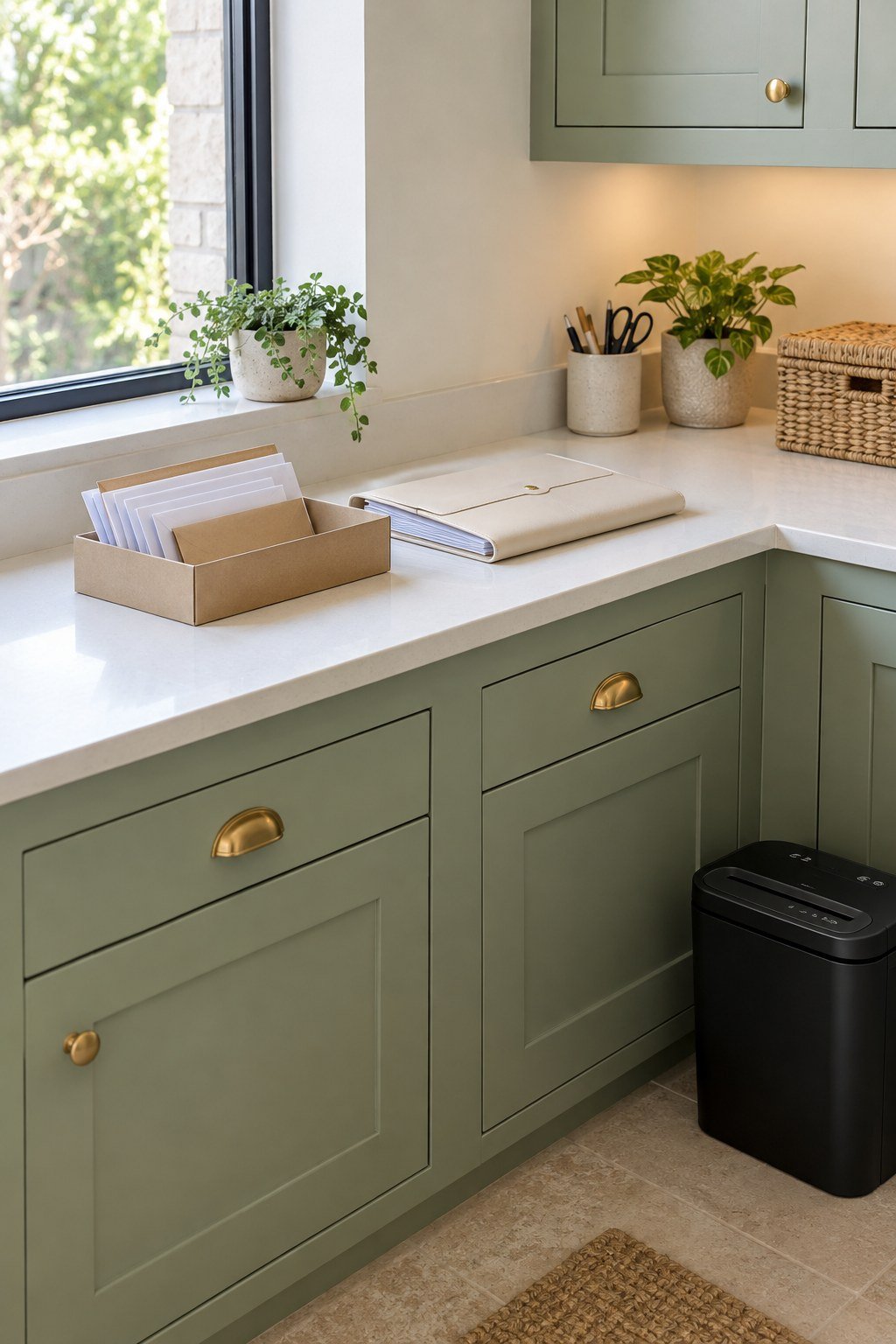
Recycling and private papers waiting for secure disposal need a clear route out of the system. Keeping them apart stops the same envelopes travelling from one surface to another.
Check papers before discarding them and use a disposal method suitable for the information they contain. Keep anything awaiting private disposal out of open view and away from the everyday filing collection.
Deal with the outgoing pile at a sensible interval so it doesn’t become a permanent box. Our decluttering tips can help if the first sort feels a little overwhelming.
11. Give paperwork a short weekly reset

A small regular reset is easier to fit in than waiting for the table to disappear. Pick a moment you already associate with household planning, then check incoming, action and filing in that order.
Put away the papers you’ve finished with, update any reminders and return the storage to its home. Keep the routine short enough that it feels possible during an ordinary week.
Adjust the system if the same type of paper keeps getting stuck. The right arrangement should make the next step clearer, rather than asking you to become a completely different person.
Let the table become a table again
You don’t need to build a perfect filing system before opening the next envelope. Start with one landing place and one clear home for papers that need action.
Add storage only where it solves a specific problem, and keep the categories easy to understand. A tray, a modest file box and a regular check may be plenty for the way your home runs.
The goal is a paper routine that gives the room back to you. Being able to sit down with a cup of tea without moving a stack of forms is a very worthwhile result.