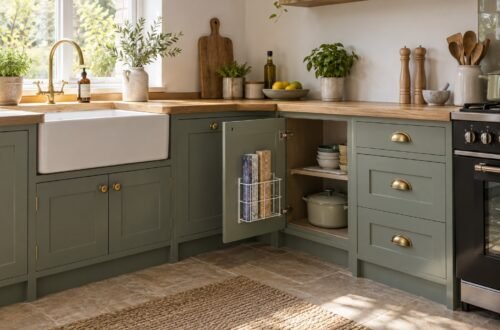

A closet shelf can hold a surprising amount, but the arrangement needs to work when you take something out. If one sweater brings the whole pile with it, a little more structure can make mornings much easier.
These closet shelf organization ideas mix useful dividers and containers with simple changes to stack height, access and the amount you keep in each space. The aim is to find things comfortably and put them back without rebuilding the shelf.
Start with one shelf that regularly causes trouble. Sort its contents, check the dimensions and choose the smallest change that would make it nicer to use.
As an Amazon Associate I earn from qualifying purchases.
Images are AI-generated room inspiration. SHOP SIMILAR opens a search for visually similar options; check the details and suitability for your space before buying.
1. Separate sweater stacks with clear dividers
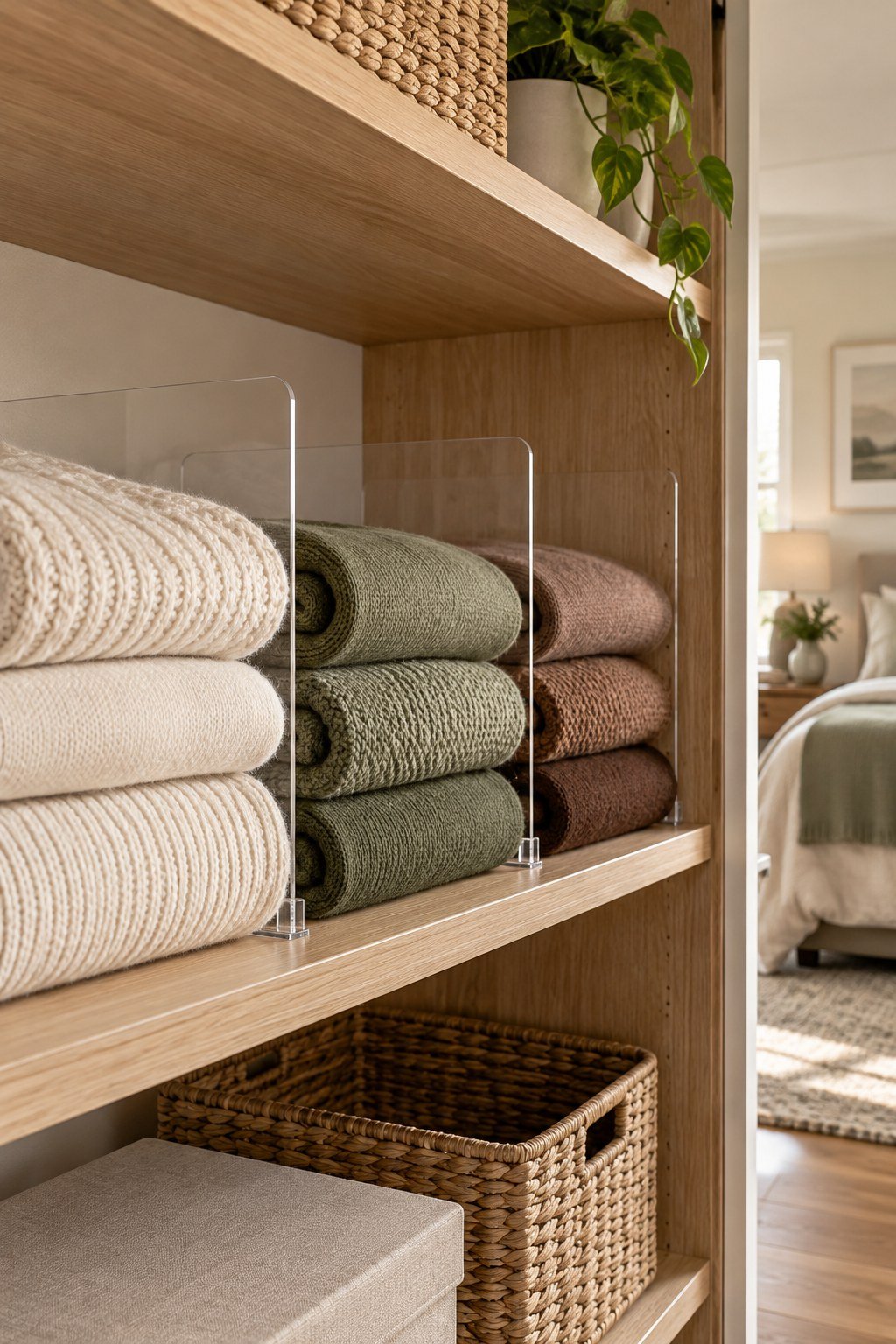
Clear dividers give a broad shelf smaller sections, so one stack is less likely to lean into the next. Their quiet finish also lets the clothes remain easy to see.
Check the shelf thickness, depth and edge shape against the divider’s fitting requirements. A clip-on design needs to suit the shelf, and any edges near the clothes should be smooth.
Keep the stacks comfortably below the space above them. Dividers help define the lanes, but they don’t make an overfilled pile pleasant to take apart.
2. Use open-front bins for folded everyday clothes
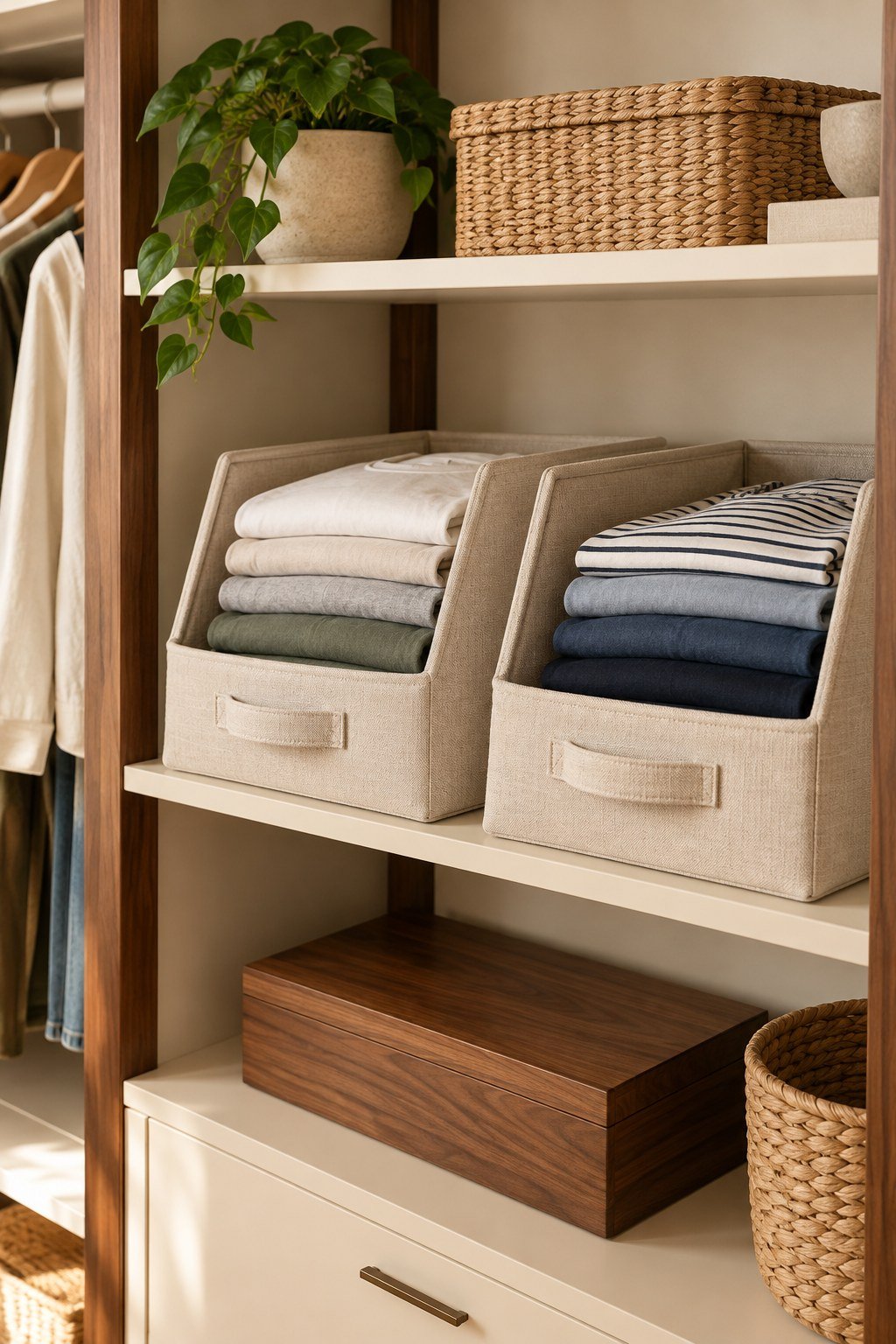
Open-front bins can make a deep shelf easier to use by giving folded clothes a clear section. A lower front lets you see the contents without pulling the whole container out.
Measure the shelf and the bin’s full shape, including handles. Leave enough room to reach in or slide the bin forward without catching the shelf above.
Give each bin a simple purpose, such as T-shirts or casual tops. Keep the amount manageable so the clothes remain visible rather than compressed into a fabric drawer.
3. Give small accessories a shallow basket

A shallow basket can gather scarves, belts or other small accessories that don’t make a stable stack. The woven texture also brings warmth to an open closet.
Choose a basket that fits the shelf without projecting into the doorway. Check the inside for rough areas or use a suitable smooth lining where delicate fabrics might catch.
Keep the category small enough to scan quickly. A basket works best when you can see the useful things near the top, rather than having to empty it every morning.
4. Make small items easier to reach with clear drawers
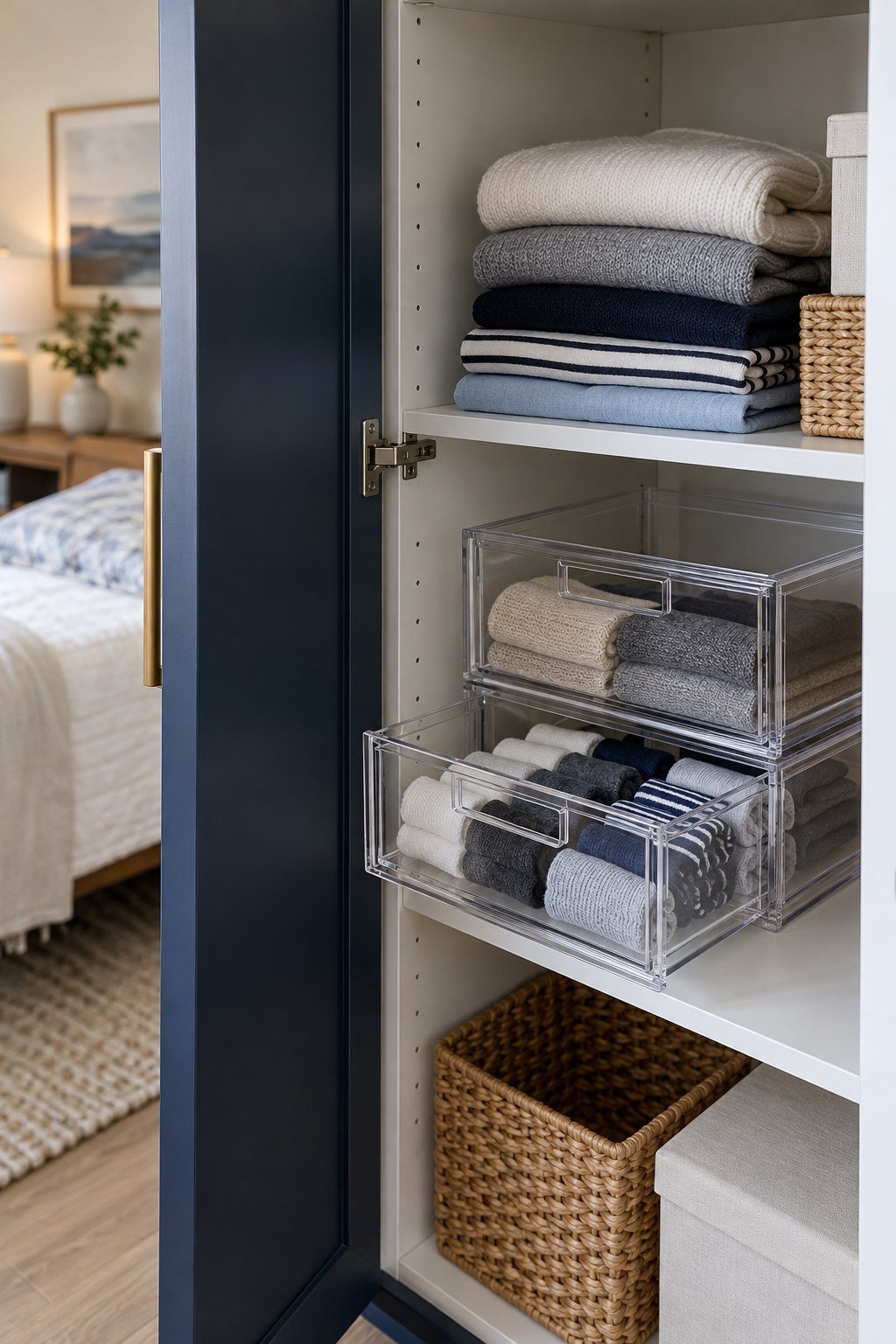
Clear drawers can give socks and small clothing items a more useful home on a shelf. They make the contents visible while keeping separate groups from drifting together.
Check the drawer’s internal size and the space needed to open it. If you stack units, follow their guidance and make sure the shelf can support the loaded arrangement.
Keep the categories straightforward so putting laundry away stays easy. A drawer for everyday socks is more useful than several tiny sections that nobody wants to maintain.
5. Give handbags separate upright spaces

Separate spaces help bags stay visible without leaning in a crowded row. A few clear dividers can make a shelf feel much calmer, especially when the bags are different shapes.
Allow enough width to lift each bag out comfortably and follow its care guidance for storage and support. Avoid stretching handles or forcing a soft bag into a narrow slot.
Keep the bags you use most at an easy height. Occasional pieces can have another suitable home, leaving the everyday row comfortable to use.
6. Add a small riser to a suitable shoe shelf
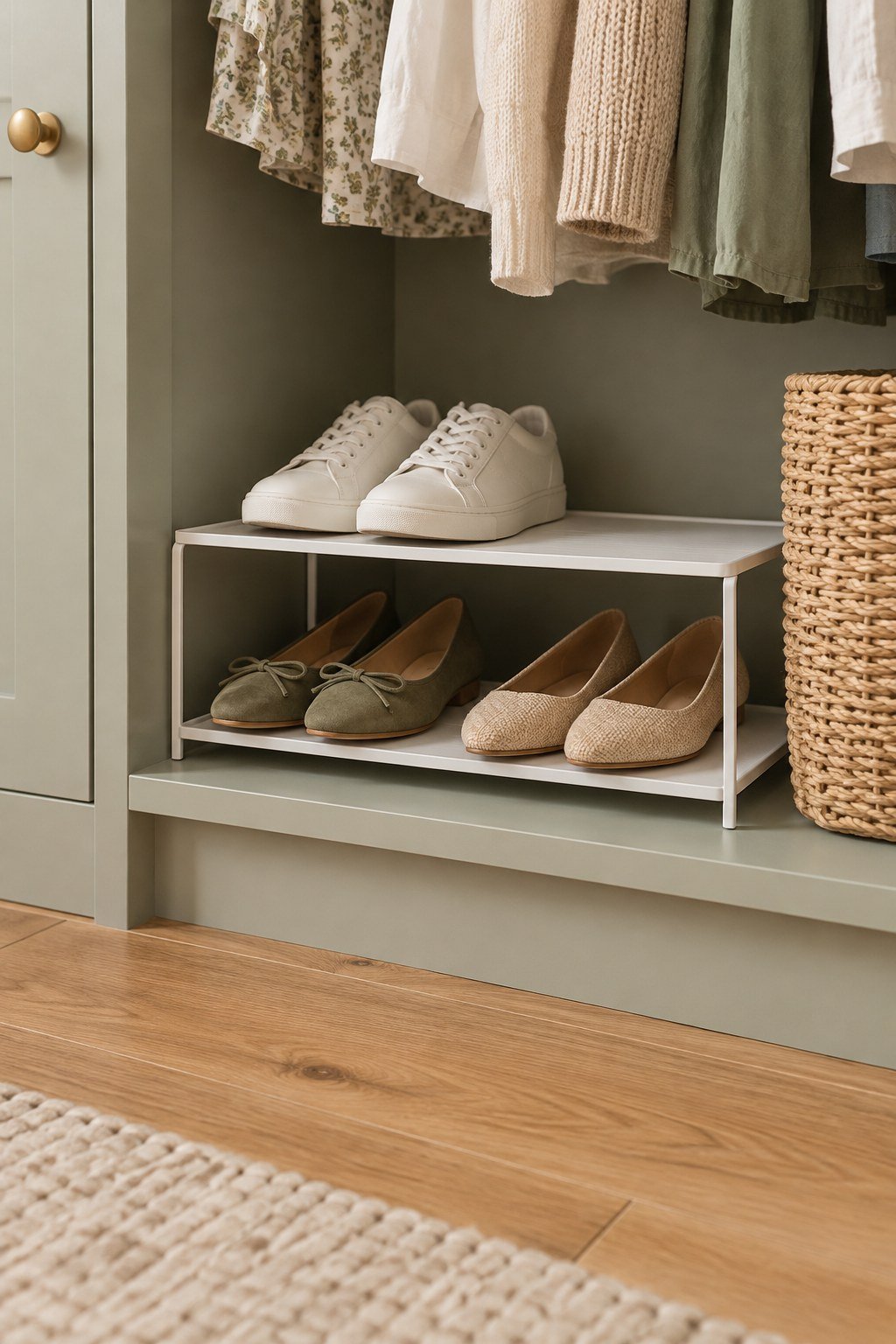
A small riser can make a tall lower shelf more useful for shoes. Two accessible levels may work better than pairs stacked directly on top of each other.
Check the shelf depth, riser height and shoe dimensions before choosing one. You need space to lift a pair out, not just enough room to slide it into a tight gap.
Keep the surface stable and follow the load guidance. For pairs that belong nearer the front door, our entryway shoe storage ideas offer other useful arrangements.
7. Contain occasional clothing in light storage bags

A zippered fabric bag can keep occasional clothes together on an upper shelf. A viewing window makes it easier to remember what is inside without opening every bag.
Put away clothing only when it is clean and fully dry, following the garment’s care guidance. Choose a storage method that suits the fabric and the location.
Keep higher bags light enough to move comfortably and leave room to take them down safely. A modest seasonal collection is easier to manage than a row of tightly packed bags.
8. Use the gap below a shelf for lightweight accessories
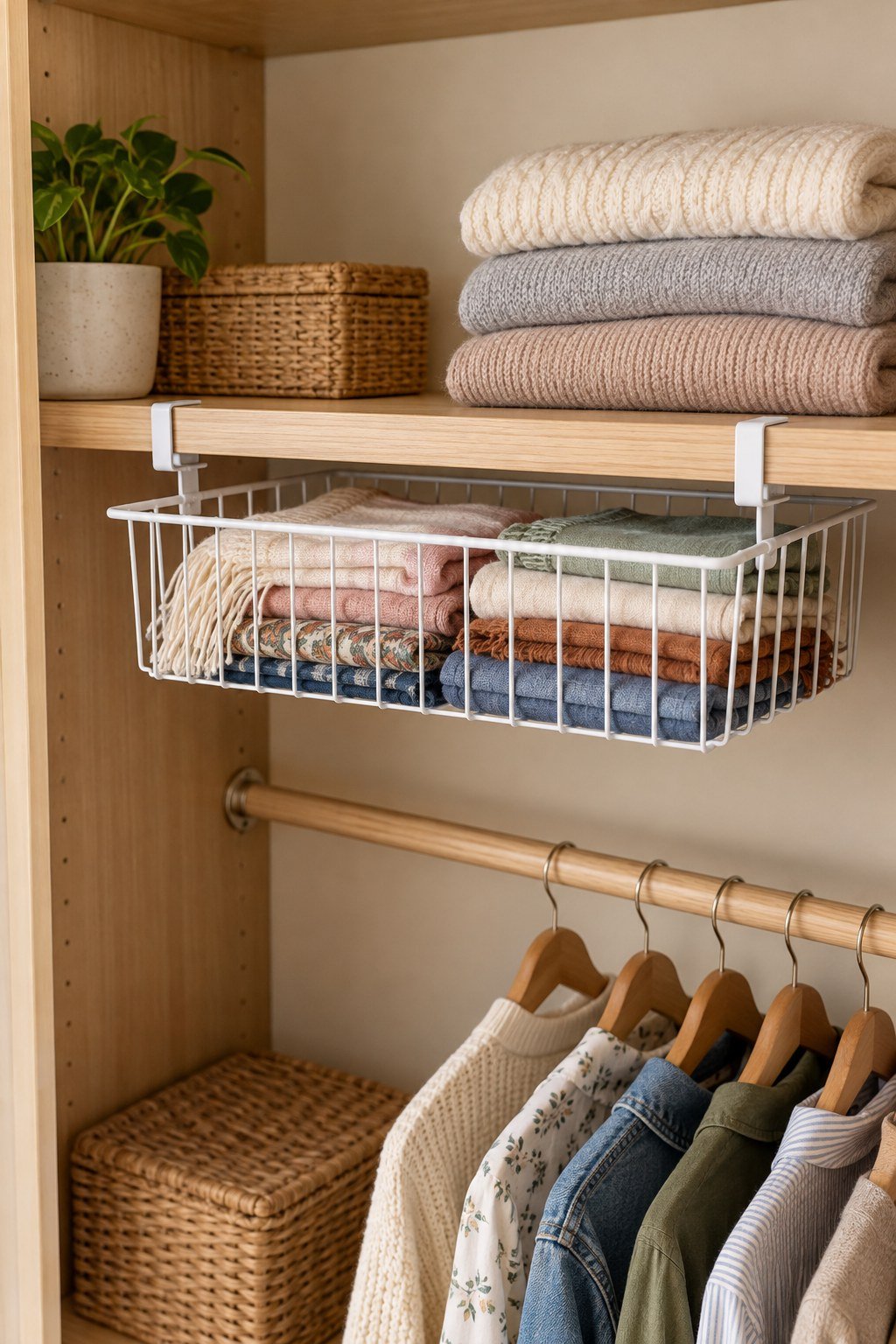
An under-shelf basket can use a small vertical gap without changing the whole closet. Lightweight scarves or soft accessories can work well in this extra layer.
Check the shelf thickness, mounting clips and stated load before choosing it. The basket should sit securely and leave enough room for whatever is stored underneath.
Keep the arrangement easy to see and reach. If the added basket makes the shelf below awkward, a simpler layout may be more useful than the extra compartment.
9. Make the stacks shorter before making them neater
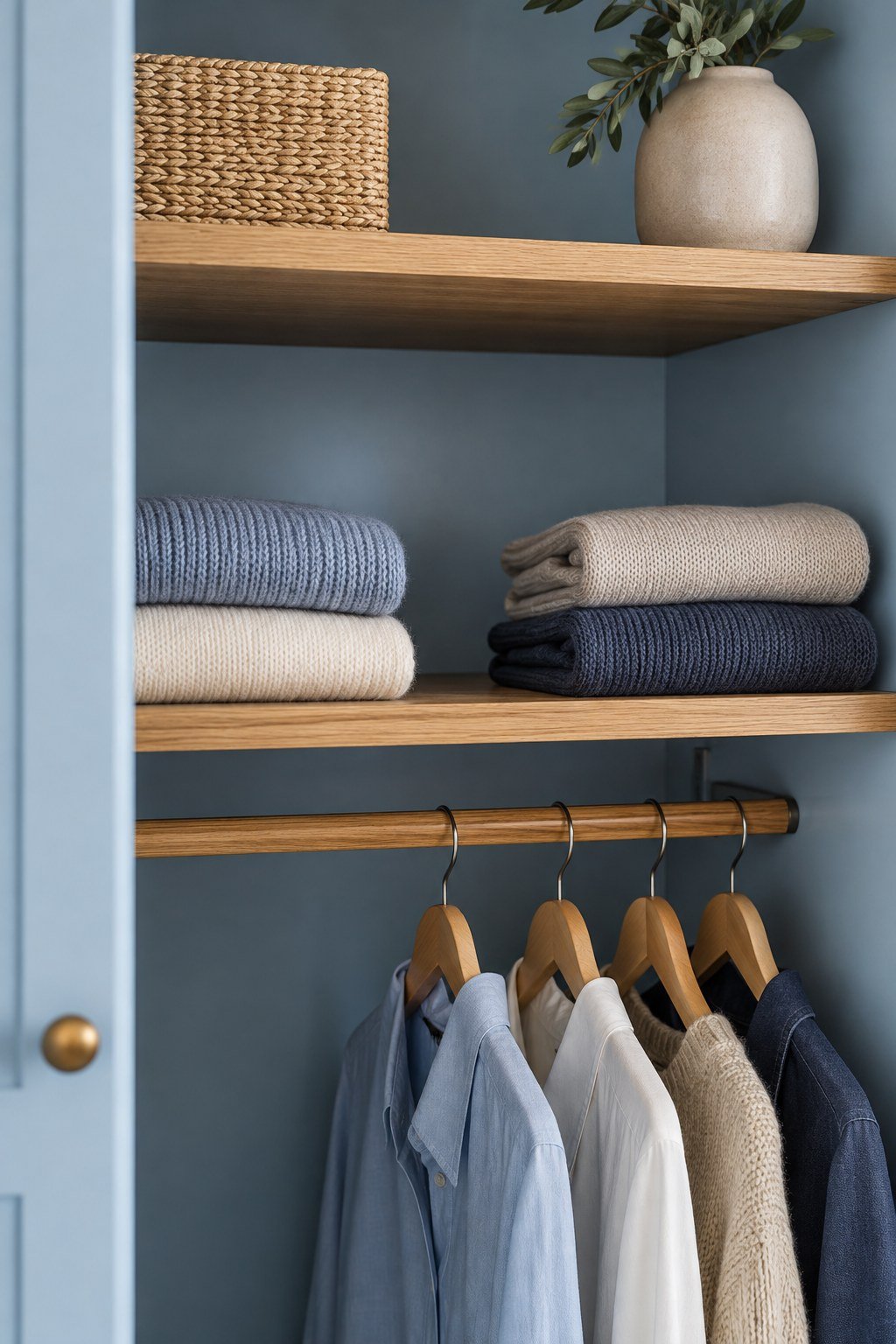
A shorter stack is usually easier to use than a tall tower, however carefully it was folded. Start by reducing the height enough that you can lift out a garment comfortably.
Fold similar items to a consistent shape that suits the shelf depth. Keep heavier pieces low in the stack and avoid hiding the clothes you use most at the bottom.
Give any overflow a deliberate home or review how much needs to stay. Our decluttering tips can help if the shelf is being asked to hold too much.
10. Match each shelf to how often you use it

Daily clothes deserve the shelves that are easiest to reach. Put occasional items in the less convenient spaces, with heavier things kept where you can handle them comfortably.
Think about the whole closet as you arrange it. Shelves, drawers and the hanging rail work better when they share the job instead of each holding a little of everything.
If the rail is crowded too, these ideas for organising hanging clothes can help you decide what belongs folded and what works better on a hanger.
11. Leave a gap that makes putting things away easier

A little empty space can make a shelf much easier to live with. It gives your hands room to move and makes returning clean laundry feel less like fitting pieces into a puzzle.
Try leaving a visible gap beside one group, then notice whether the arrangement stays easier to use. If the gap disappears immediately, review the amount or move something occasional elsewhere.
Make a quick shelf check part of a routine you already have, such as putting away the weekly laundry. These home organization systems have more ideas for small habits that keep storage useful.
Give the shelves a little breathing room
You don’t need a completely new closet to make its shelves feel better. One divider, a shallower basket or a shorter stack can be a useful first change.
Choose the shelf that is hardest to use, sort what belongs there and check the space before adding an organiser. Then give the arrangement a few ordinary mornings to prove itself.
The best result is a closet that is easy to use after laundry day, not just immediately after a tidy. Finding a favourite sweater without rebuilding the pile is a lovely little improvement.