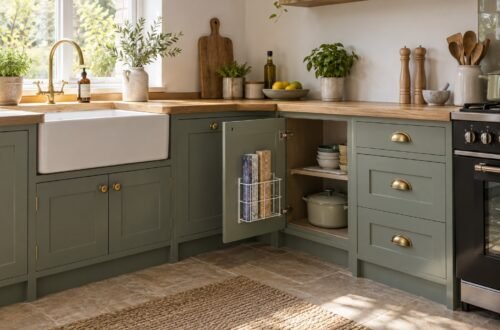

A kitchen can be practical and still feel like somewhere you want to linger. Creamy cupboards, warm wood and a little texture can take the edge off all those hard surfaces, whether you’re making breakfast in a tiny galley or gathering around an island.
The nicest warm neutral kitchen ideas don’t depend on everything being beige. A brown wooden tray, a faded runner or a softly glazed tile can give a quiet room plenty of character. It’s the small changes between colours and materials that stop the whole space feeling flat.
These twelve ideas mix easy additions with bigger choices for anyone planning a refresh. Start with something your kitchen is missing, and build from there. You may find that a few softer details make the cabinets and counters you already have feel much more inviting.
As an Amazon Associate I earn from qualifying purchases.
Images are AI-generated room inspiration, not manufacturer product photos. Selected SHOP SIMILAR links lead to products with a similar look; check the listing for the exact details and what is included.
1. Bring in a woven pendant above the island

A woven pendant adds a lovely change of texture above a kitchen full of smooth doors and worktops. Natural rattan sits easily beside cream paint and oak, and the open weave gives the fitting some interest even when the light is off. An elongated shade works particularly well over a modest island.
Choose the number and size of pendants around the surface below them. One can be enough above a small breakfast bar, while a longer island may suit a pair. Leave the sightlines comfortable so the shades don’t become a barrier between the people sitting and standing on either side.
Keep woven shades in a suitable dry area, away from cooking heat and heavy grease, and follow the fitting’s clearance and installation requirements. Let practical task lighting take care of the counters. The pendant can then bring warmth and texture to the part of the kitchen where people gather.
2. Soften the floor with a faded patterned runner
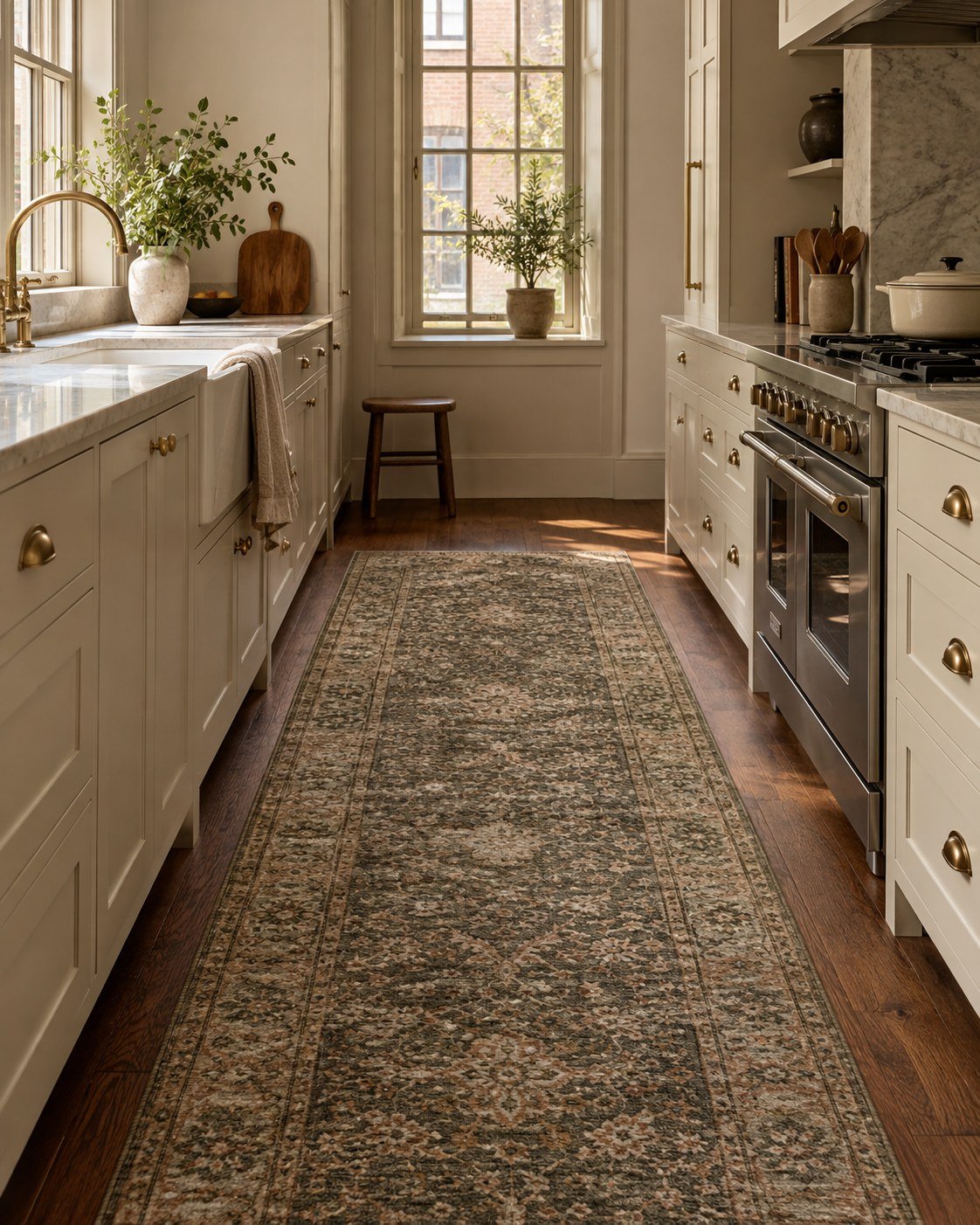
A runner can make a narrow kitchen feel much more settled, especially when the floor and cabinets are fairly plain. A faded pattern in olive, tan and muted brown brings a little depth without turning the room into a busy patchwork. The worn-looking finish sits beautifully beside older wood.
Leave a border of floor visible along the sides so the rug feels intentional rather than squeezed into the gap. Check that doors and drawers can still open freely, and use an appropriate non-slip rug pad for your floor. A low-profile design is usually easier to fit into a working kitchen.
Think about how you’ll care for it before choosing. Kitchens see crumbs and splashes, so follow the rug’s cleaning instructions rather than assuming every runner is machine washable. A pattern you enjoy and a care routine you can manage are much more useful than a rug you’re constantly worried about.
3. Gather your coffee things on a warm wooden tray

A small wooden tray can turn a scattered coffee corner into a little arrangement that feels considered. Put a couple of everyday mugs and the sugar jar together, and leave the machine beside them. The wood gives ceramic cups and a pale worktop a warmer backdrop.
Keep the tray in proportion to the counter. You want it to gather a few useful things, not take over the space you need for preparing food. A round shape can be especially nice among all the straight lines of cabinets, tiles and appliances.
Choose the pieces you reach for most and leave the rest in a cupboard. It’s easier to lift one small tray when you’re wiping down the counter, too. If you’d like to make more of this spot, our coffee bar ideas have plenty of ways to give your morning routine a proper little home.
4. Keep wooden utensils in softly fluted pottery

A ceramic utensil pot is one of those useful things that can also make the counter look better. An oatmeal or warm greige glaze feels softer beside wood than a row of shiny containers, while gentle fluting gives a plain shape some texture. A few wooden spoons make a lovely everyday pairing.
Use the taller pot for the tools you reach for most, and a smaller one for serving spoons or other utensils that tend to get lost in a drawer. Leave enough space between the handles that you can take one out easily. The arrangement should make cooking simpler, not add another obstacle.
Keep the pots within a comfortable reach of the preparation area without crowding the hob. You don’t need to fill every gap around them with decoration; a chopping board and a little clear counter are enough. The pottery’s shape and the warm grain of the wood can do most of the work.
5. Give the counters a gentler evening glow
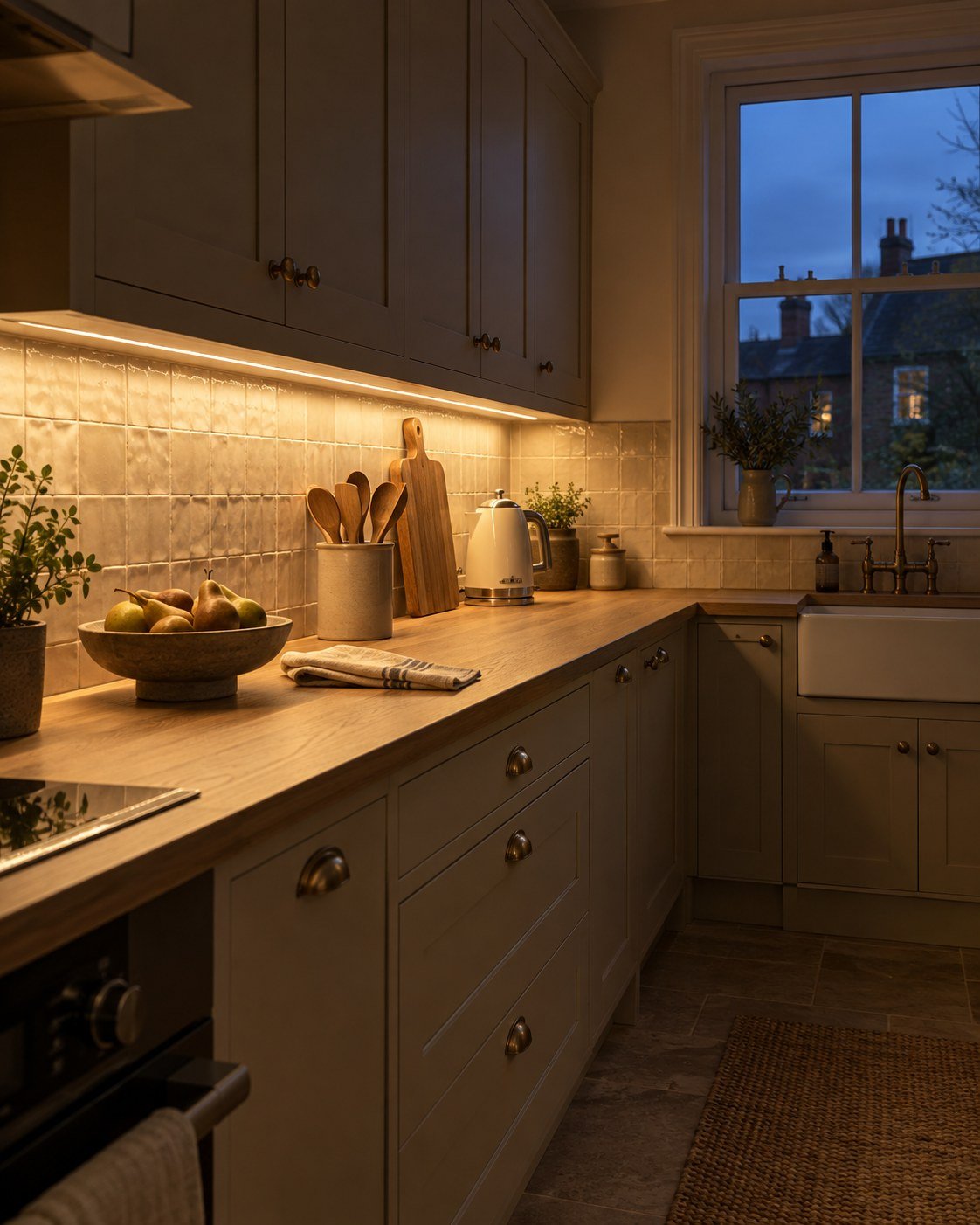
Warm under-cabinet light can make a neutral kitchen feel completely different after dark. It brings out the glaze in the tiles and the grain in a wooden worktop, while keeping useful light close to the counter. It’s a lovely setting for making tea once dinner and the washing-up are done.
Hide the light source behind the cabinet’s front edge where the installation allows, so you enjoy the wash of light rather than a row of bright dots. Test the placement and brightness before fixing it permanently. A softer setting can feel lovely in the evening, with enough light kept on for whatever you’re doing.
Follow the product’s mounting instructions and plan the power supply and cable route away from heat and water. Keep the brighter task lighting you need for cooking. Our kitchen lighting ideas look at bringing useful light and a welcoming atmosphere into the same room.
6. Layer ivory, biscuit and mushroom instead of matching everything

A warm neutral kitchen doesn’t need one exact colour repeated on every surface. Ivory cupboards can sit beside a biscuit wall or a mushroom pantry and still feel calm. Those small differences give the room more depth than a perfectly matched set of cabinets, walls and tiles.
Start with the surfaces you’re keeping. The floor, worktop and backsplash already have their own undertones, and a paint colour needs to sit comfortably beside them. Try samples in the kitchen and look at them in daylight and under the lights you use in the evening.
Let one shade lead and use the others in smaller amounts. If your cupboards are already cream, the next layer might come from a warmer wall colour or a brown wooden table. Our warm neutral living room ideas can help you carry the same easy mix into an adjoining space.
7. Break up painted cupboards with natural oak
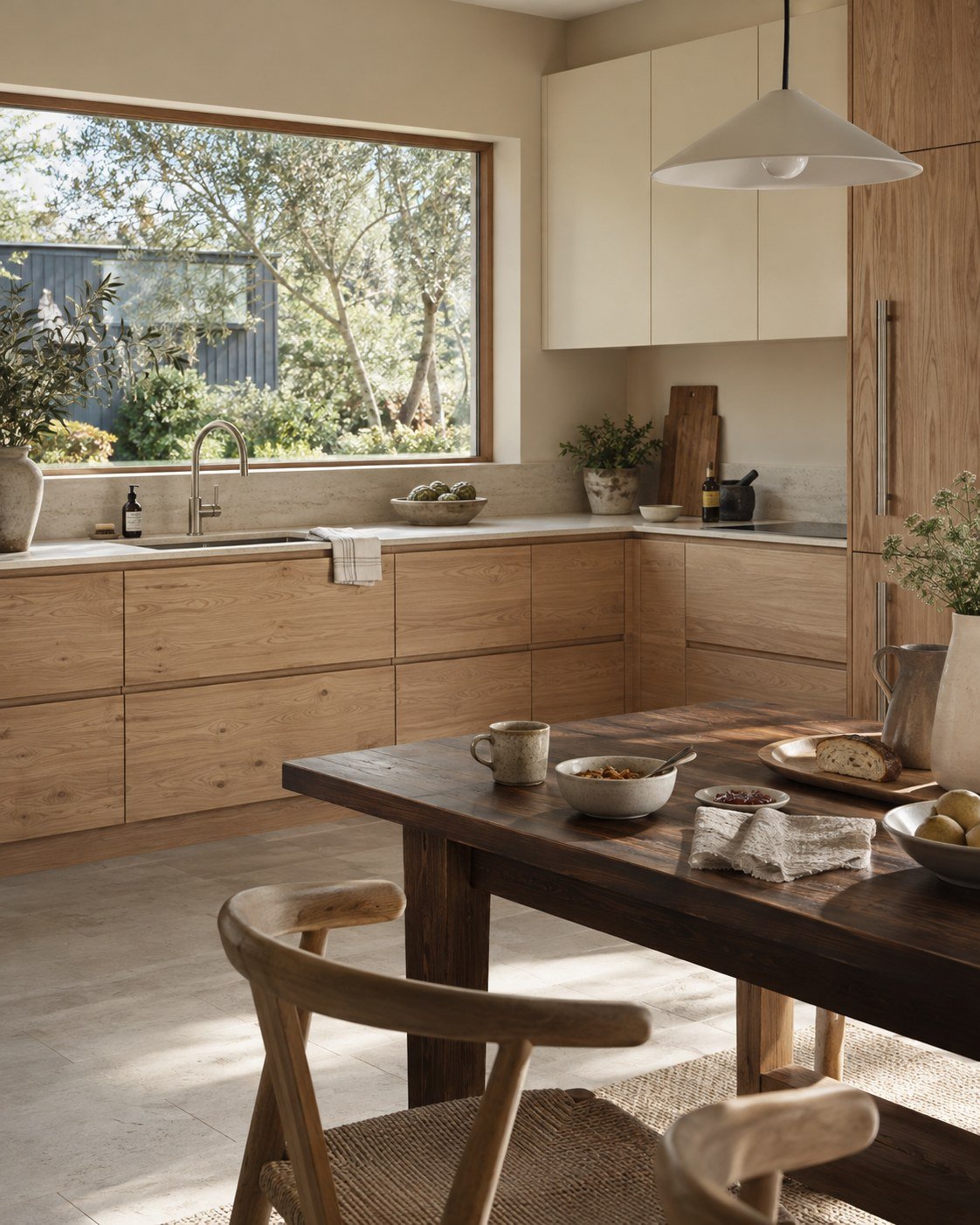
Oak gives a neutral kitchen something that paint can’t quite copy: a changing grain and a little natural variation from one piece to the next. Beside cream cupboards, it can make the room feel less uniform and more welcoming. You don’t need every cabinet to be wood for the effect to work.
If you’re planning a kitchen, try wood on the lower cupboards, the island or one tall pantry. Keeping the other large surfaces fairly quiet lets the grain show. Look at samples together, especially if the floor is also wood, so the different tones feel comfortable in the same space.
For an easier change, bring in a freestanding wooden table, a small shelf or the stools you already use. A few repeated wood tones can connect the room without making it feel like a matching furniture set. Let the pieces earn their place through everyday use.
8. Choose tiles with a little warmth and variation
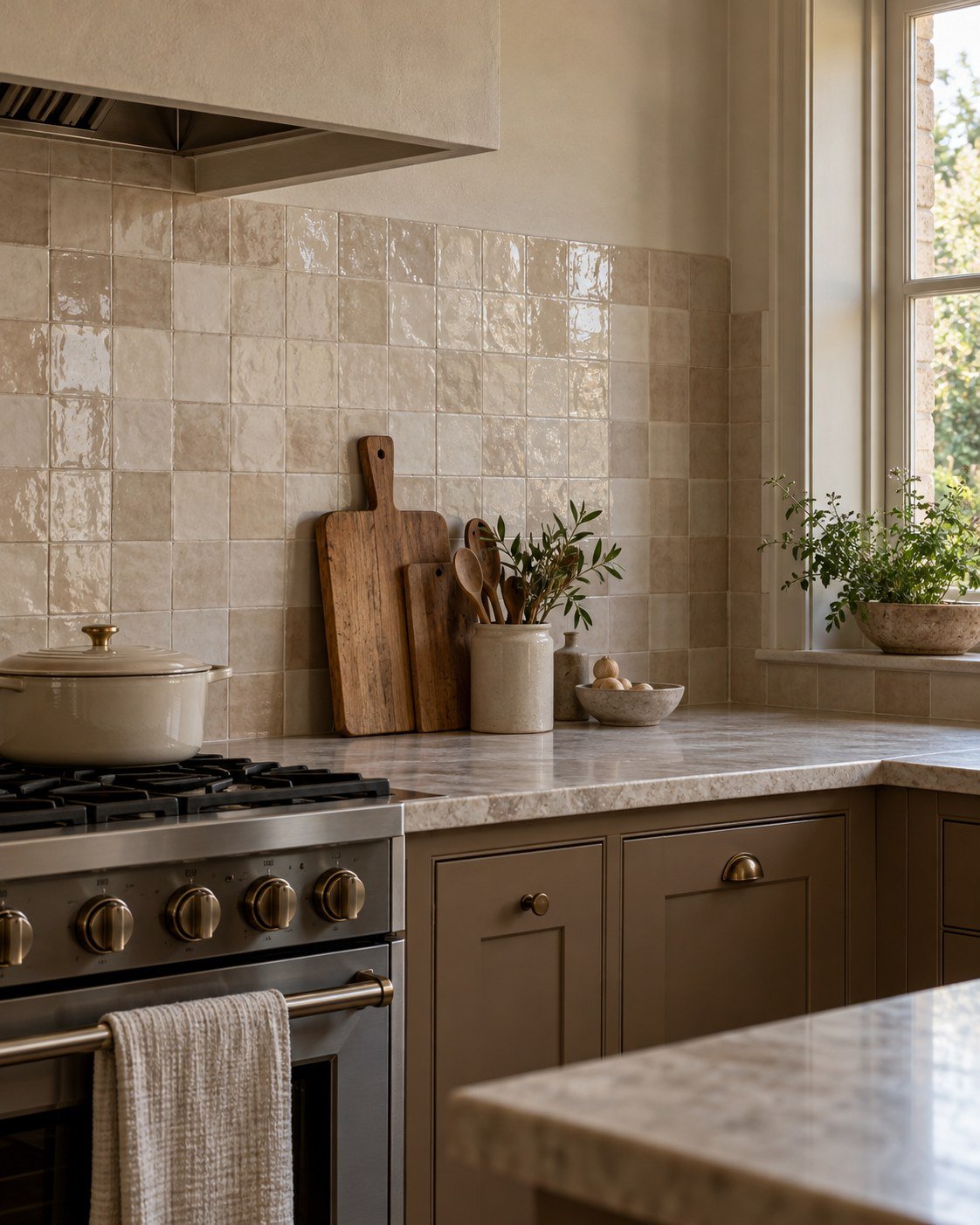
A backsplash takes up a lot of visual space, so its finish can change the feeling of the whole kitchen. Soft ivory, oat or pale beige tiles can sit gently behind a light worktop, especially when the glaze catches daylight in slightly different ways. Even a simple square shape can have plenty of character.
Bring a few samples home and place them beside the cabinet colour and worktop. A white that looks creamy on its own might look quite cool next to a warmer surface. Grout matters too: a close colour can make the tiled area feel quieter, while a stronger contrast draws attention to the grid.
Choose a surface and finish suitable for the area and follow the maker’s installation and cleaning advice. You can get a softly varied look without choosing a difficult-to-maintain material. Keep the surrounding details simple so the gentle changes in glaze have room to show.
9. Add a little fabric at the window
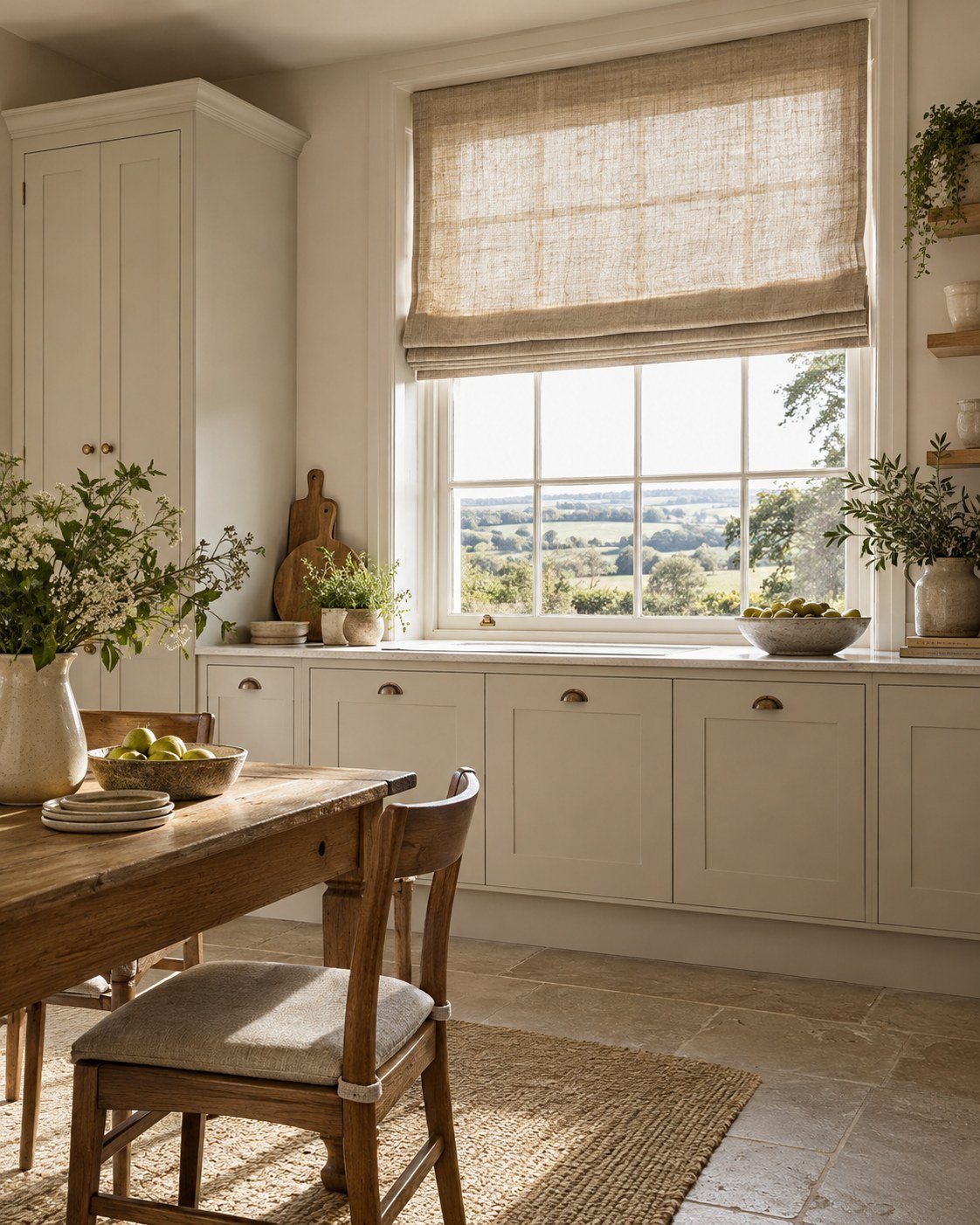
Kitchens have so many hard edges that a small amount of fabric can make a lovely difference. A flax-toned Roman blind brings texture to the window without needing a bold pattern. Its soft folds look especially good beside painted cupboards and a wooden table.
Choose the fabric and fitting for the window’s actual position. A blind near a preparation or washing area needs a practical cleaning routine, and fabric should stay clear of cooking heat and splashes. In a drier breakfast corner, you may have more freedom to enjoy a softer woven finish.
If the window works better left uncovered, try a seat pad or a simple tea towel in the same warm palette. A small check or stripe can add enough movement without taking over. You’re just giving the smooth cabinets and tiles another texture to sit beside.
10. Let warm metal soften the cabinet lines
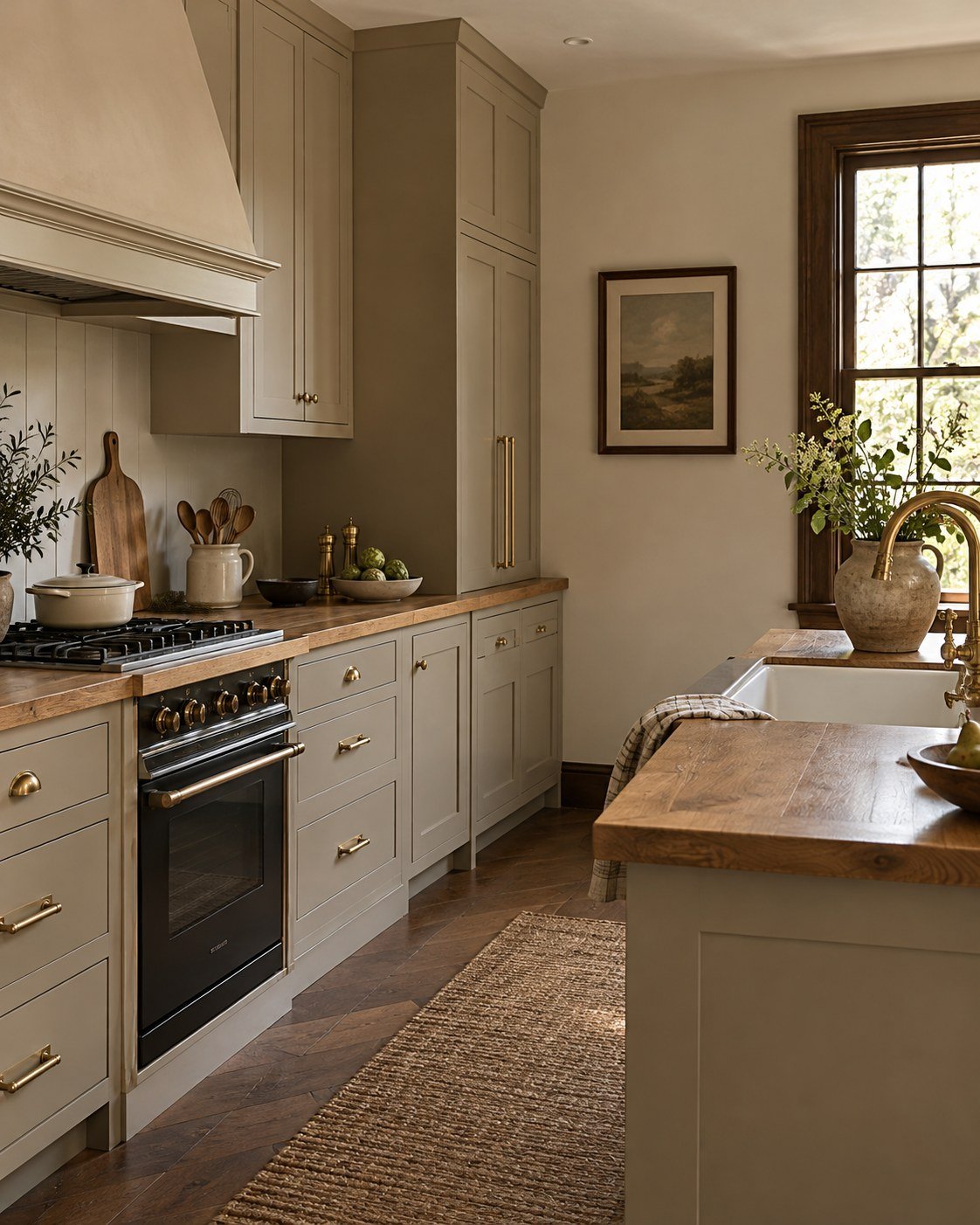
Warm metal can give a cream or mushroom kitchen a little lift without adding another strong colour. Brushed brass handles, a softly finished tap or a small wall light can bring a gentle shine beside matte doors and wood. You don’t need every metal surface to match perfectly.
If you’re changing handles, check the existing fixing centres, door thickness and how the new shape feels in your hand. Try one before ordering for the whole kitchen. The right handle should make a drawer easy to open as well as look good against the paint.
Repeat the warm finish once or twice if the room needs a little connection, then leave the rest alone. Stainless steel appliances can still belong in the same kitchen. A calm mix of finishes often feels more natural than replacing every practical piece just to make it coordinate.
11. Style one shelf with the things you use
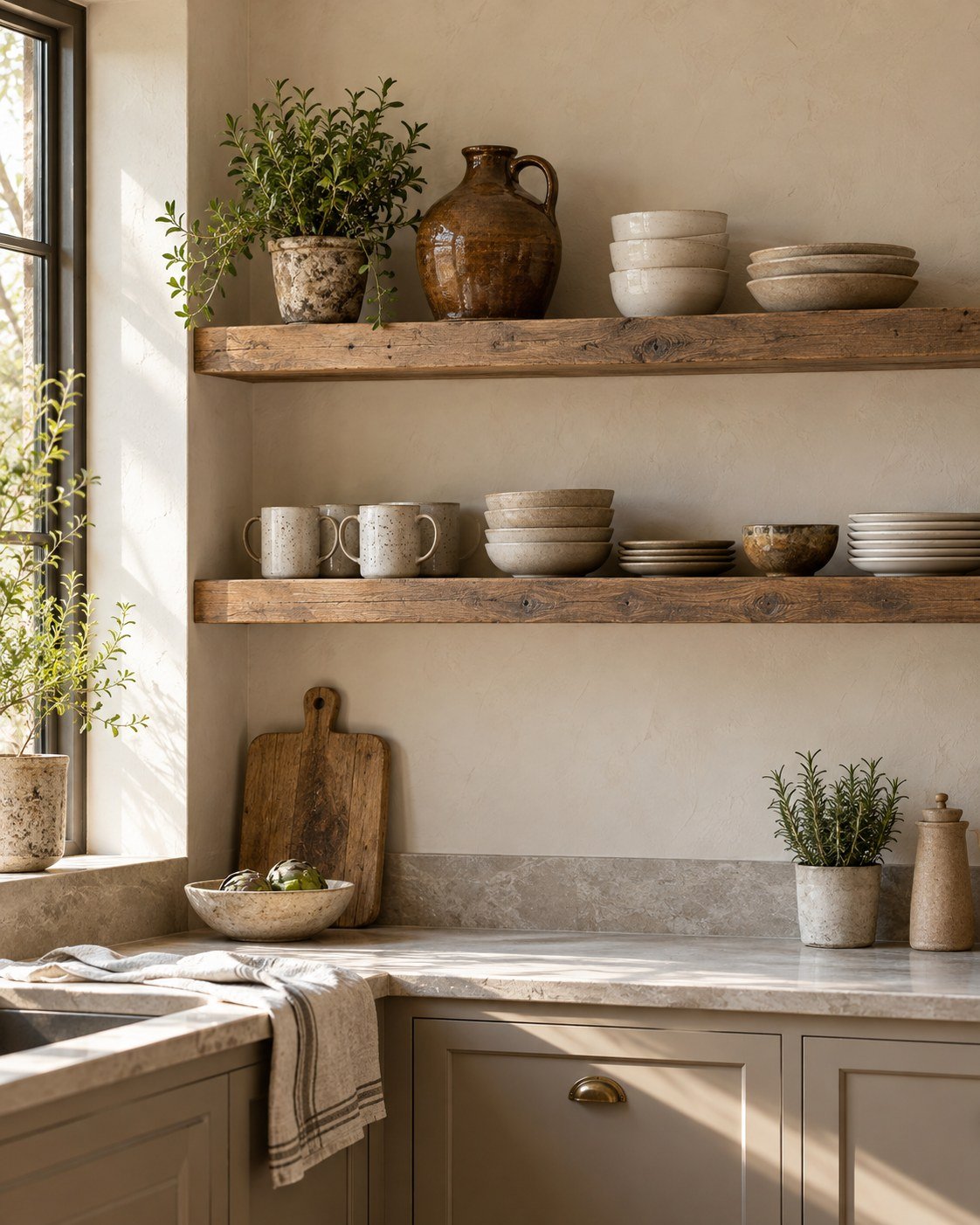
An open shelf can make a kitchen feel more personal when it holds ordinary things you enjoy using. Stacks of cream bowls, a few mugs and a brown glazed jug bring shape and texture without needing a separate collection of ornaments. Wood behind the pottery makes the arrangement feel warmer still.
Keep the daily pieces within a comfortable reach and leave visible gaps between the groups. You don’t need to fill every inch of the shelf to make it feel finished. A little empty space lets you notice the shapes and makes it easier to put things away after washing-up.
Choose a spot where the contents will be easy to keep clean and away from heavy cooking splashes. If the shelf is becoming a home for everything, edit it down to what you actually like or use. Our decluttering tips can help you make a start without turning it into a whole-house project.
12. Make one corner feel comfortable enough to linger
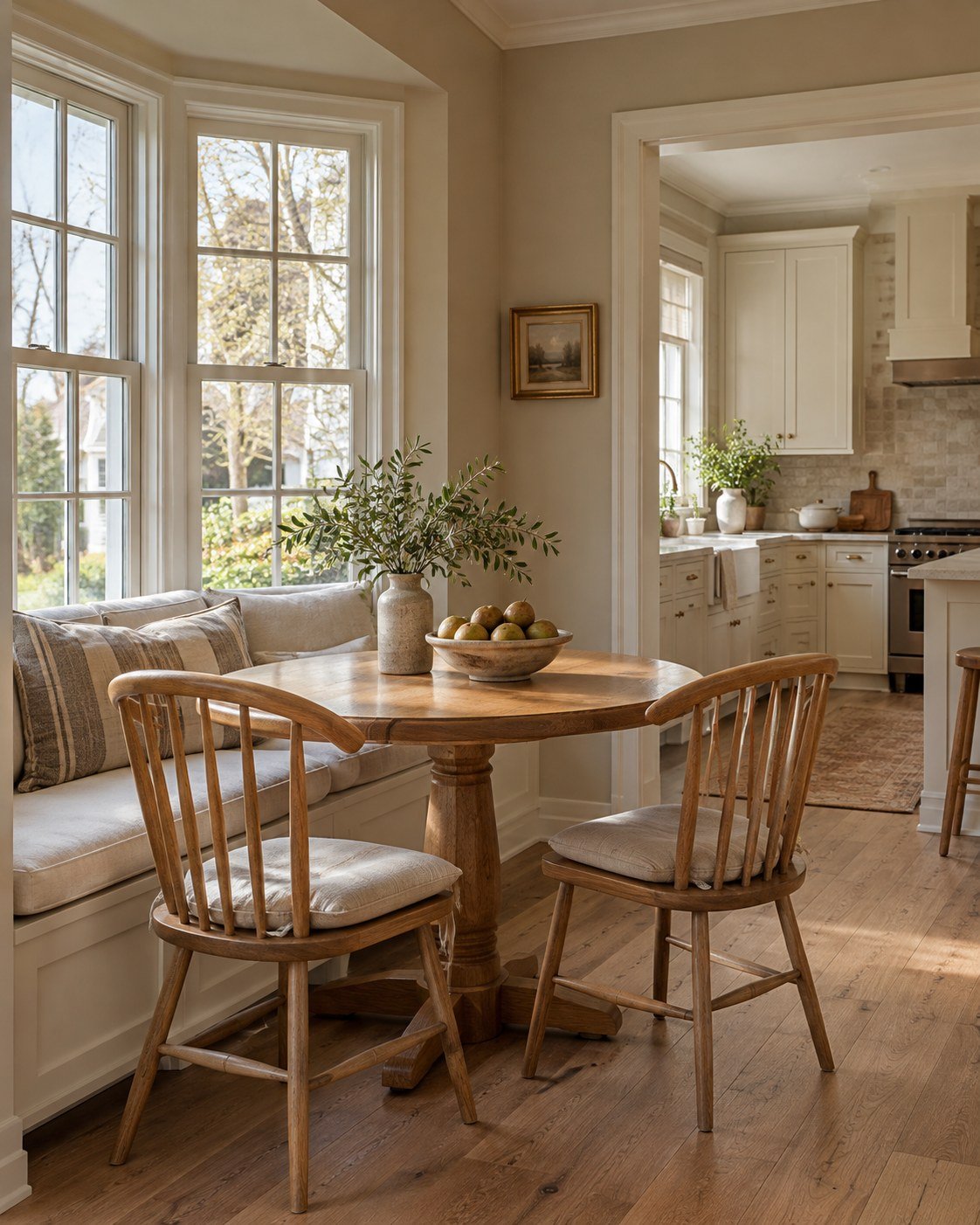
A softer kitchen isn’t only about colours and finishes. It’s also about having somewhere comfortable to sit while the kettle boils or someone else finishes cooking. A small round table, a curved wooden chair or a cushioned bench can make a corner feel like part of the room you actually want to spend time in.
Work with the space you have rather than squeezing in a dining set that interrupts the route through the kitchen. A compact table may be enough for breakfast and a notebook, while a single comfortable stool can improve an existing breakfast bar. Check the seat height and the room you need to get in and out.
Keep the fabrics simple and practical, perhaps a flax seat cushion or one muted stripe on a bench. Repeat a wood tone or creamy colour from the kitchen so the corner feels connected. Leave the table easy to clear, and you’ll have a welcoming little spot for the ordinary pauses in your day.
Make these warm neutral kitchen ideas your own
You don’t need a full renovation to give a kitchen a softer feel. Start with the piece you notice every day: the bright light above the counter, the bare stretch of floor or the collection of mugs that never quite has a home. One thoughtful change can make the rest of the room look more settled.
Then give the kitchen a little time before adding anything else. Notice which textures you enjoy and which colours work with the cupboards and worktop you’re keeping. Leave plenty of space for preparing food and putting things down; the room should feel easier to use as well as nicer to look at.
A few familiar materials can go a long way here: warm wood, soft fabric, useful pottery and light that feels good in the evening. Bring in one layer at a time, keep the things that earn their place, and let your kitchen become somewhere you’re happy to stay for another cup of tea.