
If opening a cupboard means catching a falling lid or moving three bowls to reach a mug, it is probably time for a little reshuffle. A small kitchen has to work hard, but putting things away should not feel like a puzzle you have to solve every evening.
The most useful small kitchen organization ideas deal with the awkward bits: wasted height above dishes, trays buried under pans, and packets disappearing at the back of a shelf. A well-chosen organizer can help, especially when it solves a problem you already have.
Before buying anything, empty one cupboard, keep the things you actually use and measure the space that is left. Start with the product ideas below, then use the last few tips to make the whole setup easier to live with.
As an Amazon Associate I earn from qualifying purchases.
Images are AI-generated room inspiration, not manufacturer product photos. Selected SHOP SIMILAR links lead to products with a similar look; check the listing for the exact details and what is included.
1. Add a second level above mugs and bowls

That big pocket of air above a row of mugs is useful space waiting for a second level. A little shelf riser lets you keep mugs underneath and bowls above, so you can reach either without dismantling a stack. Bamboo tops and simple white legs also look warm and unobtrusive inside a cupboard.
Choose what will sit on each level before choosing the riser. You need room for mug handles, a comfortable gap above the bowls and enough depth for the feet to rest fully on the shelf. Check that the cupboard door closes without touching the front edge.
Use the extra level to separate categories rather than squeeze in everything you own. A short stack of breakfast bowls above your everyday mugs makes sense; a precarious pile of serving dishes does not. Keep the pieces you use most on the easiest level to reach.
2. File baking trays and pans upright

If the tray you need is always at the bottom of the pile, try storing it on its side. An upright rack gives each tray, chopping board or suitable pan its own slot. You can pull out one piece without lifting the whole collection, which is a welcome change when dinner is already underway.
Use a lower cupboard with enough height for handles and the tallest tray. Adjustable dividers are helpful when your collection includes both slim baking sheets and deeper pans. Set the gaps around the pieces you own so they stand securely without being wedged together.
Measure the opening as well as the inside of the cabinet, particularly if there is a centre divider or a large hinge. Leave heavy cookware on a sturdy low shelf and follow the rack’s loading guidance. A few well-spaced pieces are easier to use than a tightly packed row.
3. Give food container lids their own little file

Food containers become much less annoying once the lids have a home of their own. A low tray with upright dividers keeps them visible and stops the smaller ones slipping behind everything else. Nest the matching bases beside it, with the larger pieces at the bottom.
Do the matching first. Put every lid with its container, then decide which complete sets are worth keeping. An organizer cannot make an orphaned lid useful, and clearing out the extras may free more room than you expected.
Arrange the lids by size or shape, whichever makes them quickest to find in your kitchen. Keep the tray near the containers and close enough to your usual leftovers-packing spot. If the whole cupboard needs a gentler starting point, these decluttering tips will help you work through it one small section at a time.
4. Bring the back of a cupboard forward with a turntable
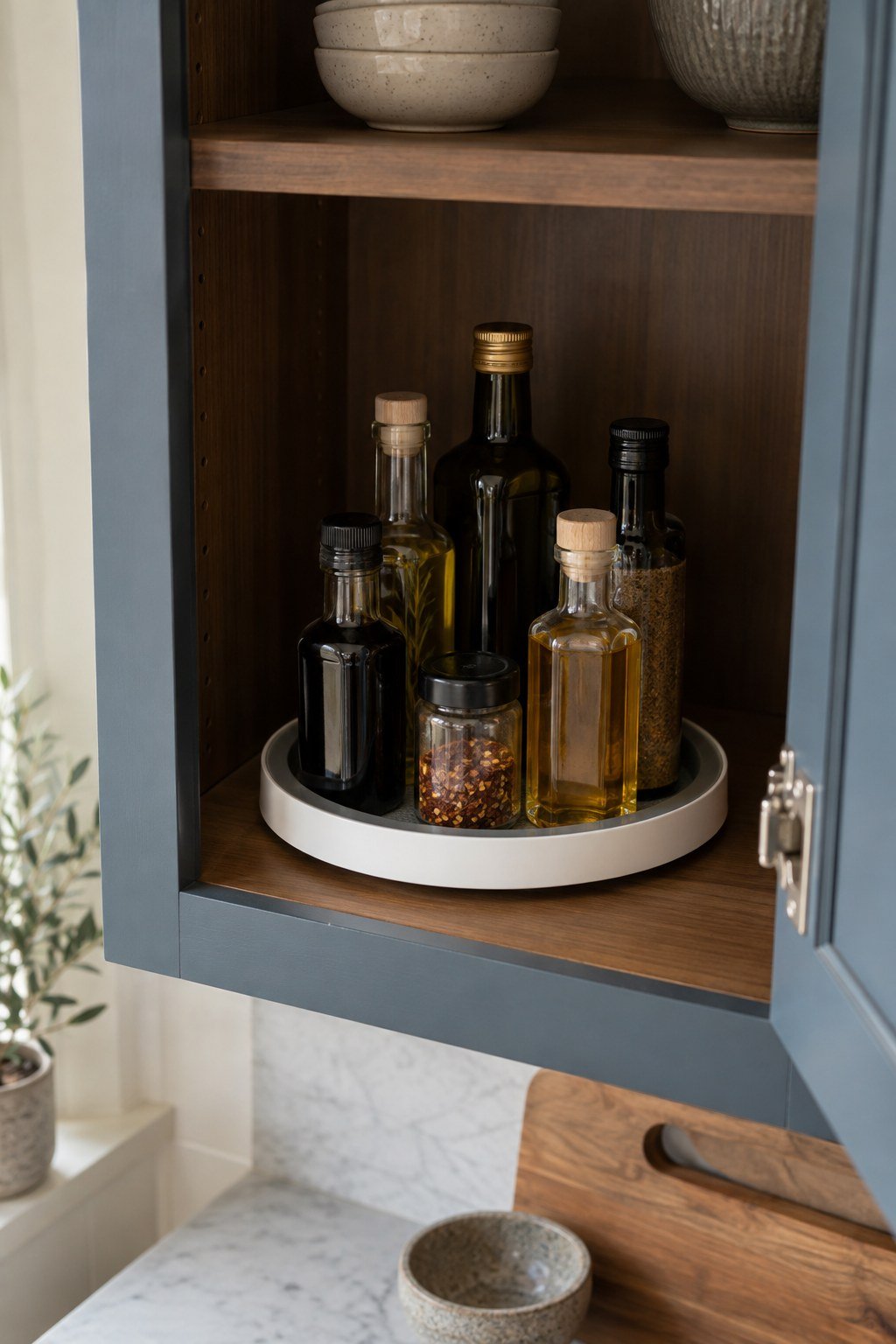
A turntable is handy for the bottles and jars that keep disappearing behind one another. A gentle spin brings the back row forward, so you can see what is there without reaching over everything. It works especially well for a small collection of oils, sauces or baking flavourings.
Check the full circle of space it needs before buying. The shelf depth, door hinge and neighbouring items can all get in the way, even when the tray itself fits through the opening. Leave enough height for your tallest bottle and enough room around it to turn freely.
Keep the collection sensible and the heavier items balanced. Tall bottles work better with some breathing room than tightly surrounded by little jars that catch as you turn. Wipe the tray when you notice a drip so it stays easy to use.
5. Use sliding baskets in a deep lower cupboard

Deep lower cupboards are often full at the front and mysterious at the back. Sliding baskets can make that depth easier to use by bringing the contents towards you. They are useful for a dry cupboard holding tea towels, spare cloths or other lightweight kitchen supplies.
A two-tier unit gives those smaller items separate homes without a loose pile developing on the cupboard floor. Keep one basket for cloths and another for sponges or refills, using a little container inside if small items would fall through the wire. Leave room to grip and pull the basket comfortably.
Check the width at the narrowest part of the doorway, the depth behind the door and the space the basket needs when extended. Follow the installation and loading instructions for the unit you choose. If you use one under a sink instead, account for every pipe and keep cleaning products separate from food.
6. Turn loose packets into easy-to-lift groups
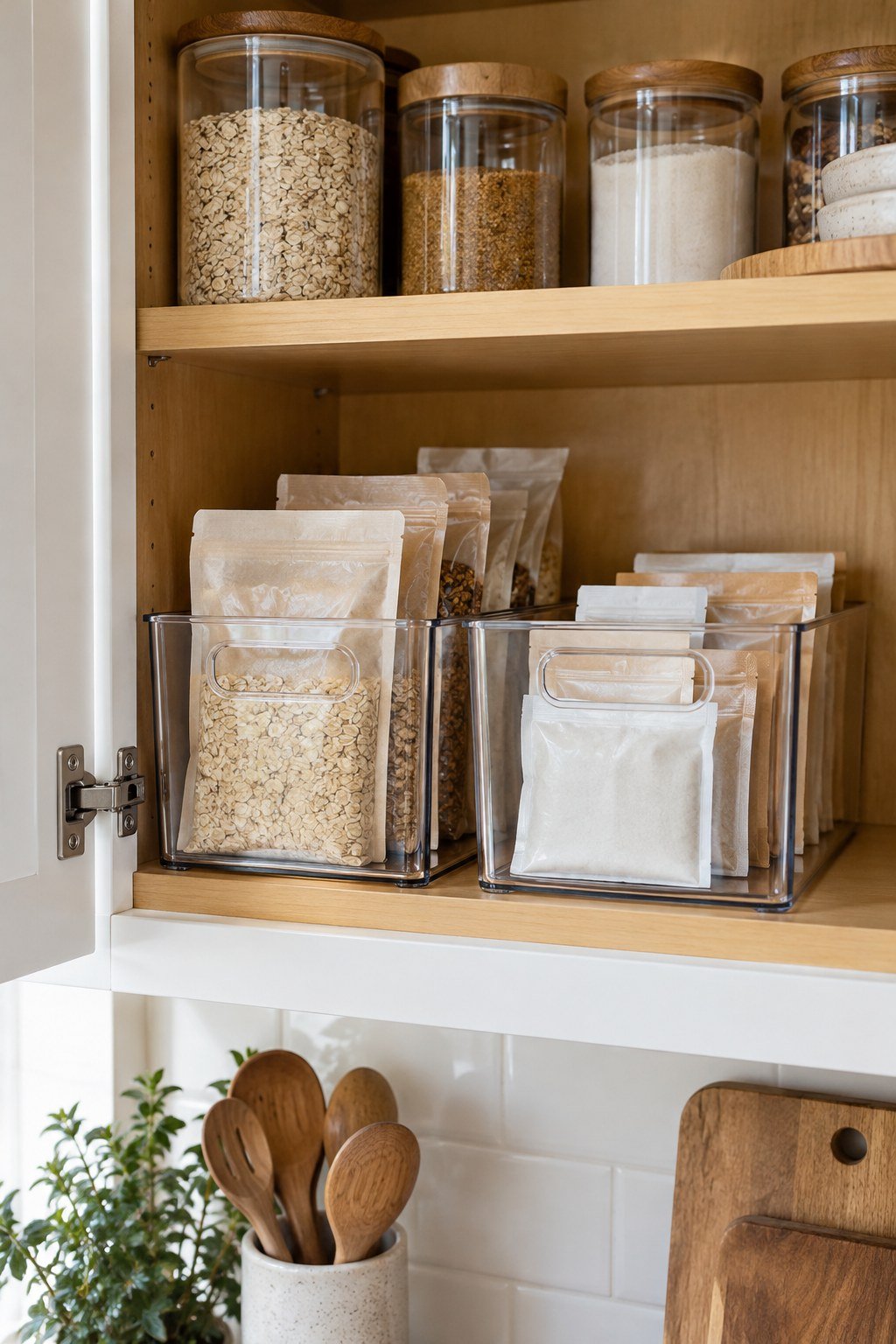
Packets are much easier to keep track of when they move as a group. A clear bin can hold breakfast sachets, baking packets or soup mixes upright, so they do not end up spread across the shelf. Pull the bin forward and you can see the whole little collection.
Make each bin a useful category rather than a random overflow box. Breakfast items together or everything for a quick baking session is easy to understand. If other people use the kitchen, a simple label can make putting things back almost effortless.
Choose a bin that leaves space for your hand at the front and can be lifted out without bumping the shelf above. You do not need to fill every inch with matching containers. For more ideas on grouping grab-and-go food, see these snack organization ideas.
7. Raise the back row of spices on a stepped shelf
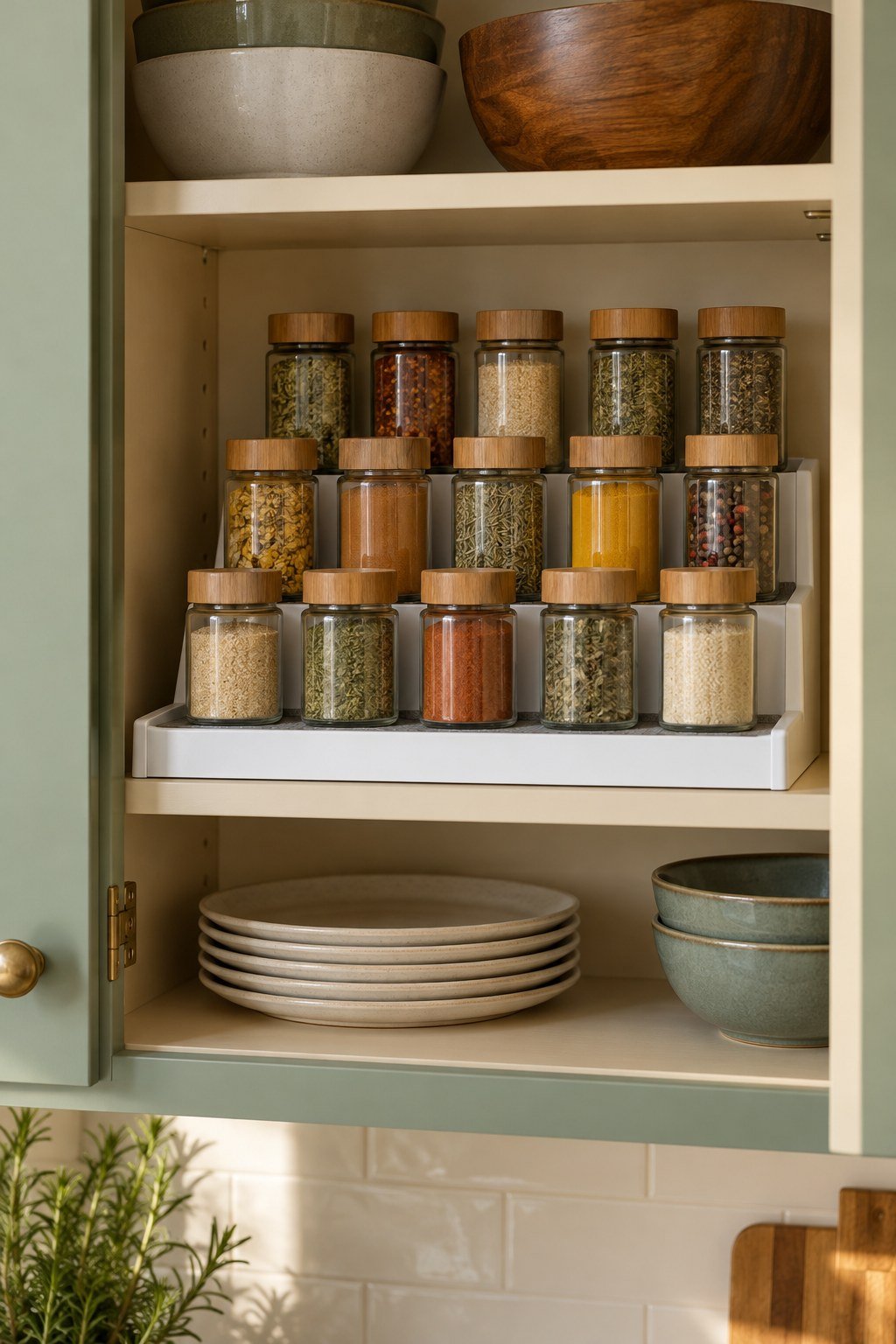
When spice jars sit in a flat crowd, the ones at the back are easy to forget. A stepped shelf raises each row a little, making the collection easier to scan. It can also help you notice that you already have paprika before another jar comes home.
Measure both the shelf width and the height above the top step with a jar in place. A riser that looks small on its own can need more headroom than expected once it is loaded. Keep the jars within reach so you can lift one out without tipping it over the front row.
Put your most-used seasonings where you can spot them quickly and keep occasional ones together further back. Check what you have before buying a whole set of matching jars; original containers may work perfectly well. A tidy spice cupboard should make cooking easier, not add another job.
8. Lay water bottles sideways on a rack

Reusable bottles have a habit of taking over a shelf one awkward shape at a time. A horizontal rack gives them defined spaces and stops them wobbling into one another. It is particularly useful when several people have different bottles and travel mugs.
Choose shelf spacing around the largest bottle you want to keep there, including any handle. Adjustable levels can help, but it is still worth checking the rack’s depth and the cupboard door clearance. Store bottles fully dry and follow their care instructions for storing the lids.
Keep the regular favourites together and reassess the extras before giving them valuable cupboard room. If a bottle has been replaced but never leaves the kitchen, it may not need a permanent spot. A smaller collection is usually easier to grab from and put back neatly.
9. Use straight-sided containers for the staples you refill

Bulky half-open bags can be awkward in a narrow cupboard. Straight-sided containers make everyday dry staples easier to line up, and clear sides let you see roughly how much is left. Start with the foods you use and refill often, such as oats, rice or pasta.
Choose the capacity around the amount you actually buy. A container that holds most of a bag can leave you storing both the container and a leftover packet, which defeats the point. Check that the lid opens comfortably beneath the shelf above, or make sure the container is easy to lift out.
Keep ingredient details, allergy information and dates with decanted food, and clean and dry containers before refilling. You can leave less-used foods in their original packaging inside a bin. Small kitchen storage ideas work best when they suit your routine, so there is no need to decant every single thing.
10. Give each cupboard a clear everyday job

A cupboard becomes easier to use when the things inside belong together. Put mugs near the kettle, everyday dishes near the dishwasher and pans close to the cooking area where the layout allows. You spend less time crossing the kitchen or opening several doors to find one thing.
Start with the items you reach for every day and give them the most comfortable spots. Put occasional serving pieces higher up or further back, while keeping heavy items on sturdy lower shelves. The most convenient cupboard should earn its place in your daily routine.
Try the arrangement for a week before deciding it is finished. If the same bowl keeps landing on a different shelf, that may be where it naturally belongs. You can use the same approach inside drawers with these kitchen drawer organization ideas.
11. Move adjustable shelves to suit what you own
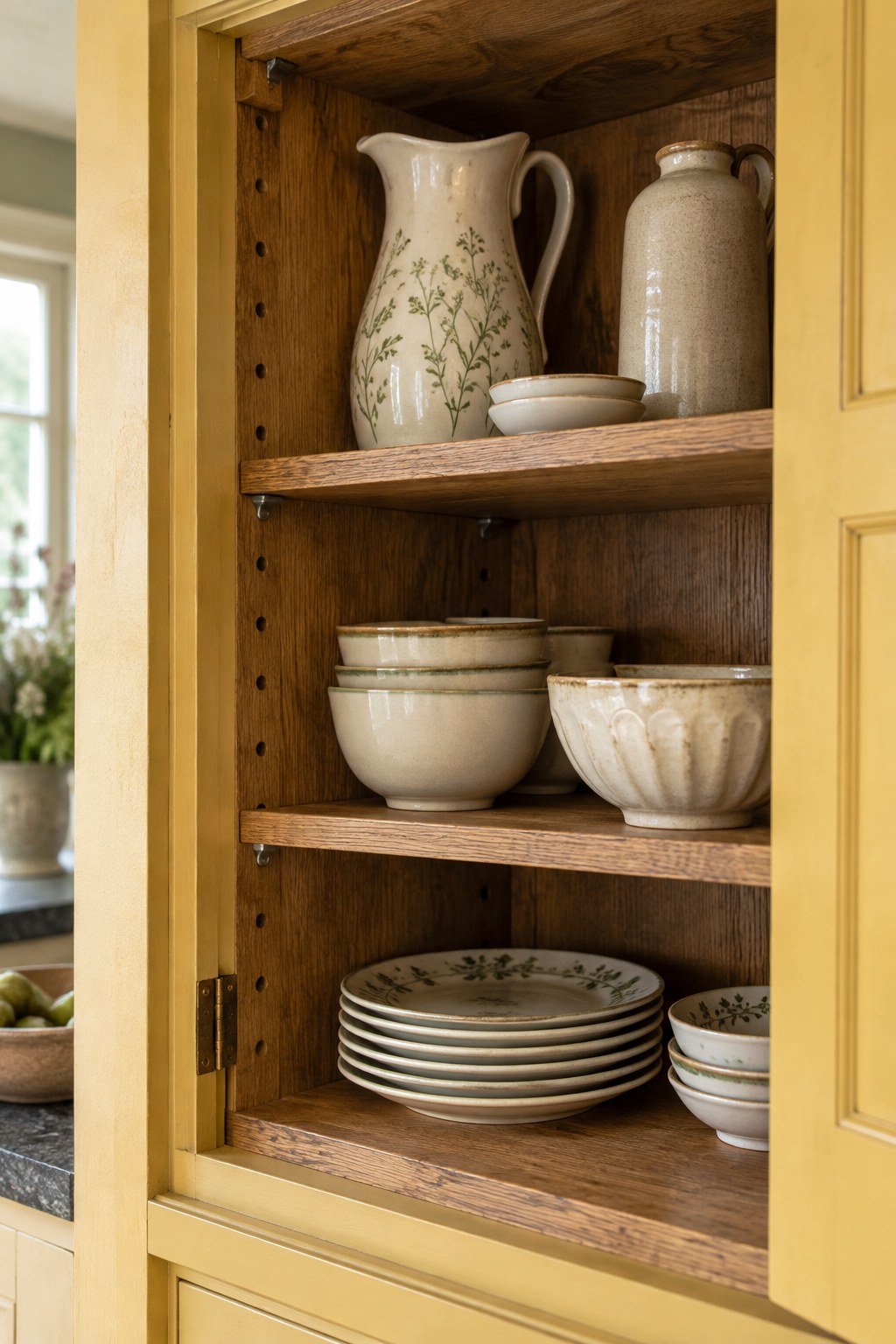
Before adding another organizer, look at the shelves already in your cupboard. Many can move up or down, and a small adjustment may remove a big gap above plates or create a proper home for a tall jug. It is one of the easiest changes to overlook.
Empty the shelf before moving it, use compatible supports and make sure every support is seated securely at the same height. Follow the cabinet manufacturer’s guidance rather than forcing a shelf into a different position. Check that the shelf sits level before putting anything back.
Build the spacing around the items you keep, with enough room to lift them out comfortably. A shallow gap suits a short plate stack, while a taller space can hold a pitcher. You may find that one well-placed shelf does more for the cupboard than several extra accessories.
12. Leave a little breathing room and make resets small

The cupboard that stays tidy is usually the one that is easy to put things back into. If every space is packed, even a quick dishwasher unload becomes a rearranging session. Leave a little room around the everyday pieces so they can go home without a struggle.
Keep a small basket for clean duplicates you are ready to rehome, then actually take them out of the kitchen. Check with the people you live with before moving on shared favourites. This is about making room for what gets used, not making the cupboards look empty.
Once the layout is working, a quick check before your grocery shop can be enough to keep things in order. Return stray packets to their groups, spot what needs using and clear the odd item that does not belong. Tiny resets are easier to keep up with than waiting for another cupboard avalanche.
Make small kitchen organization easier to keep up
You do not need a wall of matching jars or a brand-new kitchen to make crowded cupboards feel better. A few useful divisions, the right shelf height and a clearer home for the things you use can make a surprisingly big difference.
Start with the cupboard that annoys you most. Empty it, measure it and choose one change that would make it easier to reach and replace the contents. Give the new arrangement a little time before buying more organizers.
The aim is a kitchen that helps you get on with your day: a mug you can grab, a lid you can find and a pan you can lift out without moving everything else. When those small moments get easier, the whole room starts to feel more comfortable.