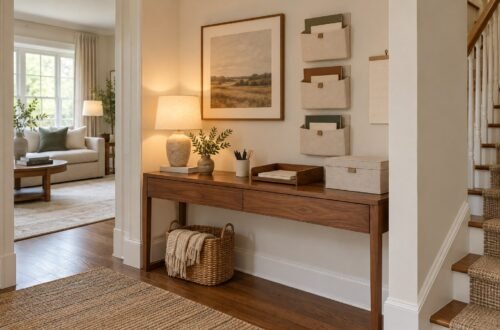

The inside of a cupboard door is easy to overlook, but a little well-chosen storage can be useful there. Foil boxes, measuring spoons and the lid you use every day don’t always need to take up a whole shelf.
The best kitchen cabinet door storage stays fairly shallow and light. Before adding anything, check the door, hinges, fixing requirements and the space behind it when closed. A handy basket isn’t handy if it bumps a shelf every time you shut the cupboard.
These ideas start with useful organisers, then finish with a few ways to make the setup work in your own kitchen. Choose one awkward little category first and give it a clear, easy-to-reach home.
As an Amazon Associate I earn from qualifying purchases.
Images are AI-generated room inspiration. SHOP SIMILAR opens a search for visually similar options; check the details and suitability for your space before buying.
1. Stand foil and baking-paper boxes in a shallow basket

A shallow door basket can keep wrap boxes upright and easy to spot. It is especially useful in a baking cupboard, where those long boxes otherwise disappear behind bowls.
Measure your actual boxes and the space available inside the closed cabinet. Check that the basket and its contents clear the shelves, frame and hinges, rather than looking only at the open door.
Keep the collection modest and follow the organiser’s mounting and load guidance. A couple of wraps you use regularly make more sense here than every spare roll in the house.
2. Give pot lids their own small rack

A lid rack gives each lid a place without balancing it on a stack of pans. The black metal looks quiet against the natural wood interior and keeps the knobs easy to see.
Choose a rack that suits the lids’ size, shape and weight. Check how far the knobs project, too, because the lid can take up considerably more depth than the empty rack.
Keep heavier cookware on suitable cabinet shelving and use the door only within its supported load. If the whole cupboard needs attention, these small kitchen organization ideas can help you rethink the surrounding space.
3. Keep a few everyday spices on a slim door rack
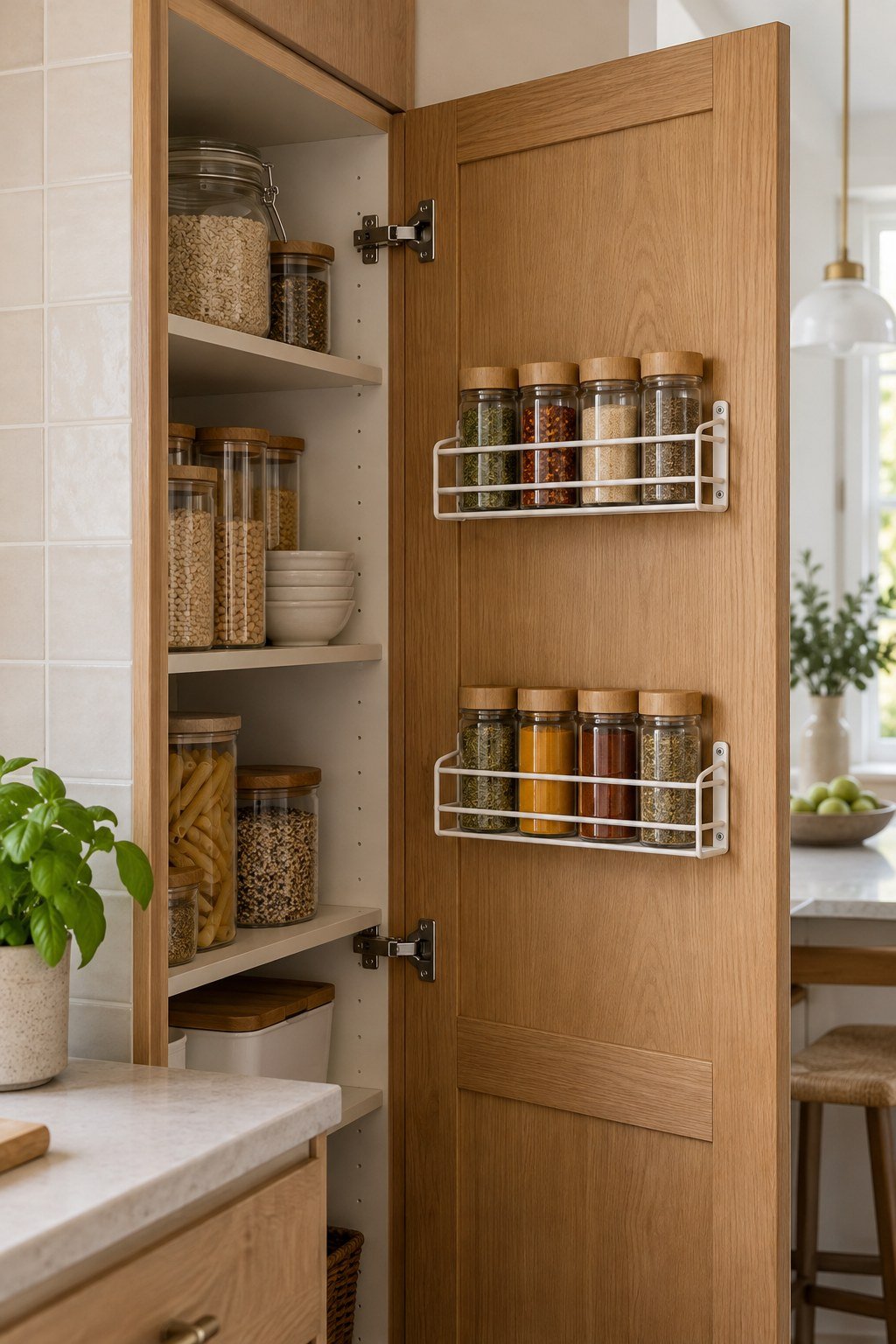
A shallow spice rack can make a small selection easier to scan. Two short rows often feel more useful than a deep shelf where the jar you want hides at the back.
Choose a suitable cupboard away from heat and follow the spices’ storage guidance. Keep the original labels and information with the jars so you can identify what you are using.
Check that the jars sit securely and that the racks clear the shelves when the door closes. Put the spices you reach for most here, with the occasional extras elsewhere.
4. Give lightweight boards a vertical home
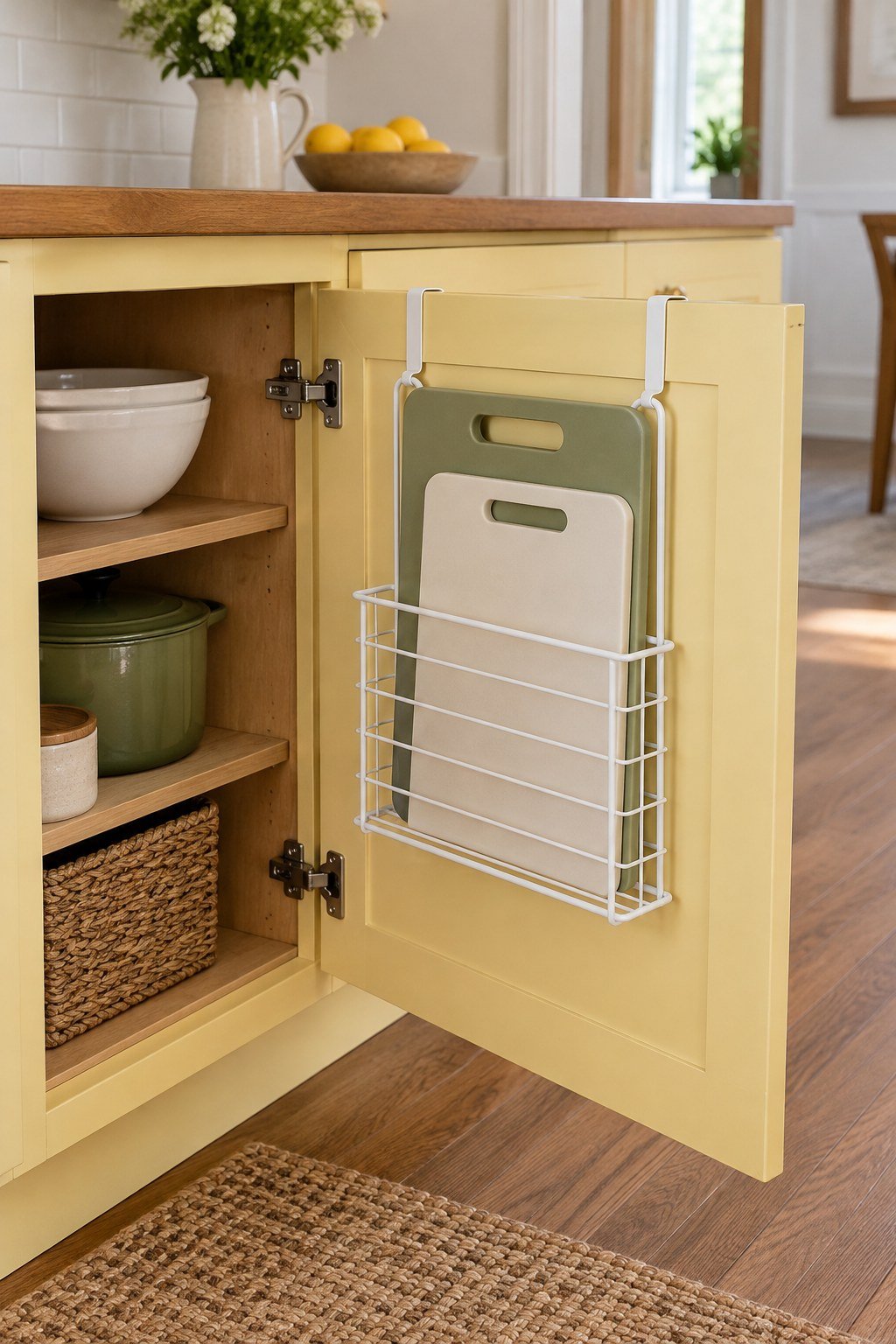
A narrow basket can hold a couple of lightweight boards upright, which makes them easier to take out than a flat stack beneath other kitchen things.
Check the board dimensions, organiser depth and the cabinet door’s suitability before buying. Thin boards and heavy wooden chopping blocks need very different amounts of support.
Put boards away clean and fully dry, following their care instructions. If over-door hooks are part of the design, check they fit the door and don’t prevent it closing properly.
5. Contain the bags you actually reuse

A small bag dispenser can keep clean spare bags from spreading across a cupboard. A narrow white design feels tidy without taking over the whole door.
Choose a position that is easy to reach and clear of the cabinet’s contents. Check how you refill it, because a dispenser is less useful if it needs to be removed every time.
Keep only the bags you are likely to use again. Once the dispenser is comfortably full, deal with the extras instead of pushing more inside.
6. Move a paper towel roll off the counter
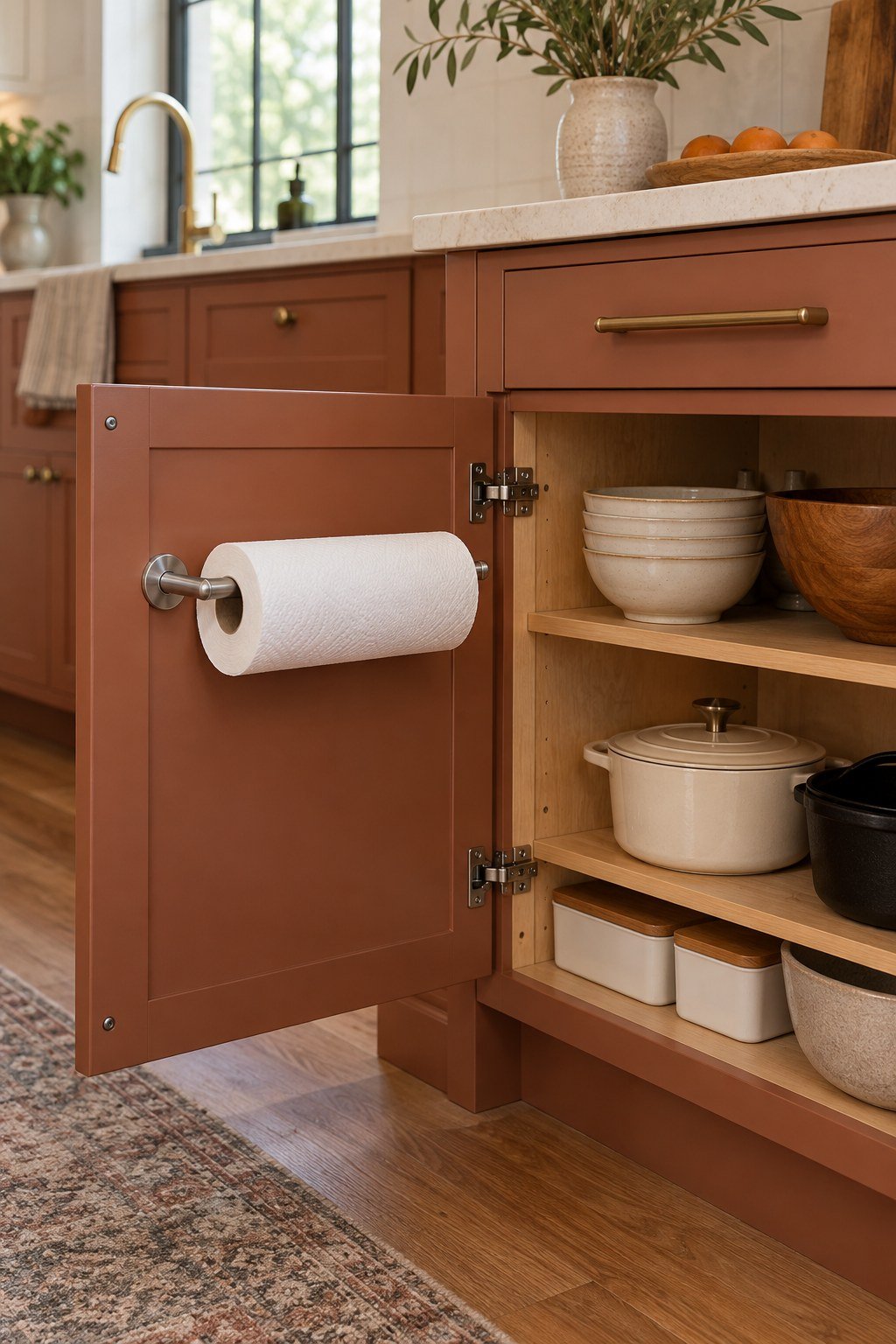
A door-mounted holder can free a little counter space while keeping a roll nearby. It works best in a cupboard you can reach easily from the place you use it.
Check the clearance with a full roll, rather than the empty holder. Allow for the roll to turn, and make sure it doesn’t catch a shelf or stored item as the door moves.
Choose a dry location away from splashes and follow the mounting instructions. Keep the door arrangement simple so taking a sheet doesn’t become a two-handed cupboard puzzle.
7. Keep dry cloths in a small mesh basket

A little mesh basket gives clean, dry cloths a place beside the sink. It can be easier to use than a cloth stack hidden behind everything else under the basin.
Look inside the cabinet before choosing the position. The basket needs to clear the plumbing, hinges and anything on the cabinet floor when the door closes.
Keep damp cloths out until they have been washed and dried appropriately. A small everyday supply is enough, with spare clean cloths stored elsewhere if needed.
8. Hang lightweight measuring tools on suitable hooks
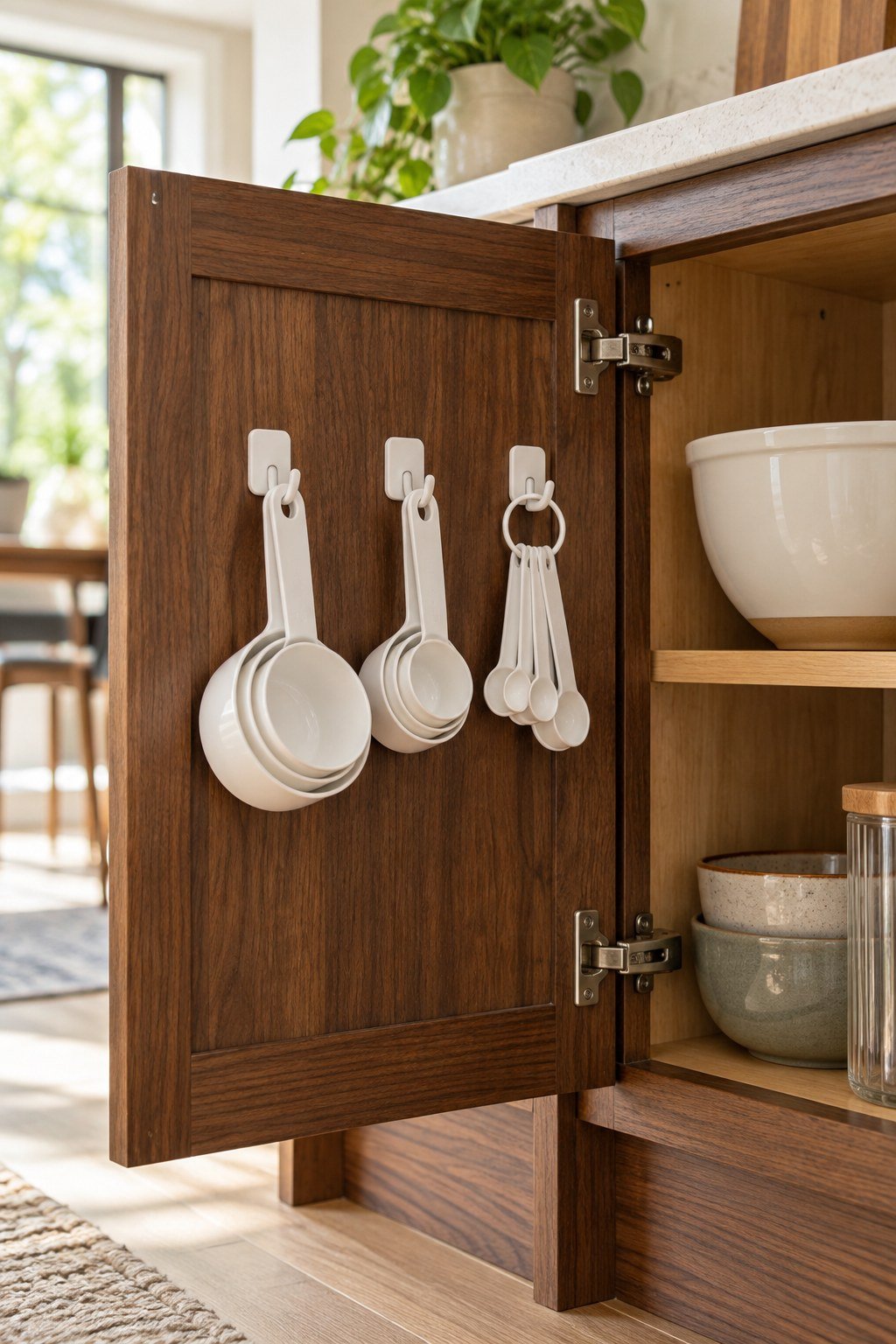
Measuring cups and spoons can sit fairly flat on a door, leaving a drawer freer for other tools. Keep them close to the bowls and baking supplies you use with them.
Choose hooks suitable for the door surface and the intended load. Check the full hanging length so the tools don’t catch the cabinet frame or shelf below.
Use a small group that you can take off and return easily. For the rest of the utensils, our kitchen drawer organization ideas offer ways to keep the drawer comfortable to use.
9. Let one light category be enough

A door doesn’t have to become a second cupboard to be useful. One light basket for one awkward category may be all the extra storage the kitchen needs.
Notice how the door feels after you add anything. Stay within the product and cabinet guidance, and don’t keep filling a rack simply because there is another gap.
Leave the hinges and door movement clear. A restrained setup is often easier to use and maintain than a door covered from top to bottom.
10. Check the closed position before committing

The open door can make an organiser look like a perfect fit while hiding a collision inside. Check the space opposite the intended position, including shelf fronts and items that project forwards.
Measure the organiser with its contents, and use the fitting guidance to confirm whether the surface and hardware are suitable. Check any over-door brackets against the cabinet frame as well.
Make the first arrangement small enough to adjust easily. Finding a useful position before filling the storage saves a lot of taking things out again.
11. Match the door storage to the cupboard’s job

Door storage feels more useful when it belongs with the cupboard behind it. Wraps beside baking tins or measuring tools beside mixing bowls keep an everyday task together.
Think about the sequence of using the items, then place the most frequent ones where they are comfortable to reach. Let occasional supplies sit a little farther back.
Check the setup after a week of real use and move anything that still feels awkward. These home organization systems use the same idea of a clear home and a simple habit.
Make one cupboard a little easier to use
You don’t need to add storage to every kitchen door. Start with the category that regularly gets in your way, then see whether a shallow rack, a small basket or a few suitable hooks would help.
Measure carefully, follow the fixing and load guidance and check that the door closes freely with everything in place. Those practical details are what make the extra space enjoyable to use.
A couple of well-placed things can be enough to change the feel of a cupboard. The reward is being able to grab what you need and put it back without a clatter.