
A warm neutral bedroom can be light and airy, softly cocooning or somewhere in between. The interesting part is the mix of textures and shades, rather than finding one beige and repeating it everywhere.
Think ivory sheets against oatmeal upholstery, a little walnut beside pale walls, or a camel blanket that makes the bed feel more inviting. Those small differences give a quiet room character.
These twelve ideas start with furniture and textiles you can shop for, then move into colour and styling choices. Take the parts that suit your room and leave enough space for it to feel like yours.
As an Amazon Associate I earn from qualifying purchases.
Images are AI-generated room inspiration. SHOP SIMILAR opens a search for visually similar options; check the details and suitability for your space before buying.
1. Start with an oatmeal upholstered headboard

An oatmeal fabric headboard gives the bed a soft outline and a little texture before you add any cushions. A fairly simple shape can work with both relaxed linen and more tailored bedding.
Check the height against your pillows and the wall space above them. Consider the whole frame too, especially if the room is small and the upholstered sides project beyond the mattress.
Let the surrounding furniture be quieter. Matching oak bedside tables and an ivory duvet give the fabric room to stand out without adding a lot of visual weight.
2. Use waffle bedding for texture you can see

A waffle duvet cover adds interest through its surface rather than a busy print. In a soft beige or natural tone, the small woven squares make the bed look comfortable even with a simple pillow arrangement.
Layer it with a smoother sheet so the textures don’t all blend together. Check the fabric, care instructions and cover dimensions against the bedding you already have before choosing a set.
Keep the fold at the end of the bed relaxed. You want to see the texture and enjoy using it, rather than creating a display that takes ten minutes to rebuild each morning.
3. Bring depth to the bedside with walnut

Walnut nightstands give pale bedding a richer neighbour. Their brown tone helps the room feel grounded while the walls and duvet keep the overall scheme gentle.
Choose a height that feels comfortable beside your mattress, and check drawer clearance on both sides. A compact table with useful storage can be more valuable than a larger surface that collects everything.
Repeat a little brown elsewhere, perhaps in a frame or cushion. Our bedside table ideas have more ways to balance the shape and storage with your room.
4. Let bedside lamps add a soft evening layer

A ceramic lamp and fabric shade bring another gentle material to the bedside. Ivory feels easy against taupe upholstery, while the pleats add detail without needing another colour.
Try the lamp from your normal sitting position in bed. The light needs to feel comfortable at eye level, and the shade should leave enough useful surface for a book and the things you reach for at night.
Treat the decorative glow as one part of the room’s lighting. If you read in bed, our bedroom lighting ideas can help you add light where it is actually needed.
5. Add a bench only when there is room to enjoy it

A small upholstered bench can make the end of the bed feel finished. The beige fabric and walnut legs bridge the softer bedding and harder furniture without introducing another strong contrast.
Measure the walking space with the bed made as you normally use it. You should be able to pass comfortably, open nearby drawers and get around the room without squeezing past the bench.
Give it a useful job, such as sitting to put on slippers or setting out tomorrow’s clothes. If the space is tight, a clear end of the bed can feel just as considered.
6. Frame daylight with oatmeal curtains

Oatmeal curtains give the window a soft frame and connect easily with cream bedding. A sheer layer underneath keeps a sense of lightness when the heavier panels are drawn back.
Choose the lining for the privacy and darkness you need; the surface colour alone won’t tell you how the fabric behaves. Leave room for the curtains to stack away from the glass where practical.
Check the colour beside the wall in daylight before ordering a whole set. Two warm neutrals can look surprisingly different together, and a sample is easier to change than the finished window.
7. Choose a warm white that belongs with the floor

Warm white can be a beautiful starting point when the flooring already has some honey or brown in it. It keeps the room open while giving the timber a softer neighbour than a very sharp white.
Test a generous sample near the floor, window and headboard. Look at it on an ordinary cloudy day as well as in sunshine, since that is often when undertones become easier to notice.
Keep the ceiling and trim in the conversation. They don’t have to be identical, but the relationship should feel intentional when you stand in the doorway and see the whole room.
8. Go a little deeper with mushroom walls

A deeper mushroom shade makes a neutral bedroom feel more cocooning. Pale bedding and ivory curtains give the eye a few lighter places to rest so the room still feels comfortable.
Try the shade behind the bed first on a large sample, then consider how it would look across the other walls. The amount of daylight and the colour of your furniture matter more than the paint name.
Keep the major shapes fairly simple if the walls are doing more of the work. These moody bedroom ideas offer more inspiration if you like the richer end of the neutral palette.
9. Build a gentle ladder from ivory to chocolate

A neutral bed looks more interesting when its shades have a little distance between them. Ivory, oatmeal, camel and one small chocolate detail create depth without making the arrangement feel colourful.
Let one or two shades cover most of the bed, with the darker note used sparingly. That keeps the eye moving softly through the layers instead of stopping at several equally strong accents.
Mix the feel of the fabrics as well as the colours. A smooth pillow, textured quilt and softer blanket give the scheme something to enjoy up close.
10. Try ticking stripes or a quiet check

A fine brown stripe can give a warm neutral room a little rhythm. Beside oak and ivory walls, it feels relaxed and adds interest without needing another large decorative object.
Keep the scale of a second pattern different. A small check cushion can sit comfortably against longer stripes when both use a similar brown-and-cream palette.
Leave some plain areas around the patterns so the room still feels quiet. You can make the bed more or less patterned simply by changing which layer is folded back.
11. Mix linen, cane and wood in a smaller room
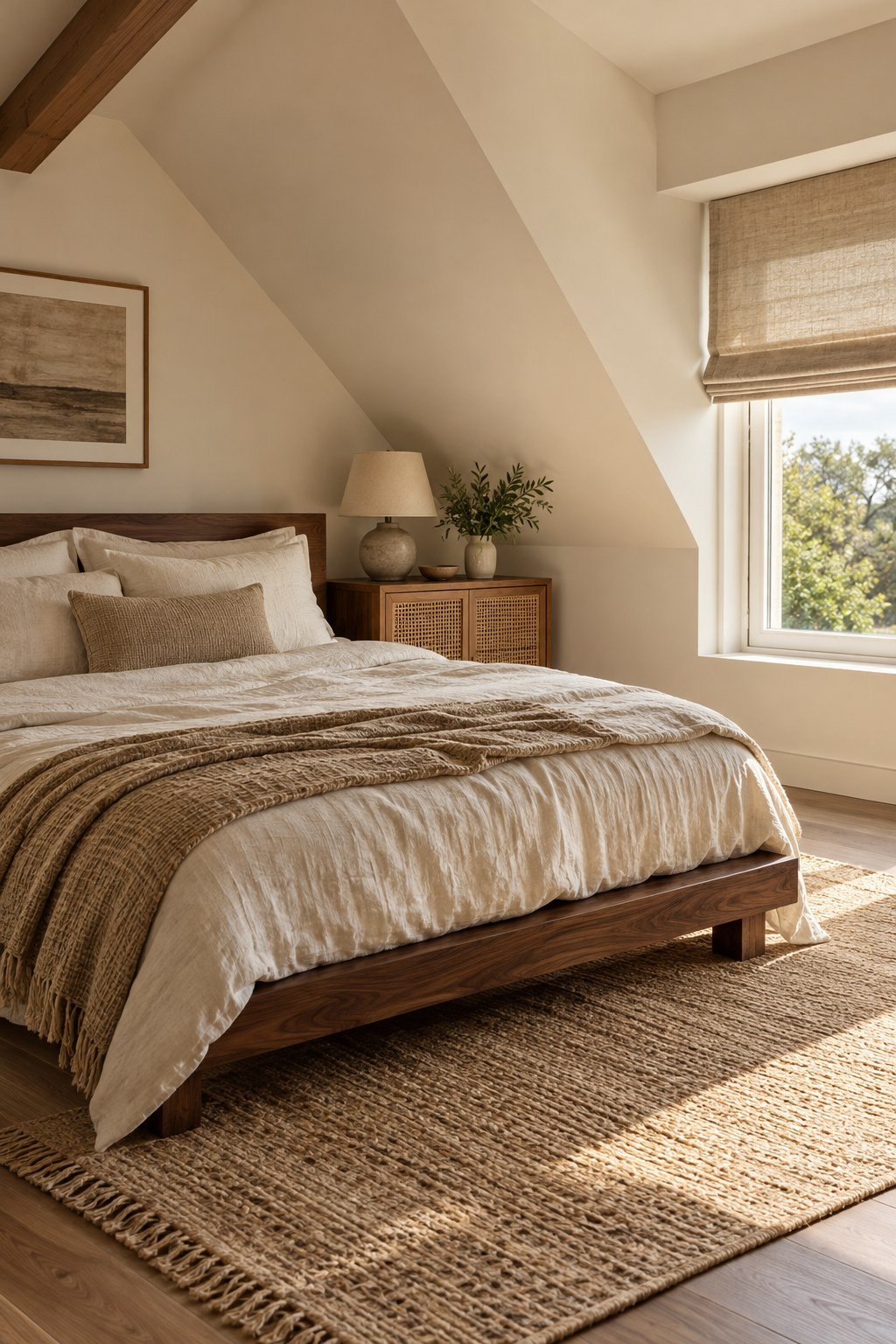
Natural-looking materials can make a compact bedroom feel full of character without filling it with accessories. Linen bedding, a cane-front cabinet and a wood frame each bring a different surface to a small palette.
Choose a few textures you enjoy and let the wall colour stay simple. In a room with sloping ceilings or awkward corners, those materials can make the architecture feel like part of the charm.
Keep furniture sizes useful for the actual floor space. Our small apartment bedroom ideas have more ways to make a tighter room comfortable to use.
12. Give the bedside some breathing room
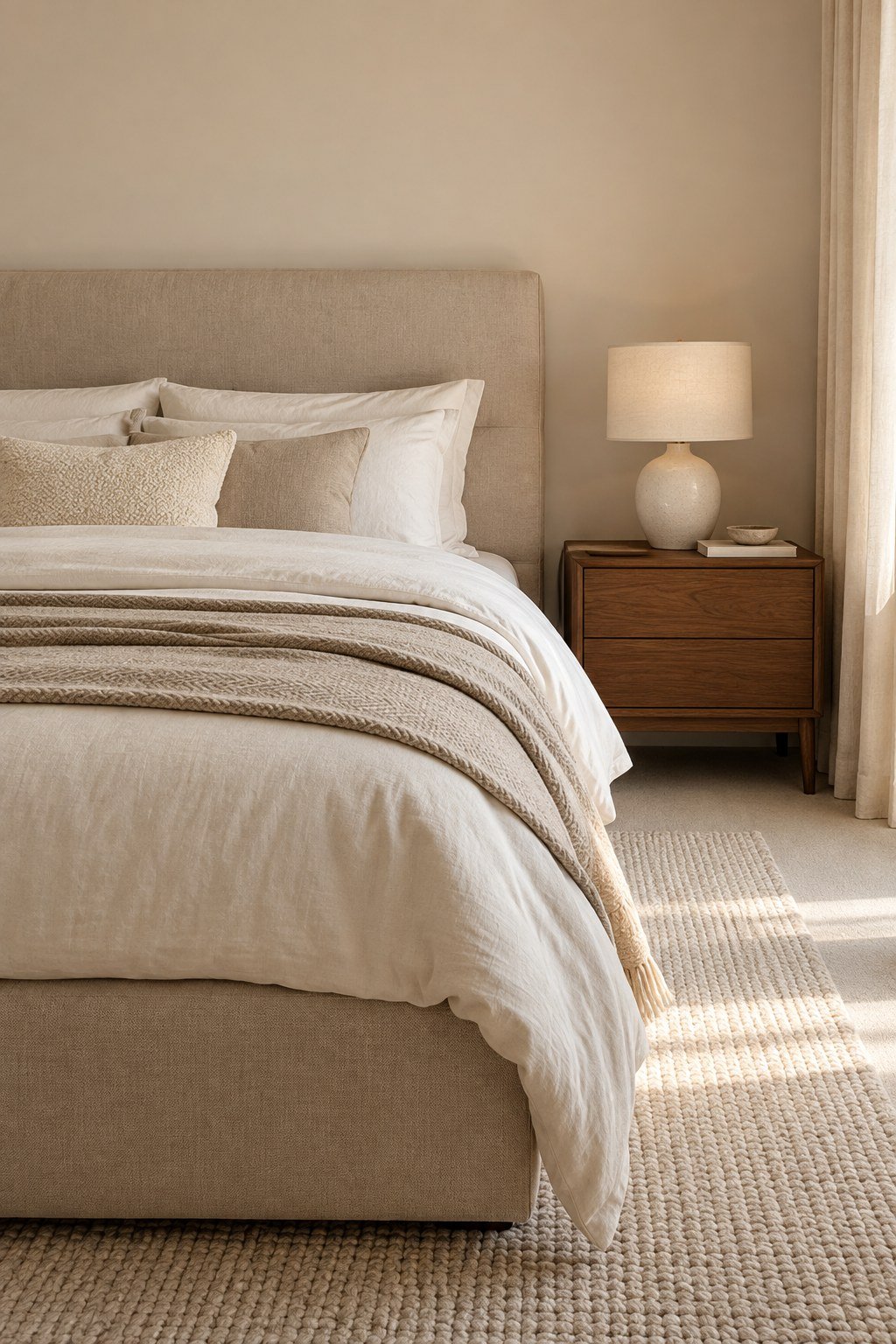
A clear bedside surface lets the textures and colours you chose feel more settled. A lamp, a book and a small dish may be all that needs to stay in view.
Move the less frequently used things into a drawer or another sensible home. Keep the items you reach for at night accessible so the arrangement works after the first tidy.
Then step back and look at the room in its evening light. These closet shelf organization ideas can help if clothes are spilling out into the calm space around the bed.
Let your bedroom settle into its own soft palette
A warm neutral bedroom doesn’t need every layer at once. Start with the biggest surface that feels wrong for the room, whether that is a sharp wall colour, a bare window or bedding you don’t enjoy.
Build around one fabric or wood tone you love, and check the other shades beside it in daylight and lamplight. A little contrast and a few different textures will give the scheme more life than trying to match everything exactly.
Leave room for the small things that make bedtime feel good: a comfortable light, a favourite book and bedding you want to climb into. That is the quiet kind of warmth worth making space for.